Montserrat Calbó i Angrill is a Professor in the Department of Specific Didactics at the University of Girona , affiliated with the Faculty of Education and Psychology . She coordinates visual arts education programs and has served as Vice-Dean of Teachers (2008-09). As a researcher in the Education, Heritage and Intermediate Arts (GREPAI) group under the Institute of Educational Research , her work spans artistic education, ecological art, and interdisciplinary learning. Education : PhD in Fine Arts (2001) from the University of Barcelona with a thesis on environmental interpretations in artistic education. Research Focus : Integrating art into broader educational contexts, emphasizing sustainability, teacher training, and creative learning. Her recent publications highlight interdisciplinary art education trends, including ecological art projects (2022), structured logical materials for early childhood mathematics (2022), and digital education initiatives like UdiGitalEdu (2020). She explores multisensory and multicultural approaches, such as visual poetry analysis (2011-2012) and heritage education (2005-2011). Contact : montserrat.calbo@udg.edu
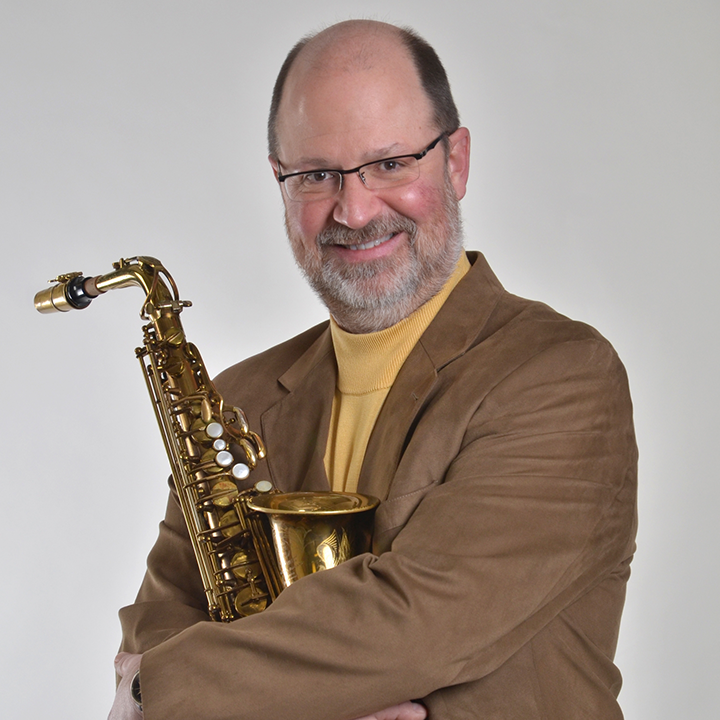
Kent Engelhardt is a Professor at the Dana School of Music & University Theatre at Youngstown State University (YSU). He has maintained a dual career as both an academic scholar and professional performer, with faculty appointments at YSU since 1994, Lakeland Community College (1991-2011), and the Youngstown State University Summer Jazz Camp (1997-1999). As a Conn-Selmer Artist and active musician, he bridges scholarly research with practical musical application through performance. Dr. Engelhardt's educational background includes: PhD in Ethnomusicology/Jazz from the University of Pittsburgh (2001) MA in Ethnomusicology/Jazz from the University of Pittsburgh (1999) BM in Performance/Clarinet from Youngstown State University (1993) MM in Performance/Jazz from Youngstown State University (1986) His research focuses on Kansas City Jazz, Charlie Parker, and Tadd Dameron , with particular emphasis on jazz composition, arranging, and historical performance practices. Dr. Engelhardt has created 47 critical editions and arrangements of Dameron's music, representing one of the most comprehensive scholarly efforts on this important jazz composer. His work combines meticulous historical research with practical musical application, often resulting in performances that bring historical works to contemporary audiences. His teaching interests span Jazz Studies: Improvisation, Composition/Arranging, Ethnomusicology, and instruction on multiple instruments including saxophone, flute, clarinet, and piano. Dr. Engelhardt's scholarly output demonstrates a consistent focus on preserving and reinterpreting jazz history, particularly the works of Tadd Dameron. His research spans from historical analysis of Count Basie's arrangements to contemporary reinterpretations of Dameron's music for modern big bands. The January 2023 release of "Central Avenue Swing & Our Delight" represents the culmination of years of research into Dameron's work, featuring 22 new editions and arrangements that have received significant critical acclaim. His scholarly contributions have been recognized through multiple university research appointments: YSU Research Professorship 2011-2012: "The 'Head' Arrangements of the Count Basie Orchestra 1937-1939" YSU Research Professorship 2012-2013: "Musical Contextualization of Charlie Parker's Solos with The Jay McShann Orchestra" CCAC re-assigned time 2013-2014: "The Music of Tadd Dameron for Harlan Leonard and his Rockets" YSU Research Professorship 2016-2017: "Tadd Dameron: The Magic Touch" for Dameron's centennial His recording "Central Avenue Swing & Our Delight" (2023) received significant recognition, being named among the "Top 25 Jazz Recordings of 2023" by Scott Yanow and appearing in the "Top 10 Critics Poll in Cadence Magazine," with additional reviews from major jazz publications including Jazz Wax, LA Jazz Scene, and All About Jazz. As an educator and performer, Dr. Engelhardt has mentored countless students through his teaching positions and ensemble leadership. His Madd For Tadd ensemble serves as both a creative outlet and educational platform, having performed at numerous festivals including the TRI-C Jazz Fest, Kaleidoscope Festival, and Lakeland Jazz Festival. Dr. Engelhardt's research has been consistently supported by university grants, enabling him to preserve and reinterpret important jazz repertoire for contemporary audiences. Dr. Engelhardt leads the Madd For Tadd ensemble, which focuses on performing and recording Tadd Dameron's music in new arrangements for big band. The ensemble has performed at major jazz festivals and venues including the TRI-C Jazz Fest, Cleveland's Bop Stop, and BLU-Jazz. Recently, he has expanded the reach of his work by performing Dameron's music with the Orlando Jazz Orchestra and at the University of South Florida, demonstrating the national recognition of his scholarly and artistic contributions to jazz studies.
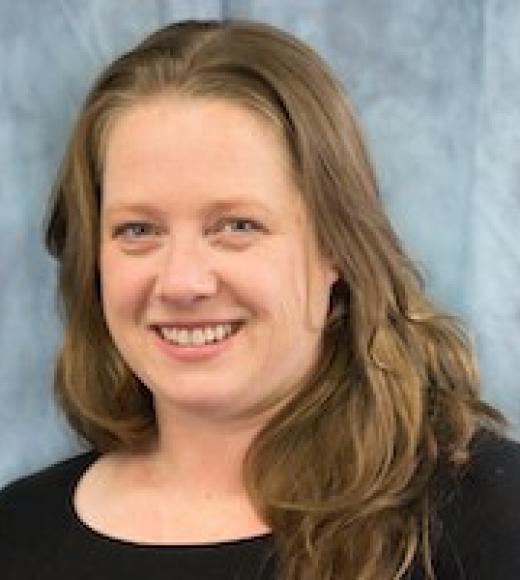
Katherine Eriksson is an Associate Professor at the University of California, Davis, specializing in applied microeconomics with a focus on economic history, labor economics, and development economics. She is a member of the American Economic Association, the Cliometric Society, and the Economic History Association, and serves on the UC Davis Graduate Placement Committee. Her educational background includes: Ph.D. in Economics from UCLA (2013) M.A. in Economics from UCLA (2008) M.S. in Agricultural Economics from Virginia Tech (2007) B.A. in Philosophy, Politics and Economics from the University of Oxford (2006) B.S. in Mathematics and Philosophy from Virginia Tech (2004) Professor Eriksson's research spans economic history , particularly examining the age of mass migration, and labor economics , with a focus on how education and language policies affect labor market outcomes. Her work in development economics investigates migration patterns and economic development in historical contexts. She employs rigorous econometric methods to analyze historical data, contributing to our understanding of long-term economic trends. Her publications in top journals such as the Journal of Political Economy and the American Economic Review reveal a consistent theme: the interplay between migration, assimilation, and economic outcomes. Her research often uses historical datasets from the United States and South Africa to explore how factors like language of instruction and inheritance practices influence individual economic trajectories over time. Her scientific awards include: Cal Poly Research, Scholarship, and Creative Activities Grant ($13,298) for 2014–2015 Finalist for the Economic History Association's Alan Nevins Dissertation Prize (2013) Elise Burman Fellowship from UCLA (2012) UCLA Center for Economic History fellowship (Fall 2012) As a member of the Graduate Placement Committee, Professor Eriksson plays a key role in guiding PhD students into academic and professional positions. She has secured research funding, including the Cal Poly grant, which supported her work on migration and economic outcomes. Her teaching includes courses on U.S. economic history and econometrics, reflecting her research expertise.
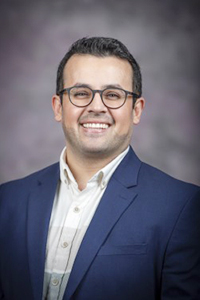
Mehmet Yavuz serves as an Assistant Professor within the School of Human Sciences at Kansas State University's College of Health and Human Sciences. He earned his doctoral degree in Peace and Conflict Studies from the University of Manitoba and completed his master's at the University of Massachusetts Lowell. His academic career spans teaching and research focused on transformative peace processes, particularly examining how marginalized identities navigate and reshape post-conflict societies. Dr. Yavuz's educational background includes: Ph.D. in Peace and Conflict Studies, University of Manitoba M.A. in Peace and Conflict Studies, University of Massachusetts Lowell Dr. Yavuz's scholarly work critically investigates the complex interplay between peacebuilding initiatives, identity formation, and systemic marginalization. His research program centers on disrupting normalized forms of violence—whether direct, structural, or cultural—across diverse social contexts. Key areas include queer peacebuilding in divided societies, intergenerational trauma transmission, youth-led reconciliation efforts, and community-engaged methodologies. Geographically, his work concentrates on Bosnia and Herzegovina, Cyprus, Turkey, and broader regions of the Balkans and Middle East, offering nuanced perspectives on how sexual and ethnic minorities navigate post-conflict landscapes. Analysis of Dr. Yavuz's recent publications reveals a cohesive research trajectory centered on LGBTQIA+ experiences within peace processes. His scholarship demonstrates particular innovation in applying queer theory to post-Yugoslav reconciliation efforts in Bosnia, while also examining rural pride movements in Kansas and migrant justice during the pandemic. Methodologically, his work consistently employs qualitative approaches and community-based participatory research, generating rich insights into how marginalized communities create spaces for resistance and transformation even within constrained political environments. As an academic advisor, Dr. Yavuz actively supervises graduate students working at the intersection of peace studies and social justice. He directs the Creative Peacebuilding and Conflict Transformation Lab (CPACT), which provides research opportunities for undergraduate and graduate students through volunteer positions and funded assistantships. His externally supported research includes a Peace and Justice Association mini grant for investigating LGBTQIA+ activism in Manhattan, Kansas, demonstrating his commitment to locally grounded peacebuilding initiatives. The Creative Peacebuilding and Conflict Transformation Lab (CPACT) serves as Dr. Yavuz's primary research hub, fostering interdisciplinary collaboration on three key projects: rural pride activism in Kansas, queer peacebuilding in Bosnia and Herzegovina, and ethnic reconciliation processes. This lab environment emphasizes experiential learning, connecting theoretical frameworks with community-based action to develop innovative approaches to conflict transformation.
Chris Hackley is Professor of Marketing at Royal Holloway University of London's School of Business and Management, where he established the marketing teaching and research department as founding Chair in Marketing in 2004. His academic career includes previous positions at Birmingham University, Aston Business School, and the Open University. He holds a PhD from Strathclyde University (awarded 1999) focusing on the creative advertising development process in UK advertising agencies. Professor Hackley's research centers on managerial, cultural and policy issues around marketing and advertising communication. His work spans critical marketing studies, qualitative research methods, product placement regulation, business education, and media ethics. He has published extensively including the Routledge textbook 'Qualitative Research in Marketing and Management' (3rd edition), 'But...How Do You Teach, Business?' (Edward Elgar, 2024), and 'Rethinking Advertising as Paratextual Communication' (co-authored, Edward Elgar, 2022). His recent scholarly output shows a trajectory toward critical examinations of business education, evolving advertising practices in digital environments, and the sociocultural implications of marketing. His work on product placement regulation has been particularly influential in UK broadcasting policy debates. He has supervised PhD students researching TV product placement, political marketing, children's gaming consumption, and influencer marketing. Editorial Board: Marketing Theory, Journal of Marketing Management, European Journal of Marketing Media Contributor: BBC TV Breakfast, ITV1, Channel 4 News, BBC Radio 4 Publications: 133 research outputs including 73 articles, 34 book chapters Hackley has been active in public discourse through The Conversation, Times Higher Education, and other media outlets. His research has been cited in Harvard Business Review, Times of India, and major UK national newspapers. He maintains active research collaborations across Europe and has appeared on international media discussing advertising psychology and marketing practices.
Glenn Ellis is a Professor of Engineering and Director of the Picker Engineering Program at Smith College. His career spans roles at Princeton University, Clarkson University, the U.S. Air Force Academy, and Kajima Corporation in Japan. Education : Ph.D. and M.A. from Princeton University; B.S. from Lehigh University. Ellis focuses on engineering education reform , emphasizing knowledge building , cognitive tools , and deep learning environments . His work includes K-12 outreach and developing the NSF-funded Through My Window educational platform. His recent publications highlight narrative-based curricula , transmedia storytelling , and STEM identity development for middle school learners. Scientific Awards : U.S. Professor of the Year (2007), Sherrerd Prize for Distinguished Teaching, Outstanding New Teacher Award, Tau Beta Pi Faculty Award. Ellis advocates for play-based learning and ethical education , balancing academic rigor with personal passions for outdoor activities and creative arts.
Dr. Lauren Madden is a Professor of Elementary Science Education at The College of New Jersey's School of Education. She coordinates the undergraduate minor and graduate certificate in Environmental Sustainability Education, and has authored a textbook while publishing over 40 peer-reviewed journal articles, book chapters, and presentations. Ph.D., Science Education, North Carolina State University (2011) M.S., Marine Science, University of South Carolina (2004) B.A., Earth Science, University of New Hampshire (2002) Her research focuses on climate change education, environmental sustainability, and integrating arts into science pedagogy. She explores how teacher identity, classroom practices, and professional development shape science learning in PK-12 settings, particularly emphasizing equitable approaches and student self-efficacy. Dr. Madden's publications span climate science professional development, enclothed cognition effects on science identity (e.g., lab coat studies), and NGSS-aligned teaching strategies. Her work often involves collaborations with colleagues like Nathan Magee, Louise Ammentorp, and Graceanne Taylor, and addresses interdisciplinary methods for early childhood and K-8 educators. Outstanding Science Teacher Educator of the Year (2021, Association for Science Teacher Education) She has presented at numerous national and international conferences (NARST, AERA, NAAEE) and contributed to initiatives like New Jersey's statewide climate change education standards. Her teaching includes environmental science courses and clinical placements for teacher candidates.
María Elena Arce Fariña is a Professor in the Department of Industrial Engineering at the Escola Politécnica de Enxeñaría de Ferrol, Universidade da Coruña (UDC). Her academic profile demonstrates extensive involvement in both teaching and research activities within the field of engineering education and sustainable technologies. Her research interests span multiple domains including Sustainable Engineering, Graphic Expression in Engineering, Industrial Design, Energy Efficiency, Textile Technology, Building Energy Analysis, and Computer-Aided Design. These research areas are reflected in her diverse publication record and collaborative projects. Dr. Arce Fariña's recent scholarly output shows a strong focus on interdisciplinary research connecting engineering education with sustainability challenges. Her publications reveal consistent contributions to high-impact journals in materials science, energy, sensors, and engineering education, demonstrating her ability to bridge theoretical knowledge with practical applications in sustainable industrial design and energy efficiency. She actively supervises bachelor's and master's theses, with recent projects focusing on luminaire design, energy analysis of buildings, industrial component replication through reverse engineering, and sustainable textile product development. Her teaching portfolio includes courses such as Digital Design and Development of Textile Products (Master's Degree in Textile Technology and Sustainable Fashion), Graphic Expression (across multiple engineering degrees), and supervision of Final Degree Projects and Master's Theses in Industrial Engineering programs. Dr. Arce Fariña participates in numerous research projects funded by entities including the European Commission, Consejo de Seguridad Nuclear, Fundación Española para la Ciencia y la Tecnología, and regional Galician organizations, demonstrating her ability to secure competitive research funding and collaborate across institutional boundaries.
Lizzi Milligan is a Professor at the Department of Education , University of Bath, specializing in Centre for Development Studies . Her research spans social, epistemic, and environmental justice in education across low-income countries, with fieldwork in Uganda, Rwanda, Nepal, and Peru . Director of Research, Department of Education (2024) Co-lead of Reimagining Education for Better Futures research group Research utilizes mixed-methods approaches , including participatory and creative methodologies, to analyze: Policy-Practice disjunctures in education Linguistic injustices in English Medium Instruction Ethics in cross-cultural research Recent projects funded by: GCRF ESRC grant (2024): Environmental, epistemic, and transitional justice in secondary schooling ESRC New Investigator Award (2023): Girls' educational outcomes in Rwandan EMI UKRI ODA funds (2022): Justice-focused education initiatives Key publications examine: Linguistic barriers in Cameroon and Rwanda Epistemic exclusion in Ugandan environmental education Educational violence in English Medium secondary schools Scientific awards and recognitions: GCRF ESRC Research Grant (2024) ESRC New Investigator Award (2023) Certificate of Accreditation from Uganda's National Curriculum Development Centre (2024) She actively supervises doctoral students in: Basic education in low-income countries Language justice in pedagogy Sustainable futures through education Collaborations include: The British Council (2025) Economic and Social Research Council (2024) UK Research & Innovation (2022)
Dr Mike Tennant serves as Vice-Dean for Education and Principal Teaching Fellow at Imperial College London's Centre for Environmental Policy within the Faculty of Natural Sciences. He co-convenes the Business and the Environment Option of the MSc in Environmental Technology and leads the Centre for Innovative Manufacturing in Industrial Sustainability as Imperial's EPSRC investigator. His educational background includes: Ph.D. in Theoretical Chemistry (University of Manchester) M.Sc. in Environmental Technology (Imperial College London) M.Ed. (Imperial College London) Prior to academia, he spent 14 years in pharmaceutical/biotech industries leading research teams and co-founding startups in California. Tennant's research integrates systems thinking and complexity theory to design sustainability interventions, with core focus on circular economy implementation, social inclusivity, and resilient urban design. He develops creativity-based tools for creating environmentally and socially responsive products, services, and policies while examining organizational contexts in constrained resource environments. Analysis of his recent publications reveals strong interdisciplinary convergence across circular economy business models, urban resilience frameworks, and human-centered sustainability approaches. His work increasingly bridges theoretical systems analysis with practical implementation strategies, emphasizing social dimensions like inclusivity and human needs satisfaction while exploring industrial symbiosis and resource-service systems. He supervises PhD research on topics including social inclusivity in circular economies and resilient urban design. Significant funding includes leadership of the EPSRC Centre for Innovative Manufacturing in Industrial Sustainability, examining manufacturing's role in resource-constrained futures. Tennant actively collaborates through Imperial's Centre for Environmental Policy and Centre for Innovative Manufacturing in Industrial Sustainability, developing cross-sector partnerships to advance sustainable business practices and policy frameworks.
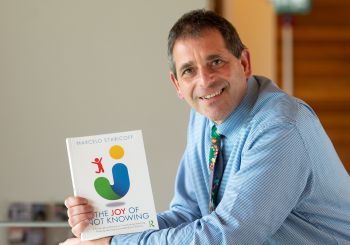
Dr Marcelo Staricoff is an Assistant Professor in Primary Education at the University of Sussex School of Education and Social Work (ESW), where he serves as Course Leader for the Masters in Education program and BA Primary & Early Years Course (BAPEYE) with Qualified Teacher Status. He also leads the Department's Bolashak Scholars initiative from Kazakhstan, acts as External Examiner for Durham University's Primary Education program, and represents Sussex on the UK-Uzbekistan Education Forum. Former research scientist and primary school headteacher Author of two influential educational books International consultant for UNICEF and Coram Life Education Active in educational policy through APPG and IAFOR Recognized with two major fellowships (Chartered College of Teaching & HEA) His work emphasizes creative, critical and philosophical thinking in multicultural classrooms, with a focus on bilingual education and values-led leadership. He promotes lifelong learning dispositions through his JONK approach, which has inspired schools across England and international initiatives. Recent publications include explorations of AI in education and multilingual pedagogy. Awards include being named Founding Fellow of the Chartered College of Teaching (2019) and Higher Education Academy Fellowship (2023). He actively contributes to educational discourse through speaking engagements and charity work, including chairing the Global Empathy Conference.
Charlotte Gleason is an Assistant Professor and Chair of the Humanities Department at Cairn University's School of Liberal Arts & Sciences. She has taught at Cairn since 2007, initially in a part-time role before transitioning to full-time, and specializes in literature, composition, and education courses. MLS, Fort Hays State University BS in Bible, Cairn University BS in Education, Cairn University Her research focuses on innovative pedagogical approaches, including alternatives to traditional direct instruction, formative assessment strategies in writing, and interdisciplinary curriculum development. She has also explored integrating adolescent literature with canonical texts to enhance college readiness. Her 2020 publication, Composition II: Analysis and Interpretation , reflects her expertise in developing pedagogical materials that promote critical thinking and interdisciplinary learning. She has presented extensively on creative teaching methods at conferences like ACSI and NeMLA. As Department Chair, Charlotte leads curriculum initiatives while maintaining an active teaching role. Her work bridges academic theory with practical application in both traditional and Christian educational contexts.
Ewa Chrusciel is a Professor at Colby-Sawyer College’s School of Arts & Sciences, joining the faculty in 2006. Holding the M. Roy London Endowed Chair, she specializes in world poetry, translation, and cognitive poetics, blending interdisciplinary and international approaches. Ph.D. in Literary Studies and Contemporary Poetry from Illinois State University M.A. in English Philology from Jagiellonian University, Poland Her research spans pre-modern, modern, and postmodern world poetry , comparative literature , and neurological theories of aesthetic experience . She teaches creative writing, world literature, and poetry, emphasizing bilingualism and translation. Recent academic work includes presentations on translating Polish poetry , religious references in verse , and cognitive embodiment in literary forms . Her poetry has been translated into Vietnamese, Hungarian, and Italian. 2016: Nomination for Best of Net Anthology 2014: Pushcart Prize nomination 2013: Second place in 'Nakręć wiersz' Poetry Competition 2011: Finalist in Sow’s Ear Poetry Contest 2009: Winner of Emergency Press Contest
Elizabeth Yale is an Associate Professor in the Department of History at the University of Iowa, College of Liberal Arts and Sciences, where she also serves as Director of Undergraduate Studies. Her research lies at the intersection of the history of science, book history, and early modern European intellectual culture, with a focus on how knowledge was created and preserved in domestic and archival contexts. Her educational background includes a PhD in the History of Science from Harvard University (2008). She previously taught at Western Carolina University and Harvard before joining the University of Iowa. Dr. Yale's research explores the material and social practices of knowledge-making, particularly in early modern Britain. She emphasizes the role of families, manuscript culture, and archival infrastructures in the development of scientific thought. Her work spans themes such as gender, materiality, and the transmission of medical and natural knowledge. She teaches courses on early modern Europe, the history of science and medicine, book history, and gender, often incorporating hands-on analysis of texts through the University of Iowa Center for the Book. Her recent publications reveal a consistent interest in the material forms of knowledge—letters, lists, marginalia, and archives—and their role in shaping scientific epistemology. She frequently examines how women’s intellectual labor and domestic spaces contributed to scientific advancement. Her collaborative projects, including an NEH-funded initiative with Matthew Brown, aim to build innovative educational spaces for studying global print and manuscript cultures. Visiting Scholar, Max Planck Institute for the History of Science, Berlin (2016) President, Andrew W. Mellon Society of Fellows in Critical Bibliography (2021–2022) Senior Fellow, Andrew W. Mellon Society of Fellows in Critical Bibliography Dr. Yale has been active in mentoring and curriculum development, particularly through experiential learning programs like the Hawkeye History Corps. She has secured external funding, including an NEH Humanities Initiatives Grant, to support interdisciplinary teaching and research. Her advising likely extends to undergraduate and graduate students interested in history of science, gender studies, and material text analysis, though specific students are not listed. She is also engaged with public history, contributing accessible commentary to outlets like The Atlantic , Quartz , and Iowa Public Radio , bridging academic research with broader societal conversations on science, gender, and race. She is involved in collaborative scholarly communities, especially through the Rare Book School and the University of Iowa Center for the Book, where she contributes to projects that integrate book history with scientific and archival studies. These affiliations support a vibrant research and teaching environment centered on material knowledge practices.
Darren Mundy is Professor and Dean of the Faculty of Arts, Cultures and Education at the University of Hull, where he has been a faculty member since 2003. He has previously served as Head of School, Associate Principal, and Associate Dean, demonstrating sustained academic leadership. His work is centered in the Department of Screen within the Faculty of Arts, Cultures and Education. University: University of Hull School: Faculty of Arts, Cultures and Education Department: Screen Role: Dean and Professor Darren Mundy’s research focuses on the transformative role of technology in education and digital society. His early work explored engagement-enhancing technologies such as The Wild Thing and PAM-PAM, evolved into designing learning environments through the Euroversity project, and has matured into advancing critical digital literacies via the DETECT project. His interdisciplinary interests span educational technology, social media, eGovernment, information security, privacy, and eHealth. He has played a foundational role in establishing the Games Design program at Hull and has taught across web design, games art, and development for two decades. His recent publications reflect a strong trend in digital representation, technology acceptance models, and digital transformation, particularly in educational and governmental contexts. Articles such as 'An Analysis of Middle Eastern Female Athletes Visual Self-Presentation Strategies on Instagram' and 'Critical digital literacies at school level: A systematic review' highlight his focus on equity, representation, and critical engagement in digital spaces. His work often involves international collaboration and EU-funded initiatives. Darren has received recognition through multiple external examiner roles at institutions including the University of Bedfordshire, Coventry University, Ulster University, and the University of Bolton, underscoring his academic standing. He has led externally funded projects such as 'Who moved my block?' (AHRC) and 'DETECT' (European Commission), demonstrating his ability to secure research support. He has supervised over a dozen postgraduate students to completion, including eight PhDs and four MSc by Research students, and currently supervises a part-time PhD candidate exploring mixed reality applications for dementia care. His advisory work emphasizes real-world impact in technology-enabled learning and digital inclusion. Darren is also co-manager of the EU-funded Euroversity Network, promoting transnational educational collaboration. His leadership extends beyond research and teaching into institutional development and international academic service, making him a key figure in shaping digital education policy and practice.