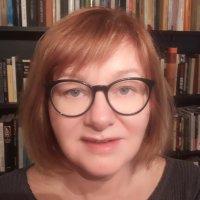
Yvette Orsovics is an Adjunct Professor at the Department of Pre-school and Elementary Education, Faculty of Education, Selye János Egyetem. She holds a PhD in Pedagogy and has extensive experience in music education and comparative textbook research. Her roles include conducting the Cantus Iuventus choir and leading various educational initiatives. Education: Completed studies at Pedagógiai Főiskola (1989-1995), Kodály Zoltán Institute (1996-1998), and Eötvös Lóránd University (2008-2013). She has taught at primary schools and music academies since 1994. Research focuses on textbook analysis, music education methods, and artistic activities. Notable projects include internationalizing teacher education programs and developing creative language teaching methods. Recognition includes multiple awards for pedagogical excellence, including the 2020 Ministerial Award and 2016 Hungarian Teacher Award. She has led over 10 funded projects, including EU-supported initiatives. As a conductor, her choirs have achieved significant national and international success. She is actively involved in cultural initiatives and serves as a jury member at music festivals.
Marcel Benčík serves as Associate Professor and Vice-Rector for International Cooperation at the Academy of Fine Arts and Design in Bratislava, where he heads the Studio Space within the Department of Visual Communication. With over two decades of professional design experience, he bridges academic leadership and creative practice across Central Europe through significant collaborations with cultural institutions including the Slovak National Gallery and architectural studio zerozero. Academic Background ArtD. (Doctorate) from Academy of Fine Arts, Prague (2004-2007) under Assoc. Prof. Pavel Choma Master's Degree from Academy of Fine Arts, Bratislava (2002-2004) Bachelor's Degree from Academy of Fine Arts, Bratislava (1998-2002) Benčík's research focuses on the intersection of communication design with architectural spaces, where he explores how visual systems enhance user experience in cultural institutions. His work demonstrates particular innovation in exhibition design and spatial navigation systems, often integrating traditional graphic elements with digital interfaces to create cohesive visitor journeys that serve both functional and aesthetic purposes. His award-winning projects include the Balustrade on the Parish Stairs in Žilina (2016 National Award winner) and Kasárne/kulturpark Košice's visual communication system. Recent outputs through 2024 show continued exploration of intermedia museum concepts and urban design interventions that respond to contemporary social contexts while maintaining strong visual identities. Selected Honors National Award for Communication Design (Experimental Design Category, 2016) Multiple National Design Awards (2020, 2021) Dušan Jurkovič Award for Architectural Integration Polish Design Award for International Collaboration The Most Beautiful Book of Slovakia recognition As Studio Space manager, Benčík mentors students in thesis development while leading international collaborations through G4 network and Design Weekend Bratislava. His academic service includes jury participation for design competitions across Europe and opposition roles at Polish and Czech institutions, demonstrating significant contribution to regional design education standards.
Ján Triaška is an Associate Professor at the Faculty of Fine Arts , Academy of Arts, Architecture & Design in Prague, where he serves as Head of the Department of Painting and STARTUP studio manager. His academic career focuses on visual arts, painting, and interdisciplinary art education. His research interests span theoretical and historical foundations of fine arts innovative pedagogical approaches in painting intermedia and digital media integration contemporary artistic practices with a particular emphasis on symbolic and narrative representation. The exhibited works demonstrate a strong focus on temporal and spatial art anatomical and bio-art themes polish cultural heritage documentation digital media narratives across various formats including installations, paintings, and mixed reality projects. Contact: jan.triaska@gmail.com
Peter Židek is an Assistant Professor at the Department of Preschool and Elementary Education, Faculty of Education, J. Selye University in Komárno, Slovakia. His research focuses on assessing university students' fitness using the NETFIT program and exploring physical activity patterns among socioeconomically disadvantaged populations, particularly children with autism spectrum disorder and Roma communities. He holds a PaedDr. degree and has extensive experience in teaching and research across multiple institutions. Education: Rigorous examination in Preschool and Elementary Pedagogy (2009–2011), social pedagogy (2000–2004). Employment: Taught in special elementary schools (2001–2013) and private vocational schools before joining academia. Research Interests: Physical education methodology, health promotion, motor skill development, and inclusive education strategies. Publications: Over 16 peer-reviewed articles and conference papers, including studies on child welfare, ASD interventions, and Roma health disparities. His work has been cited internationally, reflecting contributions to education and health sciences.
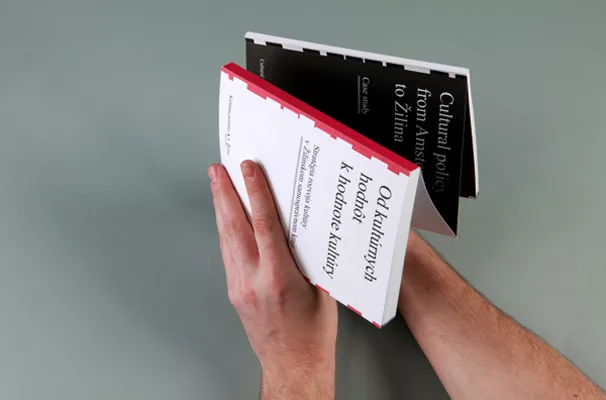
Karol Prudil is a Slovak graphic designer and typographer serving as a Lecturer in the Department of Visual Communication at the Academy of Fine Arts and Design in Bratislava. His professional practice spans publication design, packaging design, typeface creation, and visual identity development, balancing academic responsibilities with an extensive portfolio of commissioned work for publishers, cultural institutions, and commercial clients across Europe. Prudil's educational foundation includes: Master of Fine Arts from Academy of Fine Arts in Bratislava, Department of Visual Communication (2003-2009) under Doc. Pavel Choma Academy of Arts, Architecture and Design in Prague – Font and Typography studio (2008) with František Štorm SOU Polygraphics in Bratislava diploma (1997-2001) His creative research explores materiality in typography, innovative book structures, and the relationship between form and function in visual communication. Prudil has developed several notable typefaces including Klin and its variants, recognized for blending geometric precision with organic, tactile characteristics. His design philosophy emphasizes thoughtful material choices, structural innovation, and creating meaningful user experiences through interactive elements in books and packaging. The recurring themes in his portfolio include spatial relationships in two-dimensional design, material experimentation, and systems that invite user participation across physical and digital media. Analysis of Prudil's publication history reveals consistent exploration of book form boundaries and sophisticated understanding of typography across media. His work bridges historical design traditions with contemporary needs, resulting in conceptually rich yet functionally elegant solutions. The evolution from his early award-winning lie-stand book (2007) to current remini notebook brand demonstrates maturation from experimental forms to sustainable commercial applications while maintaining design integrity. Prudil's professional recognition includes: National Design Award 2009 – Klin Font recognition National Design Award 2007 – interactive book lie-stand recognition As an educator, Prudil conducts workshops on book binding and paper work since 2011, alongside lectures on books, paper, and business development. His teaching emphasizes hands-on material experience while developing conceptual depth. His professional practice operates through the registered brand 'remini' (established 2012), focusing on notebooks and diaries, and through collaborations with publishing houses and cultural institutions including participation in international projects like the SIDEWAYS exhibition at the Venice Architecture Biennale.
Simoneta Babiaková is an Associate Professor at the Faculty of Education, Matej Bel University , Slovakia, specializing in Teacher Profession and School Management . Her work bridges early reading literacy , pedagogical diagnostics , and curriculum development . Research Focus: Teacher self-evaluation, school management in changing societies, and literacy assessment for young learners. Publications: Over 118 articles and 20 monographs, including studies on leisure-time pedagogy and international comparisons of Slovak children's reading. Projects: Coordinator for VEGA 1/0455/18 (Reading Development) and contributor to KEGA 013UMB-4/2017 (Curriculum Innovation). Contact: simoneta.babiakova@umb.sk
Assoc. Prof. Matej Novotný is an Associate Professor in the Department of Digital Arts at the Academy of Fine Arts and Design in Bratislava. He specializes in creative programming, game design, and virtual environments. His courses include Creative Programming I-IV, Studio Galaxy Guide, and Creating Games and Virtual Environments I & II. He holds a PhD and M.Sc., and his work bridges artistic creativity with digital technologies. His teaching focuses on interdisciplinary approaches to digital media, emphasizing practical studio-based learning. He maintains an online presence at www.digitalneumenia.sk/posadka and can be contacted at novotny@vsvu.sk.
Dr. Anna Tóthné Litovkina is a Professor at the Department of English Language and Literature, Faculty of Education, J. Selye University (Komárno, Slovakia). She holds a habilitation in Linguistics from Eötvös Loránd University (2007) and has been a professor since 2012. Her research focuses on paremiology, lexicology, pedagogy, and intercultural communication. She has led multiple international projects, including KEGA-funded initiatives to improve language teaching through proverbs and EU-funded educational reforms. Education: Completed studies in Hungarian Language & Literature, Russian as a Foreign Language, and English Language & Literature at Lomonosov Moscow State University (1980–1985). Earned a PhD in Ethnography (Hungarian Academy of Sciences, 1993) and habilitation in Linguistics (2007). Research Interests: Paremiography, cognitive linguistics, folklore studies, and applied linguistics. She explores proverbs' role in education, humor, and cross-cultural communication. Her work bridges semiotics and pedagogical practice, emphasizing creative language teaching methods. Publications: Authored over 95 works including monographs like Teaching Proverbs and Anti-Proverbs (2015/2017) and A Dictionary of Hungarian Proverbs (2005). Her articles appear in international journals and conference proceedings, focusing on proverb analysis, metaphor studies, and cultural pragmatics. Awards: Multiple Rector’s Awards (2017–2022), the prestigious Arany Penna (2023), and recognition from the Hungarian Academy of Sciences for her dictionary of Hungarian proverbs. Leadership: Chair of the International Folklore-Linguistics Research Group (since 2006), member of program committees for language education conferences, and former director of foreign language institutes in Poland and Hungary.
Assoc. Prof. Lívia Nemcová, PhD. is an Associate Professor and Vice-Dean for Pedagogical Activities at the Faculty of Education of Matej Bel University in Banská Bystrica. She has been affiliated with the Department of Pedagogy and Andragogy since 2003, focusing on pedagogical education, teacher training, and curriculum development. Her roles include coordinating pedagogical activities and overseeing educational programs across multiple study fields. Her research interests span leisure pedagogy, youth autonomy, cross-cutting educational topics like relationship and sexual education, and the application of modern ICT in education. She has led and co-investigated numerous projects, including international collaborations like the Erasmus+ program and Slovak grants (VEGA, KEGA) focusing on youth behavior, health promotion, and online risk prevention. Over 100 scholarly outputs, including articles and edited works, reflect her contributions to educational sciences and pedagogy. Prof. Nemcová actively participates in conferences and collaborates with organizations like the Association of Educators and the Association of Leisure Centers in Slovakia. She successfully completed her habilitation in 2021, with a thesis on youth leisure activities and a lecture on marriage and parenthood education. Her work emphasizes practical educational solutions, service learning, and innovation in teacher training programs. Her professional activities include managing educational quality, developing doctoral programs, and leading initiatives like the Doctoral School of the Faculty of Education. She also coordinates projects addressing educational paradigms, non-formal education, and civic engagement.
Mária Beláková serves as an Associate Professor at the Department of Slovak Language and Literature, Faculty of Education, Trnava University, where she has taught since 2009. Her academic career focuses on bridging linguistic theory with classroom practice in Slovak language education, particularly through her habilitation research on teaching proper nouns and nicknames in primary education. Education: 1999-2003: Mgr. in Slovak Language and Literature – Religious Education, Faculty of Education, Trnava University 2003-2004: PaedDr. (rigorous studies), Faculty of Education, Trnava University 2005-2008: PhD. in Subject-Specific Didactics (Theory of Language and Literary Education), Faculty of Education, Trnava University Research Focus: Beláková's work centers on Language Didactics and Onomastics , with special emphasis on hydronymy (geographical names) and pedagogical applications of personal names . Her research integrates historical linguistics with practical teaching methodologies, examining how proper nouns function as cultural artifacts and learning tools in primary Slovak language instruction. She develops frameworks for transforming linguistic concepts into engaging classroom activities. Publication Trends: Her scholarly output reveals two interconnected trajectories: (1) systematic studies of Slovak hydronyms documenting regional linguistic heritage, and (2) innovative didactic approaches for teaching Slovak language in primary education. The publications demonstrate increasing sophistication in connecting theoretical linguistics with practical pedagogy, particularly through electronic textbooks addressing phonetics, grammar, and literature instruction. Professional Recognition: Appointed by the Ministry as chairperson of habilitation committees for Slovak language teachers, she also serves as a registered reviewer for didactic materials. Her citation record (98 total citations) reflects growing influence in Central European language education circles. Academic Leadership: As an active member of the Slovak Association of Slovak Language Teachers and Slovak Onomastic Commission, she shapes national standards for language education. Her role in developing the "Media Culture in Teaching Slovak as a Foreign Language" curriculum demonstrates international collaboration through the Southwest University in Sofia program.
Dr. Erika Kopp serves as an Associate Professor in the Department of Pedagogy at the Faculty of Education, University J. Selye in Komárno, Slovakia, where she has been employed since 2022. She is responsible for the Pedagogy and Public Education (1st level) study program and maintains an active research profile in educational sciences. Her academic qualifications include: Pedagogy studies at the Faculty of Humanities of Eötvös Loránd University (1993-1996) Doctoral studies in Pedagogy at the Faculty of Humanities of Eötvös Loránd University (1999-2006) Habilitation in Pedagogy at the Faculty of Humanities of Eötvös Loránd University (2018) Dr. Kopp's research focuses on teacher education systems, institutional development, program development, and reform-oriented schools. She has led multiple international research projects examining teacher training frameworks, school innovation processes, and the development of church-based educational institutions, particularly reformed schools. Her recent scholarly output demonstrates a strong emphasis on sustainable education approaches, digital transformation in learning environments, comparative teacher education policies across Central and Eastern Europe, and democratic practices in educational settings. Her work frequently addresses challenges in educational inclusion and the development of professional competencies for educators. Dr. Kopp has secured significant external funding through multiple European Commission projects: Network of experts for recognition of educational mobility outcomes (2020-2022) Positive direction in education (2021-2023) Supporting inclusion in society through education (2018-2021) Building bridges in teacher education (2015-2018) With over 20 scholarly publications across scientific, professional, and pedagogical categories, her work has received 52 recorded citations, demonstrating significant impact in the field of educational sciences.
Mgr. art. Andrea Tušimová is a graduate of the private conservatory in Zvolen, majoring in dance. She later continued her studies at the one-year dance program at the conservatory in Prague and completed her master's degree at the Academy of Performing Arts in 2021. Currently, she works as a modern dance teacher and head of the Dance Department at the Július Kowalský Elementary School. She actively participates in foreign workshops and residencies with artists from the dance and visual arts scene. Focus areas include modern dance techniques, creative dance, and folklore dance. She is pursuing a doctoral degree at the Academy of Performing Arts in Bratislava. Her artistic work has been featured at festivals such as OFF, Paralles, and Biennale Ve věci umění / Matter of Art. She has taught at the Balesin dance school and led folklore classes for adults.
Miroslava Gašparová is a Lecturer at the Pedagogical Faculty of Matej Bel University , Banská Bystrica, Slovakia. She works in the Department of Early Childhood and Primary Education, focusing on curriculum integration, cultural heritage, and educational technology in primary education. Her contact details include office locations C 214 and A 107, with consulting hours by prior arrangement via email. Current project: Creation of educational materials for Slovak language teaching (2024-2026) Project: Enhancing teacher preparation through integrated curricula (2021) Project: Art interpretation in pre-primary education (2019-2021) Her research emphasizes: Integration of technical education with natural/social sciences Regional education content in early childhood curricula Digital technology applications in primary textbooks Interdisciplinary approaches to cultural heritage preservation Project-based learning methodologies for distance education Development of national identity through regional studies Recent publications show trends toward: Integrated regional and cultural content in primary textbooks Combining technical and environmental education Enhancing digital literacy through curriculum design Experiential learning models for early childhood Preservation of Slovak identity abroad through education Active life skills development from childhood Her professional work includes: Designing teacher training programs Curriculum development for primary education Regional content integration across subjects Collaborative educational material creation Distance education methodology research
Dr. Lada Kaliská serves as Associate Professor and Vice-Dean for Science, Research, Arts and International Relations at the Faculty of Education, Matej Bel University in Banská Bystrica. She has been affiliated with the Department of Psychology since 2005, holding progressive leadership roles including Deputy Head of Department (2013-2021) and current Vice-Dean position since April 2021. As guarantor of the bachelor's psychology program since 2016, she coordinates Erasmus mobility and serves on the Faculty Working Group for Human Resource Strategy for Researchers (HRS4R). Her research centers on emotional intelligence with over 15 years of collaboration with University College London (K.V. Petrides) and City University of New York (John Pellitteri). Key research areas include: Emotional intelligence construct validation across cultural contexts Moral and multiple intelligence development in educational settings Learning styles assessment for students and adults Critical thinking development through Philosophy for Children methodology Her recent publications show strong focus on emotional flexibility as mental health protective factors (VEGA 1/0569/22 project) and regional analysis of youth NEET situations (2024 project). Dr. Kaliská has received the Rector's Prize 2022 for her Routledge-published monograph and led three projects recognized for excellent results. She serves as National Coordinator for the International Society of Emotional Intelligence and regional guarantor for Central and Eastern Europe, while maintaining editorial board positions for six international journals including Current Trends in Educational Science and Practice and The New Educational Review. As project leader or deputy, she has successfully managed 17 research initiatives including seven major projects, with current involvement in VEGA, APVV, and KEGA-funded studies. Her international collaborations span the UK, USA, Czech Republic, and Poland, with particular emphasis on cross-cultural emotional intelligence research and educational applications.
Prof. Krisztián Józsa is a Full Professor at the Teacher Training College of Selye János University. He holds a DSc degree and has held academic positions at institutions including the University of Szeged and Colorado State University. His primary roles include leading research on early childhood development and educational transitions. Education: MSc in Physics and Mathematics Education, József Attila University (1996) MEd in Pedagogy, University of Szeged (2000) PhD in Education, Eötvös Loránd University (2003) Habilitation in Education, University of Szeged (2013) Professorial Inaugural at University of Szeged (2018) Research focuses on child development in preschool and early school years, transitions between educational stages, mastery motivation, executive functions, and interventions for disadvantaged children. He has led projects such as the 'FOCUS App Assessment' (2017-2021) and 'Cross-Cultural Motivation Studies' (2011-2021). Over 75 publications include work in Journal of Intelligence , International Journal of Early Childhood , and Frontiers in Education . Current responsibilities include coordinating teacher training programs in preschool and elementary education, and supervising national/international research grants. His work emphasizes evidence-based interventions and cross-cultural educational comparisons.