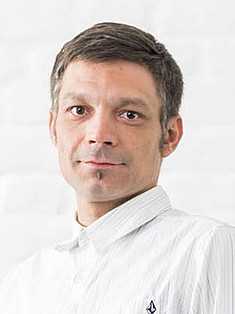
Michael Großauer is a Senior Lecturer and Head of the Academic Area Producing & Creative Industries at the Department of Creative Technologies, University of Applied Sciences Salzburg. He is based at Campus Urstein (Room 323) and serves as a key academic contact for creative technologies and digital media disciplines. Research interests include: Creative Technologies Digital Media Interactive Design Game Development Media Informatics Technology in Creative Industries Contact details: Phone: +43-50-2211-1206 Email: michael.grossauer@fh-salzburg.ac.at
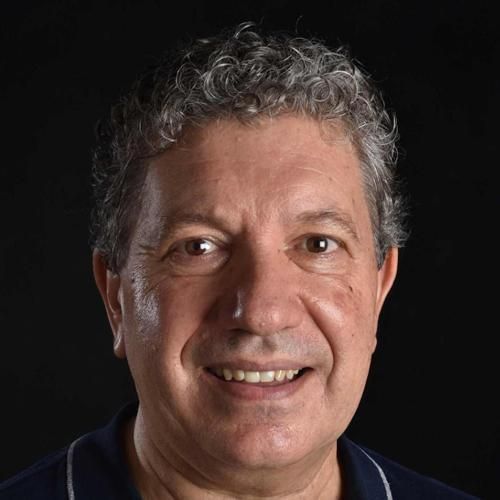
Fernando González Alonso is a Titular Professor (Associate Professor) at the Faculty of Education of the Pontifical University of Salamanca, Spain. He is affiliated with the Institute of Marist Studies and specializes in Didactics and School Organization. His academic career spans over two decades since earning his PhD from the University of Salamanca in 2004 with a dissertation on immigration and schools, specifically analyzing attitudes and evaluations at the Luis Vives University School and proposing an intercultural model for initial teacher training under the supervision of Dr. María Dolores Pérez Grande. Professor González Alonso's research interests focus on Didactics, Educational Organization, Values Education, Intercultural Education, Coexistence and Conflict Resolution, Educational Law, Technology and Education, and Teacher Training. His scholarly work demonstrates a strong commitment to addressing contemporary educational challenges, particularly in the areas of educational diversity, peace education, and the integration of technology in teaching. He has made significant contributions to understanding how educational systems can better serve diverse student populations and promote social cohesion. His recent publications reveal a clear trend toward examining the impact of the pandemic on educational systems, with multiple studies analyzing virtual learning methodologies from parental perspectives. He has also produced substantial theoretical work on integral humanism in education, educational law in rural contexts across Spain and Brazil, and the philosophical foundations of teaching. His scholarship consistently bridges theory and practice, offering concrete methodological proposals for educators while contributing to broader educational discourse. Professor González Alonso is actively involved in two research groups: ICS (Innovation in Social Sciences) and TEC (Technologies, Education and Communication). His work has been published extensively in both Spanish and Portuguese, reflecting his international collaborations, particularly with Brazilian institutions. His research output includes numerous books, book chapters, journal articles, conference papers, and educational resources that have collectively garnered significant academic attention, with over 45,000 public views on Academia.edu and a substantial following among educational researchers.
Helen Hood Scheer is an award-winning documentary filmmaker and tenured Associate Professor in the Department of Cinematic Arts at California State University Long Beach's College of the Arts. She spearheads the creative nonfiction track and serves as internship advisor, winning CSULB's 2023 Distinguished Teaching Award and the 2020 Advancement of Women Award. Education: Stanford University: MFA in Documentary Film and Video, Department of Art & Art History (additional coursework in Business School and d.school) University of California, Santa Cruz: BA with highest honors in American Studies (minor in History, emphasis in Politics and Expressive Culture) Universidad de Madrid: Filosofía A (emphasis in Spanish language, history, and art history) Research Focus: Scheer specializes in cinema verité portraits exploring emotionally complex outsiders who subvert expectations. Her work bridges documentary filmmaking with gender studies, media history, and cultural anthropology, particularly examining Hollywood's representation of sexuality and marginalized communities. She investigates contradictions in human experience through intimate observational techniques. Publication Trends: Her filmography reveals consistent exploration of societal boundaries - from competitive jump rope culture in JUMP! to pharmaceutical ethics in The Apothecary and Hollywood's sexual politics in Body Parts . These works demonstrate evolving technical mastery while maintaining verité authenticity, increasingly incorporating gender analysis and historical context. Honors: 2023 CSULB Distinguished Teaching Award 2020 Advancement of Women Award Student Academy Award for The Apothecary Aspen ShortsFest dual recognition for The Apothecary American Film Showcase selection by U.S. Department of State Sundance funding for Body Parts Mentorship & Professional Development: Scheer organizes documentary film festival trips for students (funded by Hollywood Foreign Press Association), creates master classes with industry professionals, and has guided students to win top awards at the CSU Media Arts Festival including Jury and Audience Awards. Her internship program connects students with entertainment industry professionals through workshops and panel discussions. Production Teams: Through Nutshell Productions, she collaborates with leading cinematographers and editors while serving as Consulting Producer for projects like For Madmen Only and Landfill Harmonic . Her work with the American Film Showcase involves cultural diplomacy through embassy screenings worldwide.
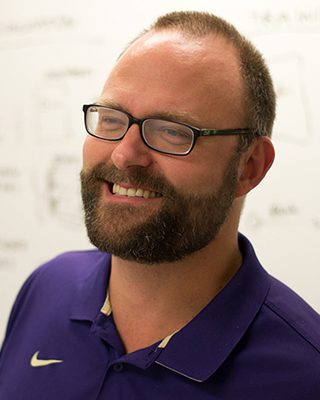
Professor Jacob O. Wobbrock is affiliated with the University of Washington , where he holds a position in the Information School and a courtesy role in the Paul G. Allen School of Computer Science & Engineering . He co-founded the DUB Group and MHCI+D degree , and serves as Interim Director of the MHCI+D program. As director of the ACE Lab and Founding Co-Director Emeritus of the CREATE Center , he leads research in human-computer interaction (HCI) and accessible computing . Education : B.S. in Symbolic Systems (1998), M.S. in Computer Science (2000), Ph.D. in Human-Computer Interaction (2006) Research Focus : Input techniques, performance modeling, mobile and accessible computing, VR, and gesture recognition Awards : ACM Fellow (2021), CHI Academy (2019), NSF CAREER (2010), ICMI/ASSETS/UIST Lasting Impact Awards His 15 most recent articles (2023-2025) explore AI-powered accessibility solutions, tactile 3D modeling, mobile reading adaptations, gesture recognition for motor impairments, and screen reader integration. These works span human-computer interaction , artificial intelligence , biomedical data analysis , and inclusive design in both academic and industry contexts. Scientific honors include the SIGCHI Social Impact Award and AMiner Most Influential Scholar rankings. As an entrepreneur , he co-founded AnswerDash (acquired by CloudEngage) and has contributed to patents and expert witness cases. His teaching and advising have produced doctoral graduates now at institutions like Harvard and CMU, though specific student names are not listed in this profile.
Professor Oleg Golubchikov is a Professor of Human Geography and Director of Postgraduate Research at Cardiff University's School of Geography and Planning. With extensive experience as a consultant to the United Nations Economic Commission for Europe (since 2008) and UN-HABITAT (since 2011), his work bridges academic research and international policy development in urban sustainability. His research focuses on three interconnected strands: Urban and spatial restructuring under market transitions - examining how political and economic imaginaries shape urban trajectories and socio-spatial inequalities, particularly in post-socialist contexts Sustainable urbanism in low-carbon and digital transitions - exploring governance, technology, and equity dimensions of climate-neutral cities and smart urban development Urban and housing development in policy and practice - translating academic insights into actionable policy frameworks for sustainable urbanization Professor Golubchikov's recent publications demonstrate a strong emphasis on energy transitions, spatial justice, and the geopolitical dimensions of urban development. His work critically examines how low-carbon and digital transitions create uneven geographical outcomes, with particular attention to peripheral communities and vulnerable populations. He has edited significant volumes including 'Smart Cities, Energy and Climate: Governing Cities for a Low-Carbon Future' (Wiley, 2024) and produced key UN publications on sustainable urban development. His policy-oriented research has resulted in influential publications for the United Nations including country profiles on urban development, housing and land management, regional guidelines for SDG Voluntary Local Reviews, and the flagship publication 'People-Smart Sustainable Cities.' As an active supervisor, Professor Golubchikov currently mentors PhD students including Daniel Dan, Jue Zhou, Xiaoxi Zhu, and Stephen Croft, with recent completions including Linhao Chen's work on Chinese arts districts and Shuye Wang's research on rural heating practices in northern China. His research has been supported by prestigious funders including the British Academy, ESRC, and UN agencies.
Carmen Maret is an Adjunct Assistant Professor at Aquinas College and Grand Rapids Community College in west Michigan, teaching flute, music theory, music history, popular music, and music business. She holds two Master of Music degrees and maintains an active career as a flutist, composer, and entrepreneur through her internationally recognized Folias Duo collaboration. Research and Professional Focus: Performance and composition of classical, world, and improvised music Argentine tango adaptation for flute/guitar and dance-music integration Music entrepreneurship through self-publishing, podcasting, and digital content Creative Outputs: Produced 5 CDs of original music with Folias Duo, performed across 12+ countries, and developed musicality workshops bridging dancers and musicians. Co-founded Folias Music for sheet music publishing, podcast hosting, and global cultural documentation.
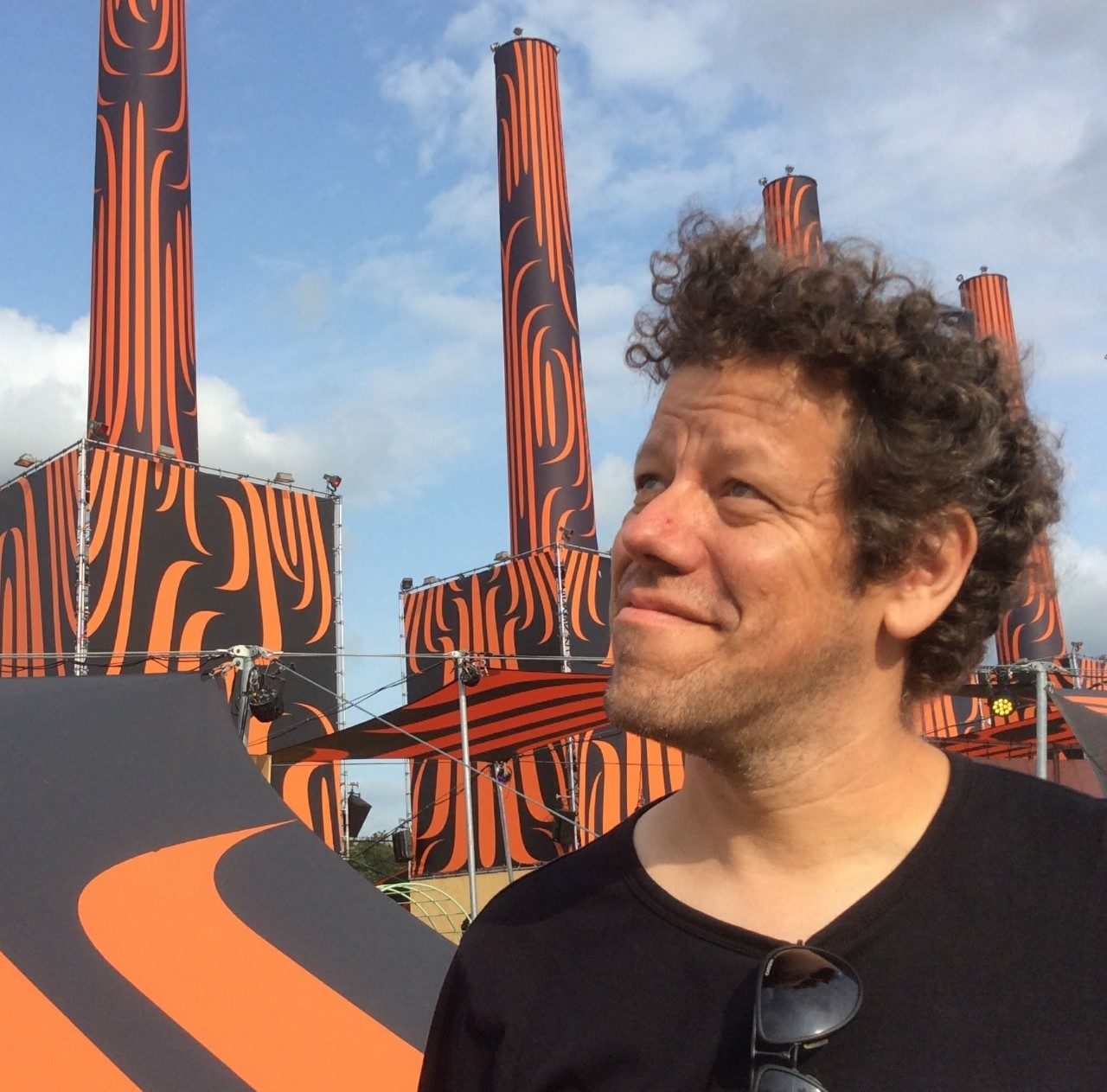
Just van Rossum (born 1966) is a Lecturer at the Royal Academy of Art, The Hague, teaching type design and programming in the Graphic Design department for both the Bachelor Graphic Design program and Master Type and Media program. As an independent type designer, graphic designer, and software developer, he bridges academic instruction with professional practice in visual communication design. Education Graduated from the Royal Academy of Art, The Hague in 1989 under Gerrit Noordzij Research Interests Type Design Typography Graphic Design Software Development for Design Computational Design Coded Animations His work pioneers the integration of programming with type design, creating influential tools that transform digital typography workflows while exploring experimental visual forms through coded animation and generative design systems. Scientific Awards Permanent collection of MoMA, New York (for FF Beowolf typeface) Collaborations and Creative Practice LettError collaboration with Erik van Blokland producing award-winning typefaces Lowlands Festival Identity project with Hansje van Halem Dailydrawbot.tumblr.com generative art initiative Academic Contributions He shapes design education through specialized instruction in type programming and experimental typography, mentoring students in the intersection of traditional design principles and computational techniques within the Graphic Design department's curriculum.
Louise Thanem Wallenberg is Professor of Fashion Studies at Stockholm University's Department of Media Studies. With a PhD in film studies, she combines interdisciplinary approaches across fashion, film, gender, and organizational theory . Her work bridges academic rigor with industry practice through extensive collaborations in Swedish and Nordic screen industries . PhD in film studies Established fashion studies discipline at Stockholm University Teaches qualitative methods and master thesis courses Her research investigates intersections between visual culture, gender politics, and industry structures . Through projects like Kulturell kolonialism and Kvinnor i svensk film , she analyzes how institutional frameworks shape creative labor . Recent publications explore queer representation, ethical fashion, and gendered production hierarchies . Award-winning contributions include analyses of the Swedish film industry's gender dynamics and the cultural impact of directors like Ingmar Bergman. Her 15 most recent publications span topics from 2023 book about women in Swedish cinema to 2018 chapters on fashion's material realities . Key journals include Journal of Scandinavian Cinema and Gender, Work and Organization . Collaborative efforts with researchers like Maria Jansson have produced groundbreaking studies on workplace gender equity and creative labor conditions . She actively connects fashion's cultural narratives to real-world garment worker realities through curatorial and policy interventions.
Zaakir A. Kareem serves as a Lecturer in the Department of Advertising and Public Relations within the College of Communication Arts and Sciences at Michigan State University, teaching ADV 245: Multimedia Commercial Production. He concurrently holds a full-time position as Senior Producer at Uniworld Group Inc. in Detroit, leveraging over 20 years of industry experience to create award-winning campaigns for clients including Ford, Rock Mortgage, Heisman Trophy Trust, and the American Heart Association. His professional focus centers on advertising and multimedia production with deep engagement in cultural storytelling, particularly Black history and heritage as evidenced by Black History Month campaigns for Ford and TD Bank. His work integrates cinematic techniques, celebrity collaborations (e.g., Big Sean, Royce Da 5’9), and community narratives to produce commercials, music videos, and branded content that resonate across diverse audiences. Recognition for his creative excellence includes: Telly Award (Silver) for Ford’s Black Music Month “50th Anniversary of Hip Hop” campaign (2023) Telly Award (Silver) for Rock Mortgage’s BSH AA Campaign (2023)
Josh Neufeld is an Assistant Instructor in the Journalism Department at Michigan State University, where he teaches courses on nonfiction comics (JRN 213) and political cartoons (JRN 313). He is a prominent comics journalist known for creating nonfiction, journalistic comics that offer new perspectives on political and social upheaval and give voice to stories that wouldn't otherwise be heard. Neufeld's research interests center around comics journalism, graphic storytelling for social issues, and the intersection of visual arts with news reporting. His work explores how comics can be used as a medium for reporting on complex social and political issues, with particular focus on health communication through what he calls 'graphic medicine' to explain complex health topics in accessible ways. His creative approach bridges journalism, visual arts, and public health education. His publications demonstrate a strong focus on health disparities, social justice, and innovative storytelling methods. Neufeld's work frequently addresses racial health disparities, community health interventions, and creative approaches to health education. He has produced numerous comics journalism pieces for major publications including The Boston Globe, The Journalist's Resource, and Chicago Sun-Times, often using visual narrative to make complex issues more understandable and emotionally resonant. Graphic Medicine Award (2023) Knight-Wallace Fellowship in Journalism at the University of Michigan (2012) Xeric Foundation grant for his first book (2004) Atlantic Center for the Arts Master Artist (2014) As a cultural ambassador through the U.S. Department of State's Speaker and Specialist program, Neufeld has conducted workshops internationally in the Middle East, Southeast Asia, and Latin America. His teaching extends beyond MSU to institutions including the School of Visual Arts and Queens College, where he shares his expertise in comics journalism and visual storytelling techniques.
David Gauthier is an Assistant Professor in the Department of Media and Culture Studies at Utrecht University's Humanities Institute for Cultural Inquiry. He bridges transdisciplinary research between computational studies, media art, and cultural analysis, with a focus on human-centered artificial intelligence. PhD in Cultural Analysis (University of Amsterdam) Media Arts and Sciences (MIT) Mathematics (Université du Québec à Montréal) His research explores computation as a performative locus through software studies, computational diagnostics, and media philosophy. Key areas include software execution theory, digital archaeology, and creativity post-automation. His artistic practice intersects with academic scholarship, producing commissioned works across Europe and North America. Recent publications interrogate computational processes in Executing (MIT Press) and Coding/Decoding the Archive (Routledge), while artworks like B42 (Surrogate) investigate material computing. Collaborations include the Voice of Machine Theft project with Anna Poletti. Scientific affiliations include: NWO Graduate Programme Fellowship ERC-funded MeLa* project researcher MIT Media Laboratory assistant Hexagram Institute research associate He previously held academic roles at the University of Amsterdam and Banff New Media Institute.
Luke Williams is a Senior Lecturer in the School of Creative Arts, Culture and Communication at Birkbeck, University of London, teaching prose fiction and creative-critical writing across all Creative Writing programmes. He is a founding member of Birkbeck's Compass project supporting individuals with forced migrancy backgrounds in higher education and integrates literary, visual art, and community contexts in his practice. His educational background includes an MA in Creative Writing from the University of East Anglia where he collaborated with Natasha Soobramanien. Williams' research centers on collaborative writing, creative-critical writing, and politics of migration narratives, deeply influenced by Black Studies scholarship. His work actively challenges individualism through community-based literary practices and explores contested spaces between literature and art, as evidenced by projects like Plastic Words at Raven Row. His co-authored novel 'Diego Garcia' (2022) won the Goldsmith's Prize while 'The Echo Chamber' (2011) received the Saltire Award for Best First Book. His publication record from 2014-2018 reveals consistent engagement with migration, community, and political resistance through experimental literary forms in journals including The White Review and BOMB Magazine, demonstrating thematic continuity in exploring collective identity formation. His notable awards include: Goldsmith's Prize (2022) for 'Diego Garcia' Saltire First Novel of the Year (2011) for 'The Echo Chamber' Williams currently supervises two doctoral researchers: Azad Sharma developing a practice-based PhD on Post-Apartheid traumas through creative-critical testimony, and Shaniqua Harris. He previously supervised Lily Dunn to completion on hybrid literary memoir and healing, consistently integrating critical discourse with creative narrative in his supervisory approach. He maintains active community engagement through Compass project initiatives, previously co-founding Akwaaba's storytellers' group in Hackney that produced collaborative texts performed at Stoke Newington Literary Festival and published in 'Tales of Two Londons', alongside his ongoing work with the Plastic Words events series.
Anxo Xose Angueira Viturro (b. 1961) is a full-time Lecturer in the Department of Galician and Latin Philology at the University of Vigo , Faculty of Philology and Translation, where he teaches Galician and Portuguese philologies. A renowned philologist, poet, novelist and essayist, he serves as president of the Rosalía de Castro Foundation since June 2012 and was elected a numbered academician of the Royal Galician Academy in October 2023. Education: Degree in Hispanic Philology, University of Santiago de Compostela PhD, University of Vigo, 2006 – thesis "Bretagne, esmeraldina eo sistema literario galego" Research & Creative Focus: Angueira’s work lies at the intersection of Galician and Portuguese literary studies , translation and cultural studies , and Rosalian studies . He has published extensively on Rosalía de Castro’s oeuvre and on modern Galician poetry and narrative, producing critical editions, essays and creative works that have shaped contemporary Galician letters. Awards & Distinctions: Premio Café Dublín 1996 for the story collection Bágoas de facer illas Premio Xerais 1999 for novel Pensa nao Premio Rebulir da Cultura Galega 2021 for lifetime cultural contribution Elected Académico de Número , Royal Galician Academy, 2023 Leadership & Service: President, Rosalía de Castro Foundation (since 2012) Coordinator, Eusebio Lorenzo Baleirón Poetry Prize Member of editorial boards and contributor to literary journals such as A Trabe de Ouro , Revista de estudios rosalianos and Nós Diario Laboratory & Research Group: He collaborates with the BiFeGa Research Group in Literary and Cultural Studies, Translation and Interpretation at the University of Vigo, fostering interdisciplinary projects on Galician literature and culture.
Pascual Santos Lopez is a Professor at the University of Murcia , specializing in the Cultural History of Technology within the History Moderna, Contemporánea y de América department. He is affiliated with the History of Science, Medical Documentation and Health Promotion research group and the Spanish Society for the History of Science and Technology . As a member of the Fray Pasqual Salmerón Center for Historical Studies and co-editor of the Andelma magazine, he merges academic research with public engagement through blogs like Ingenio y Técnica and Revista Andelma . Education: Ph.D. in Comparative Social History from the University of Murcia. Master in The Modernization of Spain between Europe and Latin America . Technical Industrial Engineer. Research Interests focus on the Industrial Heritage of Spain's Mediterranean regions , particularly through the lens of Enlightenment Thought and technological patents . His work explores how machines , inventors , and industrial practices shaped social and cultural narratives in Murcia and beyond. He investigates the gender dimensions of technological history, highlighting women's contributions to traditionally male-dominated fields like the esparto industry . Academic Contributions include co-authoring studies on topics such as Spanish industrial patents , maritime trade routes , and technological crises . His Google Scholar profile lists over 30 publications, including analyses of historical patents , machine inventors , and industrial adaptations in Spain from 1878-1966. Projects include the long-term study Wit and Technology in Spain 1878-1966 , which examines how technological creativity intersected with social change . He also leads Historia Local y Regional en las Aulas , promoting the integration of regional technological history into educational curricula. Collaborations with scholars like Manuela Caballero González and Francisco Cobos Arteaga have produced significant research on industrial families and technical migration in Murcia. His work often bridges academic research with public history through digital platforms and community projects.
Jesse Wright serves as a Teaching Assistant Professor of Journalism at the Reed School of Media and Communications, West Virginia University, appointed in February 2020 as a Mellon Foundation-funded practitioner in residence. He teaches beat reporting and contributes as a visual/audio editor for 100 Days in Appalachia, a digital publication housed at the WVU Media Innovation Center. Wright earned his bachelor's degree in journalism from West Virginia University after moving from South Africa in 1996, where he witnessed the end of Apartheid. His professional background includes serving as copy desk chief at the Dominion Post and news director/executive producer at West Virginia Public Broadcasting for programs including Inside Appalachia and Legislature Today . His research centers on community documentary storytelling and regional multimedia journalism , with emphasis on Appalachian communities. Wright co-developed a trans-disciplinary minor in community documentary storytelling with Professor Joel Beeson and integrated 100 Days in Appalachia into curriculum with Professor Dana Coester. His work spans collaborative projects like Appalachia Health News and the Ohio Valley ReSource , addressing democratic processes and health issues through visual/audio narratives. Scientific Awards: No scientific awards or fellowships were documented in the source material. Wright's academic contributions include program development through the Mellon Foundation residency and leadership in editorial collaborations. While specific student advising details are absent, his curriculum innovations directly impact journalism education. He maintains active partnerships with the WVU Media Innovation Center, West Virginia Public Broadcasting, and regional news consortia to bridge academic training and professional media practice. He operates within the WVU College of Creative Arts and Media ecosystem, leveraging the Media Innovation Center for 100 Days in Appalachia while advancing documentary storytelling as both pedagogical framework and community engagement tool across the Appalachian region.