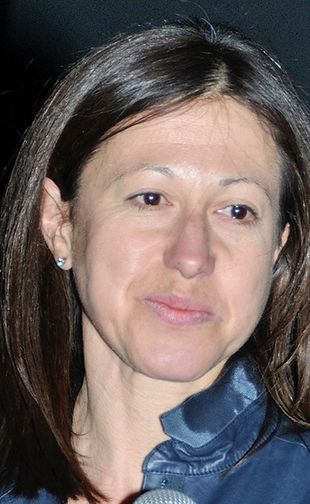
Helena Pavletić is an Associate Professor at the Faculty of Educational Sciences (University of Primorska), affiliated with the Department of Classroom Teaching. She specializes in Croatian language studies, lexicography, bilingualism, and syntax. Her research focuses on terminology analysis, dialectology, and educational linguistics, with notable contributions to phraseology, religious terminology, and maritime language studies. She teaches multiple Croatian language courses at undergraduate and graduate levels, emphasizing communication competence in professional environments. Her academic work spans over 20 years, producing influential studies on Croatian-Italian language contact, vertical bilingualism in Međimurje dialect regions, and historical analysis of 19th century children's poetry. Key areas of interest include lexicographical treatment of polysemic terms, metaphorization in nautical terminology, and syntactic features of Croatian media language. Dr. Pavletić's recent research highlights include investigations into geographical terminology's cultural significance, comparative syntactic analysis of daily newspapers, and exploration of dialect creativity in children's written works. She actively contributes to academic discourse through regular publications in linguistic journals and conference presentations. Professional activities include serving as lecturer-in-charge for numerous courses across undergraduate, graduate, and doctoral programs. Her work integrates theoretical linguistic analysis with practical educational applications, particularly in multilingual education contexts and regional dialect preservation.
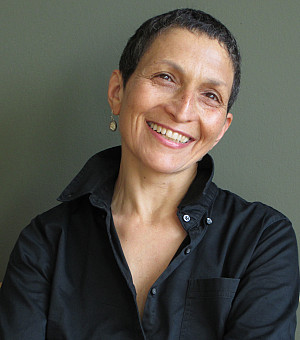
Ivaylo Seferov is a Lecturer in the Department of Production and Post-Production at the Faculty of Screen Arts, National Academy of Dramatic Arts and Film 'Krastyo Sarafov' since 2018. His academic roles include teaching modules such as '3D Animation Software', 'Visual Concept for 3D Animation', and 'Storyboarding of Text for 3D Animation'. He graduated from the same institution under Prof. Todor Dinov in Animation Directing and specialized further under the TEMPUS program in Greece. Education: Graduate of National Academy of Dramatic Arts and Film 'Krastyo Sarafov' in Animation Directing (Prof. Todor Dinov) Specialization via TEMPUS program in Greece His professional career spans over two decades, including founding Creative Studio Ltd. (1997–2022) as manager, producer, and director. Notable achievements include creating Bulgaria's first 3D animated film 'Bodyguard' (1997), rebranding major TV networks like Nova TV and BNT, and contributing to AAA game titles like Harry Potter and Spiderman 3. He has received multiple industry accolades, including first prizes at FARA and Rekalam Expo festivals. His research and creative work focuses on integrating technical mastery with artistic vision in 3D animation, commercial production, and visual storytelling.
Dr. Vivienne Glance holds the position of Honorary Research Fellow within the School of Humanities at The University of Western Australia. Her academic profile is characterized by a unique interdisciplinary approach that merges creative arts practices with scientific themes, particularly focusing on cross-cultural dialogues and environmental sustainability. This role positions her at the intersection of artistic innovation and scholarly research in the humanities. Her educational background includes a BSc in Botany from Imperial College London. This scientific foundation informs her creative work, creating a distinctive blend of empirical knowledge and artistic expression. Glance's research interests span Creative Writing , Theatre , and Transcreation , exploring the intersections of science and art through natural history narratives, climate crisis reflections, and vocal music. Her work actively contributes to UN Sustainable Development Goals by fostering environmental awareness through artistic mediums. She has produced 35 research outputs across diverse formats including poetry, theatrical works, and edited volumes. Analysis of her recent publications reveals a strong trend toward environmental humanities, with recurring themes of ecological interconnectedness, scientific metaphor in creative expression, and cross-cultural perspectives on climate change. Her work consistently bridges poetic form with scientific inquiry, particularly in botany and natural systems. She has been recognized with prestigious awards: Dorothy Hewett Literary Award (2023) for exceptional literary contribution Playwrights Realm International Scratchpad Series 2021-2022 (2021) supporting theatrical innovation No information is available regarding student advising or research grant funding in the provided materials. Her creative practice appears to operate independently of formal laboratory structures, focusing instead on collaborative artistic networks and literary communities as evidenced by her editorial work and performance-oriented outputs.
Tatyana Bronstein is a Lecturer in the Department of Film & Television at Boston University. She is also an independent director/producer based in Boston, specializing in documentaries that challenge stereotypes and advocate for social justice. Her work has been showcased at prestigious festivals like the Dance on Camera Film Festival and Worldfest. Education: MFA in Film and Media Art (Emerson College), MA in Documentary (Emerson College), BS in Marketing (UMass Boston). She completed master classes at FAMU (Prague) and Kiev's School of Visual Arts. Research focuses on human-centric storytelling, breaking racial/religious stereotypes, and amplifying marginalized voices. Her films emphasize emotional journeys and visual innovation. Awards include the 2016 Cambridge Arts Grant and Worldfest's Best Ethnic/Cultural Documentary. Active in advocacy through Women in Film & Video New England. Projects like Make Me Dance and From Russia, My Love exemplify her commitment to transformative narratives. Current lab/creative work involves advancing media diversity initiatives.
Helen Vatsikopoulos is a Lecturer in Journalism at the University of Technology Sydney (UTS) and an Industry Fellow in the School of Communication. With a 30-year career in journalism, she transitioned to academia in 2011, teaching digital journalism and mentoring students in practical media projects. A Walkley Award winner and recipient of two UN Australia Media Peace Prizes, her career includes roles at the ABC, SBS, and the Australia Network, covering major international events like the fall of the Berlin Wall and the Rwandan Genocide. Her research focuses on identity, nationalism, memory studies, and media diversity. She completed a Doctorate of Creative Arts (2018) exploring autoethnography and nationalism. Her teaching emphasizes collaboration with external partners, including social justice initiatives and photojournalism projects. She co-founded an Asian-Australian media startup in 2020, supported by grants. Key awards include the Walkley Award for Best International Reporting (1992) and two UN Media Peace Prizes. She has produced award-winning documentaries, including Agatha’s Curse and Getting Gehry .
Debra Schifrin is a Lecturer in Management at the Stanford Graduate School of Business , specializing in improv-based pedagogy and corporate training. She co-created Stanford’s first improv-based MBA course, Spontaneous Management , and Creativity in the Business Ecosystem . Her work focuses on enhancing leadership, communication, and team agility through experiential learning. Education: MBA, Harvard Business School BA, University of California, Berkeley Research & Expertise: Combines marketing strategy, improvisation techniques, and storytelling to improve organizational creativity and decision-making. Published over 80 Stanford business cases and a 2024 Harvard Business Review article on leadership communication. Experience: Former National Public Radio reporter/director/producer (1994–2005), contributing to Peabody Award-winning series Corporate trainer since 2006 Case writer and management coach at Stanford GSB (2008–2019) Labs/Teams: Coaches the Stanford GSB improv performing team, the “Archuckle Fellows,” and designs workshops for global corporations.
Laura Kaminsky serves as Professor of Music and Head of Composition at Purchase College's School of the Arts, where she teaches in both the arts management program and classical composition program within the Conservatory of Music. She previously held leadership roles including Chair of Music at Cornish College of the Arts (1999-2004) and Dean of Purchase College's Conservatory of Music (2004-2008), and has maintained significant artistic positions at New York City institutions including 92nd Street Y, Town Hall, and Symphony Space. Her research and creative work centers on contemporary classical composition with particular focus on chamber opera, LGBTQIA+ representation in music, and multidisciplinary cultural programming. Kaminsky's compositional output explores transgender narratives, environmental themes, and social justice issues through innovative musical structures. Notable projects include the groundbreaking chamber opera As One (2014), which has become the most frequently produced contemporary opera in North America, and the Crossroads/Rising Tide environmental project. Her scientific recognition includes six ASCAP-Chamber Music America Awards for Adventurous Programming and the Polish Ministry of Culture National Heritage 2010 Chopin Award. Major funding has come from the National Endowment for the Arts, Koussevitzky Music Foundation, Opera America, New York State Council on the Arts, Aaron Copland Fund, and Chamber Music America among others. Kaminsky maintains active artistic direction of Musicians Accord, the new music collective she co-founded in 1984, which operates in residence at City College of New York. Her recent projects include commissions for pianist Mackenzie Melemed (2024's Threnody ), the Utah-based Dance in the Desert featuring Desert Portal (2024), and the chamber opera Hometown to the World (2022). She has received extensive support from over 15 major arts organizations for her innovative programming and composition work.
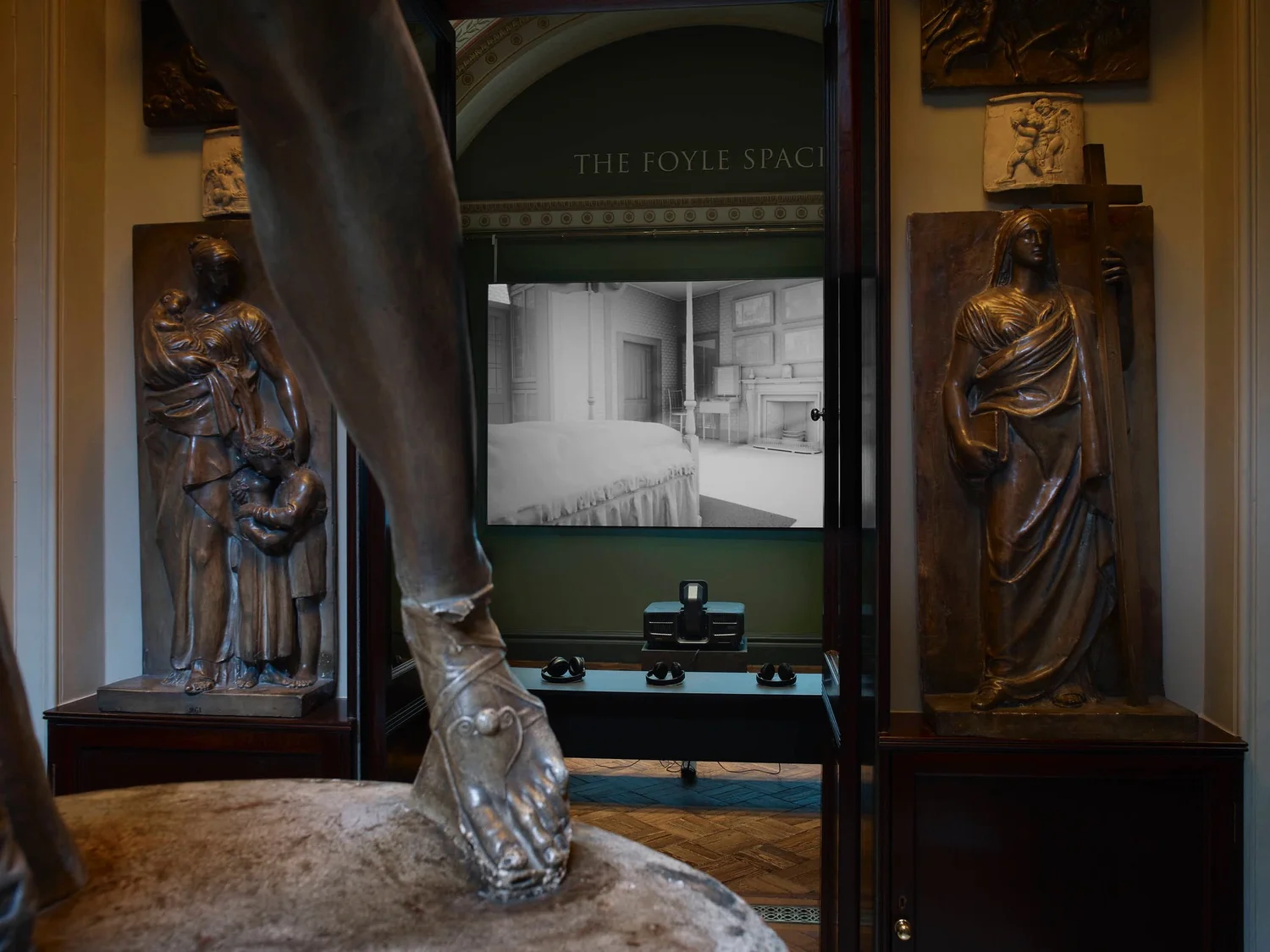
Anne-Marie Creamer is a Senior Lecturer at Central Saint Martins , part of University of the Arts London. She co-leads the Making Better social prescribing hub and contributes to health-related art research through PPIP board membership at the Bone Cancer Trust. As both artist and academic, she integrates cinematic and theatrical forms historical archival research community health perspectives into her practice. Her artistic research focuses on: Spectral conjuring of overlooked histories Reclamation of personal narratives in institutional spaces Embodiment and spatial perception through lived experience Creative memorialization of historical figures Notable projects include the 2022 solo exhibition Dear Friend, I Can No Longer Hear Your Voice at Sir John Soane’s Museum, which used CGI animation Photogrammetry Sound design Historical lyric adaptation to reconstruct Eliza Soane’s bedchamber. This work, co-produced with Animate Projects, attracted 28,000+ visitors and received Art Monthly coverage. Award highlights include: Derek Hill Scholarship (British School at Rome) Evelyn Williams Drawing Fellowship Multiple Arts Council England grants Ofsted 'Outstanding' teaching recognition UAL Teaching Awards Her practice spans film, animation, drawing and writing , with international exhibitions across Europe Asia North America and academic publications in Pirandello Studies , The Drawing Book (Black Dog Publishing), and Future Now: 100 Contemporary Artists (Aesthetica Magazine). Creamer’s pedagogical work emphasizes research-led art practice and interdisciplinary health collaborations , with past roles including Acting Course Director for MA Drawing at Wimbledon College of Art.
Dr. Raquel Campos Valverde serves as a Postdoctoral Research Fellow at the School of Media and Communication, University of Leeds, where she investigates digital music cultures through the MUSICSTREAM project. Her work bridges Popular Music studies, Ethnomusicology, and Internet Research with a focus on user experiences in streaming ecosystems and social media environments, particularly within Spanish cultural contexts. Her academic foundation includes: PhD in Arts and Creative Industries from London South Bank University (2019) MMus in Ethnomusicology from SOAS, University of London BHons in Sociology from Universidad de Granada, Spain Campos Valverde's research critically examines how digital infrastructures shape musical experiences, with current emphasis on cultural inequality in streaming taxonomies and algorithmic recommenders. She employs digital ethnography to analyze music circulation across social platforms, exploring moral economies of sharing and imagined listening communities. Her scholarship reveals persistent tensions between platform design and cultural diversity, highlighting how technical architectures reinforce systemic biases in music discovery and consumption. Analysis of her publication trajectory shows evolving focus from social media musicking (2018-2022) toward critical platform studies (2023-2025), with consistent attention to ethical implications of digital music environments. Recent work demonstrates sophisticated interdisciplinary methodology combining interface analysis, ethnographic observation, and critical algorithm studies. Her recognition includes: 2019 Andrew Goodwin Memorial Postgraduate Prize from IASPM UK/Ireland Campos Valverde maintains active engagement with academic communities through editorial contributions to the Open Encyclopedia of Anthropology and IASPM Journal. Her prior teaching role at King's College London demonstrates commitment to knowledge dissemination, while her current research directly addresses urgent questions about equity in digital cultural infrastructure. The MUSICSTREAM project positions her at the forefront of critical platform studies within music scholarship. As core researcher in the MUSICSTREAM initiative, she collaborates with interdisciplinary teams to deconstruct streaming platform architectures, producing actionable insights for more inclusive music technology design through rigorous ethnographic and critical technical approaches.
Zoe Mellick is an academic researcher at Queensland University of Technology (QUT), specializing in sustainable fashion, value chain analysis, and ethical practices in the textile and apparel industry. Her work primarily focuses on Australian cotton and wool value chains, examining sustainability metrics, labor practices, and circular economy models within these global supply networks. She is affiliated with QUT's Faculty of Creative Industries, Education & Social Justice, specifically within the School of Design, where she contributes to research on fashion industry sustainability and ethical production practices. Mellick completed her PhD at Queensland University of Technology in 2022 with a thesis titled "Walking The chain: The social construction of Australian cotton's sustainable value," establishing her expertise in cotton value chain sustainability. Her doctoral research provided foundational insights into how sustainability value is perceived and communicated throughout the cotton production and distribution process. Dr. Mellick's research spans multiple critical areas in sustainable fashion. She investigates how sustainability value is communicated and constructed throughout global value chains, particularly focusing on Australian cotton and wool industries. Her work examines labor and human rights issues downstream in textile supply chains, the impact of hyperconsumerism during festive seasons, and circular economy models for textile production. She also explores the application of emerging technologies like AI in design studios and sustainable fashion education. Her research often bridges academic theory with practical industry applications, working closely with stakeholders across the fashion value chain from producers to retailers. Analysis of her publication history reveals a clear trajectory toward addressing systemic issues in fashion sustainability, with increasing focus on labor rights, circular economy models, and the practical implementation of sustainable practices in the Australian fashion industry. Mellick's work demonstrates growing sophistication in methodology and scope, moving from foundational value chain mapping to addressing complex social and environmental challenges within the industry. Her recent publications show particular attention to the intersection of technology, sustainability, and ethical production. Dr. Mellick frequently collaborates with colleagues across disciplines, particularly with researchers like Alice Payne, Tiziana Ferrero-Regis, and Rowena Maguire. Her research has been supported by projects with the Cotton Research and Development Corporation (CRDC), indicating substantial grant funding for her work on cotton value chains. She appears to be actively mentoring students and early-career researchers through collaborative projects focused on sustainable fashion practices. Her work with the QUT Centre for Justice suggests involvement in interdisciplinary research teams addressing ethical labor practices and social justice issues within the fashion industry. Her research contributes significantly to QUT's position as a leader in Australian fashion sustainability research, with practical implications for industry stakeholders, policymakers, and consumers seeking to understand and improve sustainability practices in the textile and apparel sector. Dr. Mellick's work helps bridge the gap between academic research and real-world applications in sustainable fashion production and consumption.
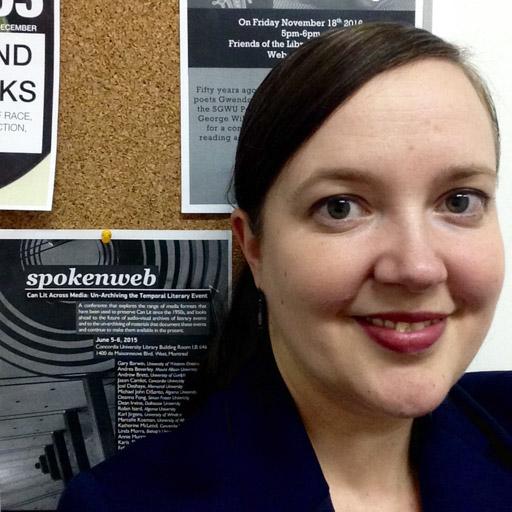
Katherine McLeod, PhD is an Assistant Professor at Concordia University, specializing in Canadian and Indigenous literatures through sound, performance, and archival studies. Her research explores feminist theory, radio history, and public humanities, with a focus on audio-based methodologies in literary scholarship. Education: PhD (2010) and MA (2005) from the University of Toronto and British Columbia, respectively Awards: SSHRC Insight Development Grant, SpokenWeb Postdoctoral Fellowship, TransCanada Institute Postdoctoral Fellowship McLeod's work bridges academic research with artistic practice, including dance-poetry collaborations and archival audio projects. She co-edited CanLit Across Media and co-hosts The SpokenWeb Podcast , producing its ShortCuts series. Her teaching spans courses on Quebec/Montreal writing, Canadian poetry, and innovative scholarly publishing methods like podcasting. Research interests center on sonic approaches to literary archives, emphasizing embodied listening, gendered voices, and the afterlives of recorded performances. She investigates how audio preservation reshapes literary history, particularly through CBC Radio collections. Scientific Awards: SSHRC Insight Development Grant for 'Literary Radio: Developing New Methods of Audio Research' SpokenWeb Researcher-in-Residence (2020-2021) Key Collaborations: Co-host of The SpokenWeb Podcast with Jason Camlot Co-editor of CanLit Across Media with Jason Camlot Interdisciplinary dance-poetry projects with Emily Christina Murphy
Travis Knox serves as Associate Professor of Producing Film and Media Arts at Chapman University's Lawrence and Kristina Dodge College of Film and Media Arts. He concurrently directs Chapman Entertainment, a feature film studio facilitating alumni transitions into professional filmmaking, and participates in Dodge College's alumni governance. His academic foundation includes: Chapman University, Bachelor of Fine Arts Knox's professional practice centers on narrative production across documentary and feature formats, with emphasis on cultural storytelling, biographical cinema, and industry transition pathways. His work demonstrates mastery in packaging high-profile projects while maintaining artistic integrity through multiple production phases from development to distribution. Recent output reveals dual trajectories: socially engaged documentaries like Breaking Bread exploring communal identity through food, and historical sports narratives exemplified by Behind The Indianapolis 500, showcasing his versatility in handling both intimate character studies and large-scale event documentation. His career accolades include: Emmy Award for 'Life With Judy Garland: Me and My Shadows' Academy Award for Best Picture for 'Chicago' Award for 'Breaking Bread' As an educator, Knox mentors alumni through Chapman Entertainment's production pipeline while teaching producing courses that integrate decades of Hollywood experience. His pedagogical approach bridges academic theory with practical studio execution, emphasizing real-world problem solving in creative development and financing. Chapman Entertainment operates as both teaching studio and professional incubator, connecting current students with alumni networks and industry partners to produce market-ready feature films through hands-on collaboration.
Sebastian Grama is an Associate Professor at the Faculty of Philosophy, University of Bucharest, where he has served on the teaching staff since 1998 and held his current rank since 2009. His academic work spans philosophy, literature, and performing arts, with notable contributions to cultural discourse through festivals and media. Education Doctorate in Philosophy, University of Bucharest (1998) Research Focus Grama's scholarship centers on metaphysics , philosophy of the imaginary , aesthetics , history of modern philosophy , and rhetoric . His work consistently explores intersections between philosophical concepts and literary expression, particularly examining language structures, silence as philosophical phenomenon, and rhetorical strategies in cultural contexts. This interdisciplinary approach manifests in both academic publications and creative outputs. Publication Trends Analysis of his 13 documented academic articles (1999-2017) reveals sustained engagement with semiotic theory, philosophy of language, and applications of philosophical frameworks to literary analysis. His later works increasingly incorporate economic and utility-based perspectives while maintaining core interests in metaphysical structures and rhetorical traditions, reflecting evolution from classical philosophy toward contemporary cultural critique. Cultural Leadership As founder of HESTUGMA Cultural Association (2012), Grama organizes the 'Gustul pentru Filosofie' colloquium (8 editions by 2018) and 'Respir Shakespeare' festival (9 editions by 2018). He has produced over 200 radio programs for Radio România Cultural and authored theatrical works including 'Sisif' (2015) and 'iCarus' (2016), demonstrating active integration of academic philosophy with public cultural practice.
Loran Dunn is a BAFTA-nominated Senior Lecturer in Filmmaking at Manchester Metropolitan University's School of Digital Arts (SODA). As founder of Manchester-based production company Delaval Film, she specializes in live action, stop-motion animation, and documentary work with international broadcast partners like BBC, Film4, and SKY. Her 2024 feature film 'Hoard' won four Venice Film Festival awards and received six BIFA nominations. Key research contributions include: 2023 investigation into risk-taking cinema and diverse storytelling through 'Hoard' 2022 experimental stop-motion work 'Salvation Has No Name' 2021 exploration of underrepresented voices in film 2023 industry analysis article 'Putting the Spotlight on Producers' Scientific awards and recognition: Venice Film Festival Most Innovative Film BAFTA nomination Six BIFA nominations Named among Creative UK's Top 50 Most Creative Companies She actively develops emerging talent through programs like BBC New Creatives and Sky Arts' ShortFLIX.
Dr. Marianne Patera is a Senior Lecturer in Animation at Manchester Metropolitan University's School of Digital Arts. With over 15 years of higher education experience, she supervises postgraduate dissertations and PhD theses while maintaining a practice-based research focus. Senior Lecturer in Animation PhD in Art & Design from Glasgow School of Art MPhil in Advanced 2D/3D Motion Graphics Her research bridges 3D animation, VR, and color theory with applications in education and cross-disciplinary fields: 3D visualization for learning VR environments for creative writing Automotive interface design Cultural identity in digital art Scientific awards include: Senior Fellow of the Higher Education Academy (SFHEA) As a practitioner, she produces commercial animations for: Architectural visualization Medical imaging Interactive simulations VR game environments Current collaborations span computer science, psychology, engineering, and medicine. Her business ventures include 3D design and printing services.