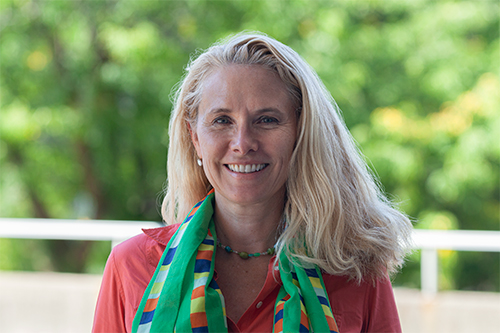
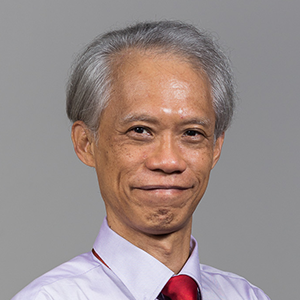
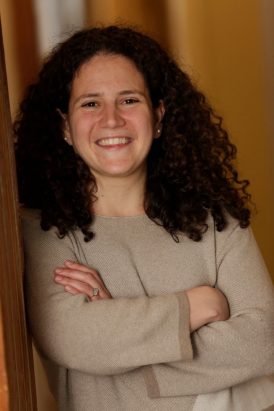
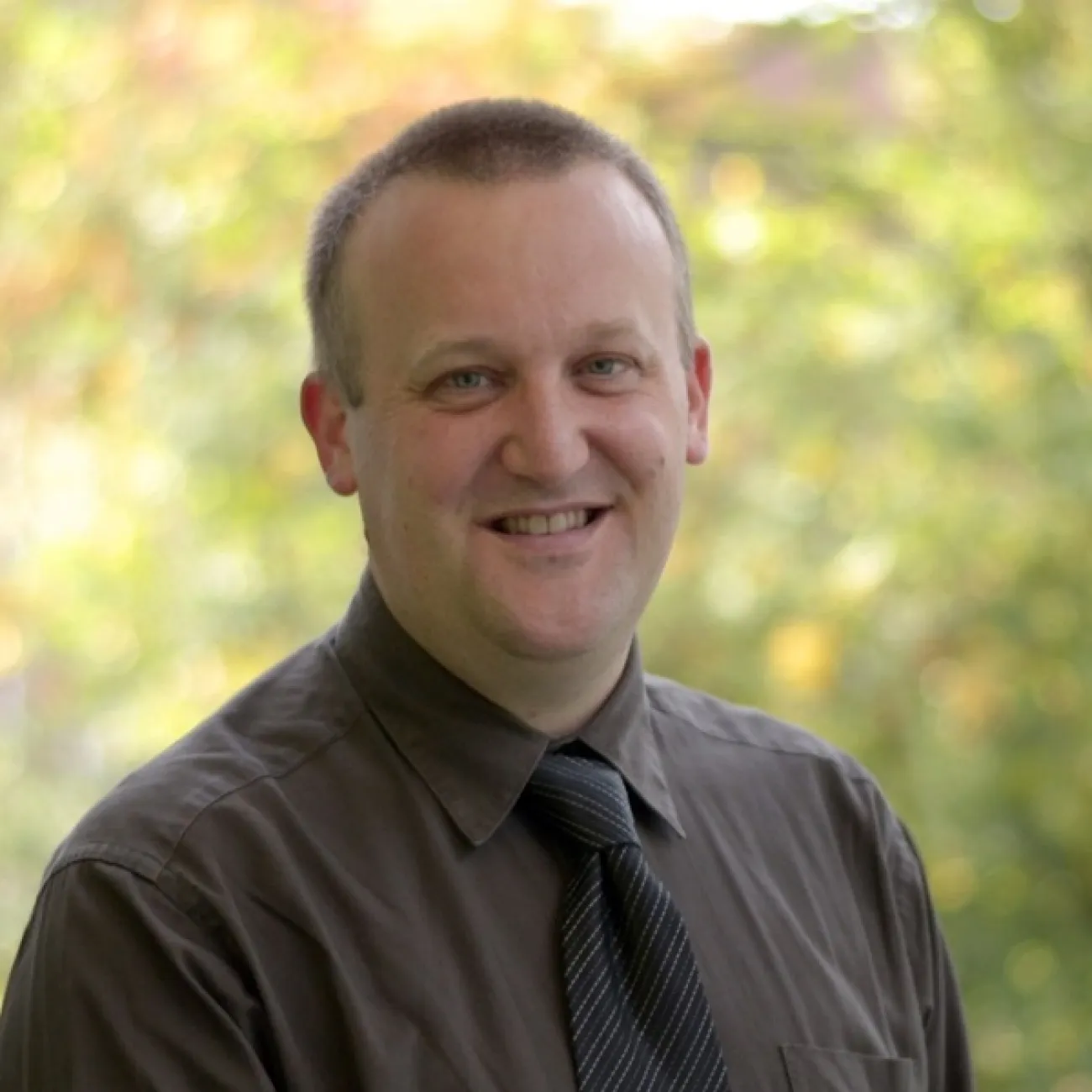
Associate Professor Lisa McGrath specializes in academic writing and English for Research and Publication Purposes (ERPP) at Sheffield Hallam University. She holds a PhD from Stockholm University and leads initiatives such as the SIoE 'Writing (better) for international publication' course and doctoral writing workshops. Her research focuses on genre pedagogy, L2 writing task design, and metacognition in academic contexts. She collaborates with institutions like Chalmers University and serves on editorial boards for journals including Journal of English for Academic Purposes . McGrath is Deputy Director of the White Rose Doctoral Training Partnership and editor of the Sheffield Institute of Education blog. Education: PhD in Education from Stockholm University Her teaching spans MA Education, MA TESOL, and EdD programs, covering topics like research project design and English for Specific Purposes. Current research projects include multi-genre pedagogy and disciplinary grading criteria analysis with Prof. Raffaella Negretti and Dr. Helen Donaghue. McGrath also supervises doctoral students in areas such as disability studies, BAME belonging, and TESOL. Recent publications emphasize embedding writing development in early-career lecturers' practices and innovating L2 writing task design. She actively engages in professional networks like BALEAP and delivers international training on academic writing for publication.
Dr. Bill Baker is a Senior Lecturer in Drama, Visual Arts & Music Education at the University of Tasmania's School of Education, College of Arts, Law and Education (CALE). With a career spanning 35 years, he specializes in arts education, technology-enhanced learning (TELT), and the scholarship of teaching and learning (SoTL). His research focuses on youth resilience through arts participation, particularly in community youth orchestras, and the preparation of pre-service teachers in arts pedagogy. Dr. Baker holds a Doctor of Education (RMIT, 2002), a Master of Education (Arts Administration, RMIT, 1997), and a Bachelor of Music Education (University of Melbourne, 1988). He has received multiple awards, including Senior Fellow of the Higher Education Academy (2019) and Honorary Life Member of the Australian Society for Music Education (2021). His funded projects include the Tasmanian Community Fund Grant and Australia-ASEAN Council grants for youth orchestra research. His peer-reviewed publications (over 40) address arts education, online teaching methodologies, and the social impacts of music participation. Current research collaborations include partnerships with the Tasmanian Youth Orchestra and institutions like University of Southern Queensland and The University of Melbourne. Dr. Baker supervises HDR students in arts participation, leadership, and teacher education reforms. Scientific Awards: Vice Chancellor's Teaching Excellence Award Vice Chancellor’s Citation for Outstanding Contribution to Student Learning CALE Teaching Excellence Award Senior Fellow, Higher Education Academy (UK) Honorary Life Member, Australian Society for Music Education Supervision & Teaching: Dr. Baker has supervised numerous HDR students, including completed PhDs on contemporary music pedagogy and Masters theses on visual arts education. He coordinates units in the Master of Teaching and Bachelor of Education degrees, emphasizing technology integration and reflective practice.
Professor Barley Norton is a distinguished ethnomusicologist and filmmaker at Goldsmiths, University of London, where he serves as Director of the Asian Music Unit (AsMU), convenor of the MA in Music (Ethnomusicology), and leader of the Goldsmiths Gamelan Group. His academic career focuses on the music and culture of Southeast Asia, particularly Vietnam, where he has conducted extensive field research. His research interests span ethnomusicological filmmaking and theory, the cultural politics of musical practice, discourse on cultural heritage and music revival, music and religious experience, music and emotion, music and gender theory, music censorship, improvisation, and performance and modal theory. Norton's academic work is deeply informed by his practical musical engagement; during his field research in Vietnam, he learned to play the dan day and dan nguyet lutes, and he also performs Sundanese music from Indonesia on the kacapi zither and in the gamelan degung orchestra. Norton's scholarly output reveals significant trends in Southeast Asian music studies, particularly focusing on the intersection of traditional musical practices with contemporary political and social contexts. His work consistently examines how musical traditions navigate processes of canonization, heritage safeguarding, and creative innovation within rapidly changing cultural landscapes. A notable thread throughout his research is the relationship between music, ritual, and identity in Vietnamese cultural contexts, with increasing attention to environmental concerns and climate change impacts on musical heritage in his most recent work. American Musicology Society's 2014 Ruth A. Solie Award for 'Music and Protest in 1968' Commendation - Intangible Culture Film Prize at the Royal Anthropological Institute's 12th International Festival of Ethnographic Film for 'Hanoi Eclipse: The Music of Dai Lam Linh' Professor Norton has supervised numerous doctoral students including Christopher Hanby (Applied Ethnomusicology and Jèrriais language revitalization), Lin Lin (Creative Realization in the Compositional Process), Clare Salaman (Reimagining the trumpet marine), and Jasmine Hornabrook (Transnational networks in London's Tamil diaspora). His research has been generously funded by the Getty Foundation, Arts and Humanities Research Council, British Academy, and ASEASUK, supporting projects on Vietnamese music revival and audiovisual archiving. He has also undertaken consultancy work with UNESCO, the British Council, and Vietnamese cultural institutions on music heritage projects. As a key figure in the field, Norton directs Goldsmiths' Asian Music Unit, which serves as a hub for research, performance, and teaching focused on Asian musical traditions. The unit facilitates cross-cultural musical dialogue and supports field research in Asia, while the Goldsmiths Gamelan Group provides hands-on experience with Indonesian musical traditions. His leadership extends to international scholarly organizations, having served as Chair of the British Forum for Ethnomusicology (2015-2018) and as a member of the Society for Ethnomusicology Council (2017-2020).
Robert Hopkins is a Professor of Philosophy at New York University, affiliated with the Department of Philosophy in the College of Arts & Science. He holds a PhD from Cambridge (1993), an MPhil from University College London (1989), and a BA from Cambridge (1986). His research focuses on aesthetics, philosophy of mind, and philosophy of representation, with notable works like The Profile of Imagining exploring sensory imagination and its relation to perception and memory. Dr. Hopkins has led departments at NYU (2016–19) and the University of Sheffield (2008–11), and served as Honorary Secretary of the Mind Association and President of the European Society for Aesthetics. His 2014 Templeton Foundation-funded project examined historical and aesthetic understanding. Awards include the Philip Leverhulme Prize. Research Interests : Aesthetics of visual arts (sculpture, photography, film), philosophy of mind, moral epistemology, and interdisciplinary cognitive science. Publications : Over 50 articles and books, including Picture, Image and Experience (1998) and recent works on episodic memory and artistic style.
Lyn van Swol is a Professor of Communication Science at the University of Wisconsin–Madison, with office hours available Tuesdays and by appointment. Her research focuses on factors influencing information acceptance during interactions, including group information sharing, advice utilization, persuasive messaging, chatbot communication, and environmental communication strategies. She holds a Ph.D. in Social Psychology with a minor in Quantitative Psychology from the University of Illinois (1999), an M.A. in Social Psychology from the same institution (1995), and a B.A. in Psychology (summa cum laude) from Loyola University (1993). Dr. van Swol's current projects examine emotional contagion in chatbot interactions, group discussion effects on climate change attitudes, and applying advice communication research to environmental contexts like forestry, aquatic invasive species, and PFAS mitigation. Her work emphasizes how peer groups establish norms through discussion to encourage pro-environmental behaviors. Her scholarly recognition includes multiple top paper awards from the National Communication Association (NCA) and International Communication Association (ICA), notably the Dennis Gouran Research Award (2007, 2018, 2021) and top three paper awards in group communication spanning 2005-2022. She co-edited the Oxford Handbook of Advice (2018) and teaches courses including Communication in Complex Organizations (CA 575), Theory and Practice of Persuasion (CA 368), and Theory in Communication Science (CA760).
Geoff Ward is Professor of African and African American Studies at Washington University in St. Louis, with faculty affiliations in Sociology and American Culture Studies. As director of the WashU & Slavery Project , he leads initiatives with the Universities Studying Slavery consortium. His scholarship examines historical racial violence, transitional justice, and reparative memory work through grants from the National Science Foundation National Institute of Justice Ford Foundation Mellon Foundation Research interests focus on racialized violence legacies , anti-racist memory practices , and democratic crime control . Recent publications analyze lynching continuities in Southern schools, coroner narratives in postbellum justice, and environmental impacts of historical racism. Creative projects include Memory for the Future public humanities lab Monumental Anti-Racism StoryMap Racial Violence Archive digital resource Scientific awards include Michael J. Hindelang Book Award (2013) Outstanding Book Prize, History of Education Society (2013) Committed to engaged scholarship through National Monument Audit advisory board Mayor's Commemorative Landscape Taskforce Reparative Justice Coalition of St. Louis
Associate Professor Leow Wee Kheng is affiliated with the Department of Computer Science at the School of Computing, National University of Singapore . His career spans over three decades with expertise in medical image analysis , computer vision , and surgical simulation . Ph.D. in Computer Science, University of Texas at Austin (1994) M.Sc. in Computer Science, National University of Singapore (1989) B.Sc. in Computer Science, National University of Singapore (1985) His research focuses on medical image analysis for craniofacial surgery and stroke diagnosis, 3D modeling of anatomical structures, and computer vision techniques like robust PCA and texture analysis . Recent work includes knee joint motion modeling and forearm rotation simulation for clinical applications. Key trends in his 2017-2025 publications involve skull reconstruction algorithms , multi-objective optimization for digital media, subject-specific biomechanical modeling , and low-rank decomposition techniques in visual computing. Collaborations include institutions like Singapore General Hospital and National Taiwan University Hospital . Scientific Awards : CAIP 2017 Best Paper Award 2007 Andrew P. Sage Best Transactions Paper Award Faculty Teaching Excellence Award (AY2015/16) Annual Teaching Excellence Award (AY2015/16) He has mentored numerous students in medical imaging , computer vision , and biomedical modeling . Current and former advisees include Chen Ying , Vineta Lum Lai Fun , and Long Huizhong (Ph.D.).
Patrick (Pat) Reilly is an Assistant Professor in the Organizational Behaviour and Human Resources Division at the University of British Columbia's Sauder School of Business. His research focuses on the social dynamics of occupations, creativity, career development, and communities of practice, with a particular emphasis on cultural production industries like stand-up comedy and television. He employs qualitative methods in his investigations. Reilly holds a B.A. from Emory University, M.A. degrees from New York University and the University of California Los Angeles (UCLA), and a Ph.D. in Sociology from UCLA. His work explores themes such as non-standard work arrangements, authenticity in creative industries, and the enforcement of community norms. Recent research highlights include analyzing team composition in television creative processes (2024), examining authenticity and norm enforcement in stand-up comedy (2018), and studying career trajectories in cultural production (2017). His publications bridge organizational theory with sociological perspectives, contributing to understanding labor dynamics in creative sectors. No scientific awards are explicitly listed in the provided materials. Teaching responsibilities include courses on negotiations and power & politics in business programs. His research has implications for understanding labor markets, creative industries, and organizational behavior in winner-take-all environments. Reilly's work often intersects with questions of institutional logics, cultural capital, and the socio-economic structures shaping artistic careers. His current projects likely continue exploring these themes through ethnographic and qualitative methodologies.
Hao-Wen Dong is an Assistant Professor in the Department of Performing Arts Technology at the University of Michigan, with an affiliation to the Computer Science and Engineering Department. His research focuses on Human-Centered Generative AI for content creation, emphasizing music, audio, and video domains. He holds a Ph.D. in Computer Science from UCSD, advised by Julian McAuley and Taylor Berg-Kirkpatrick. Affiliations: University of Michigan (Primary), UCSD (Ph.D.), National Taiwan University (B.S.) Research Pillars: Generative AI models for new domains, AI-assisted creative tools, and multimodal content creation His work spans music generation (e.g., MuseGAN), audio synthesis (e.g., ViolinDiff), and multimodal systems (e.g., TeaserGen). He has led over 25+ publications in top venues like ISMIR, ICASSP, and ICLR. He advises students in interdisciplinary projects and teaches courses on AI Music and Generative AI for Music/Audio Creation. Notable awards include the Doctoral Award for Excellence in Research (2024) and Rising Stars in AI (2024).
Deborah Beim is an Assistant Professor in the Department of Political Science at the University of Michigan, affiliated with the College of Literature, Science, and the Arts (LSA). She previously taught at Yale University before joining Michigan. Her research focuses on American politics, judicial politics, and applied game theory, particularly examining interactions between the U.S. Supreme Court and Courts of Appeals. She holds an office in 7767 Haven Hall. Her research interests include judicial behavior, legal innovation, and the strategic dynamics within the U.S. court system. Key topics include Supreme Court policy agenda-setting, ideological influences on judicial decisions, and legal uniformity across federal courts. Methodologically, she employs game theory to model judicial interactions and decision-making processes. Beim’s work has been published in top journals like the American Journal of Political Science and Journal of Politics . Her recent articles analyze topics ranging from appellate court panel effects on death penalty outcomes to the signaling mechanisms in en banc review processes. Notably, she explores how legal actors like judges and lawyers strategically shape judicial outcomes through procedural and ideological tactics. While no scientific awards are explicitly listed, her extensive publication record reflects recognition in academic circles. She has no listed advisees, though her role as a faculty member suggests potential mentorship roles not detailed here. No grants or labs are mentioned in the provided materials.
Professor Mark Weal is a faculty member in the Department of Electronics and Computer Science at the University of Southampton. He holds roles as Co-Director of the Web Science Institute, Director of the Centre for Doctoral Training in Web Science Innovation, and Web Science Trust Fellow. His research focuses on digital health interventions, behavioral change technologies, and semantic web applications. Notably, he co-leads the LifeGuide project, a £45M initiative developing online health interventions for conditions like diabetes, cancer, and respiratory illnesses. Research interests include social media analytics for disaster management, semantic web infrastructures, and information systems design. He has supervised multiple PhD students in web science and digital health domains. Professor Weal has received significant grant funding from bodies like MRC, EPSRC, and the European Commission. Key achievements include over 45 million pounds in research funding and leadership in interdisciplinary projects. His work spans technical innovation and societal impact, addressing challenges in healthcare accessibility and digital infrastructure governance.
Prof. Dr. Luis Aguiar is an Associate Professor in the Department of Business Administration at the University of Zurich, Switzerland, and a DSI Professor at the University’s Digital Society Initiative (DSI). He holds a PhD in Economics from Universidad Carlos III de Madrid and previously served as a Research Fellow at the European Commission’s Joint Research Center. His expertise lies in the economics of digitization, focusing on digital markets, media industries, and the impact of technological change on firms and consumers. Educational Background: PhD in Economics, Universidad Carlos III de Madrid MSc in Economics, Finance and Management, Universitat Pompeu Fabra Bachelor’s in Economics, University of Geneva Research Focus: Luis investigates how digitization transforms consumer behavior and market structures in digital media sectors, with particular attention to online platforms, music streaming, and intellectual property policies. His work employs advanced econometric methods to analyze welfare effects, platform power dynamics, and content distribution trends. Key Contributions: His research has been published in top journals like the Journal of Political Economy and Information Systems Research , and has received significant media coverage from outlets such as The Economist and Forbes . He currently co-edits Information Economics and Policy and leads the Swiss National Science Foundation-funded project on online platforms' power dynamics. Professional Roles: DSI Professor, Digital Society Initiative (UZH) Fellow of the CESifo Research Network Labs & Teams: His research is anchored in UZH’s Department of Business Administration and the DSI, collaborating with interdisciplinary teams to address societal challenges posed by digital transformation.
Adrian Vågberg is a doctoral student at KTH Royal Institute of Technology's PHYSICS OF LIGHT AND MATTER department. His research focuses on Artificial Intelligence , particularly the intersection of Human-AI Collaboration and Meme Analysis . He contributed to a groundbreaking study on AI-generated humor, published in 2025, analyzing how humans and large language models (LLMs) co-create memes. The work highlights AI's productivity alongside human creativity in crafting culturally resonant content. His work emphasizes Quantitative evaluation of meme creativity/shareability Human-AI iterative design processes Cultural context in digital humor As part of the Interactive Media Technology program, his research bridges computational creativity and social media dynamics. No specific awards or grants are listed, though his work is part of KTH's broader AI research initiatives.
James Hadley is an Associate Professor in Russian and Slavonic Studies and holds the Ussher Assistant Professorship in Literary Translation at Trinity College Dublin. He directs the MPhil in Literary Translation program and leads the Irish Research Council-funded QuantiQual Project. His research focuses on translation studies, particularly indirect translations, employing digital humanities and empirical methods to explore previously unanswerable questions. He is based at the Trinity Centre for Literary and Cultural Translation, fostering public engagement through events and initiatives. Dr. Hadley’s work bridges literary translation, technology integration, and computational analysis. He actively recruits doctoral/postdoctoral researchers interested in digital humanities applications in translation studies, especially regarding indirect translation. His research has addressed topics such as machine translation impacts, sentiment classification, and historical translation practices in Japan. He can be contacted at hadleyj@tcd.ie for collaborative opportunities. His academic contributions span theoretical frameworks (e.g., the Concatenation Effect Hypothesis) and practical applications like OCR tools for historical texts. The Trinity Centre serves as a hub for interdisciplinary translation studies, emphasizing both scholarly rigor and public accessibility.
Kostalena Michelaki is an Associate Professor in the School of Human Evolution and Social Change at Arizona State University. Her research focuses on integrating geochemical, archaeological, and anthropological approaches to understand material culture production, exchange networks, and human-environment interactions across diverse geographic and temporal contexts. Her work spans prehistoric Europe, Mesoamerica, and North America, with particular emphases on ceramic technology, provenance studies, and the application of archaeometric methods. Methodologically, she specializes in elemental analysis of materials (ceramics, lithics, and metals), spatial analysis of archaeological landscapes, and experimental archaeology. She critiques traditional typological approaches by emphasizing the importance of integrating physico-chemical data to reconstruct ancient production systems and social dynamics. Recent projects include geochemical sourcing of Stonehenge sarsen stones, analysis of La Quemada ceramics in Mexico, and investigations into European copper distribution in 17th-century Canada. Her research consistently highlights how material objects encode histories of human creativity, resource management, and cultural exchange. Michelaki's publications emphasize methodological rigor in data interpretation, advocating for transparent analytical frameworks to avoid over-interpretation of archaeological materials. She collaborates extensively with geologists, chemists, and Indigenous communities to contextualize technical data within socio-cultural narratives.