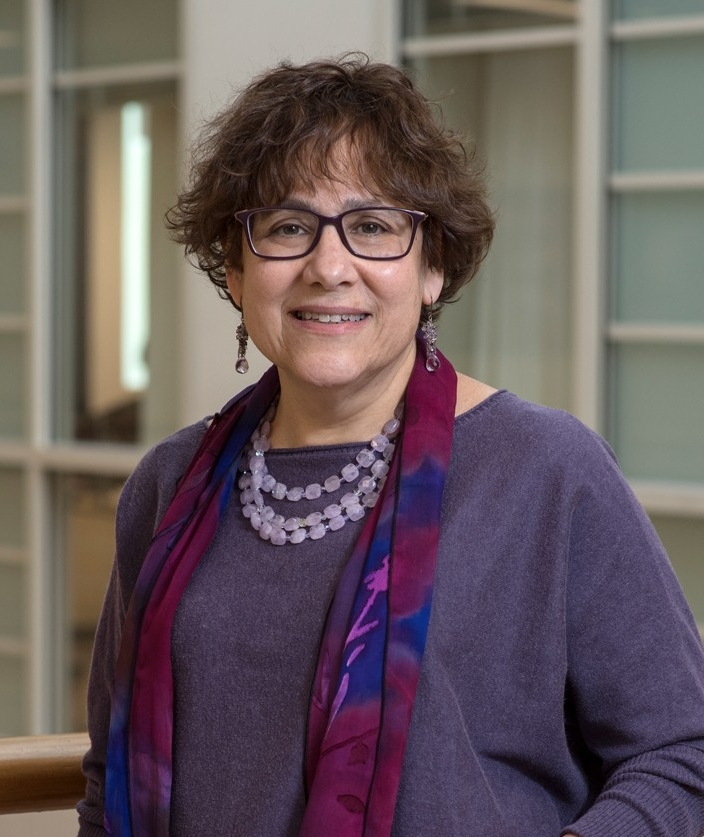
Felicity McLure is a Senior Lecturer in Education at Charles Darwin University. Her research explores science education, STEM integration, learning environments, and systemic school change. She develops tools to support students with special educational needs and promotes gender equity in STEM. Recent projects include multimodality in STEM education and validating instruments for assessing stereotypes. Awards include the NARST Travel Scholarship (2023) and Reviewer Excellence Award (2024). She serves on the Northern Territory Board of Studies and contributes to curriculum development.
Dr. Christian Hoßbach is a researcher at the Chair of Human Resource Management and Business Governance in the Faculty of Law and Economics at Martin-Luther-Universität Halle-Wittenberg. His work bridges HR practices with innovation management, focusing on creativity in hybrid work environments. PhD in Economics (summa cum laude, 2023) M.Sc. in Human Resources Management (2017) B.A. in Business Administration (2015) Research spans: - Creative self-efficacy development through training - Hybrid work collaboration dynamics - Data-driven self-leadership approaches - Systemic research methodology applications Recent publications show a trajectory from creativity theory to practical AI integration in 2024-2025. Key journals include Research in the Sociology of Organizations and International Journal of Entrepreneurship and Innovation Management . • Transferpreis Halle for regional innovation collaboration • Dr. Hans Riegel Foundation grant for pandemic-era creativity research • Springer Best Masters publication recognition
Giovanna Castellano is a Full Professor at the University of Bari Aldo Moro, Italy, where she serves in the Department of Computer Science. She coordinates the Computational Intelligence Laboratory (CILab) and has been active in academia since at least May 2015. Her extensive publication record with 354 publications demonstrates her significant contributions to the fields of Computational Intelligence, Computer Vision, and Explainable AI. Dr. Castellano earned her PhD in Computer Science from the University of Bari Aldo Moro between September 1988 and March 1993. Her academic journey has led her to become a prominent researcher in artificial intelligence applications across various domains including healthcare, education, and digital art analysis. Her research interests span a wide range of computational intelligence topics, with current focus on Computer Vision, Deep Learning, Explainable AI (XAI), and Fuzzy Systems. Dr. Castellano's work demonstrates a strong interdisciplinary approach, applying AI techniques to solve real-world problems in healthcare diagnostics, precision agriculture, educational analytics, and cultural heritage preservation. Her research consistently emphasizes model interpretability, recognizing the importance of transparent AI systems, particularly in critical domains like healthcare where trust in AI decisions is paramount. Analysis of her recent publications reveals a consistent trajectory toward more interpretable and explainable AI systems across multiple application domains. Her work spans medical imaging analysis, stress prediction in educational contexts, art analysis, and precision agriculture. A notable trend is the integration of large language models with computer vision techniques to enhance both performance and explainability of AI systems, particularly in medical and artistic contexts. Excellent Presentation Award at 1st International Conference on Soft Computing and Intelligent Systems 2002 Dr. Castellano leads the Computational Intelligence Laboratory (CILab) at the University of Bari, where she supervises research projects and collaborates with numerous researchers including Gabriella Casalino, Gennaro Vessio, and Gianluca Zaza. Her research group has secured various grants for projects in healthcare AI, educational data mining, and digital art analysis. The CILab research team works on diverse projects including medical diagnostics using AI, analysis of digital art collections, educational data mining, and precision agriculture applications. Their work often involves collaboration with healthcare institutions, cultural organizations, and agricultural technology companies, demonstrating the practical impact of their theoretical research.
Norman J. Jacknis is an Adjunct Professor at Columbia University's School of Professional Studies in the Technology Management department. He also serves as a Government Fellow at the Center for Technology in Government (CTG) and holds Senior Fellow positions at both the Intelligent Community Forum and the National Association of Counties. With extensive leadership experience in both public sector technology and academia, Dr. Jacknis brings practical government technology expertise to his teaching and research. Dr. Jacknis's research focuses on the intersection of technology, government, and community development, with particular expertise in e-government, smart cities, citizen engagement, and broadband infrastructure. His work examines how technology can transform public sector operations while addressing the digital divide and creating more equitable access to digital services. He has published extensively on technology adoption in government, network effects in public policy, and the future of work in the digital economy. His recent publications reveal a strong trend toward analyzing technology adoption patterns, systems thinking in problem-solving, and the practical implementation of innovation in government settings. Dr. Jacknis frequently explores how theoretical concepts from network science, behavioral economics, and innovation studies can be applied to real-world government challenges, particularly in the context of urban development and public service delivery. Government Technology Magazine's Top 25 Doers, Dreamers and Drivers who, using technology, broke bureaucratic inertia to better serve the public Dr. Jacknis has advised numerous government entities including Westchester County (where he served over ten years as CIO and commissioner), the National Association of Counties, the US Conference of Mayors, and New York State government. His practical experience informs his academic work, creating a valuable bridge between theory and practice in public sector technology management. He has also been instrumental in developing community-based broadband initiatives and promoting the concept of intelligent communities worldwide. As an educator, Dr. Jacknis has pioneered innovative teaching methods in the online environment, particularly during the pandemic. His graduate course on new product/service creation at Columbia University has served as a testing ground for flipped classroom techniques, interactive video content, and effective use of Zoom for workshop-style learning. His approach emphasizes practical application of concepts with strong student engagement.
Jaskirat Sodhi is a Senior Lecturer in the Department of Mechanical and Industrial Engineering at New Jersey Institute of Technology (NJIT). He holds a Ph.D. in Mechanical Engineering from NJIT and a B.S. in Aeronautical Engineering from Punjab University. His work focuses on innovative teaching methodologies, inclusive design in engineering education, and improving student engagement through active learning strategies. He has developed courses such as Introduction to Computer Aided Design (ME 430) and Analysis and Design of Machine Elements (MET 301) , integrating hands-on projects and technology tools like MATLAB and 3D printing. Dr. Sodhi’s research interests include curriculum development for first-year engineering students, embedding ethics into introductory courses, and addressing challenges in online education during the pandemic. He has pioneered initiatives like the GIFTS program to enhance self-development through engineering design projects, and Milestones-Based Learning frameworks to boost student performance. His work often involves collaborative projects with librarians and interdisciplinary teams to improve research and writing skills among undergraduates. He has presented extensively at workshops on topics such as competition-based drone education, cheating prevention strategies, and inclusive design modules. His earlier research in materials science includes studies on light-activated shape memory polymers, reflecting his background in mechanical engineering.
Tony Clelford serves as Head of Design Practice at the School of Design within the University of Greenwich's Faculty of Liberal Arts and Sciences. With 15+ years in architectural practice, he's an ARB examiner and has developed policy for ARB/RIBA. Former roles include chairing the Association of Professional Studies Advisors in Architecture. His research examines new architectural practice models, strategic management of architectural services, and timber-framed housing systems. Publications focus on architectural education methods, sustainability in design, and globalization's impact on the profession. Key publications analyze collaborative learning assessment (2006), low-carbon refurbishment (2010), and global architectural practice dynamics (2010). His work consistently bridges theoretical frameworks with practical industry applications.
Dr. Alwin de Rooij is an Assistant Professor in Creativity Research at Tilburg University's Department of Communication and Cognition, and Associate Professor in Situated Art and Design at St. Joost School of Art and Design. His work bridges (neuro-)psychology, computer science, and fine arts to explore creativity mechanisms, particularly focusing on human-AI co-creation, AI bias in art, and surprise in design processes. Education: PhD in Creativity Science (City St George’s, University of London), MSc in Media Technology (Leiden University), BFA in Autonomous Art (ArtScience Interfaculty, The Hague). Research interests include creativity support tools, co-creation with AI, mental imagery, and the role of surprise in creative thinking. He develops technologies like AI, VR, and embodied interfaces to enhance art/design practices. Notable awards: Multiple Best Paper Awards (2015,2018,2021) and an Honorable Mention (2023). Active in conferences like ACM Creativity and Cognition, and European Conference on Cognitive Ergonomics.
Shaun Murphy is a Professor in the Department of Educational Foundations at the University of Saskatchewan. He serves as Associate Dean (Undergraduate Programs, Partnerships, and Research) and has held roles such as Department Chair and Graduate Chair. Born and raised on Treaty Six territory, he has over two decades of experience as an elementary school teacher in rural and urban settings. His research focuses on relational narrative inquiry, curriculum making, rural education, and teacher-student-family dynamics. Education: Ph.D., University of Alberta, 2004 (Elementary Education) M.Ed., University of Alberta, 2000 (Elementary Education) B.Ed., University of Alberta, 1985 (Elementary Education) Research Interests: Shaun’s work explores narrative inquiry, teacher education, familial curriculum making, rural education, and Indigenous pedagogies. He emphasizes ethical relationality, particularly in assessment practices involving Indigenous communities. His approach integrates storytelling, self-study methodologies, and collaborative praxis. Service and Outreach: He holds editorial roles with journals like Teaching and Teacher Education and LEARNing Landscapes . He also engages with organizations like the Spadina Early Learning Foundation and collaborates internationally, including guest lectures at Brazilian universities. Advising and Grants: Shaun has supervised numerous graduate students, many of whom have received awards for their work. His mentorship focuses on narrative inquiry and Indigenous education. He actively seeks grants to support community-based research and pedagogical innovation. Labs/Teams: Collaborates with interdisciplinary teams on projects involving Indigenous knowledge integration, rural school partnerships, and narrative-based teacher training initiatives.
Stavros Stavrou is a Lecturer in the Department of Educational Foundations at the University of Saskatchewan. His research focuses on Indigenizing mathematics education through narrative inquiry, place-based education, and the intersection of Euro-Western and Indigenous perspectives. Key themes include anti-racist pedagogy, decolonizing curricula, and spiritual dimensions in learning. He explores Cree epistemologies and methodologies, emphasizing cultural revitalization and holistic educational practices. His work bridges mathematical theory with sociocultural contexts, addressing challenges in curriculum design and policy. He has published extensively on tensor analysis in algebraic structures, showing interdisciplinary connections between education and pure mathematics. Collaborative research with Indigenous educators highlights community-driven approaches to educational equity. Stavrou’s recent publications (2020–2024) emphasize narrative methodologies to critique and reimagine mathematics education systems. His articles consistently address the imperative of ethical relationality and tribal critical theory in supporting Indigenous students. No scientific awards or grants are explicitly mentioned in the provided text. His research extends across institutional and community partnerships, though specific teams or labs are not detailed here.
Gabriella Pocalana is a Teaching Professor at the Department of Mathematics of the Università degli Studi di Pavia (UNIPV), Italy. She specializes in mathematics education, focusing on teacher professional development, inquiry-based learning, and inclusive pedagogical strategies. Her research explores the intersection of mathematics with interdisciplinary STEAM activities, emphasizing teacher documentation practices and the role of artifacts in teaching. She actively contributes to initiatives promoting equity in mathematics education and the adaptation of hybrid learning environments. Her work bridges theoretical frameworks (e.g., praxeologies) with practical classroom applications, addressing challenges in teacher beliefs and curriculum design. Education: Not explicitly detailed in provided texts. Her research interests center on mathematics educators’ documentation work, the evolution of teaching practices through collaboration, and the design of inquiry-based tasks. She investigates how teachers’ beliefs influence their instructional choices and how hybrid environments can enhance students’ conceptual understanding through example production and conjecturing. Her studies also highlight the importance of inclusive methodologies to engage diverse learners. Her recent articles analyze teacher communities’ praxeologies, the role of digital/non-digital transitions, and metaphors for evolving teacher roles in technology-driven education. She advocates for equitable access to inquiry activities and explores meta-didactical frameworks to refine educational strategies. Awards: None explicitly mentioned in provided texts. In terms of professional development, she collaborates with researchers and educators to build inquiry communities, addressing gaps between research and practice. Her work on “Strane Storie Matematiche” demonstrates innovative storytelling approaches to enhance engagement. She also develops resources like “carte di aiuto” to support inclusive classroom participation. Her involvement in interdisciplinary projects (e.g., STEAM activities) emphasizes mathematics’ role in cross-disciplinary contexts, while her writings on “hybrid environments” reflect current trends in blended learning.
Nicola De Pisapia is a Researcher in the Department of Psychology and Cognitive Sciences at the University of Trento . His work adopts an interdisciplinary approach, collaborating with neuroscientists, psychologists, art historians, and artists to study brain activity during creative processes and states of consciousness. Notable collaborations include the MART of Rovereto, integrating art and neuroscience to explore human cognition. Research Interests De Pisapia's research spans neuroscience , cognitive science , psychology , and art . He investigates the neural dynamics of creativity, mindfulness, and altered states of consciousness, often using virtual reality and neuroimaging to understand how technology and contemplative practices influence cognitive and emotional processes. Article Trends His publications reflect a focus on psychedelics , virtual reality , and mindfulness , with recent work on immersive environments for archaeological studies, AI-driven consciousness research, and the neural bases of artistic creativity. Keywords across his work include neuroscience , virtual reality , and clinical psychology , emphasizing interdisciplinary insights.
Dr. Naveen Gudigantala is Associate Professor of Business in the Operations and Technology Management department at the University of Portland. His research focuses on the design of decision support systems, e-commerce success factors, and ethical considerations in technology, particularly regarding AI applications in business. His recent scholarship examines AI implementation frameworks, business value optimization through artificial intelligence, and factors influencing organizational adoption of emerging technologies. Current projects address sustainability-profitability tradeoffs, AI maturity models, and decision frameworks for machine learning workflows. Earlier work investigated ethical dimensions of technology including algorithmic fairness in fintech, consumer behavior in gray markets, and misinformation detection strategies. He maintains parallel interests in digital marketing effectiveness, IT talent management, and healthcare information systems.
Elisa Valenzuela, Ph.D., is an Assistant Professor of Management at the University of Saint Joseph (USJ), affiliated with the School of Arts, Sciences, Business, and Education’s Department of Business Administration since 2019. She holds a Ph.D. in Industrial-Organizational Psychology from the Pontifical Catholic University of Puerto Rico and additional degrees in Industrial Psychology and Psychometrics. Prior to USJ, she taught at institutions including Siena College and the Universidad del Este. Her expertise spans organizational development, human resources, and strategic management. Research focuses include learning strategies in corporate training, workplace innovation, and team dynamics. She has consulted for diverse sectors including banking, manufacturing, and non-profits, emphasizing high-performance teams and employee engagement. Publications and blog posts address topics like fostering innovation, emotional management in disciplinary actions, and team failure causes. She actively contributes to professional organizations and community initiatives, such as the Sila Calderón Foundation.
Janet Kolodner is a retired Professor of the Practice at Boston College's Lynch School of Education and Human Development, in the DFE Department of Formative Education. She holds a Ph.D. and M.S. from Yale University and a B.A. from Brandeis University. Her research focuses on learning environments, design-based learning, and case-based reasoning, with notable contributions to educational technology and science curriculum development. Affiliations: Boston College (Retired Professor of the Practice), Former Regent's Professor at Georgia Tech. Education: Ph.D., Yale University M.S., Yale University B.A., Brandeis University Research Interests: She pioneers approaches to integrating technology in education, emphasizing design-based learning, project-based instruction, and cognitive models of learning. Her work bridges computer science (case-based reasoning) and education, with applications in science curricula like Project-Based Inquiry Science (PBIS). Awards: Includes Inaugural Fellow of the International Society of the Learning Sciences, Regents’ Professor Emerita, and Career Award from the same society. She has also served as Editor-in-Chief Emerita of The Journal of the Learning Sciences. Key Contributions: Developed early case-based design systems (e.g., Archie-2), explored creativity in design (JULIA, ALEC), and created middle-school science curricula. Her recent work focuses on virtual environments and fostering scientific dispositions in learners.
Gemma Wheeler holds the position of Design Researcher at Lab4Living, an interdisciplinary research cluster at Sheffield Hallam University, focusing on Design-led approaches in health and wellbeing. Her work emphasizes creative, empathic methods to foster collaboration between patients, families, and healthcare professionals. She completed a PhD between the Glasgow School of Art and the Queen Elizabeth National Spinal Injuries Unit (funded by the AHRC Collaborative Doctoral Award) and returned to Sheffield Hallam University in 2017. Her education includes an integrated masters degree in Product Design from Sheffield Hallam University (2013). She has extensive experience in Participatory Design within complex healthcare settings and specializes in co-design workshops to address unmet health needs, develop healthcare products/services, and facilitate knowledge mobilization across diverse stakeholders. Key research interests include: Creative co-design methods as bridges between clinical practice and patient perspectives Politics and power dynamics in multi-stakeholder healthcare partnerships Adaptive design processes sensitive to community needs Translation of design research into real-world healthcare solutions Her current role involves bid writing, data analysis, and graphic design support for healthcare initiatives. She serves as the main point of contact for the Starworks Network's Proof of Concept projects, a Department of Health-funded initiative addressing children's prosthetic needs, and supports Devices for Dignity, an NIHR-funded MedTech Cooperative. Grant-related activities include securing further NIHR funding for Starworks and managing collaborative projects across academia, industry, and clinical sectors. Labs/Teams: Lab4Living (Sheffield Hallam University), Devices for Dignity (NIHR MedTech Co-operative at Royal Hallamshire Hospital), and Starworks Network leadership.