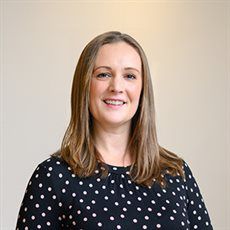
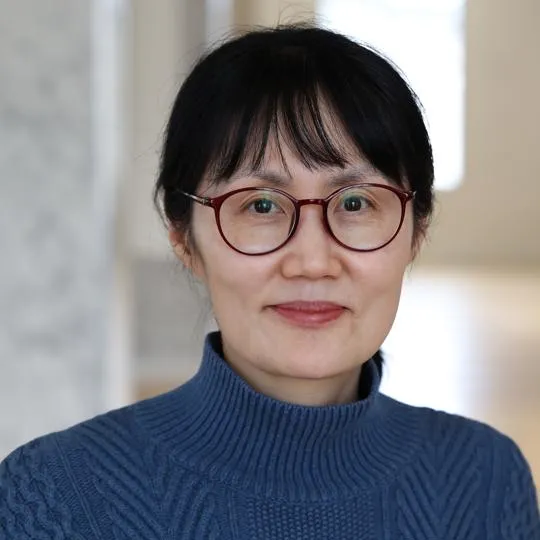
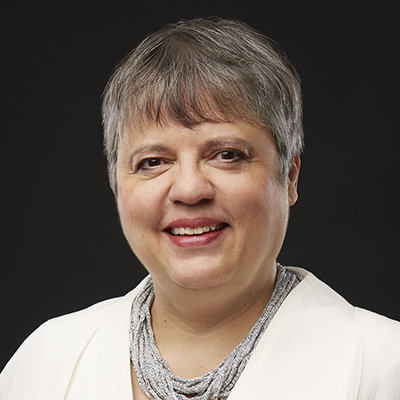
Linda Morrice is a Professor of Education and Migration at the School of Education and Social Work, University of Sussex. She specializes in the intersection of refugee/migration studies with education, focusing on informal learning, social integration, and exclusion. Her research spans both the Global North and South, emphasizing refugee access to higher education and policy implications. Current role: Co-Director, Centre for International Education (2021-2024) Education: BA(Hons) in Social Anthropology (University of Sussex), PgDip (Birkbeck, 2004), MA (University of Sussex, 2005), Doctorate in Education (University of Sussex, 2010) Her scientific work explores refugee education through participatory methodologies, creative/narrative methods, and life history approaches. Recent publications analyze racialized borders, digital technology’s role in refugee well-being, and sanctuary city frameworks. Supervision interests include refugee family dynamics, informal pedagogies, and gendered policy impacts. Key grants include UKRI funding for digital well-being of unaccompanied refugee children (2024-2027), ESRC projects on longitudinal qualitative studies (2023-2024), and AHRC research on refugee cultural values (2013-2014). She has led evaluations for the Home Office and Queen Rania Foundation. Professional roles: Co-Chair, Sussex University of Sanctuary group (2019-2024) Advisory member for Home Office integration frameworks and vulnerable persons resettlement schemes Labs/teams: Founding member of University of Sussex Sanctuary Group and Brighton & Hove Sanctuary on Sea. Her research emphasizes participatory practices with refugee communities and longitudinal tracking of social networks.
Professor Helen Abbott is a Professor of Modern Languages at the University of Birmingham, serving as Pro-Vice-Chancellor and Head of the College of Arts and Law. Her research focuses on the intersection of French poetry, music, and digital methods, particularly the work of Baudelaire. She has led major grants, including the AHRC-funded Baudelaire Song Project (2015-2019), exploring musical adaptations of Baudelaire's poetry. Abbott holds a BA from Cambridge, MA and PhD from King’s College London. She has supervised numerous PhD students and authored books such as Baudelaire in Song: 1880-1930 (2017). Awards include AHRC Standard Grant (£594,000) and an Early Career Fellowship. Her work bridges academia and practice, collaborating with musicians and digital researchers. She advises on doctoral programs and cultural initiatives, emphasizing interdisciplinary and public engagement.
Professor Matthew Treherne is a leading scholar in Italian literature at the University of Leeds, where he holds the position of Professor of Italian Literature in the School of Languages, Cultures and Societies within the Faculty of Arts, Humanities and Cultures. He currently serves as Pro-Dean for Research and Innovation, and co-directs the Leeds Centre for Dante Studies. His research bridges medieval and Renaissance literature with contemporary issues such as finance, ecology, and technology. PhD in Italian Literature, University of Cambridge (2007) Diploma in Management Studies, Judge Business School, University of Cambridge (2000) M.Phil in European Literature (Distinction), University of Cambridge (1999) BA in Modern and Medieval Languages (First-class), University of Cambridge (1997) Matthew Treherne's research focuses on Dante and late-medieval religious culture, with a strong emphasis on the liturgical imagination and theological discourse in poetry. He explores how Dante’s work can inform modern debates on the ecological crisis, financialisation, and time. His interdisciplinary approach integrates theology, philosophy, and cultural studies. He leads the project The Cultural Life of Money and Finance , which investigates how the humanities can shape financial futures. His recent publications include Dante’s ‘Commedia’ and the Liturgical Imagination and co-edited volumes on Dante’s theology. His recent scholarly articles and chapters show a consistent engagement with Dante’s theological and poetic structures, Tasso’s religious poetry, and the role of art and liturgy in early modern culture. Themes such as sacramentality, time, vision, and interdisciplinarity recur across his work, reflecting a deep commitment to understanding literature as a living, ethically engaged practice. University Teaching Fellowship Developmental University Teaching Fellowship Faculty of Arts Development Teaching Prize Treherne has supervised numerous PhD students and fosters research-led teaching, notably through projects like Discover Dante and the Leeds Dante Podcast . He has led major research initiatives, including the AHRC-funded Dante and Late Medieval Florence , and collaborates widely across disciplines and institutions. He is also active in public engagement, contributing to BBC Radio 4’s In Our Time and curating podcast series such as Conversations on Dante and Arts and Humanities Futures . He co-leads the Cultural Life of Money and Finance project with Invisible Flock, blending humanities research with creative practice.
Tobias Pettersson is a Senior Lecturer at the Department of Pedagogy: Music, Dance and Drama , University of Gothenburg . His roles include Undergraduate Teaching Coordinator and Education Coordinator for both first/second cycle education and teacher training programs. He works at the intersection of musicology , gender studies , and pedagogical traditions . Current position since 2015 Active in teacher education since the 1990s Doctoral degree in musicology (2004) Research Focus: Analyzes the origins and persistence of musical traditions , gender equality in music life , and education for sustainable development . Led projects at the Centre for Environment and Sustainability (2012-2014) and developed web-based educational toolboxes. Key Contributions: Publications on Beethoven's canonization in Swedish education (2004), gender dynamics in performing arts (2006), and critical analyses of musicological epistemology (2005). His work bridges historical musicology , pedagogical theory , and sustainability education . Contact: Email: tobias.pettersson@gu.se Office: Eklandagatan 86, 41259 Göteborg
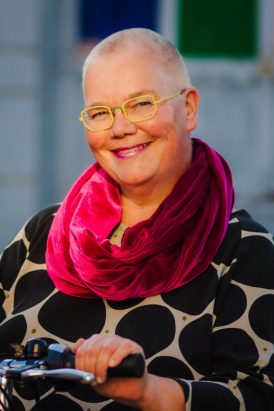
Petra Kuppers is a Professor at the University of Michigan, specializing in disability culture, performance art, and ecocriticism. She holds a PhD from Falmouth College of Art/Plymouth University (1999) and is affiliated with multiple departments, including English, Drama, and Gender Studies. Her work bridges academic research with community-based performance, emphasizing socially just futures through art. Key roles include Artistic Director of The Olimpias, co-founder of Turtle Disco, and a Just Tech Fellow (2024–2026) for 'Planting Disabled Futures,' a VR project blending disability culture and environmental ethics. She teaches graduate courses on disability studies and creative writing, advising students through a monthly 'Research Coven.' Kuppers has authored influential books like *Disability and Contemporary Performance* (2003) and *Eco Soma* (2022), recognized with awards such as the Guggenheim Fellowship and ATHE Book Prize. Her poetry collections, including *Gut Botany* (2020) and *Diver Beneath the Street* (2024), explore intersections of disability, ecology, and true crime. Her research spans crip ecologies, archival activism, and somatic methods, with recent projects including *Crip/Mad Archive Dances* and participatory events like 'Crip Drifts.' She emphasizes accessibility in performance, digital art, and public engagement, often collaborating with Indigenous communities and global disability collectives.
Annouchka Bayley is an Associate Professor at the Faculty of Education, University of Cambridge, specializing in posthuman pedagogy, new materialist philosophies, and artistic research methodologies. She chairs the Arts and Creativities Research Group and previously directed the Arts, Creativities and Education MPhil programme (2021-24) and led the Doctoral Research Training Programme. PhD from University of Warwick BA Hons from SOAS MRes from University of Warwick Her research explores: Posthuman and new materialist approaches to education Decolonial epistemologies for educational development Postqualitative research practices in higher education Digital pedagogy and augmented reality applications Embodied and affective learning methodologies Recent publications examine diffractive knowledge production, digital materiality, and postpandemic educational futures. Key collaborative works include: Diffracting New Materialisms (2023, Palgrave Macmillan) Posthuman Pedagogy (2018, Parallax journal) Current teaching focuses on: Postgraduate courses in Arts, Creativities and Education Doctoral research training Advanced research methods Labs/Teams: Arts and Creativities Research Group CRiCLE Network (Creativities in Education) Diffractive Methodologies Collective
Philippe d'Iribarne is a French researcher holding the position of Research Director at the French National Center for Scientific Research (CNRS), where he is affiliated with the Gestion et Société (Management and Society) Research Group. His academic career has focused on the complex relationship between cultural contexts and organizational success, particularly in developing countries. Dr. d'Iribarne's research interests center on cross-cultural management, organizational sociology, and development studies, with particular emphasis on how cultural frameworks shape business practices and organizational effectiveness. His work challenges conventional wisdom about universal management practices, demonstrating how successful organizations in developing countries often achieve excellence by creatively adapting to rather than rejecting local cultural contexts. He has conducted field research across Africa, Latin America, and Asia, examining how companies leverage traditional cultural forms to create innovative management approaches. His publication record reveals a consistent thematic focus on the interplay between culture and organizational success. Rather than viewing cultural differences as obstacles to development, d'Iribarne's work demonstrates how local cultural resources can be harnessed to create effective business models. His research particularly highlights how successful companies in the Global South have found ways to integrate modern management tools with local cultural frameworks, creating unique hybrid organizational forms that achieve both efficiency and cultural resonance. As a senior researcher at CNRS, d'Iribarne has led significant research initiatives examining business operations in diverse cultural contexts. His work with the Gestion et Société research group has produced influential theoretical contributions to management studies, particularly regarding the relationship between universal management principles and their culturally-specific implementation. His research methodology emphasizes deep ethnographic engagement with organizations in their local contexts, allowing him to identify the subtle cultural mechanisms that enable organizational success in challenging environments.
Michael S. Horn is a Professor of Learning Sciences and Computer Science at Northwestern University, serving as Program Coordinator for Learning Sciences. He holds a PhD in Computer Science from Tufts University and a ScB in Computer Science from Brown University. His research focuses on the intersection of human-computer interaction and learning, emphasizing the use of emerging technologies in museums, classrooms, and informal settings. Notable projects include multi-touch tabletops in natural history museums, tangible programming languages for early education, and the TIDAL Lab’s innovative exhibits like Build-a-Tree and DeepTree. Education background includes: PhD in Computer Science (Tufts University, 2009) MS in Computer Science (Tufts University, 2006) ScB in Computer Science (Brown University, 1997) Research interests span tangible interaction design, computational literacy, and museum-based learning. He has led projects such as the ‘Energy Monsters’ board game and the TunePad music-coding platform. His work integrates technology with pedagogical practices to foster collaborative and exploratory learning environments. Active collaborations include the Computer History Museum and the California Academy of Sciences. Advising contributions include mentoring doctoral students like Dr. Mmachi Obiorah and Pei-Yi. His lab, TIDAL, explores interactive technologies for education, with grants from NSF and industry partnerships. Recent articles highlight innovations in computational thinking integration, music-coding hybrid practices, and AI-driven qualitative analysis.
Dr. Shari Sabeti is a Senior Lecturer in Arts and Humanities Education at the Moray House School of Education and Sport, University of Edinburgh. She holds a PhD in English Literature from the University of Cambridge and is a Senior Fellow of the Higher Education Academy (SFHEA). Her research focuses on arts, cultural heritage, and decolonizing education, with projects in museums, schools, and Pacific Island communities. She has led initiatives in the Marshall Islands, Samoa, and Hawaii, emphasizing participatory and arts-based methodologies. Education: MA (Hons) English (Cambridge, 1994), MA English and American Literature (UCL, 1995), PhD English Literature (Cambridge, 1999), PGCE Secondary English (IOE, 2002). She has taught at the University of Stirling and the University of Edinburgh, where she currently organizes courses on anthropology of education, creative pedagogies, and literacy. Research interests include museum education, decolonizing approaches, Pacific Island education, and creative writing pedagogy. Her work bridges anthropology, ethnography, and arts-based methods, exploring community resilience and identity formation. Recent projects include 'Remediating Stevenson' (AHRC-funded, 2022–2025) and studies on Marshallese displacement through arts education. Awards and grants include a £1M AHRC Standard Grant for decolonizing Pacific literature and multiple GCRF awards for education in the Marshall Islands. She has supervised over a dozen PhD students on topics like museum pedagogy, diaspora education, and creative writing practices. Labs/Networks: Centre for Creative Relational Inquiry, Digital Cultural Heritage Network, Atelier Creative Arts and Social Sciences Network. Her work often involves partnerships with museums, NGOs, and international communities.
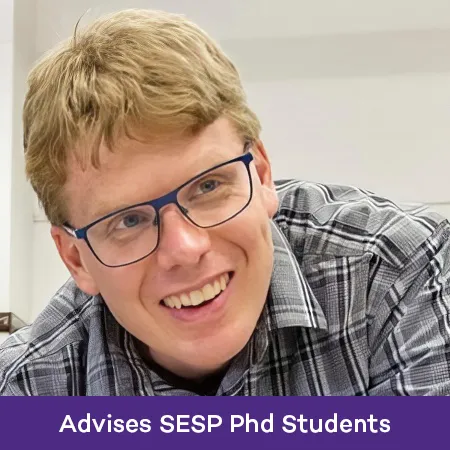
Sascha Struwe serves as a Postdoctoral Researcher at Aalborg University Business School within the Faculty of Social Sciences and Humanities, actively contributing to the International Business Research Group. Based at Fibigerstræde 11 in Aalborg Øst, Denmark, Struwe operates at the intersection of service innovation theory and business practice with international focus. Research expertise centers on service innovation , value co-creation , and digital servitization , particularly examining B2B contexts and open banking ecosystems. Work consistently explores institutional influences through German-Chinese case studies, addressing how cultural and regulatory frameworks shape service design. Recent trajectories reveal evolution from foundational service design challenges (2019-2021) toward digital transformation implications (2022-2023), with emphasis on value co-destruction mechanisms in financial ecosystems. Struwe led the PhD project Innovating the Invisible and Intangible: Value Creation in B2B service (2018-2021) investigating co-creation capabilities across industrial sectors. Academic engagement includes conference participation at EIBA and CICALICS events, plus a visiting researcher appointment at Fudan University's Nordic Centre (2019-2020). Current work continues through the International Business Research Group, focusing on digital literacies and service ecosystem resilience.
Michael S. Horn is a Professor at Northwestern University with a joint appointment in Computer Science and the Learning Sciences. He directs the Tangible Interaction Design and Learning (TIDAL) Lab and coordinates the Learning Sciences PhD Program. His work focuses on leveraging interactive technology to design innovative learning experiences, such as tangible programming languages (e.g., Tern) and music-coding platforms (e.g., TunePad). He holds a PhD from Tufts University and has collaborated with institutions like the California Academy of Sciences and the Museum of Science, Boston. Education: PhD in Computer Science, Tufts University MS in Computer Science, Tufts University BS in Computer Science, Brown University Research Interests: Dr. Horn explores how emerging technologies can create engaging learning environments. His projects include museum exhibits (e.g., DeepTree, Build-a-Tree), educational tools for computational literacy (e.g., TunePad, Strawbies), and collaborative design with educators. Recent work emphasizes integrating music and coding to foster computational thinking. Publications: His recent work addresses computational thinking in STEM education, AI-driven qualitative analysis, and hybrid music-coding practices. Themes include equitable participation, teacher professional development, and immersive AR/VR tools for learning. Awards: Recipient of the 2018 Edith Ackermann Award for innovative work in child-computer interaction. His research has led to commercial products like Osmo Coding and Kibo Robotics. Grants & Labs: Principal investigator on NSF grants (e.g., #1612619, #1451762) and collaborator with labs like the Center for Connected Learning (CCL) and the Collaborative Technology Laboratory (CollabLab).
Maureen Meadows is a Professor of Strategic Management at Coventry University's Research Centre for Business in Society. Her work focuses on strategic decision-making, big data applications, privacy in business models, and M&A dynamics. She previously held leadership roles at the Open University and Warwick Business School, where she contributed to strategic management education and research. Education: PhD in Open University (2016) MSc in Management Science from University of Warwick (1987) Bachelor of Arts in Mathematics (Oxford University, 1986) Research Interests: Strategic management tools (e.g., scenario planning), customer data analytics, privacy implications of data sharing, and post-merger integration. She has co-led projects on surveillance society blurring and privacy in the digital economy, funded by Leverhulme and EPSRC. Key Projects: Leverhulme-funded 'Taking Liberties?' (surveillance society) EPSRC-funded 'Monetize Me?' (privacy and quantified self) Co-designing digital strategies for museums and education sectors Grants & Collaborations: Multiple internally-funded projects on board assurance frameworks, creative accounting, and hybrid business models in museums. Active in international conferences and professional bodies like BAM Council. Awards: While no specific prizes are listed, her h-index of 24 and 1,891 citations reflect significant scholarly impact.
Professor Lucy Kimbell is Professor of Contemporary Design Practices at Central Saint Martins, University of the Arts London, where she convenes the Policy Futures Studio. She is Co-Director of the Sustainable Transitions through Democratic Design Doctoral Network funded by the EU Marie Curie programme and serves as Visiting Professor at University of Ulster and Honorary Adjunct Professor at RMIT University. Her work bridges design practice, public policy, and social innovation across multiple international contexts. Professor Kimbell's educational background includes a PhD in Design from Lancaster University (2013), an MA in Computing in Art and Design from Middlesex University (1996), and a B. Engineering in Design and Appropriate Technology from the University of Warwick (1989). Her academic journey reflects a consistent integration of technical, creative, and social perspectives. Kimbell's research focuses on service design, social design, and design for policy, with increasing emphasis on sustainable transitions and democratic innovation. She explores how design methods can address complex societal challenges, particularly through transdisciplinary approaches that connect creative practice with public policy contexts. Her work examines the role of design in government, professional services, and community settings, with particular attention to AI readiness in professional service firms and antimicrobial resistance policy in India. She has pioneered frameworks for measuring design's social and environmental value, notably through the Design Value framework developed with the Design Council. Her recent publications demonstrate a clear trajectory toward understanding design's role in public policy, sustainable transitions, and democratic innovation. The research shows increasing integration of practice-based research methods with policy development, emphasizing transdisciplinary collaboration and the application of design thinking to complex societal challenges. There's a notable focus on developing frameworks for measuring design's social and environmental value and advancing democratic innovation through design practice. Notable recognitions include: AHRC Research Fellow in Policy Lab in the Cabinet Office (2014-15) Principal research fellow at University of Brighton (2013-15) Clark Fellow in Design Leadership at Said Business School, University of Oxford (2005-10) Professor Kimbell supervises transdisciplinary PhD research connecting design with public policy, with six completions to date including four UAL-KCL joint studentships. She examines PhDs internationally and serves on the supervisory board for the PhD in Service Design for Public Sector at Sapienza University, Rome. Her grant portfolio includes major projects funded by EU Marie Curie, AHRC, ESRC, and Creative Europe, totaling millions in research funding for design-led approaches to societal challenges, including the Sustainable Transitions through Democratic Design Doctoral Network (2024-28) and the AHRC Design & Policy Research Network (2022-23). She previously directed UAL's Social Design Institute (2019-2022), which brought together university expertise in design for society through capacity building, joint research, publications, and public events. Her collaborative work extends to knowledge exchange projects with Design Council, Department of Work and Pensions, Northern Ireland Social Care Council, and Bite Back 2030, demonstrating her commitment to applying design thinking to real-world policy and social challenges.
Professor Hye-Kyung Lee is Professor of Cultural Policy at King's College London's Department of Culture, Media & Creative Industries. She obtained her PhD from the University of Warwick and specializes in state policies for culture, arts, and creative industries, with particular expertise in Korean cultural policy and East Asian cultural flows. Her research examines institutional frameworks of cultural policy, de-Westernization of cultural policy paradigms, and new justifications for cultural subsidies. Current investigations focus on the impact of generative AI on cultural labor and creativity. Professor Lee recently led the UK-Japan collaborative project 'Sustainable Cultural Futures' examining digital transformations in the cultural sector. Recent publications analyze venture capital approaches in cultural industries, pandemic-era cultural policy responses across East Asia, and the reformulation of cultural work in the AI era. Her extensive body of work includes foundational studies of the Korean Wave's policy implications and comparative analyses of creative industries governance. Professor Lee teaches cultural policy and creative industries courses in CMCI's BA and MA programs and welcomes PhD candidates researching cultural policy, creative industries, and cultural labor.
Yasmin Kafai is a Professor at the University of Pennsylvania's Graduate School of Education (GSE), Department of Learning Sciences. Her research focuses on computational thinking, AI education, and equitable K-12 computing pedagogy. She has pioneered work on integrating electronic textiles (e-textiles) and participatory design into STEM education to engage youth in critical perspectives of technology. Kafai's recent work emphasizes algorithmic literacy, youth-led auditing of machine learning systems, and bridging technical and societal dimensions of computing. Key research areas include: computational empowerment, AI ethics in education, youth agency in technology design, and culturally responsive computing curricula. Her projects often involve hands-on making activities, such as constructing generative AI models or debugging e-textile systems, to foster both technical and critical understandings. Publications from 2024-2025 highlight trends in youth engagement with generative AI, algorithm auditing frameworks, and the intersection of physical computing with growth mindset practices. She has also explored the role of storytelling methodologies in reimagining computing narratives for marginalized groups. Kafai collaborates extensively with teachers to develop scalable professional development programs addressing equity in CS education. Her work frequently appears in learning sciences and computing education journals, with a focus on practical classroom implementations and systemic educational reforms. Ongoing efforts include designing 'Hour of Code' activities that integrate critical AI literacy and fostering youth as co-designers of ethical technology solutions.