Rob Iliffe is Professor of the History of Science at the University of Oxford and a Fellow of Linacre College. He serves as Co-Director of the Oxford Centre for the History of Science, Medicine and Technology and is a General Editor of the Newton Project. His research focuses on the intersections between science and religion, the intellectual legacy of Isaac Newton, and the cultural history of scientific genius. Iliffe holds editorial roles for History of Science (2001–2008) and Annals of Science . His teaching includes undergraduate courses on the Scientific Revolution and scientific racism, as well as postgraduate modules on evolution and Malthusianism. Current DPhil students research topics ranging from utopian ideas in early modern Europe to the history of virtual reality technology. His media engagements include BBC Radio 4 discussions on William Stukeley and Robert Hooke, alongside lectures exploring the role of imagination in scientific creativity. Iliffe’s work bridges historical scholarship with public engagement, emphasizing interdisciplinary approaches to understanding science’s cultural dimensions.
Lena Retamoso Urbano is a poet and scholar currently serving as a Visiting Assistant Professor of Spanish at Bennington College since Fall 2021. She earned her PhD in Latin American, Iberian, and Latino Cultures from The Graduate Center of CUNY . Research Focus : 20th/21st century Latin American and Spanish poetry, transnational surrealism, queer theory, avant-garde movements, and transatlantic cultural connections Creative Output : Three poetry collections ( Light of Debris , Miracles of Absence , Blank is the Dream of the Night ) Her academic work explores intertextuality and the poetics of Eros, with publications on Garcilaso de la Vega, Blanca Varela, César Moro, and Luis Cernuda. Her article Sacralizing the Ephemeral (under contract with Vernon Press) examines the dialectic between lovers and the beloved in Cernuda and Moro. She received the NeMLA Creative Writing Award (2022) for her poem and the body rises . Key trends in her scholarship include: cross-Atlantic surrealist dialogues, phenomenological approaches to poetic spatiality, and intersections between literature, film, and music. Her teaching spans Hispanic literature, culture, and creative writing at the college level.
Prof. Helmut Grabner is a Professor at the Zurich University of Applied Sciences (ZHAW), leading the Visual Intelligence and Applications Group and the Entrepreneurship initiatives within the School of Engineering. His work bridges computer science, medical technology, and visual communication, with a focus on Extended Reality (XR), surgical training simulations, and AI-driven decision making. Education: PhD in Computer Science (Graz University of Technology, 2008), Master's in Computer Science (2008), and a Certificate of Advanced Studies in Higher Education (ZHAW, 2021). Prior to academia, he held roles including CTO at Logitech and co-founder of upicto, applying computer vision in industry and startups. Research spans augmented reality medical training tools, NMR spectrum analysis via deep learning, and understanding visual engagement in advertising. Awards include the prestigious Koenderink Prize (2018) for contributions to computer vision. Projects include Immersive Education frameworks, bias-mitigation in venture capital algorithms, and surgical proficiency measurement systems. Teaching includes courses on Visual Computing, Machine Learning, and Deep Learning. His work integrates academic research with practical applications in healthcare, education, and entrepreneurship.
Dr. Chris Chesher is a Senior Lecturer in Digital Cultures within the Discipline of Media and Communications at the University of Sydney's Faculty of Arts and Social Sciences. He co-founded both the Digital Cultures program and the Master of Digital Communication and Culture at the University. Previously, he served as a senior lecturer in the School of Media and Communications at the University of New South Wales. His academic career spans interdisciplinary research at the intersection of digital media, cultural studies, and technology. Dr. Chesher's educational background includes: PhD from Macquarie University Master of Arts (Interdisciplinary Studies) from the University of New South Wales Bachelor of Arts (Media and Communications) from Mitchell CAE (now Charles Sturt University) Dr. Chesher's research adopts a transdisciplinary approach connecting digital cultures, media studies, and cultural studies with philosophy of technology, science and technology studies, games studies, internet studies, sociology of technology, human-computer interaction, social robotics, cultural robotics, and digital humanities. His work challenges conventional understandings of human-machine relations and explores the cultural implications of emerging technologies through projects on robotics beyond anthropomorphism, invocational media theory, and smart urban environments. His recent publications reveal a strong thematic focus on robotics, AI, and digital media theory, with particular attention to non-anthropomorphic approaches to social robotics, invocational media theory, and smart urban environments. The publications demonstrate his consistent engagement with how digital technologies reshape human experience, social relations, and spatial understanding across multiple domains including banking, restaurants, street furniture, and home environments, reflecting both theoretical depth and practical relevance. Dr. Chesher has received recognition for his teaching excellence: 2023 - University of Sydney Faculty of Arts and Social Sciences Teaching Innovation Award As an academic supervisor, Dr. Chesher has guided multiple PhD candidates to completion across diverse topics including digital gambling, game items in digital environments, user regulation on Facebook, and climate change visualizations. His grant history demonstrates sustained research funding, including the Australia-Korea Partnership on Mobile Robot Development in Public Space (2019), Public Forum on Urban Robots and the Future City (2018), and Everyday Social Media Network (2014), highlighting his leadership in collaborative, interdisciplinary research initiatives. Dr. Chesher is actively involved in collaborative research through the Sydney Institute for Robotics and Intelligent Systems (SIRIS) at the University of Sydney, where he contributes to projects examining the cultural dimensions of robotics and AI beyond anthropomorphic frameworks, bridging technical innovation with critical cultural analysis.
Daniela IUBATTI is an Assistant Professor at SKEMA Business School—Université Côte d’Azur (GREDEG), specializing in Management & Organization. Her research focuses on intra-organizational networks, innovation, digitalization, and gender studies. She holds a PhD in Management from IESE Business School (Spain), and has held roles at the University of Bologna, University of Trento, and University of Chicago. Her work explores how network structures influence innovation and how digitalization impacts organizational practices. Notable contributions include studies on core-periphery networks in R&D productivity and the sociomaterial effects of digital machines in manufacturing. She has published in top journals like Organization Science and Journal of Product Innovation Management . Awards include the 2020 EBS Best Paper Award. She reviews for journals such as Journal of Management and Journal of Business Ethics . Academic activities include SIG committee roles at EURAM and conference presentations at the Academy of Management.
Lucy Collins is an Associate Professor in the School of English, Drama and Film at University College Dublin (UCD), where she has been a faculty member since 2008. She previously taught at Trinity College Dublin and the University of Cumbria. Her academic affiliations include the UCD College of Arts and Humanities, where she served as Associate Dean for Graduate Studies from 2020 to 2023. BA (Mod), Trinity College Dublin MRes, History of the Book, University of London PhD, Trinity College Dublin Prof Dip, University Teaching & Learning, University College Dublin Fulbright Postdoctoral Fellow, Harvard University Her research focuses on poetry and poetics, with particular emphasis on Irish, British, and American poetry since 1900. Key areas include ecocriticism, gender studies, the history of the book, and genetic criticism. She has published major works such as Contemporary Irish Women Poets: Memory and Estrangement (2015), Poetry by Women in Ireland 1870–1970 (2012), and The Irish Poet and the Natural World (2014). She is a co-founder of the Irish Poetry Reading Archive and academic lead on the Poetry as Commemoration project. Her recent scholarly output reflects a sustained engagement with environmental themes in poetry, archival practices, and intersections between literature, fashion, and identity. Articles such as 'Poet, Editor, Anarchist: Lola Ridge’s New York Networks' (2023) and 'Hidden Collections: The Value of Irish Literary Archives' (2020) demonstrate her interdisciplinary reach across literary history, cultural studies, and digital humanities. Fulbright Postdoctoral Scholarship MARBL Travelling Fellowship SMC Teaching Fellowship Trinity Award Wake Forest University Archives Travelling Fellowship Lucy Collins has supervised numerous graduate students and coordinated key modules including Dissertation, Irish Literature in English, and Reading Contemporary Poetry. She has received external funding and led research projects related to poetry, commemoration, and archival access. Her professional service includes editorial roles for Irish University Review and Canadian Journal of Irish Studies , and committee membership in IASIL, ASLE-UKI, and the International Yeats Society. She has also served as an external examiner for MA programs at several UK institutions.
Rachel Johnson is a Lecturer in Film Studies at the School of Languages, Cultures and Societies, University of Leeds. Her research and teaching focus on film institutions, particularly film festivals, exhibition, curation, and cinephilia, with a strong commitment to decolonial and critical theoretical frameworks. She actively collaborates with local and international film organizations, including Leeds International Film Festival and Festival Films Femmes Afrique. Educational Background: PhD in Film Studies, University of Leeds MA in European Culture and Thought: Culture, University College London BA in English Literature and Italian, University of Leeds Her research explores cinematic justice, African cinemas, migration cinema, and Italian cinema through decolonial lenses such as pluriversality and the colonial matrix of power. She is particularly interested in how film institutions like festivals and archives value, share, and mobilize cinema, often challenging dominant hierarchies and canons. Her recent work emphasizes marginalized perspectives in cinephilia and co-curation as a decolonial practice. Her publications reveal a consistent trajectory in analyzing ideological structures within European A-list film festivals, especially regarding the representation of migration and Italian cinema. She has developed a method of ideology critique rooted in Lacanian and Žižekian theory, examining festival apparatuses, paratexts, and film texts to uncover power dynamics. Her work spans monographs, peer-reviewed articles, policy reports, and public writing, reflecting a commitment to both scholarly and public engagement. Scientific Contributions and Recognition: Author of Film Festivals, Ideology and Italian Art Cinema (Amsterdam University Press, 2023) Co-investigator on Canada Research Council-funded project Decolonizing Film Festival Research in a Post-Pandemic World Co-founder of the New Voices in Cinephilia network with Professor Stephanie Dennison Active member of NECS, BAFTSS, and IAMHIST Rachel Johnson supervises PhD students on topics including Pan-African film history, puzzle films, and decolonial cinema, and mentors practice-based research in videographic criticism and podcast documentaries. She is deeply involved in public film culture as co-director of Leeds Cineforum and collaborator with Hyde Park Picture House. Her grants and collaborative projects reflect a strong commitment to social justice, institutional critique, and empowering marginalized voices in global film culture. Research Labs and Teams: Centre for World Cinemas and Digital Cultures, University of Leeds New Voices in Cinephilia network (co-founded) Italian Cinemas/Italian Histories project (collaborator) Practice Research SIG, BAFTSS
Dr. Maria Yanotti is a Senior Lecturer in Economics at the Tasmanian School of Business and Economics (TSBE) , University of Tasmania. She holds a PhD from the same institution and a Licenciatura in Economics from Universidad Nacional de Tucuman, Argentina. Her academic work centers on housing markets, housing finance, and macroeconomic policy, with strong interdisciplinary engagement in environmental and social economics. Position: Senior Lecturer in Economics Institution: University of Tasmania School: Tasmanian School of Business and Economics Department: Economics Email: Maria.Yanotti@utas.edu.au Languages: English, Spanish (Latin American) Maria’s research expertise lies in empirical economics, particularly in housing market dynamics, household financial wellbeing, and regional development. She applies advanced econometric methods to large datasets, including proprietary loan-level data (e.g., DOMINO), to analyze mortgage behavior, investment patterns, and policy impacts. Her interdisciplinary work extends to valuing environmental assets, energy efficiency in housing, microplastics, and the economic impact of creative industries. Her research aligns with several UN Sustainable Development Goals, including Reduced Inequalities (SDG 10), Sustainable Cities (SDG 11), and Gender Equality (SDG 5). Her recent publications explore topics such as home bias in property investment, the risks of 'liar loans', and the economic implications of federal budget allocations. These works reflect a consistent trend toward policy-relevant economic analysis, often engaging with national institutions like the RBA, ATO, and Housing Australia. The articles demonstrate expertise in behavioral economics, financial regulation, and regional economic disparities. Maria is actively involved in professional service: she is the Tasmanian chair of the Women in Economics Network (WEN) and a member of the Economic Society of Australia (Tasmanian branch). She has received research funding from AHURI (Australian Housing and Urban Research Institute) and has advised the National Housing Finance and Investment Corporation. She supervises and teaches in areas such as microeconomics, statistics, quantitative methods, finance for managers, and data analysis. Her teaching supports both undergraduate and postgraduate programs at TSBE. She is also a sought-after expert for media commentary, public speaking, consulting, and research collaboration. Maria leads and participates in multidisciplinary research teams focused on regional development, environmental management, and social policy. Her work often bridges economics with environmental science, public policy, and urban planning, contributing to a holistic understanding of economic wellbeing in regional contexts like Tasmania.
Cecilio Angulo Bahón is a full Professor at the Polytechnic University of Catalonia (UPC), affiliated with the Barcelona School of Industrial Engineering (ETSEIB) and the Department of Systems, Automatics and Industrial Informatics Engineering . He leads research in Artificial Intelligence and Robotics , with significant contributions to healthcare data analytics, digital twins, and human-robot collaboration. His research spans machine learning for medical data harmonization, generative adversarial networks in health informatics, and evolutionary algorithms for control systems. Recent publications focus on synthetic healthcare data generation, climate-resilient agriculture , and UMAP-based data analysis . His work bridges AI theory with practical applications in industrial and healthcare domains. Scientific awards include the Sant Jordi 2023 Digital Polytechnic Initiative Award . He has supervised doctoral candidates like Carlos Flores-Vázquez and N. Raya, with key collaborations at the IDEAI-UPC Intelligent Data Science and AI Research Group and the Institute of Robotics and Industrial Informatics (CSIC-UPC).
Claudia Cea is an Assistant Professor in the Department of Electrical & Computer Engineering at Yale University's School of Engineering and Applied Science. Her research focuses on developing soft, multifunctional bioelectronic devices designed to interface with the nervous system for long-term neural interrogation and modulation. She leads The Cea Group, which integrates principles from bioelectronics, materials science, and neuroscience to engineer conformable, high-resolution neural interfaces. Ph.D., Columbia University M.Sc., San Diego State University B.Sc., University of Pisa Her research interests lie at the intersection of bioelectronics , neural engineering , and soft materials design , with a focus on creating minimally invasive tools for understanding brain–body communication. By combining electrical, optical, and chemical modalities, her lab develops technologies capable of both recording and modulating neural activity in central and peripheral circuits. These innovations aim to uncover fundamental neural mechanisms and translate them into therapies for neurological, psychiatric, and systemic disorders. The recent publications demonstrate a strong trajectory in implantable bioelectronics , particularly in organic electrochemical transistors , ionic communication systems , and multimodal neural interfaces . Her work consistently appears in top-tier journals such as Nature Materials , Science Advances , and PNAS , reflecting significant impact in neuroengineering and bioelectronic medicine. The research emphasizes device autonomy, biocompatibility, and real-time neural signal processing. Her scientific achievements have been recognized with prestigious honors: MIT Technology Review 35 Innovators under 35 SEAS Ph.D. Research Symposium Winner, Columbia University CSNE Hackathon Winner, University of Washington Shiley Scholarship in Bioengineering Claudia Cea has secured competitive funding and recognition that support her lab’s innovative work. While specific grant details are not listed, awards such as the Shiley Scholarship and hackathon wins indicate strong support from institutions like the Center for Sensorimotor Neural Engineering (CSNE). Her role as principal investigator of The Cea Group suggests active mentorship of graduate students and postdoctoral researchers in interdisciplinary research. The lab fosters collaboration across engineering, neuroscience, and clinical domains to accelerate translation. The Cea Group is dedicated to advancing soft, multifunctional electronics for biomedical applications. The team focuses on designing conformable, implantable devices that seamlessly integrate with biological tissues. Their work spans materials synthesis, device fabrication, in vivo testing, and clinical translation, aiming to bridge gaps between engineering innovation and medical need. The lab environment promotes creativity, rigor, and translational thinking in next-generation neural technologies.
Joanne Morra is Professor of Art and Culture at University of the Arts London , specifically Central Saint Martins. She has dedicated 25 years to teaching fine art students and pioneering research at the intersection of art, psychoanalysis, and feminist theory . Her editorial work includes founding the Journal of Visual Culture and co-founding Parallax . PhD, University of Leeds MA, University of Leeds MA, University of Toronto BA Hons, University of Toronto Joanne’s research explores psycho-social dimensions of art , focusing on: Psychoanalytic practices in contemporary art Site-responsive and autobiographical art Art’s role in mental health and political discourse Transdisciplinary collaborations between art and therapy Her recent publications and conferences (2017-2021) examine: Intimacy, trauma, and transference in art Memory reconstruction and institutional critique Psychoanalytic techniques like potential space and afterwardsness Auto-theoretical/-historical/-fictional methodologies Research funding includes grants from Leverhulme Trust, Arts Council England, and SSHRC Canada . She supervises PhD candidates in topics ranging from feminist horror art to participatory intimacy. Her collaborative projects include Intimacy Unguarded and Creative Practices and Wellbeing networks.
Christine von Renesse is a Professor in the Department of Mathematics at Westfield State University. She specializes in inquiry-based learning and integrates interdisciplinary connections (e.g., games, music, dance, arts) into her teaching, particularly in Mathematics for Liberal Arts courses. As a passionate advocate for STEM education reform, she co-leads the NE-COMMIT initiative and facilitates professional development workshops for K-12 and higher education faculty. Her work extends to graduate program coordination and institutional committees like Writing Across the Curriculum (WAC). Education: PhD in Mathematics (2007), University of Massachusetts Amherst M.Ed in Mathematics (2002), Technical University, Berlin Diplom in Mathematics (2001), Technical University, Berlin Her research focuses on enhancing mathematical understanding through open inquiry, with a strong emphasis on curiosity-driven pedagogy and accessibility. She has authored numerous publications on inquiry-based teaching, including collaborations on the COMMIT Network and the Discovering the Art of Mathematics project. Her NSF-funded work bridges faculty collaboration and STEM education transformation, supported by her leadership roles in initiatives like STEM-ACT. Prof. von Renesse actively contributes to academic service as a PRIMUS board member, graduate advisor, and coordinator of mathematics education programs. Her interdisciplinary approach spans from salsa dancing to proof-writing, aiming to make mathematics engaging and relevant across diverse fields.
Scott Rettberg is a Professor of Digital Culture at the University of Bergen's Department of Linguistic, Literary and Aesthetic Studies. He leads the Center for Digital Narrative and has directed major projects like ELMCIP, funded by the Ford and Rockefeller Foundations. Contact: scott.rettberg@uib.no. Research Focus: Electronic literature, AI-generated narratives, digital humanities infrastructure. Recent Work: Explores AI writing practices, pandemic-themed digital art, and cyborg authorship models. His publications analyze intersections between generative algorithms and literary form, with a strong emphasis on digital ethics and pedagogy. Awards include the Robert Coover Award (2016) and N. Katherine Hayles Award (2019). Key Contributions: Co-founder, Electronic Literature Organization Director, ELMCIP Electronic Literature Knowledge Base Author, Electronic Literature (Polity, 2018)
Lawrence Lessig is the Roy L. Furman Professor of Law and Leadership at Harvard Law School . He previously taught at Stanford Law School (founding the Center for Internet and Society ) and the University of Chicago. A respected legal scholar, Lessig is also the founder of Equal Citizens and a founding board member of Creative Commons . He serves on the Scientific Board of the AXA Research Fund and is a member of the American Academy of Arts and Sciences and the American Philosophical Society. Education: BA in Economics and BS in Management, University of Pennsylvania MA in Philosophy, Cambridge University JD, Yale Law School Lessig's research bridges law and technology , focusing on intellectual property and internet governance, with recent work on institutional corruption —legal relationships that erode public trust, particularly in democratic systems. His scholarship includes critiques of campaign finance laws and proposals for constitutional reform. Recent publications include The Buckley Overreach (2025), analyzing campaign finance under originalism, and Conversation Networks (2025), exploring digital communication's impact on democracy. Earlier works like The End of End-to-End (2001) established him as a foundational thinker on internet architecture. Scientific awards and honors: Webby Award Free Software Foundation's Freedom Award Scientific American 50 Award Fastcase 50 Award Member, American Academy of Arts and Sciences Member, American Philosophical Society He has advised on constitutional law, notably Republic, Lost (2011) and They Don't Represent Us (2019), and has contributed to debates on digital rights , free culture , and AI ethics .
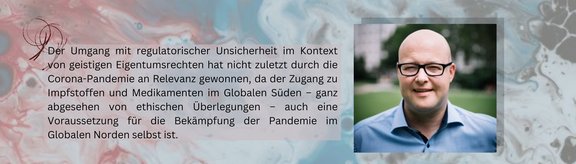
Leonhard Dobusch is a full Professor of Business Administration with a focus on Organization at the University of Innsbruck's Faculty of Business and Management, specifically within the Institute for Organisation and Learning. He has held this position since February 2016, after serving as a Junior Professor at Freie Universität Berlin from 2012-2016. Professor Dobusch maintains active international collaborations with researchers at institutions including ETH Zurich, University of Oxford, University of Zurich, and University of Duisburg-Essen. University of Innsbruck: Professor of Business Administration (since 2016) Freie Universität Berlin: Junior Professor of Management (2012-2016) Freie Universität Berlin: Postdoc at Chair for Inter-Organizational Cooperation (2009-2012) Stanford Law School: Research Fellow at Center for Internet & Society (2008) Max Planck Institute for Social Research: Postdoc Fellow (2008-2009) Professor Dobusch's research centers on three interconnected areas that challenge conventional organizational thinking. His work on organizational openness examines how principles like open source software, open science, and open innovation manifest in practice, revealing how formal openness often leads to unintended exclusion. His second research stream investigates alternatives to intellectual property rights in regulatory uncertain environments, particularly in pharmaceutical innovation where he studies approaches to vaccine development beyond traditional patent systems. Thirdly, he develops the concept of 'organisationality' to redefine how we understand organization in increasingly fluid social systems. His research has significant implications for companies, public administrations, and scientific institutions navigating the challenges of openness, regulatory uncertainty, and new organizational forms in the digital age. Professor Dobusch's publication record demonstrates consistent high-impact contributions to organizational studies, with articles appearing in top journals including Organization Studies, Journal of Management Studies, and Long Range Planning. His work shows a clear trajectory from studying open source software adoption in city administrations (his doctoral research) to broader questions about organizational forms, openness, and intellectual property in complex systems. 2025: Best Reviewer Award of the Journal Organization Theory 2025: Prof of the Year Award in Rhetoric and Didactics 2022: Best Paper Award of the Strategy Practice Interest Group 2020: Ideas Worth Teaching Award by Aspen Institute for 'Organizing in Times of Crisis' 2020: LehrePlus!-Preis der Universität Innsbruck 2016: LehrePlus!-Preis for 'Open Organizations and Organizing Openness' course Professor Dobusch actively integrates his research into teaching, exemplified by his award-winning wiki-based course 'Open Organizations and Organizing Openness' and the collaborative online course series 'Organizing in Times of Crisis', which received international recognition. He currently leads a three-year DFG/FWF-funded research project 'Organising Creativity under Regulatory Uncertainty: Alternative Approaches to Intellectual Property' with Professor Sigrid Quack. Within professional networks, he serves as Chair of the Executive Board of the Interest Group 'Strategizing Activities and Practices' at the Academy of Management and regularly leads sub-themes at the European Group of Organization Studies Colloquium on Organizational Openness. Professor Dobusch contributes to several research communities through his blogs 'osconjunction.net' and 'governancexborders.com', and participates in the Momentum-Kongress that connects academic research with social and political practice. His work bridges theoretical innovation with practical relevance, particularly in how organizations can navigate the tensions between openness and closure, formal regulation and creative adaptation.