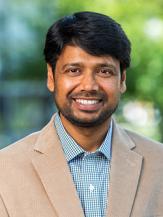
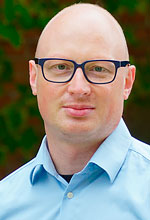
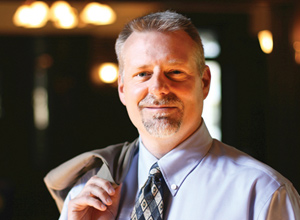
Thao Do is a Researcher affiliated with Uppsala University, working across two key units: the Institute for Research on Conflicts of Interest in Sustainable Social Transformation and the Department of Women's and Children's Health; Center for Health and Sustainability . Her work focuses on transdisciplinary approaches to sustainability challenges. Mobile: 070-167 99 57 Email: thao.do@uu.se | thao.do@swedesd.uu.se
Jessica D. Payne is a Professor of Psychology at the University of Notre Dame , where she directs the Sleep, Stress, and Memory (SAM) Lab . As a Sleep and Stress Neuroscience Expert , her research explores how sleep and stress interact to influence memory consolidation , emotional processing , and leadership performance . She has received prestigious accolades including the Laird Cermak Award , the Early Career Award from the Psychonomic Society , and election as a Kavli Fellow by the National Academy of Sciences. Education: Ph.D. in Psychology/Cognitive Neuroscience, University of Arizona Postdoctoral Fellowships at Harvard Medical School and Harvard University M.A. in Experimental Psychology, Mount Holyoke College B.A. in Psychology, University of San Diego Research Focus : Payne’s work demonstrates that sleep is not passive but an active process where the brain consolidates emotional memories , enhances creativity , and regulates neurochemicals like cortisol . Her studies reveal sleep’s role in selective memory consolidation , particularly for negative emotional stimuli , with implications for understanding mental health disorders like PTSD and depression. Scientific Contributions : 2025: Eveningness and sleep quality in aging 2024: Targeted memory reactivation during NREM sleep 2023: Cognitive reappraisal’s interplay with sleep 2022: Sleep’s preferential consolidation of negative memories Organizational Impact : As an internationally recognized speaker and consultant for 20 years, Payne applies her findings to Fortune 500 companies , healthcare organizations , and athletics teams . She advocates for flexible work schedules aligned with circadian rhythms and promotes sleep-friendly leadership practices to enhance productivity and well-being. Teaching Excellence : Payne’s popular course “The Sleeping Brain” earned teaching awards from both Harvard and Notre Dame. She serves as Associate Editor for Journal of Experimental Psychology: General and Learning & Memory . Labs & Collaborations : The SAM Lab at Notre Dame conducts interdisciplinary research integrating psychophysiological measurements , fMRI studies , and behavioral experiments to uncover how sleep and stress shape cognition.
Louise Ritchie is a Lecturer in Theatre & Theatre Practice at Aberystwyth University 's Department of Theatre, Film, and Television Studies. Her practice-based research interrogates face-to-face pedagogy in workshops, focusing on digital tools' role in transmitting performance-making pedagogies through video, photography, and pre-recorded instructions. BA (1st class hons), MA (with distinction), PGCE, PhD (Cymru) Organized Brith Gof archive dissemination events at National Library of Wales Awarded AHRC doctoral scholarship for practice-based research Ritchie's research explores the creative possibilities of digital notation systems for physical theatre, culminating in her 2012 thesis Digital notation: new approaches to physical theatre and its documents . Her work bridges digital media and performance pedagogy , examining spatial dynamics in site-specific installations . Selected publications (2004-2013) reveal research trends in: Digital archiving of performance practices Interactive workshop methodologies Time-based documentation techniques Media integration in physical theatre Spatial transformation in performance Cultural memory transmission Scientific achievements include: AHRC doctoral scholarship recipient Ritchie actively collaborates with experimental theatre company Almost Human as an associate artist, and has participated in international exchanges like Human Dialog (Norway) . Her research outputs span peer-reviewed articles, performances, and digital installations .
Pirita Seitamaa-Hakkarainen is a Professor of Craft Studies at the University of Helsinki and Docent at Aalto University. She leads the Co-inquiry, co-design, co-teaching, and co-regulation (Co4-Lab) laboratory and contributes to the Maker@STEAM research group. Her work bridges cognitive theories of design with collaborative learning environments, emphasizing materiality and knowledge building in education. University of Helsinki: Professor of Craft Studies Aalto University: Docent Her research focuses on: Cognitive theories of design processes and expertise development Collaborative learning and social creativity in maker education Role of external representations (sketching, visualization) in design Scaffolding mechanisms in craft and technology education Materiality in digital age pedagogy Knowledge building theory applications Recent publications (2020-2025) demonstrate sustained output in collaborative design education, virtual reality learning environments, and STEAM pedagogy. Her work consistently explores intersections between cognition, collaboration, and digital/material artifacts in educational settings.
Sari Graben serves as Professor and Associate Dean of Research & Graduate Studies at Toronto Metropolitan University's Lincoln Alexander School of Law, where she provides strategic research leadership and directs the Professional Development Program. She previously held positions as counsel at a national law firm, adjunct faculty at Queen's University, and associate professor at Ted Rogers School of Management. Education PhD from York University (2010) LLM from Queen's University (2004) LLB from Dalhousie University (2000) BA from York University (1996) Research Focus Her research examines Indigenous governance frameworks through interdisciplinary lenses, focusing on regulatory institutions, emergent property systems, and risk assessment. She specializes in how legal structures impact Indigenous communities in resource development contexts, with particular attention to gender equity in environmental negotiations and the evolution of Indigenous administrative law. Recent publications demonstrate growing emphasis on legal education transformation, including technology integration and cultural competency training. Her scholarship consistently intersects Indigenous rights with environmental governance, treaty implementation, and comparative institutional analysis. Awards & Recognition President’s Blue and Gold Award for Staff Excellence (2020) Dean’s Scholarly Research and Creativity Award (2015) Best Paper Award, Canadian Academy of Legal Studies (2018) Fulbright Visiting Research Chair (University of Washington) SSHRC Postdoctoral Fellowship (UC Berkeley) Queen’s University Arctic Policy Fellowship Leadership & Grants Graben leads multiple SSHRC-funded initiatives including research on Indigenous financial inclusion and Impact Benefit Agreement gender analysis. As Associate Dean, she oversees graduate program development and mentors emerging scholars. She directs the law school's Professional Development Program, creating training frameworks for legal practitioners across diverse communities.
Jacob M. Cook is a Lecturer in the Marketing Unit at Harvard Business School, where he teaches the Digital Marketing & AI Workshop. With nearly two decades of experience in digital marketing and e-commerce, Cook co-founded Tadpull, a software and data science company that partners with major brands and private equity firms to drive growth through data and AI. His educational background includes: Physics from Drury University Marketing Communications from Washington University in St. Louis Cook's research centers on leveraging digital marketing, data, and AI for customer acquisition and retention. He explores how large language models can enhance testing, creative development, and campaign analysis, often using proprietary data from industry collaborations. His work bridges academic theory and practical application, emphasizing hands-on learning and adaptable skills for students across industries. The recent publications by Cook focus on real-world business challenges in digital marketing, e-commerce, and data strategy. His cases, such as the EPCorp series and Osteoboost, examine decision-making in customer ownership, channel strategy, and healthcare startups, highlighting the integration of AI and data analytics in modern marketing. No scientific awards were mentioned in the provided text. Cook advises students in the Digital Marketing & AI Workshop, utilizing guest speakers from leading companies like Adobe and HubSpot to provide practical insights. While specific research grants are not detailed, his industry partnerships with firms including Google, Microsoft, and YETI have informed his teaching and case development, demonstrating the application of marketing frameworks to drive enterprise value. Outside the classroom, Cook co-founded Tadpull and maintains the educational platform OnDigitalMarketing.com, sharing tools and content for marketing leaders worldwide. His work integrates academic research with real-world business challenges, fostering innovation in digital marketing education.
Univ.-Prof. Franz-Markus Peschl is Professor of Cognitive Science and Philosophy of Science at the University of Vienna's Department of Philosophy within the Faculty of Philosophy and Education. He serves as Vice-Director of Studies for the Philosophy Directorate and leads multiple academic initiatives including the Middle European Interdisciplinary Joint Master's Program in Cognitive Science (MEi:CogSci) and the Extension Curriculum on Innovation & Knowledge Creation. As head of the OCKO (Organizing Cognition in Knowing Organizations) Research Group and co-founder of the Vienna Cognitive Science Hub, Prof. Peschl plays a pivotal role in interdisciplinary research and education at the university. Prof. Peschl's research focuses on innovation and knowledge creation across multiple contexts, integrating approaches from cognitive science (particularly 4E/enactive cognition), organizational theory, philosophy/epistemology, and knowledge technologies. His work centers on understanding how novelty emerges through socio-epistemological processes, with particular emphasis on concepts such as Emergent Innovation and Enabling Spaces which he developed as forms of "socio-epistemological engineering." His research explores how humans interact with environments to create knowledge, how organizations function as socially extended cognitive systems, and how we can "learn from future potentials" to develop 21st century & futures skills. He investigates the role of extended and enactive cognition in knowledge processes, the foundations of organizations as cognitive institutions, and implications for educational settings and organizational innovation. Analysis of Prof. Peschl's recent publications reveals a consistent trajectory toward integrating cognitive science with practical innovation frameworks. His work consistently bridges theoretical foundations with actionable insights for organizations and educational settings. A strong theme throughout is the role of physical and social spaces in enabling knowledge work, with empirical studies on material artifacts like LEGO bricks as boundary objects in innovation processes. His scholarship increasingly addresses digital transformation and AI's implications for knowledge creation while maintaining a robust philosophical foundation in epistemology. The temporal dimension of innovation—particularly "learning from the future as it emerges"—represents a distinctive contribution to the field. Prof. Peschl has received recognition for his innovative approaches to teaching and learning, including a Teaching Award. His educational philosophy emphasizes that "learning is a socio-epistemic-material activity of co-creation, interaction with the world and others, and shaping and being shaped by the world on all levels." He has contributed to designing innovative physical learning environments, including the Learning Lab at the Center for Teaching and Learning. His teaching portfolio includes courses on designing innovation processes, cognitive science foundations, and digital innovation labs that reflect his research interests. As head of the OCKO Research Group, Prof. Peschl leads interdisciplinary research on how cognition is organized in knowing organizations. His scholarly network extends through the CEEPUS Network for Cognitive Science and the FWF Cluster of Excellence "Knowledge in Crisis." Beyond academia, he co-founded and serves as CSO of theLivingCore Innovation and Knowledge Architects, demonstrating strong connections between theoretical research and practical innovation applications. His work with international universities through visiting professorships (including Berlin and Bratislava) underscores his global scholarly impact.
Adam Chuderski is an Associate Professor at the Jagiellonian University in Krakow, where he serves as Head of the Cognitive Science Department and Head of MA Programs in Cognitive Science within the Faculty of Philosophy. With a strong interdisciplinary background spanning computer science and psychology, he has established himself as a leading researcher in cognitive science with particular expertise in fluid intelligence, working memory, and relational reasoning. MA in Computer Science, University of Łódź, 1999 PhD in Psychology, Jagiellonian University, 2006 Habilitation in Psychology, Jagiellonian University, 2014 Chuderski's research focuses on the cognitive and neurophysiological mechanisms underlying relational reasoning and learning, with special emphasis on fluid intelligence and working memory. He employs diverse methodologies including behavioral experimentation, psychometric methods, eye-tracking, electroencephalography (EEG), and functional near-infrared spectroscopy (fNIRS). His work integrates computational modeling, structural equation modeling, and advanced signal analysis techniques to understand how neural oscillations relate to cognitive abilities. He is also deeply interested in foundational questions in cognitive science, particularly biologically-plausible cognitive architectures and emergentist theories of the human mind. His extensive publication record demonstrates a consistent focus on how working memory relates to fluid intelligence, with particular attention to how time pressure affects this relationship. Recent work has explored neural oscillations (particularly theta and gamma rhythms) as potential mechanisms underlying individual differences in reasoning ability, and how transcranial stimulation techniques might modulate these processes. Several Prizes for scientific achievements awarded by the Rector of Jagiellonian University (2013-2016) Best paper prize (with K. Andrelczyk & T. Smoleń), International Conference on Cognitive Modeling, Berlin (2012) Featured article on Scientific American website (2013) Chuderski has secured substantial research funding from Poland's National Science Center and Foundation for Polish Science, including multiple OPUS and SONATA grants totaling over 5 million PLN. His research on neural dynamics underlying relational reasoning (2020-2023) and oscillatory mechanisms of reasoning ability (2016-2018) represents some of his most significant contributions. He has mentored numerous students through the Cognitive Science Department's programs and collaborates extensively with researchers across multiple laboratories including the Brain and Cognition Lab and ERPinator Lab at Jagiellonian University. His work bridges theoretical cognitive science with practical applications in understanding individual differences in cognitive abilities, with implications for educational approaches and cognitive enhancement techniques.
Shafaeat Hossain is a Professor in the Department of Computer Science at Southern Connecticut State University (SCSU) . He holds a Ph.D. in Computational Analysis and Modeling from Louisiana Tech University (2014) and advanced degrees from the University of Dhaka. His research focuses on machine learning , user authentication in smart devices , behavioral biometrics , and multi-biometric verification . B.S. in Computer Science and Engineering, University of Dhaka (2006) M.S. in Computer Science, Louisiana Tech University (2012) Ph.D. in Computational Analysis and Modeling, Louisiana Tech University (2014) His work bridges machine learning with security applications , particularly in touchscreen gesture analysis , continuous authentication , and behavioral biometrics for smartphones. He explores multi-biometric fusion strategies to enhance security and user convenience, while also investigating game theory in social networks and NLP for deep authorship attribution . Recent publications highlight advances in capacitive swipe authentication , zoom gesture analysis , and Wi-Fi indoor positioning . Collaborative studies address sleep apnea diagnosis and smartwatch dynamics in verification systems. SCSU Faculty Scholar Award (2023) SCSU Mid-Level Faculty Research Fellowship (2019) Senior Member, IEEE He has secured grants totaling over $25,000 from SCSU, CSU-AAUP, and UConn for projects on child safety in digital authentication and multi-biometric security enhancement . His scholarship spans IEEE Access , Computers & Security , and top-tier conferences like IEEE IJCNN and SMARTCOMP .
Claire Förster is a researcher at the Leibniz Institute for Science and Mathematics Education (IPN) in Kiel, Germany, working within the Subject-related knowledge transfer department since 2023. Based in Berlin as part of the learning:digital Transfer Office, she conducts research on "co-construction" in knowledge transfer regarding digitalization topics and school development. Previously, from May 2021 to August 2023, she served as a researcher at the Museum of Natural History Berlin (MfN) for the NuForm project, which investigated digitization of museum experiences. Her research focuses on: Digital transformation in educational settings Ethnographic approaches to technology adoption Collaborative knowledge construction processes Science communication strategies for public engagement Creative methodologies in social science research She examines how digital technologies reshape learning environments in schools and museums through practitioner-researcher co-design, emphasizing participatory frameworks for sustainable educational innovation.
Dr. Felix Claus Müller serves as a Science Communication Officer at the Leibniz Institute for Research on Society and Space (IRS) since January 2019, working within the Science Support and Communications department (WUK). His responsibilities include managing press contacts, creating in-house publications like "IRS aktuell," overseeing institute-wide social media activities, and developing communication content for the IRS website. Müller earned his doctorate in economic geography from Freie Universität Berlin in 2016, with research focusing on spatial innovation and economic value creation. His academic background includes studies in regional studies, geography, and regional development at the University of Potsdam, the University of Bucharest, and Newcastle University's Centre for Urban and Regional Development Studies (CURDS). Müller's research interests span economic geography, spatial innovation research, value creation processes, geographies of dissociation, and the fur fashion industry. His work examines how value is created through spatial arrangements, particularly in global commodity chains where certain elements are deliberately made invisible. Recent publications explore topics including German-Argentine economic relations, science-policy interfaces, urban transformation, and ethical consumption narratives. His scholarly output shows a clear trajectory from studying innovation processes in biotechnology to examining value creation in fashion and fur industries, with a consistent focus on spatial dimensions of economic activities. Müller's work bridges theoretical geographic concepts with practical applications in policy and industry contexts, particularly through his examination of "geographies of dissociation" - how value is created by making certain elements of production invisible. Müller has contributed to significant research projects including the Repository for Policy Documents (REPOD) and "Geographies of Dissociation: The Social Construction of Values from a Spatial Perspective." His work has been presented at major international conferences including the Global Conference on Economic Geography, RGS-IBG Annual Conference, and American Association of Geographers meetings. As Science Communication Officer, Müller bridges academic research and public engagement, translating complex geographic and economic concepts into accessible formats while maintaining scholarly rigor. His dual expertise in economic geography research and science communication creates a unique profile that connects theoretical academic work with practical policy applications and public understanding.
Joshua Smith is a Professor at Loyola University Maryland's School of Education, where he served as Dean from 2012-2021. He was a Visiting Professor at National Chengchi University in Taiwan from 2021-2023, teaching international higher education and design thinking. Education: Ph.D. in Educational Psychology and Methodology (University at Albany, 2002) M.S. in Educational Psychology and Statistics (University at Albany) B.A. Cum Laude in U.S. History with a minor in Sociology (University at Albany) His research focuses on educational transitions (middle school to high school, high school to college), student engagement, and organizational effectiveness. He collaborates with schools and community organizations to design and evaluate educational programs. Recent scholarship trends highlight his work in post-pandemic higher education innovation (e.g., student agency, design thinking), trauma-informed care in educational settings, international collaboration in education, and computational methods in interdisciplinary fields like renewable energy and environmental policy. No scientific awards or honors were explicitly mentioned in the text. Joshua Smith has advised academic programs and partnerships but no formal advisees or grants are listed in the provided data. His affiliations include Loyola University Maryland and National Chengchi University (visiting role).
Gabriele Troilo is an Associate Professor at the SDA Bocconi School of Management, part of Bocconi University. He holds a PhD from Bocconi University and completed the International Teachers Programme at London Business School. His roles include Fellow of the European Marketing Academy (since 2012), former Vice President of the European Marketing Academy (2006–2012), and past Associate Dean for the Open Market and Online Learning Divisions at SDA Bocconi (2017–2021). Education: PhD in Marketing from Bocconi University; International Teachers Programme, London Business School. Research focuses on strategic market creation, big data marketing, marketing knowledge management, and market innovation in creative industries. His work explores digital transformation impacts, service innovation in incumbent firms, and the role of emotions in repurchase behavior within performing arts. Awards: 2023–present: Fellow of the European Marketing Academy. Teaching includes courses such as Marketing in Creative Industries , Marketing Management , and Brand Management . His research has addressed topics like digital affordances in music industry, financial impacts of digital transformation, and big data ROI strategies. Labs/Teams: Active within SDA Bocconi’s research initiatives on innovation and digitalization in business strategy.
Mag. phil. Mag. art. Dr. phil. Stephan Hametner is a Professor at PH-OÖ (University College of Teacher Education Upper Austria) since 2014, specializing in Subject Didactics for General Music Education across elementary and secondary levels. His expertise spans Systemic-constructivist didactics Empirical research in music education Curriculum development Academic supervision Organizational development Academic background highlights include: PhD in Music Education/Pedagogy (2004, magna cum laude ) Diploma in Music Education (University of Music and Performing Arts Vienna & University of Vienna, 2000 magna cum laude ) Diploma in Rhythmics (1996 magna cum laude ) Research focuses on systemic-constructivist music pedagogy , with key contributions in Didactic frameworks for music interpretation Empirical validation of teaching methods Integration of movement and music Subject-oriented educational theory His publications analyze music's role in cognitive development and pedagogical innovation, emphasizing experiential learning. He also contributes to media education through 50 ethnomusicological radio programs (Radio Orange 94.0, 2000-2005) Interactive educational CD-ROMs Academic case studies Active in international collaborations, he serves as expert for Bern University of the Arts and contributes to the Rhythmic Expositur Biel project. Current projects include reception-aesthetic film analysis for teacher training and music identity development in educational settings.
Gordana Rendulić-Davidović is a Teaching Assistant in the Department of Industrial Management at the Faculty of Technical Sciences Čačak, University of Kragujevac, Serbia. Since 2013 she has been continuously engaged in teaching and research, specialising in management, entrepreneurship, human resources and quality management. Education: BSc in Industrial Management, Faculty of Technical Sciences Čačak, University of Kragujevac (2012) – GPA 9.67/10, Valedictorian & “Dr. Milivoje Urošević” Award MSc in Management, Faculty of Technical Sciences Čačak, University of Kragujevac (2015) – GPA 9.83/10 PhD studies in Engineering Management, Technical Faculty “Mihajlo Pupin”, Zrenjanin (ongoing) Research Interests: Her work spans quality management systems , entrepreneurship and innovation ecosystems , human resource development , business ethics and higher-education pedagogy . She frequently applies tools such as QFD, TQM and innovation management frameworks to both industrial and educational contexts, with a strong emphasis on small and medium-sized enterprises in Serbia. Publication Trends: From 2014 to 2025 she has co-authored more than 25 peer-reviewed papers. Early work concentrated on quality planning, training management and HRM; recent outputs pivot toward entrepreneurial finance, start-up ecosystems, CSR and the impact of global disruptions (COVID-19, EU policy) on education and business. Awards & Recognition: Award for the highest-ranked student on entrance exam (2007/08) Award for the best third-year student (2009/10) “Dr. Milivoje Urošević” Award for the best graduate student (2011/12) Teaching & Academic Service: She delivers over fifteen courses including Organizational Behavior , Entrepreneurship and Employment , Human Resource Management , Business Ethics and Globalization and Competitiveness . Active in conference organisation and peer review, she also mentors undergraduate theses and participates in Erasmus mobility promotion.