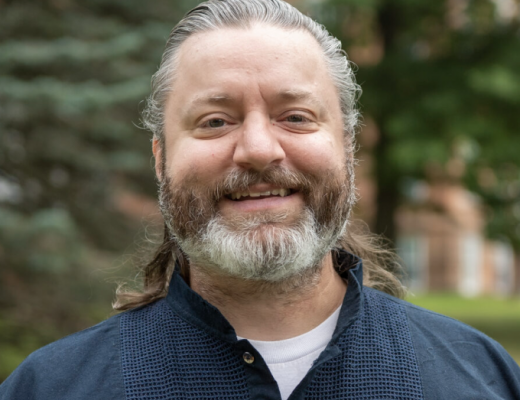
Nathan Scoll serves as a Visiting Lecturer in the Department of Film and Media Studies at the Dietrich School of Arts and Sciences, University of Pittsburgh. His academic-practitioner profile bridges scholarly research with hands-on film production, primarily within horror and American independent cinema contexts. His research integrates genre theory, formal cinematic analysis, and industrial practice through socio-historical and international frameworks. Scoll specializes in examining how film cultures evolve under societal pressures, with recent focus on digital exhibition models during global disruptions. His work consistently connects theoretical scholarship to practical filmmaking applications. Scoll actively disseminates research through presentations at major conferences including the Society for Cinema and Media Studies (SCMS) and University Film and Video Association (UFVA). His creative outputs have been featured at prestigious festivals such as Slamdance, FilmQuest, AFI Los Angeles, and the US Comedy Arts Festival, demonstrating his dual expertise in academic and production spheres.
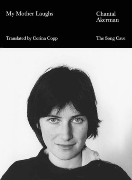
Corina Copp is a Lecturer in the Literature Department at the University of California, San Diego, and Special Faculty in the School of Film/Video at the California Institute of the Arts. Her work bridges poetry, translation, and curatorial practice, focusing on interdisciplinary collaboration, feminist critiques, and nonhuman temporalities. She holds a doctoral candidacy at the University of Southern California, researching intersections of political commitment and artistic process across disciplines. Education: PhD candidate in Literature at USC. Notable awards include the 2014 New York Foundation for the Arts Fellowship in Poetry. Her translations include Chantal Akerman’s My Mother Laughs and her own poetry collection The Green Ray (2015). Research interests span feminist film theory, cultural criticism, and the ethics of artistic collaboration. She curates the Rotations film series, emphasizing experimental nonfiction and transnational feminist practices. Recent projects explore Palestinian solidarity through cinema and the intersections of grief, history, and form in documentary. Publications span Frieze , Film Comment , BOMB , and Cabinet . Key works include essays on Deborah Stratman’s experimental documentaries and Barbara Hammer’s legacy. She designs workshops on political commitment in writing and co-leads initiatives like the Language Garden reading series.
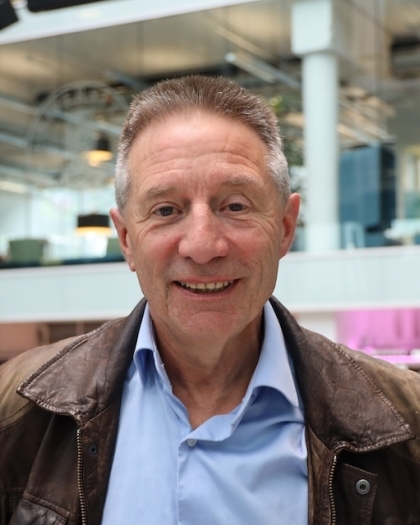
Leif Ove Larsen is a Professor at the Department of Information Science and Media Studies, University of Bergen. His research focuses on cultural journalism, migrant cinema, copyright law in media production, and Norwegian film comedy. He has presented at international conferences such as Nordmedia, ECREA, and the European Communication Research Association. His work examines topics including the role of public service media (e.g., NRK), representations of the welfare state, and the interplay between migrant filmmakers and national identity. Notably, he has explored the legal challenges faced by documentary makers regarding copyright and fair use, contributing to policy discussions in Scandinavian media industries. Larsen’s recent lectures address contemporary issues like cultural citizenship through cinema and the evolving dynamics of comedy in multicultural societies. His earlier works analyze Norwegian comedic icons like Leif Juster, linking their roles to national identity formation. He has collaborated on projects funded by the Research Council of Norway (Project 217201), investigating journalistic representations of institutional dysfunction. His contributions bridge theoretical frameworks with empirical studies, influencing both academic discourse and practical media policy.
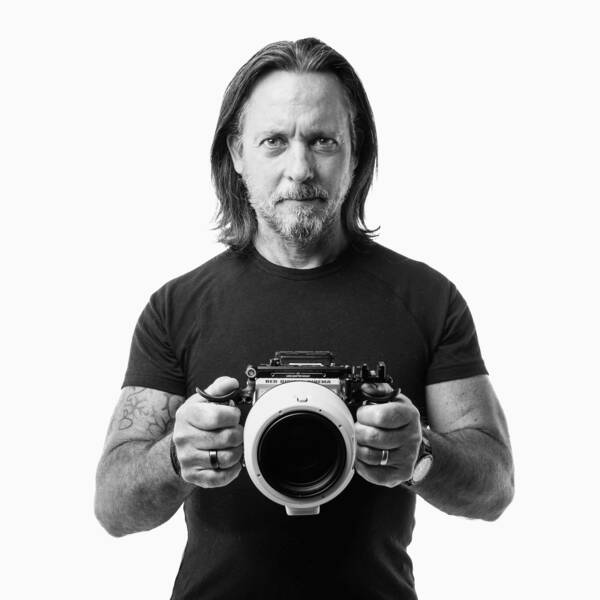
William Donaruma is a Teaching Professor of Film Production and Head of Production at the University of Notre Dame's Department of Film, Television, and Theatre within the College of Arts and Letters. He also directs the Creative Computing Group and serves as Creative Director for the Office of Digital Learning. His academic career spans over two decades, with full-time faculty status since 1998. Donaruma holds a B.A. in Communication & Theatre from Notre Dame (1989) and post-graduate training in Film, Television, and Theatre (2002–2004). His research focuses on documentary and narrative filmmaking, cinematography, and camera technology. Current projects include a Ukraine cultural heritage documentary and initiatives in African education outreach. Notable works include Nets of Memory , And There is Nothing New Under the Sun , and Strong Bodies Fight , which have garnered awards such as the Action On Film Festival Best Sports Documentary (2011) and the Honolulu Film Awards Gold Kahuna Award (2011). Grants: Over $500K in equipment grants (2014–2020) for cinema technology upgrades. Teaching: Courses include Introduction to Film/Video Production , High Definition Production , and Visual Anthropology . Service: Member of the Academy of Television Arts and Sciences, judge for College Television Awards, and advisor for FilmSkills.com. Donaruma’s creative work spans experimental short films, architectural documentaries, and educational multimedia projects, often blending technical innovation with cultural storytelling.
Professor Mary Celeste Kearney is a faculty member at the University of Notre Dame's Department of Film, Television, and Theatre within the College of Arts and Letters. She holds concurrent roles in Gender Studies and American Studies programs, and is a faculty affiliate of the Initiative on Race and Resilience. Her research focuses on gender, youth, and media culture, with a particular emphasis on historical and critical perspectives. She has earned an NEH fellowship and the Katherine Singer Kovács Essay Award for her work on post-girl power media. Education: PhD in Critical Studies from USC School of Cinema-Television (1998), MA in English from Georgetown (1992), and BA in Liberal Arts from University of San Diego (1984). She has directed Notre Dame's Gender Studies Program since 2015 and previously held professorial roles at the University of Texas at Austin. Research interests include film, television, popular music, gender dynamics, and cultural studies. Her current book project examines early representations of American teenage girlhood, with a focus on narrative and design elements. She has edited numerous volumes, including Gender and Rock (2017) and The Craft of Criticism (2018). Her editorial roles include Routledge's Gender, Sexuality, and Media series. Professional contributions include founding Girls Rock Michiana, a music-empowerment initiative for girls. Awards highlight her scholarly impact, including Routledge's Gender and Media Reader and her Kovács-winning essay on luminosity in media. Her work bridges academic critique with community engagement, emphasizing media equity and youth creativity.
Professor Sean Redmond is an Associate Dean (Media, Writing and Publishing) at RMIT University's School of Media & Communication. His research focuses on media studies, cultural analysis, and the intersection of technology with contemporary societal issues. Notable projects include exploring the Saudi film industry's global reputation, cultural censorship in Chinese cyberpunk, and child performance in 1960s American sitcoms. His work spans film theory, celebrity studies, and pedagogical innovation in creative practices. He actively supervises research projects addressing cultural dynamics and digital media transformations. With a prolific publication record, Redmond engages with themes like loneliness in media, virtual production technologies, and the ethics of cinematic representation. Research interests include celebrity politics, global media governance, and the emotional dimensions of visual and auditory media. He contributes to interdisciplinary dialogues on media's role in shaping cultural narratives and societal values.
Aaron McLoughlin is a Senior Lecturer in the School of Design at RMIT University, Australia. His professional background includes animation production at ABC TV and work as a practising writer/director with films screened at festivals like Melbourne and Edinburgh International Film Festivals. He is a member of Mensa and collaborates on creative projects such as the feature film Gravy (starring John Jarratt) and a mobile app with John Kricfalusi (creator of Ren and Stimpy ). His creative works span animation, experimental film, and interactive media. Key Projects: Gravy , John K's Merry Christmas App , Heartbreak Motel , Chloroplasm . Affiliations: School of Design, RMIT University; ABC TV (early career). His research interests focus on animation, film production, and digital media innovation, reflected in his creative outputs and industry collaborations.
Jed Samer is an Associate Professor in the Department of English at Arizona State University, specializing in film and media studies. They hold a PhD from the University of Southern California and teach courses such as FMS 380 (Race and Gender in U.S. Media) and FMS 455 (Comedy as Social Discourse). Samer’s research focuses on feminist, queer, and trans media, with particular attention to 1970s feminist media and documentary practices. Their work bridges academic scholarship with creative practice as a remix artist and documentary filmmaker. Education: PhD, University of Southern California Research interests include the intersection of gender, sexuality, and media representation, with publications analyzing lesbian potentiality in 1970s feminist film and interviews with avant-garde filmmaker Su Friedrich. Their teaching emphasizes critical engagement with media’s sociopolitical dimensions, including race, gender, and humor.
Daniel Martinico is an Associate Teaching Professor in the Department of Communication at the University of California, San Diego (UCSD). His professional affiliation includes a physical office at MCC 244 on the UCSD campus in La Jolla, California. While formal educational credentials are not explicitly detailed in his profile, his career focuses on filmmaking, experimental media, and collaborative film production. His creative work spans independent feature films (e.g., *OK, Good* and *Excursions*) and short experimental films. He has collaborated as an editor, cinematographer, and producer across narrative, documentary, and experimental projects. His films have been showcased globally at venues such as Machine Project, LACMA, LA Filmforum, Anthology Film Archives, and international film festivals like Oberhausen and Rencontres Internationales Paris/Berlin. Martinico’s work has been featured in media outlets including *Variety*, *Filmmaker Magazine*, and *IndieWire*, and streams on platforms like MUBI and Kinoscope. Despite his prolific creative output, no formal academic awards or grants are explicitly listed in the provided text. His teaching and research interests align with contemporary media production and exhibition practices.
Jonathan Andrews is a Lecturer in Art and Film Studies at Yale University. He is an independent filmmaker and educator based in Middlebury, Vermont. His notable works include the Student Academy Award-nominated Night Tram (1995) and the award-winning Short Change (1996). After a hiatus to focus on family, he returned with the short film Last Night (2015) and is developing the feature film Poor Rich for production in 2016. Andrews holds a B.A. with Honors in Film Studies from Yale College (1996). His research interests focus on film and ideology, dramatic storytelling techniques, and the audiovisual contract in cinematic narratives. His career highlights include micro-budget feature films and recent creative projects, reflecting his commitment to both academic teaching and independent filmmaking.
Christopher Catone (b. 1987) is a part-time music/music technology faculty member at the Dietrich School of Music, University of Pittsburgh, and the Associate Director of Music and Organist at St. Paul Cathedral. He holds an M.M. in Music Technology and Composition from Duquesne University (2012). His work spans composition for sacred, chamber, and film music, alongside electronic music performance and interdisciplinary projects. Catone’s compositions have been performed by ensembles like Alia Musica Pittsburgh and A Far Cry Ensemble, and his multimedia works such as The Mill have screened at international festivals. He maintains a private piano studio and has collaborated with institutions including Remote Control Studios (Hans Zimmer), Confluence Ballet Co., and Khasma Piano Duo. Research & Creative Work: Catone specializes in blending acoustic and electronic elements, with a focus on contemporary classical music, film scoring, and sacred composition. His recent projects include the 2025 release of Patience, Love, Grace (solo piano) and Confluence (ballet score), alongside commissions for orchestral and chamber ensembles. His work often explores themes of industrial heritage (e.g., The Mill ), nature-inspired compositions ( TREKKING ), and pandemic-era creativity ( Tonight’s Mix series). Awards & Recognition: While no formal scientific awards are listed, Catone’s work has gained traction through performances at venues like Northeastern University, Western Illinois University, and the Arkhaios Film Festival. His collaborations with artists like Katie Palumbo and Katya Janpoladyan highlight his network within the Pittsburgh arts community. Grants & Advising: Catone’s projects are often commission-based, with notable collaborations funded by institutions like Confluence Ballet Co. and the Pittsburgh Downtown Partnership. He advises students through his private piano studio, emphasizing technical and creative development. Labs & Teams: Operates a home studio for electronic music production and maintains affiliations with St. Paul Cathedral, Community College of Allegheny County, and the Mary Pappert School of Music at Duquesne University.
Dr. Andrew Stiff is a Senior Lecturer in Design Studies at RMIT University Vietnam's School of Communication & Design, affiliated with the Saigon South Campus. He holds a practice-based PhD from RMIT's School of Graduate Research: Architecture and Design, focusing on 'Moving Experiences: Video Observations of Ho Chi Minh City.' His academic roles include Research Coordinator, HDR DA, and Co-chair of the Practice Research Symposium Asia (2024-2027). Research interests center on experimental filmmaking exploring urban spaces' sensory experiences, cultural impacts on dense urban development, and sustainable urban futures. He has led collaborative projects like the Common Design Studio (with RMIT Melbourne, LCC UAL, ELISAVA Barcelona) and contributed to initiatives such as Memefest on food-space production and PlaceLab urban mapping workshops. Teaching roles include coordinating Capstone 1 for 3rd-year students and supervising PhD candidates. He has examined doctoral theses at the University of Sunderland (UK) and Multimedia University Malaysia. Leadership roles include Deputy Dean at RMIT Linton College Malaysia (2011–2016) and PG Coordinator at UAL's MA Digital Arts (2003–2010). His creative practice spans experimental digital film, augmented reality projects, and urban documentation. Key projects include 'Hem Realities' (2024), 'Smart and Creative Cities in Vietnam' (2024), and 'The Tight Hems' (2024), addressing urban sustainability and cultural heritage.
Larry Bogad is a Professor in the Department of Theatre & Dance at the University of California, Davis, where he also directs the Center for Tactical Performance. He is a leading scholar and practitioner of political performance, blending activism, theatre, and humor to challenge power structures and support social movements. His research centers on tactical performance , guerrilla theatre , and radical memory , with a focus on how humor and imagination can be deployed in progressive activism. His influential books, including Tactical Performance: The Theory and Practice of Serious Play and Electoral Guerrilla Theatre , are widely used in academic curricula. He has also authored plays such as COINTELSHOW and ECONOMUSIC , and produced the documentary Radical Ridicule . His recent artistic projects, such as SINFONÍA DE LA JUSTICIA and Delivering Democracy , demonstrate a sustained commitment to community-engaged art, focusing on farmworker rights and voter education. His work has been performed internationally, from SF MOMA to occupied zones in Barcelona, and he has led workshops in revolutionary Cairo, Helsinki, Buenos Aires, and beyond. His publications reveal a consistent engagement with themes of political satire , historical memory , and nonviolent resistance , often using performance to critique state violence, electoral systems, and social amnesia. The interdisciplinary nature of his work spans theatre, political science, history, and media studies. Art and Controversy Fellow, Carnegie Mellon University Distinguished Lecturer on Performance and Politics, Carnegie Mellon University Humanities and Political Conflict Fellow, Arizona State University Bogad advises activists globally through his Tactical Performance workshops and has collaborated with organizations such as the Center for Victims of Torture and North Bay Jobs With Justice. His projects have received grants from the Puffin Fund, Network of Ensemble Theatres, UC Institute for Research in the Arts, and the British Arts and Humanities Research Council. He is currently a People’s WPA Artist with the U.S. Department of Arts and Culture. He leads the Center for Tactical Performance and co-founded the Clown Army, fostering creative resistance and participatory performance. His work integrates academic scholarship with direct action, creating a unique model of engaged artistry.
Ehsan Estiri is a Temporary Assistant Professor in the Department of Anthropology at Utah State University, specializing in cultural anthropology and religious studies. He is based at the Logan campus, with his office located in RWST 207. His interdisciplinary research employs ethnographic methods to explore contemporary Islam in the U.S., particularly how religious identity is shaped at the intersection of race, gender, politics, sect, and media. Educational Background: Ph.D., 2020 – Middle Eastern Languages and Cultures (Cultural Anthropology of the Middle East), The Ohio State University M.A., 2014 – Folk Studies and Anthropology, Western Kentucky University M.S., 2010 – Social (Cultural) Anthropology with Specialization in Film Ethnography, Dalarna University, Sweden Dr. Estiri’s research interests lie at the convergence of cultural anthropology, religious studies, and visual anthropology. He investigates how new forms of Islamic expression emerge in American contexts, with a strong emphasis on the role of media and representation. His unique background as an ethnographic filmmaker informs his methodological approach, particularly in capturing and portraying the sacred through visual media. His work integrates film and photography as both research tools and forms of scholarly output. He has created multiple films and photographic exhibitions focused on cultural and religious representation, especially the depiction of spirituality in visual form. These creative projects serve as complementary expressions of his academic inquiry. While no scientific awards or publications are listed in the provided text, his interdisciplinary profile bridges anthropology, religion, and film, suggesting a commitment to innovative, multimodal scholarship. Dr. Estiri advises students in anthropology and related fields, though no specific advisees are named. There is no mention of grant funding or research teams. His work may involve collaborations in visual and digital anthropology, particularly in projects that combine ethnographic research with audiovisual storytelling. He is actively engaged in research and teaching, with a focus on expanding the methodological boundaries of anthropological inquiry through film. Future work may continue to explore the visual dimensions of religious life in diverse cultural contexts, particularly within diasporic Muslim communities in North America.
Matt Huesmann is an Adjunct Professor in the Film Department at Lipscomb University's College of Cinematic Arts, serving as its Chair. He holds a B.A. in Music Theory and Composition from The Ohio State University and an MFA in Film and Creative Media from Lipscomb. His interdisciplinary career spans cinematography, music production (including producing the largest-selling kids music line and writing over 15 No. 1 songs for contemporary Christian artists), photography, and documentary filmmaking. Education: B.A. (Ohio State University), MFA (Lipscomb University) His research interests emphasize cinematic storytelling, blending visual arts with narrative innovation. He co-wrote and directed the multipart documentary series "The History of Boardgames," reflecting his passion for interdisciplinary projects. His work spans over 85 television shows, commercials, and corporate events, alongside contributions to CMA festivals and national award shows. Notable awards include multiple Dove Awards and nominations for his music contributions. He mentors aspiring filmmakers through teaching and actively collaborates on creative industry projects.