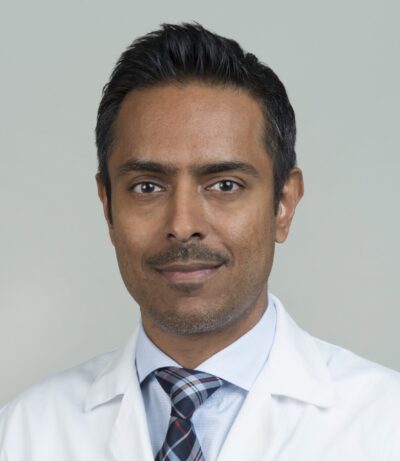
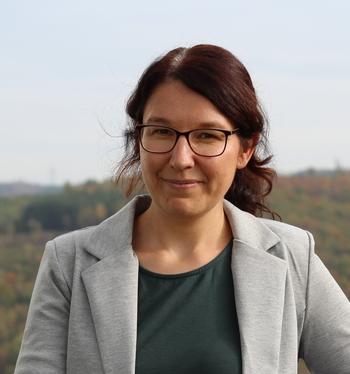
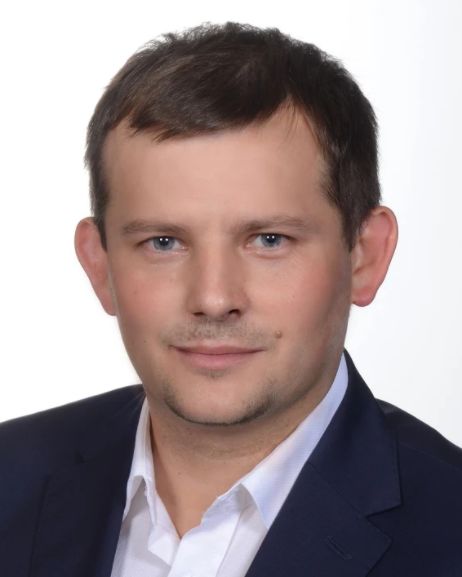
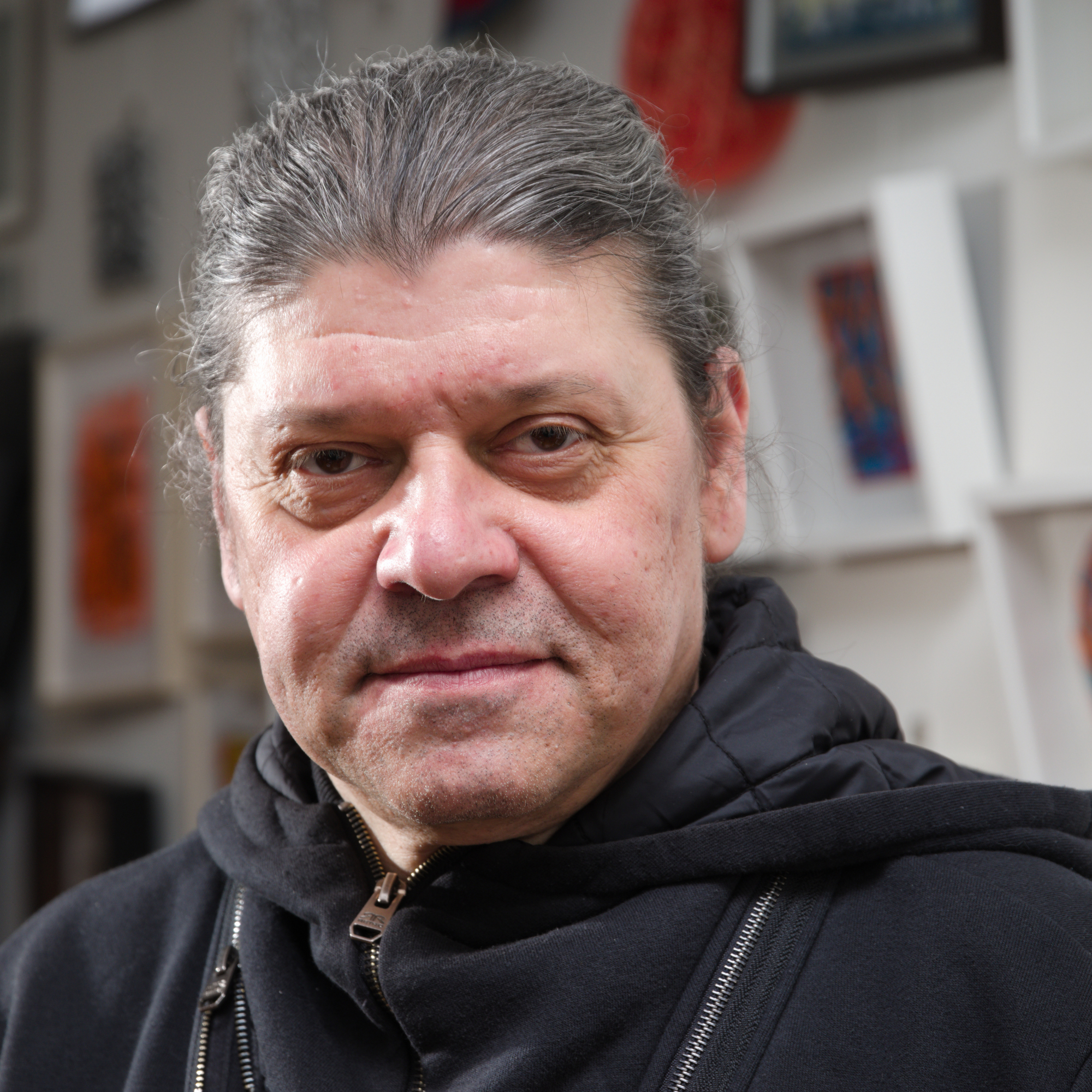
Dr. Ausaf A. Bari is a Professor in Residence in the Department of Neurosurgery at the David Geffen School of Medicine, University of California, Los Angeles (UCLA) . He specializes in neurosurgical repair and restoration of brain and nerve function, with expertise in deep brain stimulation (DBS) for treating movement disorders (Parkinson’s disease, tremor, dystonia) and psychiatric disorders (depression, OCD). His clinical practice also encompasses neurosurgery for brain tumors, chronic pain , and peripheral nerve disorders . Education MD and PhD from Boston University School of Medicine Neurosurgery residency at UCLA William P. Van Wagenen Fellowship at University of Toronto’s functional neurosurgery program Undergraduate degree in neurobiology from UC Berkeley Dr. Bari’s research focuses on interdisciplinary studies of the neurobiology of movement and psychiatric disorders , aiming to expand neurosurgical treatments. His work explores the interaction between motor and reward systems , the use of DBS in epilepsy and pain management , and structural connectivity mapping for precise neuromodulation targets. Scientific Awards & Recognitions William P. Van Wagenen Fellowship (2014-2015) Retzius Neuroanatomy Competition - First Place (2011) NIH Ruth L. Kirschtein Individual National Research Service Award (2001) Henry I. Russek Student Achievement Award (2004) Super Doctors® Southern California (2025) Los Angeles Magazine Top Doctors (2021, 2023-2025)
Dr. Mike Cook is a Senior Lecturer in the Department of Informatics at King’s College London, focusing on computational creativity and artificial intelligence applications in game design. He studies how AI can autonomously create video games, blending software engineering, design, and human-computer interaction. At King’s, he leads the Human-Centred Computing Group as Deputy Head and contributes to the Arts & Creativity Hub, which explores informatics in creative domains like games and storytelling. Research Interests: Computational creativity, automated game design, procedural generation, generative software, and AI-human collaboration in creative processes. Key Projects: Creator of AI game design systems Angelina , Puck , and Pixie , which generate games from newspaper headlines, code-level mechanics, and narrative structures. Scientific Awards: Recipient of the Royal Academy of Engineering Research Fellowship for his work on automated game design and creative AI tools. Public Engagement: Regularly participates in events like New Scientist Live and co-founded PROCJAM , a procedural generation game development jam.
Dr. Franziska Herrmann serves as a Scientific Associate (Post-Doc) in the Department of German Didactics - Linguistic and Cultural Education within the Department of Education and Psychology at Free University Berlin since April 2024. Previously, she was a guest lecturer at the same institution during 2023-2024. Her academic journey includes a doctorate completed in 2023 through a cotutelle program between Technical University Dresden and Free University Bozen/Brixen, Italy, focusing on phenomenological approaches to creative writing experiences among primary school children and students. Her research interests encompass literacy acquisition, literary learning, phenomenologically oriented writing research, children's text research, and university learning workshops. Dr. Herrmann employs narrative and inquiry-based learning methodologies in her work, with particular emphasis on how writing processes unfold in primary school settings. Her phenomenological approach examines the bodily and experiential dimensions of writing, revealing how children construct meaning through textual creation. Analysis of her recent publications shows a strong focus on children's writing processes, particularly how they navigate creative expression, social themes like wealth inequality, and multilingual contexts. Her work frequently examines the physicality of writing as a bodily activity and explores how different writing tools affect the writing experience. She has made significant contributions to understanding how children make sense of complex social concepts through writing. Aloys Fischer Grundschulforschungspreis 2024 for her dissertation on creative writing experiences VignA-Award 2024 for the same dissertation work Innovationspreis Weiterbildung Sachsen 2013 for the educational program 'Kinder in guten Händen®' Dr. Herrmann actively supervises research projects and collaborates internationally, particularly through the International Network of University Learning Workshops (NeHle) and the Vignette and Anecdote Research Network (VignA). Her current habilitation project 'Schreiben in der Schule' (2022-2026) continues her phenomenological investigations of writing situations in German language instruction across primary and secondary schools. She also coordinates the Learning and Research Workshop for Literary Education at Free University Berlin. Her scholarly activities extend to numerous conference presentations across Europe, where she shares insights on phenomenological vignette research, writing processes, and creative learning experiences in educational settings. She serves on the board of the International Network of University Learning Workshops since 2021 and participates in multiple research collaborations examining writing, literacy, and pedagogical approaches across different educational contexts.
Isabel Maria Pinto Ramos is an Associate Professor with Habilitation at the Department of Information Systems, School of Engineering, University of Minho , where she leads the ISTTOS R&D Lab and contributes to the Algoritmi Research Centre . She has held leadership roles including Head of Department of Information Systems and President of the Portuguese Association for Information Systems . Her career spans academic, research, and international collaboration roles, including a Visiting International Professor position at the University of Münster, Germany. Academic Leadership : Doctoral Programme Director (2014-2019), IFIP TC8 Chair (2019-2023), Vice President for Membership Services at Association for Information Systems (2022-2025) Research Themes : Innovation management, knowledge systems, digital transformation, crowdsourcing, organizational memory, gender in STEM, and technology's socio-cultural impacts International Engagement : Collaborations with Carnegie-Mellon, University of Agder, Georgia State, and Federal University of Santa Catarina through research projects and mobilities Scientific Recognition : IFIP Outstanding Service Award (2009) IFIP Silver Core Award (2013) IIAKM Lifetime Academic Achievement (2021) Editorial Contributions : Associate Editor for Communications of the AIS (since 2020), editorial board member for Enterprise Information Systems , International Journal of Knowledge Engineering , and Revista de Administração Mackenzie Project Involvement : ERASMUS+, Horizon 2020, FP7 programs with focus on digital workplaces, knowledge management, and organizational resilience Her scientific output demonstrates consistent exploration at the intersection of Information Systems and Organizational Innovation , with recent works focusing on Digital Transformation (2021-2025), Crowdsourcing Platforms (2009-2016), and Organizational Memory (2005-2014). The 2023-2025 publications particularly emphasize Smart City Resilience , Multigenerational Workforce Challenges , and AI Development Democratization .
Geraint A. Wiggins is Professor of Computational Creativity at the Department of Computing, Goldsmiths' College, University of London. He leads the Intelligent Sound and Music Systems (ISMS) group within the Centre for Cognition, Computation and Culture. His academic career spans institutions including City University and the University of Edinburgh. He holds two PhDs: one in Computational Linguistics and another in Musical Composition from Edinburgh, supervised by Dr Graeme Ritchie and Prof Nigel Osborne respectively. MA (Cantab.), PhD (Edin.), PhD (Edin.), MIEE, MBCS Research interests include computational creativity, music cognition, statistical learning of harmonic movement, information dynamics of music, melodic segmentation, and cross-domain modeling between music and language. His work integrates artificial intelligence with music theory, perception, and composition. Key grants include EPSRC-funded projects on musical memory and similarity, Mellon Foundation collaborations on music encoding, and interdisciplinary studies with Queen Mary University and Indiana University. He has served on UK Technology Foresight Creative Digital Media Task Groups and chaired the SSAISB (UK AI/Cognitive Science society). Leadership roles encompass directing Goldsmiths' MSci scheme, serving as Associate Editor of Musicae Scientiae, and co-founding the AISB Journal. He has held external examiner roles at Queen Mary and Sussex, and been part of various university and departmental committees.
Dr. Emil Kowalik is an Assistant Professor in the Department of Civil Procedure at the Faculty of Law, Canon Law and Administration of the John Paul II Catholic University of Lublin (KUL). His academic work focuses on civil procedure with special emphasis on land and mortgage register proceedings, real estate transactions, and commercial law. His educational background includes: Graduate of John Paul II High School in Przysucha (2001) Graduate of the Faculty of Law and Administration of Maria Curie-Skłodowska University in Lublin (2006) Doctor of Laws from KUL (2019) based on dissertation "The scope of court jurisdiction in land and mortgage register proceedings" Postgraduate studies in Economic and Commercial Law (2008) Postgraduate studies preparing for vocational teaching (2009) Postgraduate studies in Economics and commercial law for judges at Warsaw School of Economics (2011) Dr. Kowalik's research examines the intersection of civil procedure with property law and commercial regulations. His work investigates court jurisdiction in land registry matters, procedural rights of participants, and the implementation of EU directives into Polish commercial law. His scholarship demonstrates how procedural efficiency in land registration systems affects property rights protection and legal certainty in real estate transactions. He has developed particular expertise in how participant circumstances, including death, impact the speed and effectiveness of land registry proceedings. His publications from 2014-2024 show a clear trajectory from specific procedural issues toward broader regulatory frameworks. Early work focused on court interpretation of Supreme Court resolutions, while more recent publications address EU directive implementation and specialized topics like Catholic Church property in commercial contexts. His 2020 monograph "Scope of court jurisdiction in land and mortgage register proceedings" represents his most substantial scholarly contribution with 456 pages of analysis. Dr. Kowalik actively supervises student internships at common courts across the Lublin district, coordinating a structured 160-hour program during summer breaks. He has presented at twelve consecutive Scientific Seminars of doctoral students at KUL (2013-2024), with recent international presentations in Vienna and Milan reflecting growing European legal engagement. His science popularization efforts through the Lublin Science Festival creatively connect legal concepts with popular culture references (Cinderella, Shrek) to make law accessible to the general public.
Samuel Swope serves as an Assistant Professor within the Academy of Visual Arts at the School of Creative Arts, Hong Kong Baptist University, where he engages in cutting-edge interdisciplinary work bridging artistic practice and technology. His contact details include telephone 3411 8297 and email sswope@hkbu.edu.hk. His research spans a dynamic fusion of artistic and technological domains, with primary emphasis on: Visual Arts Flight and Air as Medium Robotic Art Human-Drone Interaction Sonification Airborne Systems Sculpture Creative Coding Creative Engineering Art Tech
Zoltán Szegedy-Maszák serves as Professor and Head of the Doctoral School at the Hungarian University of Fine Arts, where he previously held roles including General Vice-Rector (2009–present) and Head of the Department of Fine Arts Theory (2009–present). His academic trajectory began with Assistant Professorship in the Department of Intermedia in 1997, advancing to Associate Professor in 2003 before achieving full Professor rank through his doctoral school leadership. Education highlights: DLA (Doctor of Liberal Arts, Fine Arts), Hungarian University of Fine Arts (2003) 'dr. habil' qualification (2007) Diploma in Intermedia Department (1994) Diploma in Painting Department (1992) Postgraduate studies, Hungarian University of Fine Arts (1992–1994) Szegedy-Maszák's research interrogates the philosophical and technical boundaries of digital creation, with sustained focus on experimental photography (notably camera obscura and photogram techniques), networked art systems, and interactive installations that challenge perception. His theoretical work explores media archaeology, digital preservation, and the interplay between artistic practice and technological innovation, often examining how obsolete media forms inform contemporary digital culture. This manifests in projects like 'Cryptogram' and 'Aura' that investigate data encryption, virtual realities, and illusion mechanisms. His artistic output reveals consistent engagement with digital imaging, web-based interactivity, and real-time data systems, evolving from early computer animations (1991–1999) toward complex networked installations. Key themes include the archaeology of computing, interface design as artistic medium, and the philosophical implications of digital reproduction—particularly evident in his 2000–2010 publications analyzing virtual environments and interactive frameworks. Notable recognition includes: Munkácsy Mihály Award (2010) Camera Obscura award at Hungarian Museum of Photography (2008) Ferenc Deák Post-Doctoral Scholarship (2003–2004) Derkovits Scholarship (1999–2002) European Media Artists Residency at Bauhaus Dessau (1995) As doctoral thesis supervisor since 2003, he has mentored emerging media artists while developing innovative curricula like 'Introduction to the (An)Archaeology of Computers'—an ongoing educational resource. His collaborative work with C3 Cultural and Communication Center (1996–2002) and projects like 'Exploration Network' demonstrate commitment to interdisciplinary knowledge exchange. Current initiatives focus on preserving digital art heritage through frameworks like the '404 Project,' addressing media obsolescence while exploring new frontiers in networked artistic practice.
Georgi Arnaoudov serves as Professor of Composition and Harmony at the Faculty of Arts, Department of Music, New Bulgarian University (NBU). Born in 1957 into a musical family, he graduated from the National Music School "Lyubomir Pipkov" (1976) and the National Academy of Music "Pancho Vladigerov" (1985), studying composition under Prof. Alexander Tanev. He defended his doctoral dissertation on postmodernism in music at NBU in 2012. Professor at NBU since 2000 (regular faculty since 2000, Associate Professor 2009, Professor 2020) Vice-Rector for Research and Creative Activities at NBU (2018-2022) Previously taught at National Music School "Lyubomir Pipkov" (1984-2000) Arnaoudov's research focuses on contemporary composition, postmodernism in music, symphonic and chamber music, with significant contributions to electronic music, ancient music studies, and Far Eastern musical traditions. His theoretical work spans music semiotics, aesthetics of modernism/postmodernism, and communication in music. His compositional output includes symphonic poems, concertos, vocal works, and pieces based on medieval Bulgarian texts and Orphic rituals. His scholarly publications analyze 20th-21st century music styles, with particular attention to Messiaen, Borges-inspired concepts, and cross-cultural musical exchanges. His research demonstrates a consistent trajectory examining postmodern aesthetics, stylistic pluralism, and the integration of historical musical traditions within contemporary frameworks. Honorary Professor of NBU (2023) Musician of the Year by Bulgarian National Radio (2018) Golden Age Award by Bulgarian Ministry of Culture (2017) International Karl Maria von Weber Prize (1989) As Vice-Rector for Research (2018-2022), Arnaoudov significantly contributed to NBU's research infrastructure. He has received multiple international grants supporting his compositions performed globally from Carnegie Hall to Beijing Concert Hall. His academic leadership extends to founding the "Musica Nova-Sofia" International Festival for Contemporary Music (1993) and serving on boards of cultural institutions including the Union of Bulgarian Composers and Society for New Music in Bulgaria. Arnaoudov maintains active artistic collaborations through the Orpheus Academy Orchestra at NBU, where his works like "Concierto Barroco" receive regular performances. His research integrates practical composition with theoretical exploration of musical meaning across historical and cultural contexts.
Douglas Kearney is an associate professor of Creative Writing/English at the University of Minnesota Twin Cities, where he serves as a McKnight Presidential Fellow. His academic career centers on innovative approaches to poetry, performance, and language studies, with a particular focus on African American cultural expressions and linguistic traditions. Dr. Kearney's research interests span multiple domains of creative expression and cultural analysis. His work primarily explores: The political dimensions of language and performance African American vernacular strategies and "drum machine prosody" Visual and performative aspects of poetry Trickster figures and mask traditions in Black culture Contemporary music's relationship to poetic form Libretti composition and interdisciplinary artistic collaboration His most recent publications demonstrate a consistent engagement with the intersections of race, language, and performance. Through collections like "Sho" and "Optic Subwoof," Kearney examines how language becomes performative in contexts of racial politics, exploring what he terms "double-jointed syntax" as a way to reveal the complexities of Black linguistic expression. His work shows increasing attention to the relationship between visual presentation and sonic interpretation in poetry. Kearney's scholarly contributions have been recognized with numerous prestigious awards: Griffin Poetry Prize (2022) Minnesota Book Award for Poetry (2022) Pegasus Award for Poetry Criticism (2023) CLMP Firecracker Award for Poetry Theodore Roethke Memorial Poetry Prize Whiting Award Cy Twombly Award for Poetry As an educator, Kearney mentors emerging writers while maintaining an active creative practice that bridges academic and artistic communities. His work extends beyond traditional publication through performance, libretti composition, and interdisciplinary collaborations that challenge conventional boundaries between literary forms. Though not explicitly detailed in available information, Kearney's creative process suggests engagement with collaborative artistic spaces that support his experimental approach to language and performance. His work with musicians, visual artists, and performers indicates participation in vibrant interdisciplinary creative communities.
Emily Bommarito is an Assistant Professor in the Foundations Department at the College for Creative Studies (CCS) in Detroit, joining as full-time faculty in 2025 after prior adjunct roles at CCS and Wayne State University. Her work investigates climate change impacts on the Great Lakes cultural region through interdisciplinary approaches blending technology and traditional design. Education: MFA from Cranbrook Academy of Art (2022) Research Interests: Bommarito's practice integrates digital fabrication, code, and user experience design to create immersive art experiences addressing socio-digital human conditions amid climate challenges. She merges mold-making and 3D modeling with data visualization to explore cultural effects of environmental change in the Great Lakes region, emphasizing audience engagement through interactive installations. Climate Change Visualization Digital-Physical Art Synthesis Great Lakes Cultural Studies Interactive Experience Design Environmental Data Art Socio-Technological Reflections Professional Context: Since 2016, she has collaborated with organizations including Kroll Tactical and Eugene Applebaum College of Pharmacy on digital fabrication projects, bridging artistic practice with real-world applications in the Detroit metropolitan area.
Maximilian Friehs serves as Assistant Professor in Psychology of Conflict, Risk and Safety, maintaining an active research profile with 45 total publications and an h-index of 15. His work bridges cognitive neuroscience, gaming psychology, and risk perception through experimental methodologies. Primary research domains include: Gaming Psychology (100% fingerprint relevance) Response Inhibition and Stop-Signal Task paradigms (88%-53% relevance) Transcranial stimulation techniques (tDCS/TMS) applied to cognitive enhancement Working Memory mechanisms in digital environments Conflict, Risk, and Safety psychology frameworks Current research trends emphasize neurogaming applications, particularly examining transcranial stimulation effects during gameplay and psychological impacts of climate-related doomscrolling. Recent outputs analyze engagement dynamics in Minecraft multiplayer environments and narrative influences on cognitive control tasks. Professional activities include four 2023 conference presentations addressing toxicity mitigation in gaming, multimodal social agents, and art-technology intersections. His work demonstrates consistent annual output growth, with 11 publications in 2024 and 5 already in 2025.
Isabella Graßl serves as Visiting Professor for Gender in Computer Science at Technical University of Darmstadt, Germany. She currently holds the Diversity & Inclusion Chair position for ASE 2025 and actively participates in program committees for ICSE, ESEC/FSE, and CSEE&T conferences across multiple tracks including Software Engineering Education and Training. Her research spans critical intersections of technology and society: Human and Social Aspects of Software Engineering Diversity and Inclusion frameworks in technical environments Innovative Programming Education methodologies Empirical Software Engineering validation techniques Machine Learning/NLP applications in developer tools Literary and Cultural Studies perspectives on computing Recent publications (2022-2025) demonstrate concentrated exploration of gender dynamics in programming education, with empirical studies on pair programming behaviors, music-based coding engagement, and specialized approaches for neurodiverse learners. Her work increasingly integrates queer theory into software engineering through investigations of LGBTQ+ student experiences and identity-inclusive pedagogy. No scientific awards were documented in the source materials. Conference contributions reveal extensive service in academic leadership, particularly through diversity initiatives and educational track committees, though specific grant funding or student advising details remain unreported in available texts.
Professor Sandra Schramke serves as Professor for Scenography and Curatorial Practice/Spatialization of Knowledge at the Muthesius Academy of Art and Design Kiel since April 2017. She brings extensive expertise in architectural theory, exhibition design, and knowledge spatialization, with particular specialization in the work of Charles and Ray Eames. Her academic journey includes significant research positions at the Bauhaus University in Weimar and Humboldt University of Berlin, establishing her as a leading scholar in cybernetic scenography. Her academic foundation was built through studies in architecture and urban planning at the Technical University of Dortmund (1989-1995), followed by professional architectural practice in Germany and Spain (1995-2002). She then transitioned to academia as a research assistant at the Faculty of Architecture at the Bauhaus University in Weimar (2002-2008), where she completed her doctorate on 'Cybernetic Scenography: The Exhibition Architecture of Charles and Ray Eames from 1959 to 1964/65' in 2009. She further expanded her research at the Chair of the History of Knowledge and Culture at Humboldt University of Berlin (2009-2016) and as a postdoctoral researcher in the Cluster of Excellence 'Image Knowledge Design' (2016/17). Professor Schramke's research focuses on how spatial arrangements communicate knowledge and shape experiences, examining scenographic principles across historical and contemporary contexts. Her work bridges architectural theory with practical applications in museums, exhibitions, and public spaces, exploring how physical environments influence perception and understanding. She investigates the theoretical frameworks that connect spatial design with knowledge transmission, with particular attention to seriality, folding in architecture, and the transformation of biological forms into spatial concepts. Analysis of her publications reveals consistent thematic development across her career, with increasing interdisciplinary reach. Her work demonstrates sophisticated integration of architectural history, theoretical frameworks, and contemporary design challenges. Key patterns include exploration of how architectural elements convey meaning, examination of historical precedents in modern contexts, and investigation of the relationship between physical form and conceptual content in exhibition design. Humboldt University of Berlin: Taught courses including Drawing in Art and Technology, Atmospheres, Cultures of Remembrance, Bodies and Images, Spatial Figures of Thought, Architectures of Representation, Genealogies, Typologies, Forms, Attention Economies, Project City Space Design, Material Meanings, Objects, Berlin's Technical Infrastructures 1800-2020, Synchronous Orders of Knowledge, Symmetries, Spaces and Things, Models, and Multimedia Architectures Weißensee Academy of Art Berlin: Taught Project City Space Design and Seminar Spaces and Things Bauhaus University Weimar: Supervised seminars, design projects, and diploma theses at both the Chair of Architectural Theory and the Chair of Urban Planning II, while overseeing the interdisciplinary Media Architecture program Muthesius Academy of Fine Arts Kiel: Teaches Project Experience Spaces, Museology, and Exhibition Architecture Professor Schramke has contributed to significant research initiatives including Movement Research at Anhalt University of Applied Sciences Dessau-Roßlau, Paper Folding in Teaching at the Bauhaus with MPI Potsdam, and the Project City Space Design with the Berlin Foundation Week. Her practical architectural experience includes participation in the renovation of the former Reichstag President's Palace in Berlin, renovation of Hannes Meyer's teachers' houses in Bernau, and numerous architectural competitions and projects across Germany and Spain. This dual engagement with theoretical research and practical application defines her distinctive scholarly approach.
Prof. Gary A. Rendsburg serves as the Blanche and Irving Laurie Professor of Jewish History in the Department of Jewish Studies at Rutgers University. He holds advanced degrees from New York University and has established himself as a leading scholar in Biblical Studies and Ancient Near Eastern languages with approximately 190 scholarly publications. Dr. Rendsburg earned his M.A. and Ph.D. from New York University, developing expertise in Hebrew language and Biblical literature that would define his academic career. His educational background provided the foundation for his distinctive approach combining linguistic precision with literary analysis. Professor Rendsburg's research spans multiple dimensions of Biblical scholarship: Linguistic analysis of Biblical Hebrew, particularly regional dialects within the Bible Literary structure and composition of biblical narratives Connections between biblical texts and ancient Near Eastern contexts, especially Egyptology Hebrew language evolution from Biblical to Rabbinic periods Integration of archaeological findings with textual analysis Biblical poetics and rhetorical devices His extensive publication record demonstrates consistent engagement with core questions of biblical composition and interpretation. Rendsburg's work often bridges traditional rabbinic interpretation with modern critical scholarship, examining literary structures, linguistic features, and historical contexts. His recent writings show particular interest in Egyptian influences on biblical narratives, literary artistry of biblical composition, and linguistic peculiarities of the Hebrew Bible. The publication of his book How the Bible Is Written represents a culmination of his lifelong study of biblical literary techniques. Professor Rendsburg has authored seven books and approximately 190 scholarly articles throughout his distinguished career. His most recent monograph explores the sophisticated literary techniques employed by biblical authors, demonstrating how ancient writers used language creatively to enhance textual meaning and aesthetic quality. His academic leadership includes mentoring students in Jewish Studies and contributing to scholarly discourse on the intersection of traditional and critical approaches to biblical texts. Rendsburg advocates for what he describes as "an ideal balance in Torah study" that allows for both critical study of the text as well as traditional study, ideally putting the two in conversation with each other.