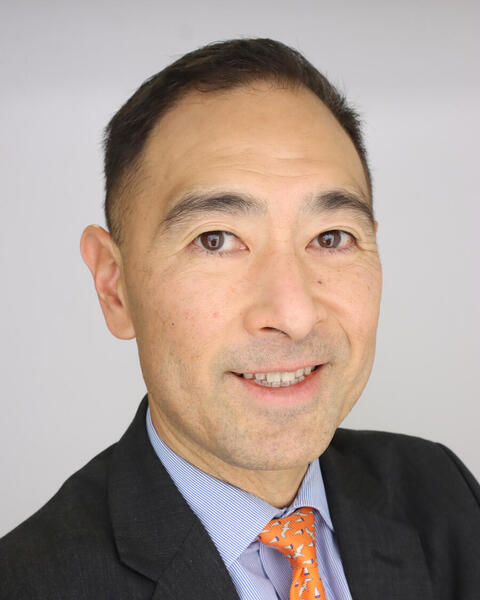
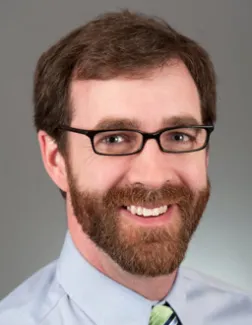
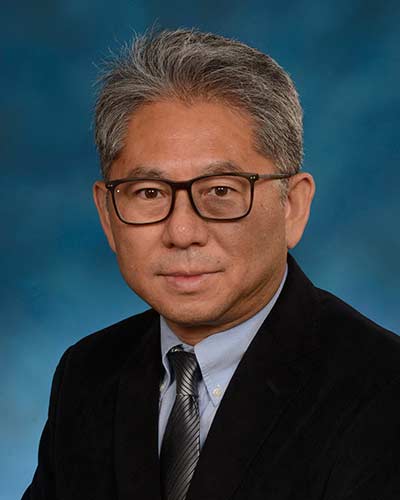
Edward S. Ahn, M.D., is a Professor of Neurosurgery and Pediatrics at Mayo Clinic in Rochester, Minnesota. As a pediatric neurosurgeon, he specializes in minimally invasive techniques for craniosynostosis, fetal surgery for myelomeningocele, and management of pediatric neurovascular disorders like arteriovenous malformations and moyamoya disease. Education: B.A. in Biology and East Asian Studies, Harvard University (1999) M.D., New York University School of Medicine (2000) Internship in General Surgery, University of Maryland Medical Center (2001) Residency in Neurosurgery, University of Maryland Medical Center (2006) Fellowship in Pediatric Neurosurgery, Children’s Hospital (2007) Dr. Ahn’s research focuses on improving surgical outcomes for children with neurosurgical conditions, including craniosynostosis , hydrocephalus , and Chiari malformation . He pioneered image-based craniometric diagnostics for early craniosynostosis detection and explores telehealth applications for neonatal cranial screening. His recent work analyzes machine learning integration in surgical diagnostics. His publications span pediatric neurosurgical outcomes , fetal interventions , and vascular anomaly management . Dr. Ahn serves on editorial boards for Journal of Neurosurgery: Pediatrics and Child's Nervous System , and has received multiple Top Doctor recognitions since 2011. He also contributes to surgical education as Director of Neurosurgical Medical Student Education at Johns Hopkins University (2013–2014).
Dr. Samantha Spencer is an Assistant Professor of Orthopedic Surgery at Harvard Medical School and a practicing Orthopedic Surgeon at Boston Children's Hospital, where she serves as Director of the Lower Extremity and Deformity Program. She has been on staff since 2006, specializing in congenital and traumatic pediatric orthopedic conditions. Her clinical practice spans Boston, Waltham, and Weymouth locations. Education: Northwestern University (BS, 1996) University of Michigan Medical School (MD, 2000) Harvard Combined Orthopedic Residency Program (Residency, 2005) Boston Children's Hospital (Pediatric Orthopedic Fellowship, 2006) Research Focus: Dr. Spencer's work centers on lower extremity reconstruction, bone dysplasias (particularly osteogenesis imperfecta), and vascular anomalies. She collaborates with multidisciplinary programs including the Osteogenesis Imperfecta Clinic, Vascular Anomalies Center, and Lower Extremity Research Group. Her publications emphasize surgical outcomes, classification systems, and clinical guidelines for rare orthopedic and vascular conditions. Publications: Her recent work demonstrates strong focus on pediatric orthopedic surgery outcomes (68% of last 15 papers), with secondary themes in vascular anomalies (20%) and developmental biology (12%). Notably, 40% involve multicenter collaborations addressing complex disorders like skeletal dysplasia and tarsal coalition. Community Engagement: Dr. Spencer provides national outreach through patient advocacy organizations including Little People of America, Osteogenesis Imperfecta Foundation, and CLOVES Foundation Medical Advisory Board.
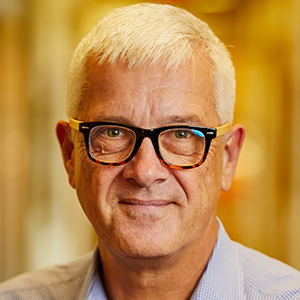
Per Erik Ahlberg is a Professor of Evolutionary Organismal Biology at Uppsala University since 2003. His research spans vertebrate paleontology, evolutionary developmental biology, and the origins of key morphological innovations in jawed vertebrates and tetrapods. Academic Affiliations: Uppsala University (2003-present), The Natural History Museum, London (1994-2003), University of Oxford (1989-1994) Leadership Roles: Head of Subdepartment, Director of SciLifeLab Uppsala's Zebrafish Facility Research Focus: His work investigates the evolutionary transitions from fish to tetrapods, jaw development, and the integration of fossil evidence with developmental genetics. He employs synchrotron imaging and comparative anatomy to analyze ancient vertebrate structures. Grant History: Recipient of major grants including five awards from the Swedish Research Council (2003-2019), two ERC grants (2008 and 2021), and multiple Wallenberg Scholarships (2010-2020), totaling over €6 million in direct funding. Scientific Contributions: His publications in Nature and Science have redefined understanding of early vertebrate evolution, with notable discoveries about tetrapod trackways (2010), neural crest development (2005), and placoderm jaw anatomy. Honors: Elected to Royal Swedish Academy of Sciences (2012), Linnaeus Gold Medal (2012), Wallenberg Scholarship (2010, renewed 2016)
Judith West-Mays is a Professor in the Department of Pathology & Molecular Medicine at McMaster University . Her research focuses on: Molecular mechanisms of eye development and disease Role of transcription factors (AP-2β, AP-2α) in ocular morphogenesis Transforming Growth Factor Beta (TGF-β) signaling in epithelial-mesenchymal transition (EMT) Matrix Metalloproteinases (MMPs) in vision disorders Biomaterials for intraocular pressure management Key scientific contributions include: Elucidating AP-2β's role in trabecular meshwork formation and glaucoma Characterizing MMP-9's impact on aqueous humor drainage Developing conditional knockout mouse models for vision research Investigating YAP signaling in lens fibrosis Creating mucoadhesive micelles for glaucoma therapy Scientific awards : Brockhouse Canada Prize (2025) for interdisciplinary vision health research Teaching : Biomedical Engineering II (2018) at McMaster University. Collaborators include Taiyab, Sheardown, and Ball. Research hubs involve McMaster's interdisciplinary vision science team.
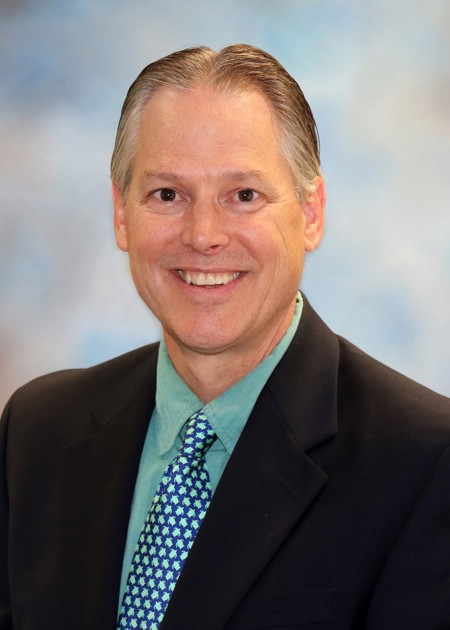
Dr. Leslie G. Biesecker serves as Director & NIH Distinguished Investigator leading the Center for Precision Health Research at the National Human Genome Research Institute (NHGRI), part of the National Institutes of Health. His work bridges clinical practice and genomic research with focus on elucidating genetic mechanisms of rare developmental disorders. Educational background includes: B.S. from University of California, Riverside M.D. from University of Illinois College of Medicine Pediatrics training at University of Wisconsin Clinical and molecular genetics training at University of Michigan His research program centers on precision genomics with dual foci: (1) rare disorders of development and overgrowth including Proteus syndrome, PIK3CA-related overgrowth, and Pallister-Hall syndrome; and (2) hypothesis-generating clinical genomics through the ClinSeq ® program. The laboratory employs integrated clinical-molecular approaches, massively parallel sequencing, and animal models to investigate genotype-phenotype correlations while developing therapeutic strategies targeting the AKT/PIK3CA pathway. Recent work expands into pharmacogenetics and cancer susceptibility gene evaluation. Key publication trends reveal consistent leadership in rare disease gene discovery (2000-2012), methodological innovation in genomic analysis (2009-2013), and translational implementation of genomic medicine (2013-2016). Research spans molecular genetics, clinical diagnostics, and therapeutic development with strong emphasis on somatic mosaicism and pathway-targeted treatments. Major recognitions include: Election to National Academy of Medicine Presidency of American Society of Human Genetics (2019) NIH Distinguished Investigator appointment Dr. Biesecker co-directs a CLIA-certified molecular diagnostic laboratory and serves on editorial boards for four biomedical journals. His advisory roles include Illumina Corporation consultation and World Trade Center victim identification efforts. The Precision Genomics Section maintains active recruitment for clinical protocols studying rare disorders through the NIH Clinical Center, with recent expansion into therapeutic interventions for overgrowth disorders. Current lab structure includes staff scientists (Jennifer Johnston), genetic counselors (Julie Sapp), research scientists (Marjorie Lindhurst), and postdoctoral fellows working on genomic analysis and clinical protocols.
Marit Råbu is a Professor of Clinical Psychology at the University of Oslo's Department of Psychology. She specializes in psychotherapy processes, qualitative research methods, and clinical practice. Råbu holds a PhD from the University of Oslo (2011) and is a specialist in clinical psychology and intensive psychotherapy certified by the Norwegian Psychological Association. She teaches courses such as PSYC4400, PSYC5410, and PSYC6310, focusing on psychological treatment, ethics, and clinical practice. Her research focuses on psychotherapy process exploration, particularly relational development in therapy and qualitative methodologies. She leads the project 'The Art and Science of Conducting Psychotherapy,' collaborating with researchers like Christian Moltu and John McLeod. She has also contributed to projects like 'An intensive process-outcome study of the interpersonal aspects of psychotherapy.' Råbu has supervised PhD projects on topics like therapists' personal experiences (Ida Stange Bernhardt, 2020), avoidant personality disorder (Kristine Dahl Sørensen, 2020), and foster parent experiences (Anette Stamland Solvi). She received the 2017 Bjørn Christiansen Prize for her academic contributions. She serves on editorial boards for Psychotherapy Research and Counselling Psychology Quarterly, and on the Norwegian Psychological Association's appeal committee. Her publications emphasize therapeutic relationships, qualitative case studies, and the integration of clinical practice with research. Recent work includes studies on foster parent challenges, therapist personal therapy, and the impact of placement disruptions in child welfare systems.
Dr. Samuel A. Moore is a Scholarly Communication Specialist at Cambridge University Library and Principal Investigator for the Materialising Open Research Practices in the Humanities and Social Sciences project, funded by Wellcome Trust, AHRC, and Research England Development Fund. He serves as an Affiliated Lecturer at Cambridge Digital Humanities and a College Research Associate at King’s College Cambridge. PhD in Digital Humanities from King’s College London His research bridges scholarly communication, metaresearch, and open science, with a focus on digital publishing , community-led open access , and academic governance . Recent work explores care ethics in publishing, the politics of author rights, and alternatives to corporate-controlled scholarly infrastructure. Key trends in his publications include open access policy critique, scholar-led publishing models, and interdisciplinary studies linking bioethics and academic labor. He co-founded the Radical Open Access Collective and advocates for progressive publishing ecosystems. Wellcome Trust grant AHRC grant Research England Development Fund grant Dr. Moore’s collaborations span libraries, research institutions, and global open science initiatives. His work emphasizes democratizing knowledge production and challenging commercial monopolies in academia.
Andrew Wilkie is the Nuffield Professor of Pathology at the University of Oxford and an Honorary Consultant in Clinical Genetics. He is based at the MRC Weatherall Institute of Molecular Medicine and leads the Wilkie Group focused on clinical genetics and craniofacial malformations. His work bridges fundamental research with clinical applications, particularly in the field of craniosynostosis and related conditions. He serves as Co-Theme Leader for Genomic Medicine at the NIHR Oxford Biomedical Research Centre and is an Associate Editor for PLoS Genetics. Wilkie's primary research interest lies in craniofacial malformations, especially craniosynostosis (premature fusion of cranial sutures). His groundbreaking 1995 discovery identified specific FGFR2 mutations as the cause of Apert syndrome, which led to two major research themes: discovering other genetic causes of craniosynostosis and investigating why certain mutations occur with unexpectedly high frequency. This work evolved into the recognition of 'selfish spermatogonial selection,' a novel process in testes that links germline and somatic mutation origins. Current research leverages next-generation sequencing to identify new genetic causes of craniosynostosis and explores the mechanisms by which stem cell populations maintain cranial sutures. His publication record demonstrates consistent contributions to understanding craniosynostosis genetics, with recent work focusing on novel gene discoveries (such as MEGF8, ERF, TCF12, ZIC1, CDC45, and SMO), regulatory element mapping, and the application of whole genome sequencing in clinical diagnostics. The research spans molecular genetics, developmental biology, and clinical applications, with increasing emphasis on understanding the complex pathways underlying craniofacial development and malformation. Fellow of the Academy of Medical Sciences (FMedSci) Fellow of the Royal Society (FRS) Wilkie leads a research team including Associate Professor Stephen Twigg, DPhil candidates, and postdoctoral researchers. His lab collaborates extensively with clinical units across the UK and internationally, including craniofacial teams at Oxford University Hospitals, Great Ormond Street Hospital, and institutions in the Netherlands and USA. Funding comes from major sources including the Wellcome Trust, NIHR Oxford Biomedical Research Centre, NIH, and Action Medical Research. His work has translated numerous genetic discoveries into NHS diagnostic testing, directly impacting patient care through improved genetic diagnoses. The Wilkie Lab maintains strong connections with clinical genetics services and focuses on both fundamental mechanisms of cranial suture development and direct clinical applications. The team uses mouse models (including CRISPR-Cas9 genome editing), single-cell analysis, and human genomic data to understand suture biology. They're part of the 100,000 Genomes Project and work closely with the NIHR Oxford BRC Genomic Medicine theme to implement genomic technologies in healthcare.
Brian C Schutte is an Associate Professor in the Department of Microbiology, Genetics, & Immunology at Michigan State University. He holds additional faculty appointments in the Genetics & Genome Sciences Program and the Cell & Molecular Biology Program, reflecting his interdisciplinary research focus on craniofacial development and genetic disorders. Dr. Schutte's primary research interests include: Genetic basis of orofacial clefts and craniofacial anomalies IRF6 gene function and regulation in epithelial development Molecular pathways involved in periderm formation Genetic epidemiology of cleft palate Gene-environment interactions in craniofacial morphogenesis His publication record spans over three decades, with recent work continuing to advance our understanding of craniofacial genetics. His 2024 publication on the geographic distribution of cleft palate in Finland demonstrates his ongoing contribution to the field. His research bridges basic science and clinical applications, particularly in understanding Van der Woude syndrome and other IRF6-related disorders. As an educator, Dr. Schutte teaches MGI 404: Human Genetics and MGI 499: Undergraduate Research, providing students with both theoretical knowledge and hands-on research experience in genetics and molecular biology.
Prof. Hester van de Bovenkamp is a Full Professor at the Erasmus School of Health Policy & Management (Erasmus University Rotterdam), specializing in Health Care Governance. She leads research in Patient Sciences, focusing on patient experiences, participation, and representation. Her work integrates qualitative research and text mining to analyze patient narratives, contributing to healthcare improvement and reflexive governance. She is a member of interdisciplinary research collaboratives involving academics, patients, healthcare providers, and policymakers. Her research emphasizes institutional layering, regulatory frameworks, and participatory approaches in healthcare. Notable contributions include exploring patient-parent-clinician relationships through arts-based projects and analyzing frontline professionals' experiences in complex care systems. She has received awards such as the 'Best Supervisor 2021' and contributed to datasets like 'From promise to practice: a guide to pooled procurement mechanisms'. Teaching roles include coordinating the HEPL course 'Comparative Health Policy' and supervising master’s theses. Her work aligns with UN Sustainable Development Goals, particularly improving healthcare quality and equity. Key Research Themes: Patient-centered care, regulatory governance, qualitative methodologies, and participatory healthcare. Recent Projects: Analysis of European Reference Network CRANIO’s arts-based initiatives and systemic reviews on rare congenital conditions. Awards: Vide publicatieprijs 2024, Best Supervisor 2021, Frans Rutten Research Award. She actively engages in media and public discourse, emphasizing the importance of patient voices in healthcare policy. Her interdisciplinary approach bridges academic research with practical healthcare challenges, fostering innovation in governance and care delivery.
Gerald H. Thomsen is a Professor in the Department of Biochemistry and Cell Biology at Stony Brook University, where his research focuses on molecular mechanisms of embryonic development using Xenopus frogs and Nematostella vectensis sea anemones. His laboratory investigates growth factor signaling pathways, ubiquitin-mediated protein degradation, and transcriptional regulation during early development. His primary research areas include TGFß superfamily signaling (specifically Vg1/nodal/activin and BMP pathways), ubiquitin ligase function in cell differentiation, and evolutionary developmental biology through comparative studies of vertebrates and cnidarians. Current projects examine Smad-interacting factors, Smurf ubiquitin ligases, and the molecular basis of regeneration in sea anemones, with implications for understanding human developmental disorders and birth defects. Dr. Thomsen's publications reveal consistent focus on developmental signaling mechanisms across diverse model organisms, with recent work emphasizing CRISPR/Cas9 applications in Xenopus and evolutionary conservation of developmental pathways. His laboratory maintains active collaborations with researchers at the University of Florida and University of Hawaii, particularly on Nematostella vectensis functional genomics and regeneration studies, as evidenced by co-authored publications on cnidarian developmental mechanisms.
Brend Jonker is a researcher at Erasmus MC specializing in Oral and Maxillofacial Surgery. His work bridges clinical practice with biomedical research, focusing on improving outcomes for oral cancer patients and advancing prosthetic solutions for craniofacial reconstruction. Primary Affiliation: Erasmus MC, Oral and Maxillofacial Surgery Research Interests span oral cancer survivorship, radiation therapy optimization, and innovative biomaterial applications. His work includes: Evaluating long-term quality of life post-microvascular tongue reconstruction Comparing bone graft materials for maxillary sinus augmentation Developing predictive assays for oral mucosal radiation toxicity Creating 3D-printed temporomandibular joint prostheses with graded material properties Scientific Contributions include clinical trials and translational research in: Postoperative radiotherapy for high-risk oral cavity cancer Biomechanical modeling of joint replacements Retrospective cohort analyses of tumor control
Jay G. Berry, MD, MPH is a general pediatrician and hospitalist at Boston Children's Hospital , and a researcher affiliated with Harvard Medical School . His work focuses on care delivery, clinical outcomes, and healthcare resource utilization for children with medical complexity. He has secured NIH and foundation funding for initiatives like developing contingency plans, hospital discharge standards, and machine learning models for predicting healthcare needs. Education : MD (University of Alabama School of Medicine, 2001), Pediatrics Residency (University of Utah), Harvard Pediatric Health Services Research Fellowship (2006). Leadership : Founder of the Complex Care Quality Improvement Research Collaborative and Co-Chair of the Academic Pediatrics Association Complex Care Special Interest Group. Research Themes include healthcare integration for children with tracheostomies, discharge planning, medical complexity classification, and machine learning applications. His recent publications span Pediatrics , JAMA Pediatrics , and BMJ , analyzing topics like readmissions, resource use in neurological disorders, and pandemic impacts on surgical volumes. Scientific Awards include: Agency for Healthcare Research and Quality (AHRQ) Outstanding Achievement for Scientific Contribution Using HCUP Award Young Clinician Research Award from CIMIT AcademyHealth Nemours Child Health Services Research Award Grants include NICHD K23 HD058092-01A1 and AHRQ R21 funding. He has contributed to national standards for pediatric discharge care and developed the Hospitalization Resource Intensity Scores for Kids (H-RISK).
Dr. Shaojun Du is a Professor in the Department of Biochemistry and Molecular Biology at the University of Maryland School of Medicine and a faculty member at the Institute of Marine and Environmental Technology, University of Maryland. His research focuses on genetic and epigenetic mechanisms regulating muscle development, growth, and repair using zebrafish models. Education: PhD in Biochemistry and Molecular Biology (University of Toronto, 1993), Postdoctoral Fellowship in Genetics (Howard Hughes Medical Institute, University of Washington, 1993–1997) Dr. Du’s work explores the roles of molecular chaperones (e.g., Hsp90α1), histone modifiers (e.g., SmyD1), and fusogenic proteins (Myomaker/Myomixer) in myofibril assembly, sarcomere organization, and myoblast fusion. His lab employs Tol2 transposon, TALEN, and CRISPR technologies to generate transgenic and mutant zebrafish models. The scientific awards section is currently empty, but his research has been funded by the NIH (Grant 1R01AR072703-01A1, 2018–2025). His publications highlight breakthroughs in muscle cell identity specification via Hedgehog signaling and the critical role of post-translational modifications in protein stability. Dr. Du’s lab has developed over 40 zebrafish models to study muscle structural proteins, transcription factors, and microRNA networks, contributing to understanding neuromuscular diseases and advancing aquaculture applications.
Carolin Röding is a postdoctoral researcher at the University of Tübingen, affiliated with the Senckenberg Center for Human Evolution and Paleoecology and the Department of Geosciences. Her work focuses on paleoanthropology through the FIRSTSTEPS project (2022-2027) and earlier CROSSROADS project (2015-2017). BSc in Biology (University of Duisburg-Essen, 2011-2015) MSc in Archaeological Sciences with Paleoanthropology specialization (University of Tübingen, 2015-2017) PhD in Archaeological Sciences and Human Evolution (University of Tübingen, 2018-2022) Her research explores: Brain evolution and braincase interaction through geometric morphometrics Virtual cranial reconstructions of fragmented fossils Dental morphology analysis in hominin identification Cranial integration and modularity in evolutionary contexts Methodological advancements in 3D imaging and surface registration Regional focus on Mediterranean hominin dispersals Scientific contributions include methodological innovations for fragmented fossils and key findings about Aterian maxillary fragments and Homo sapiens dispersal timelines. Recent publications focus on dental evolution, frontal sinuses, and paleopathological reanalysis. Universitäts Bund travel grant (EAA 2022) Universitäts Bund conference grant (EAA 2021) iNEAL STSM grant for Zagreb research visit (2021) DAAD Kongressreisen Stipendium (AAPA 2021) Active in virtual anthropology and collaborating with the Senckenberg Center, she continues advancing methodologies for studying fragmentary hominin remains and evolutionary patterns.