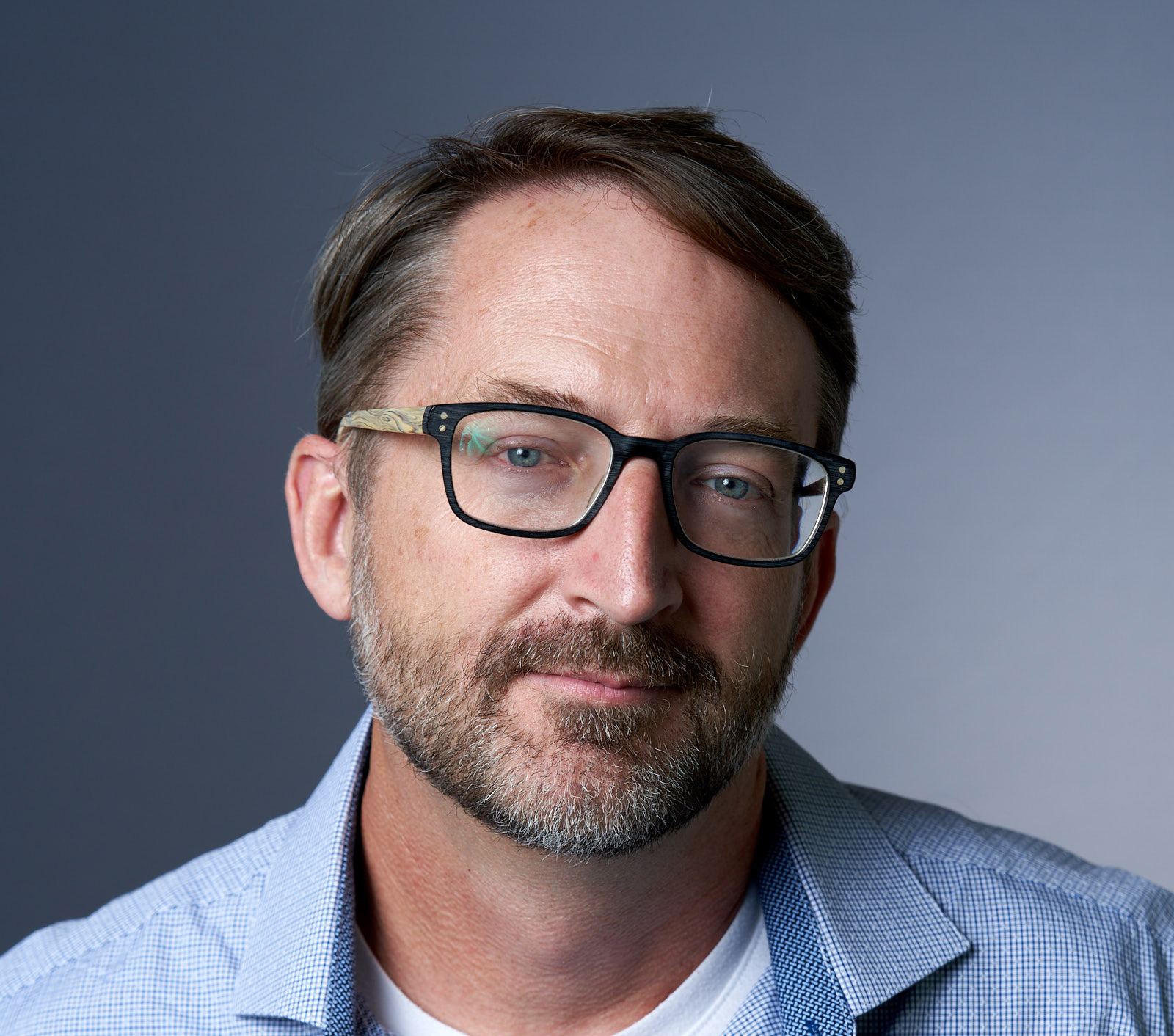
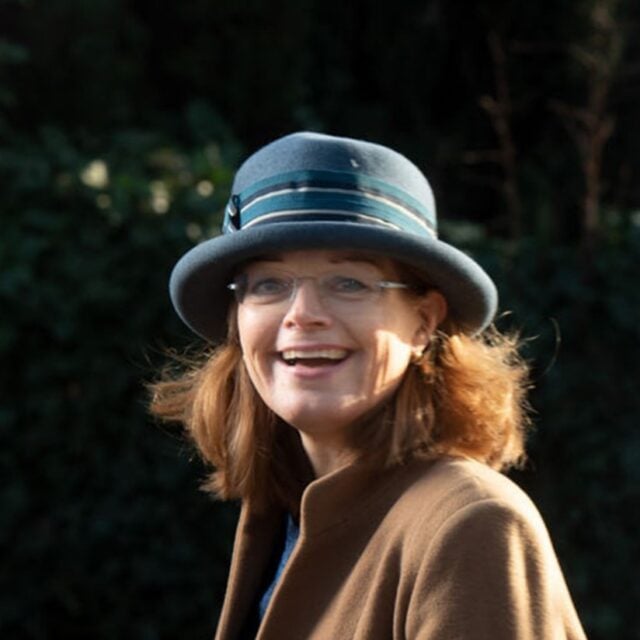
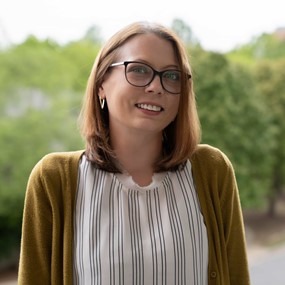
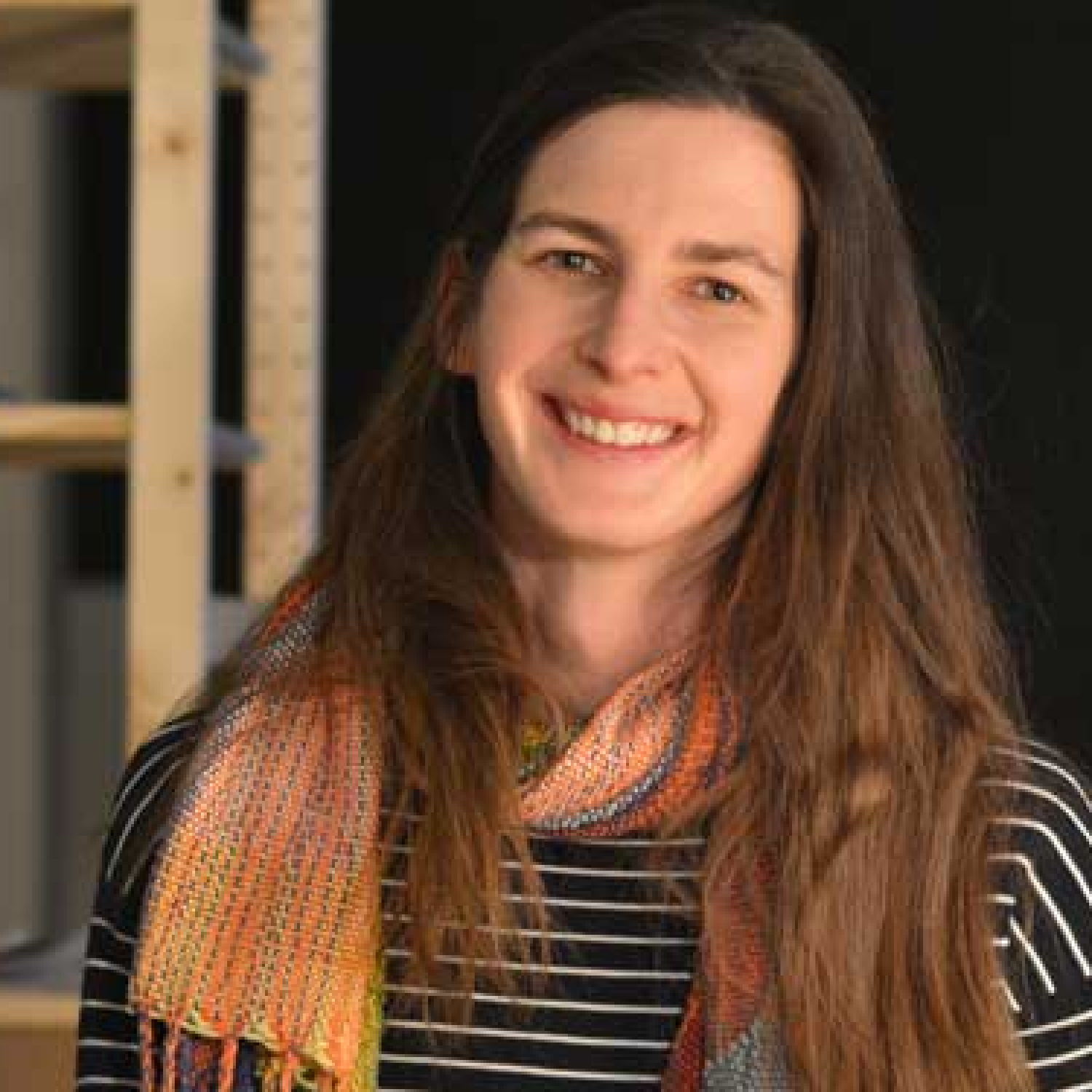
Jacob Eyferth is an Associate Professor at the University of Chicago, jointly appointed in the Department of East Asian Languages and Civilizations, the Department of History, and the College. His research focuses on the social and cultural history of twentieth-century China, particularly rural communities, gender dynamics, and the intersection of technology and everyday life. Key research themes include the impact of industrialization, collectivization, and revolution on non-elite populations, with an emphasis on rural women's labor and cultural resistance. His current project explores cotton production, clothing, and gender during China's socialist era. Eating Rice from Bamboo Roots (2009) How China Works (2006) Rural Development in Transitional China (2004) He received the 2011 Joseph Levenson Prize for his first book. Eyferth has taught courses on topics such as class inequality, everyday life under socialism, and revolutionary China, and has held postdoctoral fellowships at Oxford, Harvard, and Rutgers.
Steven Jackson is a Professor of Information Science and Science and Technology Studies at Cornell University's Bowers College of Computing and Information Science, with additional graduate field appointments in Communication and Public Affairs. Since July 2023, he has served as Vice-Provost for Academic Innovation at Cornell, and previously held leadership positions as Chair of Information Science and Dean of William Keeton House. His work bridges academic research with significant institutional leadership in higher education innovation. Dr. Jackson's research focuses on critical intersections of technology, society, and the environment, with three primary strands: technology ethics, law and policy; maintenance, repair and sustainability; and technology, inequality and global development. His work draws from American pragmatism, political economy, and science and technology studies, integrating methods from sociology, anthropology, philosophy, and media studies. He is particularly interested in how computing practices meet social and material worlds, with implications for infrastructure, collaboration, sustainability, and cultural practice. His recent publications reveal a strong emphasis on repair as both theoretical concept and practical methodology, exploring 'ordinary hope' as a framework for technological engagement and examining unmaking as a necessary counterpart to design. The research spans diverse geographical contexts from the global North to South, addressing caste dynamics in computing, digital authoritarianism, and infrastructure challenges in developing contexts. Dr. Jackson has received significant recognition including an NSF CAREER award and more than twenty paper awards at leading computing and information science venues. His research has been supported by major organizations including the U.S. National Science Foundation, Social Science Research Council, Ford Foundation, Sloan Foundation, World Bank, Intel Research, Atkinson Center for Sustainability, and the Canadian Social Science and Humanities Research Council. As an advisor, Dr. Jackson has mentored numerous graduate students who have gone on to prominent positions at institutions worldwide. He currently advises Jen Liu, Amy Cheatle, Daniel Mwesigwa, Johan Michalove, and Ritik Batra, while his former students include Palashi Vaghela (Assistant Professor at Simon Fraser University), Samir Passi (Responsible AI Researcher at Microsoft), Maggie Jack (Assistant Professor at NYU), and Ranjit Singh (Senior Researcher at Data and Society). Dr. Jackson convenes the Computing On Earth Lab, an experimental collaboration bringing together social scientists, humanists, artists, and engineers to rethink the material and planetary foundations of computing. The lab reflects his commitment to interdisciplinary approaches that address computing's environmental impacts and sustainability challenges.
Andrea Korda, PhD (University of California, Santa Barbara), is an Associate Professor of Fine Arts & Humanities and Associate Dean (Research) at the Augustana Campus of the University of Alberta. Her academic career bridges art history, material culture studies, and pedagogical innovation. Educations: BA in Fine Arts, Queen's University MA in Art History, Concordia University PhD in Art History, University of California, Santa Barbara Research Focus: Dr. Korda specializes in 19th-century visual and material culture, with a focus on education's visual dimensions, children's literature, and community-engaged projects like the award-winning Crafting Communities initiative. She co-curated the virtual exhibition Photographies (Bruce Peel Special Collections) and explores hands-on learning through historical crafts. Teaching: Courses include modern art history (AUART 220), photography theory (AUART 225), and special topics in visual culture (AUART 382). She emphasizes experiential learning and digital humanities integration, as seen in her work with the Getty Museum Challenge and OER projects. Collaborations: Leads interdisciplinary teams on projects like Crafting Communities , blending scholarship with public engagement. Her research bridges historical methodologies with contemporary pedagogical practices, fostering connections between academia and communities.
Tina Dacin is a Professor of Strategy and Organizational Behavior at the Smith School of Business, Queen's University, Canada. She holds the Stephen J.R. Smith Chair and serves as Director of the Community Impact Research Program. Her roles include former Director of the Smith School’s Centre for Social Impact, former University Senate member, and former Chair of the Principal’s Innovation Fund Committee. She co-founded the Community of Social Innovation Chair and holds affiliations with the Academy of Management and Informs. Education: Ph.D. (1993) in Business Administration from the University of Toronto and M.A. in Psychology from the University of New Brunswick. Research focuses on cultural heritage, social innovation/entrepreneurship, strategic alliances, and globalization. Key themes include custodianship, tradition preservation, place-making, and institutional dynamics. Recent work explores craft-based ventures, place-sensitive organizational practices, and institutional renewal in crises like the Detroit water wars. Awards: None explicitly listed, though her chair position reflects academic distinction. Teaching includes courses on global social impact and analytics/ethics policy. Labs/Teams: Leadership in the Community Impact Research Program and the Scotiabank Centre for Customer Analytics.
Michele Matteini serves as Associate Professor in the Department of Art History at New York University's College of Arts and Science, specializing in Late Imperial Chinese painting and material culture (ca. 1400-1800) with focus on Qing dynasty antiquarianism, collecting practices, and eighteenth-century transnational artistic exchanges. His academic credentials include: Ph.D. (2012) in History of Art from the Institute of Fine Arts M.A. (2004) in History of Art from New York University B.A. (2000) summa cum laude from the University of Venice, Ca’ Foscari Research interests encompass Late Imperial Chinese painting, antiquarianism, collecting culture, Qing history, urban culture, inter-Asian artistic exchanges, eighteenth-century globalism, craft traditions, embodied knowledge, and art historical methodology. His interdisciplinary approach bridges anthropology, religious studies, and art history to examine material culture across East Asia. Recent publications reveal consistent thematic focus on eighteenth-century material practices, analyzing antiquarian objects, historical figure cults, and cross-cultural artistic production. Works integrate art historical analysis with anthropological perspectives on topics like rock collecting, filial piety, and sacred materiality, demonstrating how objects functioned within social and global contexts. His scholarly recognition includes: The Andrew Mellon Foundation Fellowship for Assistant Professors, Institute for Advanced Study, Princeton (2013-2014) Ittleson Fellowship, Center for Advanced Study in the Visual Arts, National Gallery of Art (2007-2009) Panofsky Distinguished Fellowship, Institute of Fine Arts, New York University (2002-2007) Matteini's research has been supported by major fellowships from the Andrew W. Mellon Foundation and National Gallery of Art. While current advising activities and grant projects beyond these fellowships are not detailed in available sources, his extensive publication record indicates sustained scholarly productivity focused on East Asian material culture.
Dagmar Schäfer is a leading historian of science and technology, serving as Managing Director of the Max Planck Institute for the History of Science (MPIWG) and holding the Chair of China Studies and History of Technology at the University of Manchester (2011). She directs Department III: Artifacts, Action, Knowledge at MPIWG since 2013 and holds Honorary Professorships at Technische Universität Berlin (History of Science and Technology) and Freie Universität Berlin (China Studies). Her research spans the history of Chinese technology (Song-Ming dynasties), material culture, and knowledge systems, emphasizing artifacts' role in scientific diffusion. Doctorate (1996) and Habilitation (2005) in Sinology and History of Science Guest Professorships: Shanghai Jiao Tong University (2017), IAS Princeton (2019), European University Institute (2022) Her seminal work, The Crafting of the 10,000 Things (2011), explores 17th-century Chinese knowledge systems, earning the Pfizer and Levenson Prizes. Recent contributions focus on knowledge ownership (co-edited Ownership of Knowledge , MIT Press 2023) and plurilingual scholarship in Eurasia (co-edited Brill 2023). Her 2020 Leibniz Prize recognized her innovative approaches to global cultural studies. Publications analyze comparative technological paradigms, local knowledge in historical contexts, and transcultural artifact analysis. She is central to the Kn/Own/Able project challenging intellectual property norms in knowledge dissemination.
Thompson S.H. Teo is a Professor in the Department of Analytics and Operations (DAO) at the National University of Singapore (NUS) Business School. He holds editorial roles in top journals including European Journal of Information Systems, International Journal of Information Management, and Communications of the AIS. His research spans information systems strategy, business-IT alignment, e-commerce, sustainability, and AI's societal impacts. With over 200 publications, he ranked #143 globally in 2023 among business scientists (research.com) and was recognized in Stanford's top 2% global scientists (2021-2023). Awards include the Best Associate Editor Award (2017) and AIS Distinguished Membership. Thompson's research interests include IT adoption, cyberloafing, supply chain digitalization, and green innovation. He teaches courses on innovation, Industry 4.0, and strategic IT at undergraduate, masters, and executive levels. Notable contributions include frameworks for commute experience analysis and AI adoption market signals. His work bridges theory and practice, addressing challenges in sustainability, organizational behavior, and digital governance. Affiliations: NUS Business School, Distinguished Editorial Advisory Board (IJoIM), Senior Member (INFORMS) Grants & Leadership: Extensive editorial leadership, supervised China Scholarship Council PhD students, and executive programs on innovation design thinking. Key Contributions: Over 270 publications, four co-edited books on IT/e-commerce, and policy-relevant studies on environmental regulations and green tech adoption. His research often employs mixed methods (e.g., QCA for corruption analysis, PLS-SEM for cyberloafing models) and addresses global issues like fake news mitigation via ChatGPT and pandemic-era customer engagement in short videos.
Scott Taylor is a Professor of Leadership & Organization Studies in the Department of Management at the University of Birmingham’s Birmingham Business School. He also serves as the Business School Director of External Engagement and Responsible Business and as Academic Lead for Accreditations. He has held academic positions at Open, Essex, Exeter, and Loughborough Universities, and has been affiliated with the University of Birmingham in two periods: 2002–2007 and since 2013, confirming his current active status. Education: PhD in Management, Manchester Metropolitan University MA in Human Resource Management, University of Bolton MA in Arts, University of Glasgow His research centers on feminism in organizations, with current projects exploring gender quotas in political parties and women in the craft brewing sector. His work critically examines misogyny, gendered workloads, and the roles of men in feminist organizational change. He has published extensively in top journals such as Gender, Work & Organization , Human Relations , and Organization . His recent publications reveal a consistent focus on gender, power, and organizational ethics, often from a feminist and critical perspective. Scott Taylor is currently Development Editor for the Journal of Business Ethics and serves on the editorial boards of Academy of Management Learning & Education , Leadership , and Organization . He supervises several postgraduate students including Jennifer Davies, Isbahna Naz, and Dannielle Dorn. He is also a member of the Chartered Association of Business Schools’ Equality, Diversity & Inclusion committee, reflecting his institutional leadership in equity issues. Scientific Awards and Recognitions: Member, Chartered Association of Business Schools EDI Committee He has taught and visited universities internationally, including Auckland, Delhi, São Paulo, Jeddah, Melbourne, and Lapland. His academic leadership, editorial roles, and sustained research output confirm his active and influential position in the field of organizational studies.
Claudia Berger is a Visiting Assistant Professor at the School of Information, Pratt Institute, and serves as the Digital Humanities Librarian at Sarah Lawrence College. They are actively engaged in digital scholarship, critical making, and interdisciplinary research at the intersection of libraries, technology, and the humanities. Education: MSLIS and Advanced Certificate in Digital Humanities, School of Information, Pratt Institute MA in Classics & Ancient History, University of Exeter BA in Electronic Media & Art and Classics, Bard College at Simon’s Rock Their research focuses on innovative methodologies in digital humanities, particularly data physicalization, digital environmental humanities, and critical engagement with data through craft and tactile experiences. They explore how digital tools can be reimagined through embodied and inclusive practices, often integrating queer perspectives and ecological awareness into scholarly work. Their recent publications reflect a strong trend toward interdisciplinary making, environmental justice, and pedagogical innovation in library and information science. Themes include countermapping, plant-human relations, craft-based digital scholarship, and inclusive professional identity formation. Their work bridges technical practice with critical theory, emphasizing accessibility and material engagement. Professional Service: Editor, dh+lib and dh+lib Review Deputy Secretary, Association for Computers and the Humanities (ACH) Former Librarian, The Mellon Foundation (supporting research in higher learning, arts and culture, public knowledge, and humanities in place) Claudia Berger is deeply involved in mentoring and shaping the future of information professionals through curriculum analysis, editorial work, and collaborative projects. While no formal grants or advising relationships are listed, their leadership in digital humanities education and community-building initiatives demonstrates significant scholarly impact. They maintain an active public research presence through a Zotero repository on physical data visualization.
Dr Stella Bolaki is Reader in American Literature and Medical Humanities at the School of English, University of Kent, and Co-Director of the Centre for Health and Medical Humanities. She has been a faculty member since 2011, after holding positions at the University of Glasgow and the University of Edinburgh, where she also held a postdoctoral fellowship at the Institute for Advanced Studies in the Humanities (IASH). Her educational background includes a BA from Athens and an MSc and PhD from the University of Edinburgh. BA, Athens MSc, University of Edinburgh PhD, University of Edinburgh Stella’s research spans interdisciplinary fields including contemporary American literature, medical humanities, disability studies, and Black feminist theory. Her work critically examines narratives of illness, chronic conditions, self-care, and the intersection of art and health. She has pioneered research on artists’ books as tools for wellbeing, testimony, and community engagement, particularly in contexts of trauma and social injustice. Her recent publications and projects reveal a consistent focus on expanding narrative forms in medical humanities—moving beyond traditional literary modes to include photography, performance, film, and digital storytelling. Themes of inequality, mental health, climate anxiety, and embodiment recur across her work, especially in her ongoing monograph on self-care. Fellow of the Higher Education Academy Wellcome Trust funding recipient British Academy funding recipient Research England grant awardee Kent’s AHRC Impact Acceleration Account funding Stella supervises doctoral research across a wide range of interdisciplinary topics and has co-supervised a CHASE-funded project on health zines. She contributes to teaching in American literature and medical humanities at the Kent and Medway Medical School. Her professional service includes editorial roles for Contemporary Cultural Studies in Illness, Health and Medicine and the Journal of Literary & Cultural Disability Studies , and leadership in the Eastern Arc Medical and Health Humanities Network and the Kent Medical Humanities Network. She leads public-facing research through creative workshops, exhibitions, and events such as ‘Artists’ Books and the Medical Humanities’ and ‘Mending the Psyche: Art as Reparation’, often in collaboration with NHS partners and community organizations.
Margaret Carlyle is an Assistant Professor in the Department of History and Sociology at the Irving K. Barber Faculty of Arts and Social Sciences, University of British Columbia Okanagan. She is a graduate student supervisor and member of UBCO’s Science and Technology Studies (STS) Collective. Her academic journey includes postdoctoral research at the University of Chicago and University of Cambridge, and a Visiting Assistant Professor role at the University of Minnesota. Research Interests: Carlyle specializes in the history of medicine, science, and technology within early modern France and transatlantic contexts. Her work examines women’s roles as experimentalists, artisans, and translators in scientific knowledge formation, utilizing archival and museum sources. Key themes include scientific imaging, medical technologies, gender and women’s studies, and the intersection of race and science in the French Atlantic World. Selected Articles: Recent publications analyze Enlightenment anatomy education, reproductive technologies, and transnational scientific networks. Her research spans topics from midwifery training to fetal representation in media, reflecting interdisciplinary engagement with medical humanities and material culture. Scientific Awards: SSHRC Insight Development Grant (2021–2023) UBCO Curricular Innovation Grant (2023) CIHR Project Grant (2023–2027) Molina Fellow at Huntington Library (2014) Teaching & Public Engagement: Offers courses on science and empire, reproductive technologies, and pandemics. Created the SSHRC-funded Reproductive Technologies podcast and co-curated the University of Chicago’s 'Fetus in Utero' digital exhibition. Collaborates on medical education tools for chronic gynecological pain.
Leigh Gruwell is an Associate Professor in the Department of English at Auburn University's College of Liberal Arts. She specializes in composition and rhetoric, with a focus on digital and multimodal rhetorics, feminist methodologies, and composition pedagogy. Her research explores intersections between feminist theory, material rhetorics, and digital spaces. Education: PhD in Composition and Rhetoric, Miami University (2015) MA in English, Florida State University BA in English, Florida State University Research Focus: Gruwell's work interrogates how digital technologies shape feminist rhetorical practices, particularly in contexts of harassment and ethical access. Her recent studies emphasize materialist approaches to digital rhetoric and methodological innovations in feminist research. Article Trends: Her publications span digital humanities, feminist rhetorical methodologies, and critical analyses of online spaces. Recent work (2022-2024) prioritizes trauma-informed research practices and interdisciplinary bridging of rhetorical theory. Awards/Grants: No specific awards listed, though her research demonstrates sustained innovation in feminist digital studies. Advising & Labs: Advises graduate students in composition studies and rhetoric. No dedicated lab mentioned, but collaborates on digital humanities projects and feminist pedagogy initiatives.
Laura Devendorf is an Associate Professor at the ATLAS Institute and Department of Information Science at the University of Colorado Boulder. As director of the Unstable Design Lab, she bridges human-computer interaction (HCI), computational design, and craft practices through smart textiles and collaborative innovation. BFA in Studio Art and BS in Computer Science from University of California Santa Barbara PhD in Information Science from UC Berkeley Research Interests focus on smart textiles as a medium to challenge human-machine relationships, with projects exploring: Computational design tools for weaving Gendered labor in technology Biodegradable materials for wearables Interdisciplinary collaboration with craftspeople Speculative design practices Human-fungi relationships Recent Research Trends demonstrate her leadership in: AdaCAD software for parametric weaving Desktop biofiber spinning systems Interactive hygromorphic textiles Material-led HCI frameworks Scientific Recognition : Best Pictorial Award (TEI '23) Best Paper Honorable Mention (DIS ’22) Honorable Mention (CHI EA ’20) Best Pictorial Honorable Mention (DIS ’22) Collaborations & Grants : NSF CAREER Grant (2020) for smart textiles innovation Extensive partnerships with Mirela Alistar, Kristina Andersen, and others Advancing open-source tools like AdaCAD and Desktop Bio-spinning
Helle Hochscheid is a University Lecturer in antiquity and heritage at University College Roosevelt, a Liberal Arts & Sciences college within Utrecht University in Middelburg. She holds an affiliation with the Humanities Research Institute for History and Art History and the Department of Ancient History and Classical Civilization. Her academic roles include coordinating the Archaeology in the Classroom project and serving on the Scientific Advisory Board of the Netherlands Institute in Athens, the Editorial Board of PHAROS: Journal of the Netherlands Institute at Athens , and the Advisory Board of Theran Press. Her research expertise spans Greek archaeology, ancient history, cultural heritage, and women’s history, with a focus on craft production (particularly sculpture and musical instruments like auloi) in ancient Greek societies. She investigates social contexts of craftsmanship, including the roles of non-elite groups and women in Athenian artistic networks. Key themes include gender diversity, migration’s societal impact, and the intersection of craft labor with early knowledge economies. Hochscheid regularly collaborates with undergraduate students, co-editing volumes such as The World on Walcheren (2024). She teaches courses including Academic Internship , Greek Art & Archaeology , and Making Society in Archaeology , emphasizing interdisciplinary education and community-engaged learning. Her work bridges academic research and public heritage through projects like Archaeology in the Classroom , which introduces transferable skills via archaeology to primary school children. Her professional contributions include organizing sessions at the EAA Annual Conference (2024) and presenting on topics like women’s work in ancient Athens. She is a member of the Engendering Ancient Economies Network (EAEN) and the TEXNH research collaboration, exploring economic and social dimensions of ancient Mediterranean crafts.
Katherine Swancutt is Reader in Social Anthropology at King's College London, where she serves as Director of the Religious and Ethnic Diversity in China and Asia Research Unit (REDCARU) and Project Lead for the ERC Synergy Grant 'Cosmological Visionaries: Shamans, Scientists, and Climate Change at the Ethnic Borderlands of China and Russia' (2020-2026). She has conducted anthropological fieldwork for over two decades across Asia, focusing on Southwest China (among the Nuosu), Mongolia, Inner Mongolia, and Buryat regions of Russia. Her research centers on the anthropology of religion, with particular emphasis on shamanism, animism, dreams, and the relationship between cosmology and the environment. Her fieldwork explores how religious innovations are used to manage conflict and shape everyday life among diverse ethnic communities. She has established herself as a leading scholar in indigenous knowledge systems and their relevance to contemporary environmental challenges. Dr. Swancutt's extensive publication record reveals consistent thematic focus on ritual practices, divination systems, and cosmological frameworks, particularly among the Nuosu people of Southwest China. Her recent work examines how spiritual practices intersect with environmental change, social renewal, and cultural memory, bridging anthropology, religious studies, and environmental humanities to create innovative frameworks for understanding indigenous cosmologies in the context of climate change. ERC Synergy Grant 'Cosmological Visionaries' (£6m project connecting shamans, scientists, and rural communities) Author of four major publications including 'Fortune and the Cursed' (2012) and 'Crafting Chinese Memories' (2021) Founder of REDCARU, now an international network with branches in Chinese universities Recipient of significant research funding including ERC Synergy Grant As an educator, Dr. Swancutt teaches anthropology of religion at all levels and supervises PhD students focusing on long-term ethnographic fieldwork among ethnic minorities in China, Mongolia, or Russia. She actively engages with public audiences through exhibitions like 'Vital Signs: Another World is Possible' at the Science Gallery London, which showcases indigenous visions of climate change.