Yu-Lin Shen is a Professor in the Department of Mechanical Engineering at the University of New Mexico, with over 25 years of academic service. His research focuses on deformation and failure mechanisms in heterogeneous materials, micro-mechanical modeling, and computational analysis of thin films and microelectronic packages. PhD in Engineering (Materials Science) from Brown University (1994) Postdoctoral Research at MIT (1994-1996) Professor at UNM since 2006 Author of the book Constrained Deformation of Materials (Springer, 2010) Shen's work spans multiscale material analysis, including: Surface instabilities in thin films Nanoindentation characterization Thermo-mechanical reliability Computational modeling of porous materials His recent publications emphasize plasticity-driven surface patterns, indentation mechanics, and additive manufacturing optimization, with simulations of wind farms and FRP composites. Awards include NSF CAREER and ASME Fellowship. Teaching courses include continuum mechanics and advanced materials science.
Professor Boris Pašalić is a Full Professor of Horticulture at the Faculty of Agriculture, University of Banja Luka, Republic of Srpska, Bosnia and Herzegovina. Elected to this position on March 30, 2023, he specializes in fruit growing, viticulture and winemaking, vegetable growing, medicinal and aromatic herbs, ornamental plants, and landscaping. His academic work includes teaching courses on fruit storage, harvesting, packaging, and quality control of horticultural products at undergraduate, graduate, and doctoral levels. Professor Pašalić's research focuses on multiple aspects of horticultural science, with particular emphasis on pomology, post-harvest technology, and fruit quality assessment. His work spans from fundamental studies of fruit physiology to practical applications in orchard management and storage technologies. He has conducted extensive research on various fruit species including apples, pears, plums, cherries, grapes, and berries, examining their biochemical characteristics, storage potential, and consumer preferences. His research contributes significantly to improving horticultural practices in Bosnia and Herzegovina and the wider region. Analysis of Professor Pašalić's publication record reveals a strong focus on practical horticultural challenges facing producers in the Balkan region. His work demonstrates a consistent pattern of addressing post-harvest issues, fruit quality parameters, and crop management techniques tailored to local conditions. Over the past decade, his research has increasingly incorporated consumer preferences and market considerations, reflecting a holistic approach to horticultural science that bridges production and consumption. His recent work shows growing interest in sustainable practices and the application of novel technologies to traditional horticultural challenges. Current Research Projects: "Testing of antioxidant activity in fruits from plantations of field collections of indigenous apple and pear varieties" (2024-2025, Project Leader) "Modern fruit packaging technologies for sustainable market supply" (2024-2025, Team Member) Recent Completed Projects: "Suppression of cherry fruit cracking and conditioning them for longer storage" (2021-2022, Project Leader) "The influence of different types of lighting on horticultural plants in vitro" (2019-2024, Project Leader) "Connecting ecosystem services" (multiple iterations, 2018-2024, Team Member) Professor Pašalić actively collaborates with researchers across the Balkan region and participates in international scientific conferences. His work contributes to the development of horticultural science in Bosnia and Herzegovina and provides practical solutions for local fruit producers. He serves as a valuable resource for the agricultural community through his research, teaching, and extension activities.
Roberto M. Pereira is an Extension Professor in the Entomology and Nematology Department at the University of Florida/IFAS in Gainesville, FL. He specializes in urban entomology , focusing on pest management strategies for household, agricultural, and structural pests. His work bridges academic research and public outreach through UF/IFAS Extension programs. Research Interests : Urban pest control, medical entomology, stored product pests, vector management, and insecticide toxicology. Key Contributions : Co-author of over 20 UF/IFAS fact sheets on pests like bed bugs, termites, fleas, and ants, with emphasis on practical control methods. Technical Expertise : Integrated Pest Management (IPM), pesticide application guidelines, and pest behavior analysis in both indoor and outdoor environments. His publications highlight trends in insecticide resistance , community-wide pest control (e.g., tawny crazy ants), and nonchemical interventions like pheromone traps. He collaborates extensively with Philip G. Koehler and other UF/IFAS specialists. Advising and Outreach : Pereira’s work targets general public audiences, providing accessible guidance on pest prevention, identification, and control. He contributes to translations and multilingual resources (e.g., Spanish editions of pest fact sheets).
Jean-Pierre Landesman serves as an Adjunct Professor in the Department of Engineering Physics at McMaster University, with scholarly activity spanning over 30 years and recent publications extending to 2025. His work centers on semiconductor device physics, specifically III-V materials systems including InP and GaAs, with emphasis on experimental characterization of fabrication-induced mechanical effects. Landesman's research interests focus on semiconductor stress phenomena, optoelectronic device reliability, and photonic materials engineering. He specializes in spatially-resolved luminescence techniques (micro-photoluminescence, cathodoluminescence) to quantify mechanical strain in laser diodes and quantum well structures. Key areas include plasma etching damage analysis, silicon nitride film property optimization for photonics, and automotive-grade component qualification under high-temperature stress. Analysis of his 2021-2025 publications reveals consistent expertise in correlating mechanical stress with optical properties in III-V devices. He frequently employs finite element simulations (FEM) to model strain distributions from dielectric films and etching processes, publishing in journals like Journal of Vacuum Science and Technology, Applied Optics, and ECS Meeting Abstracts. His work bridges semiconductor processing, materials characterization, and device performance validation. No scientific awards or honors were documented in the provided text. Landesman instructs the graduate course ENGPHYS 723 (Semiconductor Diode Laser Physics) in 2025, 2024, 2022, and 2019. While his publication record indicates active research collaboration, the text lacks specifics about PhD/Master's students, grant funding, or project leadership. Automotive reliability studies suggest industry partnerships, but no funding sources are named. The provided information does not reference any dedicated laboratory, research team, or institutional facilities under his direct leadership.
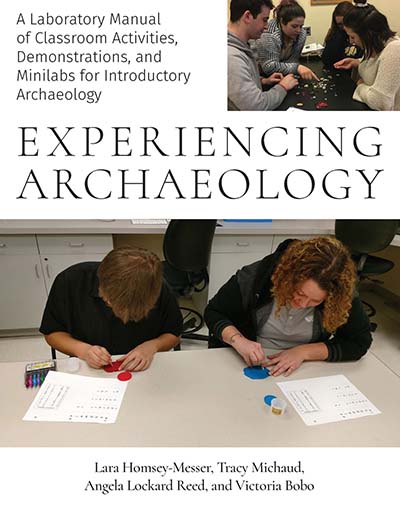
Lara Homsey-Messer is Associate Professor of Anthropology and Graduate Coordinator of Applied Archaeology at Indiana University of Pennsylvania, where she is affiliated with the Department of Anthropology, Geospatial and Earth Sciences within the Kopchick College of Natural Sciences and Mathematics. She earned her MS in geology (2003) and PhD in archaeology (2004), both from the University of Pittsburgh, and previously taught for nine years in the Geosciences Department at Murray State University. Her educational background includes: PhD in Archaeology, University of Pittsburgh (2004) MS in Geology, University of Pittsburgh (2003) Dr. Homsey-Messer is a geoarchaeologist whose research focuses on how changes in the geologic environment (such as natural hazards and climate change) affected prehistoric populations. Her methodological expertise includes soil micromorphology, microartifact analysis, geochemical fingerprinting, GIS, and remote sensing applications. She has conducted significant research at sites including the Coles Creek Raffman Site, Mississippian Wickliffe Mounds Site, South Mountain Metarhyolite quarries in Pennsylvania, and Dust Cave in Alabama. Her work often examines household organization, mound building technologies, food processing techniques, and settlement patterns across different cultural periods. Analysis of her publication record reveals strong thematic continuity in her research, with particular emphasis on integrating geoarchaeological methods with traditional archaeological approaches. Her work frequently addresses questions of site formation processes, feature analysis, and human-environment interactions across multiple temporal scales from Paleoindian through Mississippian periods. A notable trend is her increasing focus on applied archaeology and public education, exemplified by her laboratory manual Experiencing Archaeology and her service learning initiatives. Her professional service includes: Associate editor of the Journal of Kentucky Archaeology Member of the editorial board of American Archaeology magazine Service on the Public Education Committee of the Society for American Archaeology Member of the Register of Professional Archaeologists Member of the Society for American Archaeology Member of the Geological Society of America Dr. Homsey-Messer teaches undergraduate courses in Contemporary Anthropology, Geoarchaeology, Environmental Archaeology, Soils, and Cultural Resource Management, as well as graduate seminars in Pre-Columbian Archaeology, Archaeological Interpretation, and Public Archaeology. Her teaching philosophy centers on service learning and public education, with a focus on making archaeological methods accessible to non-majors through experiential learning. She has developed innovative approaches to teaching archaeology, particularly through her laboratory manual that provides hands-on activities for large lecture classes. Her research has been supported through various grants, including work on the South Mountain Metarhyolite Quarries conducted for the South Mountain Partnership, which combined geochemical research with archaeological fieldwork to develop management best practices for the quarry complex in Michaux State Forest.
Åsa Rydell Blom is an Associate Professor in Wood Science at Linnaeus University's Faculty of Technology, Department of Forestry and Wood Technology. As a pro-dean, she focuses on academic-industry collaboration and strategic partnerships. Her research emphasizes wood durability, moisture dynamics, and sustainable biobased materials, particularly in outdoor applications. Key projects include the Virtual Wood University Master Program (collaborative European initiative) and studies on forest fire rescue coordination. She leads research groups in Forest Products and Wood Protection, addressing innovation in Sweden's forest industry. Notable publications (2004–2025) cover topics like wood coating effects, moisture management, and thermal treatments. She coordinates projects such as sustainable façade materials and forest management strategies. Her work bridges academia with industry through practical innovations and educational programs.
Mads Peter Sørensen is a Professor in the Department of Applied Mathematics and Computer Science at the Technical University of Denmark (DTU). His research focuses on nonlinear dynamics, superconductivity, and fluid dynamics, with contributions to mathematical modeling in fields such as disease dynamics, traffic flow, and acoustics. He is actively involved in interdisciplinary projects, including studies on methane cracking for carbon production and bacterial biofilm growth in microfluidic systems. His work aligns with UN Sustainable Development Goals related to sustainable energy and health. Key projects include investigations into superconducting elements, nonlinear stochastic models of molecular crystals, and ultra-short optical pulse generation. Sørensen has collaborated internationally, contributing to over 147 publications. Notable recent work includes studies on memory effects in disease modeling and nonlinear oscillations in acoustic systems. He has advised multiple research projects, including those on high-temperature superconductivity and flux dynamics. His research often integrates analytical and numerical methods, addressing both fundamental and applied challenges in nonlinear systems.
Richard Wiebe is an Associate Professor in the Department of Civil & Environmental Engineering at the University of Washington. His research focuses on nonlinear structural dynamics of civil, mechanical, and aerospace structures, with applications in extreme environments such as seismic, blast, and high-speed aircraft scenarios. He holds a Ph.D. from Duke University (2012), an M.A.Sc. from the University of Waterloo (2009), and a B.Eng. from Lakehead University (2007), all in Civil Engineering. His research interests include buckling and stability of slender structures, composite materials, and marine energy systems. Current projects explore nonlinear dynamics of composite structures for hypersonic aircraft, bend-twist coupling in marine turbines, and post-tensioned rocking for earthquake-resistant designs. Wiebe has been recognized for his contributions, including promotion to Associate Professor in 2019 and leadership in interdisciplinary capstone projects with Boeing. His work bridges experimental and numerical methods to enhance structural efficiency and resilience.
Yanne Chembo is an Associate Professor in the Department of Electrical and Computer Engineering (ECE) and the Institute for Research in Electronics and Applied Physics (IREAP) at the University of Maryland. He holds dual affiliations and leads research in nonlinear, quantum, and stochastic phenomena in optoelectronics, microwave photonics, and laser physics. His work targets applications in aerospace systems, optical communications, time-frequency metrology, quantum networks, and fiber sensors. Before joining UMD in 2019, he was a Research Director at CNRS (France), leading a group focused on photonic systems such as high-Q whispering-gallery mode resonators and optoelectronic oscillators. He is a Fellow of OSA and SPIE. His research group (PACES Lab) explores photonic architectures for advanced applications including machine learning and quantum technologies. Key research trends include the development of ultra-broadband Kerr microcombs, topological frequency combs, and reservoir computing with optoelectronic systems. His recent work emphasizes multi-timescale synchronization, synthetic frequency lattices, and noise analysis in optoelectronic oscillators. Applications span aerospace systems, quantum communication, and high-precision metrology. Awards: Fellow of OSA (2020), Fellow of SPIE (2021) Labs/Teams: PACES Lab, UMD’s IREAP/ECE collaboration Grants/Advising: No explicit grants or student advisees listed in text; focuses on experimental/theoretical research leadership.
Eran Sharon is a Visiting Professor at the Laboratoire de Physique (LPENSL) at ENS de Lyon from April 2022 to May 2023. He holds a permanent position as a Professor at the Racah Institute of Physics, Hebrew University of Jerusalem, Israel. His research focuses on nonlinear physics and soft matter, particularly growth-induced patterning in elastic materials and turbulent rotating fluid flows. Collaborating with Adda-Bedia Mokhtar, he investigates crack propagation in thin plates under residual stress to develop geometric formalisms for non-linear fracture mechanics. His work intersects hydrodynamics, specifically turbulence in stratified fluids, and experimental physics. Key areas of study include: geometric principles in elastic sheet patterns, inertial wave dynamics in rotating turbulence, and biomimetic material behavior. He delivered seminars in April 2023 on self-morphing materials and rotating turbulence nonlinearities. His research outputs span experimental and theoretical frameworks, with publications in Europhys. Lett., Physical Review Fluids, and Phys. Rev. Lett. No specific awards or students are mentioned in the provided texts.