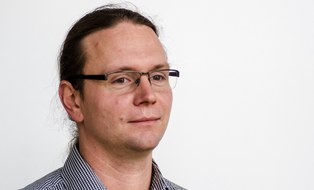
Dr.-Ing. Martin Hofmann is a Professor at Dresden University of Technology (Technische Universität Dresden) affiliated with the Chair for Mechanics of Multifunctional Structures . His research focuses on fracture mechanics, crack pattern formation, and forming process simulations, combining theoretical analysis with experimental techniques like X-ray tomography and radiography. University: Dresden University of Technology Department: Chair for Mechanics of Multifunctional Structures Academic Rank: Professor Research Interests: Hofmann's work addresses fundamental and applied aspects of mechanical behavior in materials, including: Fracture mechanics of composite membranes Thermal shock crack scaling laws Hexagonal basalt column formation mechanisms Damage modeling for limited-ductility materials Process-induced defect analysis in mechanical joining Publication Trends: His research spans 15+ years, combining computational modeling (e.g., bifurcation analysis, GISSMO simulations) with experimental validation in both artificial and natural material systems. Key subfields include hydrogel composites, volcanic rock fracture dynamics, and advanced manufacturing defect mitigation. Labs & Teams: As chair holder, Hofmann leads research on multifunctional structures, collaborating with institutions like the American Physical Society and participating in international conferences such as ESAFORM and LS-DYNA Forum.
Yang Chen is a Lecturer in the Department of Mechanical Engineering at the University of Bath, affiliated with multiple research centres including the Centre for Integrated Materials, Processes & Structures (IMPS) and the Centre for Regenerative Design & Engineering for a Net Positive World (RENEW). He holds a PhD from the Université Paris-Est (collaborating with French Alternative Energies and Atomic Energy Commission) and completed postdoctoral research at the University of Oxford. His research focuses on advanced techniques for data-rich experiments and simulations in heterogeneous materials, particularly fibre-reinforced composites applied in aerospace, automotive, and nuclear energy sectors. Key expertise includes FFT solvers, X-ray computed tomography, nonlinear mechanical modelling, and fluid flow in porous media. He has secured prestigious fellowships, including the EPSRC Future Composites Research Hub Innovation Fellowship and the Humboldt Fellowship. Teaching responsibilities include the ME20016 Solid Mechanics 3 course for mechanical engineering undergraduates. Current PhD supervision opportunities span topics like hydrogen storage composites, nuclear fusion materials, and nuclear waste management. He actively collaborates on projects such as HyFIVE (Hydrogen Storage) and explores advanced ceramic materials for nuclear energy. His work aligns with UN Sustainable Development Goals, emphasizing sustainable innovation and energy solutions. Notable contributions include developing physics-informed neural networks for resin flow prediction and machine learning-based emulators for constitutive modelling. His publications address fracture mechanics, computational homogenization, and material degradation under irradiation. He is open to supervising doctoral students through funded programs like ZENITH and GW4+ DLTP.
Dr. Luka Malenica is a dedicated researcher at ETH Zurich's Professorship for Durability of Engineering Materials, focusing on computational modeling of material degradation processes in civil infrastructure. His work bridges theoretical numerical methods with practical engineering applications through direct involvement in the department's research operations. His research program centers on multiphase flow in porous media , corrosion mechanisms in reinforced concrete , and advanced numerical techniques . He employs pore-scale direct numerical simulations to investigate steel-concrete interface phenomena, developing predictive models for infrastructure durability. His methodological innovations include control volume isogeometric analysis, adaptive multiresolution modeling, and deep learning applications for adaptive meshing—addressing challenges in heterogeneous media flow and transport phenomena. Analysis of his 15 most recent publications reveals a consistent research trajectory since 2015, with accelerating output in corrosion science (5 papers in 2024-2025) and computational methods (7 papers 2019-2022). Key interdisciplinary connections span civil engineering (corrosion in reinforced concrete), chemical engineering (bubble column reactors), and hydrology (karst aquifer modeling), unified by his expertise in numerical simulation of transport phenomena. Recent work demonstrates increasing sophistication in modeling macrovoid formation at steel-concrete interfaces and capillary-driven multiphase systems.
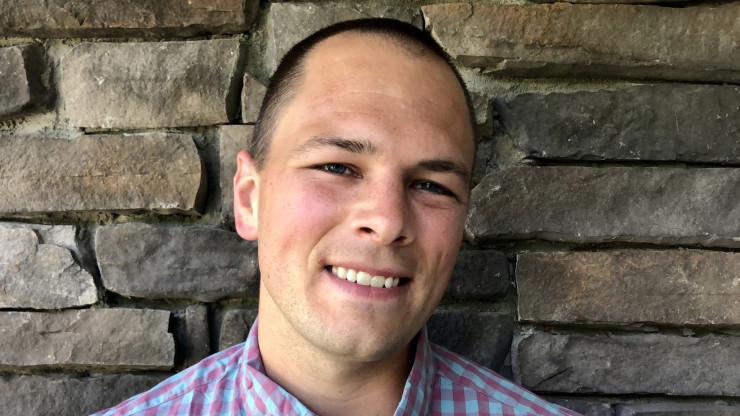
Max Dahlquist is an Assistant Professor of Geology at Sewanee: The University of the South. His research focuses on geomorphology, erosion mechanisms, and landscape evolution, particularly exploring the role of glacial lake outburst floods (GLOFs) in shaping Himalayan river valleys. He collaborates with institutions like the University of Southern California and uses innovative methods such as stream tables to simulate real-world geological processes. Dahlquist emphasizes undergraduate research involvement, fostering student engagement in projects like climate-driven erosion studies and rock fracturing analysis. His work bridges field observations, experimental modeling, and theoretical frameworks to address environmental and geological challenges. Research Interests: Dahlquist investigates how extreme events like GLOFs influence river morphology and valley geometry, as well as the interplay between climate, rock fracturing, and landscape stability. His studies in the Himalayas and Antarctic McMurdo Dry Valleys highlight the impact of environmental parameters on rock degradation and erosion dynamics. He advocates for standardized field methods to advance fracture-focused research and integrate climatic variables into geomorphological models. Publications: His recent work includes studies on rock memory of extreme temperatures, environmental controls on bedrock weathering, and subcritical fracture propagation. These contributions underscore the importance of understanding geological processes in the context of climate change and natural hazard mitigation. Advising & Grants: Dahlquist actively engages undergraduates in research, offering hands-on opportunities in fieldwork and laboratory analysis. His projects often involve collaborations with national agencies like the National Science Foundation, leveraging grants to explore topics such as debris flow dynamics and tectonic boundary structures.
Estibalitz Ukar is a Research Associate Professor at the Bureau of Economic Geology, Jackson School of Geosciences, The University of Texas at Austin. His work focuses on the interplay between structural geology and diagenesis, particularly in fractured carbonate reservoirs and subduction zone processes. He leads the Structural Diagenesis Initiative’s natural fracture research and directs a high-resolution SEM-CL facility for advanced imaging of fracture cements. Research interests include brittle structural petrology, fracture evolution modeling, and paleostress analysis using twinned fracture cements. His expertise spans carbonate rock characterization, subduction zone metamorphism, and carbonation of ultramafic rocks. Notable projects include studies in the Tarim Basin (China), Santos Basin (Brazil), and Samail ophiolite (Oman). Key awards include the GDL Foundation Fellowship (2012), R.L. Folk Petrography Award (2009), and Geological Society of America Grant (2006). He has secured grants from international organizations like the Basque Government and GDL Foundation. Current research explores fluid-rock interactions in reservoirs and reaction-driven fracturing mechanisms. His lab facilities enable nanoscale analysis of fracture microstructures, advancing understanding of diagenetic controls on subsurface permeability. Collaborations bridge field observations, laboratory experiments, and numerical modeling to address energy and environmental challenges in geoscience.
Thomas E. Weirich is an Associate Professor and Division Manager of FIB and TEM at the Central Facility for Electron Microscopy at RWTH Aachen University. His research focuses on advanced materials characterization using electron microscopy techniques, including TEM/STEM, FIB, and SEM. He specializes in crystallography, nanomaterials analysis, and the development of software tools for electron diffraction and microscopy data interpretation. Key areas of interest include phase formation in materials, structural stability under industrial conditions, and the application of electron microscopy to study alloys, ceramics, and nanowires. Recent work includes developing software like RAPID-DM and FINDS for automated diffraction pattern analysis, and studies on laser processing, additive manufacturing, and rolling contact fatigue in steels. His contributions bridge fundamental material science with applied engineering solutions, particularly in aerospace and energy sectors. Weirich collaborates extensively on interdisciplinary projects, contributing to the understanding of microstructural dynamics and material behavior under extreme conditions. His lab provides cutting-edge microscopy services to researchers across RWTH and partner institutions.
Germano S. Iannacchione is a Professor of Physics at Worcester Polytechnic Institute (WPI), specializing in experimental research on thermo-physical properties of condensed matter, particularly soft-matter materials, colloids, and far-from-equilibrium systems. He joined WPI in 1998 and has mentored over 156 students (11 PhD, 14 M.Sc., 121 B.Sc.). Affiliations: Member of the Interactive Materials Design Center (iMDC) at WPI (2015–present) Former Program Director at NSF (Condensed Matter Physics Program, 2017–2020; Biomaterials Program, 2018–2019) Former Head of Physics Department at WPI (2006–2016) Founder of WPI's Nuclear Science & Engineering Program (2012–2017) and Master of Science in Physics for Educators (MPED) Program (2012–2016) Research Interests: His work focuses on phase transitions, liquid crystals, biomaterials, and self-assembly in complex fluids. He pioneered image-based analysis techniques for studying drying droplet patterns and their morphological evolution. His studies reveal insights into protein-LC interactions and crack formation mechanisms in colloidal systems. Key Contributions: Expanded the Physics Department at WPI to 20 faculty and $2M+ annual research funding Founded outreach initiatives: R.H. Goddard Cup Rocket Competition, Physicspalooza summer camps Established the STEM Faculty Launch Workshop (2015–2016) to mentor early-career academics Grants & Awards: NSF Division Director Appointment (January 2023) Sigma Xi Awards (2015) Highlighted in WPI News for STEM education and science communication efforts Labs & Teams: His lab integrates undergraduates into MQP projects, focusing on experimental condensed matter physics and interdisciplinary collaborations across materials science, biophysics, and engineering.
Professor John Ronald Lister is a Professor of Fluid Dynamics at the Department of Applied Mathematics and Theoretical Physics (DAMTP), University of Cambridge, and a Teaching Fellow/Director of Studies at Trinity College, Cambridge. His research spans fundamental fluid mechanics and its geophysical applications, with a focus on fluid-driven crack propagation, capillary phenomena, gravity currents, and Earth's core dynamics. Education & Roles: PhD in Geophysical Fluid Mechanics (1987, University of Cambridge) Postdoctoral Fellowships at Australian National University (1988-1990) Royal Society University Research Fellow (1992-1997) Academic Positions: University Lecturer (1997-2001), Reader (2001-2006), and Professor (2006-present) at DAMTP Research Interests: Fluid dynamics of magma transport in dykes, lava flows, and porous media Capillary pinch-off, film rupture, and elastocapillary effects Viscous gravity currents, particle-laden flows, and sedimentation Thermodynamics and dynamics of Earth's core Low Reynolds number flows and temperature-dependent viscosity effects Recent Article Trends: Recent work explores inertial coalescence of drops, elastocapillary aggregation, and viscous fingering in elastic-walled systems. His studies bridge laboratory experiments, numerical simulations, and analytical models to explain singularities, instabilities, and geophysical-scale phenomena. Grants & Teams: Leads research on fluid-driven fracture mechanics and collaborates with experimentalists (e.g., on bubble dynamics, squeegee physics). Active in DAMTP's Theoretical Geophysics group and Trinity College teaching.
Indrek Wichman is a Professor of Mechanical Engineering at Michigan State University's College of Engineering. His research focuses on combustion theory, flame spread, and ignition dynamics, with significant contributions to microgravity combustion and turbulent jet ignition (TJI). He holds a B.S. from Stony Brook University, an M.S. from Virginia Tech, and a Ph.D. from Princeton University. His work integrates analytical modeling, numerical simulations, and experimental methods. Beyond academia, he has held appointments at institutions like NIST, the Finnish Technical Research Institute, and Ecole Centrale de Paris. Research interests include combustion fundamentals, flame-surface interactions, and thermal analysis of materials. Notable areas are flame spread over solid fuels, ignition mechanisms, and TJI systems. Professional service includes leadership roles in the Combustion Institute and initiatives supporting high school outreach programs through combustion education. His research has been published in journals like Combustion and Flame, Progress in Scale Modeling, and Energy and Buildings. Key contributions span theoretical models for crack formation during pyrolysis, experimental studies on flame behavior in microgravity, and collaborative work on TJI flow dynamics. His teaching and research portfolio reflects a blend of mechanics, fluid dynamics, and applied mathematics.
Dominik Kramer is a Researcher at Karlsruhe Institute of Technology (KIT) in the Institute for Applied Materials - Mechanics of Materials and Interfaces group, specifically within the Mechanics of Materials 1 (WM1) department. His work focuses on the mechanical degradation and electrochemical behavior of battery materials , with particular emphasis on dendrite formation , in-situ characterization , and fuel cell durability . Research Interests: Mechanical degradation of battery materials In-situ electron microscopy for battery analysis Dendrite formation in lithium and aluminum anodes Characterization of fuel cell components Publication Trends: Dominik Kramer has extensively studied lithium and aluminum anodes in batteries, focusing on dendritic growth , mechanical stress accumulation , and phase transformations . His work also includes fuel cell electrode degradation and material optimization using techniques like in-situ microscopy and mechanical stress analysis . Collaborations span multiple institutions, with recurring work on lithium-ion systems and high-temperature PEM fuel cells . Labs & Teams: He is part of the Battery materials: reactions and degradation group at IAM-MMI, working on metal deposition, dendrite suppression, and electrochemical imaging. His team investigates mechanical degradation mechanisms in energy storage systems using advanced characterization tools.
Dr. Michael Berhanu is a Senior CNRS researcher at the Laboratory Matières et Systèmes Complexes (MSC) within Université Paris Cité, where he has been working since 2010. Previously a CNRS researcher at the same institution (2010-2024), he specializes in fundamental aspects of non-linear physics and out-of-equilibrium systems, with particular focus on fluid mechanics problems related to environmental and natural phenomena across various scales. He earned his PhD in Physics from the École Normale Supérieure in 2008, with his thesis titled 'Turbulent Magnetohydrodynamics in liquid metals' supervised by Professors Stéphan Fauve and Nicolas Mordant. Prior to this, he completed a Master's degree in Physics from the École Normale Supérieure de Lyon in 2005. Between 2008 and 2010, he served as a Postdoctoral Researcher at Clark University, Massachusetts, USA, working in the Complex Matter and Nonlinear Physics Laboratory under Arshad Kudrolli. In December 2020, he successfully defended his habilitation thesis on 'Wave interactions and wave turbulence in presence of dissipation'. Dr. Berhanu's research spans multiple interconnected domains within fluid mechanics and non-linear physics. His primary focus areas include hydrodynamics of erosion by dissolution with applications to geomorphology, gravity-capillary surface waves and wave turbulence phenomena, turbulence in free surface flows, granular gas of magnetized particles as models for out-of-equilibrium statistical physics, and surface wave generation by underwater moving bottoms. His work often bridges laboratory experiments with natural phenomena, creating valuable analogs for understanding complex environmental processes. Notably, he has conducted research on capillary waves in microgravity as part of experiments aboard the International Space Station. Analysis of his recent publications reveals a consistent focus on wave dynamics, fluid-structure interactions, and pattern formation in natural systems. His work demonstrates strong interdisciplinary connections between fluid mechanics, statistical physics, and geophysical processes. He frequently employs experimental approaches combined with theoretical modeling to investigate nonlinear phenomena, with particular attention to dissipation effects and non-equilibrium dynamics. His research has important implications for understanding natural phenomena ranging from erosion patterns to wave dynamics in various environmental contexts. Dr. Berhanu actively participates in scientific outreach, including talks for physics teachers, presentations at the Pint of Science festival, and leadership in the French Physicists' Tournament. He has also organized professional development sessions for high school teachers and regularly participates in the 'Fête de la Science' events. His laboratory, MSC, is part of Université Paris Cité, which was formed in 2020 through the merger of University Paris Diderot and University Paris Descartes.
Dr. Imre Varga serves as an Associate Professor at the Department of Information Systems and Networks within the Faculty of Informatics, University of Debrecen. His academic profile centers on complex systems and networks, utilizing advanced computer simulations to model real-world phenomena across diverse domains including transportation infrastructure, epidemiological dynamics, and biological systems. His research spans complex network theory with emphases on transportation networks (GTFS/VANETs), epidemic spreading models (notably AI-driven COVID-19 prediction), molecular landscapes in metabolic diseases, and genealogical network analysis. Methodologically, he employs agent-based simulations, network extraction techniques, and spectral graph analysis to investigate structural properties and dynamic behaviors in interconnected systems. Current projects focus on real-time transit data processing and urban mobility optimization. Analysis of his 15 most recent publications reveals a strong trend toward applied network science: 60% address transportation/urban systems (GTFS extraction, VANET communications), 20% focus on epidemiological modeling (including dual publications on AI-based pandemic prediction), and 20% explore biomedical networks (molecular landscapes, comorbidity analysis). His work consistently bridges theoretical network properties with practical implementations in smart-city applications and public health. The Department of Information Systems and Networks, led by Dr. Zoltán Gál, provides a collaborative research environment where Dr. Varga contributes to initiatives in queuing theory, stochastic process modeling, sensor networks, and embedded systems. Key departmental research groups focus on Real-time Communication, Multimedia Systems, and Internet of Things applications, aligning with his work on vehicular networks and urban mobility systems.
Mette Rica Geiker is a Visiting Professor in Structural Engineering at Chalmers University of Technology, Sweden. Her research focuses on the interplay between cracks and reinforcement corrosion in concrete structures, particularly in chloride-containing environments. She collaborates with the Norwegian University of Science and Technology and the Swedish Transport Administration on long-term experiments to analyze crack formation and corrosion patterns, aiming to improve construction standards and maintenance strategies for durable infrastructure. Role: Visiting Professor Institution: Chalmers University of Technology Department: Structural Engineering Key Research: Crack-reinforcement corrosion interactions, concrete durability, chloride exposure effects Her work investigates how transverse cracks influence corrosion initiation and progression in reinforced concrete, with implications for structural safety and lifecycle cost reduction.
James Hendry is an Adjunct Full Professor at the School of Earth Sciences, University College Dublin (UCD), and Director of Iapetus Geoscience Limited. He holds extensive experience in academia, industry, and research, with roles including Senior Lecturer at the University of Portsmouth, Principal Geoscientist at Tullow Oil, and Senior Carbonate Geologist at Shell. His expertise spans carbonate sedimentology, reservoir characterisation, diagenesis, and microbial processes in sediments. Education: Ph.D. (Geology), University of Liverpool, 1990 MA & BA (Natural Sciences), University of Cambridge, 1985–1990 Research Interests: Focus on carbonate systems, reservoir quality assessment, stable isotope geochemistry, and fluid-rock interactions. He has contributed to studies on coral reef diagenesis, Jurassic septarian concretions, and Zechstein reservoirs in the North Sea. Professional Activities: Editor for Sedimentology and Journal of the Geological Society ; conference organizer for international sedimentological events. Active in teaching sedimentology, petroleum geoscience, and field techniques. Industry Collaboration: Advised Tullow Oil on subsurface technologies and reservoir characterization. Conducted collaborative projects with UCD on diagenesis in the North Dublin Basin and Isle of Man. Labs/Teams: Affiliated with UCD’s School of Earth Sciences and Iapetus Geoscience Limited, leading projects in carbonate reservoir modeling and hydrocarbon exploration.
Ozgur Keles is an Assistant Professor in the Department of Chemical and Materials Engineering at San José State University (SJSU), where he has worked since August 2015. He previously held a Lecturer and Senior Research Associate position at Illinois Institute of Technology from 2013 to 2015 after completing his Ph.D. in Materials Engineering at Purdue University (2013). His research focuses on developing AI-driven discovery machines for new materials, leveraging active learning and high-throughput methods to explore uncharted chemical and structural spaces. He investigates processing-structure-property-design (PSP-D) interrelationships in multi-functional materials, combining additive manufacturing with data-driven numerical approaches to control hierarchical structures from sub-nano to macro-scale. B.S. in Metallurgical and Materials Engineering from Middle East Technical University, Turkey (2005) M.S. in Metallurgical and Materials Engineering from Middle East Technical University, Turkey (2008) Ph.D. in Materials Engineering from Purdue University (2013) His research interests span artificial intelligence in materials discovery , graphene quantum dots in epoxy composites , sustainable design for smart cities , and virtual reality in engineering education . He uses molecular dynamics, finite element analysis, and vibration-assisted 3D printing to enhance mechanical reliability in composites. Recent projects include NSF CAREER grant-funded work on multi-scale mechanical behavior of quantum dot nanocomposites and an NEA grant for 3D printing cultural heritage artifacts . His publications highlight advancements in additive manufacturing , nanocomposite toughening , and machine learning for structural analysis . Notable contributions include studies on the effects of raster angle on 3D printed parts , thermal conductivity enhancement via GQDs , and stochastic fracture of porous composites . Scientific Awards: ASME Rising Star of Mechanical Engineering (2025) 2023 College of Engineering Award for Excellence in Scholarship 2019 Advisor of the Year at SJSU Keles collaborates extensively, securing grants such as the NSF MRI for a metal AM system and DOE PARC Xerox for ceramic alignment studies. His lab engages students in hands-on research, and he promotes engineering education through virtual reality modules .