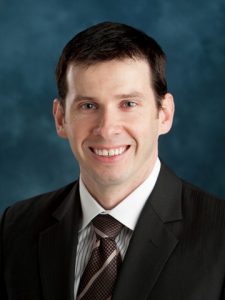
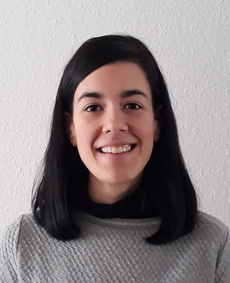
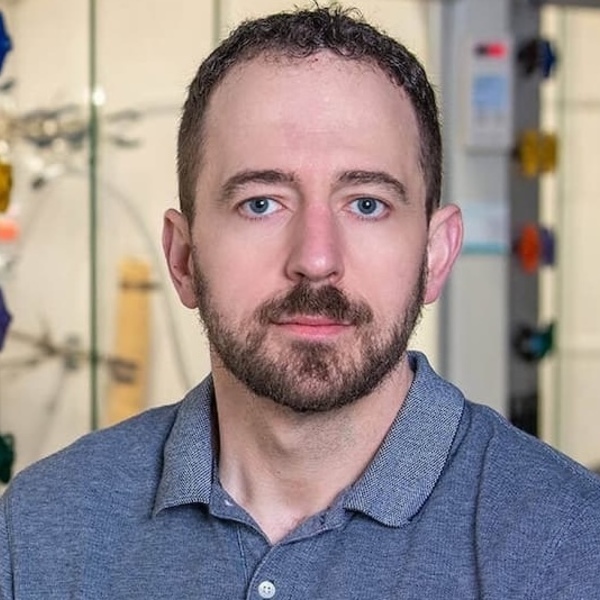
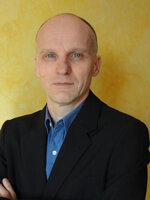
Jonathan Bramson is a Professor and Vice Dean, Research at the Faculty of Health Sciences, McMaster University , holding the John Bienenstock Chair in Molecular Medicine . His work focuses on cell-based therapies for cancer , leveraging genetic engineering, synthetic biology, and chemical biology to enhance anti-tumor activity of white blood cells. Key Research Themes: Cancer immunotherapy, T cell engineering, oncolytic viruses, and tumor immunology. Pioneering Work: Development of TAC (T Cell Antigen Coupler) receptors for targeted cancer therapies, transitioning from lab to clinical trials in Canada and the USA. Scientific Awards: John Bienenstock Chair in Molecular Medicine Collaborative Impact: Co-founded a McMaster biotech start-up advancing immunotherapy for solid cancers. Led clinical trials like CYTOSHRINK for metastatic kidney cancer and explored metabolic modulators (e.g., canagliflozin) to improve radiotherapy outcomes.
Associate Professor Timothy Scott is an Associate Dean of Graduate Research in the Faculty of Engineering at Monash University. He holds dual appointments in the Department of Chemical and Biological Engineering and the Department of Materials Science and Engineering. His research focuses on advanced materials, particularly in additive manufacturing, polymer science, and sustainable materials. He leads projects such as Stereolithographic Additive Manufacturing of Semicrystalline Thermoplastics and MOF-polymer composites for hydrogen carrier applications. His work contributes to UN Sustainable Development Goals through innovations in materials for energy and environmental systems. Education: Not explicitly listed in provided texts. Awards: 2020 PMSE Cooperative Research Award (ACS) ARC Future Fellowship (2020) veski Innovation Fellowship (2019) Research interests include photopolymerization mechanisms, 3D printing technologies, and dynamic covalent chemistry. His lab develops self-healing materials, smart dental composites, and membrane technologies for targeted purification. Current projects span multi-color irradiation systems for ultra-rapid manufacturing and bioactive materials for medical applications. Timothy Scott actively supervises PhD students and collaborates internationally, with publications in Chemistry of Materials , ACS Nano , and Polymers .
Eva Blasco is an Associated Group Leader at the Functional Polymeric Materials Research Unit under the Institute of Nanotechnology at Karlsruhe Institute of Technology (KIT), with affiliations to the University of Heidelberg. Her work bridges 3D printing , polymer chemistry , and nanophotonics , focusing on light-driven material design. Her research centers on photochemically activated 3D printing inks , light-stabilized dynamic materials , and multi-photon lithography . She explores how two-color light absorption , alkoxyamine chemistry , and visible light post-processing enable adaptable microstructures. Key trends include 4D printing , biodegradable inks , and temperature/light-responsive systems . Blasco's publications highlight collaborations with institutions like KIT, University of Heidelberg, and international teams. Her work spans photonic metamaterials , bio-inspired 3D scaffolds , and subtractive laser lithography , often involving interdisciplinary applications of light in material science.
Ghislaine M.E. Vantomme is an Assistant Professor at Eindhoven University of Technology, leading the Supramolecular Chemistry and Materials group within the Department of Chemical Engineering and Chemistry. Her research focuses on developing adaptive, self-learning supramolecular materials inspired by living systems, integrating organic synthesis, systems chemistry, and materials science. Key areas include molecular computing, bio-(opto)electronics, and sustainable materials design. Academically, she holds a PhD from Strasbourg University (2014) under Prof. Jean-Marie Lehn, and postdoctoral experience at TU Eindhoven with Prof. Bert Meijer. Notable grants include the NWO Veni (2017) and VIDI (2024), alongside the 2026 New Horizons Solvay Lectureship. She teaches advanced organic chemistry courses for engineering and premaster students. Her work contributes to UN Sustainable Development Goals through eco-friendly material innovations. Research highlights include self-regulating hydrogels, chiral semiconductor films, and phase-separated nanomaterials. She collaborates internationally, with recent media coverage on molecular computing and optoelectronic material breakthroughs. Education: PhD in Supramolecular Chemistry, Strasbourg University (2014) MSc, Sorbonne University (Paris) BSc, École Normale Supérieure (Cachan) Research Themes: Biomimetic materials, adaptive systems, molecular self-assembly, chiral optoelectronics. Grants & Awards: NWO Veni (2017) NWO VIDI (2024) Solvay Lectureship (2026) Teaching: Organic Chemistry 1/2, Advanced Molecular Chemistry.
Chambers C. Hughes is a Research Group Leader in the Department of Microbial Bioactive Compounds at the University of Tübingen, Germany. Previously, he held positions as an Assistant Professor at the Scripps Institution of Oceanography (2012–2019) and a postdoctoral researcher with Prof. William Fenical (2005–2012). His research focuses on microbial natural product discovery, synthesis, and chemical biology, particularly employing reactivity-guided isolation and bioactivity-guided approaches to uncover novel bioactive compounds. His group has pioneered methods using chemoselective probes to target metabolites with specific functional groups, enabling the discovery of siderophores, antibiotics, and other secondary metabolites. Education: B.S. in Biochemistry, Geneseo College (1999) Ph.D. in Chemistry, University of California, Berkeley (2004) Research Interests: The Hughes Group explores microbial natural products using cutting-edge techniques like NMR spectroscopy and mass spectrometry. They focus on marine and terrestrial organisms, emphasizing the development of chemical labeling strategies to identify electrophilic compounds (e.g., epoxides, β-lactams) and conjugated alkenes. Their work bridges synthetic chemistry and biological activity, targeting antibiotic discovery, enzyme inhibition, and metabolic pathway elucidation. Notable Contributions: The group has characterized marinopyrroles (protonophoric antibiotics), kasichelins (siderophores), and vatiamides (polyketide natural products). Their methods have revealed artifacts in previously reported natural products and enabled genome-mining approaches to de-orphan biosynthetic gene clusters. Students & Collaborations: Current students include Shu-Ning Xia, Sehee Jang, Luca Salvi, and Max Knab. Collaborations span microbiology, synthetic chemistry, and bioinformatics, with key partners at the University of Tübingen and Scripps Oceanography. Labs & Facilities: The Hughes Research Group operates within the Interfaculty Institute of Microbiology and Infection Medicine, leveraging advanced analytical tools for natural product characterization and synthesis.
Seda Keskin Avcı serves as Professor in the Chemical and Biological Engineering Department at Koç University, Istanbul, directing the Nanomaterials, Energy, and Molecular Modeling Research Group (NEMO). Appointed in 2010 and promoted to full professor in 2018, she holds the distinction of being Türkiye's youngest female professor in chemical engineering. Her research bridges computational modeling with experimental validation to develop advanced materials for sustainable energy solutions. Education: PhD, Georgia Institute of Technology (2009) MSc, Boğaziçi University (2006) BS, Boğaziçi University (2004) Professor Keskin's research focuses on AI-accelerated design of metal-organic frameworks (MOFs) and covalent organic frameworks (COFs) for gas separation and carbon capture. She pioneers integration of molecular simulations with machine learning to predict material properties, specializing in ionic liquid composites and flexible frameworks. Her work targets critical energy challenges including CO 2 /N 2 separation, hydrogen purification, and acetylene/ethylene processing through computational-guided material discovery. Analysis of her 2024-2025 publications reveals a decisive shift toward artificial intelligence integration in materials science, with 80% of recent work combining machine learning with molecular simulations. Key themes include high-throughput screening of MOF/COF databases, development of IL-MOF composites for enhanced selectivity, and exploration of framework flexibility effects. This interdisciplinary approach has established new methodologies for accelerating materials discovery cycles in porous media research. Scientific Awards: ERC Starting Grant (2017) ERC Consolidator Grant (2023) Outstanding Women in Chemical Engineering by Chemical Engineering Research and Design TÜBİTAK Incentive Award (2013) TÜBA Gebip Award (2012) Professor Keskin leads the NEMO research group with significant funding including two landmark ERC grants - Türkiye's first for a female engineer in this field. Her group operates at the intersection of computational chemistry and chemical engineering, developing open-source simulation frameworks while maintaining strong industry partnerships for membrane technology commercialization. Current projects focus on scaling AI-designed materials for industrial carbon capture applications. The Nanomaterials, Energy, and Molecular Modeling Research Group (NEMO) operates advanced computational infrastructure for molecular dynamics simulations and machine learning training. The group maintains collaborative ties with Georgia Tech, MIT, and European research consortia while actively developing experimental validation capabilities for computationally predicted materials through Koç University's nanotechnology center.
Isaiah Speight is an Assistant Professor in the Department of Chemistry at William & Mary, where he teaches organic chemistry. His research focuses on advancing organic synthesis and catalysis through mechanochemistry, sustainable chemistry, and 3D printing technologies. Dr. Speight earned his B.S. in Chemistry from Norfolk State University and his Ph.D. in Chemistry from Vanderbilt University, followed by postdoctoral work at the University of California, Irvine, and a Visiting Scientist role at AbbVie. Education: B.S. in Chemistry (Norfolk State University), Ph.D. in Chemistry (Vanderbilt University) Dr. Speight's research integrates mechanochemistry to develop solvent-free synthetic methods, emphasizing sustainability and innovative material design. His work explores polymorphism control in metal-organic frameworks, activation of solid-state reactions, and application of ball milling for organic and inorganic synthesis. Recent publications highlight advancements in mechanochemical Grignard reactions, nickel complex reactivity, and dimensional control of crystalline materials. His 15 most recent articles focus on mechanochemistry, organic synthesis, catalysis, and sustainable chemical technologies. These studies span topics such as ball milling optimization, polymorph stabilization, and solid-state reaction mechanisms. Dr. Speight also advocates for diversity in science as a catalyst for innovation and ethical progress.
Dr. Alojz Ivankovic is a Full Professor of Mechanics of Materials at the School of Mechanical and Materials Engineering , University College Dublin (UCD). He also serves as a Visiting Professor at Imperial College London and has held leadership roles such as Head of Mechanical Engineering Programs at UCD since 2012. His research group focuses on advanced materials science, fracture mechanics, and additive manufacturing, supported by over €25M in research funding. Educational Background: MEngSc from the University of Sarajevo and PhD from Imperial College London. Research Interests: Process-structure-property relationships in materials, fracture behavior of polymers and composites, adhesion science, and biomechanics of atherosclerosis. His work bridges computational modeling (e.g., finite volume methods) with experimental validation. Recent Achievements: Awards include the Fellowship of Wessex Institute (2004) and Royal Academy of Engineering Travel Grant (2001). He leads the UCD Centre of Adhesion and Adhesives and collaborates with industry partners like Atlas Copco and BP Chemicals. Grants & Funding: Over €27M in research funding since 2004, including a €2.5M SFI grant for drag reduction studies. Current grants focus on floating offshore wind cables and sustainable composites. Teaching: Coordinates modules in Computational Continuum Mechanics and supervises PhD/MSc students. His group includes 5 MSc, 7 PhD students, and 4 PostDocs. Publications: Over 346 publications, including 109 journals and 232 conference papers. Recent work addresses diamond powder mechanics, piezoelectric composites, and aerodynamic drag reduction.
Professor Andrew Slark is a Professorial Fellow in Polymer Chemistry at the University of Sheffield's School of Mathematical and Physical Sciences. He holds a BSc (Hons) and PhD in Chemistry from Loughborough University. With over 25 years of industrial R&D experience, he specializes in synthetic polymer chemistry and physical polymer science, focusing on adhesives, coatings, and inks. His research emphasizes sustainable materials, including recyclable polymers and smart materials. He received the EPSRC Manufacturing Fellowship (£1.5M, 2018) and previously worked at ICI, National Starch, Henkel, and De La Rue. Education: BSc (Hons) in Chemistry and Polymer Science/Technology, Loughborough University (1987) PhD in Polymer Chemistry, Loughborough University (1991) Research Interests: Smart polymers with advanced properties Recycling-focused materials (e.g., I-CARE project) Coatings, adhesives, and composites Structure-property relationships in polymers Notable Awards: ICI Innovation and Creativity Team Award (1997) MacroGroup UK Younger Researcher Award (1999) EPSRC Manufacturing Fellowship (2018) Advising & Grants: He leads the EPSRC Fellowship-funded I-CARE project and collaborates with industry partners to develop scalable sustainable materials. His work bridges academic research and industrial applications, emphasizing translational outcomes.
Juan Ramón Granja Guillán is a Professor of Organic Chemistry at the University of Santiago de Compostela (USC), affiliated with the Faculty of Chemistry and the Research Center in Biological Chemistry and Molecular Materials (CIQUS). His academic career began with a PhD in Organic Chemistry (1988) under Dr. Antonio Mouriño Mosquera, focusing on vitamin D analog synthesis. His research spans supramolecular chemistry, peptide self-assembly, and nanobiomimetic systems, with a focus on cyclic peptide nanotubes and their applications in drug delivery, membrane interactions, and dynamic materials. Key research areas include the design of modular supramolecular capsules, photo-responsive peptide assemblies, and antimicrobial peptide nanotubes. He has pioneered the CYCLOPEp web platform for cyclic peptide research and explored applications in microfluidic systems and energy transfer materials. His work integrates computational modeling (e.g., MA (R/S) TINI forcefields) with experimental methods to study peptide-membrane interactions and self-healing hydrogels. His publications (2001–2025) highlight innovations in cyclic peptide architecture, anion recognition, and light-driven systems. Granja Guillán collaborates globally, with CIQUS as a hub for interdisciplinary projects in molecular biophysics and nanomaterials. No awards are explicitly listed, but his extensive citation network reflects significant contributions to supramolecular chemistry.
E.W. "Bert" Meijer is a Distinguished University Professor in Molecular Sciences and Professor of Organic Chemistry at Eindhoven University of Technology, where he has been appointed since 1991. He serves as co-director of the Institute for Complex Molecular Systems and holds part-time positions at Radboud University Nijmegen, Max Planck Institute Mainz, and University of California Santa Barbara. Since 2022, he has also been a visiting professorial fellow at the University of New South Wales. His research focuses on supramolecular polymers and functional materials, with particular expertise in multicomponent systems in water, biomimetic materials, and chiral supramolecular assemblies. Meijer's group explores the interplay between molecular structure, supramolecular architecture, and dynamic behavior, with applications ranging from responsive hydrogels to advanced optoelectronic materials. His work combines experimental techniques like cryo-TEM and hydrogen-deuterium exchange mass spectrometry with computational modeling. Meijer's publication record shows consistent high-impact contributions, with recent work emphasizing multicomponent supramolecular systems, chiral amplification, and applications in biomaterials and optoelectronics. His 2023-2025 publications demonstrate particular strength in circularly polarized light emission, supramolecular polymer dynamics, and biomimetic material design. Major Scientific Honors: Spinoza Award (2001) ACS Award for Polymer Chemistry (2006) AkzoNobel Science Award (2010) International Award of Society of Polymer Science Japan (2011) Cope Scholar Award (2012) Prelog Medal (2014) Nagoya Gold Medal (2017) Chirality Medal (2018) Commander in Order of Netherlands Lion (2020) Meijer serves on numerous editorial boards including Advanced Materials and as Associate Editor of the Journal of the American Chemical Society. His research has been supported by multiple prestigious grants, leading to fundamental advances in supramolecular polymerization mechanisms and functional biomaterials. He leads the Meijer Lab at Eindhoven, which maintains strong international collaborations and focuses on translating fundamental supramolecular principles into advanced materials with biomedical and technological applications.
Matthew J. Webber is the Keating-Crawford Collegiate Professor of Engineering and Professor of Chemical and Biomolecular Engineering at the University of Notre Dame, where he also serves as Director of the Berthiaume Institute for Precision Health. He holds a concurrent associate professorship in the Department of Chemistry & Biochemistry. His expertise lies in supramolecular engineering, focusing on biomaterials and drug delivery systems that leverage non-covalent interactions. Webber graduated with a BS in Chemical Engineering from Notre Dame and a PhD in Biomedical Engineering from Northwestern University, followed by postdoctoral training at MIT under Professors Robert Langer and Daniel Anderson. Research interests include glucose-responsive hydrogels, dynamic covalent materials, and supramolecular peptide assemblies for therapeutic delivery. His work spans applications in cancer immunotherapy, diabetes treatment, and environmental contaminant capture. Notable contributions include injectable hydrogels for tumor-targeted immune modulation and smart insulin delivery systems. Publications highlight advancements in hydrogel mechanics, supramolecular sensors for opioids, and pH-responsive gene delivery platforms. Webber's NIH-funded CAREER grant supports research into dissipative hydrogels driven by chemical fuels. Collaborations span academia and industry, with a focus on translating materials science into clinical solutions. Labs & Teams: Directs the Berthiaume Institute for Precision Health and leads a multidisciplinary research group at Notre Dame's Department of Chemical and Biomolecular Engineering. Engages in cross-departmental initiatives combining engineering, chemistry, and medicine.
Prof. Dr. Stephen Schrettl holds a professorship in the TUM School of Life Sciences at Technische Universität München , focusing on functional materials for food packaging . His research emphasizes mechanochromic materials, polymer chemistry, and supramolecular systems. Key areas include strain-sensing polymers, self-healing materials, and adaptive nanocomposites. His work spans interdisciplinary topics like mechanoresponsive polymers , smart coatings , and nanomaterial fabrication . Recent studies highlight advancements in mechanochromic inclusions, reversible crosslinking mechanisms, and microphase-separated metallosupramolecular polymers. He has contributed to applications in automotive materials, biomedical devices, and environmental sensors. Publications from 2024–2020 showcase innovations in straining-induced fluorescence , liquid crystal-driven nanoparticle assembly , and platinum nanocomposite synthesis . His research bridges fundamental polymer science with industrial applications, particularly in materials that integrate mechanical and optical functionalities.
Luc Avérous is a University Professor at the School of Chemistry, Physics, and Materials (ECPM) at the University of Strasbourg, France, where he teaches bioplastics, composites, and polymer processing. He is a leading researcher at ICPEES (Institute of Chemistry and Processes for Energy, the Environment and Health), heading the BioTeam research group and directing the Mutaxio joint laboratory with the Soprema group. His research spans biopolymers, sustainable macromolecular architectures from renewable resources, and biomaterials for environmental and biomedical applications. Key interests include biodegradable polyesters, vitrimers, enzymatic catalysis, bio-recycling, tissue engineering, and 3D/4D printing. His work emphasizes a cradle-to-cradle approach, integrating green chemistry and circular economy principles. The recent publications highlight a strong trend in biosourced materials, particularly from lignin, tannins, fatty acids, and sugars. Research focuses on developing sustainable alternatives to conventional polymers, including non-isocyanate polyurethanes (NIPU), polyamides (PA), and polyisocyanurates (PIR), with applications in foams, membranes, and biomedical devices. There is a clear emphasis on enzymatic processes, degradation mechanisms, and life cycle sustainability. TOP 1% of scientists in the world Luc Avérous has supervised numerous PhD and postdoctoral researchers through his BioTeam and Mutaxio lab. He has secured funding from major national (ANR, BpiFrance, PIA) and international (H2020, EU-China, AUF) programs. He collaborates extensively with industry (Soprema, Tereos, Stellantis, Veolia) and academic partners worldwide (Australia, Canada, Latin America, EU). He serves on research advisory boards, editorial boards of scientific journals, and international grant juries (ERC, Horizon, FWO). He leads the BioTeam at ICPEES and the Mutaxio joint laboratory with Soprema, focusing on translational research in sustainable polymers. These labs integrate expertise in synthesis, formulation, characterization, and processing of advanced bio-based materials for industrial and biomedical applications.
Wen-Gui Weng is a Professor at the College of Chemistry and Chemical Engineering at Xiamen University , China. He earned his Ph.D. from Case Western Reserve University in 2007, followed by postdoctoral training at the University of Delaware. His research spans mechanochemistry, supramolecular polymers, and biomedical polymers, with a strong publication record in high-impact journals. Education: Ph.D. in Chemistry, Case Western Reserve University (2007) M.S. in Chemistry, Huaqiao University (2003) B.S. in Chemistry, Huaqiao University (2000) Postdoctoral Fellow, University of Delaware Research Interests: His work focuses on reactive polymers , supramolecular polymers , topological polymers , polymer nanocomposites , and biomimetic and biomedical polymers . He is particularly known for developing mechanoresponsive materials that can sense and respond to mechanical stimuli, including self-healing polymers and mechanochromic systems. His research group explores force-induced chemical reactions at the single-molecule level and designs dynamic covalent networks with tunable mechanical and optical properties. These materials have applications in smart coatings , biomedical devices , and adaptive materials . Scientific Contributions: Prof. Weng has published over 27 peer-reviewed articles in top-tier journals such as Nature Communications , Journal of the American Chemical Society , and Angewandte Chemie . His work is highly cited and recognized for advancing the field of polymer mechanochemistry . Contact: Email: wgweng@xmu.edu.cn Phone: +86 (0592) 2182430 Address: College of Chemistry and Chemical Engineering, Xiamen University, Fujian Province, 361005, China