Micheal Davies is a Professor of Signal and Image Processing at the University of Edinburgh and a Visiting Professor at the Laboratoire de Physique (LPENSL) at ENS Lyon (2023-2024). His research focuses on sparse representations, compressed sensing, machine learning, and inverse problems. He holds a First-Class Honours degree in Engineering from the University of Cambridge (1989) and a PhD in Nonlinear Dynamics from University College London (1993). His collaboration with the SiSyPh team at ENS Lyon centers on self-supervised deep learning methods for scientific imaging. Key contributions include advancing theoretical frameworks for inverse problems and algorithmic strategies in imaging. He delivered talks at the MLSP seminar and lectures for master's students in physics and computer science. Awards: Fellow of the Royal Academy of Engineering (2017), Fellow of the Royal Society of Edinburgh (2018). Research Impact: Pioneered work in compressed sensing for MRI and sparse signal processing. His visit strengthens interdisciplinary research at ENS Lyon, bridging physics, AI, and signal processing. Current projects with J. Tachella aim to eliminate ground-truth data reliance in scientific imaging.
Conrado Martinez Parra is a Professor in the Department of Computer Science at the Faculty of Computer Science, Universitat Politècnica de Catalunya (UPC). He is a core member of the ALBCOM research group, which focuses on Algorithmics, Bioinformatics, Complexity, and Formal Methods. Affiliation : Department of Computer Science, Faculty of Computer Science (FIB), UPC Research Group : ALBCOM - Algorísmia, Bioinformàtica, Complexitat i Mètodes Formals Email : conrado@cs.upc.edu ORCID : 0000-0003-1302-9067 Researcher ID : G-4629-2015 His research spans theoretical computer science with a strong emphasis on the design and analysis of algorithms and data structures. His work includes average-case analysis of algorithms, combinatorial generation, probabilistic methods in algorithmics, and applications in information retrieval and data stream processing. He has extensively studied multidimensional data structures such as quadtrees, K-d trees, and skip lists, analyzing their performance under various query models including partial match and orthogonal range searches. His recent publications reveal a sustained focus on algorithmic efficiency, sampling techniques, and probabilistic modeling in data structures. Trends indicate a deep engagement with randomized algorithms, unbiased estimation, and cache-efficient selection methods, reflecting both theoretical rigor and practical applicability in modern computing environments. Scientific Contributions Extensive publication record spanning over three decades, from 1989 to 2024. Active in major algorithmic conferences such as ANALCO, AofA, and AAAI. Contributions to foundational algorithm analysis including Hoare’s FIND, Quickselect variants, and deletion in binary search trees. Collaborative research with prominent figures in theoretical computer science across Europe. Professor Martinez Parra has advised or collaborated with several doctoral students, including Gustavo Lau, whose thesis on partial match queries he supervised. He has participated in numerous competitive R&D projects funded by national and regional programs, focusing on large-scale information processing and graph-based computing models. His work is supported by long-standing grants from Spanish and Catalan research councils. He is affiliated with the ALBCOM research group, a leading team in algorithmic research at UPC, contributing to both theoretical advances and practical implementations in combinatorics and data structure optimization.
Karen Gunderson is an Associate Professor in the Department of Mathematics at the University of Manitoba's Faculty of Science. Her research spans graph theory, combinatorics, random graphs, percolation, hypergraphs, and extremal combinatorics. Research Focus : Graph theory, combinatorics, random graphs, percolation, hypergraphs, extremal combinatorics Academic Role : Associate Professor, Acting Associate Head Graduate Contact : Karen.Gunderson@umanitoba.ca , karen.gunderson@umanitoba.ca Her work includes bootstrap percolation , random geometric graphs , and extremal hypergraph problems , with applications in network modeling and probabilistic combinatorics. Recent publications focus on adversarial burning densities, Erdos-Ko-Rado robustness, and Turán numbers in switching contexts. Academic Leadership : Co-organizer of the University of Manitoba Combinatorics Seminar and key organizer for the 2023 CanaDAM conference and Movement & Symmetry in Graphs retreat.
Dr Ben Smith is a Senior Research Associate at Lancaster University's School of Mathematical Sciences, specializing in abstract rigidity for natural stability problems through advanced mathematical frameworks. His research spans Matroid theory, Tropical geometry, Algebraic geometry, Algebraic combinatorics, Geometric rigidity, and Discrete geometry. He actively applies these disciplines to scientific challenges including neural networks and tropical mathematics applications, demonstrating strong interdisciplinary connections. Smith's 2024 publications reveal consistent focus on combinatorial-geometric intersections, particularly tropical extensions, valuated matroids, and polyhedral structures. This work establishes clear trends in bridging abstract mathematical constructs with real-world stability analysis. Scientific Awards: None mentioned. While no formal advisees are listed, Smith leads significant research projects including "A discrete geometry approach to neural network" (April-May 2025), "Tropical Mathematics and its Applications" (November 2024), and "Counting Realisations of Discrete Rigid Structures" (January 2024), indicating active grant funding. He contributes to Lancaster's Combinatorics and Geometric Rigidity research groups, collaborating on theoretical and applied investigations of discrete structures and their stability properties.
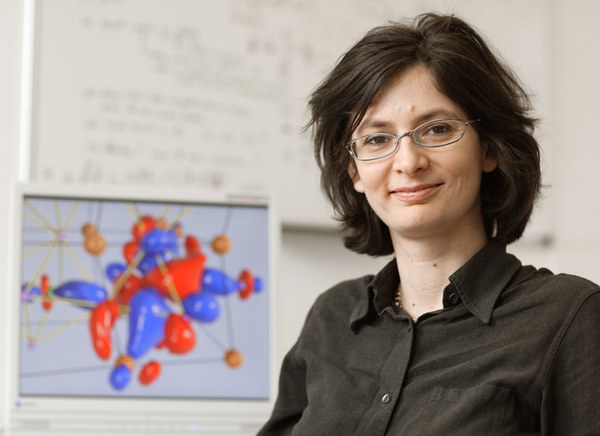
Prof. Dr. Eva Pavarini is a Professor at the Theoretical Nanoelectronics (PGI-2) group within the Peter Grünberg Institute at Forschungszentrum Jülich. Her research focuses on strongly correlated electron systems , with expertise in many-body physics , Dynamical Mean-Field Theory (DMFT) , and Quantum Monte Carlo (QMC) methods. Key research areas include transition-metal oxides , spin-orbit coupling , Mott transitions , and orbital ordering . She leads the Autumn School on Correlated Electrons , an educational initiative on many-body physics. Her recent publications address orbital ordering mechanisms in KCuF 3 , super-exchange Hamiltonians , and spin-orbit effects in ruthenates. Her work combines LDA+DMFT with realistic Coulomb vertex calculations. Current and former group members include Dr. Xue-Jing Zhang, Dr. Guoren Zhang, and Dr. Alessandro Chiesa. She offers PhD and postdoc positions , as well as bachelor/master grants for students.
Alistair Sinclair is the Kikuo Ogawa and Kaoru Ogawa Professor of Computer Science in the Department of Electrical Engineering and Computer Sciences at UC Berkeley. He received his BA in Mathematics from the University of Cambridge (1982) and PhD in Computer Science from the University of Edinburgh (1988). After briefly serving on faculty at Edinburgh, he joined UC Berkeley in 1994. Sinclair has held visiting positions at DIMACS, Princeton University, Rutgers University, Microsoft Research, École Polytechnique, University of Paris-Orsay, and University of Rome III. His research explores: Randomized algorithms and Markov chain Monte Carlo methods Phase transitions in statistical physics Algorithmic applications of stochastic processes Nonlinear dynamical systems Combinatorial optimization Analysis of Sinclair's recent publications (2017-2025) reveals strong emphasis on statistical physics models (especially Ising and random-cluster systems), Markov chain dynamics, phase transitions, and algorithmic solutions for combinatorial problems. Key methodologies include spatial mixing analysis, entropy decay measurements, and deterministic approximation techniques. Scientific Awards: 1996 ACM-EATCS Gödel Prize 2006 Fulkerson Prize 2017 SIGACT Distinguished Service Prize Sinclair has advised 17+ PhD students including notable researchers in theoretical computer science and mathematics. He served as Founding Associate Director (2012-2017) of the Simons Institute for the Theory of Computing, receiving recognition for developing its research programs on probability, geometry, and computational complexity.
Leslie Valiant serves as the T. Jefferson Coolidge Professor of Computer Science and Applied Mathematics at Harvard University's School of Engineering and Applied Sciences, where he has been faculty since 1982. Previously, he held positions at Carnegie Mellon University, Leeds University, and the University of Edinburgh. His academic journey began with education at King's College Cambridge, Imperial College London, and Warwick University, where he earned his PhD in computer science in 1974. Valiant's research spans theoretical computer science with primary focus areas including computational complexity theory, machine learning foundations, parallel computation systems, computational neuroscience, and evolutionary computation. His work bridges artificial and natural computational phenomena, addressing fundamental limitations in both engineered systems and biological processes. Key contributions include the development of the PAC (Probably Approximately Correct) learning model, holographic algorithms, robust logics for reconciling reasoning and learning, and theoretical frameworks for understanding cortical computation and evolvability. His publication record demonstrates sustained impact across decades, with recent work focusing on cortical computation primitives, multi-core algorithm design, and evolutionary dynamics with drifting targets. These publications reveal a consistent trajectory toward understanding computational principles in both artificial systems and biological cognition. Nevanlinna Prize (1986) Knuth Award (1997) EATCS Award (2008) A.M. Turing Award (2010) Fellow of the Royal Society Member of the National Academy of Sciences Valiant's research program integrates theoretical rigor with profound questions about natural computation, maintaining active engagement with both computer systems design and fundamental neuroscience questions. His work continues to influence multiple disciplines through formal frameworks that address computational limitations in learning, evolution, and neural processing.
François Pirot is an Associate Professor (Maître de Conférences) at Université Paris-Saclay since September 1, 2021. He conducts research at the LISN laboratory within the GALaC team and teaches at the Faculty of Science of Orsay. PhD in Mathematics (Radboud University) and Computer Sciences (Université de Lorraine), 2019 Postdoctoral experience: ULB (2019), G-SCOP (2019-2020), Inria Sophia Antipolis (2020-2021) His research focuses on graph coloring problems in diverse contexts such as graph powers, locally sparse graphs, and distributed algorithms, utilizing probabilistic methods and connections to bio-informatics through circular codes. He has advanced bounds for h -conflict-free coloring, acyclic coloring, and dichromatic numbers in oriented graphs, with applications to minor-closed families and geometric group theory. Scientific contributions include: Asymptotically tight bounds for chromatic numbers in sparse graphs Efficient fractional coloring algorithms for K_t-minor-free graphs Structural analysis of comma-free and mixed circular codes in genetic alphabets Charles Delorme Prize for outstanding thesis in Graph Theory (2019) Collaborations span institutions like ULB, G-SCOP, Inria, and cross-disciplinary fields from computer science to mathematical biology.
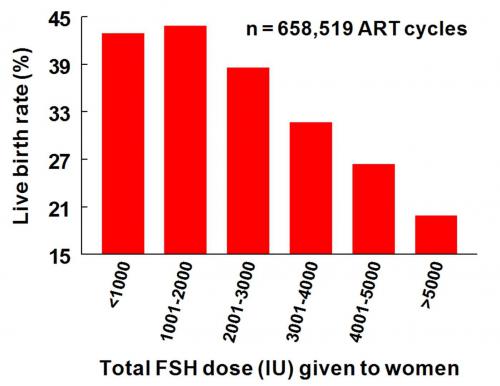
Jim Ireland is a Professor in the Department of Animal Science at Michigan State University with a joint appointment in Physiology. His research focuses on reproductive physiology in cattle, particularly investigating anti-Müllerian hormone as a biomarker for fertility prediction, developing more efficient superovulation techniques, understanding the mechanisms of excessive hormonal treatments on embryo survival, and studying the effects of maternal environment on offspring fertility. Dr. Ireland's research interests center on reproductive developmental sciences, with a particular emphasis on the relationship between ovarian reserve and fertility in cattle. His work examines how anti-Müllerian hormone serves as a reliable biomarker for predicting future fertility, health, and herd longevity in dairy cows. He investigates the development of more efficient superovulation techniques that could benefit both cattle embryo transfer and assisted reproductive technologies in women. His research also explores how excessive hormonal treatments during superovulation impair embryo survival and how maternal androgen production affects the health and fertility of female offspring. Analysis of Dr. Ireland's publication history reveals a strong focus on reproductive biology with significant translational implications. His work bridges agricultural science and biomedical research, particularly in the area of fertility biomarkers and assisted reproductive technologies. The consistent focus on anti-Müllerian hormone across multiple publications demonstrates his expertise in this specific area of reproductive endocrinology. His more recent publications show an increasing emphasis on the dual-purpose applications of his research for both agricultural and biomedical contexts. Dr. Ireland coordinates ANS 409: Selected Topics: Problems, Controversies and Advancements in Reproduction, demonstrating his active engagement in teaching and academic leadership. His research has been supported by significant funding sources including AgBioResearch, USDA-NIFA-AFRI grants, and the NIH-USDA-NIFA dual-purpose research program, highlighting the importance and applicability of his work across multiple domains.
Nutan Limaye is a Professor at the Department of Theoretical Computer Science , IT University of Copenhagen , specializing in Algorithms , Computational Complexity , and Algebraic Circuits . She actively contributes to research on polynomial complexity, quantum computation, and lower bound techniques. Key Research Areas : Algebraic Circuit Complexity, Polynomial Computation, Graph Isomorphism, Boolean Satisfiability Current Projects : FLows : Formula complexity and lower bounds (2024-2026) DIREC: OnlineAlgo : Digital research initiatives (2022-2025) BARC2 : Basic Algorithms Research Copenhagen (2024-2029) Scientific Recognition includes the FOCS Best Paper Award (2022) . Her work frequently appears in top conferences like CCC , FSTTCS , and SIGACT News , with recent collaborations in Denmark and international institutions. She contributes to public understanding through media appearances on topics like basic computer science research and BARC's initiatives .
Paloma Thomé de Lima is a Lecturer in Theoretical Computer Science at IT University of Copenhagen. Her research focuses on graph theory, algorithms, and computational complexity, particularly in chordal graphs, induced subgraphs, and graph modification problems. Her work includes studies on bounded degree constraints, matching numbers, and polynomial time algorithms. Recent publications address problems in claw-free graphs, min-cut optimization, and structural graph theory. She has received the Best Paper Award at IPEC 2022 for collaborative research. Current projects include Unifying Theories for Graph Modification Problems funded by Danmarks Frie Forskningsfond (2023–2027).
Carla Gomes is a Professor at Cornell University and a leading figure in Artificial Intelligence (AI), renowned for pioneering the field of Computational Sustainability. Her work bridges core AI advancements with multidisciplinary research, addressing critical sustainability challenges while driving innovation in computer science. Key Contributions: Established Computational Sustainability as a transformative subfield integrating computational methods with ecological and socio-economic problem-solving. Developed XOR-streamlining for model counting, enabling breakthroughs in probabilistic inference and combinatorial solvers. Advanced AI applications in materials discovery, including Deep Reasoning Networks for solving crystal-structures phase-mapping problems to identify solar fuel materials. Awards: ACM AAAI Allen Newell Award (2021) for foundational AI and Computational Sustainability contributions. Recognized as an ACM Fellow (2017) for transformative work in AI and technology advancement. Gomes’ research spans combinatorial optimization, heavy-tailed runtime distributions, and algorithm portfolios, with practical impacts on SAT, MIP, and SMT solvers. Her NSF Expeditions awards underscore her leadership in fostering interdisciplinary collaboration for global sustainability solutions.
Rob Eggermont is an Assistant Professor in the Department of Mathematics and Computer Science at Eindhoven University of Technology (TU/e), specializing in the Discrete Algebra and Geometry research group. His work focuses on finiteness properties in infinite-dimensional algebraic settings with symmetry, connecting algebraic geometry, representation theory, and combinatorics. His research has significant applications in fields including phylogenetics, chemistry, and algebraic statistics. Education: MSc in Mathematics from Leiden University (2011), cum laude PhD from Eindhoven University of Technology (2015), cum laude Rob Eggermont's research centers on how algebraic structures with symmetry maintain finiteness properties even in infinite-dimensional settings. His work on topological noetherianity demonstrates that in systems with sufficient symmetry, problems involving millions of variables can be as tractable as those with only a few variables. This has profound implications for computational algebra and geometric modeling. His research group plays a leading role in algebraic graph theory, finite and incidence geometry, and discrete Lie theory. An analysis of his recent publications (2017-2025) reveals a consistent focus on polynomial representations, GL-varieties, and symmetric matrix structures. His work frequently explores how finiteness properties emerge in infinite-dimensional settings through symmetry constraints. Collaborations with Jan Draisma and other mathematicians form a significant portion of his output, indicating strong research networks in algebraic geometry and representation theory. Scientific Awards: Jong Talent Aanmoedigingsprijs (2007) - awarded to the best first-year mathematics student at Leiden University Veni grant 016.Veni.192.113 from the Netherlands Organization for Scientific Research (NWO) Dr. Eggermont has secured research funding through competitive grants and has participated in numerous international workshops and conferences, including the AIM workshop on 'Representation stability' (San Jose, 2016) and the BIRS workshop on 'Free Resolutions, Representations, and Asymptotic Algebra' (Banff, 2016). His research group actively contributes to the DIAMANT symposium and the Intercity Number Theory Seminar. Within the Discrete Algebra and Geometry group at TU/e, Eggermont collaborates with colleagues on advancing the theoretical foundations of algebraic structures with symmetry. His work has helped establish connections between representation theory, combinatorics, and practical applications in scientific computing.
Alex Eskin is the Arthur Holly Compton Distinguished Service Professor in the Department of Mathematics at the University of Chicago. He has been a faculty member at the University of Chicago since 1999 and is a leading researcher in dynamical systems, geometric group theory, and the theory of moduli spaces. His educational background includes: Undergraduate studies at UCLA PhD from Princeton University (1993) under Peter Sarnak Eskin's research focuses on rational billiards, geometric group theory, and the dynamics of the SL(2,R) action on moduli spaces of translation surfaces. His work bridges several areas of mathematics including ergodic theory, geometry, and number theory. He is particularly known for his breakthrough results on the classification of invariant and stationary measures for the SL(2,R) action on moduli spaces, which led to his Breakthrough Prize in 2020. Eskin's recent publications demonstrate a continued focus on measure rigidity, Lyapunov exponents, and the geometry of moduli spaces. His work often involves deep collaborations with other leading mathematicians such as Maryam Mirzakhani (until her passing), Amir Mohammadi, and others. The research spans from foundational theoretical work to applications in counting problems and effective estimates. His major scientific achievements include: Clay Research Award (2007) for work on quasi-isometric rigidity of solvable groups Fellow of the American Mathematical Society (2012) Election to the National Academy of Sciences (2015) Breakthrough Prize in Mathematics (2020) for classification of P-invariant and stationary measures for the moduli of translation surfaces Eskin has advised several PhD students including Moon Duchin and Simion Filip. His research has been supported by major grants from the National Science Foundation and the Simons Foundation. He has been an influential figure in the field, giving invited talks at the International Congress of Mathematicians in 1998 and 2010. His work has opened new directions in the study of dynamics on moduli spaces and has deep connections to other areas of mathematics. While not explicitly mentioned in the provided texts, Eskin is likely involved in research groups or seminars at the University of Chicago related to geometry, topology, and dynamical systems. His extensive collaboration network suggests active participation in the broader mathematical community through workshops, conferences, and collaborative research projects.
Dr. Viresh Patel is a Lecturer in Optimisation at the School of Mathematical Sciences, Queen Mary University of London. His research focuses on extremal and probabilistic combinatorics, graph polynomials, phase transitions, and approximation algorithms. University: Queen Mary University of London School: School of Mathematical Sciences Email: viresh.patel@qmul.ac.uk Research Interests: Patel’s work bridges combinatorics, graph theory, and statistical physics. Key areas include Hamiltonian cycles in dense graphs, algorithmic approaches to graph polynomials, and complexity analysis of physical models. Publication Trends: Recent articles address structural graph theory (cycle/path decomposition), computational complexity (Potts/Ising models), and approximation algorithms using probabilistic and Taylor series methods. Collaborations: Regular co-authorship with researchers like Guus Regts, Allan Lo, and Matthew Jenssen indicates strong interdisciplinary engagement.