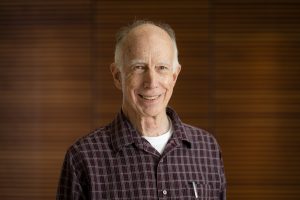
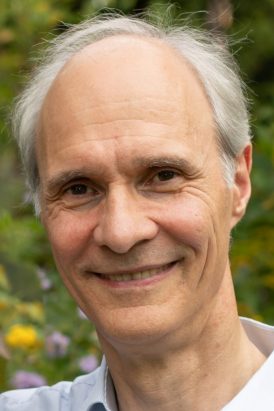
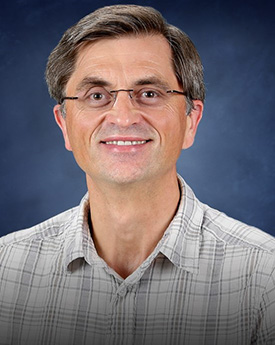
Matthew W. Kunz is an Associate Professor of Astrophysical Sciences at Princeton University, serving as Associate Chair of the Department of Astrophysical Sciences and Director of Graduate Studies for the Program in Plasma Physics. He holds a B.S. in Astronomy-Physics and B.A. in Music from the University of Virginia (2003), and a Ph.D. in Physics from the University of Illinois at Urbana-Champaign (2009). His research focuses on astrophysical plasma dynamics, including instability, turbulence, and transport in weakly collisional and poorly ionized plasmas, with applications to galaxy clusters, accretion disks, and the solar wind. Dr. Kunz's work employs analytical and numerical methods to study multi-scale plasma dynamics, aiming to understand angular momentum transport in accretion disks, kinetic turbulence cascades, and magnetic field evolution. His research has been recognized with several awards, including an NSF CAREER Award (2020-25), Alfred P. Sloan Research Fellowship (2017-20), and NASA Einstein Postdoctoral Fellowship (2011-14). He teaches courses on plasma astrophysics (AST 521), irreversible processes in plasmas (AST 554), and astrophysical research methods (AST 303). His publications demonstrate a consistent focus on plasma turbulence, magnetic reconnection, and cosmic ray propagation, with recent work emphasizing collisionless plasma dynamics and high-energy astrophysical phenomena.
Dan McCammon is a Professor in the Department of Physics at the University of Wisconsin-Madison, affiliated with the College of Letters & Science. His research focuses on X-ray astronomy, including studies of the diffuse X-ray background, interstellar and intergalactic media, and the development of advanced X-ray instrumentation. He is a key contributor to the XRISM (X-ray Imaging and Spectroscopy Mission) satellite, leading efforts in high-resolution X-ray spectroscopy and mission operations. McCammon's work emphasizes understanding cosmic plasma dynamics, galaxy cluster physics, and supernova remnant evolution through cutting-edge observational techniques and detector technology. His research interests span multiple subfields, including the thermodynamic properties of galactic clusters, charge-exchange processes in astrophysical plasmas, and the design of cryogenic microcalorimeters for space-based observatories. He has pioneered advancements in transition-edge sensors (TES) and superconducting detectors, enhancing the precision of X-ray spectral measurements. McCammon has contributed to numerous sounding rocket missions, such as Micro-X, and has been instrumental in the development of the Line Emission Mapper (LEM) probe concept, aimed at mapping the soft X-ray sky with unprecedented resolution. His work on the Hitomi (ASTRO-H) satellite demonstrated breakthroughs in resolving the thermal and dynamic properties of cosmic plasmas, such as the Perseus galaxy cluster and the Crab Nebula. His publications highlight a focus on high-resolution X-ray spectroscopy of cosmic sources, including galaxy clusters, active galactic nuclei, and supernova remnants. He has explored topics like non-thermal pressure contributions in cluster cores, ionized plasma diagnostics, and the role of charge-exchange emissions in interpreting diffuse X-ray backgrounds. McCammon's instrumentation innovations have enabled breakthroughs in measuring spectral features with sub-eV resolution, advancing our understanding of astrophysical processes. Despite the absence of explicitly listed awards or grants in the provided text, his leadership in major space missions and pioneering detector technologies underscores his contributions to the field. His research team collaborates on international projects, such as XRISM and LEM, reflecting a commitment to advancing observational astrophysics through interdisciplinary collaboration.
Carsten Rott is a Professor in the Department of Physics & Astronomy at the University of Utah and holds the Jack W. Keuffel Memorial Chair until December 2025. His academic journey began with a Ph.D. in Physics from Purdue University (2004), preceded by undergraduate studies at the Universität Hannover. Rott has held academic positions at institutions including The Ohio State University (CCAPP Senior Fellow 2009-2013), Penn State University (postdoc 2005-2008), and Sungkyunkwan University in South Korea (Assistant Professor 2013-2017, Associate Professor 2017-2025). He has been a member of the IceCube Neutrino Telescope collaboration since 2005 and serves on committees like the IceCube-Gen2 Coordination Committee and JSNS2 Speakers Board. His research spans Particle Physics , Neutrino Astronomy , and Dark Matter Detection . Key projects include analyzing IceCube data for sterile neutrino signatures, studying cosmic-ray anisotropy, and investigating terrestrial gamma-ray flashes. Notable achievements include the Bruno Rossi Prize (2021) for high-energy astrophysics contributions. Rott's work involves multimessenger observations (neutrinos, gamma-rays, radio signals) and detector calibration innovations, such as those for the JSNS2 experiment. Recent publications focus on atmospheric neutrino oscillation parameters, TGF spectroscopy, and dark matter constraints. He employs machine learning techniques (CNNs) for event reconstruction and leads initiatives like the IceCube Master Class for student engagement. Grants include funding for IceCube upgrades (2024-2026) and Hyper-Kamiokande collaborations (2023-2026). As department chair since 2023, Rott continues to bridge experimental particle physics with astrophysical discoveries.
Wolfgang Lorenzon is a Professor of Physics at the University of Michigan, specializing in experimental particle physics, nuclear physics, and astrophysics. His research spans three major experimental programs: the LUX-ZEPLIN (LZ) dark matter experiment at SURF, the MUSE experiment at PSI for proton radius measurements, and the SpinQuest collaboration at Fermilab studying hadronic physics. He has held significant roles in major collaborations including SeaQuest and HERMES, where he served as Deputy Spokesman from 1997-1998. His educational background includes a Ph.D. (1988) and Diploma (1984), both from the University of Basel. Lorenzon has built a distinguished research career focusing on precision measurements in particle and nuclear physics, with particular expertise in detector development and experimental techniques. Lorenzon's research interests center on fundamental questions in particle physics. His work on the LZ experiment involves developing the in-line radon removal system for the central time-projection chamber, crucial for enhancing the detector's sensitivity to WIMPs. At PSI, he leads the development of liquid hydrogen targets for the MUSE experiment, which aims to resolve discrepancies in proton charge radius measurements. His hadronic physics work with SeaQuest and SpinQuest focuses on understanding nucleon structure through antiquark distributions and polarized Drell-Yan processes. His research bridges theoretical questions with cutting-edge experimental techniques, often requiring innovative detector solutions. Analysis of his recent publications (2023-2025) reveals a strong focus on dark matter detection using liquid xenon technology, precision measurements of nucleon structure, and development of next-generation detectors. His work spans theoretical interpretation of experimental results, detector development, and analysis of fundamental particle interactions. The research shows increasing collaboration across international boundaries, with significant contributions to multiple major experiments simultaneously. Scientific Awards: Fellow of the American Physical Society Lorenzon has mentored numerous graduate students through completion of their Ph.D. degrees, with recent graduates including Haley Reid (2024), Noah Wuerfel and Chami Amarasinghe (2023), Maris Arthurs (2022), Marshall Scott (2020), and Daniel Morton (2019). His current research group includes postdocs, graduate students, and undergraduate researchers. His research is supported by multiple grants from the National Science Foundation (Grant 2110229) and the Department of Energy (Grant SC0019193 and Subcontract 734299), as well as University of Michigan funding. Lorenzon leads a research group with active laboratories at both the Homer A. Neal Laboratory (3265 HANL) and West Hall (357 WH) at the University of Michigan. His team collaborates with international groups at Fermilab, SURF in South Dakota, and the Paul Scherrer Institute in Switzerland. The group maintains strong connections with the LZ collaboration, MUSE experiment, and SpinQuest collaboration, contributing both technical expertise and physics analysis capabilities to these major international efforts.
Professor Stephen Croft is a faculty member at Lancaster University , affiliated with the School of Engineering . His research focuses on Nuclear Materials Measurement Science , with expertise in radiation detection, neutron interrogation, and X-ray/gamma-ray spectroscopy. Current projects include cosmic ray neutron monitoring , active neutron interrogation of nuclear materials , and radiation damage assessment . His recent publications emphasize semi-empirical modeling of atomic interactions and advanced detection techniques for nuclear applications. He has contributed to understanding vacancy transfer probabilities , X-ray fluorescence cross-sections , and water detection in nuclear environments . His work supports nuclear security, power plant safety, and space weather monitoring. Scientific awards : None explicitly mentioned in the text. Research groups : Involved in Nuclear Space Weather initiatives.
Amir Bahadori serves as Professor and Nuclear Engineering Program Director in the Department of Mechanical and Nuclear Engineering at Kansas State University's Carl R. Ice College of Engineering, holding the Hal and Mary Siegele Professorship in Engineering. He directs the Radiological Engineering Analysis Laboratory (REAL) and established the Institute for Radiation Health Studies (IRHS) in 2024, focusing on radiation protection, space radiation environments, and radiation health effects. His educational background includes: Ph.D. in Biomedical Engineering, University of Florida (2012) M.S. in Nuclear Engineering Sciences, University of Florida (2010) B.S. in Mechanical Engineering and Mathematics, Kansas State University (2008) Bahadori's research spans radiation transport modeling, dosimetry, and risk assessment with applications in space exploration, medical physics, and radiation epidemiology. He develops computational frameworks for radiation exposure scenarios and biological response prediction, emphasizing space radiation protection for Artemis missions and chronic exposure studies through the Million Person Study collaboration. Analysis of his recent publications reveals dominant themes in space radiation measurement (Artemis missions), radiation epidemiology (Million Person Study innovations), and advanced detection systems (miniaturized neutron spectrometers). His work increasingly integrates big data approaches for radiation risk assessment and electrostatic shielding concepts for deep-space exploration. His scientific recognition includes: NASA Graduate Student Research Fellowship (2009) Certified Health Physicist designation Big 12 faculty fellowship (2022-2023) NCRP council election (2024) Two USPTO patents Bahadori secures substantial research funding from NASA for space radiation instrumentation, Department of Energy projects via the Kansas City National Security Campus, and collaborative epidemiological studies. He mentors nuclear engineering graduate students while leading interdisciplinary teams developing radiation protection solutions for aerospace and medical applications. His laboratory infrastructure includes the REAL with Beocat high-performance computing resources, radiation detectors, and a 3D printer, plus the IRHS with a Precision X-ray XRad320 irradiator and radon chamber. These facilities support collaborations across K-State colleges and external organizations for radiation health effect studies.
Professor Malcolm Fairbairn is a faculty member at King's College London's Department of Physics, part of the Faculty of Natural, Mathematical & Engineering Sciences. His research focuses on the intersection of cosmology, particle physics, and astrophysics, particularly dark matter, dark energy, and cosmological inflation. He leads projects like the ERC Consolidator Grant (2015–2020) investigating dark matter in the early Universe. He collaborates with initiatives such as the MoEDAL experiment at CERN (magnetic monopole searches) and the Cherenkov Telescope Array (CTA) for gamma-ray astronomy. His interests extend to gravitational waves, supermassive black hole formation, and particle astrophysics. Fairbairn has contributed to studies on axion dark matter, primordial black holes, and dark matter constraints from dwarf galaxies. He is affiliated with the Theoretical Particle Physics & Cosmology (TPPC) Group, exploring beyond-Standard-Model physics, including supersymmetry and extra dimensions. Publications span topics like dark matter relic abundance, JWST observations of black holes, and LHC searches for exotic particles. He has advised on outreach projects like the 'Dark Matter' exhibition at Science Gallery London and interviews with alumni (e.g., Royal Navy submariner Chris Tuckley).
Professor Christian Knigge serves as Professor of Astrophysics at the University of Southampton and is a core member of the Southampton Theory Astrophysics and Gravity (STAG) Research Centre within the Institute for Life Sciences. His research program investigates accretion phenomena across diverse cosmic scales, from stellar-mass compact objects to supermassive black holes. Knigge's primary research focuses on accretion phenomena and associated outflows, cataclysmic variables, close binaries, globular clusters, and active galactic nuclei. He examines the physical mechanisms driving accretion disk instabilities, outflow generation, and explosive events in binary systems, with particular emphasis on white dwarf and black hole accretors. His work integrates observational data with theoretical modeling to unravel the complex physics of these high-energy environments. Recent publications (2024-2025) reveal a strong emphasis on multi-wavelength observational campaigns, especially leveraging JWST capabilities, alongside theoretical code development. Key research threads include characterizing disk winds in active galactic nuclei, identifying quasi-periodic oscillations in white dwarf systems, classifying optical outbursts in cataclysmic variables, and developing computational tools like the SIROCCO radiative transfer code. These studies demonstrate his leadership in connecting observational signatures with fundamental accretion physics across different astrophysical regimes. Supervision: Currently guides six PhD students in Physics (Austen George William Wallis, Cordelia Brown, Brian Luff, Zackery Alexander Irving, Arianna Clarissa Albayati, Pornisara Nuchvanichakul) Grants: Leads STFC-funded projects including 'Line-Driven Disk Winds in Active Galactic Nuclei', 'C Knigge - Astrophysics at Southampton', and previously held a Leverhulme Trust Research Fellowship for 'The Universal Nature of Accreting Compact Objects' As an integral member of the STAG Research Centre, Knigge collaborates within a multidisciplinary team investigating gravity-dominated systems, contributing to Southampton's prominence in theoretical and observational astrophysics through both individual research initiatives and institutional consolidation grants.
Prof. Adam Deller is a Professor at Swinburne University of Technology, affiliated with the School of Science, Computing and Emerging Technologies. His academic journey includes a BSc, BE (1st class honours), and PhD in Astrophysics from Swinburne. He specializes in radio interferometry, neutron star physics, fast radio bursts (FRBs), and space domain awareness. His research focuses on compact objects like pulsars and black holes, using radio telescopes for high-resolution imaging. He co-founded Fourier Space Pty Ltd, developing signal processing solutions for radio astronomy and space industries. **Research Interests**: Radio interferometry instrumentation, neutron star magnetospheres, FRB localization and cosmological applications, and space domain awareness through radio observations. **Awards**: Includes the Pawsey Medal (2020), Newcombe Cleveland Prize (2022), and multiple grants from ARC and industry partners. His grants focus on SKA pulsar timing, FRB studies, and gravitational wave astronomy collaborations. **Teaching**: Teaches Computational Astrophysics, emphasizing numerical simulations for astrophysical problems. **Grants & Collaborations**: Key roles in ARC Centre of Excellence for Gravitational Wave Discovery, SKA pulsar timing projects, and international telescope collaborations like ASKAP and VLBI networks.
Nadia Zakamska is a Professor in the Department of Physics & Astronomy at Johns Hopkins University and serves as Vice Chair for Academics. She holds a PhD from Princeton University and has held fellowships at the Institute for Advanced Study and Stanford University. Her research focuses on observational and theoretical astrophysics, including quasar-driven galactic winds, stellar variability, binary systems, and the co-evolution of supermassive black holes and galaxies. Her work leverages cutting-edge facilities like the James Webb Space Telescope (JWST) and the Atacama Large Millimeter/submillimeter Array (ALMA). Key research areas include: (1) Discovery of galactic winds powered by supermassive black holes, which influence galaxy formation and star formation suppression. (2) Exploration of variable astrophysical phenomena using surveys like LSST and WISE, with a focus on binary stars, white dwarfs, and neutron star mergers. (3) Analysis of dual quasars and their role in galaxy mergers. Recent achievements include detecting extreme outflows in 'extremely red quasars' and using JWST to study starburst galaxies. Zakamska has mentored over 30 graduate and undergraduate students, many of whom have pursued postdoctoral roles at prestigious institutions. She leads the JWST Early Release Science Program Q3D and collaborates on projects like the Sloan Digital Sky Survey (SDSS-V). Awards include the Newton Lacy Pierce Prize (2014), Alfred P. Sloan Fellowship (2011–2013), and JHU Catalyst Award (2016).
Matthew Szydagis is an Associate Professor in the Department of Physics at the University at Albany, State University of New York, where he conducts cutting-edge research in experimental astroparticle physics with a focus on dark matter detection. Education: PhD, University of Chicago, 2010 Postdoctoral Associate, University of California Davis, 2010-2014 Dr. Szydagis leads research efforts centered around the LZ (LUX-ZEPLIN) Dark Matter Experiment, the world's largest direct dark matter search project operating at the Sanford Underground Research Facility. His expertise lies in the physics of two-phase Xenon time-projection chambers and the development of sophisticated Monte Carlo simulation techniques to understand detector responses. In 2011, he created the NEST (Noble Element Simulation Technique) software package, which has become an essential tool for the broader scientific community working with noble element detectors. His research spans multiple disciplines including particle physics, astrophysics, and computational physics, with applications extending beyond dark matter research into neutrino physics and medical physics. Dr. Szydagis is an active member of the international LZ collaboration and leads the Dark Matter Research Group at the University at Albany. His work contributes significantly to establishing the world's most sensitive limits on dark matter interactions across a wide range of particle masses.
Elena D'Onghia is an Associate Professor in the Department of Astronomy at the University of Wisconsin-Madison. Her research focuses on unraveling the dynamical processes that shape the stellar structure of the Milky Way and nearby galaxies using analytical models and high-resolution numerical simulations. She leverages data from the GAIA satellite to study galactic evolution, emphasizing the importance of understanding our cosmic environment beyond the Solar System. University: University of Wisconsin-Madison Department: Astronomy Contact: edonghia@astro.wisc.edu | 4504 Sterling Hall Research Interests D'Onghia's work spans galactic dynamics, stellar structure formation, and interstellar medium processes. She investigates how gravitational interactions, stellar bars, and supernova-driven outflows influence galactic morphology. Her studies often integrate multi-wavelength observations with cosmological simulations to trace the evolution of galaxies like the Milky Way and Magellanic Cloud analogs. Recent Publications Her recent articles highlight galactic disk corrugations, starburst outflows in the LMC, and the role of classical bulges in shaping stellar bars. Collaborative projects include the Sloan Digital Sky Survey and ALMA-based studies of high-redshift galaxies. Scientific Awards 2018-2020 Vilas Associate Professor Research Fellow 2013-2017 Alfred P. Sloan Research Fellow 2013 Kavli Fellow Frontiers of Science 2009-2012 Keck Fellowship (Harvard) 2005-2006 Max-Planck Research Fellowship
Joop Schaye is a Full Professor at Leiden University, affiliated with the Leiden Observatory within the Faculty of Science. His research focuses on galaxy formation, the intergalactic medium (IGM), and cosmological hydrodynamical simulations. He leads the FLAMINGO and COLIBRE projects, building on prior work with OWLS and EAGLE simulations. Role: Professor of Galaxy Formation and IGM Research Affiliation: Leiden Observatory, Faculty of Science Research & Group His group includes current PhD candidates (e.g., Jeger Broxterman, William McDonald) and postdocs (e.g., Victor Forouhar Moreno). Former students include Roi Kugel and Jorryt Matthee. Active collaborations involve MUSE surveys and Athena X-ray instrumentation. Awards Appointed member of the Royal Netherlands Academy of Arts and Sciences (KNAW) in 2025, recognizing his contributions to astrophysics. Teaching Teaches the Spring 2025 MSc course Large-scale structure and galaxy formation .
David A. Neufeld is a Professor in the William H. Miller III Department of Physics & Astronomy at Johns Hopkins University (JHU), part of the Krieger School of Arts & Sciences. He holds a PhD from Harvard University and specializes in theoretical astrophysics, molecular astrophysics, and interstellar medium (ISM) studies. His research utilizes advanced observatories like the Herschel Space Observatory and SOFIA (Stratospheric Observatory for Infrared Astronomy), focusing on molecular line emission, cosmic ray ionization rates, and hydride molecules in diffuse clouds. Key projects include leading the HyGAL SOFIA Legacy Program to study hydrides in the Galactic ISM and participating in Herschel’s HEXOS, PRISMAS, and WISH Guaranteed Time programs. Neufeld has developed experimental methods to constrain sexaquark dark matter and contributed to the discovery of the helium hydride ion (HeH+) in planetary nebulae. He is also involved in GUSTO, a terahertz spectroscopic mission mapping [CII] and [NII] emissions. His research integrates observational astronomy with theoretical models, exploring topics like protostellar outflows, water ice chemistry, and shock dynamics. He has published extensively on infrared/submillimeter spectroscopy, molecular ion abundances, and the role of cosmic rays in interstellar chemistry. Neufeld’s work bridges laboratory experiments (e.g., dissociative recombination studies) with astrophysical observations, advancing understanding of the ISM and star formation processes.
Prof. Frank L. H. Wolfs is a Professor in the Department of Physics and Astronomy at the University of Rochester. His research focuses on experimental particle physics, particularly in dark matter detection using advanced xenon-based detectors. He leads the LUX-ZEPLIN (LZ) experiment, responsible for trigger electronics development and calibration systems. His group has contributed to the Zeplin II (Boulby Mine, UK) and LUX (Sanford Underground Research Facility, South Dakota) projects, advancing detector technologies for underground physics. He also engages in educational outreach via online experiments like the muon lifetime measurement. Prof. Wolfs teaches courses ranging from introductory physics to advanced labs and participates in initiatives like the College Teaching, Learning, and Technology Roundtable. His work emphasizes precision instrumentation and interdisciplinary collaborations in astrophysics and nuclear physics. Research Interests: Direct detection of dark matter Liquid xenon time projection chambers Calibration and data acquisition systems Low-energy nuclear recoils Background reduction techniques Scientific Contributions: Design of the DDC-8DSP trigger system for LZ Development of the HydroX detector concept Advancements in electronic recoil discrimination