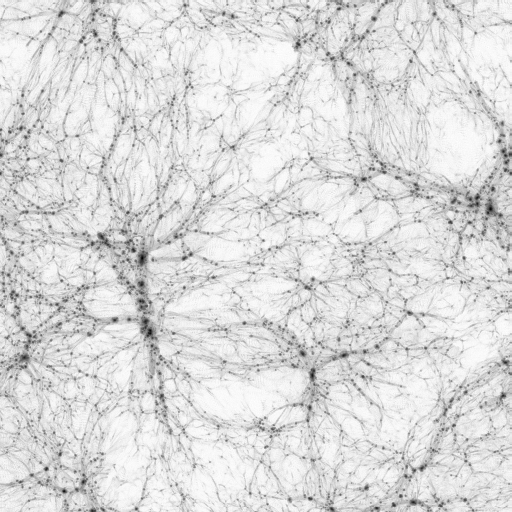
Prof. Dr. Dominik Schwarz is a faculty member at the Faculty of Physics , Bielefeld University. His research focuses on Cosmology and Particle Physics , particularly in the areas of Dark Energy , Dark Matter , Cosmological Inflation , and Large-Scale Structure Formation . He contributes to projects like the International LOFAR Telescope Consortium and the SFB-TRR 211 on strongly interacting matter. APART Fellow of Austrian Academy of Sciences Humboldt Fellow CERN Fellow His recent work explores the cosmic dipole anisotropy , axion density perturbations , and multi-wavelength cosmic web mapping . He also advances data science infrastructure through the PUNCH4NFDI consortium.
Kai Schmitz is a theoretical physicist affiliated with the University of Münster, specializing in the intersection of particle physics and cosmology. His research focuses on understanding fundamental aspects of the early universe, dark matter, and gravitational phenomena through theoretical frameworks. His primary research interests include: Cosmological implications of particle physics models Axion physics and its role in dark matter and inflation Gravitational wave signatures from cosmological phase transitions Leptogenesis and baryon asymmetry of the universe Neutrino physics and its cosmological implications Analysis of his recent publications reveals a strong focus on connecting theoretical particle physics with observable cosmological phenomena. His work often explores how physics beyond the Standard Model could leave detectable imprints in gravitational wave experiments like LISA and pulsar timing arrays. He has made significant contributions to understanding how axion physics could explain dark matter and baryon asymmetry, and how cosmic strings might produce detectable gravitational wave signals. Dr. Schmitz has received recognition through numerous publications in high-impact journals including: Journal of High Energy Physics Physical Review Letters Physical Review D Journal of Cosmology and Astroparticle Physics His collaborative work extends across international boundaries, with contributions to major projects like the LISA Cosmology Working Group and the International Pulsar Timing Array Collaboration. His research bridges theoretical developments with potential observational tests, positioning him at the forefront of modern theoretical cosmology.
Andrei Linde is a Russian-American theoretical physicist and the Harald Trap Friis Professor of Physics at Stanford University. He is renowned for pioneering the inflationary universe theory, eternal inflation, and the inflationary multiverse. He holds affiliations with the Lebedev Physical Institute, CERN, and Stanford University. His research focuses on cosmic inflation, quantum cosmology, and the implications of string theory for the multiverse. His work explores cosmological phase transitions, reheating, and the fractal structure of the multiverse. Linde's contributions are highlighted by numerous awards, including the Kavli Prize (2014), Breakthrough Prize in Fundamental Physics (2012), Gruber Prize (2004), Dirac Medal (2002), and Gamow Prize (2018). He is a member of the National Academy of Sciences and the American Academy of Arts and Sciences. Education: B.S. from Moscow State University (1975), PhD from Lebedev Physical Institute (1975) Positions: Professor at Stanford University; CERN researcher (1989–present) Collaborations: Worked with Alan Guth, Paul Steinhardt, Alexei Starobinsky, and Renata Kallosh
Fabian Schmidt is a Professor (Forschungsgruppenleiter) at the Max Planck Institute for Astrophysics (MPA) in Garching, Germany. He specializes in cosmology, focusing on dark matter, dark energy, and the evolution of cosmic structures. His research explores the universe's composition, history, and the mechanisms behind primordial density fluctuations. Education: Diplom (equivalent to MSc) in cosmic gamma rays from Humboldt University Berlin, PhD (2005-2009) at the University of Chicago under advisors Scott Dodelson and Wayne Hu. Held fellowships at Caltech (Moore Fellow) and Princeton (NASA CXC Einstein Fellow) before joining MPA in 2013. Research interests include cosmological observables in general relativity, baryon acoustic oscillations (BAO) reconstruction, and field-level inference techniques. His group is funded by the Excellence Cluster Origins and MPA resources, with ongoing work on large-scale structure, gravitational lensing, and dark matter physics. Notable contributions span theoretical cosmology, computational methods for galaxy clustering analysis, and Bayesian forward modeling. His team advises PhD students and postdocs in areas like EFT-based BAO reconstruction, simulation-based inference, and dark matter dynamics. Outreach: Active in public talks (Lange Nacht der Wissenschaften) and collaborations with science journalists. Co-author of Modern Cosmology textbook (2nd ed. 2020, 3rd ed. 2025), addressing topics like inflation and quantum vacuum cosmology.
Yakov Shlapentokh-Rothman is an Assistant Professor in the Department of Mathematics at the University of Toronto St. George and the Department of Mathematical and Computational Sciences at the University of Toronto Mississauga. He holds a PhD from MIT (2015) and a BS with Honors from Stanford (2010). His research focuses on Partial Differential Equations, General Relativity, and Geometric Analysis, with particular emphasis on black hole dynamics, gravitational stability, and mathematical physics. He has been supported by an Alfred P. Sloan Fellowship and NSERC grants (RGPIN-2021-02562 and DGECR-2021-00093). His work includes groundbreaking studies on naked singularities, wave equations on Kerr spacetimes, and the Einstein vacuum equations. He currently advises PhD student Avyay Venkat Viswanath. Key research contributions span topics like mode stability, decay estimates for linear waves, and the interplay between geometric analysis and general relativity. His recent articles explore self-similar solutions to Einstein equations and Cauchy horizon instabilities, advancing theoretical frameworks for understanding spacetime singularities and black hole physics.
Alan Guth is an American theoretical physicist and cosmologist currently serving as the Victor Weisskopf Professor of Physics at the Massachusetts Institute of Technology (MIT) , within the School of Science and Department of Physics . He is best known for pioneering the theory of cosmic inflation , a framework explaining the universe's exponential expansion in its earliest moments. His career spans multiple prestigious institutions, including Princeton University (1971–1974), Columbia University (1974–1977), Cornell University (1977–1979), and the Stanford Linear Accelerator Center (1979–1980). Research Interests : Guth's work bridges particle physics and cosmology , focusing on the application of quantum field theory to the early universe. His seminal contribution, cosmic inflation , addresses critical problems in standard Big Bang cosmology, such as the horizon problem , flatness problem , and magnetic monopole abundance . Later, his research expanded into brane world models , density fluctuations , and vacuum energy dynamics . Scientific Contributions : Guth's publications, including the foundational 1981 paper on cosmic inflation, emphasize the role of false vacuum states and phase transitions in shaping the universe. The 1983 and 1984 papers further explore these themes, linking inflation to quantum mechanics and large-scale structure formation. His work has become central to understanding the early universe's evolution and cosmic homogeneity . Scientific Awards : Oskar Klein Medal (1991) Benjamin Franklin Medal for Physics (Franklin Institute) Isaac Newton Medal (2009) Dirac Prize (International Center for Theoretical Physics) Gruber Prize in Cosmology (2004) Breakthrough Prize in Fundamental Physics (2012) Kavli Prize in Astrophysics (2014) Eddington Medal (1996) Golden Plate Award (American Academy of Achievement, 2014) Julius Edgar Lilienfeld Prize (1992)
Jürgen Struckmeier is an Adjunct Professor at the Department of Physics, Goethe University Frankfurt am Main, and a FIAS Fellow since 2016 leading the working group "Canonical Gravity Theory". His research focuses on deriving general relativity through canonical transformation formalism under dynamic space-time, grounded in classical field theory and the principle of action. Research Interests : Covariant canonical gauge theories of gravity Hamiltonian mechanics in extended phase space Dark energy and cosmic expansion Stochastic effects in particle beams Noether's theorem and Lie symmetries Geometrodynamics and torsion in spacetime Scientific Awards : 1995 Particle Accelerator Conference Award for work on emittance growth in intense beams Collaborators and Students : Vladimir Denk, Matthias Hanauske, Dirk Kehm, Johannes Kirsch, Julia Lienert, David Vasak, and PhD student Armin van de Venn.
Andrina Nicola is Junior Professor at the University of Bonn's Argelander Institute for Astronomy within the Faculty of Mathematics and Natural Sciences. Her research combines cosmological data from multiple probes including the Cosmic Microwave Background, galaxy clustering, and weak gravitational lensing. Her group develops novel analysis techniques using machine learning to test cosmological models and examine dark energy, dark matter, and cosmic inflation. She contributes to major surveys including ACT, LSST, and SO to advance precision cosmology through multi-probe integration.
Joanna Dunkley is a British astrophysicist and Professor of Physics at Princeton University, specializing in cosmology and the cosmic microwave background (CMB). She has held positions at both Princeton University and the University of Oxford, contributing to major projects like the Atacama Cosmology Telescope, Simons Observatory, and Large Synoptic Survey Telescope (LSST). Her research combines theoretical physics with statistical analysis to understand the universe's composition, including dark energy and dark matter. Education : MSci in Natural Sciences (Theoretical Physics) from University of Cambridge (2001), DPhil in Astrophysics from University of Oxford (2005) Her research focuses on high-resolution CMB observations, gravitational lensing, and neutrino physics. Recent work involves the Simons Observatory's search for new physics in the early universe and cross-correlation studies of galaxy clusters with CMB lensing. Dunkley has received numerous accolades, including the Breakthrough Prize in Fundamental Physics (2017), Rosalind Franklin Award (2016), and election as Fellow of the Royal Society (2024). She authored the book Our Universe: An Astronomer's Guide (2019) and actively participates in public science engagement.
Serena Valtolina serves as a Research Fellow (Junior Scientist/Postdoc) at the Max Planck Institute for Gravitational Physics (Albert Einstein Institute) in Hannover, Germany, within the Observational Relativity and Cosmology research group. Her work focuses on gravitational wave detection through pulsar timing array methodologies. Her research spans theoretical and observational aspects of Relativity and Cosmology, with specialized expertise in Pulsar Timing Arrays for low-frequency gravitational wave astronomy. This work contributes to understanding supermassive black hole binaries, cosmic inflation signatures, and neutron star physics through precise timing analysis of millisecond pulsars. Her investigations sit at the intersection of astrophysics, general relativity, and cosmological modeling. Based at the Hannover campus (Callinstraße 38), Dr. Valtolina collaborates within international gravitational wave consortia including the European Pulsar Timing Array (EPTA) and the International Pulsar Timing Array (IPTA), advancing multi-messenger astronomy through radio telescope observations and data analysis techniques.
Dr. Maxence Corman is a postdoctoral researcher at the Max Planck Institute for Gravitational Physics (Albert Einstein Institute) in Potsdam, Germany, where he works in the Department of Astrophysical and Cosmological Relativity. His research bridges gravitational physics and cosmology, with a strong emphasis on numerical relativity and high-performance computing. Ph.D. in Theoretical Physics, Perimeter Institute for Theoretical Physics (2019–2023) M.Sci. in Physics and Astronomy, University of Glasgow (2016–2019) B.Sc. in Physics with Astrophysics, University of Glasgow (2014–2016) Dr. Corman's research focuses on testing general relativity in strong-gravity regimes through numerical simulations. His work explores black hole mergers in modified gravity theories , nonsingular bouncing cosmologies , robustness of inflation under inhomogeneous initial conditions , and flux compactifications in string theory as mechanisms for cosmic acceleration. He investigates how primordial black holes behave during cosmological bounces and whether inflation can emerge from highly inhomogeneous states. His methodology relies heavily on solving Einstein's equations numerically to model gravitational wave signals and spacetime dynamics in extreme conditions. He has studied binary black hole mergers in Einstein-scalar-Gauss-Bonnet gravity, producing waveforms that deviate from general relativity and could be detectable by future observatories like LISA. He also explores higher-dimensional theories and forecasts how space-based gravitational wave detectors can constrain extra dimensions through multi-messenger astronomy. Dr. Corman is passionate about promoting women in physics and envisions gender parity across all academic levels within the next two decades. He encourages young women to pursue physics authentically and without pretense. He has no listed scientific awards or students at this stage of his career. Dr. Corman leads or contributes to several key research projects, including: Numerical simulations of black hole mergers in modified gravity Dynamics of primordial black holes in bouncing cosmologies Nonlinear evolution of flux compactifications in string theory Testing inflationary robustness under extreme inhomogeneities Forecasting constraints on extra dimensions using LISA-era observations
Guadalupe Cañas Herrera is a Research Fellow at the European Space Agency (ESA) , specializing in Theoretical Cosmology . She is a key member of the Euclid Consortium and a software developer for the CLOE (Cosmology Likelihood for Observables in Euclid) project, which is part of ESA's official data analysis pipeline for cosmological constraints. Her research focuses on statistical analysis of beyond-Standard cosmological models to study dark energy, dark matter, and primordial density perturbations, using data such as the Cosmic Microwave Background, weak lensing, and galaxy clustering. She also explores forecasting techniques for novel observables like gravitational waves and machine learning applications in cosmological inference. Collaborations : Euclid Consortium, Osservatorio Astronomico di Roma, University of Amsterdam, Leiden Observatory, Lorentz Institute for Theoretical Physics, University of Cantabria. Contact : guadalupe.canasherrera@esa.int Her work bridges theoretical cosmology with advanced statistical methods and software development, aiming to unravel the universe's origins and evolution through precision data analysis.
Alan H. Guth is a Professor at the Massachusetts Institute of Technology (MIT), affiliated with the Department of Physics and the Laboratory for Nuclear Science (LNS). He is renowned for his foundational work in cosmology, particularly the theory of cosmic inflation. Guth has held senior academic positions at MIT since 1980, following postdoctoral roles at SLAC and Cornell University. His research focuses on theoretical physics, cosmology, and quantum field theory, with contributions to inflationary models, quantum fluctuations, and the multiverse concept. Guth’s affiliations include MIT’s Center for Theoretical Physics (CTP) and collaborations with institutions like Harvard-Smithsonian Center for Astrophysics. His educational background includes doctoral studies leading to his influential work on inflation, with Francis E. Low as his advisor. Research interests span cosmological parameters, dark matter axions, and the implications of eternal inflation. Notable articles address topics like Bayesian analysis in cosmology, quantum entanglement experiments using cosmic data, and axion physics in inflationary scenarios. Collaborations with researchers such as David I. Kaiser and Alexander Vilenkin highlight his interdisciplinary work. While no specific awards are listed here, his contributions to cosmology are widely recognized in the scientific community. Guth’s research also involves exploring cosmic phenomena through theoretical frameworks, including the interplay between quantum mechanics and cosmological models.
Prof. Pedro Schwaller is a Professor in the Theoretical High Energy Physics (THEP) group at Johannes Gutenberg University Mainz. He leads a research group focused on physics beyond the Standard Model and cosmology, addressing fundamental questions such as the matter-antimatter asymmetry, dark matter composition, and new physics at colliders. His work integrates theoretical frameworks with experimental data from LHC, gravitational wave observatories, and cosmological surveys. Education & Positions: PhD in Theoretical Particle Physics, University of Zurich (2010) Diploma (M.Sc.) in Theoretical Physics, ETH Zurich (2006) Professor at Mainz University since 2016 Prior roles include Fellowships at CERN (2013–2015) and DESY (2015–2016) Research Interests: His group explores cutting-edge topics including axion-like particles, gravitational wave probes of dark sectors, relaxion mechanisms for the hierarchy problem, and non-standard collider signatures. Recent efforts emphasize using gravitational waves to study dark matter and phase transitions in the early universe. Teaching: Recent courses include Advanced Cosmology (2021/22), Finite Temperature Quantum Field Theory (2018), and Dark Matter (2016/17). He also contributes to summer schools and international workshops on BSM physics and gravitational wave astronomy. Awards: CHIPP Prize for Best PhD Student in Particle Physics (2009) First-class honors for PhD thesis (2010) DPG Honorary Membership (2001) Group Members & Collaborations: Current students and postdocs include Dr. Fatemeh Elahi (maternity leave), Dr. Yann Gouttenoire, and PhD candidates like Enrico Morgante. Collaborations involve the Cluster of Excellence PRISMA and Mainz Institute of Theoretical Physics (MITP). Past members have transitioned to roles at institutions like Granada University, CERN, and DESY. Future Directions: Focus areas include exploiting upcoming colliders (e.g., FCC), gravitational wave observatories (e.g., LISA), and novel detection techniques to unravel dark matter and BSM physics.
Raphael Flauger is a German theoretical physicist and cosmologist currently serving as a full professor in the Department of Physics at the University of California, San Diego. He has previously held faculty positions at Carnegie Mellon University (assistant professor, 2014-2015) and the University of Texas at Austin (assistant professor, 2015-2019). Flauger received his education at several prestigious institutions, including the University of Würzburg, the University of Texas at Austin (where he earned his PhD under Nobel laureate Steven Weinberg), and Imperial College London (where he earned an M.S. in Quantum Fields and Fundamental Forces). His research focuses on cosmology, particularly on extracting predictions about the early universe from cosmic microwave background (CMB) data, including findings from the Wilkinson Microwave Anisotropy Probe (WMAP) and Planck space-based observatory. He also works on quantum field theories, quantum gravity, and string theory, with particular emphasis on phenomenological models that can be tested against observational data. Flauger is best known for his significant role in challenging and ultimately refuting the BICEP2 collaboration's claims of detecting gravitational waves and evidence of inflation in the CMB through his work at the Institute for Advanced Study. He demonstrated that polarized emission from interstellar dust could explain the BICEP2 findings. His notable awards include: Sloan Research Fellowship (2015) New Horizons in Physics Prize (2016)