Vivian Miranda is an Assistant Professor at the C.N. Yang Institute for Theoretical Physics, Stony Brook University. Her research focuses on cosmology, particularly dark energy, weak lensing, galaxy clustering, and machine learning applications in cosmological data analysis. She collaborates with institutions like ICTP-SAIFR in Brazil and works with students and postdocs on projects involving LSST, Roman Space Telescope, and DESI surveys. Research Interests: Dark energy and cosmic acceleration Weak lensing and galaxy clustering Machine learning in cosmological simulations CMB lensing and cross-correlations Supernova observations and systematics Baryonic physics constraints Collaborations: Active partnerships with ICTP-SAIFR and Prof. Rogério Rosenfeld. Mentors students like Evan Saraivanov, Yijie Zhu, and Victoria Lloyd, with former advisees João Rebouças and Diogo Henrique. Her lab emphasizes theoretical physics, emulator development, and multi-probe cosmological analyses.
Dr. Charles Wang is a Reader in the Department of Physics at the University of Aberdeen, within the School of Natural and Computing Sciences. He has held this position since 2005 and is also an Honorary Cruickshank Lecturer in Astronomy at the same institution. His academic journey began with a BSc in Physics from National Taiwan University, followed by a Certificate of Advanced Study in Mathematics from Cambridge, and culminated in a PhD in Mathematical Physics from Lancaster University. Education: BSc (National Taiwan University), CASM (Cambridge), PhD (Lancaster) Current Position: Reader, Department of Physics, University of Aberdeen Additional Role: Honorary Cruickshank Lecturer in Astronomy Dr. Wang's research lies at the intersection of theoretical physics and experimental gravity, focusing on general relativity, quantum gravity, modified gravity, astrophysics, and cosmology. He is a pioneer in quantum gravity phenomenology, particularly through atom interferometry techniques. His work extends into applied mathematics, including differential geometry, Clifford algebra, and the Cosserat theory of rods. He actively collaborates with industry and research institutions on quantum sensing, gravity gradiometry, and precision measurement applications. His recent publications reveal a strong trajectory in quantum aspects of gravity, including Unruh radiation, gravitational decoherence, quantum sensing of spacetime fluctuations, and loop quantum gravity formulations. These works are published in high-impact journals such as Physical Review D, Classical and Quantum Gravity, and the European Physical Journal C. Scientific honors include being a Fellow of the STFC Centre for Fundamental Physics. He has secured significant research funding from sources like MoD/Dstl, EPSRC, UKSA, and BP for projects related to quantum gravity experiments and gravity sensing technologies. STFC Centre for Fundamental Physics Fellow Dr. Wang has supervised PhD students and contributed to major international collaborations such as STE-QUEST (ESA mission candidate), GG-TOP (with Birmingham), and CERN-related supernova research. He has also served in professional roles including Grampian Regional Organiser for the Institute of Physics in Scotland and as a Series Editor for Springer Briefs in Physics. He is affiliated with research groups including the Plasma Science Research Group (PSRG) and contributes to interdisciplinary initiatives such as the Advanced Centre for Energy and Sustainability (ACES).
David Bolst is a Research Fellow at the School of Physics, University of Wollongong, within the Faculty of Engineering and Information Sciences. His research focuses on medical physics, radiation therapy, and computational modeling with applications in both clinical and space environments. Dr. Bolst has contributed significantly to the development and validation of Geant4-based models for hadron therapy, microdosimetry systems, and radiation protection technologies. Research Interests: His work spans medical physics (radiation therapy dosimetry, particle therapy modeling), radiation-matter interactions (secondary fragmentation, LET analysis), and space radiation protection (astronaut shielding, galactic cosmic ray studies). He has pioneered the use of silicon-on-insulator (SOI) microdosimeters for radiation quality assessment in diverse environments. Funding & Collaborations: He leads projects including the 'Advanced microdosimetry for particle therapy and space medicine' (2021-2022) and 'Anthropomorphic Phantom Ionising Radiation Modelling and Simulation' (2021-2022). Collaborations include institutions like CATANA and the Geant4 Medical Simulation Benchmarking Group. Grants: RevITAlise Research Grant Scheme (RITA): Advanced microdosimetry for particle therapy and space medicine (2021) Defence Materials Technology Centre: Anthropomorphic Phantom Modelling (2021) Labs/Teams: Involved in the G4-Med system development and the SOI microdosimeter project teams. Engaged with international collaborations in radiation physics and space medicine.
Nassim Bozorgnia is an Assistant Professor in the Department of Physics at the University of Alberta and a Tier 2 Canada Research Chair in Astroparticle Physics. He specializes in theoretical astroparticle physics and dark matter phenomenology, focusing on dark matter's particle nature and its implications for direct/indirect detection experiments. His research uses cosmological simulations and observational data to study dark matter distribution in galaxies like the Milky Way. Education: Ph.D. in Physics, UCLA (2012), Dissertation: 'Ion Channeling in Direct Dark Matter Detection' M.S. in Physics, San Francisco State University (2006) B.S. in Physics, Kharazmi University (2004) Research Interests: His work explores dark matter interactions, galactic distribution modeling, and astroparticle physics. Key areas include: Dark matter direct detection using crystal detectors Impact of Large Magellanic Cloud on dark matter signals Velocity-dependent annihilation radiation Dark matter distribution correlations with stellar kinematics Grants & Awards: Canada Research Chair (2022–2027) Natural Sciences and Engineering Research Council (NSERC) Discovery Grant (2020–2025) McDonald Institute Highly Qualified Personnel Pooled Resources (2021–2023) Recipient of multiple fellowships including UCLA's Cota Robles Fellowship Teaching & Supervision: Currently supervising 6 Ph.D./M.S. students and mentoring EXPLORE program participants Teaches courses like 'Physical Cosmology' and 'Dark Matter: from cosmology to underground searches' Developed the EXPLORE international research collaboration program Labs & Collaborations: Active in collaborations like the EXPLORE program and international initiatives such as GRAPPA and IPPP. His work integrates cosmological simulations (EAGLE, APOSTLE) with observational datasets to refine dark matter models.
David A. Williams is an Adjunct Professor of Physics at the University of California, Santa Cruz . He is a member of the VERITAS and CTA collaborations, focusing on high-energy gamma-ray astronomy. Additionally, he is an Affiliated Scientist with the Fermi -Large Area Telescope project. Ph.D. from Harvard University (1987) Office: Room 319, Natural Science 2 Email: daw@ucsc.edu Research Interests Williams investigates high-energy astrophysical phenomena using ground-based gamma-ray telescopes. Key research areas include: Understanding gamma-ray bursts and their emission mechanisms Analyzing active galactic nuclei (particularly blazars) and their relativistic jets Studying cosmic rays and their acceleration processes in astrophysical systems Developing advanced instrumentation for experiments like VERITAS and CTA Investigating absorption of gamma rays via cosmic microwave background interactions His recent publications highlight collaborative work on TeV gamma-ray detection, source analysis, and telescope design advancements. Collaborations VERITAS : Observational gamma-ray astronomy with 12m telescopes CTA : Chair of the CTA-US group for next-generation telescope development Fermi -LAT : Multi-wavelength studies combining satellite and ground-based data
Glenn Starkman is a Professor and Vice-Chair in the Department of Physics at Case Western Reserve University. He holds a B.Sc. (Hons.) from the University of Toronto (1984) and a Ph.D. from Stanford University (1988). Research Interests: Dr. Starkman focuses on cosmology , particle physics , and astrophysics , particularly on the fine-tuning problem in the Standard Model, dark matter as macroscopic baryonic chunks, modified gravity theories, and the topology of the universe. His work integrates theoretical physics with observational data from microwave background radiation, galaxy surveys, and gravitational lensing. Selected Scientific Awards: Distinguished University Professor Michelson Postdoctoral Prize Lectureship Recent Research Trends: His recent articles address cosmological simulations , dark matter candidates , Ward-Takahashi identities in the Standard Model , and topological constraints on the universe . These studies often bridge theoretical frameworks with observational tests. Collaborations and Mentorship: He collaborates closely with graduate and undergraduate students, postdoctoral associates, and international research teams. His projects include precision tests of the Standard Model and investigations into dark energy and cosmic isotropy. Contact: glenn.starkman@case.edu
Julia Gehrlein is an Assistant Professor in the Physics Department at Colorado State University. She has held research positions at CERN and Brookhaven National Laboratory, focusing on theoretical particle physics with particular emphasis on neutrinos and dark matter. Her work bridges astrophysical phenomena like supermassive black holes with ultralight dark matter and explores new physics scenarios through neutrino oscillations, non-standard interactions, and collider experiments. PhD: Instituto de Física Teórica UAM-CSIC, Madrid, Spain (Marie Curie ITN “Elusives”) MSc/BSc: Karlsruhe Institute of Technology, Germany Her research spans neutrino mass mechanisms (inverse seesaw, sum rules), dark matter phenomenology (Z′ bosons, indirect signals), and experimental connections to long-baseline accelerators, reactor neutrino experiments, and the IceCube observatory. She contributes to the DUNE experiment design and analyzes neutrino polarizability effects. Recent publications (2022-2025) focus on: Neutrino oscillation anomalies (gallium, ATOMKI X17) Neutrinoless double-beta decay theory Non-standard neutrino interactions in precision experiments Dark matter connections to neutrino physics Flavor models and symmetry-based mass matrices Collider signatures of new physics She has worked extensively on theoretical frameworks testable at current experiments, particularly through neutrino factories and coherent scattering searches.
Prof. Bing Zhang is a Chair Professor and Global STEM Scholar at the Department of Physics, Faculty of Science, The University of Hong Kong. His research focuses on theoretical astrophysics, particularly high-energy phenomena such as Gamma-ray bursts (GRBs), fast radio bursts (FRBs), neutron stars, and black holes, with an emphasis on understanding the physical mechanisms behind relativistic jets and multi-messenger signals. Primary Research Themes : High-energy astrophysics, Gamma-ray bursts, Fast radio bursts, Multi-messenger astronomy, Magnetic reconnection, Relativistic jets Affiliation : Department of Physics, Faculty of Science, The University of Hong Kong His publications reveal a trajectory from foundational work on GRBs to pioneering studies on FRBs. Key contributions include monographs on GRB physics (2018) and FRBs (2023), alongside seminal papers on jet dynamics, magnetic reconnection models, and neutrino emission mechanisms. The work bridges theoretical modeling with multi-messenger observations, particularly through Swift satellite data analysis.
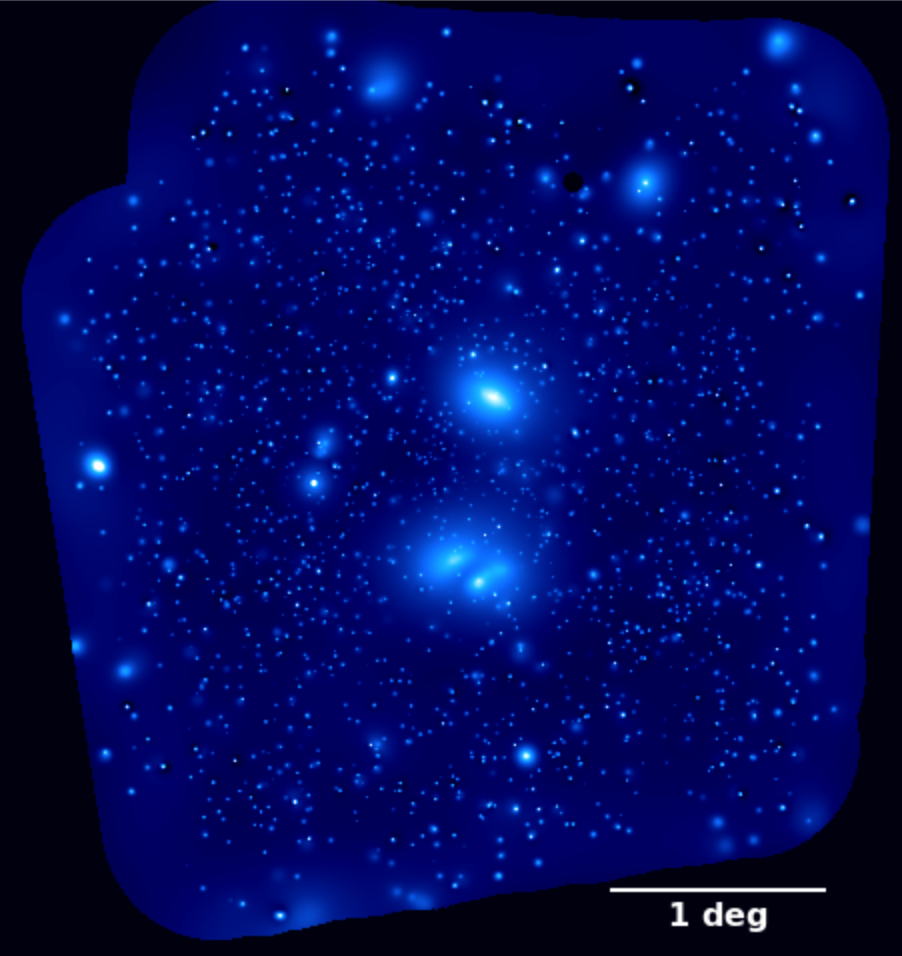
Professor Thomas H. Reiprich is a leading astrophysicist at the Argelander Institute for Astronomy, University of Bonn, specializing in X-ray observations of galaxy clusters and large-scale cosmic structure. His research focuses on dark energy, cosmology, and the physics of intergalactic medium through missions like eROSITA. His primary research interests include: Clusters of Galaxies and their evolution Supermassive Black Holes and active galactic nuclei Cosmological structure formation Gravitational lensing phenomena X-Ray and Optical Astronomy techniques Professor Reiprich's recent work has centered on the eROSITA mission, with groundbreaking discoveries including the 15 Mpc intergalactic filament connecting galaxy clusters Abell 3391/95, providing unprecedented evidence of cosmic web structure. His research combines X-ray, radio, and optical data to study the hot gas in cluster outskirts and filaments. He has been actively involved in public outreach, including lectures at the Planetarium Hamburg and Astronomy on Tap events, making complex cosmological concepts accessible to the general public. His work has received significant media attention from international science outlets including NASA and ESA. Professor Reiprich maintains an active teaching schedule at the University of Bonn, regularly offering courses on dark energy, galaxy clusters, and X-ray astronomy, for which he and colleague Jürgen Schmitt received the faculty's teaching award for their dark energy lecture in WS15-16.
Jean-Luc Autran is an Exceptional University Professor (PRCE2) at Aix-Marseille University, affiliated with the Department of Detection, Radiation and Reliability (DETECT) within the Faculty of Sciences. Since July 2023, he has been temporarily assigned to the University of Rennes for managerial roles. His research focuses on radiation effects in microelectronics, particularly soft errors caused by atmospheric neutrons, muons, protons, and terrestrial radiation in nanoscale devices. Key Research Areas: Microelectronics Reliability, Single-Event Effects, Atmospheric Radiation, Neutron Interactions, Muon Physics, Radiation-Hardened Design. Scientific Leadership: As an Honorary Member of the Institut Universitaire de France (since 2003), he leads multidisciplinary efforts from radiation metrology to multi-physics circuit simulation via tools like GEANT4, SRIM, and NGSPICE. His work spans 25+ years, evolving from quantum transport in nano-MOSFETs (1998-2008) to atmospheric radiation effects (2005-present). Recent Contributions: 2025 studies on ultrawide-bandgap semiconductors, deep learning-based radiation simulations, and JET Tokamak neutron experiments. He pioneers a multi-scale Single-Event Effect simulation framework for decananometer CMOS, integrating particle physics, device modeling, and system-level error rate prediction. Scientific Awards: Honorary Member, Institut Universitaire de France (2003 class). Educational Impact: Teaches graduate courses in quantum mechanics simulation, nanoelectronics reliability, and radiation detection at Aix-Marseille University, with lectures delivered in English for international audiences.
Tomi S. Koivisto is a theoretical physicist and cosmologist holding a 2006 PhD from the University of Helsinki under Hannu Kurki-Suonio. He is currently active at the Institute of Physics, University of Tartu (Estonia), and the National Institute of Chemical Physics and Biophysics (NICPB) in Tallinn. Earlier he was also affiliated with the Helsinki Institute of Physics. Research Focus: Modified theories of gravity beyond General Relativity, including teleparallel, metric-affine, and Lorentz-gauge formulations. Cosmological applications: dark energy, dark matter, cosmic acceleration, and observational tensions. Black-hole physics and gravitational waves within extended gravity frameworks. His publication record (≈ 143 papers, 2009-2025) reveals a steady flow of highly-cited works in JHEP , Phys. Rev. D , JCAP , and Universe , often co-authored with José Beltrán-Jiménez, Manuel Hohmann, Luca Marzola, Tom Złośnik, and others. Articles Trend: Recent papers explore Spin(4) gauge-theoretic unification of gravity and matter, ghost-free symmetric teleparallel models, relativistic viscous fluids, and black-hole solutions in Lorentz-gauge theory—showing a shift toward geometrically richer, observationally testable extensions of gravity. Scientific Awards & Recognition: None explicitly reported in the supplied texts. Advising & Grants: No specific student names or funded-grant details are provided in the supplied material. Laboratories & Teams: Works within the gravity and cosmology groups at Tartu and NICPB; participates in international collaborations such as the CosmoVerse and CANTATA networks.
Dr. Ramesh Bhat is a Senior Research Fellow at Curtin University's School of Electrical Engineering, Computing and Mathematical Sciences (EECMS), affiliated with the Curtin Research Institute and Curtin Institute of Radio Astronomy (CIRA). His primary affiliation is with the Faculty of Science and Engineering. He is based at Curtin Perth Campus in Brodie Hall, Room 161. His research focuses on astrophysics and radio astronomy, particularly pulsar timing, gravitational wave detection using pulsar timing arrays, and the study of transient phenomena such as fast radio bursts (FRBs). He contributes to major projects like the High Time Resolution Universe (HTRU) survey, MeerTime, and the Murchison Widefield Array (MWA). Key research interests include pulsar population studies, interstellar medium interactions, signal processing for radio astronomy, and instrumentation development for next-generation telescopes like the Square Kilometre Array (SKA). His work spans theoretical models of pulsar emission mechanisms to observational studies of pulsar nulling, subpulse drifting, and gravitational wave backgrounds. Recent publications highlight advancements in pulsar survey techniques (e.g., GPU-accelerated analysis), discovery of new pulsars and FRBs, and constraints on cosmological models via pulsar timing arrays. His research often involves international collaborations, leveraging facilities like the Parkes radio telescope and the MWA. He actively contributes to radio interferometry, transient detection algorithms, and pulsar timing array data analysis. His work bridges observational astronomy with computational methods, aiming to advance understanding of compact objects and gravitational physics.
Professor Iver Cairns is a renowned academic in Space Physics at the University of Sydney's Faculty of Science, affiliated with the Sydney Nano Institute. He holds a PhD from the University of Sydney (1987) and has held prestigious positions including a Senior Research Fellowship and Australian Professorial Fellowship. His research focuses on solar radio emissions, plasma physics, and space weather, with notable contributions to understanding solar wind dynamics and ionospheric interactions. He leads projects like the CUAVA training center and developed the RedEye-1 SWIR imager for atmospheric monitoring. Awards include the 2023 Australian Space Awards Scientist of the Year. Key research areas include radio emission mechanisms in space plasmas, spacecraft charging effects, and nanosatellite technology. His work spans interdisciplinary collaborations in astrophysics, engineering, and environmental science. Major grants include projects on GPS-R technology and space photovoltaics. Current initiatives include the Waratah Seed-1 satellite and the TOLIMAN space telescope. He has pioneered open-source hyperspectral imaging tools and contributed to missions like the Parker Solar Probe and STEREO. Education: PhD in Physics, University of Sydney (1987) Grants: 2023 JORN Enhancement Project; 2022 Space Photovoltaics Roadmap Key Projects: CUAVA CubeSats, TRICE-2 Sounding Rockets, PUNCH Solar Mission Awards: Australian Space Awards Scientist of the Year (2023) Advises on satellite engineering, plasma diagnostics, and space policy. Active in Sydney Nano's multidisciplinary research, addressing challenges in nanoscience and space technology.
Alexandre Ziegler is a Senior Lecturer at the Department of Finance, University of Zurich, affiliated with the Faculty of Economics. He holds a Ph.D. in Finance from the University of St. Gallen (1998, Summa cum Laude), an MBA from Stanford Graduate School of Business (2000), and a Habilitation in Economics from the University of St. Gallen (2001). His research focuses on asset pricing, game theory, corporate finance, and labor economics, with notable contributions to climate policy impact on stock markets and political economy dynamics. He teaches Advanced Investments, Portfolio Management, and Backtesting methodologies. **Teaching:** Asset Management: Advanced Investments (2025/26) Portfolio Management Implementation (2025/26) Portfolio Management Theory (2025/26) Backtesting for Portfolio Management (2025/26) **Research Interests:** Climate responsibility and stock price reactions to policy shocks (e.g., U.S. elections) Corporate finance strategies under tax and trade policy changes Market anomalies and seasonal trading patterns (e.g., 'Sell in May') Risk management in catastrophe reinsurance and securitization **Publications:** Over 15 peer-reviewed articles across finance, economics, and interdisciplinary fields, including high-impact studies in Review of Corporate Finance Studies , Journal of Financial Economics , and Biophysical Journal .
Irene Tamborra is a Professor at the Niels Bohr Institute (University of Copenhagen) and leads the Particle Astrophysics group . She holds the Mercator Fellow visiting professorship at the Max Planck Institutes for Physics and Astrophysics in Garching, Germany. Her research bridges astrophysics and particle physics, focusing on multi-messenger astronomy through neutrinos , gravitational waves , and photons . Current research themes include: Stellar explosions (supernovae, gamma-ray bursts) Neutrino flavor evolution in extreme environments Physics beyond the Standard Model using astrophysical probes Nucleosynthesis of heavy elements Recent work (2024-2025) explores neutrino production mechanisms in compact transients, fast flavor instabilities , and multi-messenger signatures of stellar collapses. She collaborates extensively with institutions in Germany, Spain, and the US. Scientific awards: MERAC Prize (European Astronomical Society) Duggal Award (IUPAP) ERC Consolidator Award She leads the Particle Astrophysics group at the Niels Bohr Institute and contributes to supernova neutrino theory , neutrino quantum kinetics , and cosmic accelerators analysis.