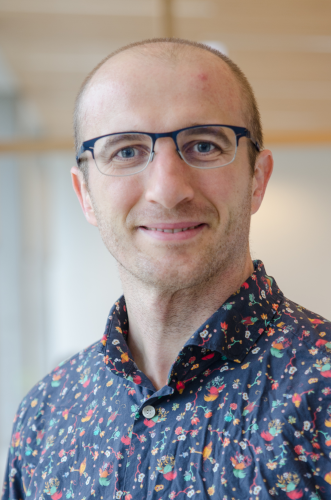
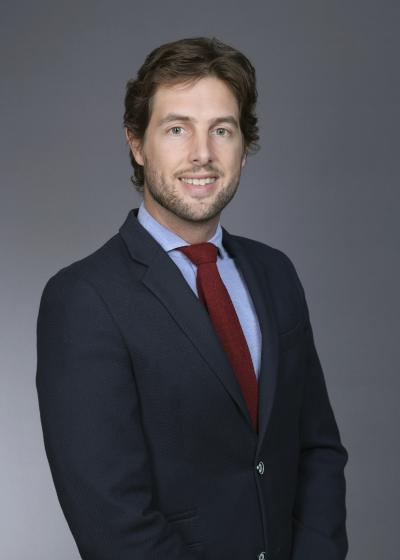
Jorge Turmo Borras es profesor del Departament de Ciències de la Computació en la Universitat Politècnica de Catalunya. Forma part del Grup de Processament del Llenguatge Natural (GPLN) i del Centre de Tecnologies i Aplicacions del Llenguatge i la Parla (TALP). Su investigación se centra en procesamiento del lenguaje natural, inteligencia artificial y minería de datos clínicos. Investigación: NLP, Deep Learning, Salud Digital Colaboraciones: IDEAI-UPC, XarTEC Salut Sus intereses principales incluyen extracción de información de documentos médicos, resolución de anáforas mediante hipergrafos, y normalización léxica de microtextos. Ha publicado sobre modelado de temas para enlazado de entidades y detección de negaciones en textos clínicos. En los últimos 5 años ha trabajado en sistemas de asistencia para diagnóstico , procesamiento de tweets médicos , y redes neuronales para historiales de salud . Sus artículos destacan aplicaciones de Transformers, CRF y modelos híbridos. Patrocinadores: HORIZON 2020, Plan Estatal de Investigación 2021-2023, RIS3CAT. Colabora con investigadores como Alicia Ageno, Lluís Padró y Horacio Rodríguez-Hontoria.
Dr. Andreas van Cranenburgh is an Assistant Professor of Digital Humanities and Information Sciences at the University of Groningen, Faculty of Arts. His work focuses on computational linguistics, statistical parsing, and computational literary studies, with expertise in information science, language & linguistics, and artificial intelligence. He leads projects on historical text normalization, authorship attribution, and narrative analysis frameworks like the GOLEM Triple Store. His research integrates NLP techniques with literary analysis, addressing topics such as gender bias in literary prizes, coreference resolution in Dutch literature, and psycholinguistic applications in speech disorder detection. He collaborates on corpora like OpenBoek and Dutch Novels 1800-2000, advancing digital humanities infrastructure. Notable contributions include developing Dutchcoref systems for literary text processing, exploring machine learning approaches to literary quality, and advancing graph-based narrative representations. His work bridges computational methods with humanistic inquiry, impacting both academic research and cultural heritage preservation.
Michael Strube is an Honorary Professor at the Department of Computational Linguistics at Heidelberg University and leads the Natural Language Processing (NLP) Group at HITS (Heidelberg Institute for Theoretical Studies) in Germany. He has been with HITS (previously EML Research and European Media Laboratory) since 2003 and became an Honorary Professor at Heidelberg University in 2010. He is also a Fellow of the Association for Computational Linguistics (2019). Dr. Strube received his PhD from the Computational Linguistics Department at the University of Freiburg in December 1996 under the supervision of Udo Hahn. Between 1997 and 1999, he was a postdoctoral fellow at the Institute for Research in Cognitive Science at the University of Pennsylvania, Philadelphia. Michael Strube's research focuses on semantics and discourse pragmatics, graph-based methods for text representation and analysis, extraction of world knowledge from Wikipedia for computational linguistics, and development of methods to synchronize multilingual content. His work spans coreference resolution, discourse processing, text summarization, entity linking, and natural language generation. He has made significant contributions to coherence modeling, anaphora resolution, and the application of geometric deep learning in NLP. His recent publications demonstrate strong trends in discourse processing, coreference resolution, and the application of geometric approaches to NLP problems. Strube has pioneered work in hyperbolic space for entity typing and graph embeddings, while maintaining his foundational work in discourse and coherence. His research bridges theoretical linguistics with practical NLP applications across multiple languages. Dr. Strube has received several prestigious awards, including: Fellow of the Association for Computational Linguistics (2019) Best Paper Award for "Fine-grained entity typing in hyperbolic space" (2019) Honorable Mention for the IJCAI-JAIR best paper prize 2010 for "Knowledge Derived from Wikipedia for Computing Semantic Relatedness" Professor Strube has advised numerous PhD students who have gone on to successful careers in academia and industry. His current PhD students include Yi Fan, Wei Liu, Haixia Chai, Mehwish Fatima, and Sungho Jeon, working on topics such as discourse structure, discourse relations, coreference resolution, and cross-lingual summarization. His former students include Federico Lopez, Benjamin Heinzerling, Mohsen Mesgar, and Nafise Moosavi, who now hold positions at institutions like Argo AI, RIKEN, Bosch Center for AI, and the University of Sheffield. As group leader of the NLP Group at HITS, Strube oversees a team focused on advancing natural language processing through research in discourse analysis, coreference resolution, text generation, and knowledge extraction. The group has been involved in numerous collaborative projects and has made significant contributions to the field through publications, shared tasks, and community building via workshops and conferences.
Slavko Žitnik is an Associate Professor and Vice-dean at the Faculty of Computer and Information Science, University of Ljubljana, where he is a member of the Laboratory for Data Technologies. His academic career spans multiple research projects and international collaborations focusing on data technologies and natural language processing. His primary research interests include information retrieval, information extraction, natural language processing, entity extraction, relationship extraction, coreference resolution, data merging, redundancy elimination, and ontologies. Dr. Žitnik's work often bridges theoretical computer science with practical applications in various domains including education, healthcare, and smart city ecosystems. Dr. Žitnik has led and participated in numerous significant research projects including P2-0359 on Ubiquitous Computing (2023-2027), PoVeJMo on Adaptive Natural Language Processing with Large Language Models (2023-2026), and the GOBLIN COST Action for building global networks of large-scale knowledge graphs. His recent work demonstrates a strong focus on adapting natural language processing techniques with large language models and creating practical applications of these technologies. His scientific contributions span multiple domains including: Natural Language Processing and Information Extraction techniques Knowledge graph construction and integration Applications in education, healthcare, and smart city ecosystems Development of practical tools and systems for data processing Dr. Žitnik has established international collaborations with institutions including Harvard University's Department of Biomedical Informatics (where he conducted a research visit from July to October 2022), the University of South Florida, and various European partners through COST Actions and other collaborative frameworks.
Vinicius Woloszyn is currently a Project Leader and Post-Doc Researcher at the Quality and Usability Lab within Deutsche Telekom Laboratories at Technical University of Berlin. His work focuses on natural language processing applications for social good, particularly in combating disinformation and addressing climate change through technological solutions. Dr. Woloszyn received his Ph.D. from the Federal University of Rio Grande do Sul (Brazil) with research on Unsupervised Machine Learning Methods for Natural Language Processing. His academic journey includes: Visiting Scholar at Grenoble Informatics Laboratory (France) in 2014 Research at Austrian Research Institute for Artificial Intelligence (Austria) in 2016 Visiting Scholar at Universitat Pompeu Fabra (Spain) in 2017 Researcher at Leibniz Universität Hannover (Germany) in 2018 Dr. Woloszyn's research spans multiple interdisciplinary areas at the intersection of artificial intelligence and societal challenges. His primary interests include Natural Language Processing with specific focus on Text Summarization, Question Answering, and Named Entity Recognition. He has made significant contributions to Open Science initiatives, particularly regarding Open Data and the Usability of Research Data. A substantial portion of his recent work addresses Disinformation through Fake News Detection and Knowledge Base Creation. More recently, he has expanded his research to apply AI techniques to Climate Change issues and Learning Analytics. His publication record demonstrates a clear trajectory toward developing AI solutions for societal challenges. The most recent works focus on regulatory implications of AI content moderation, automatic detection of green claims to combat greenwashing, and systems for improving fact-checking processes. These publications reveal a researcher deeply engaged with real-world applications of NLP technology to address misinformation and environmental sustainability. Dr. Woloszyn actively contributes to the academic community through service on scientific committees including the Annual Meeting of the Association for Computational Linguistics (ACL 2020), International Conference on Language Resources and Evaluation (LREC 2020), and The SIGNLL Conference on Computational Natural Language Learning (CoNLL 2019). He also serves as a reviewer for various conferences and journals. As Project Leader, he oversees several significant initiatives including the Berlin Open Science Platform, Untrue.News (a search engine for fake stories), and CLIFA (a collaborative platform for climate change facts). His current working projects span from language model evaluation to climate change applications, Python interfaces for research data, learning analytics platforms, and multilingual fact-checking systems.
Cécile Fabre is a Professor of Language Sciences at the University of Toulouse 2 - Jean Jaurès, affiliated with the CLLE laboratory (Cognition, Languages, Ergonomics). She serves as Director of the Maison des Sciences de l'Homme et de la Société de Toulouse (MSHS-T, UAR 3414) and Co-head of the H-SHS (Humanities, Human and Social Sciences) research center of the Comue de Toulouse. Her research focuses on Natural Language Processing (NLP) , Computational Linguistics , and Corpus Linguistics , particularly in extracting semantic information and lexical relations using Distributional Semantics . She has contributed to understanding discourse structures, medical interactions, and morphological derivatives in French. Research Trends include: Distributional Semantics applications in lexical substitution and specialized corpora Discourse organization through empirical analysis and annotated corpora Semantic discrimination of nominalizations and technical terms Corpus-driven studies in French linguistics and NLP Methodological innovations in linguistic annotation and semantic modeling Interdisciplinary collaborations in medical discourse and cognitive sciences
Lydia-Mai Ho-Dac is a Lecturer in Language Sciences at the University of Toulouse Jean Jaurès, affiliated with the Cognition, Languages, Ergonomics (CLLE) laboratory and the Language & Cognitive Processes team. She teaches corpus linguistics and Natural Language Processing , focusing on quantitative corpus methods and digital tools for linguistic research. Teaching: Corpus linguistics, NLP, data collection methodologies Research Themes: Discourse organization, textual cohesion, online discussion forums (health/Wikipedia), text typologies Her research combines corpus analysis with computational linguistics , particularly examining: Discourse structuring mechanisms Referential continuity in student writing Epistemic regimes in collaborative platforms like Wikipedia Textual cohesion markers in educational contexts Quantitative methods for analyzing web 2.0 corpora Annotation frameworks for multi-scale discourse Recent publications include studies on Wikipedia talk pages and the E-CALM student writing corpus. She contributes to projects like ANNODIS and WikiDisc, focusing on annotated resources for discourse analysis. As a supervisor, she advises PhD and Master's students in projects involving: Reference chain modeling Discourse annotation tools Linguistic approaches to health forums Computational analysis of under-specified names
Mark Steedman is a Professor of Cognitive Science at the School of Informatics , University of Edinburgh, and an Adjunct Professor in the Department of Computer and Information Science at the University of Pennsylvania. His research bridges Artificial Intelligence , Cognitive Science , and Computational Linguistics , with a focus on Combinatory Categorial Grammar (CCG) , Prosody and Intonation , and Temporal Semantics . He has led the Institute for Language, Cognition, and Computation and contributed to interdisciplinary research at the Human Communications Research Center and Centre for Speech Technology Research . Research Interests : Steedman's work explores the intersection of formal grammar, computational models, and cognitive processes. He investigates how CCG parsing can enhance semantic inference, how prosodic features improve speech processing, and the role of temporal semantics in language understanding. His projects often integrate language models with entailment graphs for question answering and dialogue systems. Scientific Awards : Fellow of the American Association of Artificial Intelligence (1993) Fellow of the Royal Society of Edinburgh (2002) Fellow of the British Academy (2002) Member of Academia Europaea (2006) Best Paper Awards at ACL 2023 and AACL/IJCNLP 2023 Influential Paper Award (IFAAMAS 2017) Recent Trends in Publications : His recent work emphasizes language models for semantic inference , entailment graphs in multilingual settings, and incremental parsing for brain-language interfaces. Papers address challenges in hallucination , cross-lingual transfer , and prosody-text alignment .
Erdem Yörük is a Professor in Sociology at Koç University , with additional affiliations as Associate Member at the University of Oxford's Department of Social Policy and Intervention, and Affiliated Faculty at the Ford Institute of Human Security (University of Pittsburgh, Central European University). As Director of the Center for Computational Social Sciences at Koç University, he leads major research initiatives including the ERC-funded projects Emerging Welfare and Politus , along with the H2020 Social Comquant project. Ph.D. in Sociology from Johns Hopkins University (2012) M.A. in Sociology from Johns Hopkins University (2009) M.A. in Sociology from Boğaziçi University (2006) B.Sc. in Electrical and Electronics Engineering from Boğaziçi University (2002) His research integrates Computational Social Sciences with Political Sociology to analyze the interplay between Social Movements and Welfare Policy . Current work focuses on creating cross-national datasets ( Global Welfare Dataset (GLOW) and Global Contentious Politics Database (GLOCON) ) to explore how governments utilize social assistance as both Mobilization and Containment mechanisms in response to grassroots political activity. Major findings from his publications in journals like World Development , Governance , and Politics & Society demonstrate that Emerging Market Economies have developed distinct Populist Welfare State Regimes through interactions between Structural Pressures , Institutional Frameworks , and Political Agency . Notable among these is his 2022 book The Politics of the Welfare State in Turkey (University of Michigan Press), which presents a political explanation for Turkey's shift from employment-based social security to poverty-targeted assistance. He has organized EU-funded Training Workshops on topics including Social Media Data Research , Network Analysis with R , and Digital Trace Data applications. His methodological contributions span Random Sampling techniques for protest event coding, Multilingual Annotation protocols, and Machine Learning Integration with expert rule systems.
Farhad Mohsin is an Assistant Professor in the Department of Math and Computer Science at College of the Holy Cross in Worcester, MA. He earned his PhD in Computer Science from Rensselaer Polytechnic Institute (RPI) between 2018-2023, working with Professor Lirong Xia, and completed his BSc in Electrical and Electronic Engineering at Bangladesh University of Engineering and Technology (BUET) from 2010-2015. Prior to his academic career, he worked as a Telecommunications Engineer/Data Analyst at Grameenphone Ltd, Bangladesh. Dr. Mohsin's research focuses on computational social choice, particularly preference aggregation and fair decision-making. He explores ML-based techniques for designing economic mechanisms, with specific interest in fairer voting rules. His broader research interests include natural language processing, interpretable machine learning, and multi-agent reinforcement learning. His recent publications (2021-2024) examine computational complexity of voting paradoxes, election data generation using deep learning, and natural language-based preference aggregation. His work has appeared in top venues including IJCAI, AAMAS, and JAIR. Dr. Mohsin teaches courses including Data Mining, Data Structures, Analysis of Algorithms, Discrete Structures, and Advanced Algorithms. He supervises undergraduate research projects, with recent honors theses on multi-agent reinforcement learning and fairness in zoning laws.
Klim Zaporojets is a Marie Skłodowska-Curie Postdoctoral Fellow in the Department of Computer Science at Aarhus University, where he conducts research within the Data-Intensive Systems Group. His work bridges theoretical advancements and practical applications in natural language understanding. His research focuses on information extraction systems that connect textual content with structured knowledge bases. His methodology emphasizes leveraging external knowledge sources to enhance information extraction performance, particularly in document-level contexts where entities evolve over time. His work spans temporal relation extraction, entity linking, and biomedical text mining applications. The publication record reveals a strong focus on document-level information extraction with increasing emphasis on temporal aspects and knowledge integration. Recent work explores large language model applications for graph learning and calibration challenges in LLMs, showing evolution from traditional NLP tasks to cutting-edge foundation model research. His publications appear in top-tier venues including ACL, EMNLP, CIKM, and NeurIPS. His scientific recognition includes the prestigious Marie Skłodowska-Curie Postdoctoral Fellowship, supporting his research at Aarhus University. His work has produced several influential datasets including DWIE, TempEL, and BioDEX that have become benchmarks in document-level information extraction. Zaporojets maintains active collaborations with researchers at Ghent University (evidenced by his ugent.be email address) and has contributed to multiple interdisciplinary projects spanning computational linguistics, healthcare informatics, and knowledge representation. His technical contributions include open-source implementations of his research, demonstrating commitment to reproducible science.
Costanza Navarretta serves as a Senior Researcher at the Department of Nordic Studies and Linguistics, University of Copenhagen, where she conducts advanced research in computational linguistics and multimodal communication through the Centre for Language Technology. Her work bridges theoretical linguistics with practical applications in digital text modeling and language resource development. Her academic foundation includes: PhD in Computational Linguistics (2002, University of Copenhagen) with dissertation 'The Use and Resolution of Intersentential Pronominal Anaphora in Danish Discourse' Master in Computer Science (1992, University of Copenhagen) with film minor Master in Scandinavian Languages and Literature (1982, University "La Sapienza" of Rome) Visiting studies in Nordic Philology (1980-1982, University of Copenhagen) Navarretta's research centers on multimodal communication systems, computational cognitive science, and intersentential pronominal anaphora. She develops methodologies for annotating and utilizing multimodal corpora while advancing natural language processing techniques for coreference resolution. Her expertise spans language technology, corpus linguistics, machine learning, and XML-based digital text modeling, with particular focus on parliamentary discourse and online interaction environments. As National Coordinator for CLARIN-DK since 2019, she shapes national infrastructure for language resources. Recent publications reveal a concentrated trajectory in parliamentary corpus linguistics, with significant contributions to the ParlaMint project across 20+ European languages. Her work integrates computational analysis of policy domains, gender representation, and sentiment in political debates, demonstrating interdisciplinary convergence between digital humanities, political science, and NLP. The GEHM Zoom corpus project further extends her research into multimodal behavior in virtual environments, reflecting adaptation to contemporary communication contexts. Navarretta actively shapes her field through extensive peer review for LREC, Nodalida, and journals including Natural Language Engineering, while co-organizing annual workshops on multimodal communication. Her leadership includes Programme Responsible for IT and Cognition (2013-2017, 2020-2023) and Head of Studies at the Nordic Research Institute (2015-2017), alongside developing courses at both University of Copenhagen and IT University. Current collaborations through CLARIN and ParlaMint networks demonstrate sustained international engagement in language resource development.
Leander Heldring is an Associate Professor of Managerial Economics & Decision Sciences at the Kellogg School of Management, Northwestern University. He joined Kellogg in 2020 after receiving his PhD in economics from the University of Oxford. His research spans economic development, political economy, and economic history with particular focus on government's role in facilitating or stifling innovation, entrepreneurship, and growth. His research interests include: Economic Development Political Economy Economic History Government Origins and Evolution Innovation and Entrepreneurship Growth Patterns Heldring's scholarly work examines historical government formation, economic effects of historical events like the English Parliamentary Enclosures and the Dissolution of English Monasteries, and long-term impacts of colonialism in Africa. His research combines historical data with economic analysis to understand how institutions shape economic outcomes over time. He has published in top journals including American Economic Review, Quarterly Journal of Economics, and Review of Economic Studies. Heldring has received media coverage for his work in outlets such as the Economist magazine, VOXeu.org, and Forbes. His research has significant implications for understanding historical roots of modern economic development and government structures. Contact information: Email: leander.heldring@kellogg.northwestern.edu Website: http://www.leanderheldring.com/ Twitter: @LeanderHeldring