- Phonology
- Morphology
- Syntax
- +۸ مورد دیگر
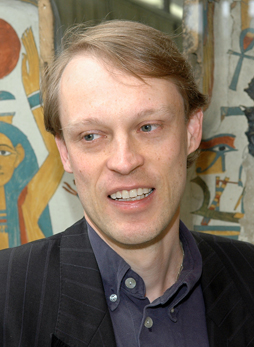
Prof. Dr. Frank Kammerzell is a Professor at the Department of Archaeology and Cultural History of Northeast Africa within Humboldt University of Berlin since May 2003. His academic career includes habilitation at the University of Göttingen (1999) and extensive research collaborations with Hebrew University of Jerusalem and University of Vienna. His educational background encompasses Medieval and Modern History (major 1980), Egyptology (major), Coptic Studies, General and Indo-European Linguistics, and Assyriology. He earned his Dr. phil. from Göttingen with a dissertation on 'Studies on the Language and History of the Carians in Egypt' (1990) and completed habilitation with 'Language contact and language change in ancient Egypt' (1999). Kammerzell's research spans Egyptian phonology, morphology, syntax, lexis, language history, diachronic typology, language contact, writing systems, and Carian history in Egypt. His work integrates linguistic analysis with archaeological contexts, examining language evolution through contact and typological shifts. Notable projects include studies on Egyptian-Akkadian typological developments and classifiers in ancient Egypt. His publications since 2000 demonstrate sustained focus on Egyptian linguistic structures, writing systems, and cross-linguistic influences. Key themes include verb classifiers, glossing rules for Ancient Egyptian, and lexical semantics-pragmatics interfaces, bridging Egyptology with broader linguistic theory. Graduate Scholarship from the State of Lower Saxony (Doctoral Scholarship) 1987-1989 Kammerzell has led significant research projects funded by the DFG, Fritz Thyssen Foundation, and Volkswagen Foundation. His collaborative work with institutions in Jerusalem and Göttingen highlights international partnerships. While specific advisees aren't listed, his editorial roles suggest mentorship in academic publishing. He co-founded research groups on multilingualism and script systems, contributing to journals like Lingua Aegyptia and Ägypten und Levante , underscoring team-based archaeological-linguistic research.