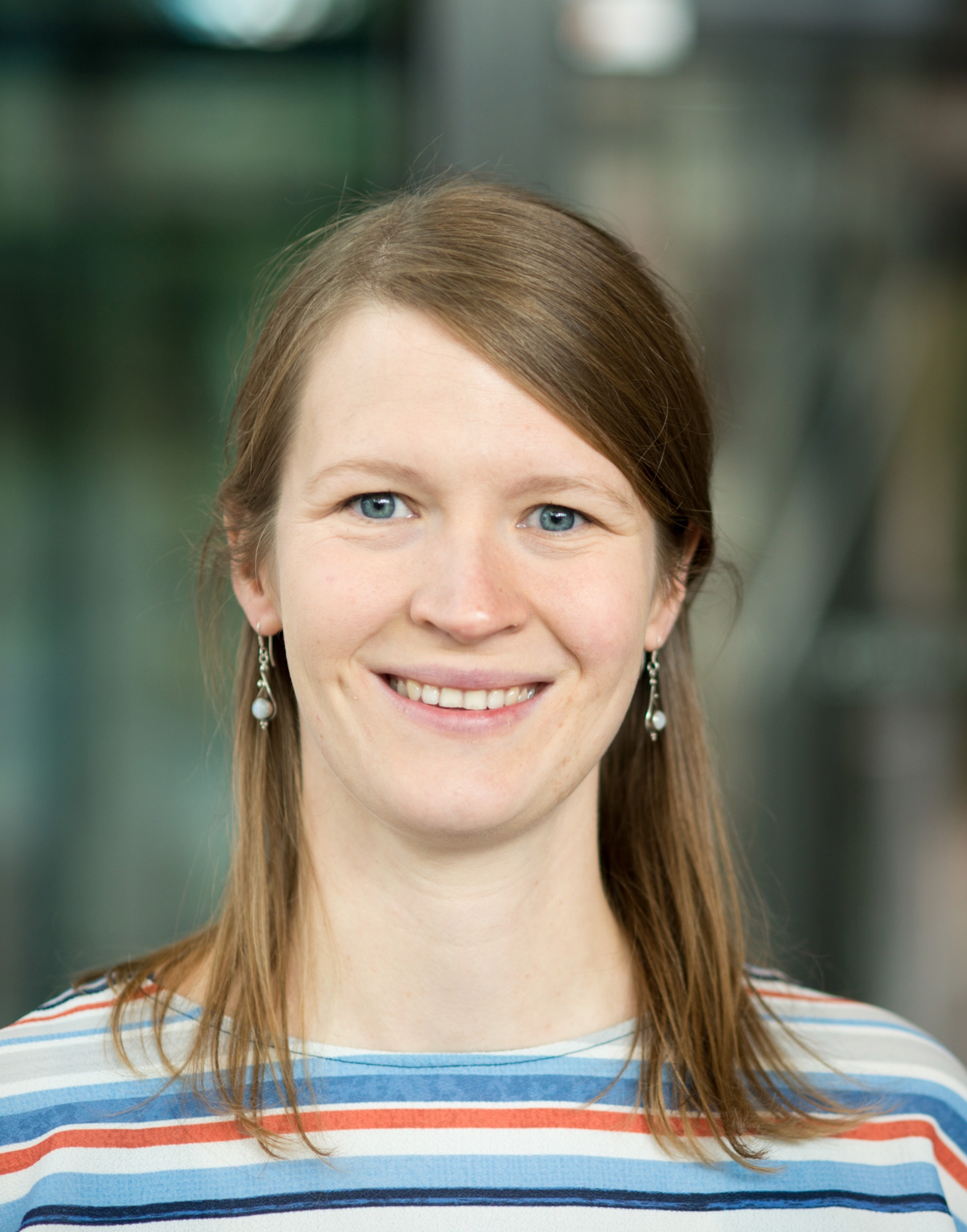
Martijn Kuller is Assistant Professor of Nature-Based Solutions and Water at Utrecht University's Copernicus Institute of Sustainable Development. He holds a PhD in Urban Water Management from Monash University, an MSc in Urban Environmental Management from Wageningen University, and a BSc in Economics and Policy. Research expertise includes: Nature-based solutions for urban water management Spatial planning support systems (SSANTO tool developer) Climate adaptation strategies for cities Publications demonstrate strong focus on blue-green infrastructure planning, flood vulnerability assessment, and decision-making frameworks for sustainable urban development, with recent work in Colombian cities. Awarded the prestigious Marie Sklodowska-Curie Fellowship for transnational research. International experience includes positions at Eawag (Switzerland), Université Laval (Canada), and University of New South Wales (Australia), working on projects ranging from flood early warning systems to stormwater quality modeling.
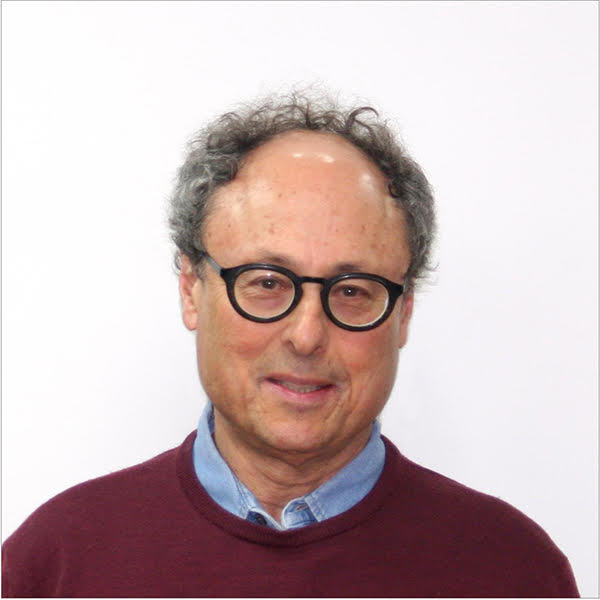
Leif Eriksson is a Professor at Chalmers University of Technology , specializing in Radar Remote Sensing within the Department of Space, Earth and Environment . His career at Chalmers began in 2004, and he was promoted to Professor in 2022 after serving as Group Leader (2012–2017) and Head of Faculty Assembly (2017–2020). His research focuses on developing advanced methods for environmental monitoring using radar data, particularly synthetic aperture radar (SAR) from satellites and aircraft. Leadership Roles: Group Leader (Radar Remote Sensing), Faculty Assembly Head Key Collaborations: Rymdstyrelsen, EU Horizon, VINNOVA, European Space Agency Research Interests : Dr. Eriksson’s work spans forest biomass estimation , sea ice dynamics , and ocean surface current/wind retrieval . He integrates SAR data with in situ observations and climate models to study: Forest degradation (clear cuts, storm damage) via multi-temporal SAR Sea ice concentration, drift patterns, and thickness in Arctic regions Wind vectors and surface currents using interferometric SAR techniques Applications for maritime navigation safety and polar shipping optimization Article Trends : His recent publications emphasize SAR’s role in transport infrastructure monitoring (e.g., Iron Ore Line degradation), pan-Arctic landfast ice stability , and multi-frequency SAR fusion for enhanced sea ice observations. Collaborative work with teams across Europe and the U.S. highlights interdisciplinary approaches to climate and marine research. Projects & Grants : Dr. Eriksson leads or contributes to projects such as: CAISA (2022–2024): Air-ice-sea data assimilation EONav (2016–2019): Copernicus data for maritime navigation SEDNA (2017–2020): Safe Arctic shipping Forest Biomass Monitoring (2017–2018): Spaceborne SAR applications His work is supported by Rymdstyrelsen, EU Horizon, and industry partners like Trafikverket. Labs & Teams : He is central to the Radar Remote Sensing Group at Chalmers, collaborating with institutions like Lund University and international bodies such as ESA. His research often involves satellite campaigns (e.g., TanDEM-X, Sentinel) and field studies in polar regions.
Dr. Jarno Hoekman is an Associate Professor in Innovation Studies at the Copernicus Institute of Sustainable Development, Utrecht University. His research focuses on the dynamics and governance of science in the context of innovation, regulation, and societal challenges, with particular emphasis on sustainability and health. He is affiliated with both the Copernicus Institute of Sustainable Development and the Utrecht collaborating Centre for Pharmaceutical Policy & Regulation in the Department of Pharmaceutical Sciences. Dr. Hoekman serves as the programme leader of the research master in Innovation Sciences and teaches academic integrity courses to Master students and PhD candidates. Dr. Hoekman's research is organized around three interconnected themes: Science in transition , examining how scientific practices and institutional arrangements are evolving through open science, interdisciplinary research collaborations, and alternative recognition systems; Regulatory science and innovation , investigating innovations in tools and standards for assessing risks and benefits of new technologies, including safety assessment methods and regulatory authorization standards; and Geography of science , exploring the role of location factors in scientific knowledge production and diffusion. Analysis of Dr. Hoekman's recent publications (2022-2024) reveals a strong interdisciplinary focus spanning pharmacology, toxicology, innovation studies, and science policy. Key research trends include examining conditional marketing authorization pathways, post-approval studies for conditionally authorized medicines, animal-free safety testing methodologies, and the societal impact of transdisciplinary research projects. His work frequently employs mixed-methods approaches and involves multi-stakeholder perspectives to address complex regulatory and innovation challenges. Dr. Hoekman actively contributes to policy-relevant research, including major European Commission studies on pharmaceutical legislation. His collaborative work extends across multiple institutions and involves interdisciplinary teams working on pharmaceutical policy, sustainable innovation, and science-society interactions. As a member of the Utrecht Young Academy and the UU Open Science Platform, he engages with broader academic community initiatives related to research integrity and open science practices.
Prof. Hens Runhaar is a Full Professor of Sustainable Food System Governance at Utrecht University's Copernicus Institute of Sustainable Development. His research focuses on reconciling food production with biodiversity recovery, environmental sustainability, and health through innovative governance frameworks. He emphasizes connectivity issues in food systems, such as disconnects between production and environmental conditions, and advocates for transformative practices like agroecology and nature-inclusive agriculture. Key roles include chairing the Board of Examiners for Sustainable Development and membership in Future Food Utrecht. His projects include NWO-funded initiatives like COMBINED (grassland biodiversity) and REWIRE (circular agricultural missions). He actively engages in policy dialogues, such as advising BirdLife Netherlands and contributing to the Dutch Biodiversity Council. Research highlights systemic barriers to sustainability transitions in agriculture, with recent work analyzing dairy farming and farmer collectives. His outreach includes media appearances on nitrogen policy, nature restoration, and sustainable food systems. Professional memberships span international networks like Earth System Governance and the Wageningen School of Social Sciences.
Confidence Duku is a researcher at Wageningen University & Research, specializing in climate resilience and agricultural systems. Their work integrates climate science, hydrology, and machine learning to address food security, deforestation impacts, and flood forecasting in data-scarce regions. Research Interests: Climate change modeling in Eastern Africa Hydrology-guided neural networks for flood forecasting Agricultural resilience (common bean, green gram) under climate stressors Economic impacts of deforestation in Brazil Climate services for financial institutions and SMEs Notable Contributions: Developed frameworks for climate-smart business planning and flood prediction, with a focus on regions like East Africa and Brazil. Their work emphasizes ecosystem services and adaptation strategies. Collaborations: Active in multi-institutional projects, including partnerships with SNV and Copernicus. Led LVVN projects on cascading climate risks and reforestation impacts.
Hugo de Boer is a Professor at the Copernicus Institute of Sustainable Development , Faculty of Geosciences, Utrecht University. He serves as scientific lead for the Delta Climate Center in Vlissingen and coordinates MSc programs in Water Science and Management and Water Management for Climate Adaptation . His research explores climate-ecosystem interactions, focusing on plant ecophysiology, ecosystem dynamics, and nature-inclusive climate adaptation in deltas. Research Themes: Future Deltas, Pathways to Sustainability, Integrative Bioinformatics Projects: LEMONTREE, CloudRoots, 'From losers to winners' (ancient plant lineages under elevated CO2) Teaching Expertise: System thinking for sustainability, quantitative statistics, plant ecophysiology Research Trends emphasize interdisciplinary approaches to climate change impacts on ecosystems, with publications spanning plant-cloud processes, CO2 acclimation, and eco-evolutionary optimality models. His work bridges biogeochemistry, land-atmosphere interactions, and sustainable development frameworks. Projects & Collaborations include experimental studies on ancient plant lineages (Equisetum) and integrative field campaigns in Amazon and temperate forests. He contributes to modeling climate-vegetation feedbacks, pesticide emission scenarios, and social-ecological system transitions.
Dr. Li Shen is an Associate Professor at the Copernicus Institute of Sustainable Development , Utrecht University since 2015. She holds the Energy & Resources group and has been active in sustainability assessment of materials and energy systems since completing her PhD in 2011. Education: BEng (Mechanical Engineering, cum laude 1999, Shanghai) MSc (Sustainable Development, track Energy and Resources 2006, Utrecht University) PhD (2011, Utrecht University, thesis: Bio-based and Recycled Polymers for Cleaner Production – an Assessment of Plastics and Fibres ) Research Interests: Dr. Shen specializes in Life Cycle Assessment and Technological Sustainability Evaluation of Bio-based Plastics , Plastics Recycling , Waste Management , and Nanomaterials . Her work bridges Environmental Science , Chemical Engineering , and Sustainable Development through rigorous system analysis. Scientific Publications: Leading expert in Circular Economy applications for plastics Developed Ex-ante LCA frameworks for emerging materials Key contributor to PEF Bio-based Bottle sustainability analysis Active in Telescope Energy Systems sustainability Published in Nature Communications , Science of the Total Environment , and Journal of Cleaner Production Teaching: Responsible instructor for Advanced Energy Analysis in the Master Energy Science program. Also teaches Life Cycle Assessment and Sustainable Resources Use in the Global Sustainability Science bachelor program. Supervises numerous master thesis projects from Energy Science (ES), Sustainable Development (SD-EM), and Science for Energy Innovation (SBI) programs.
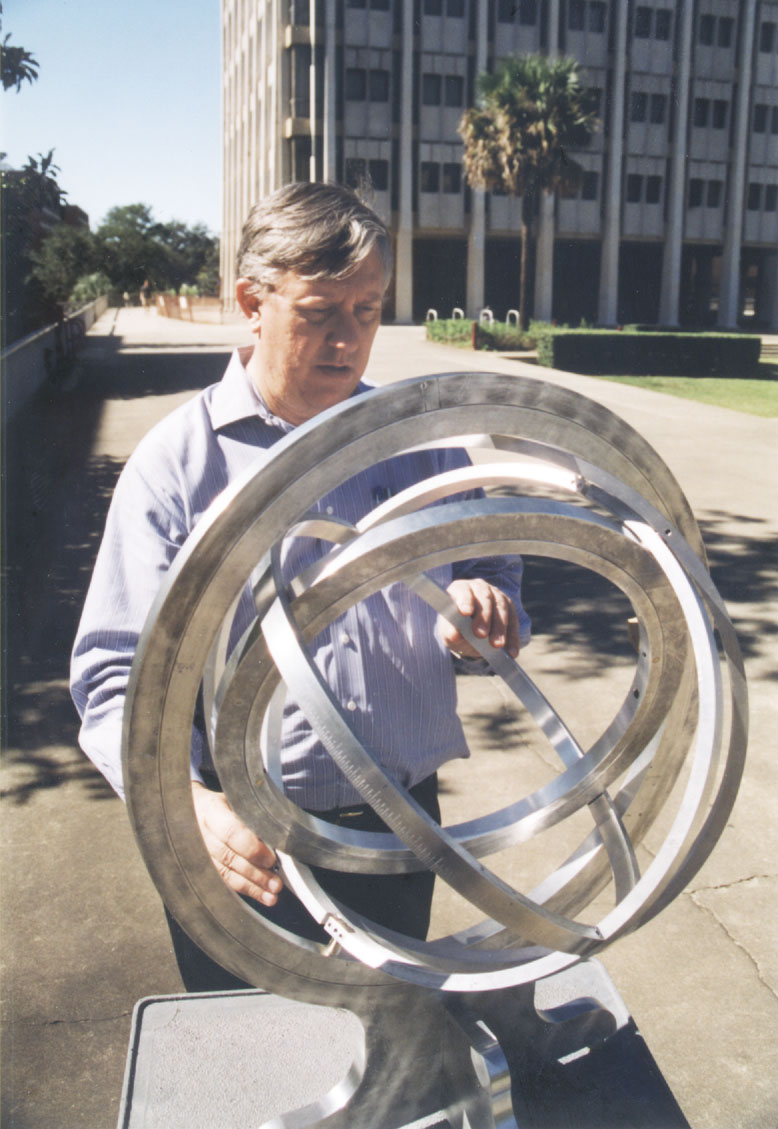
Dennis W. Duke is a Professor of Physics at Florida State University, with a joint appointment in the Department of Physics within the College of Arts and Sciences and the School of Computational Science. He has been a faculty member at FSU since 1979, progressing from Visiting Assistant Professor to his current position as full Professor since 1992. Duke has also held significant leadership roles including Director of the Supercomputer Computations Research Institute (1993-1998) and Director of the San Diego Supercomputer Center (1996-1997). Duke's research spans multiple disciplines with primary focuses on the history of ancient astronomy, computational physics, and high-performance computing. His work in ancient astronomy includes detailed studies of Greek, Babylonian, and Indian astronomical traditions, with particular emphasis on planetary models, trigonometry development, and historical measurement techniques. In computational science, he has made contributions to nonlinear dynamics, chaos theory, and statistical process control. Duke is particularly known for creating educational computer animations of ancient planetary models that have become valuable teaching tools. Analysis of Duke's 15 most recent publications reveals a consistent focus on historical astronomy, with approximately 75% of his work dedicated to analyzing ancient astronomical systems from Greek, Babylonian, and Indian traditions. The remaining publications address statistical methods and computational techniques. His historical research often combines mathematical analysis with historical scholarship to reconstruct and understand ancient astronomical practices. COFRS Award, The Florida State University (1985) COFRS Award, The Florida State University (1986) Developing Scholar Award, The Florida State University (1986) President's Continuing Education Award, The Florida State University (1992) Duke has been extensively involved in professional service, serving on numerous national committees related to supercomputing and organizing major conferences including multiple Supercomputing 'XY events from 1988 through 2006. His teaching extends beyond traditional academic boundaries through public outreach initiatives such as chairing the Board of Directors for Tallahassee Free-Net, Inc. and serving on the Leon County Schools Information Services Advisory Board. He has supervised numerous graduate students in computational physics and the history of science, though specific student names are not documented in the provided materials. Duke maintains an active research laboratory focused on computational ancient astronomy, where he develops mathematical models and computer animations to visualize historical astronomical concepts. His team has created an extensive collection of interactive animations demonstrating planetary models from Ptolemy through Copernicus, which are widely used in educational settings. Current projects include further analysis of ancient star catalogs and the development of more sophisticated visualization tools for historical astronomical concepts.
Jule Thober is a Scientific Manager at the Helmholtz Centre for Environmental Research - UFZ , leading Topic 5 "Landscapes of the Future" in the Helmholtz Program and managing the Integration Platform "Robust Pictures of the Future". She contributes to cross-disciplinary research in Smart Models / Monitoring and Computational Hydrosystems , focusing on agent-based models, sustainable land management, and climate risk analysis. Roles : Scientific Manager (2022–), Postdoc (2017–2021), PhD Student (2013–2016) Projects : Copernicus Contract Ulysses 2, LandYOUs Game Development Research Interests center on socio-environmental systems, integrating agent-based models with ecological economics. Her work explores decision-making under climate uncertainty, land use policy, and resilience of pastoral systems through computational methods. Publication Trends (15 most recent) span ecological complexity, environmental informatics, and computational hydrosystems. Key themes include agent-based land use models , climate risk mitigation , and participatory decision support tools . Collaborations involve UFZ departments, international institutions, and interdisciplinary teams in Germany and abroad. She contributes to Helmholtz POF IV programs and EU-funded initiatives like 4DHydro.
Iryna Susha serves as an Assistant Professor in the Innovation Studies group within the Copernicus Institute of Sustainable Development at Utrecht University's Faculty of Geosciences. Her academic journey includes obtaining a PhD from Orebro University in Sweden, establishing her expertise in digital governance and data collaboration frameworks. Dr. Susha's research focuses on how organizations across different sectors can collaborate and leverage data to address 21st century societal challenges while contributing to sustainability goals. Her work spans digital government, open data initiatives, and data collaboratives for public good, with particular attention to cross-sector partnerships, data governance models, and the practical implementation challenges of data sharing initiatives. She has developed significant expertise in analyzing how data ecosystems can be structured to support societal benefits while navigating complex regulatory and organizational landscapes. Her publication record shows a clear evolution from early work on e-participation and open government data toward more sophisticated frameworks for data collaboratives and digital innovation for sustainability. The research demonstrates consistent engagement with practical implementation challenges while maintaining strong theoretical grounding in governance and organizational theory. Prizes & Grants (1) Dr. Susha actively supervises PhD candidates, currently guiding Dwayne Ansah's research on data donations for social good and Olafur Thorarensen's work on algorithmic decision systems in healthcare. She leads the "Digital Innovation" course where students develop critical understanding of digital innovations' societal and economic impacts. Additionally, she co-leads the Special Interest Group on Digitalization & AI for Sustainability (DAISY), which serves as a hub for interdisciplinary research on sustainable digital transformation. Her research connects with several major projects including the DATA ALLY project and Data Purchasing project, demonstrating practical applications of her theoretical work in real-world contexts. The DAISY group she co-leads provides an important forum for advancing research on sustainable digital innovation across disciplinary boundaries.
Hens Runhaar is Professor of Policy and Governance for Sustainable Food Systems at Utrecht University's Copernicus Institute of Sustainable Development. He holds positions as Chair of the Examination Committee for Sustainable Development and is a member of the Core Team of Future Food Utrecht. Additionally, he serves on the Editorial Board of Earth System Governance Journal and as Associate Editor of Frontiers in Sustainable Food Systems journal. His research focuses on sustainable food systems, policy and governance for biodiversity conservation, and nature-inclusive agriculture. Runhaar's research interests center on understanding the connectivity issues in Western food systems that lead to sustainability challenges including biodiversity loss, climate change, and food-related diseases. He investigates the decoupling of food production from environmental conditions, disconnects between feed production and livestock farming, and the separation between food production and consumption areas. His work emphasizes biodiversity as a key indicator of sustainable food systems, with special interest in scaling up agroecology, regenerative agriculture, and nature-inclusive agriculture. He delivered his inaugural lecture on January 17, 2025, titled 'Governing towards sustainable food systems: new connections for more diversity'. His recent publications demonstrate a strong focus on biodiversity policy integration, nature-based solutions, and transformative food system changes. Runhaar has been instrumental in special issues on biodiversity governance and environmental policy integration. His research projects include COMBINED (2025-2031), REWIRE, DivGrass, and work on the Water Framework Directive after 2027. Editorial Board Member of Earth System Governance Journal Associate editor of Frontiers in Sustainable Food Systems journal Member of the Scientific Advisory Committee of Dutch Bird Protection Association Senior Research Fellow of Earth System Governance research network Fellow of Wageningen School of Social Sciences Runhaar actively supervises numerous PhD students and postdoctoral researchers, with a focus on sustainable food systems, biodiversity conservation, and nature-inclusive agriculture. He has contributed significantly to societal debates through media appearances in NRC, De Volkskrant, and EenVandaag, addressing topics like nitrogen policy, nature restoration, and the role of farmers in sustainability transitions. Beyond academia, he volunteers with the Badger Working Group Utrecht and 't Gooi Foundation, monitoring badgers since 2012 and contributing to nature conservation efforts.
Jim Dowling is a distributed systems researcher at KTH Royal Institute of Technology, focusing on large-scale distributed systems, machine learning, and big data. His work emphasizes improving system dependability, performance, security, and scalability through middleware, peer-to-peer systems, and cloud-native solutions. He leads courses such as Advanced Course in Large Scale Machine Learning and Deep Learning and Scalable Machine Learning and Deep Learning , demonstrating his commitment to education in AI and distributed computing. His research spans topics like feature stores, Kubernetes integration, and AI-driven environmental analytics (e.g., ANIARA project for edge infrastructure automation and ExtremeEarth for Copernicus data analysis). He has contributed to scalable ML pipelines, cloud storage systems (HopsFS-S3), and hyperparameter optimization tools like Maggy. Key projects include the Hopsworks platform for machine learning operations and the development of cloud-native tools for big data analytics. His work bridges theoretical distributed systems research with practical applications in AI, healthcare, and environmental science. He has advised on numerous collaborative initiatives but no formal students are listed. His grants and lab activities are centered around Hopsworks and the ANIARA project, reflecting his focus on scalable, self-managing systems.
Robert S. Westman is a Professor of History at the University of California, San Diego (UCSD), specializing in the History of Science with a focus on the Scientific Revolution and early modern astronomy. He previously taught at UCLA before joining UCSD’s faculty in 1988. His research interrogates the socio-cultural, religious, and philosophical conditions shaping scientific thought, particularly the Copernican Revolution and resistance to it. He has held leadership roles, including Director of UCSD’s Science Studies Program (2008–2013) and a Huntington Dibner Fellowship (2011–12). Westman’s academic journey includes a B.A. from the University of Michigan (1963), followed by studies at Imperial College, London (1967–69), and a Ph.D. in History of Science from the University of Michigan (1971). His work challenges internalist historiography by integrating sociological, philosophical, and cultural perspectives. Central to his research is the question of why Copernicus abandoned geocentrism and how subsequent generations engaged with his heliocentric theory. He argues that Copernicus’s work arose from late 15th-century debates over astrology’s credibility, linking celestial order to political and religious stability. His major work, *The Copernican Question* (2011), synthesizes these themes, earning scholarly acclaim and prompting interdisciplinary dialogue. Westman’s awards include a Guggenheim Fellowship and recognition for his contributions to science studies. His courses cover the Scientific Revolution, Galileo’s legacy, and the historical interplay between science and religion. His publications span monographs, edited volumes, and peer-reviewed articles addressing topics from Kepler’s theology to historiographical methodological debates.
Dr. Leonie Guerrero Lara is a researcher at the Copernicus Institute of Sustainable Development , Utrecht University, focusing on the intersection of community-supported agriculture (CSA) , degrowth , and post-capitalism . Her work applies social movement theory to analyze how CSA networks drive ecological and social justice in agri-food systems. She contributes to academic discourse through publications in journals like Agriculture and Human Values and Sustainability Science , while volunteering with Germany’s Netzwerk Solidarische Landwirtschaft . PhD research: Political agency of CSA networks Key themes: Degrowth, Post-Capitalism, Social Justice Her studies explore coalition-building between CSA and degrowth movements, emphasizing transformative strategies for sustainable food systems. Recent articles highlight systemic transitions and policy engagement in agri-food governance. She also participated in international conferences such as the International Degrowth Conference and POLLEN .
Yuyu Zhou is a Professor in the Department of Geography at The University of Hong Kong. With an extensive publication record of 301 papers and over 18,000 citations, Dr. Zhou is a leading researcher in urban environmental studies, climate change, and sustainability science. Dr. Zhou received their PhD in Environmental Science from the University of Rhode Island (2004-2008) and previously worked as a Research Scientist at Pacific Northwest National Laboratory's Joint Global Change Research Institute (2010-2015). They currently serve as Chief Editor for Earth System Science Data (Copernicus Publications), Associate Editor for Ecological Processes, and Section Editor for All Earth. Dr. Zhou's research focuses on the intersection of urbanization, climate change, and environmental sustainability. Their work spans several key areas including urban heat island effects, vegetation phenology in urban environments, energy modeling, and sustainable urban development. Through innovative remote sensing approaches and spatial analysis, Dr. Zhou investigates how urban environments respond to and influence global environmental change. Analysis of Dr. Zhou's recent publications reveals a strong emphasis on urban environmental challenges, with particular attention to urban heat islands, vegetation dynamics, and climate change impacts in cities. Their work combines remote sensing data with ground observations to develop high-resolution models of urban environmental processes. Recent research has focused on urban greening effects, building energy use under climate change, and environmental justice issues related to urban heat exposure. Dr. Zhou has received significant recognition for their work, as evidenced by the high citation count of their publications. Their research has important implications for urban planning, climate adaptation strategies, and sustainable development policies worldwide. As an educator and mentor, Dr. Zhou advises numerous graduate students and collaborates with researchers globally. Their work with international teams has resulted in significant contributions to understanding urban environmental systems across different geographical contexts.