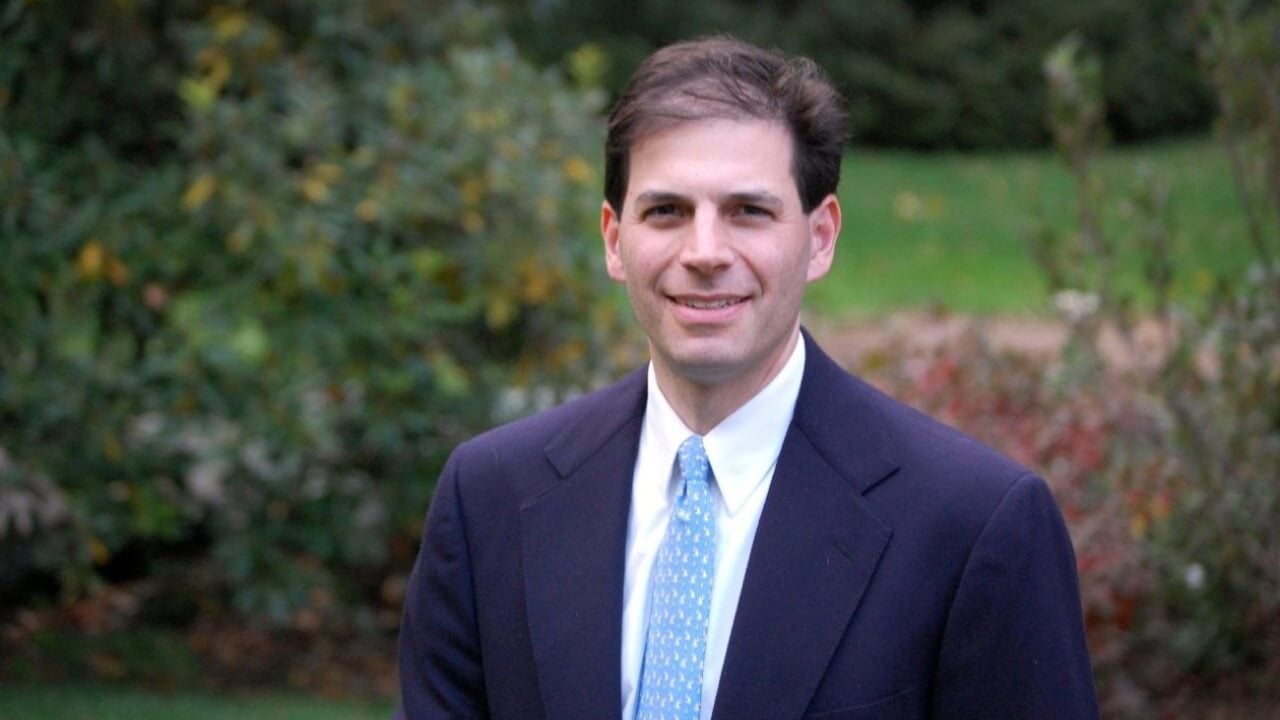
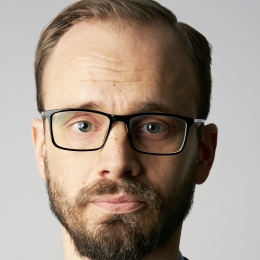
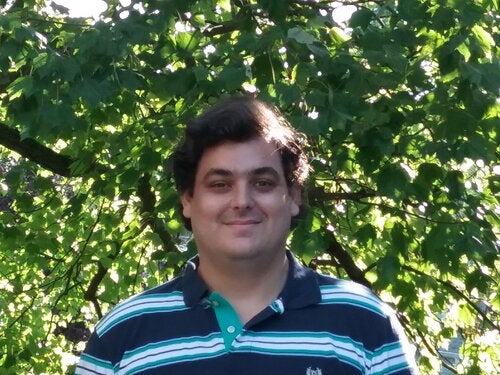
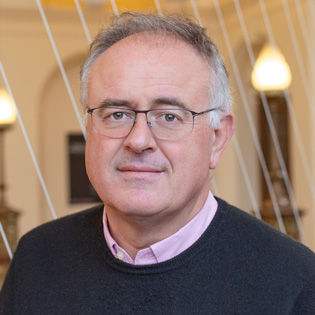
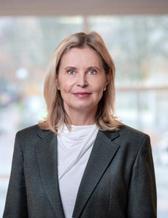
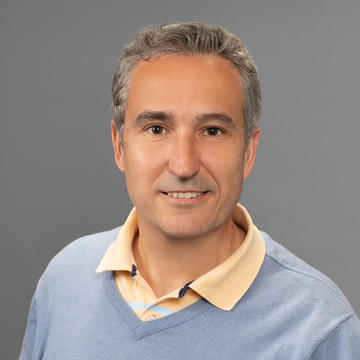
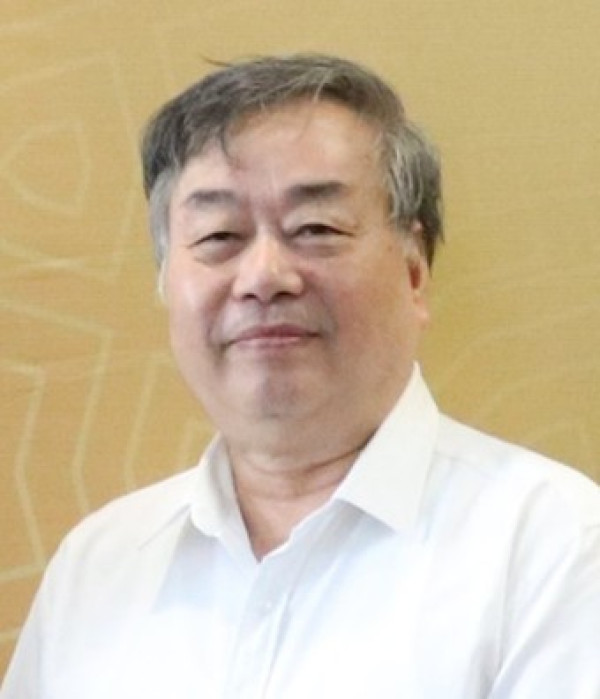
Jeffrey A. Cooper is a Professor of Law at Quinnipiac University School of Law , where he teaches courses in estate planning, wills and trusts, and taxation. He previously served as Associate Dean for Research and Faculty Development and is currently faculty adviser to the Quinnipiac Probate Law Journal . Education: AB from Harvard University, JD from Yale University, LLM from New York University Research Interests: His work focuses on tax policy , estate and gift taxation , and the intersection of federal tax law with state probate systems . He specializes in trust enforceability , uniform trust code , and historical analysis of tax legislation. Publications: Recent articles address perpetual trusts , state death tax decline , and curriculum reforms in estate planning education. His scholarship is widely published in national law journals and cited in casebooks. Scientific Awards: Academic Fellow, American College of Trust and Estate Counsel (ACTEC) Faculty Scholar, Quinnipiac University Professional Background: Before academia, Cooper practiced law for over a decade as a principal at Cummings & Lockwood, senior officer at United States Trust Company, and special counsel to Shipman & Goodwin. He also served as a senior adviser to Fiduciary Trust Company International.
Anca Dragan is an Associate Professor in the Department of Electrical Engineering and Computer Sciences at the University of California, Berkeley, where she runs the InterACT Lab focused on algorithms for human-AI and human-robot interaction. Currently on leave from Berkeley, she leads AI Safety and Alignment at Google DeepMind, overseeing safety for Gemini models and preparing for future advancements. Dragan has been a co-PI of the Center for Human-Compatible AI and served on the steering committee for the Berkeley AI Research (BAIR) Lab. B.Sc. in Computer Science from Jacobs University Bremen, Germany Ph.D. from Carnegie Mellon University Dr. Dragan's research focuses on enabling AI agents to work effectively with, around, and in support of people. Her work bridges robotics, machine learning, and game theory to create systems that better understand human preferences and coordinate with users. Key areas include AI alignment (ensuring AI does what people actually want), learning reward functions from diverse human feedback forms, and developing algorithms for human-AI collaboration across domains like autonomous vehicles, brain-machine interfaces, and recommender systems. Her research emphasizes maintaining uncertainty about human preferences and accounting for the plurality of human values. Dr. Dragan's recent publications reveal a strong focus on addressing fundamental challenges in AI safety and alignment. Her work spans theoretical foundations of reward learning, practical implementations for human-AI coordination, and critical examinations of limitations in current approaches. There's a clear trajectory toward more robust, safe, and value-aligned AI systems that can handle complex human preferences while avoiding both present-day harms and potential catastrophic risks. IEEE RAS Early Academic Career Award in Robotics and Automation (2021) McEntyre Award for Excellence in Teaching (2020) PECASE (Presidential Early Career Award for Science and Engineering) (2019) Sloan Fellowship (2018) NSF CAREER Award (2017) Okawa Foundation Award (2017) MIT Tech Review 35 Innovators Under 35 (2017) Multiple best paper awards at top robotics and AI conferences Dr. Dragan has mentored numerous successful students who have gone on to faculty positions at MIT, Stanford, CMU, and Princeton, as well as industry roles at DeepMind, Waymo, and Meta. Her advising philosophy emphasizes both technical rigor and consideration of broader societal impacts. She has secured significant research funding including NSF CAREER, ONR Young Investigator, and Okawa Foundation awards, supporting work on human-AI interaction and alignment. Dragan has also consulted for Waymo for six years, helping develop roadmaps for deploying increasingly learning-based safety-critical systems. Dr. Dragan leads the InterACT Lab at UC Berkeley, which has produced influential work on Cooperative Inverse Reinforcement Learning, Inverse Reward Design, and other foundational concepts in human-AI interaction. The lab's research has significantly shaped the field of AI alignment, with applications spanning autonomous vehicles that coordinate with human drivers, brain-machine interfaces that adapt to user needs, and language models that better understand human preferences. Current work focuses on scaling safety approaches as AI capabilities advance, ensuring alignment keeps pace with technological progress.
Karl Gustafsson is a Professor at Stockholm University within the Department of Economic History and International Relations. His work bridges security studies , collective memory , and digital research methods in international relations. Current Role: Professor of International Relations, Stockholm University Previous Positions: Post-Doc at Lund University, Researcher at Swedish Institute of International Affairs Visiting Appointments: University of Tokyo, Osaka University, Keio University, Academia Sinica, Nordic Institute of Asian Studies Research Focus: Karl specializes in memory politics , ontological security , and anxiety-driven international dynamics , particularly in Sino-Japanese relations and digital platforms . His studies explore how historical narratives and online memory construction influence state identity and policy. Awards & Grants: Recipient of the Wang Gungwu Prize (2014) and Stockholm University Association’s award (2011). Holds Swedish Research Council and Marianne & Marcus Wallenberg Foundation grants for projects on apologies in international politics and digital memory in East Asia . Publications: His work appears in journals such as International Studies Quarterly , European Journal of International Relations , and Memory Studies , addressing topics like narrative power in East Asia, anxiety’s role in policy change , and digital humanities applications in IR.
Professor Elaine Fahey is a leading scholar in EU law and global governance at the City Law School, City St George's, University of London, where she serves as Professor of EU Law and Deputy Head of Department (academic programmes). She is co-convener of the Institute for the Study of European Law (ISEL) and the UACES James Madison Trust EUFUtures initiative (2022–2025). Her academic career includes visiting professorships at Washington College of Law (American University), Keio University, and NYU, as well as fellowships at the European University Institute and the University of Graz. LLB, Trinity College Dublin LLM, Sidney Sussex College, University of Cambridge PhD, Trinity College Dublin Barrister-at-Law, Honorable Society of King’s Inns, Ireland Attorney-at-Law, State of New York Senior Fellowship, Higher Education Authority UK Her research focuses on the intersection of EU law with global governance, digital regulation, transatlantic relations, and the Area of Freedom, Security and Justice. She explores how the EU navigates legal frameworks beyond the nation-state, particularly in digital trade, cybersecurity, and data protection. Her work critically examines the EU’s role as a global regulatory actor and its interactions with international institutions. Her extensive publication record includes the monograph The EU as a Global Digital Actor (Hart, 2022) and numerous articles on digital sovereignty, data transfers, and transatlantic cooperation. Recent research analyzes the EU–US Trade and Technology Council (TTC), the evolution of the Privacy Shield, and strategic litigation in digital rights. Her work reveals a strong trend toward understanding how soft law, institutional design, and judicial decisions shape EU external relations and digital governance. Erasmus+ Jean Monnet Chair in Law & Transatlantic Relations (2019–2022) Emile Noël Fellow, NYU Law School Max Weber Fellow, European University Institute Senior Land Steiermark Fellow, University of Graz Senior Fellowship, Higher Education Authority UK Professor Fahey has supervised multiple PhD students, including Isabella Mancini, Giulio Kowalski, and Christos Karetsos, on topics such as algorithmic collusion, digital markets, and investment law. She has led significant research projects, including the ESRC-funded TRILATTRADE grant and the Marie Curie ITN on EU and Transatlantic Investment and Trade (EUTIP). She previously held leadership roles as Associate Dean (International) and interim Associate Dean (Research) at the City Law School. She is an elected member of the EU Studies Association (EUSA) Executive (2021–2025). She has also contributed to public policy through briefings for the Welsh Parliament and reports on CJEU litigation in Ireland. She is associated with research initiatives such as the Institute for the Study of European Law (ISEL) and has collaborated on interdisciplinary projects on Facebook regulation, transatlantic relations, and EU technological sovereignty. Her work bridges legal scholarship, policy, and international academic collaboration.
Daniel Cooney is an Assistant Professor in the Department of Mathematics at the University of Illinois Urbana-Champaign. He holds additional affiliations as an Affiliate at the Carl R. Woese Institute for Genomic Biology. His research focuses on applying partial differential equations (PDEs), dynamical systems, and stochastic processes to study evolutionary dynamics, particularly in biological and social systems. Key themes include multilevel selection, evolutionary game theory, and the emergence of cooperative behavior. Cooney earned his PhD in Applied and Computational Mathematics from Princeton University, advised by Simon Levin, and completed a postdoc as a Simons Fellow in Mathematical Biology at the University of Pennsylvania. His work bridges theoretical mathematics with applications in ecology, epidemiology, and social sciences. Recent publications explore topics like altruistic punishment in cultural systems, classroom-turnover dynamics, and protocell evolution. He actively participates in academic outreach, co-organizing conferences such as the AMS Special Session on Mathematics of Infectious Disease and the SIAM Minisymposium on Social-Ecological Systems. His research has been published in high-impact journals including *Proceedings of the National Academy of Sciences* and *Bulletin of Mathematical Biology*.
Professor Jonathan Boff (FRHistS) is a leading military historian in the Department of History at the University of Birmingham. His research explores the intersection of institutions, individuals, and warfare through comparative and cross-disciplinary approaches. He has a unique background combining academic expertise with two decades of private-sector experience, primarily in Asia. PhD in War Studies, King’s College London MA in History of Warfare, King’s College London BA in PPE, Merton College, Oxford University Boff’s research focuses on Economic Statecraft , the military history of the World Wars, British strategy (1880–1945), and the psychological dynamics of combat. He bridges historical analysis with modern policy challenges, particularly in financial and strategic contexts. Recent publications highlight his expertise in First World War financial policy, battlefield tactics, and institutional adaptation. His work is recognized for its empirical rigor and interdisciplinary methodology. AHRC Fellowship in Research Leadership (2020–23) Prize-winning books: Haig's Enemy (OUP, 2018) and Winning and Losing on the Western Front (CUP, 2012) Fellow of the Royal Historical Society He supervises PhD research on topics such as economic statecraft, World War-era military strategies, and comparative studies of morale. His grants include AHRC funding for his current project on financial warfare, culminating in a 2025 monograph by Oxford University Press.
Lisbeth Aggestam is an associate professor at the Department of Political Science and an associate researcher at the Center for European Research (CERGU) at the University of Gothenburg. She serves as the editor-in-chief of the international journal Foreign Policy Analysis , published by the International Studies Association (ISA) and Oxford University Press. Aggestam's research focuses on several interconnected areas: Political leadership and foreign policy Diaspora and foreign policy Foreign policy role theory The European Union as a global actor Her scholarly work demonstrates a consistent focus on leadership dynamics within European foreign policy, particularly examining how the EU navigates its role as a global actor amid shifting geopolitical landscapes. She has developed significant theoretical contributions to role theory in foreign policy analysis, creating frameworks for understanding how states and international organizations perform specific roles on the global stage. Aggestam's publication record reveals several important trends in contemporary foreign policy studies. Her work increasingly examines the intersection of domestic politics and international relations, particularly how diaspora communities influence state foreign policies. Her recent research addresses European strategic autonomy in the context of US foreign policy shifts and the implications of Sweden's NATO membership decision, reflecting her ability to connect theoretical frameworks with pressing real-world issues. As an educator, Aggestam serves as course manager and instructor for several key programs: EU2215: Europe in the World (MA, 15 hec) SK1136: Foreign Policy Analysis (BA, 7.5 hec) EU1145: The European Union in International Affairs (BA, 7.5 hec) Through her leadership of the Swedish Research Council project 'Transnational civil society and foreign policy' (2022-2025) and her editorial role at Foreign Policy Analysis , Aggestam plays a significant role in shaping contemporary discourse on international relations and European foreign policy.
Sakari Melander is a Professor at the Faculty of Law , University of Helsinki, specializing in Criminal Law , with a focus on constitutionalization, Europeanization, and sentencing policies. His work bridges theoretical criminal law with practical legislative and policy challenges. Key research areas include EU criminal law, constitutional constraints on criminal legislation, and general doctrines of criminal law. He has extensive experience in parliamentary legal consultation, providing expert opinions to Finland’s Legislative Committees (e.g., on immigration control, anti-corruption directives, and digital evidence handling). Recent publications address topics like EU corporate sanction policies, constitutionalization of criminal law, and reforms in Finnish sentencing systems. His 2025 article in the New Journal of European Criminal Law explores balancing administrative and criminal sanctions in the EU. Scientific awards include: Hilkka ja Otto Brusiin Foundation Thesis Prize (2001) Magister Bonus – Good Teacher Award (2014) Primustohtori Award (2010) Year’s Teacher (2010) Year’s Opponent (2008) He leads research projects such as Criminal Law Under Pressure: Differentiation and Harmonization (2012-2015) and Assessment of Human Trafficking Sanction Practices (2021-2022), and supervises doctoral theses on criminal law topics.
Professor Mette Eilstrup-Sangiovanni serves as Senior Lecturer in International Studies within the Department of Politics and International Studies (POLIS) at the University of Cambridge and holds a Fellowship in International Relations at Sidney Sussex College. Her teaching portfolio encompasses International Organization, International Relations Theory, International Security, History and Theory of European Integration, and Research Design and Methodology, reflecting her dual institutional commitments. Her research program centers on International Security, International Organizations, and European Integration with specialized expertise in Global Governance and Transnational Networks. She investigates how formal and informal institutions shape security governance frameworks, weapons proliferation regimes, and European defense architectures through rigorous application of network theory. This analytical lens reveals critical insights into cooperation dynamics and institutional evolution within international security contexts. Publication analysis shows consistent thematic development from foundational work on balance-of-power theory (2008-2009) toward contemporary examinations of multipolarity's institutional impacts (2013-2014). Her scholarship demonstrates methodological continuity in applying network analysis to diverse security challenges, from terrorist organizations to EU defense policy, while maintaining focus on institutional interplay in global governance structures.
Dr. Herb Lin is the Hank J. Holland Fellow in Cyber Policy and Security at the Hoover Institution and Senior Research Scholar for Cyber Policy and Security at the Center for International Security and Cooperation (CISAC), both at Stanford University. He also serves as Chief Scientist, Emeritus for the Computer Science and Telecommunications Board of the National Academies, where he worked from 1990 to 2014, and as Adjunct Senior Research Scholar and Senior Fellow in Cybersecurity at Columbia University's Saltzman Institute for War and Peace Studies. Dr. Lin received his doctorate in physics from MIT, providing him with a strong technical foundation that informs his policy work at the intersection of technology and national security. His academic background bridges the gap between deep technical understanding and policy application in the cybersecurity domain. Dr. Lin's research focuses on the policy dimensions of cybersecurity and cyberspace, with particular emphasis on offensive cyber operations as instruments of national policy, information warfare, and influence operations affecting national security. His work addresses critical challenges at the intersection of emerging technologies like artificial intelligence, quantum computing, and their implications for nuclear security, election integrity, and democratic processes. He has been instrumental in analyzing how cyber capabilities are transforming traditional security paradigms and how policy frameworks must adapt to these changes. His extensive publication record reveals a consistent focus on the evolving relationship between cyber capabilities and national security strategy. Lin's work demonstrates increasing attention to the implications of artificial intelligence for warfare, the vulnerabilities created by quantum computing for current cryptographic systems, and the growing threat of cyber-enabled information warfare to democratic institutions. His research trajectory shows a progression from traditional cybersecurity issues toward the broader implications of digital technologies for national and international security. Member of Science and Security Board of Bulletin of the Atomic Scientists Served on President Obama's Commission on Enhancing National Cybersecurity (2016) Regular congressional testimony on cybersecurity matters Contributor to Stanford Emerging Technology Review As a mentor and collaborator, Dr. Lin works extensively with policymakers, military officials, and technology experts to translate complex cybersecurity concepts into actionable policy recommendations. His approach emphasizes practical solutions to emerging threats while recognizing the technical limitations and policy constraints that shape real-world security outcomes. Dr. Lin is associated with multiple research initiatives including Stanford's Center for International Security and Cooperation and the Stanford Emerging Technology Review, which aim to connect technological advances with policy considerations for national security decision-makers.
Professor Jennifer M. Welsh is a leading scholar in global governance and security, holding the Canada 150 Research Chair at McGill University. She previously served as Professor at the European University Institute and the University of Oxford, where she co-founded the Oxford Institute for Ethics, Law and Armed Conflict. Her work focuses on humanitarian intervention, the 'Responsibility to Protect' (R2P), UN Security Council dynamics, and Canadian foreign policy. Welsh advised UN Secretary-General Ban Ki-moon on R2P (2013–2016) and directed a five-year European Research Council project on 'The Individualisation of War.' Education : D.Phil. in International Relations, St. Antony's College, University of Oxford (Oxford, England) Masters and Doctorate from University of Oxford (Rhodes Scholar) BA, University of Saskatchewan (Canada) Research Interests : Welsh examines ethical and legal dimensions of armed conflict, atrocity prevention, and norms governing state sovereignty. Her work bridges theoretical analysis and policy implementation, with key contributions to R2P frameworks and non-state actor engagement in conflict zones. Recent publications explore localization in governance, Canada's geopolitical role, and civilian self-protection mechanisms. Key Awards : Leverhulme Trust Research Fellowship Trudeau Fellowship Grants & Advising : Directed a €2.5M ERC-funded project (2014–2019) Advisory roles include Peace Research Institute Frankfurt, Global Centre for R2P, and Auschwitz Institute Editorial boards: Global Responsibility to Protect , International Journal , and Ethics and International Affairs Labs/Teams : Directs McGill's Centre for International Peace and Security Studies (CIPSS), fostering interdisciplinary research on global security challenges.
Pol Antràs serves as the Robert G. Ory Professor of Economics at Harvard University, where he has been a faculty member since 2003. He holds significant research affiliations as a Research Associate at the National Bureau of Economic Research (NBER), where he directed the International Trade and Organization Working Group, and as a Research Affiliate at the Centre for Economic Policy Research (CEPR). He also contributes to the Barcelona School of Economics as a member of its Scientific Council. His academic foundation includes a BA and MSc in Economics from Universitat Pompeu Fabra in Barcelona and a PhD in Economics from MIT (2003). Antràs specializes in international economics and applied theory, with recent research focusing on global value chains, the interplay between globalization and interest rates, market power in global markets, and international relations. His work examines how firms organize cross-border production, the implications for trade policy, and the structural transformations in international trade following events like pandemics. He bridges rigorous theoretical modeling with empirical analysis to address contemporary economic challenges. His publication record reveals a sustained focus on the evolution of global trade architecture, particularly the rise of production networks and their vulnerability to disruptions. Recent work explores unconventional intersections such as monetary policy's impact on trade flows and the political economy of ideology-driven foreign influence. His major scientific distinctions include: Alfred P. Sloan Research Fellowship (2007) Fundación Banco Herrero Prize (2009) Fellow of the Econometric Society (2015) Member of the American Academy of Arts and Sciences (2024) As Editor of the Quarterly Journal of Economics (2015-2020) and contributor to multiple editorial boards, Antràs shapes scholarly discourse in economics. His research is institutionally supported through NBER and CEPR affiliations, though specific grant details aren't publicly itemized. He maintains an active role in mentoring graduate students at Harvard. He drives collaborative research through leadership in the NBER's International Trade and Organization Working Group and CEPR's research networks, fostering international scholarly exchange on trade and globalization.
Professor Nguyen Van Chinh is a distinguished scholar in anthropology at the University of Social Sciences and Humanities, Vietnam National University (VNU-USSH), specializing in the Department of Anthropology and Religious Studies. With a PhD from the University of Amsterdam and extensive international research experience including a postdoctoral fellowship at the National University of Singapore, he has established himself as a leading expert in Southeast Asian anthropology, migration studies, and ethnic relations. His academic career spanning over four decades includes numerous visiting professorships at prestigious institutions worldwide. Professor Chinh's research interests encompass Anthropology Research Methods , History of Anthropology , Migration and Poverty Studies , Ethnic Identity , and Cross-border Ethnic Groups in Southeast Asia. His scholarly work demonstrates a particular focus on the intersection of economic development, cultural preservation, and social transformation in Vietnamese and Southeast Asian contexts. Through extensive fieldwork and theoretical contributions, he has shaped contemporary understanding of ethnic minorities, migration patterns, and socio-economic changes in the region. His extensive publication record shows a clear evolution toward contemporary issues including China's growing influence in the Mekong region, ethnic Chinese migration, and the challenges of poverty reduction in Vietnam. The research demonstrates increasing engagement with transnational phenomena, border studies, and the impact of China's economic expansion on Southeast Asian societies. His most recent work addresses pressing contemporary issues such as disability rights, academic publishing challenges, and urban migration dynamics. Distinguished PhD dissertation awarded by NVMC (Netherlands Association of Social Sciences and Cultural Sciences), 2000 Certificate of Merit from the President of National University for outstanding achievements, 2007 Asian Leadership Fellow (ALFP) awarded by the Japan Foundation, 2004 Asian Public Intellectual Fellow (API) awarded by the Nippon Foundation, 2010 Multiple research grants from prestigious foundations including Toyota, Rockefeller, and Japan Foundation Professor Chinh has served as an independent consultant for numerous national and international development projects implemented in Vietnam. His advisory work spans multiple sectors including labor, health, agriculture, and ethnic minority affairs, working with organizations such as WHO, World Bank, Asian Development Bank, UNDP, DFID, IUCN, UNICEF, and UNESCO. His expertise in ethnographic research methods and understanding of Vietnamese society has made him a valuable resource for policy development and implementation across multiple domains.
Erik Bohlin is a Professor at Western University's Ivey Business School in the Business, Economics and Public Policy department. He holds the Ivey Chair in Telecommunication Economics, Policy and Regulation and serves as Editor-in-Chief of Telecommunications Policy . Currently on leave from Chalmers University of Technology, he combines economic theory with telecommunications policy analysis. PhD in Economics of Technology from Chalmers University of Technology (1995) BA in Business Administration and Economics from Stockholm School of Economics (1987) Masters and Bachelor in Theology from Community Chapel College (1984-1985) His research focuses on telecommunications policy, digitalization's socioeconomic impact, broadband regulation, and technology diplomacy. He examines network effects, market entry strategies, and digital infrastructure's role in economic growth. Recent publications analyze 5G regulation, AI's societal impact, digital technology adoption strategies, and broadband's economic effects. These works span telecommunications economics, policy analysis, and technology's macroeconomic influence. Scientific Affiliation : Member of Swedish Royal Academy of Engineering Past Chair of International Telecommunications Society Teaching activities include developing and instructing graduate courses on Digital Strategy and Policy. The Chair receives funding from Ivey Business School, Bell Canada, and TELUS.
Gyu Tag Lee is a Professor in the International Studies Department at George Mason University Korea, specializing in Cultural Studies with a focus on K-Pop, media criticism, and the globalization of culture. He holds a PhD in Cultural Studies from George Mason University (2013), an MA in Communication from Seoul National University, and a BA in English Language and Literature from the same institution. Having completed three years of military service in the Republic of Korea Air Force, he has been teaching at George Mason University Korea since 2014. His research interests span Cultural Studies, Media Criticism, Popular Music, K-Pop and Hallyu, Globalization of Culture, and Music Industry studies. Professor Lee is particularly recognized for his expertise on K-Pop's global expansion, cultural appropriation issues within the industry, and the relationship between Korean cultural identity and global pop music markets. His extensive publications reflect a consistent focus on K-Pop's evolution, from its historical roots to contemporary challenges and future directions. His work examines the tension between local Korean identity and global appeal, the role of digital platforms in fan engagement, and the cultural politics surrounding K-Pop's international success. Professor Lee's research demonstrates how K-Pop functions as both a cultural product and economic phenomenon with significant implications for understanding transnational cultural flows. As a respected commentator in the field, he serves on the selection committee for the Korean Music Awards and has been featured in numerous international media outlets including Wall Street Journal, South China Morning Post, Netflix's documentary Explained, and major Korean broadcasters such as KBS, MBC, and SBS. His insights on cultural appropriation in K-Pop have been particularly influential in shaping discussions about cultural sensitivity and global cultural exchange. Professor Lee teaches courses including Media Criticism, Globalization and Culture, K-Pop, Hallyu, and Korean Society, and Korean Popular Culture in a Global World, bringing his scholarly expertise directly into the classroom to educate the next generation of cultural critics and analysts.