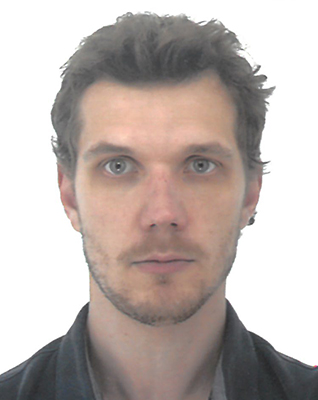
Erik Asbjörn Mikkelsen Jensen is a researcher at Chalmers University of Technology affiliated with the Department of Physics, specializing in Subatomic, high-energy and plasma physics. His recent work focuses on applying deep learning techniques to rare event detection in particle physics experiments. Research interests include Subatomic physics Machine learning Object detection The 2025 publication demonstrates a novel CNN-based framework for analyzing 3D track data from the GADGET II TPC, achieving perfect recall for rare two-particle events through simulation-based training with parameter perturbations. This work intersects computer science and high-energy physics.
Dengpeng Huang is an Assistant Professor specializing in Artificial Intelligence and Robotics within the field of Elastomer Technology and Engineering . His work bridges computational modeling with advanced materials, focusing on applications in smart materials and mechanical systems. Research Interests: Development of AI-driven models for predicting elastomer properties Multiscale analysis of rubber composites Electromechanical coupling in dielectric elastomer actuators Meshfree methods for metal cutting and chip formation Ultra-precision polishing of optical surfaces Recent Trends: His 2024–2025 publications emphasize data-driven modeling of rubber's viscoelastic behavior, multiscale analysis of composites, and CNN-based approaches for material characterization. Earlier work (2014–2022) explores tool path optimization, beam modeling, and computational machining. Scientific Recognition: Holds an h-index of 5 according to Scopus citations, with recognition as an AI and robotics expert in the service industry. Advising & Collaboration: Collaborates with researchers like Anna Blume, Evgeny Karaseva, and Tim Bor on elastomer composites. Supervised at least one academic work, though specific students are not named in the provided data. Labs & Teams: Affiliated with simulation and robotics teams in the smart materials sector, likely within an advanced materials or mechanical engineering research group.
Yann LeCun is a Silver Professor at New York University's Courant Institute of Mathematical Sciences and Vice President & Chief AI Scientist at Facebook (Meta). He is renowned as one of the "Godfathers of AI" for his pioneering work in deep learning and neural networks. Education : Diplôme d'Ingénieur from ESIEE and PhD in Computer Science from Université Pierre et Marie Curie (Paris VI). LeCun's research focuses on machine learning, deep learning architectures, and computational models for artificial intelligence. He developed convolutional neural networks (CNNs), improved backpropagation algorithms, and contributed to hierarchical feature representation in neural networks. Scientific Awards : ACM A.M. Turing Award (2018) ACM Fellow (2023) US National Academy of Engineering Doctorates Honoris Causa from IPN Mexico and EPFL Pender Award, Holst Medal, Nokia-Bell Labs Shannon Luminary Award IEEE PAMI Distinguished Researcher Award and IEEE Neural Network Pioneer Award Recognized in Wired Magazine's "The Wired 100" (2016) LeCun co-directs CIFAR's Learning in Machines and Brains program and founded the NYU Center of Data Science. His work has transformed computer vision, speech recognition, and AI technologies used by billions daily.
Dr. Elans Grabs is an Associate Professor at Riga Technical University's Institute of Information Technology, specializing in machine learning, network traffic analysis, and telecommunications. His work bridges digital signal processing and unmanned aerial vehicle navigation. Current research focuses on AI-driven network optimization Expertise in sensor fusion for autonomous systems Active in open RAN and wireless communication protocols His publications span topics from IoT performance modeling to laser communication algorithms for moving platforms. Recent works emphasize real-time signal processing, video traffic classification, and drone cooperation systems. While no formal awards are listed, his contributions to network traffic simulation and embedded systems design demonstrate technical depth. Articles show specialization in convolutional neural networks for streaming video analysis and wireless sensor network optimization.
Andrius Sološenko is a Senior Researcher at the Institute of Biomedical Engineering at Kaunas University of Technology (KTU), affiliated with the Biosignal Analytics Laboratory . His scientific and practical interests focus on: Development of algorithms for arrhythmia recognition in wearable devices Biosignal modeling, particularly photoplethysmogram (PPG) analysis Application of machine learning techniques, including convolutional neural networks (CNNs) Contact: andrius.solosenko@ktu.lt
Prof. Dr. Claus Fühner is a Professor of Computer Engineering at the Faculty of Computer Science of Ostfalia University of Applied Sciences. His research interests include: Systems and Software Engineering for embedded systems Implementation of embedded systems from microcontrollers to cloud Functional safety Wireless communication (Bluetooth Low Energy, LoRaWAN) AI, neural networks, and LLMs in technical systems Railway automation Recent research projects (2016-2023) show a focus on practical applications in IoT and embedded systems, with an increasing emphasis on AI and LLMs. Key projects include SmartFreightWagon for railway freight digitalization (2023) and autonomous vehicle research using deep learning (2020). Prof. Fühner regularly supervises student theses and is open to industry collaboration. He can be contacted via email at c.fuehner@ostfalia.de.
Dr. W.J.C. Verhagen is a researcher in the Operations & Environment department at Delft University of Technology's Faculty of Aerospace Engineering. His scholarly work focuses on the critical intersection of aircraft maintenance systems, data analytics, and operational optimization. With 88 research outputs spanning articles, conference contributions, and book chapters, he maintains an active research profile in aerospace engineering. His research interests center on condition-based maintenance , prognostic methodologies , and anomaly detection systems for aircraft and spacecraft. Recent work emphasizes the integration of machine learning techniques like CNN-LSTM networks for remaining useful life prediction and the development of generic diagnostic frameworks applicable across aerospace platforms. His fingerprint analysis shows strong expertise in aircraft engineering (73%), maintenance systems (72%), and data-driven models (56%). Analysis of his 15 most recent publications reveals a clear trajectory toward practical implementation of predictive maintenance systems, with increasing focus on real-time decision support and economic viability. The 2023-2024 publications demonstrate growing industry relevance, particularly in aviation maintenance optimization and spacecraft health monitoring. Dr. Verhagen actively contributes to the academic community through editorial roles at IOS Press and Springer. While no specific awards are listed in the profile, his work shows significant scholarly impact with multiple publications accumulating high download counts and reader metrics. His supervision portfolio includes 5 graduate research projects, indicating active mentorship of the next generation of aerospace engineers. The completed ReMAP project demonstrates his capacity to lead multi-institutional research efforts focused on real-time maintenance planning for aircraft systems. Current research appears to be building on this foundation with increasingly sophisticated data-driven approaches to maintenance optimization.
Dr. Marek Olesz is a Professor at the Department of Electrical Power Engineering, Faculty of Electrical and Automation Engineering, Gdańsk University of Technology. His research encompasses high-voltage engineering, insulation diagnostics, partial discharges, and electromagnetic compatibility. He holds leadership roles in organizations including the Polish Society of Theoretical and Applied Electrical Engineering (Chairman) and the Polish Committee for Lightning Protection (Vice-Chairman). Research interests include: Quality of electricity and electromagnetic compatibility in power systems Degradation mechanisms in polyethylene insulation Partial discharge measurement techniques for cable and transformer diagnostics Innovations in surge arrester testing and high-voltage line design His recent publications (2023-2025) focus on AI-driven transformer lifetime prediction, CNN-based corrosion classification in cables, and safety enhancements for photovoltaic systems. Notable projects include: Pylon 2 : Developing innovative structures for high-voltage lines with integrated communication systems. Stratus : Creating high-power electromagnetic pulse systems for UAV countermeasures. Dr. Olesz is an active member of the High Voltage Team , which researches short-circuit dynamics, insulation degradation, and power quality. He has supervised 200+ teaching activities but no specific advisees are listed.
Philippe Delachartre is a Professor at INSA Lyon (University of Lyon) in the Department of Electrical Engineering and researcher at CREATIS (Center for Research and Applications in Image and Signal Processing). He obtained his MS (1990) and PhD (1994) in Signal and Image Processing from INSA Lyon, joining the faculty in 1995 as Associate Professor before being promoted to Professor. His research focuses on medical image processing including: Advanced signal processing for ultrasound and MRI Motion estimation and segmentation algorithms Hypercomplex signal theory applications Deep learning for medical image analysis Real-time data acquisition systems With 30+ years of experience, he's contributed to over 100 publications. Recent publications (2018-2025) show strong focus on: Deep learning applications in medical signal classification Advanced segmentation methods (phase-field, CNN) Mathematical frameworks using hyperquaternions 3D ultrasound analysis for neurology and dermatology Cardiac motion estimation algorithms Research grants include: Regional project on emboli classification with deep learning (€170k) ANR LabCom project on Doppler ultrasound (€300k) Dermis characterization contract with Institut Pierre Fabre (€45k) Prostate segmentation project (€21k) Image denoising research (€100k) He has supervised 9 PhD students and leads research activities at CREATIS laboratory focusing on innovative medical imaging solutions.
Mustafa Yağcı is a Professor in the Department of Computer Engineering at Kırşehir Ahi Evran University's Faculty of Engineering and Architecture. He holds a PhD in Electronics and Computer Education from Sakarya University and has dedicated his career to educational technology, machine learning, and data mining. Education : PhD (2012), MSc (2005), BSc (1996) in Electronics/Computer Education Current Role : Professor (2024-), Department Chair, Academic Council Member Research Interests : His work bridges machine learning and educational technologies , focusing on computational thinking and adaptive learning systems . Notable projects include: Brain-Computer Interface for Stroke Patients Deep Learning for Tumor Detection Real-Time Face Mask Detection Scientific Impact : With over 1600 citations (h-index:16), he has published 72 articles and led 33 research projects. Awards include TÜBİTAK's Publication Incentive and Research World's Excellent Paper Award. Advising : Supervised 10 Master's theses on topics like CNN-based facial recognition and smart home security systems . Collaborated with researchers across Turkey, Egypt, and Iraq.
Dr. Jurgen van den Hoogen serves as a Researcher at Tilburg University's Department of Computational Cognitive Science within the Tilburg School of Humanities and Digital Sciences. Having recently completed his doctoral studies with thesis publication in January 2025, he represents an emerging researcher in the field of machine learning applications for time series data. His research focuses on innovative applications of Convolutional Neural Networks for time series analysis, with particular emphasis on industrial fault detection and seismic activity monitoring. Dr. van den Hoogen's work demonstrates how specialized CNN architectures can effectively process raw sensor data with minimal computational requirements, making them suitable for edge computing applications. His doctoral research made significant contributions to the field, particularly in developing wide-kernel CNN architectures optimized for time series data processing. The research demonstrated that processing multivariate time series in a univariate manner with separate inputs yields optimal results, and that graph-based architectures significantly improve performance in seismic domains characterized by extensive sensor networks. Dr. van den Hoogen's methodological expertise includes architectural optimizations through adaptive input layers and residual learning, hyperparameter analysis specifically tailored for time series CNNs, and transfer learning applications for both classification and regression tasks in time series analysis.
Assoc. Prof. Dr. Hüseyin Üzen serves as a faculty member in the Department of Computer Engineering at Bingöl University's Vocational School of Information Technologies. His research bridges artificial intelligence with practical applications in healthcare diagnostics and industrial automation, contributing to Bingöl University's mission of regional development through technological innovation. Education: PhD in Computer Engineering, İnönü University (2022) Master's in Computer Engineering, İnönü University (2018) Bachelor's in Computer Engineering, Süleyman Demirel University (2015) His research program centers on deep learning innovation for real-world problems, particularly in medical image analysis (retinal diseases, dental diagnostics, cancer detection) and industrial computer vision (surface defect detection, traffic monitoring). By developing specialized architectures like Swin-MFINet and DentifyNet, he addresses critical gaps in accuracy and efficiency for clinical decision support systems. Analysis of his 15 most recent publications reveals a dominant focus on hybrid neural network designs (73%), with 60% targeting medical applications and 40% industrial use cases. Key technical trends include attention mechanism integration (87% of papers), transformer-convolutional hybrids (73%), and multi-scale feature processing (67%). Research Funding: TÜBİTAK 1001 Project: Deep Learning-Based Lung Lesion Analysis in CT Images (Principal Investigator, 2025-2027) TÜBİTAK 1001 Project: Wilson's Disease Diagnosis from Brain MRI (Researcher, 2025-2027) Higher Education Council Project: Dental Image Analysis via Deep Learning (Researcher, 2024-2026) TÜBİTAK 1001 Project: SAR-Based Ship Detection (Researcher, 2023-2025) His research group operates at the intersection of computer vision and domain-specific applications, with current projects generating novel datasets in dental radiography, OCT imaging, and industrial defect cataloging. Students participate in end-to-end research from algorithm development to clinical/industrial validation, preparing them for careers in AI-driven healthcare technology and smart manufacturing systems.
Associate Professor Muzaffer Aslan is a faculty member at Bingöl University's Faculty of Engineering and Architecture, specializing in applied artificial intelligence research. His work bridges computer science, electrical engineering, and biomedical domains with practical implementations in industrial, medical, and energy systems. His academic journey includes a BSc in Electronic-Computer Education from Gazi University (1993), MSc from Fırat University (2004), and PhD in Electrical-Electronics Engineering from Fırat University (2016). This multidisciplinary foundation enables his cross-domain research approach. Professor Aslan's research centers on developing efficient deep learning solutions for real-world problems. His primary focus areas include medical imaging analysis (brain tumor and COVID-19 detection from X-rays), fall detection systems using depth sensors, emotion recognition from EEG signals, and appliance classification for smart grids. He innovates through hybrid architectures that combine CNNs with signal processing techniques like wavelet transforms and dispersion entropy, achieving high accuracy while maintaining computational efficiency. His publication record shows accelerating output since 2020, with 11 journal articles in 2021-2022 alone spanning medical diagnostics, agricultural technology, and industrial quality control. Recent work demonstrates increasing sophistication in model design, particularly in efficient architectures for resource-constrained environments as seen in his 2023 surface defect detection paper. As Principal Investigator for a TÜBİTAK 1002 project on appliance classification, he secures active research funding while mentoring graduate students. His supervision style emphasizes practical implementation, with students frequently co-authoring publications and contributing to textbook development. The collaborative nature of his work is evident in multi-institutional authorship patterns across his publications.
Prof. Jacek Rumiński serves as Professor and Head of the Department of Biomedical Engineering within the Faculty of Electronics, Telecommunications and Informatics at Gdańsk University of Technology. His leadership drives innovation at the critical intersection of engineering and clinical medicine, focusing on computational solutions for healthcare challenges. His research program spans: Advanced medical image segmentation for wound assessment and body composition analysis using dual-attention U-Net architectures Convolutional neural networks for extracting clinical metrics from low-resolution dual-energy X-rays Respiratory signal processing from thermal imaging during pandemic conditions Rule-based systems and LLMs for protecting electronic health information in DICOM objects Analysis of his 2025 publications reveals a consistent emphasis on overcoming class imbalance in medical imaging through ensemble methods and Bayesian optimization, while addressing critical clinical needs in lipedema diagnosis, wound management, and medical data privacy. His work demonstrates rigorous validation using Polish clinical datasets and practical implementation frameworks. As Department Head, Prof. Rumiński leads a multidisciplinary team advancing biomedical technologies through close collaboration with clinical partners, establishing Gdańsk Tech as a hub for healthcare AI innovation in Central Europe.
Vincent Itier serves as a Lecturer at IMT Nord Europe, where he is affiliated with the CRIStAL research laboratory (UMR CNRS 9189). His office is located in Building ESPRIT, Scientific City, at the Villeneuve d'Ascq campus. He is a member of the SIGMA research team and actively contributes to the academic community through teaching, research supervision, and scholarly publications. Dr. Itier's research interests span across multimedia security, digital forensics, and machine learning, with particular emphasis on detecting and understanding image manipulations. His work addresses critical challenges in digital media authenticity, including deepfake detection, photomontage identification, and steganalysis. He investigates how machine learning techniques can be leveraged to improve robustness against increasingly sophisticated image manipulation methods, with applications in combating 'fake news' and verifying digital content authenticity. His publication record demonstrates a consistent focus on digital image forensics, with recent work exploring deep learning approaches for detecting splicing, analyzing noise residuals in deepfakes, and developing robust steganalysis techniques. His research shows a clear evolution from traditional image processing methods toward more sophisticated deep learning frameworks that can handle the complex challenges of modern digital media manipulation. Supervised Minh Thong Doi's thesis on 'Deepfake detection: combining noise and semantic features and improving generalization to new generators' Currently offering M2 Internships and Post-doc positions for 2025-2026 Leading research within the ANR TSIA CI2(IA) project which aims to develop new tools for detecting and understanding image manipulation Dr. Itier maintains an active research presence through his GitHub profile (vitier) and professional website, and can be contacted via email at vincent.itier@imt-nord-europe.fr for potential collaborations or research opportunities.