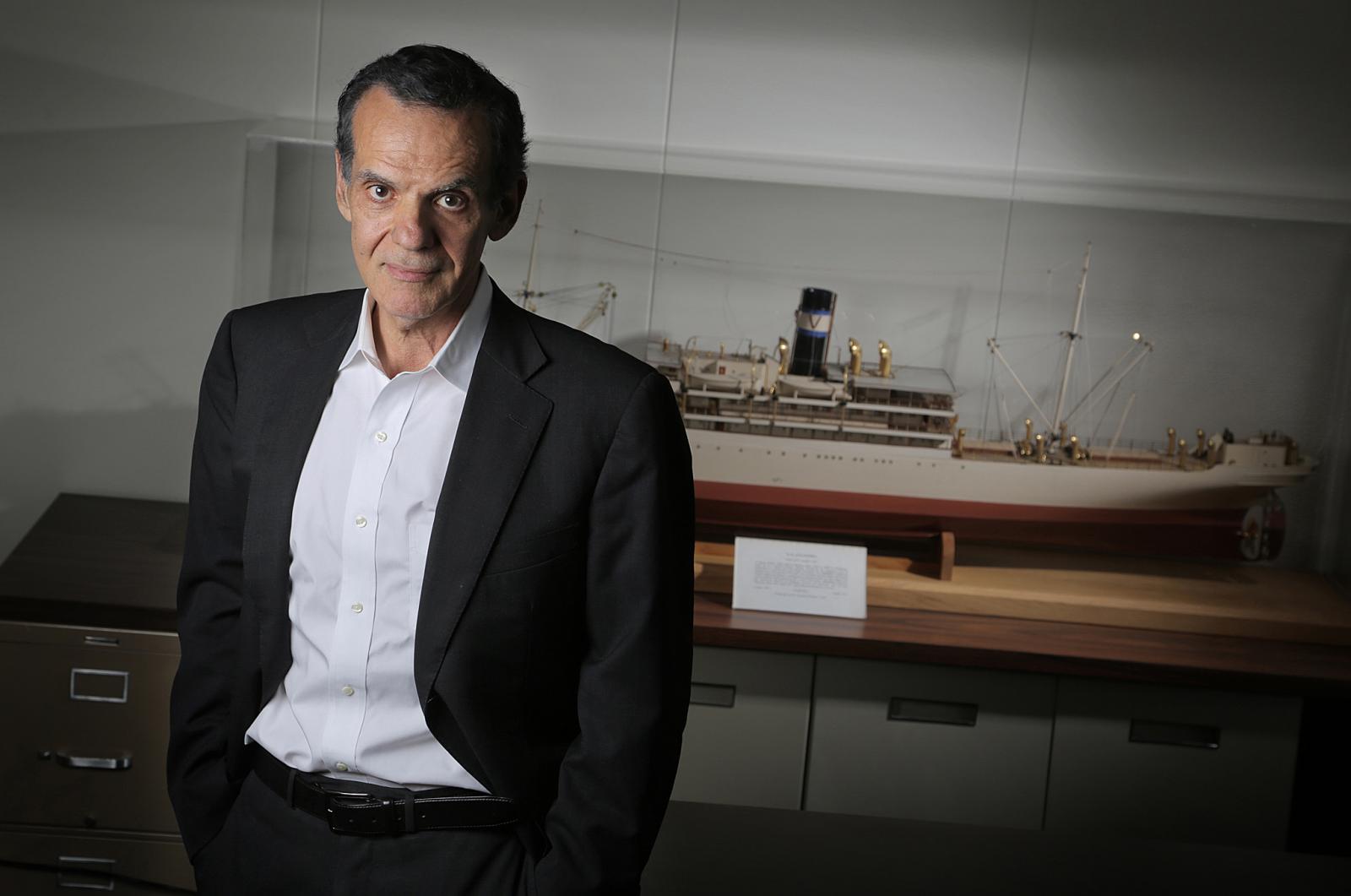
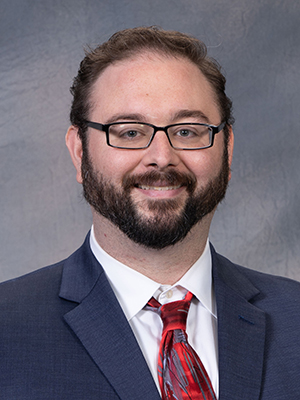
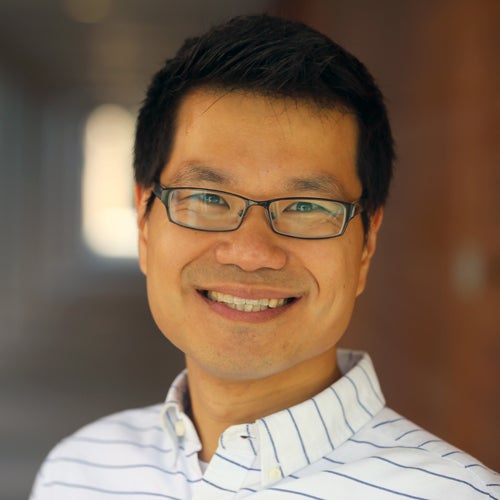
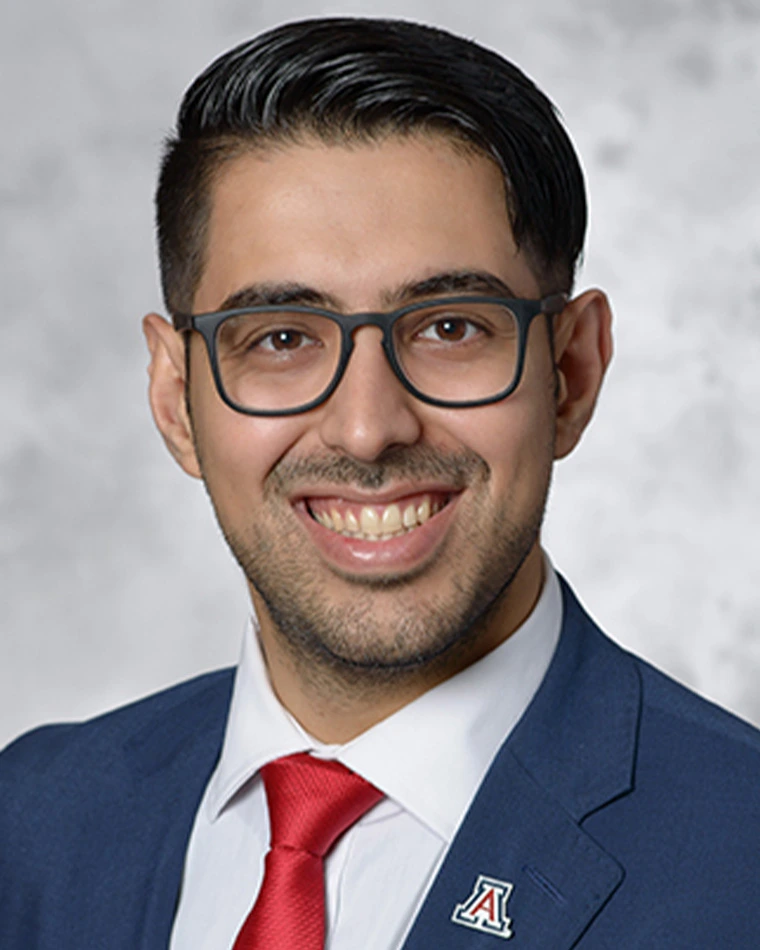
Professor Paul D. Sclavounos is a faculty member in the Department of Mechanical Engineering at the Massachusetts Institute of Technology (MIT). He earned his B.Sc. from the National Technical University of Athens in 1977 and Ph.D. from MIT in 1981. Research Interests : Marine hydrodynamics, stochastic control, offshore wind/wave/tidal/solar energy, machine learning applications, magnetohydrodynamic propulsion systems. Notable Contributions : Development of computational tools like SWAN and SML software suites; analysis of nonlinear wave dynamics; integration of AI/ML in marine hydrodynamics. Scientific Recognition : First Prize in National Mathematics Competition (1972), Georg Weinblum Memorial Lecturer (2010-2011), Best Paper Award at OMAE 2019, AEOLOS Scientific Award (2024). Leadership : Director of the Laboratory for Ship and Platform Flows since 1985; advisory roles for US Navy, US Department of Energy, and Det Norske Veritas (DNV). Teaching : Courses in Hydrodynamics (2.016), Advanced Fluid Mechanics (2.25), and Naval Architecture (2.701).
Prof. Liam Murphy is a Full Professor of Computer Science & Informatics at University College Dublin (UCD) and Director of the Performance Engineering Laboratory. He holds a B.E. from UCD, M.Sc. and Ph.D. from UC Berkeley. His research focuses on performance engineering of networks, software systems, and multimedia transmissions. He has published over 150 peer-reviewed papers and is an IEEE member and Fellow of the Irish Computer Society. Education: B.E. in Electrical Engineering, UCD (1985) M.Sc. & Ph.D. in Electrical Engineering & Computer Sciences, UC Berkeley (1988, 1992) Research Interests: Dynamic resource allocation in networks Cloud computing efficiency Software performance engineering Wireless multimedia systems Quality of Service (QoS) optimization Recent work emphasizes energy-efficient cloud workflows, multi-objective data center optimization, and decentralized traffic simulation. Grants & Awards: Fellow of the Irish Computer Society (2007) Conference Paper Awards (2004, 2002, 2001) Principal Investigator in multiple funded projects (e.g., EU-funded traffic simulation, cloud resource allocation) Advising & Labs: Directed 24 Ph.D. and 8 M.Sc. students. Leads the Performance Engineering Laboratory (PEL), focusing on distributed systems, cloud efficiency, and network performance. Collaborates on industry-relevant projects like crovan (UCD/DCU campus company). Teaching: Coordinates courses on computer science fundamentals, distributed systems performance, and software engineering at UCD.
Dr. Auzeen Shariati is an Associate Professor and Director of Undergraduate Programs in the Department of Criminology, Law and Society at George Mason University. She holds a Ph.D. in Public Affairs and Criminal Justice from Florida International University (2017), an M.A. in Criminal Law and Criminology from Allameh Tabataba’I University (2010), and a B.A. in Judicial Law from the University of Tehran (2006). Prior to academia, she practiced as a defense attorney at the Iranian Bar Association. Her research focuses on environmental criminology, crime prevention, victimization, policing strategies, and comparative criminal justice systems. Key areas include pandemic impacts on domestic violence, school safety through Crime Prevention Through Environmental Design (CPTED), and policy evaluation in criminal justice. She has published extensively in journals like American Journal of Criminal Justice , Journal of Family Violence , and Security Journal . Recent work examines how the Covid-19 pandemic and social upheavals like the murder of George Floyd influenced domestic violence reporting and victim experiences. Her studies combine quantitative and qualitative methods, emphasizing real-world policy implications. Dr. Shariati teaches courses such as Introduction to Criminology , Law and Justice Around the World , and Evaluation of Crime and Justice Policies . She actively presents at conferences like the American Society of Criminology and has contributed to public discourse on campus safety and criminal justice reform through media engagements.
Beverley J. McKeon is a Professor of Mechanical Engineering at Stanford University, previously holding the Theodore von Kármán Professorship in Aeronautics at Caltech. Her research focuses on fluid mechanics, particularly turbulence, flow control, and boundary layer dynamics. She earned her B.A. and M.Eng. from the University of Cambridge, and her Ph.D. from Princeton University. McKeon's work integrates experimental and theoretical approaches to manipulate wall-bounded flows for drag reduction and performance enhancement. Her research interests include resolvent analysis, high Reynolds number turbulence, and the application of machine learning to fluid dynamics. She has led interdisciplinary projects on morphing surfaces and viscoelastic turbulence. Awarded the Vannevar Bush Faculty Fellowship and PECASE, McKeon has been recognized for her teaching and mentoring. Her honors include Fellowships from the APS and AIAA. She chairs editorial boards for journals like Physical Review Fluids and has served on national committees for theoretical and applied mechanics. Her academic leadership includes roles as Deputy Chair of Caltech’s Division of Engineering and Applied Science and Associate Director of GALCIT. She advises numerous students and collaborates globally on initiatives like the Stories of Women in Fluids.
Eli Ben-Michael is an Assistant Professor jointly appointed in the Heinz College of Information Systems and Public Policy and the Department of Statistics & Data Science at Carnegie Mellon University. He is affiliated with the CMU-NIST AI Measurement Science & Engineering Cooperative Research Center (AIMSEC), contributing to cutting-edge research at the intersection of statistics, policy analysis, and artificial intelligence. His educational background includes a PhD in Statistics from U.C. Berkeley and undergraduate studies at Columbia University where he earned a dual degree in Computer Science and Statistics. Prior to his current position, he completed a postdoctoral fellowship at Harvard University's Institute for Quantitative Social Science and Department of Statistics. Ben-Michael's research focuses on developing innovative statistical and computational methods for causal inference and policy evaluation, with particular emphasis on integrating machine learning techniques to address complex problems in public policy and social science. His work bridges theoretical statistics with practical applications in healthcare, criminal justice, education, and social policy. Current research directions include safe policy learning, sensitivity analysis for clustered data, and methodological innovations for the synthetic control method. His publication record shows a strong trajectory in top-tier journals including Journal of the American Statistical Association, Journal of the Royal Statistical Society, and Proceedings of ICML. Recent work demonstrates increasing focus on policy-relevant applications including abortion legislation impacts, pre-trial risk assessment, and healthcare disparities, while maintaining methodological rigor in causal inference frameworks. Ben-Michael has developed open-source software tools including augsynth and multical R packages, which implement his methodological contributions for synthetic controls and multilevel calibration weighting. These packages have been adopted by researchers in multiple disciplines for causal inference applications.
Dr. Carolyn Conner Seepersad is a Woodruff Professor in the George W. Woodruff School of Mechanical Engineering at Georgia Institute of Technology. She leads the Digital Design and Manufacturing research group and previously founded the Center for Additive Manufacturing and Design Innovation at The University of Texas at Austin. Her research focuses on additive manufacturing, materials design, and process innovation. She holds editorial roles, including Editor-in-Chief of the ASME Journal of Mechanical Design, and has received numerous awards for research and teaching. Education: PhD, Mechanical Engineering, Georgia Tech, 2004 MS, Mechanical Engineering, Georgia Tech, 2001 BA, Philosophy, Politics, and Economics, Oxford University, 1998 BS, Mechanical Engineering, West Virginia University, 1996 Her research interests span design for additive manufacturing, simulation-based materials and structures, and metamaterials. She emphasizes manufacturing-aware design and sustainability. Key contributions include lattice structure optimization, negative stiffness composites, and process-aware manufacturing techniques. Her publications reflect advancements in additive manufacturing processes, materials characterization, and design methodologies. Awards include the ASME Design Automation Award and recognition as a University of Texas System Academy of Distinguished Teachers. Seepersad has advised on grants such as the LEAP-HI GOALI project and contributed to initiatives like the Solid Freeform Fabrication Symposium. Her work bridges academia and industry, emphasizing practical applications and innovation. Labs/Teams: Leads the Digital Design and Manufacturing group at Georgia Tech, previously directed the UT Austin Additive Manufacturing Center.
Padhraic Smyth is a Distinguished Professor and Hasso Plattner Endowed Chair in Artificial Intelligence at the University of California, Irvine (UCI), holding joint appointments in the Department of Computer Science and Department of Statistics. He leads the DataLab research group, focusing on machine learning, AI, and their applications in climate science, healthcare, and education. His research spans probabilistic modeling, deep learning, and human-AI collaboration. Education: PhD in Electrical Engineering from the California Institute of Technology (1988), MSEE (1985), and BEng (1984). Prior to UCI, he worked at NASA's Jet Propulsion Laboratory (1988–1996). Research Interests: Machine learning, AI, pattern recognition, Bayesian methods, climate science applications, algorithmic fairness, and human-AI interaction. He has published over 200 papers and co-authored textbooks like Modeling the Internet and the Web . Awards: ACM Fellow, IEEE Fellow, AAAI Fellow, AAAS Fellow, and ACM SIGKDD Innovation Award recipient. He has held leadership roles in UCI's Center for Machine Learning and Data Science. Key Projects: Human-AI collaboration frameworks, robustness in deep learning, climate modeling using spatio-temporal data, and AI fairness with missing attributes. Collaborates with institutions like NASA and industry partners (e.g., Google, eBay). Labs/Teams: Director of UCI’s Data Science Initiative and HPI Research Center in Machine Learning. Supervises a vibrant PhD program with over 30 alumni in academia and industry.
Ian Grettenberger is an Assistant Professor of Cooperative Extension in the Department of Entomology and Nematology at the University of California, Davis. He leads the Grettenberger Lab, focusing on applied entomology in agricultural ecosystems. His work emphasizes pest management strategies, biological control, and sustainable solutions for invasive species threatening California crops. Education: B.S. in Biology, Western Washington University Ph.D. in Entomology, Pennsylvania State University Research Interests: Grettenberger’s expertise spans pest management of field/vegetable crops, invasive species like the Bagrada bug and western striped cucumber beetle, and resistance management in pests such as the alfalfa weevil. He investigates biological control mechanisms, pesticide efficacy, and economic impacts of pest management policies. Key Contributions: Recent work includes studies on insecticide spray optimization, economic implications of pesticide regulations, and biological control of invasive species. His research bridges laboratory and field settings, addressing challenges in California’s agricultural landscapes. Labs/Teams: The Grettenberger Lab collaborates on applied entomology projects, advancing IPM practices and crop protection strategies.
Tomila Lankina is a Professor of Politics and International Relations at the London School of Economics (LSE), specializing in democratization, popular protest, and Russian and Eastern European politics. She holds a DPhil from the University of Oxford and has held research appointments at institutions such as Stanford University and Humboldt University in Berlin. Her work examines historical legacies of social structure and their implications for democracy, inequality, and political regimes. Her groundbreaking book The Estate Origins of Democracy in Russia (Cambridge University Press, 2022) explores how pre-communist social stratification in Russia shapes contemporary political outcomes. The book has received major accolades, including the 2023 J. David Greenstone Prize and Davis Center Book Prize. Lankina’s research also addresses modern issues like Russian media manipulation, post-communist social resilience, and the impact of historical institutions on modern governance. Active in supporting Ukrainian scholars during Russia’s invasion of Ukraine, Lankina co-founded an LSE Taskforce to assist displaced students and researchers. She has been recognized for her excellence in PhD supervision by LSE and has published widely in top journals like the American Political Science Review and World Politics . Her interdisciplinary approach combines historical analysis with contemporary political dynamics, emphasizing the persistence of social hierarchies and their role in shaping autocracy and democracy. Current projects include a book on Russian dissent history and comparative studies of post-colonial and post-communist societies.
Thomas Gray is an Assistant Professor in the Mechanical Engineering Department at Texas A&M University, affiliated with the Mike J. Walker ’66 Department. His research focuses on Human Strength Amplification, Wearable Robotics, and Control Systems, with a particular emphasis on exoskeleton design and biomechanical interaction. He leads the HERC Lab, aiming to advance direct control paradigms for physically interactive robots. Educational Background : Ph.D., Mechanical Engineering, University of Texas at Austin (2019) B.S., Engineering: Robotics, Olin College of Engineering (2012) Research Interests : Gray’s work centers on enhancing human performance through advanced robotic systems. Key areas include: Development of wearable devices for strength amplification and fatigue mitigation Design of series-elastic actuators and force/torque feedback mechanisms System identification for robust control in dynamic environments Optimization of mechanical impedance rendering for natural human-robot interaction Awards & Recognition : IEEE ICRA Best Manipulation Paper Award (2017) IJHR Best Paper Award (2016) NASA Space Technology Research Fellowship (2015) DARPA Virtual Robotics Challenge Winner (Team IHMC, 2013) Grants & Advising : Gray has secured significant funding for his research, including grants from NASA and DARPA. He advises students in robotics and control systems, though specific student names are not listed. Labs & Teams : He directs the Human-Empowering Robotics and Control (HERC) Lab, which explores next-generation robotics for human augmentation and direct control methodologies.
T. S. Eugene Ng is a Professor of Computer Science and Electrical & Computer Engineering at Rice University. He holds appointments in both departments and chairs the CS Grad Committee. His research focuses on network architectures, optical networking, and machine learning applications in distributed systems. Education: B.S. in Computer Engineering (with distinction and magna cum laude), University of Washington M.S. and Ph.D. in Computer Science, Carnegie Mellon University Research Interests: Developing robust network infrastructure, optical circuit-switched systems, congestion control, and efficient machine learning frameworks. Current projects include BOLD (Big data and Optical Lightpaths Driven) networking, telemetry systems like Söze, and gradient compression techniques for distributed training. Awards: IEEE Fellow (2023) Alfred P. Sloan Research Fellow (2009) National Science Foundation CAREER Award (2005) IBM Faculty Award (2009) Kavli Fellow Professional Activities: Chair of the 2018 ACM SIGCOMM Distinguished Dissertation Award Committee, Associate Editor for IEEE Transactions on Big Data, and organizer of multiple networking conferences/workshops. Active in program committees for SIGCOMM, NSDI, and CoNEXT. Teaching: Courses include Introduction to Computer Networks, Advanced Computer Networks, and seminars in distributed computing and network systems.
Magdy M. A. Salama is a Professor and University Research Chair at the University of Waterloo's Department of Electrical and Computer Engineering, Faculty of Engineering. He holds a P.Eng. license and is a Fellow of the IEEE. His research spans Energy Systems (Power Quality, Smart Grids, Renewable Energy) and Biomedical Engineering (Medical Imaging, Sleep Analysis). He has authored/co-authored over 460 publications and supervised numerous graduate students. Education: PhD (University of Waterloo), M.Sc. and B.Sc. (Cairo University). Awards include the IEEE Fellow distinction, University Research Chair, and multiple teaching/research awards from the University of Waterloo. Research trends in his articles focus on Smart Grid resiliency, renewable integration, cyber-physical security, and biomedical applications of AI. Notable projects include voltage sag mitigation, EV fleet electrification, and blockchain-based energy trading platforms. Scientific Awards: IEEE Fellow, University Research Chair, Teaching Excellence Award (2000) Grants/Consultation: Extensive industry and institutional collaborations on power systems and biomedical tech. Labs/Teams: Active in High Voltage Lab, Smart Grids Research Group, and Medical Image Processing Lab.
Dr. Kyle Jamieson is a Professor of Computer Science at Princeton University, leading the Princeton Advanced Wireless Systems (PAWS) lab within the Department of Computer Science. He is also Affiliated Faculty in the Department of Electrical and Computer Engineering. His research focuses on wireless networking systems, 5G architecture, IoT networks, and quantum computing applications in wireless communication. He has pioneered work in reconfigurable intelligent surfaces, MIMO detection algorithms, and metamaterials for millimeter-wave networks. Dr. Jamieson has developed courses such as COS 597S: Recent Advances in Wireless Networks (graduate seminar), COS 463: Wireless Networks , and COS 418: Distributed Systems . His teaching emphasizes interdisciplinary approaches to networking challenges, including physical-layer design, computational structures for wireless processing, and cross-layer optimization. His lab’s research spans smart surfaces for 5G networks, quantum annealing for MIMO processing, and edge computing for live video analytics. Recent work includes deploying reconfigurable metamaterials for enhanced mmWave networks and developing tools like NR-Scope for 5G telemetry. While no awards are listed in the provided text, his contributions to wireless systems have advanced both academic and industrial applications in areas such as network resilience, IoT scalability, and quantum-enabled wireless processing. Dr. Jamieson’s advising focuses on graduate and undergraduate students working in wireless systems, though specific advisee names are not provided. His lab collaborates on projects like Wall-Street for roadside networking and Spider for multi-hop mmWave video analytics. External collaborations include work with Microsoft Research and guest lecturing roles at Berkeley. His research bridges theoretical foundations with practical implementations, often addressing real-world challenges in wireless infrastructure and next-generation communication systems.
Soheil Salehi is a tenure-track Assistant Professor in the Department of Electrical and Computer Engineering at the University of Arizona, with a joint appointment in Systems and Industrial Engineering. He is the Director of the Privacy-preserving, Intelligent, and Secure Computing (PRISM) Lab, established in August 2022. Prior to this, he was an NSF-Sponsored Computing Innovation Fellow and Postdoctoral Research Fellow at the University of California, Davis. Ph.D., Electrical and Computer Engineering, University of Central Florida, 2020 M.S., Electrical and Computer Engineering, University of Central Florida, 2016 B.S., Isfahan University of Technology, Iran, 2014 Dr. Salehi's research focuses on the intersection of hardware, AI, and security. His work spans hardware and AI-enabled security in IoT , Generative AI for hardware design and security , neuromorphic and biologically-inspired AI hardware , emerging spin-based devices , reconfigurable architectures , low-power VLSI circuits , and digital twins and mixed reality for semiconductor workforce development . He also explores the application of Generative AI in personalized education . His recent publications, spanning 2023–2025, reveal a strong trend toward integrating AI and machine learning into hardware security and design. Key themes include automated secure IC design flows , AI-driven hardware obfuscation , firmware and side-channel attack analysis , security in neuromorphic and spiking neural networks , and educational frameworks using digital twins and generative models . His work appears in top venues like DAC, ICCAD, USENIX Security, IEEE TCAS-I, and ISCAS. Outstanding Reviewer Award, IEEE/ACM Design Automation Conference (DAC), 2023 Best Presentation of the Symposium Award, UC Davis Postdoctoral Research Symposium, 2021 UCF Excellence by a Graduate Teaching Assistant (University-Level), 2016 Nominated for 30-under-30 Award, UCF, 2020 Nominated for Postdoctoral Research Excellence Award, UC Davis, 2022 Dr. Salehi has secured significant research funding as PI and Co-PI, including a $300K NSF SaTC EAGER grant on Generative AI-based Personalized Cybersecurity Tutor, a $174,000 University of Arizona PIF Award, and multiple RII grants totaling over $198K. He has also received industry funding from CHEST. He actively mentors students and leads the PRISM Lab, which focuses on privacy-preserving and intelligent secure computing. His service includes roles as Technical Program Committee (TPC) Member and Session Chair at premier conferences such as DAC, ICCAD, CCS, NDSS, and GLSVLSI. The PRISM Lab, under his direction, conducts cutting-edge research in secure and intelligent hardware systems, with applications in IoT, edge computing, and workforce development. The lab emphasizes interdisciplinary collaboration and innovation in both research and education.
Song Mei is an Assistant Professor in the Department of Statistics and Department of Electrical Engineering and Computer Sciences at the University of California, Berkeley. She received her Ph.D. from Stanford University in 2020 under Andrea Montanari and maintains active research collaborations with institutions including Amazon (as a 2023 Amazon Research Award recipient) and OpenAI (where she is currently on leave). Her research spans the intersection of statistics, machine learning, information theory, and computer science, with particular emphasis on foundational theories for modern AI systems. Key interests include language models, diffusion models, quantum algorithms, and high-dimensional statistics, often leveraging insights from statistical physics literature. Analysis of her recent publications reveals a strong focus on theoretical underpinnings of generative AI, with significant contributions to understanding contrastive pre-training (CLIP), attention mechanisms in LLMs, and mathematical foundations of diffusion models. Her work demonstrates consistent interdisciplinary connections between statistical theory and practical AI development. Sloan Research Fellowship (2025) Noether Early Career Scholar Award (2025) Google Research Scholar Award (2024) Amazon Research Award (2024) She actively advises graduate students through MA programs and has secured significant research grants including Amazon Research Awards. Her work with AGI Labs at Amazon demonstrates applied impact of theoretical research. Current projects focus on mechanistic interpretability of large language models and mathematical frameworks for generative AI. Professor Mei leads research on the statistical principles behind frontier AI models, with particular focus on developing rigorous theoretical frameworks for understanding emergent behaviors in large-scale systems.