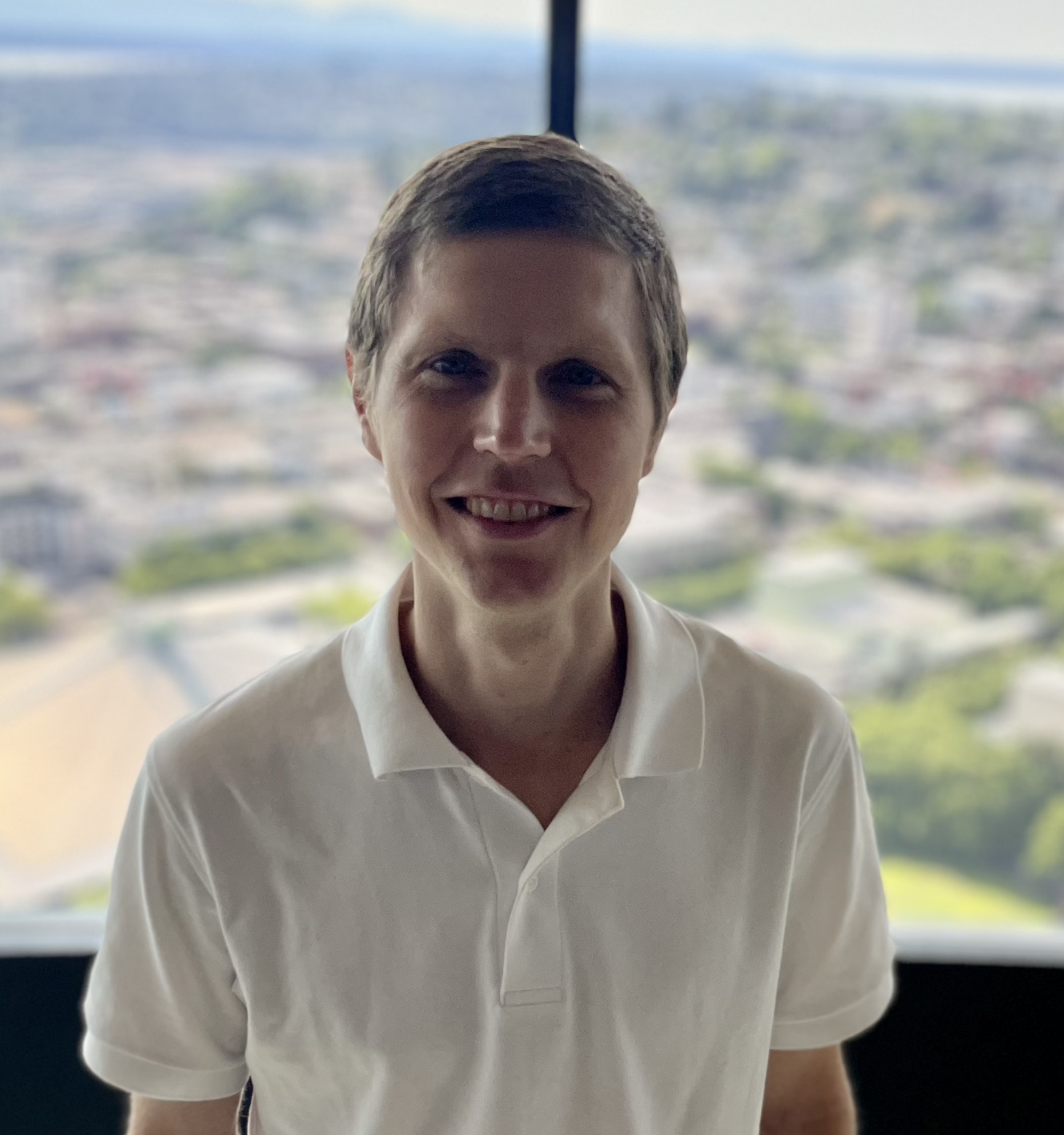
Prof. Dr. Markus Zimmermann leads the Chair of Product Development and Lightweight Design at the Technical University of Munich (TUM). With a background in mechanical engineering from TU Berlin and the University of Michigan, and a doctorate from MIT on solid-state singularities, he bridges academic rigor with industrial application. His career spans 12 years at BMW focusing on vehicle development before transitioning to academia. Specializes in solution space engineering for robust design Expert in additive manufacturing and systems engineering Develops methodologies for managing design complexity and uncertainty His research focuses on multidisciplinary design optimization and lightweight structures , particularly in robotics and automotive systems . His team applies digital twin frameworks and attribute dependency graphs to enhance design processes. Recent publications emphasize topology optimization in robotic systems and thermal management for medical X-ray sources. Key trends in his 2024-2025 publications include: Topological optimization for additive manufacturing and robotics Application of solution spaces to manage design uncertainty Development of compact X-ray systems for medical therapy Integration of digital twin technologies in industrial contexts
Peter Benner is a Professor and Director at the Max Planck Institute for Dynamics of Complex Technical Systems in Magdeburg, where he leads the Computational Methods in Systems and Control Theory group. He also holds an Honorarprofessor position for Mathematics at Otto-von-Guericke Universität Magdeburg since 2011. Benner has previously served as Managing Director of the Max Planck Institute during multiple periods (2013-2014, 2021-2022, and 2025-2026), demonstrating his leadership in the field. Benner's research focuses on Scientific Machine Learning, Numerical Linear and Multilinear Algebra, Model Order Reduction and Reduced-order Modeling, Numerical Methods in Systems and Control Theory, PDE Constrained Optimization, High-performance and Power-aware Computing, and Mathematical Software development. His work bridges theoretical mathematics with practical engineering applications, particularly addressing challenges in large-scale dynamical systems. Analysis of his recent publications reveals a strong emphasis on developing efficient computational methods for complex systems. Benner has pioneered approaches combining model order reduction with tensor methods to tackle high-dimensional problems in uncertainty quantification and PDE-constrained optimization. His work shows a consistent trend toward integrating data-driven techniques with traditional model-based approaches, particularly for nonlinear and parametric systems. Throughout his career, Benner has actively mentored students and collaborated with researchers worldwide, delivering numerous invited talks at prestigious institutions and conferences across Europe, North America, and Asia. His research has received significant funding, supporting the development of mathematical software and computational methods for industrial applications. Benner leads the Computational Methods in Systems and Control Theory department at the Max Planck Institute, which focuses on developing and implementing advanced numerical methods for large-scale dynamical systems. The group maintains strong connections with both theoretical mathematics and practical engineering applications, particularly in fluid dynamics, energy systems, and control theory.
Judy Kay is a Professor at the University of Sydney, Australia , renowned for her contributions to Artificial Intelligence in Education , User Modeling , and Ubiquitous Computing . Her work focuses on creating scrutable open learner models , enhancing collaborative learning analytics , and applying machine learning to education and health. Current research includes AI-driven misinformation detection and human-AI teaming for education. Recent projects involve virtual reality exergames and long-term physical activity tracking . Key publication trends span AI in education , data-driven learning design , and privacy-aware personalized systems . She actively collaborates with researchers in human-computer interaction and health informatics , emphasizing user control and ethical data use .
Pan Xu is a tenure-track assistant professor with joint appointments in the Department of Biostatistics & Bioinformatics, Department of Computer Science, and Department of Electrical & Computer Engineering at Duke University. Previously, Xu was a Postdoctoral Scholar Research Associate at Caltech's Department of Computing and Mathematical Science and earned a Ph.D. in Computer Science from UCLA. Xu's research focuses on developing computationally- and data-efficient machine learning algorithms with strong empirical performance and theoretical guarantees. Xu's research interests center around Machine Learning with broad applications in Artificial Intelligence, Data Science, Optimization, Reinforcement Learning, and High Dimensional Statistics. The research specifically targets real-world problems in Bioinformatics and Healthcare, with recent work emphasizing distributionally robust decision making, efficient exploration strategies, and multi-agent systems. Xu has developed novel algorithms that address the challenges of exploration in sequential decision making and robustness to distributional shifts between training and deployment environments. Xu's recent publications demonstrate a strong trend toward developing theoretically grounded yet practical algorithms for reinforcement learning and bandit problems, with particular emphasis on distributionally robust methods, efficient exploration techniques, and applications to healthcare. The work spans both theoretical analysis (providing minimax optimal regret bounds) and practical implementations (validated on benchmarks like Atari games and real healthcare datasets). Whitehead Scholar award from Duke University School of Medicine (2023) Best Paper Award at ACM FAccT 2023 for Queer In AI paper PIMCO Postdoctoral Fellowship in Data Science (2022) TMLR Featured Certification (2023) NSF award on approximate sampling based exploration (2023) Xu actively mentors multiple Ph.D. students across Duke's Biostatistics & Bioinformatics, Computer Science, and Electrical & Computer Engineering programs, with several alumni now pursuing doctoral studies at top institutions. The research group has secured competitive funding including an NSF award for approximate sampling based exploration for sequential decision making. Xu serves as an action editor for TMLR and as an area chair for major conferences including ICML, NeurIPS, AAAI, ICLR, and AISTATS. Xu leads a dynamic research group focused on sequential decision making, with projects spanning theoretical algorithm development, implementation of practical systems, and applications to healthcare and bioinformatics. The group maintains active collaborations across Duke's medical and engineering schools, with recent work applying machine learning to epidemic forecasting during the pandemic.
Emilio Frazzoli is a Full Professor at ETH Zurich’s Department of Mechanical and Process Engineering. He leads the Institute for Dynamic Systems and Control and the Center for Sustainable Future Mobility, focusing on autonomous systems, robotics, and socio-technical control frameworks. Current affiliations: ETH Zurich (Dynamic Systems and Control, Sustainable Future Mobility) Research: Autonomous mobility-on-demand, game theory for resource allocation, and safety verification in multi-agent systems His work bridges robotics, control theory, and economics, with projects like the open-source AMoDeus simulation framework for autonomous taxis and karma-based resource allocation systems. Recent publications emphasize trustworthy AI, reproducibility in autonomous vehicle control, and human-robot interaction challenges. Notable projects include nuReality (VR-based pedestrian interaction studies) and CARSI II (context-driven vehicle interfaces).
Jeremy Dahl is a Professor of Radiology (Pediatric Radiology) at Stanford University School of Medicine. He directs the Ultrasound Imaging & Instrumentation Lab and serves as Director of Research Academic Affairs in the Department of Radiology since 2020. He holds multiple affiliations across Stanford including Bio-X, the Cardiovascular Institute, Wu Tsai Human Performance Alliance, Maternal & Child Health Research Institute, Stanford Cancer Institute, and Wu Tsai Neurosciences Institute. Dr. Dahl received his B.S. in Electrical Engineering from the University of Cincinnati (1999) and Ph.D. in Biomedical Engineering from Duke University (2004). His research focuses on developing ultrasonic beamforming and image reconstruction methods for diagnostic imaging applications, particularly techniques that generate high-quality images in difficult-to-image patients. His laboratory specializes in B-mode and Doppler imaging techniques that utilize additional information from ultrasonic wavefields to improve image quality and develop real-time imaging systems for clinical applications including cardiac, liver, and fetal imaging. Dr. Dahl's research has led to significant advancements in ultrasound molecular imaging platforms, sound speed estimation, aberration correction, and reverberation noise suppression. His work often bridges engineering innovation with clinical applications for cancer detection and other diseases. His recent publications demonstrate strong focus on machine learning applications in ultrasound, distributed aberration correction, and molecular imaging techniques. Fellow, American Institute of Ultrasound in Medicine (2021) Senior Member, Institute of Electrical and Electronics Engineers (2020) Distinguished Investigator Award, The Academy for Radiology & Biomedical Imaging Research (2018) Outstanding Paper Award, IEEE Ultrasonics, Ferroelectrics, and Frequency Control Society (2011) Dr. Dahl serves in editorial roles for major journals including IEEE Transactions on Medical Imaging (2017-2024) and IEEE Transactions on Ultrasonics, Ferroelectrics, and Frequency Control (2013-Present). His laboratory has successfully translated numerous innovations into clinical applications, with multiple patents including recent developments in pulsed focused ultrasound therapy and speed of sound quantification.
Mark de Rond is Professor of Organisational Ethnography at Cambridge Judge Business School and Fellow of Darwin College, University of Cambridge. His work focuses on immersive ethnographic studies of human behavior in extreme contexts including war zones, high-stakes sports, and controversial social movements, revealing how individuals navigate challenging circumstances through compromise and sensemaking. His educational background includes a DPhil from the University of Oxford alongside advanced degrees in management and economics, photojournalism, documentary photography, biography, creative nonfiction, and prose fiction. This multidisciplinary training informs his unconventional methodological approach. De Rond's research centers on extreme context ethnography, examining how pressure-cooker environments expose fundamental organizational dynamics. His work spans military medicine (Camp Bastion fieldwork), elite sports (Cambridge Boat Race), Amazon river expeditions, and controversial practices like paedophile hunting. Key contributions explore negotiation, conflict resolution, serendipity, institutional persistence, and the emotional toll of fieldwork, often employing innovative methods like enactive ethnography and linguistic analysis of digital communities. His recent publications reveal a growing focus on digital vigilantism and the societal implications of extreme practices, with increasing interdisciplinary reach across organizational studies, criminology, medical anthropology, and sociology. The work demonstrates methodological creativity through linguistic analysis of Facebook groups, embodiment studies in extreme environments, and dream-based reflexive techniques. Scientific recognition includes: BEST ARTICLE AWARD FOR 2016 Favorite MBA Professor honors from Poets & Quants (2021, 2022) Guinness World Record for first unsupported Amazon row De Rond advises MBA students and delivers executive education to top law firms (Slaughter and May, Allen & Overy), professional services (McKinsey, KPMG), corporations (Sky, BT, Diageo), and NGOs (UNICEF, NHS). His negotiation training from Harvard Law School informs both academic work and university mediation practice. Current research involves collaborative teams studying paedophile hunting (featured in Sundance-nominated documentary Predators ) and high-performance sports organizations, with fieldwork requiring deep immersion in challenging environments. His research methodology involves embedded collaboration with diverse teams including medical personnel in conflict zones, elite rowers, and controversial activist groups, often pushing methodological boundaries through photojournalism and creative nonfiction approaches.
Associate Professor Wenhua Zhao is a globally recognized expert in offshore hydrodynamics and renewable energy technologies at The University of Queensland , School of Civil Engineering. With over 110 publications and 30 million AUD in secured research funding, his work bridges theoretical and practical advancements in marine engineering. Research focuses on Clean Energy , Artificial Intelligence , and Climate Change , specifically floating wind energy, floating solar, offshore aquaculture, and green hydrogen production. His 15 most recent articles (2024-2025) emphasize wave-structure interactions, gap resonance dynamics, and AI-driven wave prediction, published in top journals like Journal of Fluid Mechanics and Ocean Engineering . Scientific awards include the prestigious ARC Future Fellowship (2024-2028) and DECRA Fellowship (2019-2022) , recognizing his contributions to academia and industry. He teaches the 'Design of Offshore Energy Systems' course , training hundreds of students in coastal and ocean engineering, and serves as Deputy Editor for Ocean Engineering and Associate Editor for ASME's Journal of OMAE . Available for research supervision, Zhao actively collaborates with editorial boards of Applied Ocean Research and other Q1 journals.
Prof. Dr. Sebastian Steinhorst is an Associate Professor (W3-level with tenure) at the Technical University of Munich (TUM) within the Embedded Systems and Internet of Things group at the TUM School of Computation, Information and Technology . His research focuses on advancing the security, predictability, reliability, and interoperability of smart connected and autonomous systems, particularly for applications in Internet of Things (IoT) , Industry 4.0 , and automotive systems . PhD in Computer Science (2011) from Goethe University Frankfurt Postdoctoral roles at TUMCREATE Singapore (2011-2016) and Aarhus University (2016) Joined TUM in 2016 as Rudolf Moessbauer Tenure Track Professor His research areas include decentralized embedded systems, hardware/software co-design, modeling and verification of cyber-physical systems, security protocols for automotive networks, and time-sensitive networking (TSN) for industrial applications. Recent work explores blockchain-based data sovereignty, zero-knowledge proofs for vehicle authentication, and resilient architectures for autonomous systems. Key scientific contributions include the 2019 ACM TODAES Best Paper Award and pioneering work on CyberSecDome , LeapChain , and Simutack frameworks. He serves on editorial boards and conference committees, including co-organizing the Autonomous Systems Design initiative at DATE. His teaching portfolio spans lectures on System Design for IoT , Software Architecture for Distributed Systems , and IoT Security across multiple semesters. He also leads advanced seminars on embedded systems and IoT.
Geert Deconinck is a full professor at KU Leuven , leading the Electrical Energy Systems and Applications (ELECTA) research group within the Department of Electrical Engineering (ESAT). He also serves as scientific leader of the EnergyVille research center's algorithms domain, focusing on smart electrical networks and thermal systems. M.Sc. and Ph.D. from KU Leuven Head of ELECTA since 2012 (10 professors, 8 postdocs, 70+ PhDs) Over 8 million EUR research budget in last 5 years 44 completed PhDs and 10 current advisees IEEE Transactions editorial board member His research spans smart grid architectures , distributed control , and cyber-physical security , with recent focus on EV-grid integration , renewable energy democratization , and multi-carrier energy systems . Current projects include: Smart Charging - E-Mobility meets Renewable Energy Early Detection and Defense Systems for Smart Grids Open-source P2P energy sharing platforms Microgrid control strategies for PV-battery systems Awarded IET Fellow and IEEE Senior Member status, his work combines machine learning with power systems engineering through both theoretical modeling and experimental validation . He has contributed over 575 publications with 9800+ Google Scholar citations.
Yang Weng is an Associate Professor at the School of Electrical, Computer and Energy Engineering, Arizona State University. He leads the U.S.-Israel International Consortium on Energy Cyber Initiative on Cybersecurity R&D and directs a research lab focused on smart grid resilience and machine learning applications. Previously, he was a TomKat Postdoctoral Scholar at Stanford University. Education: Ph.D. in Electrical and Computer Engineering, Carnegie Mellon University M.S. in Machine Learning, Carnegie Mellon University Research: His interdisciplinary work bridges power systems, machine learning, and cybersecurity, emphasizing renewable integration, grid optimization, and cyber-physical resilience. Key themes include physics-informed AI, adversarial robustness in energy infrastructure, and real-time control algorithms for dynamic grids. Publications: Recent articles (2024–2025) demonstrate strong trends in AI-driven grid security, adaptive control under uncertainty, and climate-impact modeling. Dominant domains include neural network applications for stability guarantees, cyber-attack mitigation, and data-efficient renewable integration. Awards: NSF CAREER Award (2021), Amazon Research Award (2023) Best Paper Awards at IEEE SmartGridComm (2012, 2013), PES GM (2014), PMAPS (2016) IEEE Senior Member, Sun Award (ASU), Centennial Award (ASU) Grants & Leadership: Secured DOE, NSF, and AFOSR funding for projects on AI-enhanced grid resilience. Advises PhD/postdoc candidates and chairs the U.S.-Israel Energy Center consortium. Organized international workshops (e.g., ICRDE 2023) and validated research via hardware-in-the-loop experiments. Lab & Team: Directs a research group developing deployable ML solutions for utilities (e.g., OPAL-RT collaborations). Focus areas: cybersecurity toolchains, reinforcement learning for grid control, and anomaly detection architectures.
Professor Ben Goldys is a distinguished academic at The University of Sydney's School of Mathematics and Statistics, where he conducts research at the intersection of pure mathematics and applied sciences. His work spans multiple disciplines including stochastic analysis, partial differential equations, and financial mathematics, with significant contributions to both theoretical frameworks and practical applications in science and finance. Goldys' research interests center on stochastic (ordinary and partial) differential equations and their applications. His specific focus areas include stochastic partial differential equations, stochastic geometric PDEs, stochastic boundary value problems, stochastic fluid dynamics, ergodic theory of infinite-dimensional diffusions, and applications in financial mathematics such as interest rate derivatives, credit risk, and stochastic volatility. His work bridges pure mathematical theory (Functional Analysis, PDEs, Ergodic Theory) with complex real-world problems across multiple domains. His research aligns with the University of Sydney Faculty of Science Research Strengths including Understanding the Universe, Fundamental Laws of Nature, Complex Systems, and Next Generation Materials. Professor Goldys has secured multiple significant research grants from the Australian Research Council, including recent projects such as 'Mathematics for future magnetic devices' (2024), 'Mathematics for breaking limits of speed and density in magnetic memories' (2019), and 'Novel Approaches for Problems with Uncertainties' (2015). His current research projects focus on geometric stochastic partial differential equations and applications in micromagnetism, mean field games in finance, stochastic boundary value problems, and stochastic Navier-Stokes equations on the rotating sphere. He maintains extensive international collaborations with institutions in Germany (University of Tuebingen), Italy (LUISS University), Poland (Institute of Mathematics Polish Academy of Sciences), and the United Kingdom (University of York), working on projects involving optimal control, stochastic systems with memory, and geometric stochastic PDEs. Goldys is an active member of the Applied Mathematics Research Group and The University of Sydney Nano Institute, contributing to interdisciplinary research initiatives that connect mathematical theory with cutting-edge technological applications.
Sean Welleck is an Assistant Professor at Carnegie Mellon University's School of Computer Science, Language Technologies Institute, leading the L3 Lab. His research focuses on bridging informal and formal reasoning with AI, spanning machine learning for mathematics and code, inference algorithms, and AI agents. PhD in Computer Science from New York University (advised by Kyunghyun Cho) Postdoctoral work at University of Washington (advised by Yejin Choi) His work explores AI-driven formal methods for mathematics and code generation, test-time compute scaling, and algorithms enabling AI improvement over time. Recent publications analyze reasoning evaluation, premise selection, and automated proof optimization in systems like Lean. Key article trends include neural theorem proving, code generation, and inference-time compute optimization. Awards: NVIDIA AI Labs Pioneering Research Awards (2017, 2018), NAACL 2025 Best Paper. Current advisees include PhD students Pranjal Aggarwal, Weihua Du (co-advised with Yiming Yang), Andre He (co-advised with Daniel Fried), and Seungone Kim (co-advised with Graham Neubig). He co-organizes workshops like Autoformalization for the Working Mathematician (ICERM 2025) and VerifAI: AI Verification in the Wild (ICLR 2025), and teaches Advanced NLP at CMU.
Heping Zhang is the Susan Dwight Bliss Professor of Biostatistics at the Yale School of Public Health , with secondary appointments in the Child Study Center , Department of Statistics and Data Science , and Department of Obstetrics, Gynecology, and Reproductive Sciences . He directs the Collaborative Center for Statistics in Science (C²S²) and leads the Reproductive Medicine Network data coordinating center. Education: PhD in Statistics, Stanford University (1991) Postdoctoral Fellow, Mathematical Science Research Institute (1991) Research Focus : Zhang specializes in biostatistical methodology for genomic data analysis , clinical trials , and reproductive medicine . His work bridges genetics , mental health , and maternal-child health through innovative statistical approaches. Awards : 2023 Web of Science Highly Cited Researcher 2023 International Chinese Statistical Association Distinguished Achievement Award 2022 Institute of Mathematical Statistics Neyman Award and Lecture 2011 Royan Institute International Research Award 2011 Institute of Mathematical Statistics Medallion Award 2008 Harvard School of Public Health Myrto Lefokopoulou Distinguished Lecturer Professional Roles : He served as President of the International Chinese Statistical Association (2019) and Former Editor of the Journal of the American Statistical Association - Applications and Case Studies . His lab develops open-source software tools like ABESS , STREE , and modSaRa for genomic and clinical data analysis.
R. Edwin García is a Professor at the School of Materials Engineering at Purdue University, where he has been faculty since 2005. He holds appointments in the Materials Engineering department within Purdue's College of Engineering, specifically in the School of Materials Engineering located in the Neil Armstrong Hall of Engineering at Purdue's West Lafayette campus. His educational background includes: B.S. in Physics from the National University of Mexico (1996) M.S. in Materials Science and Engineering from Massachusetts Institute of Technology (2000) Ph.D. in Materials Science and Engineering with a minor in Applied Mathematics from Massachusetts Institute of Technology (2003) Professor García's research focuses on the design of materials and devices through the development of a fundamental understanding of the solid state physics of individual phases, their short and long range interactions, and associated microstructural properties and time evolution. His current research emphasizes establishing relationships between material properties and resultant performance and degradation in electrochemical systems. He integrates computational approaches ranging from kinetic Monte Carlo, phase field and level set methods, to finite elements, finite volumes, and symbolic computing. His work particularly addresses microstructure design, crystallographic texture, and grain boundary science and engineering to control the topology of underlying phases and establish practical relations between processing, microstructure, and material properties. His recent publications demonstrate a strong focus on lithium-ion battery technology, ferroelectric materials, and computational modeling of material behaviors. The research trends show increasing integration of machine learning with traditional computational methods, exploration of novel sintering techniques like flash sintering, and deeper investigation into the fundamental mechanisms of material degradation in energy storage systems. His work spans multiple length scales from atomistic to continuum modeling, reflecting a comprehensive approach to materials design and analysis. Professor García teaches several courses including MSE 230 (Structure and Properties of Materials), MSE 350 (Thermodynamics of Materials), MSE 597G (Modeling and Simulation of Materials), MSE 597I (Introduction to Computational Materials), and MSE 597N (Physical Properties of Crystals). He mentors graduate students in areas related to computational materials science, battery technology, and microstructural evolution. His research group, the Laboratory of Computational Microstructures, focuses on developing home-grown analytical theories and algorithms to resolve relevant time and length scales in materials systems. The group's work has significant implications for portable power sources, including rechargeable batteries and fuel cells, as well as for ferroelectric ceramic applications.