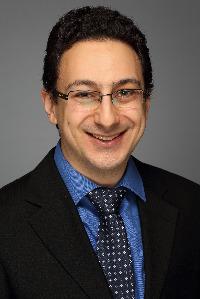
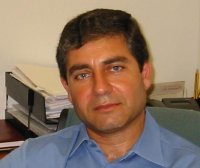
Stelios Timotheou is an Associate Professor at the Department of Electrical and Computer Engineering and faculty member at the KIOS Research and Innovation Center of Excellence, University of Cyprus. He holds a Dipl-Ing from National Technical University of Athens, and MSc/PhD from Imperial College London. His research focuses on developing real-time distributed methodologies using mathematical optimization, machine learning, and computational intelligence to enhance efficiency in critical infrastructure systems. Research interests center on data-driven decision making for urban mobility management, traffic control systems, and energy optimization. Key areas include: Intelligent UAV-based sensing for traffic monitoring Cooperative control algorithms for multi-agent systems Optimization of renewable energy integration Robust infrastructure protection strategies Recent publications demonstrate strong focus on traffic state estimation (76%), energy system optimization (16%), and UAV applications (8%). Awarded the Cyprus Research Award (2017) and ERC Consolidator Grant for URANUS project. Secured multiple research grants focusing on real-time control systems.
Prof. Bahire Efe Özad is a Professor in the Department of Television and Film Studies at Eastern Mediterranean University's Faculty of Communication and Media Studies. She holds a PhD and multiple master's degrees in education and English language teaching. Her research focuses on media studies, social media impact, communication theory, environmental sociology, cinema analysis, and intercultural communication. She has supervised over 80 PhD and Master's theses, reflecting her extensive academic mentorship. Her notable works include analyses of sacred defense cinema, pandemic governance in Northern Cyprus, and systematic reviews on fake news scholarship. She has conducted impactful studies on marital sustainability during the pandemic, Nigerian election media framing, and digital natives' social media use. Her research spans diverse areas including ICT's environmental impact, romantic relationship dynamics, and blog reader engagement. Prof. Özad has led projects like analyzing communication barriers for African students and exploring original scores in film. She maintains an active academic presence through Google Scholar and has contributed to numerous peer-reviewed journals. Her teaching and research activities emphasize interdisciplinary approaches to media, communication, and social dynamics.
Marios Polycarpou is a Professor of Electrical and Computer Engineering and Director of the KIOS Research and Innovation Center of Excellence at the University of Cyprus. He holds honorary positions at Imperial College London and is a member of Academia Europaea. His expertise spans intelligent systems, adaptive control, machine learning, and critical infrastructure. Education: B.A. Computer Science (Rice University, 1987) B.Sc. Electrical Engineering (Rice University, 1987) M.S. Electrical Engineering (University of Southern California, 1989) Ph.D. Electrical Engineering (University of Southern California, 1992) Research Focus: Polycarpou’s work emphasizes fault diagnosis in cyber-physical systems, water distribution networks, and adaptive control. He pioneers digital twin technologies for infrastructure resilience and develops algorithms for real-time anomaly detection and system optimization. Article Trends: His recent publications address adaptive control strategies, cybersecurity in networked systems, and AI-driven solutions for water management. Key themes include distributed control, event-triggered mechanisms, and transformer-based anomaly localization. Awards: 2023 IEEE Frank Rosenblatt Technical Field Award 2016 IEEE Neural Networks Pioneer Award Fellow of IEEE and IFAC Grants & Leadership: He secured prestigious grants including ERC Advanced and Synergy Grants. He led KIOS CoE’s Horizon 2020 projects and served as IEEE Computational Intelligence Society President (2012–2013). Labs & Teams: Directs the KIOS CoE, a hub for AI in critical infrastructure. Collaborates on projects like ERC Water-Futures, focusing on long-term water system transitions and contamination mitigation.
Michael Sirivianos is an Associate Professor at the Cyprus University of Technology (CUT), where he serves as Dean of the School of Engineering and Technology. He holds a PhD in Computer Science from Duke University (2010) and leads research in cybersecurity, disinformation detection, and social media analysis. He coordinates multiple EU-funded projects including ReCRED (Horizon 2020) and ENCASE (Marie Curie RISE), securing over €3M in research funding. Research Focus His work spans: Cybersafety : Detection of cyberbullying, hate speech, and inappropriate content targeting children Trust Systems : Device-centric authentication and blockchain applications Disinformation Analysis : Graph-based detection of fake news and state-sponsored manipulation Scalable Systems : Distributed databases and network infrastructure Achievements & Recognition Best Paper Award (2019) for work on state-sponsored disinformation Distinguished Paper (2018) for fringe web community analysis Spotlight Session recognition (2020) for child protection research Featured in NYT, Washington Post, and Wired for YouTube content analysis Leadership Co-directs the Network Systems Research Lab, serves on the Board of CYENS Centre of Excellence, and coordinates the Fact-check Cyprus Centre against Disinformation.
Angelos Georghiou is an Associate Professor of Operations Management at the Department of Business and Public Administration, University of Cyprus. He previously held academic positions as Assistant Professor at McGill University (2016–2019), Post-Doctoral Researcher at MIT (2012–2013), and Postdoctoral Researcher at ETH Zurich (2013–2016). His work bridges computational methods in stochastic and robust optimization with applications in healthcare, energy systems, and operations management. Ph.D. in Operations Research, Imperial College London (2012) M.Sci. in Mathematics, Imperial College London (2008) His research focuses on stochastic optimization , robust optimization , and decision rules , addressing challenges in healthcare analytics , energy-efficient control systems , and machine learning integration . Recent publications in Management Science and Operations Research highlight his contributions to decision-dependent information discovery and computational frameworks. Key trends in his 15 most recent articles include: Advancing robust optimization techniques for multistage problems Applications in healthcare (psychiatric risk prediction) and energy systems Integration of machine learning with stochastic programming Development of tractable algorithms for complex decision environments Scientific Awards : Esdras-Minville Best Student Paper Award (2023) He serves on editorial boards of Operations Research Letters (Area Editor) and Management Science , and collaborates with institutions like MIT, ETH Zurich, and McGill University. His work with undergraduate students includes a 2021 paper in SIAM Undergraduate Research Online .
Savvas G. Loizou is a faculty member at the Cyprus University of Technology , affiliated with the Department of Mechanical and Materials Science and Engineering . He established the Robotics, Control, and Decision Systems Laboratory (RCDS Laboratory) in 2011. Education: PhD in Mechanical Engineering (2005) and Eng. Diploma (2000) from National Technical University of Athens (NTUA). Postdoctoral Experience: GRASP Laboratory, University of Pennsylvania (2005–2007). His research focuses on control theory for autonomous robotic systems , with applications in underwater, aerial, ground, and micro-robotics . Key areas include multi-agent coordination , human-robot interaction , task planning , and sensor-based navigation . Recent work emphasizes logistics automation , UAV hardware platforms , and bounded control algorithms . Dr. Loizou has contributed to multi-agent formation control , underwater vision systems , and nonlinear model predictive control for electric vehicles. He is active in control system design and navigation transformations for complex environments. His laboratory, RCDS , serves as a hub for research in autonomous systems and decision-making algorithms.
Costas S. Patrickios is a Professor in the Department of Chemistry at the University of Cyprus, within the School of Natural and Applied Sciences. His academic career spans over two decades, beginning as an Assistant Professor in 1998 and progressing to his current position as Professor. His research is centered on advanced polymer systems with applications spanning materials science, nanotechnology, and biomaterials. Dr. Patrickios received his Diploma in Chemical Engineering from the National Technical University of Athens (NTUA) in 1988, followed by a Master of Science in Chemical Engineering Practice from MIT in 1990. He completed his PhD at MIT in 1993 and conducted postdoctoral research at the University of Sussex from 1994-1996. His academic journey continued with a lectureship at UMIST before joining the University of Cyprus in 1998. His research focuses on dynamic covalent chemistry , amphiphilic copolymer networks , and microphase separation in polymer systems. Patrickios has made significant contributions to the understanding of polymer synthesis , controlled polymerizations , and degradable polymer networks . His work often bridges experimental and computational approaches, particularly in coarse-grained molecular dynamics simulations of polymer behavior. Recent research has expanded into applications related to RNA and DNA yield , demonstrating the versatility of his polymer systems. Analysis of his publication record reveals a strong focus on amphiphilic polymer conetworks, with consistent exploration of their synthesis, characterization, and applications. His work shows increasing integration of computational methods with experimental approaches, particularly in understanding structure-property relationships. The research spans fundamental polymer science to applied areas including energy materials, biomaterials, and smart responsive systems. Dr. Patrickios has also contributed significantly to the field through book editing, including the comprehensive volumes Amphiphilic Polymer Co-networks: Synthesis, Properties, Modelling and Applications (2020) and Polymer Networks: Synthesis, Properties, Theory and Applications (2010), which have become important references in the field. His collaborative research approach is evident through numerous international partnerships, with co-authors from institutions across Europe and beyond. This collaborative network has enabled multidisciplinary research that bridges chemistry, materials science, and engineering perspectives.
Paraskevi Gkotzaridis is an Adjunct Professor at European University Nicosia (Cyprus) and a Visiting Professor at institutions like Jagiellonian University (Poland) and Sorbonne Nouvelle (France). She specializes in post-war Greek and Irish history, focusing on historiography, political narratives, and state-civil society dynamics. Her research bridges comparative historical analysis with intellectual history, emphasizing the interplay between national identity and political structures. Education: Doctorat in Irish History & Politics, Sorbonne Nouvelle (2001) DEA in Irish History & Politics, Sorbonne Nouvelle (1997) Maîtrise and Licence in English Studies, Sorbonne Nouvelle (1995-1994) Research Interests: Dr. Gkotzaridis examines post-World War II political and social transformations in Greece and Ireland, particularly the legacies of civil war, revisionist historiographies, and the role of intellectuals in shaping national narratives. She critically analyzes concepts like 'revisionism' and their evolution in academic and political discourse. Awards: Irish Government Senior Scholarship (2001, Oxford) Government of Ireland Postdoctoral Fellowship (2001-2003) European Science Foundation Exchange Grant (2004) Advising & Grants: Her work has been supported by grants from the European Science Foundation and the Jean Monnet Programme. She actively contributes to editorial committees and academic councils, promoting interdisciplinary historical research.
Professor HADJINICOLAS GEORGE holds a faculty position at the University of Cyprus, Department of Business Administration and Public Administration under the School of Economics and Management. His research focuses on production-marketing interface, international manufacturing systems, and product positioning methods. He earned a Ph.D. in Business Administration (Operations Management) from the University of Southern California in 1993, preceded by MS degrees in Statistics (1990) and Computer Engineering (1989), and a BS in Electrical Engineering (Cum Laude, 1988). His research interests emphasize optimizing production systems through interdisciplinary approaches, integrating marketing and operational decisions. Key themes include cost reduction in serial production systems, resource allocation for service quality, and strategic product positioning using advanced analytics like self-organizing maps. His publication trends reflect sustained contributions to operations management and decision sciences, with notable work on journal evaluation metrics and production-marketing interface challenges. Over two decades, his research has addressed both theoretical frameworks (e.g., asymptotic distribution analysis) and practical applications (e.g., hotel service optimization). He has advised numerous studies on manufacturing systems and marketing strategies, though specific student names are not listed here. His work bridges engineering and business disciplines, addressing global operational challenges through quantitative methodologies.
Andreas Charitou is a Professor at the Department of Accounting and Finance within the School of Economics and Management at the University of Cyprus. He served as Dean of the School of Economics and Management from September 2016 to December 2021 and previously as Vice Dean from 2006-2012. He has been Co-Director of the Ph.D. Program since 2001 and served as Co-Director of the MBA program from 2005-2016. Prior to his position at the University of Cyprus, he was an Associate Professor (with tenure) and Assistant Professor at the Rotman School of Business, University of Toronto (1986-1997), and an Instructor/Lecturer at The Pennsylvania State University (1983-1986). His educational background includes a Ph.D. in Business Administration/Accounting (1983-1986) and a Master of Science in Business Administration/Accounting (1982-1983), both from The Pennsylvania State University, and a Bachelor of Science in Business Administration/Accounting from the Economic University of Athens (ASOEE), Greece (1976-1980). Professor Charitou's research focuses on Capital Markets Research, Corporate Governance, Corporate Finance, Investments, Financial Analysis, Bankruptcy prediction, Credit Analysis, and International Accounting. His work examines the relationship between financial reporting, capital markets, and corporate decision-making with particular attention to international contexts and regulatory frameworks. His extensive publication record spans over three decades, with recent work increasingly addressing environmental, social, and governance (ESG) issues, reflecting the growing importance of sustainability in financial markets. His most recent publications (2022-2025) demonstrate continued scholarly productivity with articles in top journals including the Journal of Accounting Literature, The International Journal of Accounting, and Journal of Corporate Finance. These works address contemporary issues such as ESG reporting, article retractions in academic research, IFRS implementation effects, and environmental reporting evolution in Europe. Profiling article retractions in accounting and finance research (2025) Environmental, Social and Governance: Performance, Investment and Measurement (2025) Analysts' information environment and voluntary turn away from IFRS: Discussion (2025) Coverage Termination due to Resources Constraints: Cheap talk or Euphemism for Bleak Business Prospects? (2024) The Evolution of Environmental Reporting in Europe: The Role of Financial and Extra-financial Regulation: Discussion (2022) Throughout his career, Professor Charitou has demonstrated significant academic leadership through his departmental, school, and program director roles. His research bridges theoretical accounting principles with practical implications for financial markets and corporate governance, maintaining relevance through evolving market conditions and regulatory environments.
Prof. Dr. Hadi Işık Aybay is a distinguished Professor of Computer Engineering at Eastern Mediterranean University (EMU), North Cyprus. He has held academic roles including Department Chairman of Computer Engineering (1994–2004 and 2013–present) and Director of EMU's Distance Education Institute (2000–2013). He earned his PhD in Electrical and Electronic Engineering from METU (1989) and served as an Assistant/Associate Professor before becoming a full Professor in 2013. His research spans neural networks, distributed systems, and e-learning technologies. Education: PhD, Electrical and Electronic Engineering, Middle East Technical University (1989) M.Sc., Electrical and Electronic Engineering, METU B.Sc., Electrical and Electronic Engineering, METU Research Interests: Prof. Aybay's work focuses on computer engineering innovations, including neural network hardware, distributed multimedia systems, and wireless communication protocols. He pioneered EMUOnline, a blended learning platform, and contributed to science park development in North Cyprus. His research also addresses challenges in video streaming optimization and adaptive resource allocation in cellular networks. Key Achievements: He led over 15 projects, including EU-funded initiatives like 'Deep Farm' (2024–2025). His publications (80+ papers) span IEEE journals and conferences, with 281 Google Scholar citations. Awards include the 1973 National Project Contest First Prize and the 1990 Best Thesis Award (supervised). Grants and advising: Supervised 3 PhD and 28 MSc students. Current projects include AI-driven agriculture (Erasmus+). Grants include EU funding (€1M) and Turkish Republic of Northern Cyprus initiatives. Labs/Teams: Active in the EMU Computer Engineering Department's research groups, focusing on distributed systems and e-learning infrastructure.
Yannis Dimopoulos is a Professor in the Department of Computer Science at the University of Cyprus. He has previously held research positions at the Max-Planck Institute for Computer Science in Saarbrücken and the University of Freiburg in Germany. He earned his B.Sc. and Ph.D. in Computer Science from the Athens University of Economics and Business. His primary research interests include: Knowledge representation and reasoning Planning Nonmonotonic reasoning Constraint satisfaction Machine learning His recent research, based on publications from 2017 to 2024, focuses on the theoretical and computational aspects of abstract argumentation, particularly control argumentation frameworks, probabilistic extensions, and the integration of argumentation with Boolean networks and negotiation under incomplete information. He has also contributed significantly to Answer Set Programming (ASP) for planning, developing the plasp 3 framework for effective ASP-based planning solutions. His scholarly work appears in top-tier venues such as AAAI, IJCAI, ECAI, KR, AAMAS, and journals like Artificial Intelligence and Autonomous Agents and Multi-Agent Systems. His most frequent collaborators include Pavlos Moraitis, Jean-Guy Mailly, Antonis C. Kakas, and Wolfgang Dvorák. No scientific awards or honors are mentioned in the provided text. Yannis Dimopoulos has advised or collaborated with several researchers, including Jean-Guy Mailly, Pavlos Moraitis, Nabila Hadidi, and Muhammad Adnan Hashmi, though formal student-advisor relationships are not explicitly detailed. His work often involves theoretical and computational modeling, and while specific grants or funding sources are not listed, his sustained publication record suggests active research support. He is actively involved in research teams and collaborations focused on argumentation, multi-agent systems, and automated reasoning, as evidenced by his extensive co-authorship network.
Chrysovalantis Spanias is a Research Associate at Cyprus University of Technology and works with the Electricity Authority of Cyprus. He holds a PhD in Electrical Engineering (CUT, 2020) and a Diploma in Electrical & Computer Engineering from the National Technical University of Athens (2010). His research focuses on power system stability analysis, control of non-linear dynamical systems, and SCADA applications. Recent publications develop passivity-based frameworks for stability enhancement in modern grids, proposing novel methods for optimal placement of compensation devices like SVCs to improve damping and dynamic response. Analysis of publications reveals consistent focus on bridging theoretical control frameworks (especially passivity-based approaches) with practical power system challenges. His models incorporate multivariable system dynamics to address stability in renewable-rich grids.
Tasos Christofides is a Professor in the Department of Mathematics and Statistics at the University of Cyprus, School of Natural and Applied Sciences. He has been serving in this position since 2004 after previously holding the rank of Associate Professor from 1991 to 2004. Prior to his appointment at the University of Cyprus, he was an Assistant Professor at the State University of New York at Binghamton from 1987 to 1991. His educational background includes a Ph.D. (1987) and MSE (1985) in Mathematical Sciences from The Johns Hopkins University, USA, and a Mathematics degree (1983) from the University of Athens, Greece. Professor Christofides specializes in Probability Inequalities, Demimartingales, Stochastic Orders, Survey Methodology, and Indirect Questioning Techniques. His research primarily focuses on theoretical statistics with applications to survey methodology, particularly in developing techniques for handling sensitive questions while preserving respondent privacy. His work bridges probability theory with practical survey design, making significant contributions to both theoretical foundations and applied methodologies. His publication record demonstrates consistent contributions to statistical theory, with a particular emphasis on U-statistics, demimartingales, and randomized response techniques. The trajectory of his research shows progression from foundational work on U-statistics and probability inequalities in the early career to more applied survey methodology techniques in later years, while maintaining strong theoretical underpinnings. Professor Christofides serves as Associate Editor for several prestigious statistical journals including Communications in Statistics-Theory and Methods, Communications in Statistics-Computation and Simulation, Journal of Statistical Theory and Practice, and Statistics and Probability Letters. His editorial service reflects his standing in the statistical community and his expertise across multiple domains of statistical theory and methodology. While specific grant information is not provided in the available text, his sustained research output and editorial positions indicate active engagement with the research community.
Prof. Dr. Derviş Subası is a faculty member in the Department of Mathematics at Eastern Mediterranean University's Faculty of Arts and Sciences. His research focuses on numerical analysis, partial differential equations, and computational mathematics, with significant contributions to inverse problems and domain decomposition methods. He has supervised multiple master's and PhD students and is actively involved in academic research. Education: PhD and MS in Mathematics from Eastern Mediterranean University (1997, 1992), BS in Electrical and Electronics Engineering (1989). His research interests include numerical solutions of partial differential equations, preconditioning techniques, and iterative methods for linear systems. He has contributed to advancements in fractional calculus-based algorithms, block-grid methods for singular boundary conditions, and parallel computing for parabolic problems. Prof. Subası has co-supervised ongoing PhD research and mentored numerous master's students, with theses focusing on parabolic inverse problems, diffusion coefficient determination, and finite difference schemes. His work often intersects applied mathematics and computational modeling. Contact details: Office AS140, Phone +90 392 630 1138, Email dervis.subasi@emu.edu.tr .