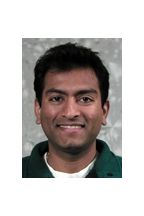
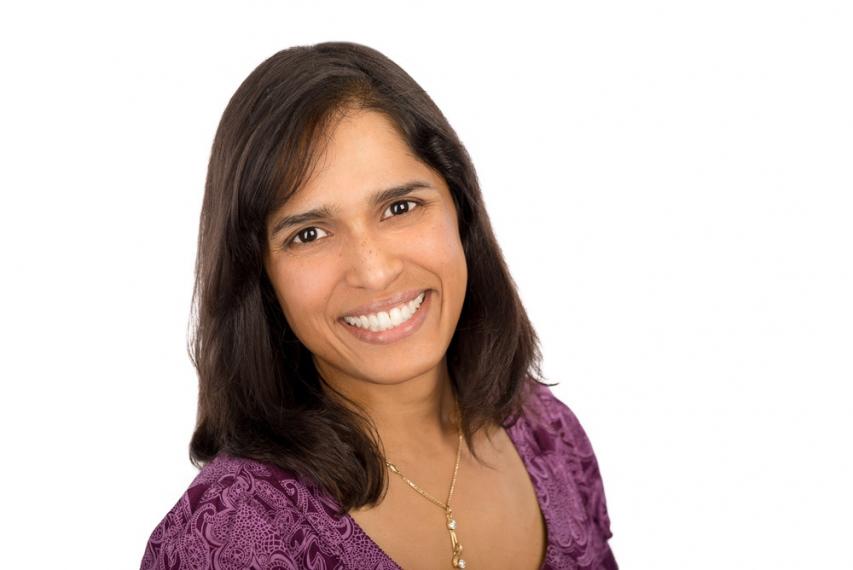
Dr. Mahesh Tripunitara is a Professor in the Department of Electrical and Computer Engineering at the University of Waterloo, serving as Associate Chair for Undergraduate Studies. He holds a PhD (2005) and Master's (1995) in Computer Science from Purdue University, along with a BSc (1993) in Computer Science from Dalhousie University. His research focuses on information security, authorization mechanisms, cryptographic key management, and hardware security, with industry experience at Motorola's R&D labs and Silicon Valley. His work spans theoretical advancements like access control policy analysis and practical applications such as secure payments systems and IoT device reliability. Notable awards include the Best Student Paper at Usenix Security 2013 and Best Paper at ACM SACMAT 2013. He actively serves on program committees for major security conferences including CCS, CODASPY, and SACMAT. Recent publications highlight innovations in cellular security (SUCI-Catchers defense), role-mining optimization, and blockchain smart contract auditing. Teaching includes advanced algorithm design courses (ECE 406/606) and digital computation (BME 121). His research emphasizes balancing security rigor with usability in authorization systems and hardware protection mechanisms.
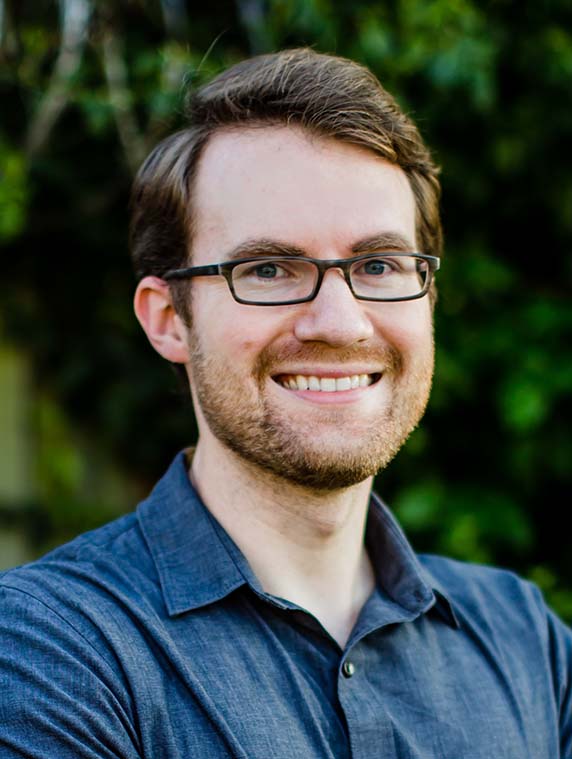
Dr. Jason Rights is an Associate Professor in the Department of Psychology within the Faculty of Arts at the University of British Columbia. His office is located in Kenny Room 2017 at 2136 West Mall, Vancouver, BC. He leads The Rights Lab, a quantitative methods research group dedicated to improving statistical practice in scientific research. His educational background includes: B.S. in Psychology and Mathematics from the University of North Carolina at Chapel Hill (2011) M.S. in Psychology (Quantitative Methods) from Vanderbilt University (2015) Ph.D. in Psychology (Quantitative Methods) from Vanderbilt University (2019) Dr. Rights' research focuses on addressing methodological complexities in multilevel/hierarchical data contexts where observations are nested (e.g., patients within clinicians, students within schools). His work spans several interconnected programs including developing R-squared measures for multilevel models, addressing issues with level-specific effects, exploring connections between multilevel and mixture models, and advancing latent variable model selection techniques. Analysis of his publication record reveals a consistent focus on methodological innovations in quantitative psychology, with particular emphasis on improving statistical techniques for hierarchical data structures. His work bridges theoretical statistical development with practical applications across psychology and related fields. Dr. Rights actively develops open-source software in R to implement his methodological contributions, making advanced statistical techniques accessible to researchers. The Rights Lab serves as the hub for his ongoing research program in quantitative methods development.
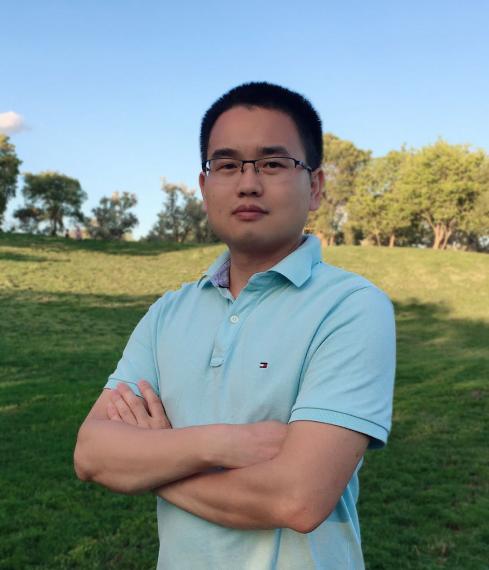
Dr. Sheng Yang is an Assistant Professor in the School of Engineering at the University of Guelph. He leads the Design Innovation and Intelligent Manufacturing (DIIM) lab, focusing on advancing additive manufacturing, generative design, and smart manufacturing technologies. His research integrates IoT, big data analytics, and bio-inspired design to address challenges in aerospace, green energy, and healthcare. Key areas include computational design for additive manufacturing, data-driven mass customization, and digital twin-based optimization. Education: Ph.D. in Mechanical Engineering from McGill University (2019), followed by a Postdoctoral Fellowship at McGill (2019–2020). Joined University of Guelph in 2020. Research interests span energy efficiency, complex system optimization, and personalized healthcare products. Recent work emphasizes digital twin synchronization in robotics, machine learning for quality prediction, and sustainable additive manufacturing processes. Notable awards include the 2019 Association of Commonwealth Universities Blue Charter Fellowship and 2018 ASME Best Paper Award. His lab actively seeks partnerships in personalized healthcare, product design, and smart manufacturing. Grants and collaborations focus on advancing manufacturing technologies and sustainability. No formal advisees listed, but active in graduate training through lab projects. The DIIM lab explores cutting-edge solutions for industrial and societal challenges through interdisciplinary approaches.
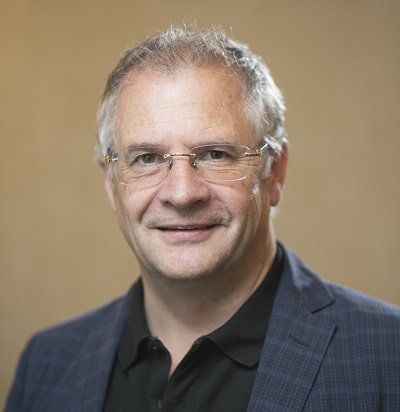
Christian Messier is a Professor at the University of Quebec in Outaouais (UQO) in the Department of Natural Sciences and at the University of Quebec in Montreal (UQAM) in the Department of Biological Sciences. He serves as Scientific Director of the Institute of Temperate Forest Sciences (ISFORT) and holds two prestigious research chairs: the Canada Research Chair on Tree Resilience to Global Changes and the NSERC/Hydro-Québec Chair on Tree Growth Control. His academic career spans over three decades since completing his Ph.D. in forest sciences from the University of British Columbia in 1991. Dr. Messier's research focuses on two primary areas: the complex functioning of managed natural forest systems to develop management approaches that promote resilience in the face of global changes, and the study of trees and urban forests to reconcile the needs of minimizing negative impacts of trees on human infrastructure while maximizing ecosystem services. His work integrates field studies, simulation modeling, and network theory to address pressing challenges in forest ecology and management. His recent publications demonstrate a strong emphasis on urban forest resilience, functional diversity in forest ecosystems, and nature-based solutions for climate adaptation. The research shows a clear trajectory toward more applied, solution-oriented approaches that bridge fundamental ecological understanding with practical forest management applications across diverse spatial scales from individual trees to entire landscapes. Francqui Foundation Chair (Belgium) - 2020 Member of The Royal Society of Canada - 2019 Personality of the Year 'Radio-Canada/Le Droit' - 2017 Humboldt Research Award - 2016 Prix Acfas – Michel-Jurdant - 2010 Canadian Forestry Scientific Achievement Award - 2006 Dr. Messier has supervised over 40 graduate students throughout his career and currently leads multiple major research projects including the Canada Research Chair on Forest Resilience, the NSERC/Hydro-Québec Chair on Tree Growth Control, and the SylvCIT project for urban forest immunization against global change. His research has been supported by significant grants from NSERC, Canada Research Chairs program, Hydro-Québec, and other major funding agencies. He directs the Messier lab with research assistants Kim Bannon and Fanny Maure, and collaborates with numerous researchers across Canada and internationally. His team studies diverse aspects of forest ecology including soil dynamics, functional composition of tree communities, nature-based solutions for climate adaptation, and ecophysiology of maple water flow. The lab maintains strong connections with the International Diversity Experiment Network with Trees (IDENT) and other major forest research initiatives.
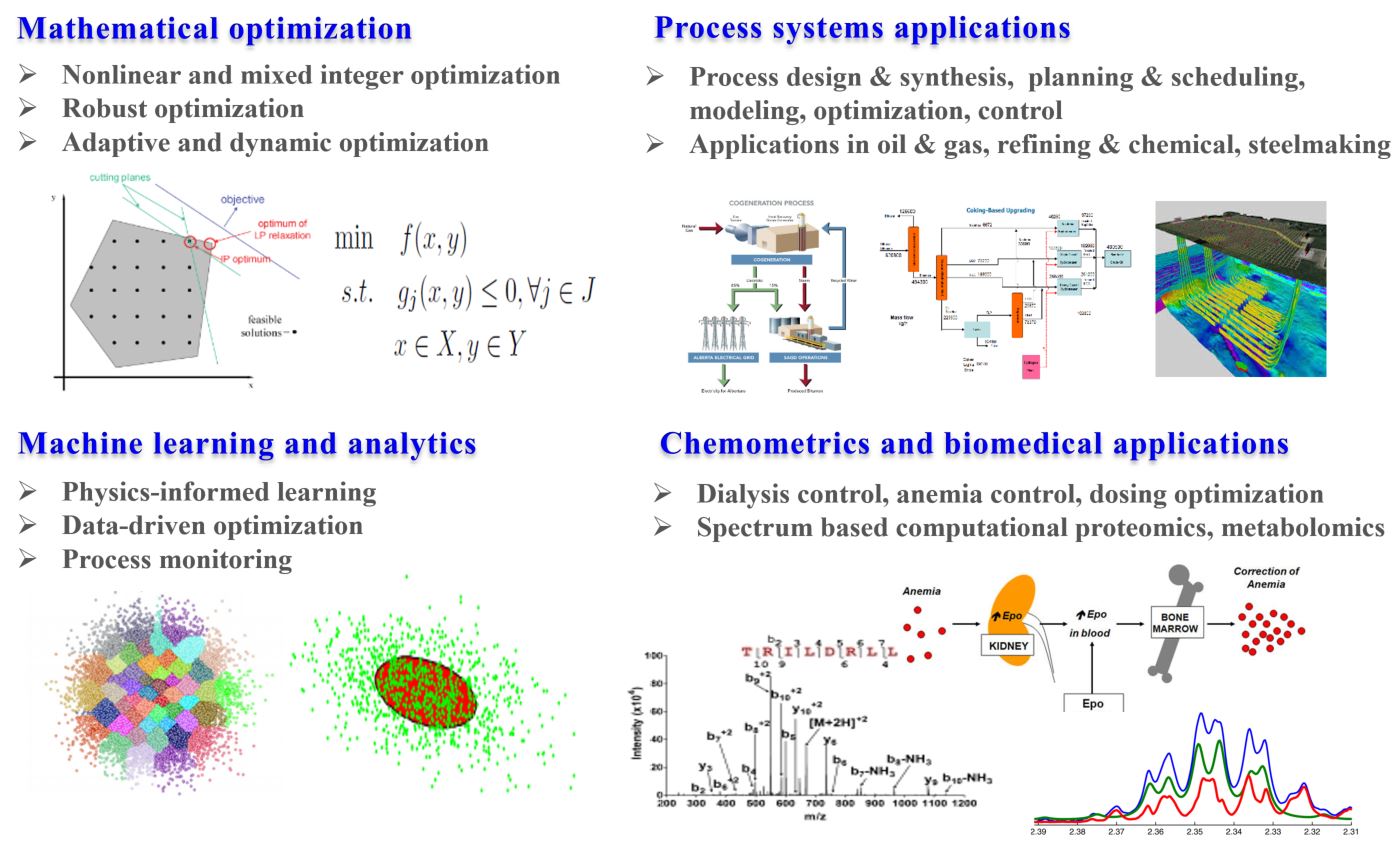
Zukui Li is a Professor in the Department of Chemical and Materials Engineering at the University of Alberta's Faculty of Engineering, where he leads a research group focused on mathematical optimization, machine learning, and process systems engineering. His work spans oil sands extraction, steel production, biomedical applications, and advanced optimization methods. Education: Ph.D. in Chemical Engineering, Rutgers University (2010) M.Sc. in Control Theory and Control Engineering, University of Science and Technology of China (2005) B.Sc. in Automatic Control, University of Science and Technology of China (2002) Postdoctoral Training: Princeton University (2010-2012) Research Focus: Dr. Li's research integrates mathematical optimization and machine learning for complex process systems. His primary areas include: Advanced optimization techniques (robust, stochastic, and distributionally robust optimization) Machine learning applications in process monitoring and biomedical systems Industrial applications in energy, manufacturing, and resource extraction Specific innovations include physics-informed ML for anemia treatment, adaptive optimization for steel production, and distributionally robust methods for uncertainty management. Publication Trends (2019-2023): Recent articles demonstrate a strong focus on uncertainty-aware optimization methods, with increasing integration of machine learning techniques. Dominant themes include distributionally robust optimization, adaptive decision-making under uncertainty, neural network approximations for complex constraints, and applications in industrial process control and biomedical systems. Theoretical advancements are consistently coupled with practical implementations in energy and manufacturing sectors. Research Group: Leads an active team developing optimization frameworks and machine learning solutions for process engineering challenges. Group website: Dr. Zukui Li's Research Group
Ayesha Ali is a Professor of Statistics and Director of the Master of Data Science program at the University of Guelph. She holds a PhD in Statistics from the University of Washington (2002) and has expertise in statistical methods for complex high-dimensional systems, including ecological networks, causal inference, and bioinformatics. Her research integrates graphical Markov models, machine learning, and statistical computing to address challenges in plant-pollinator networks, livestock genetics, and disease risk modeling. Education: B.Sc. Honours in Statistics and Actuarial Science, University of Western Ontario (1996) M.Sc. in Statistics, University of Toronto (1998) Ph.D. in Statistics, University of Washington (2002) Research Interests: Graphical Markov models and ecological networks Causal inference and longitudinal data analysis Machine learning and high-dimensional predictive modeling Statistical methods for livestock genetics and animal health Computational statistics and bioinformatics Articles Trends: Her recent work spans interdisciplinary applications, including veterinary oncology biomarker discovery, remote sensing for agricultural suitability, and pipeline development for cross-species transcriptomics. She emphasizes graphical structure exploitation in regression and predictive modeling, with contributions to both theoretical and applied statistical methodologies. Awards: Canadian Journal of Statistics Award (2020) for groundbreaking work on doubly sparse regression NSERC Discovery Grant (2018) NSERC Collaborative Research and Development Grant (2015) Advising & Grants: She has supervised numerous graduate and undergraduate students on projects ranging from plant-pollinator network analysis to bioinformatics. Her grants include NSERC-funded research on milk fatty acid genetics and statistical methods for clustered data. Labs/Teams: Involved in the Bioinformatics program at the University of Guelph, contributing to interdisciplinary research collaborations in ecology and animal science.
Dr. Kevin Schneider is a Professor in the Department of Computer Science at the University of Saskatchewan. His research focuses on software architecture, evolution, analysis, and visualization, with notable work in quantum computing applications and machine learning. He also explores collaborative software teams and domain-specific languages to enhance development processes. Education: Ph.D., Computing and Information Science, Queen’s University (2000) Research Associate, Computing and Information Science, Queen’s University (1991–94) M.Sc., Computing and Information Science, Queen’s University (1990) B.Sc.(Hon), Computational Science, University of Saskatchewan (1980) Research interests include software design principles, maintenance strategies, and the integration of AI/quantum computing into software engineering. He emphasizes reproducibility in scientific workflows and tools like VizSciFlow. His work often bridges theory and practice, addressing challenges in code clone stability, user feedback management, and healthcare-related machine learning frameworks. Scientific Awards: Most Influential Paper at SCAM 2001 for his work on software engineering via source transformation. Advising and grants: While no specific advisees are listed, his research involves large-scale projects such as the Nutrient App and automated polyp segmentation tools. He collaborates on grants related to quantum computing applications and cloud-based software systems. Labs and teams: His work centers on collaborative scientific data analysis groups and developing tools for real-time groupware systems in complex workflows. He contributes to projects like CloneCognition and FSECAM, aiming to improve software design and maintenance through advanced analytics.
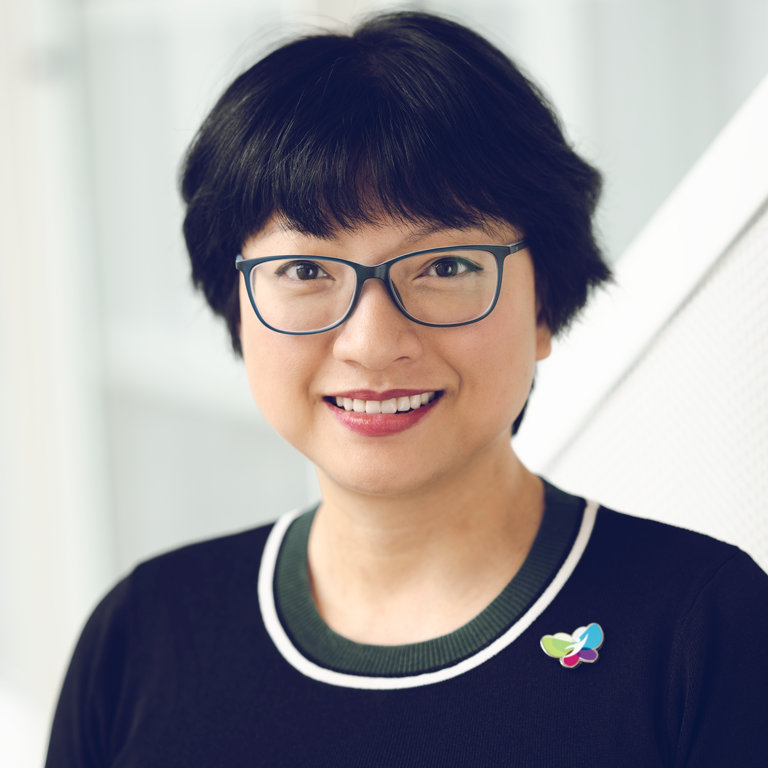
Mai Thai is an Associate Professor in the Department of Entrepreneurship and Innovation at HEC Montréal. She holds additional roles as Director of the Social Business Creation competition and Researcher at Mosaic – Creativity & Innovation Hub. Her expertise spans Social Entrepreneurship, New Venture Creation, International Business, Strategic Management, Transition Economies, and Emerging Markets. Current research focuses on determinants of new venture creation, social business models, mechanisms for social impact, and immigrant entrepreneurship. Dr. Thai’s education includes a B.A. from Hanoi University, an M.B.A. from the University of Hawaiʻi, and a Ph.D. (Management) from the University of St. Gallen. Her research has explored topics such as Vietnamese family firm performance, social entrepreneurship education frameworks, and the impact of cultural and institutional factors on entrepreneurship. Her publications reflect a focus on global entrepreneurship challenges, including immigrant entrepreneurship dynamics, corporate frugality in crises, and AI startup legitimacy. She is affiliated with the Mosaic Hub, contributing to interdisciplinary creativity and innovation initiatives. No specific awards are listed, but her work emphasizes practical solutions for social and economic development in transitional and emerging economies.
Lisa Monchalin is a Métis-Anishinaabe scholar with a PhD in Criminology (University of Ottawa, 2012) and a Juris Doctor (UBC, 2022). She teaches courses like Indigenous Peoples and Justice, Wrongful Convictions, and Canadian Legal Systems at Kwantlen Polytechnic University's College of Arts. BSc & MA in Criminology (Eastern Michigan University, 2004 & 2006) JD from UBC's Peter A. Allard School of Law (2022) Member of Law Society of British Columbia (2023) Her research focuses on Indigenous justice systems, colonial legacies in criminal justice, and culturally-safe approaches to crime prevention. She has consulted for the Department of Justice Canada and authored The Colonial Problem , an award-winning book on Indigenous perspectives in Canadian penology. Her publications (2014–2023) reveal trends in Indigenous incarceration, gendered violence, and structural critiques of colonial justice systems, often intersecting with themes of cultural sovereignty and policy reform. Recipient of 2023 W.E.B. Du Bois Award for racial equity contributions Keynote speaker at Oxford, Cambridge, and global criminology conferences Advocate for Indigenous women's rights via Butterflies in Spirit dance group
Shahab Bakhtiari is an Adjunct Professor in the Department of Psychology at the University of Montreal's Faculty of Arts and Sciences. His research focuses on NeuroAI, exploring the intersection of neuroscience and artificial intelligence, particularly in visual perception and learning mechanisms in biological systems and artificial neural networks. He holds a PhD in Neuroscience from McGill University and conducted postdoctoral research at Mila, Quebec AI Institute. Education: Bachelor's and Master's in Electrical Engineering, University of Tehran PhD in Neuroscience, McGill University His research interests include computational neuroscience, machine learning, visual system modeling, and energy-efficient predictive coding. He teaches courses on AI, cognitive neuroscience, and deep learning applications in psychology. Key grants include a CRSNG grant (2023–2029) for comparative visual system studies and the UNIQUE strategic initiative (2022–2029), co-led by 50+ researchers. He has supervised one Master's student, Hamza Abdelhedi, on AI-human face recognition comparisons. His work bridges AI and biological systems, leveraging neuroimaging and deep learning to model brain dynamics and improve AI's biological plausibility.
Aida Geraldina Polanco Sorto is an Associate Professor in the Department of Labour Studies at McMaster University's Faculty of Social Sciences. Her academic work critically examines the intersection of migration, labor, and globalization, with particular focus on temporary foreign worker programs and their implications for workers' rights and social citizenship in contemporary labor markets. Dr. Polanco Sorto's educational background reflects strong foundations in sociological theory and research: Bachelor of Arts (Honours) in Sociology (First Class) from the University of British Columbia, Vancouver Master of Arts in Sociology from Concordia University, Montreal PhD in Sociology from the University of British Columbia, Vancouver Her research program spans multiple interconnected fields including Migration Studies, Temporary Foreign Worker Programs, Labour Relations, Sociology of Work, Cultural Studies, Gender and Sexuality, and Globalization. Dr. Polanco Sorto's scholarship reveals how national governments actively produce 'culturally tailored' migrant workers for specific labor markets, creating systems of labor unfreedom that challenge traditional notions of citizenship. Her work particularly examines service sectors like fast food where temporary foreign workers are increasingly prevalent, analyzing the mechanisms of labor control and the production of precarious work conditions within immigration regimes. Dr. Polanco Sorto's scholarly output demonstrates consistent engagement with pressing issues in migration and labor studies over the past two decades. Her publications reveal an evolving trajectory from early work on religious institutions and worker rights to sophisticated analyses of contemporary migration regimes. A clear pattern emerges across her research showing how states actively brand national workforces, how language policies regulate migrant mobility, and how citizenship aspirations are leveraged to maintain labor control within precarious immigration schemes. Dr. Polanco Sorto maintains an active teaching schedule with courses spanning both undergraduate and graduate levels. Her course offerings include Methods (LABRST 715), Sociology of Immigration (SOCIOL 728), Labour and Globalization (WORKLABR 2G03), On the Move: Workers in a Global World (WORKLABR 3K03), and Work in Flux: The Gig Economy, the Corporate Ladder, and Changing Labour Markets (SOCIOL 4V03), with teaching activities documented through 2025. Her curriculum reflects direct connections between her research expertise and pedagogical approach, preparing students to critically analyze the complex dynamics of contemporary labor markets in an increasingly globalized world.
Dr. An-Chang Shi is a Professor of Physics & Astronomy at McMaster University, specializing in condensed matter physics with a focus on soft matter systems. His research spans theoretical modeling of polymeric materials, particularly block copolymers and their self-assembly behavior. Dr. Shi earned his B.Sc. in physics from Fudan University and completed his Ph.D. in physics at the University of Illinois at Urbana-Champaign in 1988. He conducted postdoctoral research at McMaster University from 1988 to 1992 before joining Xerox Research Centre of Canada. In 1999, he returned to McMaster University as an Associate Professor and was promoted to Professor. His research interests center on the development of theoretical models for soft matter systems, with particular emphasis on block copolymer self-assembly , phase behavior of self-assembling macromolecules , and kinetic pathways of transitions between stable and metastable states . His work bridges fundamental theoretical physics with practical applications in nanomaterials design. Analysis of his recent publications (2023-2025) reveals a strong focus on complex phase behavior in block copolymer systems, particularly quasicrystalline structures, Frank-Kasper phases, and the effects of molecular architecture and dispersity on self-assembly. His research increasingly incorporates advanced theoretical approaches to understand and predict nanostructure formation in soft materials. Dr. Shi has received significant recognition for his contributions to the field: Premier's Research Excellent Award (2000) Fellow of American Physical Society (2010) His scholarly activity demonstrates extensive collaboration across the international soft matter research community, with over 135 publications in the last decade. While specific grant information isn't detailed in the provided text, his sustained research output suggests successful funding from major research agencies. Dr. Shi's theoretical work provides fundamental insights for designing novel polymeric materials with tailored nanostructures, contributing significantly to the advancement of soft condensed matter physics and materials science.
Werner Dietl is an Associate Professor in the Department of Electrical and Computer Engineering at the University of Waterloo. His work focuses on programming languages, static analysis, software security, and formal verification techniques. He has contributed to type system design, low-power computing, and approximate data types through projects like EnerJ. His research also addresses challenges in compiler design, cryptographic protocol validation, and runtime enforcement mechanisms. Key research areas include: Type systems for imperative and domain-specific languages Static analysis of implicit control flow (e.g., Java reflection, Android intents) Approximate computing and energy-efficient computation Formal verification of security properties Publications span topics from unit measurement type inference to ownership-based security models, reflecting a focus on practical formal methods. His work emphasizes scalability and precision in type systems while addressing real-world software engineering challenges.
Elyar Pourrahimian is a Postdoctoral Fellow at the University of Alberta's Faculty of Engineering, specifically within the Civil and Environmental Engineering Department. He teaches courses such as CIV E 303 - Project Management (Winter Term 2026) and CIV E 601 - Analytical Methods for Project Management (Fall Term 2025), focusing on project planning, scheduling, and control methodologies. His research interests span Construction Management Project Management Artificial Intelligence Applications in Engineering Chaos Theory in Project Planning Fuzzy Systems in Labour Productivity Bayesian Inference in Construction Simulation . Recent publications highlight trends in construction workspace optimization (2025), chaos and fuzzy systems for productivity analysis (2025-2022), and machine learning frameworks (2024) for construction monitoring. He also explores multidimensional project control (2024) and socio-technical lean management frameworks (2024).
Jason Jaskolka is an Associate Professor in the Department of Systems and Computer Engineering at Carleton University, part of the Faculty of Engineering and Design. He holds a Ph.D. from McMaster University and is a licensed Professional Engineer in Ontario. His research focuses on cyber security evaluation and assurance, formal methods, and secure software engineering. He leads the Cyber Security Evaluation and Assurance (CyberSEA) Lab, emphasizing security-by-design principles for complex systems like industrial control systems and IoT-enabled healthcare. Education: Ph.D. (Software Engineering, McMaster University, 2015), M.A.Sc. (Software Engineering, McMaster University, 2010), B.Eng. (Software Engineering and Game Design, McMaster University, 2009). Research interests include: Cyber Security Evaluation & Assurance, Data-Driven Security Metrics, Formal Verification of Security Properties, Secure Software Architecture Design, and Industrial Cyber-Physical Systems Security. His work addresses challenges in threat modeling, compliance with security standards, and mitigating implicit system vulnerabilities. Recognition includes the 2021 New Faculty Excellence in Teaching Award for innovative pedagogy. He actively supervises graduate students in funded research positions. Key collaborations include Health Canada's Scientific Advisory Committee on Digital Health Technologies and the U.S. Department of Homeland Security’s Cybersecurity Postdoctoral Fellowship at Stanford University. Labs/Teams: CyberSEA Lab, focusing on developing rigorous security evaluation frameworks and tools for software-dependent systems.