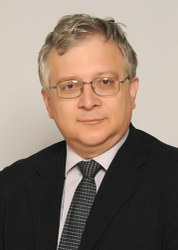
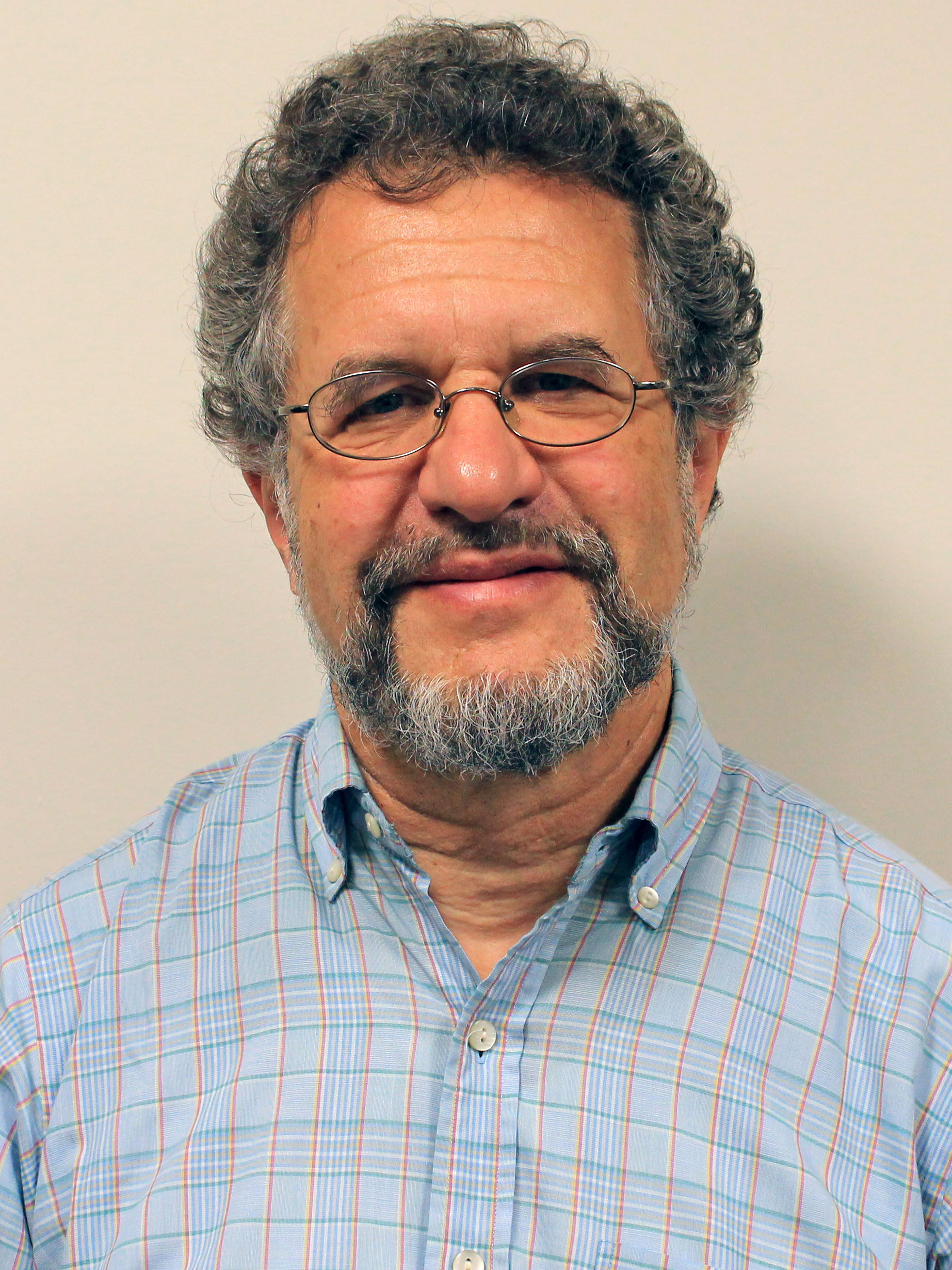
Vijay Gupta is an Adjunct Professor at the University of Notre Dame, affiliated with the Fitzpatrick Hall of Engineering. His research focuses on cyberphysical systems, integrating control theory, communication networks, and processing algorithms for applications in smart power grids, energy storage, and electric vehicle charging infrastructure. Education: Ph.D. and B.S. in Electrical Engineering from the California Institute of Technology His work emphasizes systematic design theories for cyberphysical systems, addressing challenges in renewable energy integration, distributed control algorithms, and stochastic optimization. Publications highlight applications in electricity markets, microgrid management, and EV charging infrastructure. Recent research trends include online learning for distributed control, regret minimization in energy management, and stochastic pricing models for renewable energy systems.
Peter Burke is a Professor of Electrical Engineering and Computer Science (joint appointments in Biomedical Engineering and Materials Science and Engineering ) at the Samueli School of Engineering, University of California, Irvine . His research bridges nanoelectronics with biotechnology , focusing on carbon nanotubes , graphene devices , and mitochondrial bioenergetics . He has received prestigious Young Investigator Awards from the Office of Naval Research and Army Research Office. Education: B.A. in Physics, University of Chicago (1992) Ph.D. in Physics, Yale University (1998) His work spans quantum electronics , high-speed semiconductor devices , and bio-nano interfaces . Recent publications highlight drone technology , mitochondrial electrical activity , and AI-driven nanoscale sensing . Research trends include terahertz spectroscopy , super-resolution imaging , and open-source medical devices like the NanoStat potentiostat . Scientific Awards Young Investigator Award, Office of Naval Research Young Investigator Program Award, Army Research Office As director of the BurkeLab , he develops nano-electronic interfaces for biological systems, including mitochondrial membrane potential assays and graphene-based biosensors . His lab's innovations in carbon nanotube arrays and scanning microwave microscopy have advanced bio-nano applications.
Marcus Gerhold is an Assistant Professor in the Formal Methods and Tools group at the University of Twente's Faculty of Electrical Engineering, Mathematics and Computer Science. His research focuses on model-based testing for software reliability in critical infrastructures, particularly railway systems, alongside significant contributions to game design and programming language analysis. His educational background includes: PhD in Computer Science from University of Twente (2018): Choice and Chance: Model-based Testing of Stochastic Behaviour MSc in Mathematics from Friedrich Schiller Universität Jena (2013): Embeddings of Weighted Morrey Spaces BSc in Mathematics from Friedrich Schiller Universität Jena (2011): Entropy-, Approximation- and Kolmogorov Numbers on Quasi-Banach Spaces Gerhold's research integrates theoretical model-based testing with practical critical infrastructure applications . His work on railway conformance testing addresses EULYNX controller validation, while his game design research explores affective mirroring in NPCs and procedural dungeon generation. The code modernity analysis stream leverages static analysis to quantify legacy code evolution across languages like Python and PHP, revealing version identification challenges through deep learning. Publication trends show consistent focus on model-based testing methodologies (40%), railway safety applications (25%), and innovative game design/code analysis (35%). Recent work increasingly incorporates AI/ML techniques for UML assessment and Python version identification, while maintaining rigorous formal methods foundations. He actively mentors 63 students across all academic levels and contributes to major research initiatives: STORM_SAFE (ERDF, 2024): Daily Supervisor for WP1/WP2 on software reliability for critical infrastructures ZORRO (KIC grant, 2023): Daily Supervisor for WP4 on zero downtime in cyber-physical systems MISSION (MSCA RISE, 2021-2025): Interim coordinator (early 2024) for space systems modeling As part of the Formal Methods and Tools research group, Gerhold participates in European collaborations while serving on SAC-SVT 2024 and FormaliSE 2023 program committees.
Amanda Watson is an Assistant Professor in Electrical and Computer Engineering at the University of Virginia, with joint appointments in Computer Science. She leads the Watson Research Lab within the UVA Link Lab, a multidisciplinary center for Cyber-Physical Systems (CPS) and Internet of Medical Things (IoMT) research. Her work bridges wearable technology with healthcare and athletic performance applications, focusing on noninvasive monitoring, physiological signal analysis, and safety-critical medical devices. She is also the cofounder and CEO of Luminosity Wearables, commercializing a noninvasive continuous glucose monitor. Education: PhD in Computer Science (2020) - College of William & Mary MSc in Computer Science (2016) - College of William & Mary Bachelors in Computer Science and Mathematics (2014) - Drury University Her research spans multiple domains including: Wearable spectroscopy for nutrition and skin health Machine learning for drug overdose and fall risk detection Biomechanical monitoring in sports medicine Wearable support for visual and neurological impairments IoMT device integration and analytics Recent publications (2024-2025) show strong emphasis on calibration-free physiological monitoring systems, with technical contributions in spectral analysis , multi-wavelength sensing , and rapid prototyping for healthcare wearables. Applications range from maternal health to gerontological social isolation detection. Lab and Team: The Watson Research Lab at UVA develops wearable solutions for clinical and athletic contexts, with ongoing collaborations in the PRECISE Center at University of Pennsylvania and LENS lab at William & Mary alumni network. She works with multidisciplinary teams including engineers, clinicians, and data scientists.
Mahsa Derakhshani is a Senior Lecturer (equivalent to Associate Professor) in Digital Communications at Loughborough University's Wolfson School of Mechanical, Electrical and Manufacturing Engineering. She leads research in the Signal Processing and Networks Research Group (SPNRG) and serves as an Associate Editor for the IET Signal Processing Journal. Her academic journey includes a PhD from McGill University (2013), followed by postdoctoral roles at the University of Toronto and Imperial College London. Key awards include the Royal Academy of Engineering/The Leverhulme Trust Research Fellowship (2020-21) and NSERC Postdoctoral Fellowships (2015-2017). Research interests focus on digital communications, machine learning for signal processing, wireless networks, and reinforcement learning applications. Recent work addresses challenges in satellite communications, OTFS modulation, and opto-physiological monitoring. She has authored over 70 publications spanning topics like NOMA systems, MIMO optimization, and edge-assisted live streaming. Education: PhD (McGill, 2013), MSc (Sharif University, 2008), BSc (Sharif University, 2006) Affiliations: IEEE Senior Member, IET Member, Fellow of the Higher Education Academy Grants & Funding: Leverhulme Trust, Royal Academy of Engineering, NSERC Labs/Teams: Active in SPNRG and collaborates on projects involving 5G/6G networks, satellite systems, and biomedical signal processing. Current research emphasizes AI-driven solutions for communication networks and wearable health monitoring technologies.
Peng Gao is an Assistant Professor in the Department of Computer Science at Virginia Tech. He is affiliated with the Virginia Tech Security & Intelligence Lab and holds a Ph.D. in Electrical Engineering from Princeton University. Prior to his faculty position, he was a postdoctoral researcher at UC Berkeley and held research internships at Microsoft Research, Facebook, and NEC Laboratories America. Education includes a B.Eng. from Shanghai Jiao Tong University (2009-2013), M.A. and Ph.D. from Princeton (2013-2019), and an exchange program at the University of Hong Kong (2012). Key roles include Technical Program Committee memberships for conferences like IEEE S&P, USENIX Security, and CCS. Research focuses on Cybersecurity (APT prevention, network security with P4/eBPF) AI applications (LLMs for security, AI safety) Systems security (attack investigation, threat intelligence) AI for science (molecular/materials prediction) Notable awards include the 2022 Amazon-VT Initiative Faculty Award, CCI Fellowships, and multiple best paper nominations. His lab has received grants from CCI, NSF, and industry partners like Google Cloud and Cisco. Teaching includes courses on Principles of Computer Security (CS 4264) and Blockchain Technologies (CS 5594). He advises ~20 students across Ph.D., MS, and undergraduate levels.
Matt J. Rutherford is an Associate Professor in the Department of Computer Science at the University of Denver, with a joint appointment in the Department of Electrical and Computer Engineering. He is Deputy Director of the Unmanned Systems Research Institute and a faculty fellow of Project X-ITE. His research focuses on autonomous systems, embedded systems, and software engineering, with extensive contributions to UAV navigation, control systems, and robotics. Rutherford holds a Ph.D. in Computer Science from the University of Colorado Boulder (2006), an MS (2001), and a BS in Civil Engineering from Princeton University (1996). His work emphasizes practical applications of software engineering principles in distributed and embedded systems. Notable projects include radar-based collision avoidance for UAVs, self-leveling landing platforms, and studies on electric vehicle charging impacts on power grids. Rutherford's research bridges theoretical computer science with real-world engineering challenges, particularly in unmanned systems and robotic autonomy. Key publications explore UAV flight control using neural networks, ground/ceiling effects in rotorcraft, and GPU-based real-time pose estimation. His contributions to model-driven systems and distributed testbed automation highlight long-term engagement with software reliability and scalable experimentation frameworks. Rutherford collaborates widely, including with institutions like the University of South Carolina and Politecnico di Torino. His interdisciplinary approach integrates robotics, aerospace engineering, and software engineering to advance autonomous system capabilities.
Karim Oweiss is a Pre-eminent Professor at the University of Florida, with joint appointments in the Department of Biomedical Engineering (Herbert Wertheim College of Engineering), Electrical and Computer Engineering, and Neuroscience (McKnight Brain Institute). He holds a Ph.D. in Electrical Engineering and Computer Science from the University of Michigan (2002). His research focuses on neural mechanisms of sensorimotor integration and the development of clinically viable brain-machine interfaces (BMIs) to restore damaged neurological function. His work spans computational neuroscience, neural decoding, optogenetics, and advanced neurotechnology, with a strong emphasis on closed-loop systems and neural plasticity. 2025 : Chemogenetic stimulation of phrenic motor output and diaphragm activity 2024 : Chemogenetic phrenic motoneuron activation enables increased tidal volume 2023 : Compressive sensing of functional connectivity maps from patterned optogenetic stimulation Oweiss has received the NSF Excellence in Neural Engineering Award (2001) and is a Senior Member of the IEEE. He has published extensively on topics including neural decoding, compressive sensing, and multiscale neural interfacing. As editor of Statistical Signal Processing for Neuroscience and Neurotechnology (2010), he has contributed significantly to the field's methodological foundations. His lab develops tools like NeuroQuest for large-scale neural data analysis and implantable neuroprocessors for wireless BMI applications.
Dr. Rafeef Garbi is a Professor at the Department of Electrical and Computer Engineering, University of British Columbia, and the Founder/Director of the Biomedical Signal and Image Computing Laboratory (BiSICL). Her multidisciplinary research integrates artificial intelligence, computer vision, and medical imaging for clinical applications in pediatric orthopedics, oncology, and neurology. PhD (Chalmers University, Sweden), MSc (with distinction), Technical Licentiate Research Focus: Specializing in Medical Image Computing and Visual Computing , her lab develops AI-driven solutions for: Automated segmentation and analysis of multi-dimensional biomedical data Clinically-translatable biomarkers for disease assessment Computer-aided intervention systems in surgical contexts Scientific Leadership: UBC Killam Faculty Research Fellow Peter Wall Institute for Advanced Studies Early Career Scholar Senior IEEE Member & Founding IEEE EMBS Vancouver Section Member Key Collaborations: Active in the Medical Image Computing and Computer Assisted Intervention (MICCAI) Society and CAIDA: UBC ICICS Centre for Artificial Intelligence Decision-making and Action. Her team bridges engineering, medicine, and computational biology through translational research.
M. Hadi Amini is an Assistant Professor at Florida International University's Knight Foundation School of Computing and Information Sciences. He founded and directs the Sustainability, Optimization, and Learning for InterDependent networks (SOLID) laboratory, focusing on cyber-physical-social systems and distributed AI applications. Ph.D., Electrical and Computer Engineering (2019), Carnegie Mellon University M.Sc., Electrical and Computer Engineering (2015), Carnegie Mellon University M.Sc. (2013), Tarbiat Modares University B.Sc. (2011), Sharif University of Technology His research spans federated learning, interdependent network optimization, and AI applications in smart cities , energy systems , and healthcare . Recent work emphasizes privacy-preserving techniques, quantum encryption, and blockchain integration for secure distributed learning. The 15 most recent publications highlight trends in large language models , edge computing , medical imaging security , and infrastructure resilience , with interdisciplinary emphasis across computer science, systems engineering, and urban planning. Best Paper Award, IEEE Conference on Computational Science & Computational Intelligence (2019) Best Journal Paper Award, Springer Nature Operations Research Forum (2021) Excellence in Teaching Award, FIU (2020) Multiple Best Reviewer Awards, IEEE Transactions NSF Travel Awards (2019) As Associate Editor for Frontiers in Communications and Networks and book series editor for Sustainable Interdependent Networks , he actively shapes research discourse. His lab has secured $3.6M in federal/state funding for AI-driven infrastructure projects.
Albert Treytl is a Senior Researcher at the Danube University Krems , serving as Head of the Center for Distributed Systems and Sensor Networks and Deputy Head of the Department for Integrated Sensor Systems. He holds a Master’s degree in Electrical Engineering from the Vienna University of Technology (2001) and has over two decades of experience in communication technologies and security. Current roles: Head of Center, Deputy Head of Department Research focus: Security for embedded systems, IoT, digital twins, AI in energy optimization Involvement: IEEE, CEN TC 247 WG4, IEEE1588 standardization His work addresses distributed data management, smart grid security, and model predictive control strategies for energy efficiency in buildings and traffic systems. He leads multiple national and international projects funded by FFG and EU programs. Recent research projects include KI4HVACS (AI-driven HVAC optimization), Factories4Renewables (industrial renewable energy integration), and Dataskop (sensor-based data economy). He has authored over 100 peer-reviewed publications and serves as co-lecturer at the Vienna University of Technology.
Assoc. Prof. Iliev Atanas is affiliated with the Faculty of Electrical Engineering and Information Technologies (FEIT) at the Ss. Cyril and Methodius University of Skopje. He holds the position of Associate Professor at the Institute for Power Plants and Switchgear. His academic journey includes a PhD (2003), MSc (1993), and BSc (1987) in Electrical Engineering from FEIT. His work experience spans over three decades, starting as a Junior Assistant (1987–1994), progressing to Assistant Professor (1994–2008), and attaining his current rank in 2008. His research focuses on optimizing power systems through advanced algorithms, particularly genetic algorithms applied to unit commitment, hydrothermal scheduling, and microgrid management. Key areas include renewable energy integration, grid reliability, and security-constrained optimization. He has contributed to over 50 publications addressing topics like dynamic programming for hybrid power systems, fuzzy logic for hydroelectric project evaluation, and reliability modeling of substations under distributed generation uncertainty. Notable contributions include developing novel self-adaptive genetic algorithms for short-term scheduling and energy management in hybrid systems. His work bridges theoretical optimization with practical grid challenges, emphasizing sustainability and resilience in power infrastructure.
Dana Brooks is a Research Professor in the Department of Electrical and Computer Engineering at Northeastern University, with affiliations in Bioengineering. He holds a PhD from Northeastern University (1991) and has received the Søren Buus Outstanding Research Award (2006). His primary research focuses on biomedical signal and image processing, medical imaging techniques (including MRI and electrocardiography), and neuromodulation technologies such as transcranial magnetic stimulation (TMS). He is also involved in protein conformation estimation using X-ray scattering and optimization algorithms for medical applications. Dr. Brooks leads the Biomedical Signals Processing Lab and collaborates with the Center for Integrative Biomedical Computing . His work bridges engineering and medicine, with recent grants including a $400K NSF MRI grant for advanced TMS systems and a $600K NSF grant for motor cortical organization studies. He has advised students like Setareh Ariafar (PhD’20) and contributed to innovations in image mosaicking for confocal microscopy and machine learning applications in dermatology. His publications span computational neuroscience, cardiac imaging, and uncertainty quantification in biomedical simulations. Notable achievements include developing algorithms for ECG imaging, optimizing TMS protocols, and creating tools like UncertainSCI for simulation reliability assessment.
Yong-Bin Kim is a Professor in the Department of Electrical and Computer Engineering at Northeastern University, part of the College of Engineering. He has held prior positions at Intel Corp., Hewlett Packard Co., Sun Microsystems, and the University of Utah. His research focuses on integrated circuit design, nanoelectronics, bio-chip interfaces, and low-power VLSI systems. He has contributed to initiatives like the HPVLSI Lab and Microsystems and Electron Devices Lab. Education includes a B.S. in Electronic Engineering from Sogang University (Seoul, South Korea), an M.S. from the New Jersey Institute of Technology, and a Ph.D. in Computer Engineering from Colorado State University (1996). Research interests encompass high-speed low-power VLSI design, system-on-chip (SoC), physical VLSI CAD, and nanoelectronics. Specific areas include bio-sensor interface circuits, electronic neuron design, and adaptive robot controllers. Key projects involve compact power-efficient integrated circuits and high-speed transceiver design. Outstanding Paper Award, 2020 IEEE ISOCC South Korean Patent for Autonomous Impedance Calibration (2021) Best Paper Award, 2016 International SoC Design Conference Patent for Improved Receiver Circuit (2020) Patent for Method to Detect Trojan Circuits (2018) Advisees include graduate student Yixuan He. He has led research projects funded by Winchester Technology and Hynix Semiconductor, focusing on semi-self-calibration transceivers and tunable RF inductors. Labs include the HPVLSI Lab and Microsystems and Electron Devices Lab at Northeastern University, which focus on high-speed/low-power IC design and microfabrication technologies.
Lillian Ratliff is an Associate Professor in the Department of Electrical and Computer Engineering at the University of Washington, holding additional Adjunct Associate Professor positions in the Allen School of Computer Science and Engineering and the Department of Aeronautics and Astronautics. She specializes in research at the intersection of game theory, optimization, machine learning, and control theory, with a focus on decision-making in intelligent systems with learning-enabled components and strategic agents. Her research interests span game theory and economics, optimization, machine learning, and control theory. She develops theoretical frameworks for understanding how intelligent systems make decisions when interacting with strategic agents. Her work bridges theoretical foundations with practical applications in multi-agent learning systems, where she examines how learning algorithms converge to equilibria in strategic environments. She has made significant contributions to understanding the dynamics of gradient-based learning in games, Stackelberg games, and decision-dependent distributions. Her recent publications demonstrate a strong focus on theoretical foundations of game-theoretic learning, with particular attention to convergence properties, equilibrium analysis, and strategic behavior in multi-agent systems. Her work spans zero-sum games, matrix games, Stackelberg games, and decision-dependent learning scenarios, with applications across multiple domains including human-machine interaction and networked systems. NSF Graduate Research Fellowship (2009) NSF CISE Research Initiation Initiative award (2017) NSF CAREER award (2019) ONR Young Investigator award (2020) UW CoE Junior Faculty Award (2021) Invited speaker at NAE China-America Frontiers of Engineering Symposium (2019) Dhanani Endowed Faculty Fellowship (2020) Professor Ratliff's research is supported by multiple NSF grants (current: CNS-1736582, CNS-1836819, CNS-1931718, CNS-1907907, CNS-1844729, CNS-1952011; previous: CNS-1634136, CNS-1646912, CNS-1656873) and an Office of Naval Research Young Investigator award. She has mentored numerous students and collaborators across her extensive publication record, with work appearing in top venues including NeurIPS, ICML, AISTATS, and IEEE conferences.