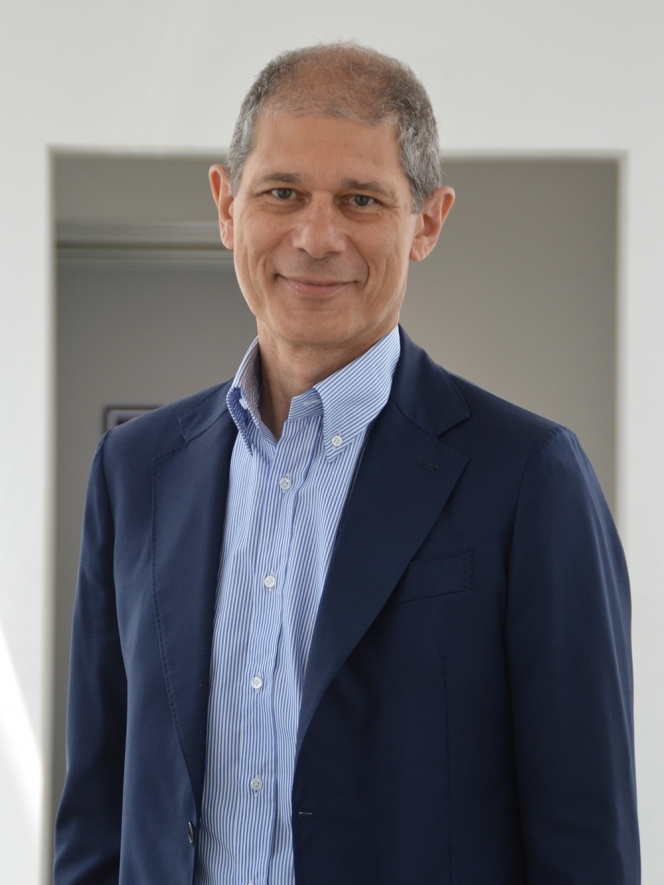
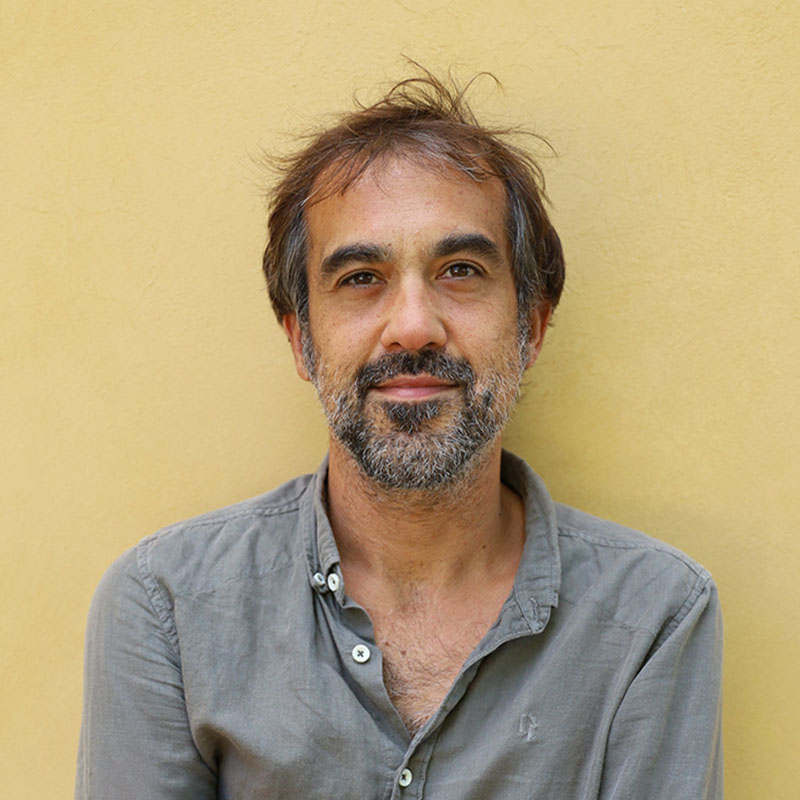
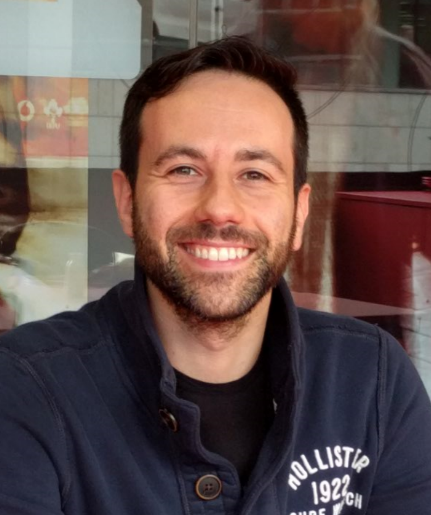
Prof. Sergio Ginebri is an Associate Professor at the Department of Jurisprudence, University of Rome Tre. He holds a PhD in Economics from Sapienza University of Rome and has extensive experience in fiscal policy, pension systems, and public finance research. His work focuses on topics like pension sustainability, social inequality, and the political economy of public debt. Education: PhD in Economics, Sapienza University of Rome (1988–1992) MA in Economics, University of Warwick (1987–1988) Laurea in Statistics and Demography, Sapienza University of Rome (1977–1984) Research Interests: Prof. Ginebri specializes in public policy, fiscal sustainability, and the social impacts of pension reforms. His research explores how demographic trends, wealth distribution, and political dynamics shape economic policies. Recent work includes analyses of longevity risks, pension equity, and fiscal policy integration in the EU. Key Projects: Coordinated studies on pension system sustainability (2002–2018) Developed models for forecasting public pension expenditure Contributed to EU tax policy observatories Awards: Recipient of the national PhD award (1994) and recognition for academic excellence in tax policy research (2001). Teaching: Teaches courses in political economy, public finance, and macroeconomics at undergraduate and graduate levels.
Elias Dinas is a Full-time Professor in the Department of Political and Social Sciences at the European University Institute (EUI). He holds the Swiss Chair in Federalism, Democracy, and International Governance. His research focuses on political socialization, authoritarian legacies, and research methodology. Dinas earned his PhD in Political Science from the EUI in 2010. His research interests include the impact of historical traumas on political attitudes, experimental methods, and the dynamics of norm change. He collaborates with institutions like the Graduate Institute in Geneva through seminars, conferences, and methodological workshops. Recent work explores topics such as ideology mapping via AI, the electoral effects of early voting experiences, and the interplay between migration crises and public policy. His research has been published in top journals like the American Political Science Review and highlighted in outlets like The New York Times. Received the Michael Wallerstein Award (2019) for his work on migration and hostility. Supervises 14 students researching memory politics, norm change, and intergroup relations. Leads projects on post-authoritarian ideologies, German political identity, and elite-driven norm erosion. His teaching and supervision emphasize causal inference, experimental design, and quantitative methods, reflecting his commitment to rigorous political analysis.
Giuseppe Carlo Marano is a Full Professor at the Department of Structural, Building and Geotechnical Engineering at Politecnico di Torino. He is also a component of the SISCON Interdepartmental Center for Infrastructure Safety. With expertise in civil and structural engineering, his work focuses on machine learning applications, seismic risk reduction, and sustainable structural optimization. Education Graduated cum laude in Structural Engineering from Polytechnic University of Bari PhD in Structural Engineering from University of Florence (2000) Research Interests Marano's research spans structural optimization, seismic engineering, and machine learning applications in civil infrastructure. He develops advanced computational models for: Seismic retrofitting of existing structures Optimization of steel and masonry structures Recycled materials in concrete production AI-driven structural health monitoring Multiobjective design methodologies Publication Trends His recent work emphasizes: Machine learning for concrete mix design and damage assessment Optimization of gridshells and arch structures Seismic isolation systems and vibration control Sustainable construction practices with recycled materials Multiobjective genetic algorithms for structural design Scientific Recognitions National Scientific Qualification - First Band (2013, MIUR Italy) Certificate of Appreciation for Outstanding Lecture (2012, China) Academic Contributions As an educator, he teaches: Consolidamento Strutturale (Structural Consolidation) Dinamica delle Vibrazioni Random (Random Vibration Dynamics) Progettazione Generativa (Generative Design) He also leads Challenge@PoliTo initiatives and contributes to national infrastructure safety regulations. Research Projects ADAPT4CE - Adaptive Digital Systems for Circular Economy (2025-2028) AI-ENVISERS - AI for Seismic Retrofit Environmental Impact (2023-2025) ADDOPTML - Additive Manufacturing Optimization (2021-2025)
Stefano Rossi is a Full Professor of Finance at Bocconi University's Department of Finance, serving as Chair of the Department. He holds affiliations with the Centre for Economic Policy Research (CEPR) and the European Corporate Governance Institute (ECGI), and serves on editorial boards for journals including Journal of Law, Finance, and Accounting and European Financial Management . His research focuses on corporate governance, bankruptcy, debt financing, sovereign borrowing, and quantitative trading, with publications in top journals such as The Journal of Finance and Journal of Monetary Economics . He has received international recognition, including awards for his work on ownership evolution. Prior to Bocconi, he taught at institutions including the Stockholm School of Economics and Cornell University. He earned his BA/MSc from Bocconi and a PhD in Finance from London Business School. Prof. Rossi's research explores intersections between corporate finance and public policy, with recent work analyzing credit cycles, municipal bankruptcy law, and liquidity shocks in insurance markets. His articles frequently address systemic financial risks and institutional frameworks governing corporate and sovereign debt. Awards include the ECGI Best Paper Prize for his collaborative research on ownership dynamics. Teaching spans corporate finance, valuation, and financial markets at undergraduate, graduate, and executive levels. He has developed courses at Bocconi's undergraduate, MBA, and PhD programs, emphasizing practical applications of theoretical finance models. His comprehensive curriculum includes mergers & acquisitions and private equity strategies. Key contributions include studies on shareholder voting mechanisms, sovereign default dynamics, and the impact of tax policies on corporate behavior. His work often bridges academic rigor with real-world policy implications, influencing both academic discourse and regulatory practices.
Oswald Lanz is a tenured full professor at the Faculty of Engineering of the Free University of Bozen-Bolzano , leading the Visual Computing Lab . He holds a Ph.D. in Computer Science and a Mathematics degree from the University of Trento. Prior to his current role, he was a researcher and head of research at FBK Trento. He is an endowed professor collaborating with Covision Lab , an AI hub in Bressanone, and coordinates the board of professors for the PhD in Computer Science program since 2025. His research focuses on Computer Vision, Deep Learning, and Video Analytics , with applications in sports technology, medical imaging, and industrial automation. Key achievements include the Amazon AWS Machine Learning Research Award (2020) , ACM Multimedia Best Paper (2015) , and Best Student Paper at ICIAP (2007) . He co-organized the ELLIS-VISMAC Winter School (2025) and chaired ICIAP 2019 . His work spans novel view synthesis, action recognition, and anomaly detection, supported by patents in video tracking and detection. He teaches courses like Deep Learning and Artificial Intelligence in undergraduate and graduate programs. Recent projects such as 5VREAL integrate 5G, edge computing, and AI for sports analysis. His collaborations bridge academia and industry, exemplified by his role in Covision Lab and multidisciplinary initiatives like DSS4LCO for food supply chains. Lanz’s publications emphasize spatiotemporal modeling, neural architecture search, and hybrid machine vision systems.
Gian Antonio Susto is an Associate Professor at the Department of Information Engineering , University of Padova . With a Ph.D. in Information Technology and post-doctoral experience at National University of Ireland, Maynooth, he leads research in Machine Learning , Semiconductor Manufacturing , and Industrial IoT . His work bridges Anomaly Detection , Continual Learning , and Algorithmic Fairness with applications in Hydroelectric Power Plants , Particle Accelerators , and Smart Mobility . B.Sc. and M.Sc. in Controls Engineering, University of Padova (cum laude) Ph.D. in Information Technology, University of Padova (2013) Post-Doc at National University of Ireland, Maynooth (2012-2013) Assistant Professor at University of Padova (2013-2021) His research focuses on Explainable AI , Virtual Metrology , and Deep Learning for manufacturing and infrastructure monitoring. Recent projects include the AIMS5.0 (AI for Manufacturing Sustainability) and MICS (Circular Economy in Italy) initiatives. His publications span Engineering Applications of Artificial Intelligence , IEEE Transactions , and Information Processing & Management , with 15+ recent papers on topics like Fault Diagnosis , Continual Learning , and Fair Ranking . Key scientific awards include: IEEE CCTA Best Student Paper Award (2021) IP&M 2020 Ph.D Paper Award Best Industry Paper Award, European Workshop on Advanced Control and Diagnosis (ACD 2019) He has supervised Ph.D. students on projects involving Particle Accelerators , Plant Behavior Modeling , and Explainable AI , with alumni now at institutions like Max Planck Institute , IBM , and Scripps Research . Current teaching includes Reinforcement Learning and Explainable Machine Learning at graduate and Ph.D. levels.
Gaetano Valenza is an Associate Professor of Bioengineering at the University of Pisa, Italy, where he leads the Neuro-Cardiovascular Intelligence Lab at the Enrico Piaggio Research Centre. He holds affiliations with the Neuroscience Statistics Research Laboratory at MIT and has served as a Research Fellow at Harvard Medical School and Massachusetts General Hospital. His academic work spans bioengineering, computational physiology, and affective computing. His research focuses on statistical and nonlinear biomedical signal and image processing , cardiovascular and neural modeling , and physiologically interpretable artificial intelligence . He develops wearable systems for physiological monitoring, with applications in autonomic nervous system assessment, brain-heart interactions, and mental health. His work has led to novel metrics such as the Sympathetic and Parasympathetic activity indices derived from ECG. The 15 most recent publications reflect a consistent trend in brain-heart interplay , complexity analysis of physiological signals , explainable AI in healthcare , and virtual reality applications in mental health . His work integrates advanced signal processing, nonlinear dynamics, and machine learning to decode emotional and cognitive states from physiological data. Dr. Valenza is a Senior Member of IEEE and serves on several technical committees. He is an active editorial leader, currently serving as Associate Editor for IEEE-EMBC , Plos One , Complexity , and Scientific Reports , and has guest-edited special issues in Philosophical Transactions of the Royal Society A and IEEE Journal of Biomedical and Health Informatics . He has led or participated in numerous international research projects, including FP7 and H2020 initiatives such as NEVERMIND and EXPERIENCE. He teaches courses in Biostatistics, Probability & Biostatistics, and Advanced Image Processing at the University of Pisa. As lab head and project coordinator, he leads a multidisciplinary team working on neuro-cardiovascular intelligence, wearable systems, and AI-driven mental health interventions.
Luca Iocchi is a Full Professor at Sapienza University of Rome, where he teaches in the Master in Artificial Intelligence and Robotics program. He is affiliated with the Department of Computer, Control, and Management Engineering and the Faculty of Engineering of Information, Computer Science and Statistics. Iocchi serves as an Associate Editor for Artificial Intelligence Journal and has been the scientific coordinator of Spoke of PNRR project FAIR (Future AI Research). His educational background includes: Master in Engineering in Computer Science (Laurea in Ingegneria Informatica) cum Laude, Sapienza Università di Roma, 1995 PhD in Engineering in Computer Science (Dottorato in Ingegneria Informatica), Sapienza Università di Roma, 1999 Professor Iocchi's research focuses on cognitive robotics, task planning, multi-robot coordination, robot perception, robot learning, human-robot interaction, and social robotics. His work has significant applications in security, surveillance, and environmental monitoring. He has published over 200 referred papers with an h-index of 46 (Google Scholar). His research bridges theoretical AI with practical robotic systems operating in real-world environments, with a particular emphasis on developing intelligent systems that can interact effectively with humans. His recent publications show a strong trend toward multi-agent reinforcement learning, trust modeling in human-AI teams, UAV coordination, and planning systems. There's a clear focus on making robotic systems more reliable, efficient, and capable of operating in complex real-world scenarios like healthcare facilities and smart cities. His work increasingly integrates formal planning approaches with machine learning techniques. Professor Iocchi has received numerous scientific awards: 1999 Top Paper Award WebNet'99 2006 Best Paper Award RoboCup 2006 2008 Best Robotics Demo Award AAMAS 2008 2014 Best Paper Award For Engineering Contribution RoboCup 2014 2017 RoboCup@Home SSPL 2017 - 3rd place 2018 Canada-Italy Innovation Award 2019 Best Paper Award For Engineering Contribution RoboCup 2019 As an academic advisor, Iocchi has directed the PhD Program in Engineering in Computer Science from 2020 to 2023. He has been Principal Investigator for numerous research projects including SciRoc (European Robotics League), AI4EU (European AI project), BUBBLES, AIPlan4EU, ROSITA, Trust Your Agents, and FAIR. His research has been supported by EU H2020 programs, national grants, and industry collaborations, demonstrating strong connections between academia and practical applications. Professor Iocchi is actively involved with the Cognitive Cooperating Robots Lab (LabRoCoCo) and is a key member of the RoboCup Federation, having served as Vice-President from 2019 to 2024. He has played a significant role in benchmarking domestic service robots through RoboCup@Home and the European Robotics League Service Robots (ERL-SR), which he helped establish. His leadership in organizing international scientific robot competitions has been instrumental in advancing the field of service robotics.
Giulia Giordano is a Full Professor in the Department of Industrial Engineering at the University of Trento, Italy, where she leads the Dynamical Networks and Systems Biology research group. She also holds a dual appointment as Visiting Professor and Delft Technology Fellow at the Delft Center for Systems and Control, Delft University of Technology, The Netherlands. Her career includes previous positions as Assistant Professor at Delft University of Technology (2017-2019), Postdoctoral Research Fellow at Lund University, Sweden (2016-2017), and Research Fellow at the University of Udine, Italy (2016). Giulia earned her Ph.D. in Industrial and Information Engineering: Automation (Excellent) from the University of Udine with a thesis titled "Structural Analysis and Control of Dynamical Networks." She completed her M.Sc. and B.Sc. in Electrical Engineering (both Summa cum laude) at the same institution. She also undertook research visits at Caltech (2012) as a SURF Fellow and at the University of Stuttgart (2015) as a DAAD Research Scholar. Her primary research focuses on the analysis and control of dynamical networks with applications in systems biology, mathematical ecology, and mathematical epidemiology. She develops mathematical frameworks that bridge control theory, network theory, and dynamical systems to address complex problems in biological systems. Her recent work spans epidemic modeling, opinion dynamics, biochemical networks, and neurological disorders, with a particular emphasis on structural analysis of networked systems. She employs both theoretical and computational approaches to understand system behavior under uncertainty. Giulia's publications reveal a strong interdisciplinary focus, spanning from theoretical control systems to practical applications in epidemiology and biology. Her recent work shows increasing emphasis on epidemic modeling (particularly related to mpox and SARS-CoV-2), network synchronization, and the application of control theory to biological phenomena like fibromyalgia pathogenesis and opinion formation. Many of her papers appear in top-tier control journals including Automatica and IEEE Transactions on Automatic Control. 2024: Outstanding Service as Associate Editor of IEEE Control Systems Letters 2021: SIAM Activity Group on Control and Systems Theory Prize 2020: Outstanding Reviewer, Annals of Internal Medicine 2017: NAHS Best Paper Prize and EECI PhD Award 2016: Outstanding TAC Reviewer, IEEE Transactions on Automatic Control Giulia actively mentors students and postdoctoral researchers, currently supervising five postdoctoral researchers and two Ph.D. students at the University of Trento. She has advised numerous M.Sc. and B.Sc. students on topics ranging from bio-inspired modeling to optimal control of epidemic systems. Her research is supported by competitive grants including the ERC Starting Grant INSPIRE (Integrated Structural and Probabilistic Approaches for Biological and Epidemiological Systems). She serves as Associate Editor for IEEE Control Systems Letters and Automatica, and is a Senior Member of IEEE and the Control Systems Society. Giulia leads the Dynamical Networks and Systems Biology research group at the University of Trento, which maintains strong international collaborations across Europe and North America. The group's work combines theoretical advances in control theory with practical applications to pressing problems in public health and biological systems, demonstrating the power of mathematical approaches to understanding complex phenomena in the life sciences.
Martin Ruhs is a Full-time Professor of Migration Studies and Deputy Director of the Migration Policy Centre (MPC) at the European University Institute (EUI) in Florence. Previously, he served as Professor of Political Economy at the University of Oxford. His academic appointments include significant leadership roles at the Robert Schuman Centre for Advanced Studies. Ruhs's research focuses on the economics and politics of international migration with a strong international comparative dimension. He is particularly interested in the links between migration and wider public policies, and the tensions between diversity in national institutions and supra-national policy-making. His work addresses key questions and dilemmas in public policy-making across Europe, North America, and Asia. Analysis of his recent publications reveals a consistent focus on migration policy dilemmas, with particular emphasis on irregular migration, public perceptions of fairness in asylum systems, ethical considerations in migration governance, and the relationship between migration and welfare states. His research combines theoretical rigor with practical policy implications, often examining how institutional frameworks shape migration outcomes. Co-editor of the World Migration Report 2018 (IOM) Co-author of a 2022 European Parliament study on rights of irregular migrant workers Regular contributor to major media outlets including New York Times, Financial Times, Guardian, and Irish Times Ruhs currently provides policy analysis and advice for various national governments and international institutions. His supervisory work includes mentoring PhD students Andreea Ferent, Julie Fournier, and Hirotaka Fujibayashi. His ongoing research projects include 'Protecting Irregular Migrants in Europe (PRIME)' (2023-26), freeEUmove, MEDAM, DYNAMIG, MigResHub, AFAR, Dilemmas, and research on EU Member States' protection policies for Ukrainian refugees.
Maria Elena Valcher is a Professor at the Department of Information Engineering, University of Padova, Italy. She is an IEEE Fellow (since 2012), IFAC Fellow (since 2023), Socio Effettivo of Istituto Veneto di Scienze, Lettere ed Arti (since 2017, previously Socio Corrispondente 2008-2017), and Socio Effettivo of Accademia Galieliana di Scienze, Lettere ed Arti in Padova (since 2022, previously Socio Corrispondente 2017-2022). She currently serves as Administrator of the Istituto Veneto and holds leadership positions including EUCA President (2024-2025) and IEEE Control Systems Society Past President. Her research focuses on control systems, systems theory, optimization, Boolean control networks, multi-agent systems, and consensus problems. She has made significant contributions in distributed control, data-driven methods, and network optimization, with recent work exploring applications in opinion dynamics and social networks. Recent publications demonstrate a strong emphasis on data-driven approaches to control systems, particularly in distributed state estimation, unknown-input observer design, and multi-agent coordination. Her work shows consistent development in theoretical frameworks for networked systems with practical applications. Awards and Honors: IEEE Fellow (2012) IFAC Fellow (2023) Socio Effettivo, Istituto Veneto di Scienze, Lettere ed Arti (2017-present) Socio Effettivo, Accademia Galieliana di Scienze, Lettere ed Arti in Padova (2022-present) She teaches 'Controlli Automatici' (Bachelor in Information Engineering) and 'Systems Theory' (Master in Control Systems Engineering) during the 2024/2025 academic year. She has chaired major conferences including the 61st IEEE Conference on Decision and Control (CDC 2022) and serves as Program Chair for ICSTCC 2025.
Marilena Vendittelli is a Professor at Sapienza University of Rome, affiliated with the Robotics group. Her research spans control systems, biomedical robotics, motion planning, and autonomous systems. Research Areas: Control systems for robotics and nonholonomic systems Biomedical applications (hyperthermia therapy, needle insertion) UAV navigation and obstacle avoidance Haptics and human-robot interaction Adaptive estimation algorithms Recent Publications focus on adaptive control of bio-heat equations, safe UAV motion planning, soft robotics actuation, and haptic feedback in medical procedures.
Stefano Grivet Talocia is a Full Professor in the Department of Electronics and Telecommunications at Polytechnic University of Turin. He serves as Director of the Doctoral School, is a member of the Interdepartmental Center SmartData@PoliTO - Big Data and Data Science Laboratory, and holds positions on the University Committee for Research and the Commission for the Promotion of Library, Archive and Museum Heritage. He is also President of the Doctoral School Council. His educational background includes a Laurea degree (summa cum laude) in Electronic Engineering (1994) and a Ph.D. in Electronic and Communication Engineering (1998), both from Polytechnic University of Torino. From 1994 to 1996, he worked at NASA/Goddard Space Flight Center in Greenbelt, MD, USA. Professor Grivet Talocia's research focuses on passive macro-modeling of concentrated and distributed interconnect structures for Signal/Power Integrity, order reduction techniques, and modeling and simulation of fields, circuits, and their interactions. His work spans several key areas including fast simulation of transmission lines (TOPLine technique), macromodeling and model order reduction, simulation methods for fields and circuits, passivity enforcement of lumped macromodels, waveform relaxation techniques, and wavelet applications. His research has significant applications in electromagnetic compatibility and signal integrity verification of complex electronic systems. His recent publications demonstrate strong trends in model order reduction techniques applied to power integrity verification, advanced macromodeling for electromagnetic compatibility, nonlinear circuit analysis, uncertainty quantification in PCB design, and power electronics modeling. These works consistently address practical engineering challenges in high-speed electronic design with emphasis on computational efficiency and accuracy. URSI Young Scientist Award (1999) Best symposium paper (2006) Three IBM Shared University Research Awards (2007-2009) IEEE Transactions on Advanced Packaging Best Paper Award (2007) Best EPEP conference paper awards (2007, 2008) Best Associate Editor Award - IEEE Transactions (2020) Best Conference Paper Award (2020) Three Intel SRS Grants (2022-2024) IEEE Fellow (2018) Professor Grivet Talocia actively supervises PhD students working on cutting-edge topics including machine learning applications in signal integrity, model reduction techniques, and electromagnetic compatibility. He has secured significant research funding through competitive grants including PRIN projects and multiple industry-sponsored research contracts with major technology companies such as IBM, Intel, Nokia, Hitachi, and Infineon. His technology transfer activities include co-founding the spin-off IdemWorks (acquired by CST in 2016) and maintaining active collaborations with industry partners. He leads the EMC Group (Electromagnetic Compatibility) within the Department of Electronics and Telecommunications and has developed the autoCircuits web service for automated generation of circuit theory problems. His research has been recognized by inclusion in the top 2% worldwide researcher catalog (Stanford) since 2019.
Stefano Leonardi is a Full Professor in the Department of Computer, Control and Management Engineering Antonio Ruberti at Sapienza Università di Roma. His research focuses on Algorithm Theory, Algorithms and Data Science, and Economics and Computation. He leads the ERC Advanced Grant project AMDROMA, exploring algorithmic mechanisms for online markets. He has held roles as Conference Chair for STOC 2021, WWW 2015, and FUN 2018, and coordinates the Sapienza School of Advanced Studies (2016-2018). His work spans approximation algorithms, online algorithms, and mechanism design. Awards include the ERC Advanced Grant and EATCS Fellowship. His research interests emphasize foundational algorithmic problems in web-based markets, leveraging rigorous design and large-scale data analysis. Recent projects include ALGADIMAR (PRIN 2019-2022) for digital market algorithms. He chairs the Highlights of Algorithms conference series and serves on program committees for top venues like EC, ICALP, and SODA. His lab focuses on web algorithmics and data mining, addressing challenges in online labor markets and fair division. Leonardi's academic contributions include over 100 publications, with recent work on fair algorithms, prophet inequalities, and mechanism design in auctions. He has pioneered methods for submodular optimization, online learning, and multi-agent systems. Grants and awards reflect his leadership in bridging theory with real-world applications, particularly in digital economies. Grants: ERC Advanced Grant (2018-2023), PRIN ALGADIMAR (2019-2022) Leadership: Chair of ACM STOC 2021, WWW 2015, and 9th FUN Conference Labs/Teams: Laboratory on Web Algorithmics and Data Mining Key Projects: AMDROMA (algorithmic mechanisms), ALGADIMAR (digital markets)
Riccardo Raheli is a Full Professor at the University of Parma , Department of Engineering and Architecture, with a career spanning over three decades in Information and Communication Technologies (ICT). He has served as Chair of the Councils for Telecommunications and Communication Engineering programs, and as representative of the University of Parma in CNIT and its Members' Assembly. Education: Laurea in Electronic Engineering (University of Pisa, 1983), M.Sc. in Electrical and Computer Engineering (University of Massachusetts, 1986), Postgraduate Diploma (Scuola Superiore Sant'Anna, 1987) Key Roles: President of Degree Councils (2002-2018), CNIT Committee Member (2000-2005), Editorial Board member for IEEE Transactions, Springer and MDPI journals His research bridges telecommunications , digital signal processing , and healthcare applications , producing extensive international publications and industrial patents. He has co-authored monographs including Detection Algorithms for Wireless Communications (Wiley, 2004) and LDPC Coded Modulations (Springer, 2009). Recent article trends show interdisciplinary work in automotive stress monitoring (IoT/Matlab-based systems), video processing for healthcare (neonatal seizures, respiratory monitoring), and acoustic field control (microphone virtualization, personal sound zones). His work spans machine learning applications in automotive systems, stochastic acoustic modeling , and power-line communications . Scientific Leadership : Co-Chair for IEEE conferences (ICC 2010, GLOBECOM 2011, ISPLC 2020) Editorial roles in 7+ international journals Grants & Collaborations : Led industrial patents in communications systems Coordinated CNIT Technical Reports series (2025) He teaches Wireless Communications and Digital Signals Laboratory , emphasizing Matlab/Simulink proficiency. His laboratory sessions focus on practical implementation of signal processing algorithms, requiring full software installation on personal devices.