Divya Jayasankar is a researcher at the Department of Microtechnology and Nanoscience, Chalmers University of Technology, and Research Institutes of Sweden (RISE), Borås. Her work focuses on terahertz technology, quantum-cascade lasers, and spaceborne instrumentation. Research Interests: Development of terahertz mixers for space and airborne instruments Terahertz metrology and high-frequency measurements Phase-locking quantum-cascade lasers for precision spectroscopy Harmonic mixer design and performance optimization Projects & Grants: TEMMT (2019–2022): EURAMET-funded project on traceability for THz measurements THz Metrology for Modern Wireless Systems (2019–2023): Swedish Foundation for Strategic Research (SSF) THz Schottky Diode Mixers for FIR Spectroscopy (2018–2019): Swedish National Space Board Email: divysaras@gmail.com
Prof. Kjeld Eikema is a Full Professor at the Faculty of Science of Vrije Universiteit Amsterdam, affiliated with the Quantum Metrology & Laser Applications department and the LaserLaB - Physics of Light institute. He concurrently serves as a part-time group leader at ARCNL since 2014. His research focuses on ultrafast laser physics, high-harmonic generation, quantum metrology, and precision spectroscopy. Key contributions include studies on particle charge radii in quantum-degenerate helium, extreme ultraviolet vortex beams, and ptychographic imaging techniques. He has supervised 25 PhD theses and holds the Fresnel Prize 2003 for Fundamental Aspects from the European Physical Society. His work bridges fundamental physics with applied laser technologies, including innovations in laser pulse shaping and plasma-based light sources. Research interests span high-order harmonic generation, laser-matter interactions, and precision measurements . His group develops cutting-edge methods for extreme ultraviolet ptychography and coherent beam control. Recent advancements include structured illumination techniques and vortex beam applications. He teaches Ultrafast Laser Physics and contributes to interdisciplinary projects at the interface of quantum optics and metrology. Notable achievements include the first observation of the 1S-2S transition in helium ions and breakthroughs in Ramsey-comb spectroscopy. His lab, LaserLaB, is a hub for advanced laser systems and ultrafast dynamics research. Future work emphasizes quantum-degenerate gases and applications of extreme ultraviolet imaging in materials science.
Alan Cudlip is an Assistant Professor, Teaching Stream at the University of Waterloo. His research focuses on biomechanics, ergonomics, and musculoskeletal health, with particular emphasis on upper extremity dynamics, muscle activity analysis, and rehabilitation strategies. He investigates topics such as sex differences in strength, tendon responses to loading, and the biomechanical impacts of occupational tasks like cleaning and ladder handling. His work integrates experimental methods, electromyography (EMG), and clinical applications to address musculoskeletal disorders and improve ergonomic practices. Key research themes include: Evaluation of shoulder and wrist strength disparities between sexes Optimization of exercise techniques (e.g., bench press, elastic resistance training) Biomechanical assessment of occupational tasks to mitigate musculoskeletal risks Rehabilitation interventions for neurological conditions like multiple sclerosis While no scientific awards are explicitly listed, his contributions to ergonomic safety, sports medicine, and musculoskeletal biomechanics are evident through over 30 peer-reviewed articles. He has advised no students in the provided data. His research often bridges clinical applications and engineering principles, with a focus on translational outcomes for healthcare and workplace settings.
Y. Richard Yang is a Professor of Computer Science and Electrical Engineering at Yale University, where he leads research in computer networks, wireless systems, and distributed computing. He is a core member of Yale's Computer Systems Lab and has pioneered Internet standards like ALTO (RFCs 7285/9439/9569). His work on massive MIMO (Argos) laid foundations for 5G cellular networks. Education: Ph.D. in Computer Science, University of Texas at Austin (2001) M.S. in Computer Science, University of Texas at Austin (1998) B.E. in Computer Science, Tsinghua University (1993) Research Interests: Yang's work spans network architecture (ALTO/P4P), wireless innovations (beamforming, superposition coding), and network verification (Flash, Trident). His recent focus includes deep application-network integration and scalable data plane verification for cloud/CERN-scale systems. Publication Trends: Recent articles emphasize SDN programmability (Maple, Trident), Internet-scale optimization (ALTO extensions), and high-speed verification (Flash). His works consistently bridge theory (game-theoretic models) with practical deployment (RFCs, CERN integration). Awards: ACM SIGMobile Test of Time Award (2022) ACM SIGCOMM NAI Best Paper Award (2022) NSF CAREER Award Facebook/Google/Microsoft Faculty Research Awards Students & Funding: Advised recent graduates including Jackie Dong and Lily Zhou. Secured grants from U.S. NSF, Army, U.K. MoD, Facebook, Google, and Microsoft. Labs: Directs projects in the Computer Systems Lab at Yale , collaborating with CERN, Microsoft Research, and Tsinghua/Peking Universities.
Dr. Tilmann Hickel is a researcher at the Max Planck Institute for Sustainable Materials, leading the Computational Phase Studies group. He holds a PhD in physics from Humboldt-University Berlin (2005) and has been a scientific co-worker and group leader in the CM department of MPIE since 2005. His research focuses on computational materials design, defect phase diagrams, and ab initio methods to study materials thermodynamics and magnetism. Key areas include hydrogen embrittlement, grain boundary engineering, and materials informatics. Education & Career: Bachelor/Master (Dipl.-Phys.): Physics at Humboldt-University Berlin (1995-2001) PhD in Theoretical Physics: Study of many-body effects in Kondo-lattice models (2001-2005) Group Leader roles since 2006 (CM department) and 2008 (ASG Modelling at ICAMS) Research Interests: Ab initio calculations, phase diagrams for defects, magnetism in alloys, and materials data spaces. His work bridges computational methods with industrial applications like steel design and corrosion science. Publications: Recent work emphasizes workflow engineering for materials design, hydrogen effects in metals, and high-throughput studies of segregation at grain boundaries. He contributes to initiatives like NFDI-MatWerk and pyiron IDE development. Grants & Teams: Leads interdisciplinary projects on materials digitalization and defect-driven materials design. Collaborates with industry and academic partners through platforms like MaterialDigital.
Dr. Siamak Layeghy is a Lecturer in the School of Electrical Engineering and Computer Science at The University of Queensland. He holds a PhD in Information Technology and Electrical Engineering from UQ (2018). His research focuses on AI/ML-driven cybersecurity solutions, particularly network intrusion detection systems (NIDS), IoT security, edge learning, and software-defined networking (SDN). Education : PhD in Information Technology and Electrical Engineering, The University of Queensland (2018) Research Interests : Application of ML techniques (Transformers, GNNs, GANs) for network and IoT security Edge computing and hardware acceleration (e.g., Edge TPU) Domain-invariant NIDS and cross-platform security solutions Federated learning and blockchain for collaborative intrusion detection His work emphasizes explainability, generalization, and real-world deployability of AI models in cybersecurity. Publications : Over 50 peer-reviewed articles, including high-impact journals like Expert Systems with Applications and IEEE Transactions . Key themes include sensor-based anomaly detection, SDN security, and framework development (e.g., FlowTransformer). Labs/Teams : Active contributor to the development of open-source frameworks like FlowTransformer and datasets such as NF-CSE-CIC-IDS2018-v3. Collaborates with industry partners on IoT security and edge computing.
Aleksandar Kuzmanovic is a Professor in the Department of Computer Science at Northwestern University, leading the Northwestern Networks Group. He holds a Ph.D. from Rice University (2005) and B.S./M.S. degrees from the University of Belgrade (1996/1999). His research focuses on computer networking, including denial-of-service resiliency, protocol design, and Internet-scale systems. Notable contributions include the TCP-LP protocol adopted in Linux, Explicit Congestion Notification (ECN) as an Internet standard, and denial-of-service defenses for Akamai’s CDN. He has over 60 publications in top venues such as SIGCOMM, NSDI, and IMC. Education: Ph.D., Electrical and Computer Engineering, Rice University (2005) M.S., Electrical Engineering, University of Belgrade (1999) B.S., Electrical Engineering, University of Belgrade (1996) Research Interests: Network protocols and congestion control Security and resiliency in distributed systems CDN optimization and edge computing Privacy-preserving network architectures Internet measurement and standardization Professional Activities: Visiting Professor at University of Electronic Science and Technology of China Steering Committee Member of Measurement Lab (Measurement Lab) Co-founder of bloXroute Labs, Inc. Awards: NSF CAREER Award (2008) Microsoft Trustworthy Computing Award (2006) Searle Junior Fellowship (2006) Rice Presidential Fellowship (1999) Teaching: EECS 110: Introduction to Computer Programming EECS 397/497: IoT Networks Seminar
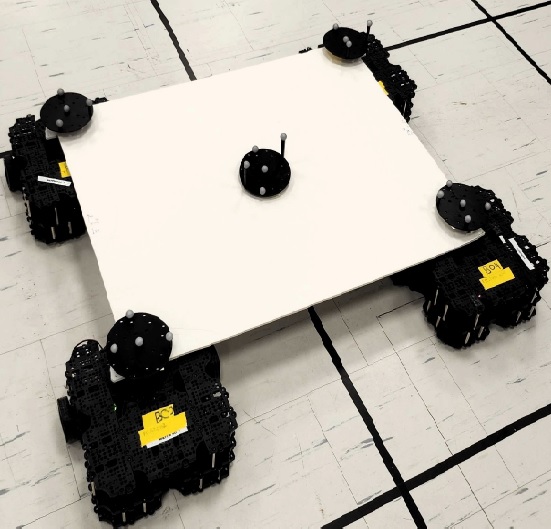
Sajad Saeedi Gharahbolagh is an Assistant Professor in the Department of Mechanical, Industrial, and Mechatronics Engineering at Toronto Metropolitan University and an Honorary Research Fellow at Imperial College London's Department of Computing. His research spans robotics, SLAM, focal-plane sensor-processor arrays (FPSP), and deep learning for autonomous systems. Education : PhD in Electrical and Computer Engineering (2014) from the University of New Brunswick. Prior Roles : Dyson Research Fellow (2018-2019) at Imperial College London; Postdoctoral Fellow at University of New Brunswick (2014); R&D Engineer at 2G Robotics (2015). His research focuses on Simultaneous Localization and Mapping (SLAM) for single/multi-robot systems Focal-plane Sensor-Processor Arrays (FPSP) for high-speed, low-power vision processing Autonomous aerial/underwater robotics Deep learning integration with traditional robotics algorithms Control systems for heterogeneous robotic platforms His work addresses challenges in computational efficiency, robustness in GPS-denied environments, and real-time multi-sensor data fusion. Recent publications highlight advancements in Distributed NeRF for collaborative mapping MR.CAP multi-robot control/planning BIT-VIO visual-inertial odometry WiFi-based geometric mapping FPSP-optimized CNNs PathBench benchmarking framework Scientific Awards : Dyson Research Fellowship (2018-2019) Best Robotics Paper (CRV 2021) Best Student Presentation (IROS 2023) Research Team : PhD Students: Christopher Kolios, Navid Zarrabi, Messiah Esfahani, Ishaan Mehta, Mahboubeh Asadi, Jack Saunders MASc Students: Georgia Jovanovic, Hussein Ali Jaafar, Austin Vuong, Roni Sherman, Matthew Lisondra, Glenn Shimoda, Ali Babaei, Robel Efrem, Messiah Ataey, Christopher Kolios, Nikolas Kourtzanidis Laboratory Facilities : Robotics and Computer Vision Lab (RCVL) with Vicon motion capture system 14 TurtleBot 3 platforms (Waffle Pi/Burger variants) Germicidal UVC-equipped G-Robots Jetbots with onboard GPU processing OpenMANIPULATOR robotic arms
Professor Xu Dong Zhang is an NHMRC Research Fellow and Head of the Melanoma Research Laboratory at the University of Newcastle's School of Biomedical Sciences and Pharmacy, within the College of Health, Medicine and Wellbeing. A globally recognized leader in skin cancer research, his work focuses on melanoma pathways, particularly the molecular mechanisms governing tumor resistance and metastasis. Key discoveries include identifying the role of PIB5PA in melanoma progression and its potential as a therapeutic target. His research integrates molecular biology, biochemistry, and clinical translation. Professor Zhang's education background includes a decade as a cancer surgeon in China before pursuing research at the University of Newcastle since 1995. His work bridges basic science and clinical applications, with collaborations at institutions like the Hunter Medical Research Institute (HMRI) and the Melanoma Institute Australia. He leads comparative studies on skin cancer biology between Australian and Asian populations, highlighting population-specific treatment differences. Research interests span apoptosis resistance, endoplasmic reticulum stress responses, and long non-coding RNAs (e.g., MILIP, PLANE) in cancer progression. His lab explores metabolic pathways, such as oxidative phosphorylation dependencies and the Warburg effect, to develop targeted therapies. Notable achievements include an H-index of 31 and editorial roles in top journals. Current projects address biomarker discovery (e.g., PIB5PA), obesity-melanoma links, and therapeutic strategies against BRAF/MEK inhibitor resistance. Collaborations with Chinese institutions (e.g., University of Science and Technology of China) have yielded over 30 co-authored studies. Grants and awards include NHMRC funding and equipment grants for cancer research infrastructure.
Dr. Robert Vanderbei is a Professor in the Department of Operations Research and Financial Engineering at Princeton University, based in Sherrerd Hall 227. His research bridges mathematical optimization and astronomical instrumentation. Research Domains: Foundational work in linear programming and simplex algorithm optimizations Pioneering contributions to exoplanet detection technologies including starshade coronagraph designs Development of telescope scheduling frameworks and wavefront control systems for space-based observatories Scholarly Output: His publications span mathematical optimization theory and astrophysical applications. Recent work (2017-2021) focuses on: Advanced coronagraph designs for next-generation space telescopes Wavefront sensing and control algorithms for high-contrast imaging Simulation methods for exoplanet observation missions Refinements of simplex and parametric optimization methods Professor Vanderbei maintains strong interdisciplinary collaborations between operations research, optical engineering, and astronomy communities.
Zhuoqing Morley Mao is a Professor in the Department of Electrical Engineering and Computer Science at the University of Michigan. He holds the Morris Wellman Faculty Development Professorship and has received prestigious awards such as the NSF CAREER Award and Sloan Fellowship. His research focuses on network systems, mobile/distributed systems, and cybersecurity, with a strong emphasis on autonomous vehicle security, sensor fusion, and adversarial machine learning. Mao received his B.S., M.S., and Ph.D. from the University of California, Berkeley. He has taught courses including EECS388 (Computer Security), EECS591 (Distributed Systems), and EECS280 (Programming and Data Structures). His work spans securing connected vehicles, analyzing cellular network performance, and developing robust protocols for autonomous systems. He has pioneered defenses against adversarial attacks on LiDAR and GPS spoofing, contributing to safer autonomous driving frameworks. Awards include the Sloan Fellowship (2012), NSF CAREER Award (2010), and IBM Faculty Partnership Award (2009). He leads projects such as AVGuardian for autonomous vehicle security and MPBond for mobile device collaboration. Mao's research has been published in top venues like SIGCOMM, Usenix Security, and IEEE S&P. His lab focuses on real-world network measurements, protocol design, and cybersecurity for emerging technologies.
Dr. Chengyi Qu is an Assistant Professor in the Department of Computing & Software Engineering at Florida Gulf Coast University (FGCU), affiliated with the U.A. Whitaker College of Engineering. He joined FGCU in Fall 2023 after completing his Ph.D. in Computer Science at the University of Missouri - Columbia (2023) and a Bachelor's in Software Engineering from Northeastern University (China, 2016). Prior to FGCU, he worked as a research assistant at Argonne National Lab and the Department of Energy. Education: Ph.D. in Computer Science, University of Missouri - Columbia, 2023 Bachelor of Science in Software Engineering, Northeastern University, China, 2016 Research Interests: Dr. Qu focuses on Edge/Cloud Computing, Cybersecurity, Unmanned Aerial Systems (UAS), Computer Networking, Machine Learning, and Advanced Cyberinfrastructure. His work emphasizes practical applications such as disaster response systems, drone swarm coordination, and secure video analytics. He has developed platforms like FlyNet and Dronenet-sim to support edge-to-core computing workflows for UAV applications. Grants & Advising: No specific grants or student advisees are listed in available records. His research contributions are highlighted through collaborations with institutions like Argonne National Lab and AERPAW testbed initiatives. Labs & Teams: His research involves platforms like FlyNet (for drone-edge-cloud collaboration) and Dronenet-sim (a simulation framework for UAS networks). These tools address challenges in autonomous systems, environmental routing, and secure data transmission.
Professor Andrew McMullan is a Professor of Computational Engineering at Aston University's School of Computer Science and Digital Technologies. He leads the Aston High Performance Computing (HPC) facility TAURUS, launching in 2025. His research focuses on Large Eddy Simulation (LES) applications in turbulent shear flows, urban pollution dispersion, and indoor ventilation systems. He has pioneered LES integration with Virtual Reality to study human behavior in polluted environments, supported by a Royal Academy of Engineering/Leverhulme Trust Fellowship (2020/1). Research Interests: Turbulent Shear Flow Analysis Urban and Indoor Contaminant Dispersion Modelling LES-Based Fluid Dynamics Simulations Computational Engineering Applications Publications Trends: Recent work emphasizes LES advancements in mixing layer dynamics (2024-2025), thermal stratification effects (2023), and urban pollution mitigation strategies (2022). Over 25 publications demonstrate expertise in fluid mechanics, turbulence modeling, and environmental engineering applications. Scientific Awards: Best Paper Award at AIAA Aviation 2015 Royal Academy of Engineering/Leverhulme Trust Research Fellowship (2020/1) Advising & Grants: Supervised 14 PhD students (2012-2023), primarily in fluid dynamics and LES applications. Active in securing research funding including major institutional HPC infrastructure development. Labs/Teams: Core member of the Aston Fluids Group. Leading TAURUS HPC initiative for advanced computational engineering research.
Dani Fadda is a Professor of Practice in the Department of Mechanical Engineering at the University of Texas at Dallas (UT Dallas), affiliated with the Erik Jonsson School of Engineering and Computer Science. He holds a PhD from Southern Methodist University (1996). His research focuses on Thermal Fluids Sciences, Multiphase Flow & Separation, Filtration, and innovative teaching methodologies in mechanical engineering education. His work spans experimental and applied research, including studies on heat transfer enhancement via microporous coatings, thermal ground plane design, and the integration of advanced technologies like augmented reality in classrooms. He has also contributed significantly to adapting engineering education during the global pandemic, exploring online delivery methods and student engagement strategies. Dr. Fadda’s publications highlight a dual focus: advancing thermal management solutions and redefining pedagogical approaches in mechanical engineering. Recent articles emphasize wettability effects in boiling heat transfer, comparisons between prototyping tools (laser cutters vs. 3D printers), and flipped classroom models for first-year students. He has been recognized with prestigious awards such as the UTD Certificate of Achievement (2018) and the ASME North Texas Engineer of the Year (2016). His research and teaching contributions reflect a commitment to bridging theory and practice, with a particular emphasis on fostering hands-on learning experiences for undergraduates. He has also explored topics like capillary evaporation, statics project design, and the optimization of industrial filtration systems.
Dr. Pablo Salva-Garcia is a Lecturer and Programme Leader of the BSc in Web and Mobile Development at the University of the West of Scotland (UWS). He earned his PhD at UWS and has contributed to EU Horizon projects such as SelfNet, SliceNet, and 6GBrains. His research focuses on 5G/6G networks, network slicing, edge computing, and cognitive control planes. He actively participates in the Beyond5GHub, emphasizing practical applications in industrial and aerospace sectors. Salva-Garcia's education includes a PhD from UWS, reflecting his deep institutional involvement. His research interests span Network Management, Software-Defined Networks (SDN), and Cloud Computing. Recent work emphasizes 6G architecture innovations, hardware acceleration (e.g., eBPF-XDP), and topology-aware slice management. His articles highlight trends in 5G/6G deployment challenges, economic feasibility of aerospace 5G, and hardware-based network slicing. He collaborates internationally, addressing multi-tenant network security and real-time video optimization in virtualized environments. Grants/Projects: EU Horizon projects (SelfNet, SliceNet, 6GBrains), Beyond5GHub collaboration. Advising: Accepting PhD students in mission-critical communications and next-gen networks. Salva-Garcia leads the BSc in Web and Mobile Development, integrating academic rigor with industry-relevant skills. He also contributes to the design of immersive network management interfaces and scalable video optimization frameworks.