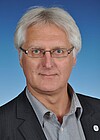
Professor Yufeng Yao is a Professor in Aerospace Engineering at the School of Engineering , University of the West of England (UWE Bristol). He leads the Engineering Modelling and Simulation (EMS) research group and specializes in high-fidelity flow physics simulations (DNS, LES) and industry-standard turbulent flow modeling (RANS, URANS). His research spans Turbulent wake dynamics Shock-wave/boundary-layer interactions Morphing winglet design Turbine blade cooling Supersonic combustion with applications in aerospace, automotive, and built environment systems. Recent publications highlight his work in aerodynamic optimization (e.g., morphing aerofoils, microjet inlets) alongside unexpected interdisciplinary contributions in biomedical genetics (e.g., miRNA polymorphism in cervical cancer, lipid metabolism in ferroptosis). This diversity reflects collaborations across fields.
Francisco Javier Rodriguez Rodriguez is a Full Professor in the Thermal and Fluids Engineering Department at Universidad Carlos III de Madrid, where he leads research within the Fluid Mechanics Group at the Gregorio Millán Barbany University Institute for Modelling and Simulation in Fluodynamics, nanoscience and industrial mathematics. His work spans multiple disciplines including Mechanical Engineering, Physics, and Biomechanics. Professor Rodriguez Rodriguez's research focuses on fluid mechanics phenomena, particularly bubble dynamics, multiphase flows, and interfacial phenomena. His work ranges from fundamental investigations of bubble formation, growth, and dissolution to applied research in heat transfer with additively manufactured heat pipes and respiratory droplet physics. His publications demonstrate expertise in microgravity fluid dynamics, droplet evaporation, and the physics of bubbly systems. His recent publications (2018-2025) show a consistent output in high-impact journals across fluid mechanics, physics, and engineering. The research trends reveal a progression from fundamental bubble physics toward more applied work in heat transfer technologies and pandemic-relevant respiratory droplet studies, while maintaining core expertise in fluid mechanics phenomena. Professor Rodriguez Rodriguez actively supervises doctoral students, with recent theses focusing on additively manufactured heat pipes, bubble dynamics in microgravity, and biomechanical applications. He has secured significant research funding as Principal Investigator on multiple projects including the DynaVirion project (2024-2027) studying virus dynamics in respiratory droplets and earlier work on coronavirus-containing droplet evaporation (2021-2025). His research group provides students with opportunities to work on cutting-edge problems in fluid mechanics using advanced experimental techniques. The lab maintains connections with international research centers including ZARM (German microgravity center) and collaborates with industry partners on heat transfer applications.
Rachid Boukhili is a Professor in the Department of Mechanical Engineering at Polytechnique Montréal, where he has established himself as a leading researcher in composite materials and mechanical engineering. His academic career spans multiple decades with continuous research productivity through 2025, demonstrating sustained scholarly impact. He is affiliated with the Centre de recherche sur les systèmes polymères et composites à haute performance (CREPEC) and contributes to multiple Centers of Excellence including Innovative materials, Transport and Sustainable Infrastructure, and Energy, Water and Resources. Professor Boukhili's research focuses on composite materials, with particular expertise in optimization of composite manufacturing parameters, analysis of bonded and bolted assemblies, characterization of physical and mechanical properties, and behavior of composites under fatigue and mechanical shock. His work bridges fundamental material science with practical engineering applications, particularly in aerospace, automotive, and hydraulic power generation sectors. He has made significant contributions to understanding damage tolerance, durability, and failure mechanisms in composite structures. His publication record shows a clear progression from foundational work on composite mechanics to increasingly specialized applications and advanced testing methodologies. Recent publications (2023-2025) emphasize sustainable manufacturing techniques, recycling of composite materials, and advanced characterization methods using digital image correlation. This trajectory reflects both continuity in core expertise and adaptation to contemporary engineering challenges related to sustainability and advanced manufacturing. Scientific Recognition: 1996 - Prix d'excellence en enseignement et en recherche, École Polytechnique de Montréal Professor Boukhili has supervised 16 PhD students and 24 master's students throughout his career, demonstrating significant mentorship impact. His teaching responsibilities include MEC4330 - Composite Materials, MEC3420 - Polymer Materials, and MEC6306A - Mechanical Behavior of Composite Materials, directly connecting his research expertise with student education. His research group at CREPEC continues to produce high-impact work in composite materials characterization, manufacturing optimization, and sustainable processing techniques. As a member of multiple Centers of Excellence, Professor Boukhili's work bridges fundamental research with practical applications in transportation infrastructure, energy systems, and sustainable technologies. His recent focus on recycling technologies and sustainable manufacturing reflects contemporary priorities while maintaining his core expertise in composite materials mechanics and characterization.
Dr. Hans-Hermann Ritze is a theoretical researcher at the Max Born Institute for Nonlinear Optics and Short Pulse Spectroscopy (MBI) in Berlin, Germany, where he leads the Attosecond Theory Group (T1) from House A, room 2.09. Contact is available via hans-hermann.ritze@mbi-berlin.de or +49 30 6392 1239. His work bridges quantum chemistry and ultrafast laser physics with experimental collaborators. His research centers on theoretical modeling of excited-state dynamics in biomolecules and nanostructures using attosecond spectroscopy techniques. Key focus areas include hydration effects on DNA base photostability (thymine, guanosine, adenine), proton transfer mechanisms, and fragmentation dynamics under intense laser fields. He integrates quantum simulations with time-resolved photoelectron spectroscopy to unravel non-adiabatic processes at femtosecond timescales. Analysis of his 2009-2015 publications reveals consistent investigation of photophysical relaxation pathways in aqueous environments, particularly how solvent interactions modulate excited-state lifetimes in nucleobases. His group specializes in simulating liquid-jet photoelectron spectra and modeling laser-induced dynamics in clusters like hydrated adenine and C60 fullerenes. Dr. Ritze has no listed scientific awards in the provided materials. While student advising isn't documented, his collaborative publications span multiple institutions including Fritz Haber Institute and University of Tokyo. He directs the Attosecond Theory Group at MBI, focusing on computational frameworks for electron-nuclear dynamics in photoionization and dissociation processes.
Professor Andrzej Frąckowiak is a distinguished academic at Poznań University of Technology, holding a position in the Faculty of Environmental and Energy Engineering within the Institute of Thermal Energy. With a scientific profile split between Environmental Engineering (75%) and Civil Engineering (25%), he represents a key figure in thermal engineering research in Poland. His career spans over two decades since completing his dissertation in 2000, with significant milestones including his habilitation in 2010 on inverse heat conduction problems. Professor Frąckowiak's research interests center on heat transfer, thermal engineering, and inverse problems, with recent work expanding into sustainable aviation technologies, hydrogen combustion, and advanced thermomechanical analysis. His scholarly output includes 59 scientific articles, 31 book chapters, 6 books, and numerous research reports demonstrating consistent productivity and relevance in his field. Notably, his 2024-2025 publications show continued active engagement with cutting-edge research topics. The publication trends reveal a strong theoretical foundation in mathematical methods for thermal engineering that has evolved to address contemporary challenges in sustainable energy systems. His work bridges fundamental research in inverse heat conduction problems with practical applications in aircraft engines, biomass boilers, and military systems. Recent publications increasingly focus on environmental sustainability through research on sustainable aviation fuel and hydrogen combustion technologies. Primary affiliation: Faculty of Environmental and Energy Engineering, Poznań University of Technology Supervised 5 doctoral dissertations (2014-2022) Reviewed multiple doctoral works Active research funding evidenced by numerous research reports Professor Frąckowiak maintains an active research laboratory focused on thermal energy systems, with ongoing projects related to sustainable aviation, advanced combustion technologies, and thermal modeling. His collaborative approach is evident through extensive co-authorship networks within the university and across different engineering disciplines, facilitating interdisciplinary research that addresses complex energy challenges.
Sylvain Martin is a Lecturer and Researcher at MINES Saint-Étienne's Centre for Chemical Engineering, affiliated with the Powder Science and Technology (PMMG) department. His academic background includes a PhD and Engineering degree in Chemical Engineering from Université de Technologie de Compiègne. His research focuses on numerical simulation of granular and porous media using particle methods: DEM : Simulating dry powders and mixing processes SPH : Modeling free-surface flows and atomization LBM : Analyzing reactive flows in porous materials Dr. Martin teaches core engineering subjects including Fluid Mechanics, Heat Transfer, and Computational Methods. His recent publications demonstrate consistent focus on advancing simulation methodologies for industrial applications like powder mixing optimization, sintering validation, and granular material characterization. Research frequently involves interdisciplinary collaboration with materials scientists and process engineers.
Dr. Ralf Brinkmann serves as Group Leader at the Institute for Biomedical Optics, University of Lübeck, and Managing Director of MLL GmbH. His research focuses on advancing optical imaging technologies for medical applications, particularly in neurosurgery and ophthalmology. His primary research interests include: Optical Coherence Tomography (OCT) and Elastography (OCE) Medical imaging for brain tumor detection Retinal laser therapies with precise temperature control Laser lithotripsy and urological applications Development of microscope-integrated imaging systems Dr. Brinkmann has published extensively with numerous high-impact publications from 2023-2025. His work demonstrates significant advancements in real-time temperature-controlled retinal treatments, in-situ brain tumor tissue delineation during neurosurgery, and improved laser stone ablation techniques. His research bridges engineering, physics, and clinical medicine to develop novel diagnostic and therapeutic approaches. His publication record shows a strong focus on: Real-time temperature-controlled retinal laser treatments Brain tumor tissue delineation during neurosurgery Optical methods for stone ablation in urology Fluorescence lifetime imaging for age-related macular degeneration Advanced image processing for medical diagnostics Dr. Brinkmann leads the AG Brinkmann research group and collaborates with numerous students and researchers, including Nicolas Detrez, Sazgar Burhan, Jessica Kren, and Paul Strenge, who frequently appear as co-authors on his publications. His work demonstrates strong interdisciplinary collaboration between engineering, physics, and clinical medicine, with direct applications to improving surgical outcomes and diagnostic capabilities.
Thierry Dufour is an Associate Professor at Sorbonne University and heads research activities at the Laboratory of Plasma Physics (LPP, UMR 7648), a joint research unit of Sorbonne University, CNRS, and École Polytechnique. He is affiliated with the Low Temperature Plasma team at the LPP, located at Sorbonne University's Pierre and Marie Curie Campus in Paris. Dr. Dufour earned his PhD in Plasma Physics from the University of Orleans in 2009, followed by postdoctoral research at the University of Brussels in 2010. He was appointed as Associate Professor at Sorbonne Université in 2015 and received his HDR (Habilitation à Diriger des Recherches) accreditation in 2016. His research spans multiple interdisciplinary fields where plasma technology intersects with life sciences and fundamental physics. Plasma Medicine constitutes a major focus, particularly in developing cold plasma treatments for solid tumors including cholangiocarcinomas and non-small cell lung carcinomas. His work extends to clinical engineering applications, notably cold plasma endoscopy for biliary duct treatments. In Plasma Agriculture , Dr. Dufour investigates seed decontamination, dormancy release, and stimulation of seedling growth across various crops including maize, barley, and lentils. His research in Evolutionary Biology examines extremophiles like tardigrades and halobacteria. Additionally, he conducts Fundamental Plasma Physics research on guided streamers and self-organization phenomena, along with expertise in plasma-material interactions and plasma gas processing for CO2 valorization. Dr. Dufour's scientific contributions include 47 peer-reviewed articles, 12 conference proceedings, and 6 patents as of 2024, with an h-index of 23 (Google Scholar). His recent publications demonstrate a strong trend toward translational research, bridging fundamental plasma phenomena with practical applications in medicine and agriculture. His work shows particular strength in developing plasma-based solutions for cancer treatment and agricultural improvement, with increasing focus on understanding the underlying biological mechanisms. Dr. Dufour actively contributes to the academic community through his membership on the LPP Council and the Plas@Par Steering Committee. He co-heads the "Initiative Physique des Infinis" research program at Sorbonne University and participates in several collaborative networks including the GDR Happybio under CNRS, and the PLASTHER and PLAGRI COST Actions. His research has been supported through various grants enabling interdisciplinary collaborations across physics, biology, and medical fields. As a dedicated educator, Dr. Dufour teaches courses in fundamental physics as well as specialized plasma applications. He has also co-founded and served as CEO of Auxoway SAS, demonstrating his commitment to translating academic research into practical applications.
Lucien Baldas is a Professor in the Mechanical Engineering Department at the National Institute of Applied Sciences of Toulouse (INSA Toulouse), where he serves as Associate Dean since 2020 and previously held roles including Director for International Relations (2007-2013). He is a member of the Modeling of Mechanical Systems and Microsystems (MS2M) research group, focusing on microfluidics and gas dynamics. His research spans microfluidics , gas microflows , fluidic micro-actuators for active flow control , particle-laden flows in microchannels , and mini pneumatic systems . Key projects include coordination of the ANR/DFG Project PuCK (2023-2026), Work-Package leadership for European Projects PERSEUS and MACAO, and coordination of the MIGRATE Training Network. His work demonstrates strong integration of theoretical modeling with experimental validation across fluid dynamics applications. Analysis of his 125+ publications reveals consistent focus on microscale flow phenomena , thermal effects in gas flows , and fluidic actuator development . Recent work (2021-2025) emphasizes additive manufacturing for microsystems , high-frequency fluidic oscillators , and multi-physics integration in microfluidic devices, with significant contributions to rarefied gas dynamics and particle transport phenomena. Key Administrative Roles: Associate Dean of Mechanical Engineering Department (2020-present) Elected Board of Studies member (2022-present) Co-chair of ISTEGIM 2019 Symposium Work-Package leader for multiple EU projects Co-Leader of Microfluidics Working Group (since 1999) His teaching portfolio includes Solid Mechanics, Automatic Control, Fluid Mechanics, and Computational Fluid Dynamics at INSA Toulouse. He has supervised numerous PhD students through EU projects and coordinates international research collaborations across Europe and North America.
Pieter Sijtsma serves as a Professor in the Department of Operations & Environment within Delft University of Technology's Faculty of Aerospace Engineering. His academic career spans over 15 years of specialized research in aeroacoustics, with significant contributions to microphone array technology and noise measurement methodologies. Current affiliations include active roles in the Berlin Beamforming Conference Committee and ongoing collaborations with major aerospace research entities. Professor Sijtsma's research focuses on advanced acoustic measurement techniques for aerospace applications. His work centers on beamforming algorithms , engine noise characterization , and wave propagation modeling in complex environments like wind tunnels and annular ducts. Key specialties include CLEAN-SC deconvolution methods for noise source mapping, directivity pattern analysis, and experimental validation of acoustic assessment techniques. His fingerprint reveals dominant expertise in acoustics (100%), noise measurement (97%), and microphone array technology (68%). Recent publication trends show concentrated activity in improving acoustic field assessment (2025), engine noise directivity determination (2024), and beamforming in swirling flows (2023). His work consistently addresses practical aerospace noise challenges through rigorous experimental validation and mathematical modeling, with strong emphasis on measurement accuracy and algorithmic innovation. Professor Sijtsma actively supervises research through collaborative projects, typically co-mentoring students with colleagues like Snellen and Avallone. His group maintains strong industry connections, evidenced by committee roles with the Ministry of Infrastructure and Environment and participation in international standard-setting conferences. Current projects involve EU-funded research on wind tunnel acoustic correction methods and engine noise source characterization. The research infrastructure leverages TU Delft's advanced wind tunnel facilities with specialized acoustic treatment and high-channel-count microphone arrays. Recent dataset releases confirm access to sophisticated wave propagation modeling tools and experimental validation platforms for closed-test-section environments.
Natalja Genina serves as Associate Professor in the Department of Pharmacy at the University of Copenhagen, specializing in personalized pharmaceutical manufacturing and drug delivery innovation. Her work bridges cutting-edge production technologies with healthcare system integration. Her educational foundation includes: Ph.D. in Pharmaceutical Technology from University of Helsinki (2010) M.Sc. in Pharmacy from University of Tartu (2006) Research centers on developing personalized dosage forms through printing technologies, non-destructive quality control systems, and digital platforms for on-demand drug production in pharmacies, industries, or homes. She investigates regulatory and societal impacts through interdisciplinary collaboration with Social and Clinical Pharmacy researchers, focusing on patient-oriented products and controlled drug delivery systems. Recent publications (2024-2025) demonstrate dominant trends in 3D pharmaceutical printing, particularly binder jetting and fused deposition modeling for patient-tailored products. Key themes include microstructure analysis of printed tablets, stability of antidepressant formulations, near-infrared/Raman imaging for quality assessment, and QR-encoded smart dosage systems - reflecting convergence of material science, precision medicine, and digital health. She mentors MSc and PhD students through problem-based learning and research integration, with many MSc students publishing papers before graduation. Her teaching philosophy emphasizes student ownership of ideas and active critical thinking through case studies and collaborative problem-solving. Leading the Pharmaceuticals, processes and products research group, she maintains international collaborations focused on translating personalized medicine concepts into practical healthcare solutions while addressing regulatory and distribution challenges.
Charles Louis Fefferman is the Herbert E. Jones, Jr. '43 University Professor of Mathematics at Princeton University, where he has held a faculty position since 1977. Previously, he served as a full professor at the University of Chicago from 1971 to 1977, becoming the youngest full professor in U.S. history at age 22. His academic journey began at the University of Maryland, College Park, where he earned his undergraduate degree at 17 before completing his PhD at Princeton under Elias Stein at age 20. Fefferman's research spans mathematical analysis with particular emphasis on harmonic analysis, partial differential equations, and complex analysis. His groundbreaking work on singular integrals, Hardy spaces, and the Bergman kernel revolutionized these fields, leading to his Fields Medal in 1978. More recently, he has made significant contributions to Whitney extension problems, fluid dynamics singularity formation, and mathematical aspects of topological materials. His publication record shows remarkable consistency over five decades, with recent work (2019-2023) focusing on manifold learning, smooth function interpolation, and quantum systems. These publications demonstrate both theoretical depth and increasing connections to data science applications, maintaining his position at the forefront of mathematical research. Fefferman's scientific honors form an exceptional constellation of recognition: Fields Medal (1978) Alan T. Waterman Award (1976, inaugural recipient) Salem Prize (1971) Bergman Prize (1992) Bôcher Memorial Prize (2008) Wolf Prize in Mathematics (2017) BBVA Foundation Frontiers of Knowledge Award (2021) As an advisor, Fefferman has mentored numerous doctoral students who have become leaders in their fields, including Matei Machedon, Luis Seco, and Michael Christ. His research group continues to explore fundamental questions in analysis while developing mathematical frameworks for emerging applications in data science and quantum physics. Fefferman remains actively engaged in research, with publications through 2023 demonstrating his continued intellectual vitality and mathematical creativity.
Gabriel Crosses is a Researcher in the Department of Physics "Giuseppe Occhialini" at the University of Milano-Bicocca, specializing in nuclear fusion diagnostics and radiation detection systems for tokamak reactors. His work focuses on developing advanced diagnostic tools essential for measuring and understanding plasma behavior in fusion experiments. Dr. Crosses' research interests center on radiation detection for fusion applications, with particular expertise in gamma-ray and neutron spectroscopy. He develops diagnostic systems including scintillation detectors, semiconductor-based neutron sensors, and proton recoil spectrometers. His work addresses critical challenges in measuring fusion power output, particularly for next-generation devices like ITER. Recent research incorporates machine learning techniques to improve diagnostic accuracy in complex fusion environments. His publication record shows consistent contributions to the field, with numerous articles in 2025-2026 focusing on detector development, plasma diagnostics, and analysis methods for major fusion facilities including SPARC, ITER, MAST-U, and JET. The research spans both theoretical modeling and experimental validation of diagnostic systems. Dr. Crosses collaborates extensively with international fusion research teams across multiple facilities. His work supports the development of reliable diagnostic tools necessary for advancing fusion energy research toward practical implementation.
Giuseppe Gorini is a Professor in the Department of Physics "Giuseppe Occhialini" at the University of Milan-Bicocca, specializing in nuclear fusion diagnostics and plasma physics. His research primarily focuses on developing and implementing advanced diagnostic techniques for measuring fusion power in tokamak devices through neutron and gamma-ray spectroscopy. Professor Gorini's research interests center on fusion plasma diagnostics, with particular expertise in gamma-ray spectroscopy for fusion power determination, neutron detection systems, and radiation-hard detector development. His work addresses critical challenges in magnetic confinement fusion, including accurate measurement of fusion reactions, plasma behavior analysis during disruptions, and characterization of detector technologies for harsh fusion environments. His research has significant implications for the success of major fusion projects including ITER, SPARC, and other international tokamak experiments. His recent publications demonstrate a strong focus on applying cutting-edge diagnostic approaches to solve fundamental challenges in fusion research. The work spans from fundamental detector characterization to complex plasma physics analysis, with an increasing incorporation of machine learning techniques for data analysis. His research consistently addresses the critical need for accurate, reliable diagnostics in the path toward practical fusion energy. Professor Gorini actively collaborates with major fusion research institutions worldwide, contributing his diagnostic expertise to experiments at facilities including JET, MAST-U, TCV, and SPARC. His work on gamma-ray spectroscopy for fusion power measurement represents a critical capability needed for the success of ITER and future fusion power plants.
Abdullah al Faruque serves as an Associate Professor within the Department of Civil Engineering Technology, Environmental Management and Safety at Rochester Institute of Technology's College of Engineering Technology. His academic foundation includes a B.Sc. from Bangladesh University of Engineering and Technology (BUET), followed by M.A.Sc. and Ph.D. degrees from the University of Windsor, Canada, complemented by Professional Engineer licensure in Ontario (PEO). His educational background encompasses: B.Sc. in Civil Engineering, Bangladesh University of Engineering and Technology (BUET) M.A.Sc. and Ph.D. in Civil Engineering, University of Windsor, Canada Professor Faruque's research expertise centers on fluid mechanics and hydraulic engineering, with specialized focus on turbulence characteristics in open channel flows, bridge pier scour mechanisms, and environmental fluid dynamics. His investigations into roughness effects, Reynolds number dependencies, and seepage impacts provide critical insights for infrastructure resilience and environmental protection. Recent work extends to hydrofracking effects on aquifers, demonstrating interdisciplinary relevance across civil and environmental engineering domains. Analysis of his 15 most recent publications (2010-2018) reveals sustained productivity with emphasis on experimental fluid dynamics, turbulence modeling, and practical hydraulic applications. His work consistently bridges fundamental flow physics with engineering design challenges, particularly in sediment transport and infrastructure vulnerability assessment. Professor Faruque actively contributes to engineering education through core civil engineering technology courses including Statics, Strength of Materials, Structural Analysis, and Reinforced Concrete Design. His teaching integrates commercial structural analysis software (STAAD) and emphasizes practical laboratory applications, as evidenced by publications on equipment modernization and educational technology implementation. While specific grant details and student advising information aren't provided, his publication trajectory suggests active research mentorship. No dedicated laboratory name or web presence was identified in the source materials.