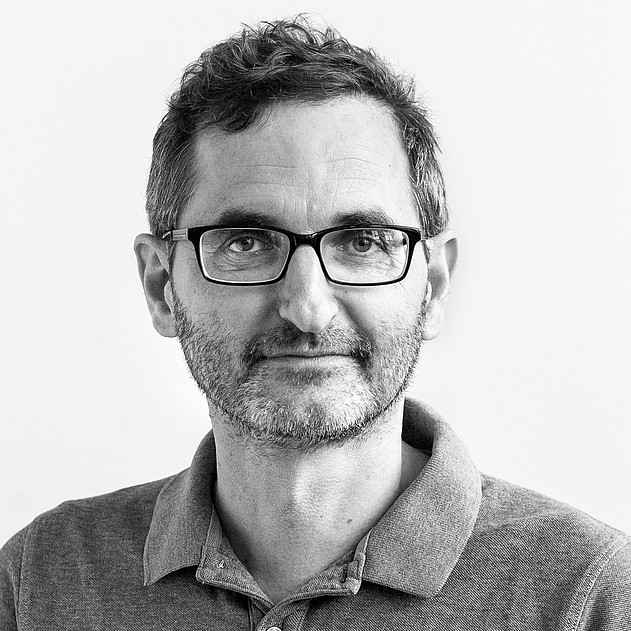
Gil Weinberg is a Professor at the Georgia Institute of Technology's College of Design, School of Music, and founding director of the Georgia Tech Center for Music Technology. He leads the Robotic Musicianship group, pioneering research in artificial creativity, musical expression for robots, and human augmentation through robotics. Professor, Georgia Tech School of Music Founding Director, Georgia Tech Center for Music Technology Education: Ph.D. in Media Arts and Sciences, MIT MS in Media Arts and Sciences, MIT BA in Interdisciplinary Program for Fostering Excellence, Tel Aviv University Research Interests span Robotics, Music Technology, Human Augmentation, and Ethnomusicology. Notable projects include Shimon , a robotic marimba player using machine learning for jazz improvisation, and a prosthetic robotic arm enhancing drumming abilities for amputees. Recent Work Trends focus on emotional prosody in robotics, cultural music system integration, and multimodal interaction. His 2025 publications explore sonification applications in biomedical contexts, Carnatic music synthesis, and large-scale robotic musicianship frameworks.
Sarah Gimbert Sterman is a Research Assistant Professor in the Computer Science department at the University of Illinois Urbana-Champaign, where she leads the Process, Interaction, and Creativity Lab (PICL). Her work bridges computer science, design, and humanities perspectives to develop computational creativity support tools. Her educational background includes: PhD in Computer Science from University of California, Berkeley (Hybrid Ecologies Lab with Eric Paulos) MS in Computer Science from Stanford University BS in Product Design from Stanford University Sterman's research examines creative process across multiple domains including writing, CS education, and design. She applies computational approaches to understand and enhance creative work, with recent focus on AI writing tools and how they impact creative expression. Her work consistently explores how documentation practices support reflection and learning in creative processes, examining both digital and analog approaches to creative work. Her publication portfolio reveals a consistent trajectory exploring creative process support, with recent work heavily focused on AI writing tools and their impact on creative expression. The research spans technical development of novel tools, empirical studies of creative practices, and theoretical frameworks for understanding creativity in digital contexts. Keywords across her work include human-computer interaction, creative tools, documentation, and educational technologies. Notable honors include: Google Academic Research Award (2024) for "Teaching Debugging Skills in an Age of LLMs" Best Paper Award at CHI 2023 for "Kaleidoscope: A Reflective Documentation Tool" Best Paper Award at C&C 2022 for "Creative and Motivational Strategies of Expert Creative Practitioners" Best Paper Honorable Mention at CHI 2018 for "MatchSticks: Woodworking through Improvisational Digital Fabrication" Sterman has received significant grant support including the Google Academic Research Award of $100,000 for her work on teaching debugging skills with AI. She actively mentors graduate students interested in HCI, creativity, and education, teaching courses including CS 591 IC (Interactive Computing) and CS 598 MPL (Methodological Pluralism). Her teaching philosophy emphasizes bringing whole perspectives to computing research. She leads the Process, Interaction, and Creativity Lab (PICL) at UIUC, which focuses on understanding creative process and building computational tools to enhance creative work. The lab brings together researchers from computer science, design, and humanities to explore both technical and theoretical aspects of creativity support.
Erin B. Lavik is a Professor and Associate Dean for Research and Faculty Development at the College of Engineering and Information Technology (COEIT) at the University of Maryland Baltimore County (UMBC), where she is affiliated with the Department of Chemical, Biochemical and Environmental Engineering. Dr. Lavik holds a Sc.D. (2001), M.S., and B.S. in Materials Science and Engineering from the Massachusetts Institute of Technology. Her primary research interests focus on developing translatable approaches to treat injuries and diseases of the central nervous system, including spinal cord injury, glaucoma, and retinal degeneration, utilizing polymer science, drug delivery, and cellular therapy approaches. Her recent publications demonstrate a strong focus on nanomedicine, biomaterials, and neural tissue engineering, with particular emphasis on nanoparticle-based drug delivery systems, hydrogel scaffolds for tissue engineering, and strategies to mitigate immune reactions to therapeutic interventions. She has also contributed to engineering education through publications on innovative teaching methods and adapting to online learning environments. Dr. Lavik's research spans multiple disciplines including biomedical engineering, nanotechnology, materials science, and neuroscience, reflecting her interdisciplinary approach to developing therapeutic solutions for neurological conditions. She is actively engaged in both research and educational initiatives at UMBC, serving in leadership roles while maintaining an active research program as evidenced by her consistent publication record from 2017-2021.
Jesse Jonkman is an Assistant Professor in International Development Studies at Utrecht University's Faculty of Geosciences, specializing in political and environmental anthropology. His research examines resource extraction, state formation, and infrastructure politics, primarily in Colombia. Core research themes: Resource extraction and territorial governance Subterranean politics and materiality Infrastructural improvisation and autonomy Transnational mining networks Recent publications (2018-2025) reveal three dominant clusters: ethnographic examinations of small-scale mining (53%), methodological reflections on resource studies (20%), and critical analyses of sustainable extraction discourses (13%). His work consistently engages with Latin American political ecology and decolonial approaches. Honors: JC Ruigrok Award from Royal Dutch Society of Sciences FSW Dissertation Prize for outstanding PhD thesis Current Projects: NWO-Veni grant on gold supply chain transparency (2024-2028) Postdoctoral research on material practices in mining regions
Carey Bunks is a Visiting Professor at the School of Electronic Engineering and Computer Science, Queen Mary University of London. Their research focuses on music informatics and algorithm development, particularly in Cover Song Identification (CSI) funded by Apple. The project emphasizes robust algorithms for detecting musical improvisations and variations across song versions, with applications in copyright protection and music recommendation systems. Key research interests include harmonic analysis, jazz musicology, signal processing, and computational methods applied to music. Their work bridges computer science and music theory, addressing challenges in audio analysis and algorithmic musicology. Collaborations involve industry partnerships like Apple, leveraging interdisciplinary expertise in software engineering, numerical computing (e.g., Scilab), and signal processing. Earlier contributions span seismic analysis, reservoir monitoring, and cybersecurity methodologies.
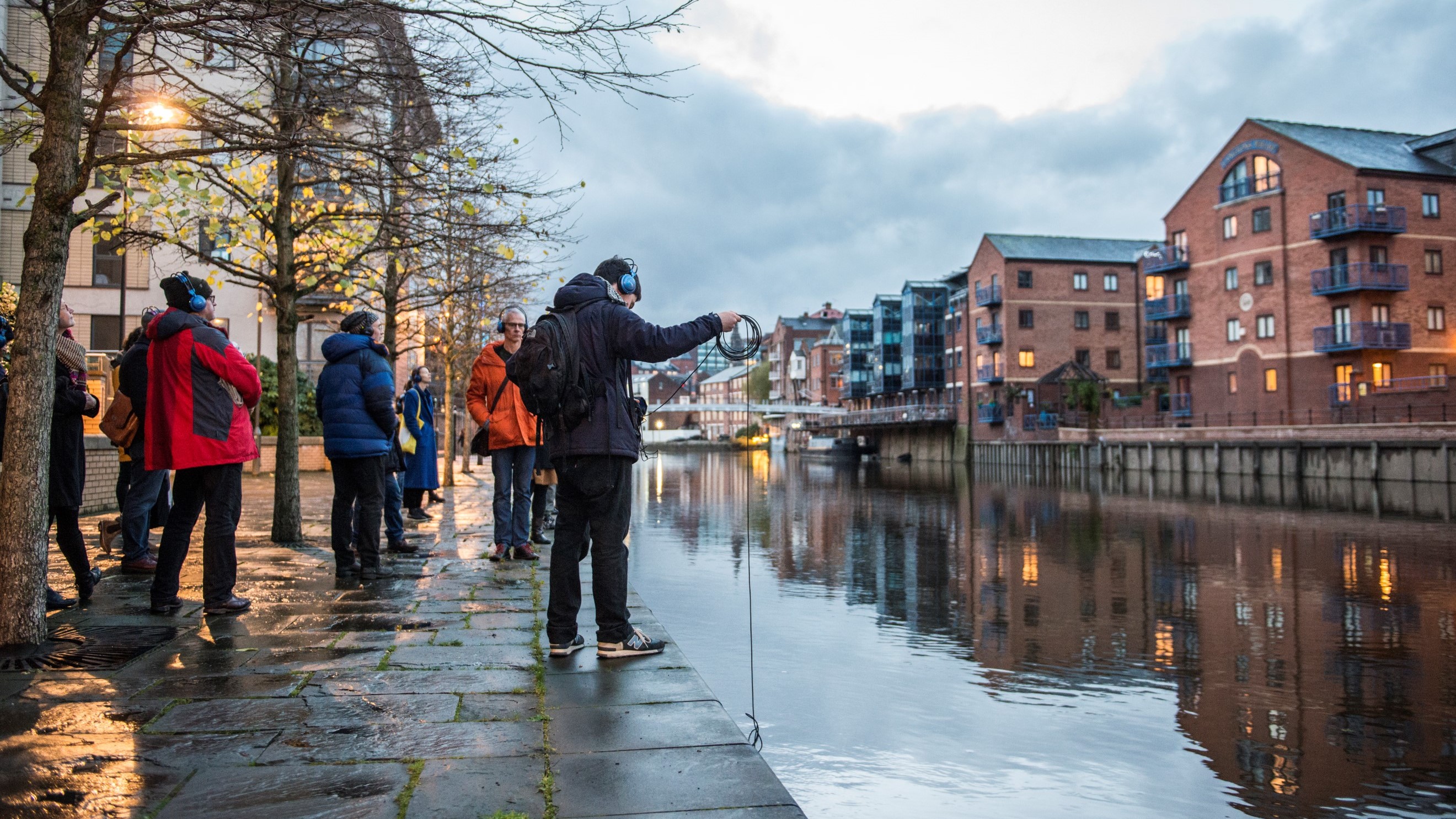
Tim Shaw is an academic staff member at the School of Arts and Cultures, Newcastle University, specializing in Fine Art through a unique sound-based practice. His project Ambulation redefines field recording as a live, participatory performance using wireless headphone systems to transmit real-time acoustic and electromagnetic signals to audiences. This work bridges sound art, digital media, and interactive technologies. Shaw’s research focuses on soundwalking , live sound manipulation , and audience-centered sonification . His practice employs self-built hardware and software to create immersive environments, emphasizing the interplay between geography, technology, and perception. Since 2015, Ambulation has been presented at 17 international events, including FACT Liverpool and Sonica Festival. His publications explore site-specific soundscapes , minimalist interfaces , and transdisciplinary artistic engagement , reflecting evolving trends in acoustic ecology and digital performance. Collaborative projects like Many Makings highlight public participation in art creation.
Dr. Xinyue Zhang is a Lecturer in the School of Project Management at The University of Sydney. She holds a Ph.D. from Tongji University (2023) with a joint program at Delft University of Technology (2021-2023). Her research focuses on infrastructure management, project organizing, and systems integration, with particular emphasis on tensions between projects and permanent organizations, systematic delivery models, and digitalization-driven future project systems. Teaching responsibilities include PMGT1860 (Project Initiation and Scope) and PMGT5858 (Project Initiation). Current research funding includes a University of Sydney Faculty of Engineering Start-up Grant (2024-2026) and a National Natural Science Foundation of China grant (2024-2028, Co-I). Co-lead for the 'Projects in the face of climate change' pillar at the Net Zero Institute. Member of the Editorial Review Board for Project Management Journal. Her industry engagement includes participation in the Beijing Daxing International Airport execution and planning for Shanghai Pudong Airport’s Phase IV expansion. She has contributed to 22 airport and 27 hospital projects in China, emphasizing practical application of research findings. Awards include the Top Cited/Viewed Article in Journal of Operations Management (2025), EURAM Best Track Award (2024), and China National Scholarship (2021-2023). She advises two research students: Yuhan Liu (Inter-Project Learning) and Vivi Shu Wen (Project Organizing for Systematic Delivery).
Bryan Cardinale-Powell serves as Associate Professor and Chair of Film in the Department of Moving Image Arts at Oklahoma City University's College of Arts and Sciences. With extensive professional experience in film production prior to academia, he brings practical industry knowledge to his academic leadership and teaching responsibilities. His educational background includes: M.S. (MFA) in Film Production from Boston University A.B. in Economics, cum laude, from Xavier University Additional graduate work in film history and theory at Georgia State University Professor Cardinale-Powell's scholarly work focuses on American independent cinema and personal documentary, with particular expertise in British director Mike Leigh's filmmaking methods. His research explores the intersection of cinematic form, social context, and production techniques, examining how theoretical frameworks manifest in practical filmmaking. He has published extensively on directorial analysis, film history, and innovative pedagogical approaches to media education. His recent publications demonstrate consistent thematic focus on directorial studies (particularly Mike Leigh's work), historical analysis of film industries, and creative approaches to film education. The articles collectively reveal his dual expertise in both theoretical film studies and practical production techniques. His notable professional achievements include: Southeast Region Emmy Award GABBY Award from the Georgia Association of Broadcasters Telly Award Beyond research, Professor Cardinale-Powell actively mentors students through his role as Director of the OCU Film Institute and coordinator of the deadCenter University Educators' Forum. His administrative leadership includes chairing the University Budget Committee and PCAS Promotion & Tenure Committee, while serving on the Faculty Senate Executive Committee and multiple curriculum development groups. He maintains strong community connections through his photography work for TheatreOCU, advisory roles with the Oklahoma Arts Institute Film & Video Board, and extensive work with young filmmakers at Oklahoma Children's Theatre and the OK Cine Latino Youth Film Workshop. His creative practice includes recent film direction projects and photography exhibitions at the Nona Jean Hulsey Gallery.
Dr. Kathleen Keogh is a Lecturer in Information Technology at Federation University Australia, specializing in intelligent software agents and multiagent systems. She coordinates the Bachelor of IT (Professional Practice) program, integrating industry internships with IBM and Kyndryl. Her research focuses on modeling human behavior through agent-based systems, particularly in dynamic environments requiring improvisation. She holds a PhD from the University of Melbourne (2019), with prior qualifications including a Master of Science (2002) and Bachelor of Science (Honours) (1988). Education: PhD (Computer Science), University of Melbourne (2019) MSc (Cognitive Science), University of Melbourne (2002) BSc(Hons) (Computer Science), James Cook University (1988) DipEd (Adult Education), Australian Catholic University Research Interests: Her work emphasizes agent coordination in complex scenarios, such as emergency management simulations. She explores organizational constructs enabling autonomous agents to adapt dynamically, contributing to sociotechnical systems analysis. Recent studies include familiarity-based team recognition in academic networks and runtime flexibility in multiagent systems. Teaching & Industry Collaboration: Dr. Keogh teaches programming, software engineering, and capstone projects using Scrum methodologies. She manages industry partnerships for work-integrated learning programs, ensuring students gain practical experience while studying. Labs & Collaborations: Involved in interdisciplinary projects with IBM and Kyndryl, focusing on cloud and enterprise computing. Her research integrates computational models of human expertise, such as disturbance management in healthcare.
Laura Gonzalez is a PhD Research Fellow at the Royal Conservatoire of Scotland and an Athenaeum Research Fellow with the Research and Engagement Sciences, Humanities and Arts Research Exchange (SHARE). She also serves as Reader in Contemporary Art and Performance Practice at Glasgow School of Art and faculty member at the Transart Institute. Her academic work bridges performance art, psychoanalytic theory, and contemplative practices with a particular focus on the intersections of breath, body, and consciousness. Her research interests span psychoanalytic approaches to art (particularly Freudian and Lacanian theory), hysteria in performance, durational and intimate performance practices, breath and voice studies, Eastern cosmologies, and the theoretical frameworks of seduction in artistic practice. Gonzalez has developed a unique methodology that combines psychoanalytic theory with embodied practices, creating innovative approaches to understanding the relationship between performer and audience, theory and practice. Gonzalez's scholarly output demonstrates a clear trajectory from early work on psychoanalytic approaches to art objects toward increasingly sophisticated explorations of breath, voice, and the hysteric body in performance. Her recent publications (2023-2025) show a deepening engagement with Eastern philosophical traditions, particularly yoga and pranayama, while maintaining her foundational psychoanalytic framework. This synthesis represents a significant contribution to performance studies, offering new methodologies for understanding the mind-body connection in artistic practice. Athenaeum Award (2018, 2023) Breath Practice: Creative Scotland Open Project Funding Award CS-1910-29042 (2019) Glasgow Medical Humanities Network Foundation Award (2023) RCS Student-led Awards: Outstanding Research Supervisor (2025) Gonzalez has supervised numerous PhD students across multiple institutions including the Royal Conservatoire of Scotland, Glasgow School of Art, and Transart Institute. Her supervision portfolio demonstrates remarkable breadth, spanning topics from Deaf performer training to the mytho-geographical line in drawing practice. She has secured research funding including the Creative Scotland Open Project Funding for her Breath Practice project, indicating strong grant-writing capabilities and institutional support for her interdisciplinary work. Gonzalez also co-directs @TheGlasgowJam, a Contact Improvisation organization that provides multidisciplinary performance opportunities to the community, demonstrating her commitment to bridging academic research with community engagement.
Dr. Mark Foley is a Professor of Double Bass and Electric Bass at Wichita State University's College of Fine Arts, School of Music. He serves as Principal Double Bassist of the Wichita Symphony Orchestra and is active in diverse musical genres including jazz, rock, and bluegrass. Foley founded the Knob Festival of New Music, an annual event showcasing contemporary compositions. He holds degrees from the University of Minnesota, Eastman School of Music, and Indiana University's Jacobs School of Music, where his doctoral work uncovered an unpublished double bass concerto by an 18th-century Viennese composer. Education: Doctorate in Music Performance, Jacobs School of Music, Indiana University Master's in Music Performance, Eastman School of Music Bachelor's in Music Performance, University of Minnesota Research & Performance: Foley's expertise spans classical, jazz, and experimental music. He performs on an 1810 Gagliano double bass and actively composes electronic music. His teaching emphasizes technique, improvisation, and interdisciplinary approaches, as detailed in blogs about pedagogical strategies with luminaries like Adam Linz and Chris Bates. Honors & Grants: While no formal awards are listed, his contributions to music education and performance are recognized through his roles in festivals, orchestras, and academic leadership. Labs/Teams: Coordinates the Knob Festival and collaborates with Wichita's jazz and rock scenes, maintaining active engagement in music communities through workshops and masterclasses.
Dr. Sonja Schaeffler is a Reader in Speech Variation at Queen Margaret University (QMU), Edinburgh, within the Division of Speech & Hearing Sciences in the School of Health Sciences. She serves as the Academic Coordinator for Research Culture and Doctoral Studies for the School of Health Sciences and is a full member of the Research Centre for Clinical Audiology, Speech & Language (CASL). Her educational background includes an M.A. in Phonetics (with German Linguistics and Psycholinguistics as minor subjects) from Ludwig-Maximilians-University Munich and a PhD in Psychology from the University of Stirling, supervised by Professor Vera Kempe. Dr. Schaeffler's research focuses on the 'when, how and why' of speech variation, exploring the fine-phonetic and articulatory details of intentional and unconscious speech variation. Her work spans the interdisciplinary borderland between Phonetics and Psychology, examining intra- and interindividual differences in cognitive processing, oro-motor skills, attitude, motivation, and personality that may facilitate or impede speech variation. Her current projects include research on speech registers (particularly child-directed speech), adaptations of articulatory settings in bilinguals, variations in silent speech preparation, and accent variation in Scotland. Analysis of her recent publications reveals a strong focus on the cultural evolution of child-directed speech, bidialectal speech adaptations, and the psychological and social implications of speech variation. Her work frequently employs advanced methodologies including ultrasound tongue imaging and acoustic analysis to investigate subtle articulatory movements and their perceptual consequences. Member of the British Association of Academic Phoneticians (BAAP) Member of the ESRC Peer Review College Dr. Schaeffler has successfully secured multiple research grants including SFC and UKRI Talent and Research Stabilisation Funding (2022) as Principal Investigator for research on the cultural evolution of Child-Directed Speech. She has supervised numerous PhD students including Ciera Haggar, Irina Brodskaya, and Janet Coulson, with research topics spanning accent adaptation, ultrasound tongue imaging for 'second accent' training, and articulatory reaction times. Her research group on 'Accent Variation in Scotland' collaborates with Prof Jim Scobbie (QMU), Prof Jennifer Smith (Glasgow University), and PhD student Janet Coulson. She actively promotes Open Science principles in research development and champions the 'Students as Researchers' approach in PhD training, aligning with the Higher Education Academy's framework.
Prof. Dr. Alberto de Campo is Professor for Generative Art/Computational Art at University of the Arts Berlin's Institute for Time-Based Media. His research explores computer music systems, generative art practices, and scientific sonification methods. De Campo has led research projects including 3DMIN (new instrument design) and SonEnvir (scientific data sonification). His creative practice develops novel interfaces like the nUFO movement instrument and SlowQin hybrid guqin, bridging cultural heritage with technological innovation. Publications examine collaborative live coding, metacontrol frameworks, and interdisciplinary approaches to computational art. De Campo's work consistently explores emergent behaviors in complex audiovisual systems.
Marlon Barrios Solano is an interdisciplinary artist, creative technologist, and researcher at the University of Florida's Center for Arts, Migration and Entrepreneurship (CAME) since 2024. With an MFA in Dance and Technology from Ohio State University and software engineering training, he merges generative AI, machine learning, and queer theory to create epistemic infrastructures. Current roles: Maker-in-Residence at CAME, Lake Studios Berlin co-founder Education: MFA in Dance and Technology (2004), General Assembly Software Engineering Immersive (2021) His work interrogates latent space as a metaphor for diasporic memory and synthetic cognition. Through live AI collaborations , he constructs knowledge labs that challenge Silicon Valley's extractive AI paradigms, focusing on Decolonial AI frameworks Queer techno-intimacy Embodied computational ethics Somatic machine learning Scientific achievements include 2017 Hombroich Fellowship Residencies at Radiona (Croatia), ICK Amsterdam (Netherlands) fal.ai Research Grant for real-time AI development He has published in Transmission in Motion and Dance in the Head , while pioneering open-source platforms like dance-tech.net (2007) and movimiento.org (2011). Currently developing the Born in Latent Space five-year research arc (2024-2029).
Bonnie Whiting is the Chair of Percussion Studies and an Associate Professor at the University of Washington School of Music. Her work focuses on experimental music, non-traditional notation, interdisciplinary performance, and the integration of spoken word with percussion. She actively commissions and performs new works, collaborating with composers and multimedia artists globally. Whiting’s research and creative practice include site-specific installations, IoT data transcoding projects, and collaborations with incarcerated women. She has received a Mellon Creative Fellowship (2019/20) supporting her work with designer Audrey Desjardins on data-transcoding performance. Notable projects include Control/Resist (2017) and Through the Eyes(s) (2021), a collaborative cycle with composer Eliza Brown. Performance Highlights: Work with the Harry Partch Ensemble, National Orchestra of Turkmenistan, and multimedia artist Afroditi Psarra Recordings: Perishable Structures (2020), null_abc (2018), and John Cage’s 45’ for a speaker (2017) Her creative collaborations span Norway, New Zealand, and the US, emphasizing experimental music’s intersection with technology and social engagement.