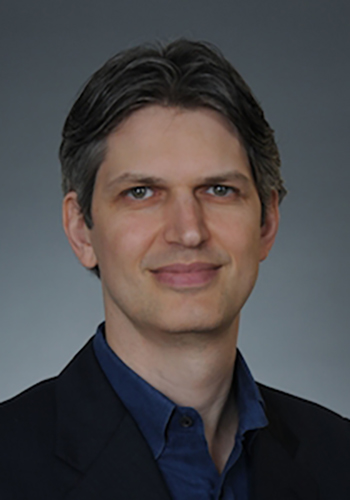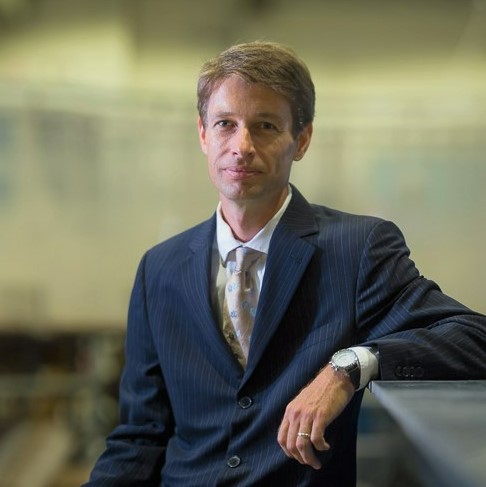
Colin D. Rennie is a Professor and Chair in the Department of Civil Engineering at the University of Ottawa, Faculty of Engineering. He holds a Ph.D. and MASc from the University of British Columbia and a B.Sc. from the University of Guelph, and is a licensed Professional Engineer (P.Eng.). He is an active researcher, educator, and leader in river and environmental hydraulics. His research focuses on river morphodynamics, sediment transport, turbulence, and aquatic habitat, utilizing advanced techniques including acoustic Doppler current profilers (ADCPs), laboratory physical models, and 3D numerical modeling. His work addresses critical issues such as river stability, flood dynamics, hydroelectric development, and ecosystem protection. The recent trends in his publications reflect a strong emphasis on high-resolution numerical modeling of local scour, sediment transport using acoustic methods, and the morphodynamic impacts of river confluences and floods. His work integrates field data with computational fluid dynamics (CFD), particularly using OpenFOAM, to understand complex flow-sediment interactions. He is an Associate Editor of the Journal of Hydraulic Engineering (ASCE) and has served on editorial boards of Journal of Geophysical Research – Earth Surface (AGU). He is a member of professional organizations including ASCE, IAHR, CSCE, and AGU, and has held leadership roles such as Secretary of the River Hydraulics Division at IAHR. Professor Rennie currently supervises multiple graduate students, including Yi Man, Xiatong Cai, Qingcheng Yu, and others, supporting research in sediment dynamics and hydraulic modeling. He has secured research funding for projects related to river flooding, ice processes, and habitat restoration. His teaching includes CVG3116 (Hydraulics), CVG4001 (Introduction to Civil Engineering Design), CVG4907 (Design Project), CVG5162 (River Hydraulics), and CVG5160 (Sediment Transport). His research has been conducted globally, with collaborations in New Zealand, Switzerland, Spain, and China, where he has led field campaigns and trained researchers in spatial mapping of water and sediment fluxes. He has applied his expertise to major flood events, including the 2013 Alberta flood and the 2017–2019 Ottawa River floods.