Nadine Großmann is a PhD Candidate at Freie Universität Berlin, affiliated with the Department of Biochemistry under the School of Chemistry and Biochemistry within the Department of Biology, Chemistry, and Pharmacy. She is a member of the Knaus Group , specializing in Signal Transduction research. Research Interests Signal Transduction Protein Interactions Chemical Biology Molecular Biology Cell Signaling Sustainable Research Practices Her work contributes to the lab’s focus on developing chemical dimerizer systems for protein interaction control and monitoring, as seen in recent publications like MT36 sensor development in Angewandte Chemie . Contact Email: nadine.grossmann@fu-berlin.de Phone: +49 30 838 52911
Michael B. Chamunorwa is a Research and Design Engineer and PhD candidate at the University of Oldenburg's Department of Computing Science (School II), specializing in Media Informatics and Multimedia Systems. His research focuses on designing user interfaces embedded in everyday objects for smart home control, exploring embodied interaction and repurposing household items as smart home interfaces. He holds a Bachelor of Technology in Software Engineering and a Master's in Computer Science from the Namibia University of Science and Technology. Michael has taught as a tutor and project supervisor in courses such as 'Experiments and Studies' and 'Makers’ Lab - Things that Think', supervising projects like 'Rich Interactive Materials for Everyday Objects in the Home'. His work bridges theoretical research with practical applications, including developing tools for cultural preservation with marginalized communities in Namibia. Key research areas include tangible user interfaces, embodied interaction, and smart home systems. His projects often involve collaborations with industry-standard frameworks and have been published in venues like ACM International Conference on Mobile and Ubiquitous Multimedia (MUM) and Interactive Surfaces and Spaces. Michael's current PhD project investigates secondary affordances of everyday objects to enhance smart home user experiences. He has contributed to open-source tools like the 'Popup Observation Kit' for remote usability testing and the 'Sweet Spots' AR platform for interaction area visualization. He has been actively involved in the Virtual and Augmented Reality Lab (inf174) and the Makers’ Lab, emphasizing hands-on innovation in technology design. His work reflects a commitment to both academic rigor and real-world societal impact through technology.
Prof. Dr. Armando Walter Colombo is a Professor at the Department of Technology, Electrical Engineering and Informatics at the University of Applied Sciences Emden/Leer. He leads the Institute I2AR as Scientific Director and coordinates the DAAD/DAHZ Binational Master in Industrial Informatics with the Universidad Tecnológica Nacional-FRRe in Argentina. His research focuses on Cyber-Physical Systems (CPS), Industrial Digitalization, Industry 4.0, and Smart Manufacturing. Key areas include asset administration shells, IoT integration, and sustainable industrial automation. He holds IEEE Fellow status and is a Distinguished Lecturer for the IEEE Systems Council. He has pioneered educational frameworks like T-CHAT and contributed to standards alignment (RAMI4.0, IEEE Industrial Agents). Recent publications emphasize Industry 4.0 compliance, digital twins, and AI in logistics. Responsibilities: DAAD Master Coordinator, Institute I2AR Director, and International Relations Officer. Awards: IEEE Fellow, Distinguished Lecturer (IEEE Systems Council). Grants & Partnerships: DAAD-funded binational programs, EU-funded PERFoRM projects. His work bridges academia and industry through platforms like the ICPS-based Digital Factory Lab, addressing SME digitalization and sustainable automation.
Prof. Sven Steinigeweg is a Professor of Environmental Technology and Process Automation at the University of Applied Sciences Emden/Leer, affiliated with the School of Natural Science and Technology. His work focuses on sustainable energy systems, particularly biogas production optimization, CO2 capture, and hydrogen technology. He leads projects like H2Watt (Hydrogen on North Sea Islands) and Smart-RLT (Energy Efficiency in Air Handling Devices), funded by Interreg, the German Federal Environmental Foundation, and the EU. Research interests include flexible biogas plant operation, power-to-gas systems, and eco-efficient energy processes. Notable contributions address residual load management, anaerobic digestion modeling, microbial community dynamics, and life cycle assessment of technical processes. He collaborates on EU-funded initiatives such as HPEM2GAS (cost-effective PEM electrolysis) and Power2Flex (flexible renewable energy use). His publications span 2014–2019, emphasizing biogas flexibility, environmental impact analysis, and process automation. Key projects include Synflex (synergy effects in biogas plants) and Biomasstec-Raman (Raman spectroscopy for biogas monitoring). Prof. Steinigeweg’s research integrates modeling, experimental validation, and interdisciplinary approaches to advance sustainable energy solutions, with a focus on grid balancing, carbon utilization, and renewable integration.
Prof. Dr. Gefei Zhang is a Professor of Media Informatics at HTW Berlin. He holds a Master’s and PhD from Ludwig-Maximilians-Universität München (LMU). His research focuses on Data Science and Software Engineering, with expertise in aspect-oriented modeling, UML state machines, and model-driven development. He teaches software and data science courses and previously contributed to the Programming and Software Engineering Group (PST) at LMU, now part of the Software and Computational Systems Lab (SoSy). Research interests include aspect-oriented programming, web engineering, and adaptive systems. He has published extensively on topics like UML state machines, software metrics, and HiLA framework applications. Awards include the Best Paper Award at AOM@MoDELS'09. Office hours are by appointment. His work bridges academic research and industry, with past roles in software development for large-scale web applications. Collaborations and grants are part of his ongoing contributions to computer science education and innovation.
Prof. Dr. Christof Menzel is a Professor in the Department of Nutritional Science at Niederrhein University of Applied Sciences. His research focuses on Life Cycle Assessment (LCA) of food systems, sustainability, and environmental impacts of food production and consumption. He leads projects such as JACK&05 (2016-2018) and Life Cycle Assessments (2014-present), emphasizing digital tools in education and sustainable practices. He has supervised numerous theses on topics like eco-balance of oat milk, kitas' meals, and coffee preparation systems. Awards include the Wissenschaftspreis 2023 and Nachwuchspreis 2021. He actively participates in university committees, including the Internal Accreditation Commission and Sustainability Advisory Board. Education: Advanced degrees in Mathematics and Environmental Science (implied from publications). Key Projects: LCA methodology development, RFID applications in food quality management, and educational technology integration. Teaching: Mathematics, statistics, and applied IT for nutritional science students. Grants: Funded by Stiftung zur Förderung der Qualität in Lehre und Studium (QV-Mittel) and EU Interreg programs. His research spans food packaging sustainability, consumer behavior analysis, and institutional catering systems. Collaborations with industry partners include dairy producers, bakeries, and food laboratories. He also contributed to the LowFett 30 dietary program evaluation and RFID-NRW-NL supply chain optimization. Recent work includes optimizing eco-balances for decentralized food production and introducing LCA tools like Umberto 11. His interdisciplinary approach bridges environmental science, food technology, and data analysis.
Prof. Dr. Swen Günther holds the Chair of Process and Innovation Management at HTW Dresden within the Faculty of Business Administration . His academic leadership spans teaching and research in production management, project management, process/quality management, and technology/innovation management. He oversees the Bachelor's and Master's programs in Industrial Engineering and collaborates with international partner universities like Satakunta/VAMK (Finland) and FH Burgenland (Austria). Education & Career: Günther earned his PhD (Dr. rer. pol.) from TU Dresden's Market-Oriented Management department. Prior to academia, he worked at Procter & Gamble in manufacturing and quality management (2008-2015). His research focuses on Lean Six Sigma, TRIZ Reverse, transfer indicators, and digitalization. He leads the BMBF-funded 'Transfer_i' project (2019-2021), developing transfer metrics for academia-industry collaboration. Research Interests: His work emphasizes systematic knowledge/technology transfer, digital transformation in processes, and innovative management methodologies. Recent studies address transfer indicators for universities, cost-benefit analyses of digital projects, and empirical research on management trends. Teaching & Advising: Over 50+ theses supervised (2018-2021) across process optimization, quality management, and innovation transfer. He advises companies on Lean/Six Sigma implementation and organizes industry excursions with firms like T-Systems MMS and König & Bauer. Professional Engagement: Member of German Society for Quality (DGQ) and Society for Organisation (GFO). Regularly publishes in journals like Qualität in der Wissenschaft and Zeitschrift für Organisation .
Prof. Dr. Siegfried Blechert is a Professor at the Institute of Chemistry, Technische Universität Berlin, specializing in homogeneous catalysis, organic synthesis, and natural product synthesis. He is affiliated with the Organic Chemistry Research Group within Faculty II (Mathematics and Natural Sciences). His research focuses include catalyst development, alternating copolymerizations, and substrate synthesis, with contributions to UniCat (Cluster of Excellence for Unifying Systems in Catalysis). His work emphasizes sustainable chemistry and photocatalytic processes, as evidenced by publications in journals like Energy Technology and Angewandte Chemie International Edition. Blechert’s lab has developed novel catalysts for reactions such as hydroamination and ring-closing metathesis. He collaborates with institutions like the Fritz Haber Institute and leads projects on energy-efficient chemical processes. Research interests span the design of microporous polymer networks, light-driven reactions, and transition metal complexes. His team investigates catalysts for hydrogen evolution and C-C bond formation, with applications in green chemistry and renewable energy. Blechert’s work bridges fundamental catalytic mechanisms with industrial applications, including collaborations with companies like ORAFOL Europe and B. Braun Melsungen AG. He has contributed to initiatives like the Green Chemistry East network, promoting sustainable chemistry in Eastern Germany. His publications highlight advancements in organocatalysts, carbon nitride semiconductors, and metal-organic frameworks, reflecting a commitment to both academic and applied research. Blechert’s group is involved in training programs, such as the ChemClub and ChemKids, fostering interest in chemistry among students. Despite no explicitly listed awards, his contributions to catalysis research have been recognized through institutional collaborations and funding in sustainable chemistry.
Ulf Meyer is a Lecturer at the Department of Mechanical Engineering and Process Technology at the University of Applied Sciences Osnabrück. His research focuses on automation technology, industrial robotics, and energy-efficient manufacturing systems. He leads the Automation Technology Department, emphasizing practical applications in modern production environments. His research interests span automation systems in manufacturing, sensor and control technologies, and digital transformation in industrial processes. Key themes include improving energy efficiency, integrating robotics into production workflows, and leveraging Industry 4.0 principles for smart factories. Ulf Meyer's publications from 2017 to 2022 highlight advancements in automation, emphasizing trends like energy-efficient solutions, digitalization, and the role of robotics in industrial applications. His work bridges theoretical concepts with real-world manufacturing challenges. He currently leads the Automation Technology Department, driving interdisciplinary research and practical innovation in mechanical engineering and process technology.
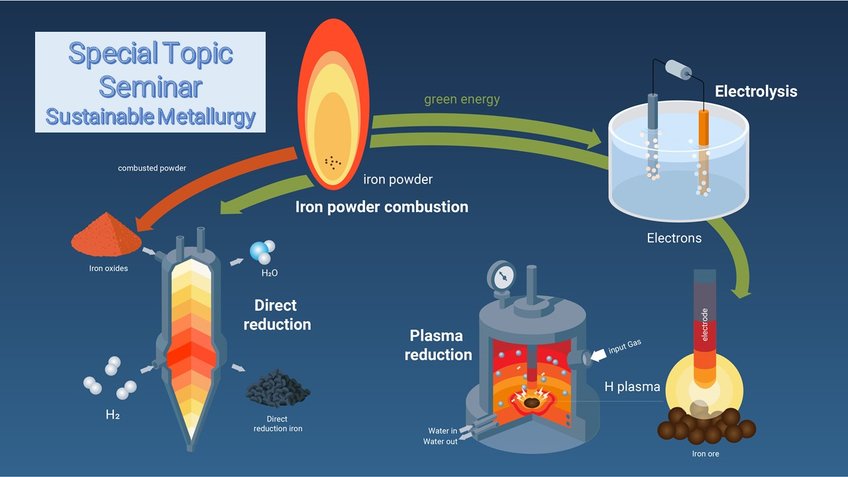
Prof. Wangzhong Mu is a Senior Lecturer (Docent) in the Department of Materials Science and Engineering at KTH Royal Institute of Technology, Stockholm. His research focuses on sustainable metallurgy, microstructure physics, and alloy design. He leads the thermo-physical property analysis section in the Hultgren Lab and is affiliated with Digital Futures at KTH. Educations: PhD in Materials Science, KTH Royal Institute of Technology (2015) MSc/Bachelor's in Materials Science, Northeastern University, China Research Interests: Inclusion engineering and microstructure-property correlations in steels High-entropy alloy design using digital tools (AI/thermodynamic modeling) In-situ characterization via confocal microscopy and multiscale analysis Recycling-oriented steel production and CO2 reduction strategies Grants/Projects (selected): SSF Strategic Mobility Grant (2023-2024): Clean steel for sustainable future VINNOVA Mobility Grant (2022-2024): Hydrogen-based metallurgy STINT Project (2022-2023): Inclusion engineering for green steel EIT RawMaterials (ENDUREIT, 2019-2021): Durable steels at intermediate temperatures Labs/Teams: Hultgren Lab (materials characterization), Digital Futures (AI-driven metallurgy), and international collaborations with Hanyang University (South Korea), IIT Bombay (India), and Tohoku University (Japan).
Pablo J. Sáez is a researcher at the University of Hamburg's Medical School, affiliated with the Department of Cell Biology and Immunology. His work focuses on cellular mechanisms of migration, signaling, and structural dynamics in immune and kidney-related cells. He explores processes like dendritic cell migration, podocyte dysfunction in nephropathy, and the role of calcium channels in cellular behavior. His research integrates biophysical and immunological approaches to understand how cell shape, cytoskeletal dynamics, and microenvironment interactions regulate immune responses and disease progression. Notable contributions include studies on membrane blebbing, SPARC-driven tumor progression, and the development of imaging tools for cellular analysis. Key areas of investigation include: cell shape sensing, actomyosin regulation, and the role of septins in immune cell motility. His articles highlight interdisciplinary methods, combining live-cell imaging, molecular biology, and computational modeling to dissect cellular decision-making processes during migration and disease. Scientific achievements include foundational work on exopher-formation in kidney disease and guidelines for functional assays in dendritic cells. His research bridges basic science and clinical applications, aiming to uncover therapeutic targets in immune and renal disorders.
Dr. Guy C. Hembroff is an Associate Professor in the College of Computing at Michigan Technological University, serving as the founding director of the MS in Health Informatics Program and director of the Computational Science & Engineering PhD Program. He leads the Biomedical Data Science (BDS) Lab, focusing on healthcare innovation through AI, cybersecurity, and data science. His expertise spans machine learning, medical image analysis, and healthcare interoperability. Education: PhD in Computational Science & Engineering (Michigan Tech), MPA in Public Administration (Northern Michigan University), BS in Finance and Economics (Michigan Tech). Research interests include human health-focused AI/ML models, cybersecurity in healthcare, medical image segmentation, and public health surveillance. His work emphasizes collaboration with medical institutions like Henry Ford Hospital to develop clinical decision support systems and improve disease surveillance. Recent projects include AI-driven fracture risk prediction from knee radiographs and enhancing mental health intervention efficacy through multi-source data integration. Advising includes four doctoral students in areas like medical image analysis, blockchain for patient data security, and cost-effective mental health modeling. His software projects include FHIR-enabled health information exchange systems and Tick-Talk, a crowdsourced tick disease monitoring platform. Labs/Teams: The BDS Lab integrates expertise in medicine, AI, and cybersecurity to tackle healthcare challenges, emphasizing real-world impact through industry and academic partnerships.
Prof. Mitja Stadje is a Professor at the University of Ulm's Department of Insurance Science. Previously, he served as a tenured Associate Professor at Tilburg University's Department of Econometrics and Operations Research (since November 2014) and held an Assistant Professor position there from 2010. Earlier, he was a Postdoctoral Fellow at Eurandom, Technical University of Eindhoven (2009–2010). Education: PhD in Operations Research and Financial Engineering from Princeton University (May 2009, advised by Prof. Patrick Cheridito), with a Graduate School Fellowship. Master of Arts from Princeton (July 2007). Research focuses on Optimal Control Theory applications in Insurance/Finance, Dynamic Mortality Modelling, Risk Measure Axiomatization, Portfolio Selection in Incomplete Markets, Levy Processes, Optimal Entry/Exit Decisions, and Hedging under Market Impacts. His work bridges theoretical mathematics with practical financial/insurance applications. Publications are accessible via his website . Office: Helmholtzstrasse 20, Room 1.50. Contact via email预约.
Prof. Dirk Lebiedz is a full professor at the Institute of Numerical Mathematics, University of Ulm, specializing in optimal control, mathematical modeling, and dynamical systems. He holds a PhD in Physical Chemistry and dual Diplom degrees in Chemistry and Mathematics from the University of Münster. His career includes habilitations in Physical Chemistry (Heidelberg), Bioinformatics (Freiburg), and Mathematics (Freiburg). He has led research groups focusing on model reduction in multi-scale systems, with applications in combustion chemistry, biological signaling, and medical treatment optimization. Education: 1998: Diplom in Chemistry (Münster) 2002: Diplom in Mathematics (Münster) 2001: PhD in Physical Chemistry (Münster) 2007: Habilitation in Physical Chemistry (Heidelberg) 2010: Habilitation in Mathematics (Freiburg) Research Interests: Prof. Lebiedz’s work spans optimal control theory, nonlinear dynamics, and computational methods for complex systems. He develops geometric and differential geometric approaches to model reduction, focusing on slow invariant manifolds in chemical and biological systems. His research also explores interdisciplinary applications in medicine, ecology, and music theory, such as mathematically modeling circadian rhythms and linking mathematical principles to philosophical and artistic concepts. Recent Work Trends: His recent publications emphasize holomorphic dynamical systems, invariant manifold analysis, and applications of differential geometry. He investigates complex-time systems and their connections to fundamental mathematical problems like the Riemann Hypothesis. His articles often bridge pure mathematics with applied fields like combustion engineering and biomedical modeling. Awards & Recognition: He has held visiting professorships at Heidelberg University and secured multiple habilitations across disciplines, reflecting his interdisciplinary impact. Labs/Teams: Leads the Institute of Numerical Mathematics at Ulm, focusing on computational methods for multi-scale systems. Collaborates with the Center for Integrative Biological Signaling Studies (Freiburg) and the SFB 1391 (Tübingen).
Ingo Weber is a Professor affiliated with Technische Universität München (TU Munich) and Fraunhofer Gesellschaft. His research focuses on blockchain technology, business process management (BPM), and artificial intelligence (AI), with a particular emphasis on integrating these fields. He has held former positions at TU Berlin, CSIRO Data61, and other institutions. Current affiliations: TU Munich and Fraunhofer Gesellschaft Former affiliations: TU Berlin, CSIRO Sydney, University of New South Wales, SAP Research, and University of Massachusetts Amherst Research interests include blockchain applications in business processes, process mining, AI-driven systems, and sustainability-oriented process analysis. His work explores topics such as blockchain scalability, data confidentiality, and cost-efficient process execution on next-generation blockchains like Algorand. He has pioneered frameworks like SOPA for sustainability analysis and FhGenie for confidentiality-preserving AI. Key contributions include over 200 publications in journals like IEEE Access, Future Generation Computer Systems, and ACM Transactions on Management Information Systems. Recent work emphasizes AI-augmented BPM systems and the application of large language models (LLMs) in scientific contexts. Notable projects include blockchain-based process execution engines (e.g., Caterpillar), platform architectures for multi-tenant blockchain systems, and frameworks for evaluating payment channel networks. He has collaborated extensively with industry partners and academic institutions globally.