Thomas Laskoمشاهده پروفایل
دانشیار
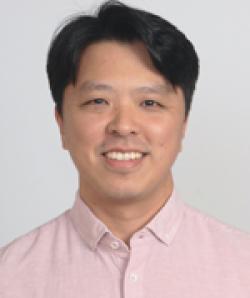
Thomas Lasko is an Associate Professor holding dual appointments in the Department of Biomedical Informatics and the Department of Computer Science at Vanderbilt University. His work focuses on advancing machine learning and computational methods to address critical challenges in healthcare, particularly leveraging electronic health records (EHR) for disease prediction, risk stratification, and clinical decision-making. Lasko’s research spans areas such as predictive modeling for chronic diseases (e.g., COPD, systemic lupus erythematosus), multimodal data integration (e.g., imaging and EHR), and improving the generalizability of clinical models across healthcare institutions. His academic contributions emphasize scalable solutions for large-scale EHR analysis, including lightweight natural language processing (NLP) models for document classification and contrastive learning approaches for patient-level representation. Lasko has also pioneered methods for uncovering latent disease signatures using probabilistic independence and has developed tools like pyPheWAS for phenome-disease association studies. His work frequently intersects with clinical practice, aiming to translate algorithmic advancements into actionable clinical decision support systems. Lasko’s recent research trends highlight a focus on longitudinal data analysis, model calibration drift mitigation, and explainable AI (XAI) for enhancing trust in medical AI systems. While his articles emphasize technical innovation, they consistently ground methodologies in real-world healthcare challenges, such as optimizing lung cancer screening protocols and identifying comorbidity patterns in autoimmune diseases. Despite his prolific output, no formal scientific awards or student advising records are explicitly mentioned in the provided texts. He collaborates across disciplines, integrating expertise from computer science, biomedical informatics, and clinical medicine to tackle problems such as automated patient acuity determination and novel disease subtyping. Ongoing work includes refining multimodal fusion techniques for pulmonary nodule classification and developing synthetic data frameworks to improve model robustness in resource-limited settings.