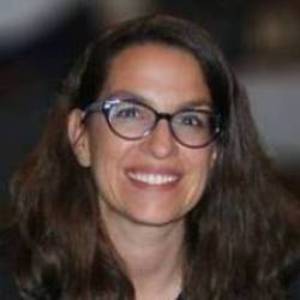
Liset M. de la Prida, Ph.D. is a physicist and neuroscientist holding the position of Full Research Professor at the Instituto Cajal - CSIC in Spain. She has held visiting roles at UCL, MRC, Krasnow Institute, and ICM Paris, building a multidisciplinary expertise in brain function. Her lab investigates hippocampal microcircuit dynamics underlying memory in health and disease across species, including human studies. She is a leader in physiological/pathological brain oscillations, neurotechnology, and computational analysis of brain activity. Affiliations & Roles: Group Leader, Instituto Cajal, CSIC (since 2008) Full Research Professor (since 2021) Scientific Advisory Board Member: C-BRAINS (Paris), NERF-IMEC (Leuven) Editorial Roles: Journal of Neuroscience Methods , Hippocampus , eLife , eNeuro Leadership in Spanish Societies of Epilepsy and Neuroscience, and FENS Programme Committees Research Focus: Her work bridges hippocampal circuit architecture, spatial/episodic memory representation, and layer-specific CA1 dynamics. Techniques include manifold analysis, functional tagging, and machine learning to study memory trace geometry. She develops MRI contrast agents and neurotechnologies for non-invasive brain imaging.
Prof. Marcus R. Makowski is the Director of the Institute for Diagnostic and Interventional Radiology at the Technical University of Munich's Klinikum rechts der Isar, appointed since 2020. He holds a Heisenberg Professorship and focuses on quantitative imaging, AI applications in radiology, molecular imaging (ECM and immunoimaging), and clinical biomarker development. Education: MD from Ludwig Maximilian University of Munich (2007), PhD from King's College London (2010), and habilitation at Charité (2013), awarded the Wilhelm Conrad Röntgen Prize. Prior to TUM, he served as Deputy Director of Radiology at Charité before joining the Heisenberg Professorship. Research Interests: His work integrates experimental and clinical research to advance imaging techniques, particularly in cardiovascular and musculoskeletal diseases. Key areas include AI-driven diagnostic tools, molecular contrast agents, and noninvasive biomarker identification. Publications: Recent work emphasizes endothelial damage imaging in diabetes, spine metastasis differentiation via SW MRI, and aortic aneurysm wall analysis. Early studies include elastin-specific MRI for atherosclerosis assessment (Nature Medicine, 2011). Awards: Marie Curie Ring (2018), Heisenberg Fellowship (2014), Wilhelm Conrad Röntgen Prize (2013). Prof. Makowski leads the Institute for Diagnostic and Interventional Radiology, driving translational research and clinical innovation in radiology.
Dr. Markus Kowarschik is a researcher affiliated with the Chair of Computer Science Applications in Medicine at Technical University of Munich under Prof. Nassir Navab. His work focuses on interventional imaging, blood flow quantification, and tomographic reconstruction. He contributes to labs like DHM (Deutsches Herzzentrum München), NARVIS, and IFL, advancing medical imaging and AI applications in healthcare. His teaching includes courses on medical procedures, robotics, and deep learning in medical contexts. Recent research emphasizes AI-driven solutions for endovascular procedures, motion compensation in imaging, and 3D pose estimation. His research interests span medical image analysis, computer vision, and generative models applied to surgical data science. Key projects involve developing datasets for benchmarking, improving X-ray imaging systems, and integrating simulation for medical training. He has no listed awards but maintains an active publication record in top-tier journals and conferences. Labs and collaborations include the NARVIS Lab (navigation and robotics), DHM for cardiac imaging, and GenAI initiatives exploring generative models. His work bridges clinical needs with computational methods, addressing challenges in radiation dosimetry, robotic control systems, and real-time imaging analysis.
Dr. Chen Wang serves as an Assistant Professor in the Department of Statistics and Actuarial Science at the University of Hong Kong, with visiting appointments at the University of Cambridge Faculty of Economics during June-August 2024, July-August 2022, and July-December 2019. His academic position and active research output confirm his status as a current faculty member engaged in interdisciplinary statistical research. His core research focuses on: Random Matrix Theory for high-dimensional covariance estimation Time Series Analysis in complex stochastic systems High-dimensional Data Analysis methodologies These statistical frameworks provide foundational tools for modern data-intensive scientific domains. Analysis of his 2022-2025 publications reveals a strategic expansion into biomedical AI applications, particularly in single-cell genomics and spatial biology. His work demonstrates consistent innovation in developing AI agents for biological experimentation (e.g., PerTurboAgent for Perturb-seq, SpatialAgent) and advancing molecular design through diffusion models. This trajectory shows a deliberate integration of his statistical expertise with cutting-edge computational biology challenges. No scientific awards or honors were documented in the provided materials. The available information contains no details regarding graduate student supervision, research grant funding, or laboratory affiliations. His visiting positions at Cambridge suggest collaborative international research activities, but specific advising relationships or grant mechanisms remain unreported in the source text.
Professor Tracie Barber is a faculty member in the Department of Mechanical and Manufacturing Engineering at the University of New South Wales (UNSW), within the Faculty of Engineering . Her primary role is as a Professor , focusing on vascular fluid dynamics with clinical collaborations at hospitals like Prince of Wales and Royal Hospital for Women. She leads a research group investigating cardiovascular systems, hemodialysis, and medical device design using computational and experimental methods. Specializes in fluid-structure interaction, bioprinting, and vascular flow dynamics. Utilizes advanced facilities including Trentino and Leonardi HPC clusters for simulations. Experimental lab equipped with PIV systems, high-speed cameras, and microfluidic setups. Research interests span vascular stents, arteriovenous fistulae mechanics, and biomedical engineering applications . Key projects include optimizing hemodialysis devices and modeling cerebral venous hemodynamics in multiple sclerosis. Collaborates with medical companies and clinical partners to translate engineering innovations into clinical solutions. Publications focus on CFD applications in vascular systems, microbubble dynamics, and 3D bioprinting. Recently explored hydrodynamic impacts on cell properties and stent implantation effects. Active in international conferences and interdisciplinary research, bridging engineering and medical fields. Supervises graduate students in vascular fluid dynamics and bioprinting. Funds include grants for renal research and medical device development. A leader in translating fluid dynamics principles to clinical and industrial applications.
Eric Walker, MD, MHA, is a Professor in the Department of Radiology. His professional certifications include Board Certifications in Radiology (2001), Clinical Informatics (2019), and Integrative Medicine (2022), as well as prestigious fellowships from the American College of Radiology (2017) and American College of Healthcare Executives (2018). His expertise spans musculoskeletal imaging, clinical decision criteria development, and healthcare management. Education: MD: Thomas Jefferson University (1995) MHA: The Pennsylvania State University (2016) Integrative Medicine Fellowship: University of Arizona (2019–2021) Research Interests: Focuses on advancing diagnostic imaging standards through ACR Appropriateness Criteria, optimizing musculoskeletal MRI protocols, and integrating informatics into clinical practice. His work addresses rare tumors, chronic joint pain, and evidence-based imaging guidelines. Recent Research Trends: Over the past three years, his publications emphasize refining imaging protocols for stress fractures, inflammatory arthritis, and non-contrast MRI applications. He frequently collaborates on multi-author guidelines for musculoskeletal disorders. Professional Honors: 2022: Board Certification in Integrative Medicine 2019: Board Certification in Clinical Informatics 2018: FACHE designation
Shuming Nie is the Grainger Distinguished Chair in Bioengineering and Professor of Chemistry at the University of Illinois at Urbana-Champaign. He holds additional professorships in Bioengineering, Micro and Nanotechnology Lab, Electrical and Computer Engineering, and Materials Science and Engineering. His research focuses on nanotechnology, biomedical imaging, and materials science with applications in cancer diagnostics and therapy. Nie leads interdisciplinary efforts in developing advanced optical sensors, plasmonic nanoparticles, and SERS-based imaging systems for precision medicine. His work spans innovations in perovskite nanocrystals for multispectral imaging, biomimetic nanoparticle design, and machine learning-aided diagnostic tools. He has pioneered techniques like intraoperative molecular imaging for real-time tumor detection during surgery. Nie's contributions include over 400 publications and inventions in nanomedicine, including US patents for targeted drug delivery systems and bioconjugated nanocarriers. Research interests include: 1) Nanoparticle engineering for biodiagnostics 2) Optical biosensors 3) Photothermal therapy materials 4) Image-guided surgery platforms 5) Cancer nanotechnology 6) Biocompatible materials development. His lab collaborates across disciplines to bridge nanoscience with clinical applications.
Kristen M. Flatt is a Senior Research Scientist at the Materials Research Laboratory (MRL) at the University of Illinois at Urbana-Champaign (UIUC). She holds a B.S. in Molecular and Cellular Biology and a Ph.D. in Neuroscience, both from UIUC. Her academic positions at MRL include Senior Research Scientist (2024–present), Research Scientist (2021–2024), and Post-Doctoral Research Associate (2019–2021). Prior roles include Pre-Doctoral Fellow in Neuroscience and Graduate Research Assistant in the Department of Crop Sciences. Her research focuses on microscopy techniques, including cryogenic electron microscopy (Cryo-EM), optical microscopy, and advanced sample preparation methods. She specializes in imaging biological and soft materials, with expertise in electron microscopy (TEM/SEM), cryogenic vitrification, and array tomography. Her work bridges molecular biology, materials science, and microscopy, with applications in cancer research, nanoparticle characterization, and structural biology. Key research themes include: Development of cryogenic sample preparation methods for TEM Optimization of light and electron microscopy workflows Imaging of biological tissues and synthetic nanoparticles Recent publications highlight her contributions to breast cancer drug resistance mechanisms, nanoparticle-based cancer diagnostics, and structural analysis of biological macromolecules. She collaborates across disciplines, integrating microscopy with molecular biology and nanotechnology. Flatt’s lab is part of the MRL’s Electron Microscopy Core facility, where she supports cutting-edge imaging projects. Her work emphasizes both scientific rigor and the aesthetic aspects of microscopy, viewing it as an intersection of science and art.
Warren S. Warren is the James B. Duke Distinguished Professor of Chemistry, Radiology, and Physics at Duke University, with affiliations to Trinity College of Arts & Sciences, the School of Medicine, and the Duke Cancer Institute. His research bridges chemical physics, ultrafast laser spectroscopy, and nuclear magnetic resonance (NMR) to develop novel hyperpolarization techniques for MRI and biomedical imaging. University of California, Berkeley (Ph.D., M.S.) His work focuses on coherent light and spin dynamics to enhance MRI sensitivity, detect biomarkers for diseases like melanoma, and apply imaging to cultural heritage preservation. Recent publications highlight advancements in SABRE hyperpolarization and exchange-selective NMR pulses. Warren has received prestigious awards including the William F. Meggers Award for spectroscopy, AAAS Fellowship, and the Gunther Laukien Prize. He has also held leadership roles as Chair of Duke’s Chemistry (2007–2012) and Physics departments. William F. Meggers Award (2018) Raymond Andrew Prize (2022) Gunther Laukien Prize (2020) Liversedge Medal (2017) Mees Medal (2015) His lab’s innovations include pump-probe microscopy for cancer diagnosis and non-invasive laser imaging for artwork preservation. He is actively involved in mentoring through NIH-funded training programs.
Hyungsoo Choi is a Research Professor in the Department of Electrical and Computer Engineering at the University of Illinois at Urbana-Champaign, affiliated with The Grainger College of Engineering. His research spans nanomedicine, drug delivery systems, and advanced materials science, with particular focus on targeted therapeutic delivery using nano- and micro-scale carriers. Choi holds a Ph.D. in Chemistry from Brown University (1983) and has established himself as a leading researcher in nanotechnology applications for medical treatments. Dr. Choi's research interests encompass targeted delivery and controlled release of therapeutics mediated by nano- and micro-spheres, contrast agents for medical imaging, cell therapy via microencapsulation, nanostructured materials synthesis, sensors and plasmonic metamaterials, metal oxide topological insulators, and hybrid perovskite solar cells. His work bridges photonic technologies with translational biotechnologies, creating innovative solutions for medical challenges. Recent publications demonstrate his continued leadership in developing novel nanoscale delivery systems for applications ranging from diabetes treatment to cancer imaging and stroke therapy. Analysis of his 15 most recent publications reveals a consistent research trajectory focused on nanoscale drug delivery systems, particularly using gelatin and other biocompatible materials. His work spans multiple disciplines including nanomedicine, materials science, and biomedical engineering, with significant contributions to cancer imaging, diabetes treatment, stroke therapy, and agricultural biotechnology. The research demonstrates sophisticated understanding of both material properties and biological applications. UI College of Medicine, Student Award, Britta & Charles Wolfe Awards for Diabetes Research, 2019 National Nanotechnology Initiative (NNI), Winner of EnvisioNano Contest, 2015 Arnold O. Beckman Research Award, 2012 Arnold O. Beckman Research Award, 2006 Dr. Choi has mentored numerous graduate students and postdoctoral researchers, many of whom appear as co-authors on his publications. His research has been supported by significant grants enabling the development of innovative drug delivery platforms. Current projects focus on microcapsules for pancreatic cell transplants to treat type I diabetes, nanoscale drug delivery to the brain, and advanced materials for solar energy applications. His laboratory at the Holonyak Micro and Nanotechnology Laboratory continues to push the boundaries of nanomedicine and advanced materials science.
Yulan He is an active researcher in Natural Language Processing and Computational Linguistics with numerous publications in top-tier conferences including ACL, EMNLP, and COLING from 2023-2025. Their work spans both theoretical advancements in Large Language Model architectures and practical applications in healthcare, social media analysis, and information retrieval. Research interests focus on Large Language Model optimization , including improving faithfulness in rationale generation, enhancing reasoning capabilities, personalizing outputs to user preferences, and optimizing computational efficiency. Significant contributions include frameworks for debiasing opinion summarization, improving depression detection in clinical interviews, and developing methods for Theory-of-Mind reasoning in LLMs. Their work addresses critical challenges in LLM reliability, interpretability, and efficiency. Analysis of recent publications reveals consistent focus on bridging the gap between theoretical LLM capabilities and practical applications , with particular attention to healthcare contexts, social media analysis, and complex reasoning tasks. Their research demonstrates how to make LLMs more reliable, efficient, and aligned with human needs across diverse domains. Scientific contributions include: Novel frameworks for LLM faithfulness and reasoning (Drift, EnigmaToM) Efficient inference methods (SCOPE, PECAN) Bias mitigation techniques (LASS, Rehearse With User) Personalization approaches (PROPER) Healthcare applications (Explainable Depression Detection) As evidenced by senior authorship positions across numerous publications, Yulan He leads research projects and likely supervises graduate students in NLP research. Their work demonstrates strong technical expertise combined with practical problem-solving approaches to real-world NLP challenges.
Sujian Li is an active researcher in computational linguistics and natural language processing, with recent contributions to advanced large language model applications. Their work spans multiple critical areas including hierarchical memory frameworks for Wikipedia generation, self-refining entity grounding systems, and long-context embedding model extensions. Key Research Areas: Continual learning in NLP, multimodal reasoning, cross-lingual knowledge transfer, and factual consistency evaluation. Notable Methods: MOG framework for structured generation, ISR self-refinement scheme, LongAttn token-level analysis, and IPR step-level process refinement. Article Trends show a focus on improving LLM robustness through adversarial training, enhancing coherence via discourse-level graph modeling, and developing benchmarks like WIKIGENBENCH for real-world evaluation. Their research also addresses knowledge integration in biomedical multilingual models (KBioXLM) and mathematical parsing via tree-structured decoding. Collaborations include leading researchers like Yifan Song, Dawei Zhu, and Wenhao Wu across institutions and projects.
Professor Paul Mullins is a faculty member at Bangor University's School of Psychology and Sports Science , holding the title of Professor of Neuroimaging and Senior Physicist at the Bangor Imaging Centre. His research focuses on Magnetic Resonance Spectroscopy (MRS) and Cerebral Physiology , particularly examining brain responses to hypoxia , concussion , and exercise . He actively collaborates with institutions in the USA, Ireland, Norway, and the UK, contributing to global neuroimaging standards through roles in international symposia and the Minimum Reporting Standards for MRS. Education: PhD in Neuroscience (University of Queensland, 2002) Biochemistry Honours (James Cook University, 1995) BSc in Chemistry and Biochemistry (James Cook University, 1993) Research Interests: Mullins' work spans three domains: (1) using neuroimaging to study neurologic processes in health/disease, (2) measuring neurotransmitter changes via MRS, and (3) investigating physiological challenges like hypoxia and concussion. His recent projects include validating handheld devices for mTBI diagnosis in rugby and exploring orosensory exercise training for chronic fatigue. Publications reveal a focus on neurotransmitter dynamics , hypoxia effects , and clinical MRS applications . Key trends include neurovascular uncoupling in hypoxia, GABA/glutamate imbalance in psychiatric disorders, and metabolite measurement innovations. Supervision: He has directly supervised 10 PhD students to completion and currently co-supervises 4 others. His lab also mentors numerous Master's students in neuroimaging projects. Grants: Mullins has secured funding for projects like HeadSense (mTBI device validation) and Orosensory Exercise Trials through Bangor University's Innovation and Impact Awards.
Hakan Erkol is an Associate Professor and Deputy Head of the Department of Physics at Boğaziçi University. He holds a PhD (2009) and MS (2003) in Physics from Boğaziçi University, and a BS (2000) in Physics from Yıldız Technical University. His research focuses on theoretical physics applied to biomedical engineering, particularly in medical physics, photoacoustic imaging, and laser therapy. He has contributed to advancements in acoustic force modeling, photoacoustic wave analysis, and photothermal therapy planning. His work bridges fundamental physics with practical medical applications, including imaging technologies and therapeutic systems. Education: PhD: Boğaziçi University, Department of Physics (2009) MS: Boğaziçi University, Department of Physics (2003) BS: Yıldız Technical University, Department of Physics (2000) Research Interests: Medical Physics, Acoustic Forces, Photoacoustic Imaging, Laser Therapy, Biomedical Optics, and Analytical Modeling. Current Roles: Deputy Head of Department at Boğaziçi University's Physics Department (2018–present). His publications emphasize analytical models for biomedical applications, including studies on microbubble dynamics under pulsed lasers, chromophore concentration quantification in tissues, and real-time imaging techniques. He has led projects like the BAP 15362 (completed in 2022) on acoustic microscopy-guided laser therapy. His teaching spans foundational physics courses and research methodology.
Michaelann Tartis is a Professor at New Mexico Tech's Department of Chemical Engineering. Her research focuses on targeted drug delivery systems leveraging ultrasound and microbubble technologies, lipid-based nanoparticles, and advanced molecular imaging techniques for small animal studies. She specializes in developing validation methods for drug delivery systems and micro-encapsulation strategies. Her work bridges chemical engineering and biomedical applications, emphasizing controlled drug release mechanisms and biomaterial design. Research contributions include phospholipid prodrug conjugates, silica encapsulation methods, and hybrid nanobiomaterial synthesis using chemical vapor deposition techniques. Publications span topics like ultrasound-mediated drug delivery, liposome synthesis innovations, and cell encapsulation in silica matrices. Tartis has pioneered techniques for long-term cell viability studies in encapsulated systems and radiolabeled liposome development for medical imaging applications. No scientific awards are listed, though her extensive publication record reflects sustained research excellence. Her work integrates material science with biological systems to advance therapeutic delivery and diagnostic imaging capabilities.