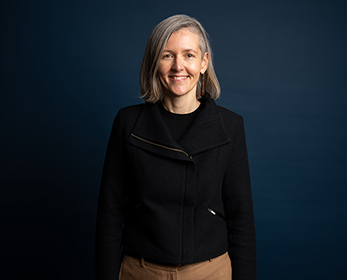
Rowena Harper is a Professor and Deputy Vice-Chancellor (Education) at Edith Cowan University (ECU), where she leads educational strategy, including Library and the Centre for Learning and Teaching. Her portfolio encompasses curriculum innovation, learning technologies, and academic integrity initiatives. Prior roles include Director of ECU's Centre for Learning and Teaching and Associate Director of Curriculum Development at the University of South Australia. Harper holds a PhD, GradCertEd, and BA (Hons). Her research focuses on academic integrity, contract cheating, digital learning, and English language development. She co-founded the International Consortium of Academic Language and Learning Developers (ICALLD) and served as President of the Association for Academic Language and Learning (AALL). Key projects include leading the Learning Management System transition and City Campus Project at ECU. Her articles highlight innovative approaches to combating contract cheating, assessment reform, and digital clinical communication in health education. She emphasizes ethical pedagogy and institutional accountability in addressing academic misconduct.
Professor Michael Draper is a faculty member at the Hillary Rodham Clinton School of Law, Swansea University, where he serves as Director of the Swansea Academy of Inclusivity and Learner Success and Chair of the University’s Academic Regulations and Student Cases Board. He is a Principal Fellow of the Higher Education Academy and actively contributes to national and international policy development in academic integrity. His research focuses on Academic Integrity , Legal Education , and Ethics , with a particular emphasis on contract cheating, remote assessment challenges, and fraud law implications. His work bridges legal practice and educational policy, addressing issues like online assessment integrity and student assignment purchasing . Recent publications analyze trends in remote proctoring , essay mills , and academic ethics , reflecting his expertise in aligning legal frameworks with educational practices. He has received recognition as a Principal Fellow of the Higher Education Academy for his contributions to teaching and policy. Michael Draper supervises postgraduate research, including a 2023 PhD on Minority Shareholder Protection , and leads strategic university initiatives in learning and teaching. His grants include the Epigeum Project (2015–2017), which enhanced academic success frameworks.
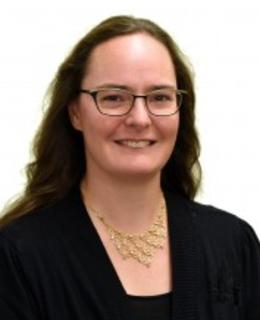
Dr. Thomas Lancaster is a Principal Teaching Fellow in the Department of Computing at Imperial College London, part of the Faculty of Engineering. He specializes in academic integrity, generative AI's impact on education, and combating contract cheating. His roles include Associate Dean at Staffordshire University and leadership positions at Coventry University and Birmingham City University. His research spans ethical AI use, plagiarism detection, and educational policy. He has authored numerous articles on cheating prevention and technology's role in academic integrity. His Orcid identifier is 0000-0002-1534-7547, and he can be reached at t.lancaster@imperial.ac.uk. Research Interests: Lancaster focuses on the intersection of technology and academic ethics, including generative AI's implications for student work, digital watermarking, and social media's role in enabling cheating. He advocates for staff-student partnerships to strengthen integrity frameworks and has pioneered methodologies for detecting source code plagiarism from online repositories. Publications: His recent work highlights global comparisons of cheating industries, the evolution of AI-driven cheating threats, and policy development to address historical misconduct. He emphasizes practical solutions for institutions, such as leveraging AI tools ethically and enhancing detection systems. Professional Contributions: As a leader in computing education, Lancaster has improved placement-year support for students and developed strategies to address transnational education challenges. His work on the SEEPAI project in Southeast Europe underscores his global impact.
Guy Curtis is an Associate Professor at the University of Western Australia (UWA), specifically within the School of Psychological Science. He holds roles as Director of Undergraduate Psychology Programs and Chair of the Psychology Undergraduate Education Advisory Committee. His career includes over 20 years in academia, with prior positions at Murdoch University (Senior Lecturer, Head of Discipline, and leadership roles in teaching and learning) and the University of Western Sydney. He earned a PhD in Psychology from UWA (2002), a Bachelor of Arts with First-Class Honours in Psychology from Murdoch (1997), and a Graduate Certificate in Higher Education from Deakin (2011). Research Interests: Curtis specializes in academic integrity, plagiarism, cheating, leadership, social cognition, anxiety, and ethics. He investigates why students engage in contract cheating, the psychological factors driving misconduct, and the evolving challenges posed by AI tools like ChatGPT to academic standards. His work also explores leadership styles and how information-processing systems influence organizational behavior. Scientific Contributions: His recent work highlights that contract cheating is four times more prevalent than previously estimated, emphasizing the need for systemic reforms. He collaborates on projects like the TEQSA Academic Integrity Toolkit and advises on policies to counter cheating. Curtis has been recognized with awards such as the Tracey Bretag Prize (2021) and SFHEA (2021), reflecting his contributions to education and ethics. Advising & Grants: Curtis supervises PhD students researching leadership and academic integrity. He leads the "Ethical use of Gen-AI in Higher Education" grant (2024–2026) and contributed to the HERDSA grant (2021–2022). His work addresses both theoretical and practical dimensions of misconduct prevention. Labs & Collaborations: While no dedicated lab is explicitly named, he collaborates extensively with institutions like TEQSA and contributes to editorial roles at journals including Higher Education Research & Development and Frontiers in Psychology .
Dr. Vicky Nagy is a Senior Lecturer in Criminology and Associate Head of Learning & Teaching at the School of Social Sciences within the College of Arts, Law and Education at the University of Tasmania. She has been with the university since February 2019, initially as a Lecturer before being promoted to Senior Lecturer in January 2022. Prior to her position at UTAS, she taught Criminology at Deakin University (2018-2019) and RMIT University in Melbourne. Her educational background includes: PhD in Criminology from Monash University (2012) MA in English Literature and Linguistics from Eötvös Loránd University, Hungary (2006) Graduate Certificate in Tertiary Teaching from Curtin University (2016) Dr. Nagy specializes in historical criminology with particular expertise in gender and crime. Her research examines socio-legal responses to female criminality, particularly through historical case studies such as 19th century arsenic poisoning cases in Essex. She has developed significant research interests in sexual violence prevention, especially child sexual abuse perpetration and victimization, stemming from her work with the Australian Institute of Family Studies related to the Royal Commission into Institutional Child Sexual Abuse. In 2019, she established the Australian and New Zealand Historical Criminology Network (ANZHCN), demonstrating her leadership in this specialized field. Dr. Nagy has received the following scientific recognition: Outstanding Thesis Award from the School of English and American Studies at Eötvös Loránd University (2006) As Graduate Research Coordinator for Sociology & Criminology students (2021-2022), Dr. Nagy has supervised postgraduate research. Her administrative leadership includes serving as co-chair of the Technology Enhanced Learning and Teaching (TELT) Project Steering Committee and member of the TELT Governance Group (2020-2024), membership on the University Course and Unit Proposals Committee, and representation on the Academic Senate (2022-2024). Her work with the Australian Institute of Family Studies on sexual violence prevention represents significant research engagement with real-world policy issues. Dr. Nagy maintains active professional memberships in the Australian and New Zealand Society of Criminology, the Australian and New Zealand Historical Criminology Network, the Australian Women's History Network, and the Australian History Association. Her recent publications demonstrate her dual focus on historical prison studies and contemporary issues in academic integrity and crime.
Associate Professor Christine Slade is an academic at The University of Queensland, holding appointments as Associate Professor at the Institute for Teaching and Learning Innovation (ITaLI) and as an Affiliate Associate Professor in the School of Education and Faculty of Humanities, Arts and Social Sciences. Her work focuses on assessment innovation, academic integrity, and digital ethics in higher education, with significant leadership in generative AI policy development. Her educational background includes: Bachelor of Arts from La Trobe University Postgraduate Diploma in Professional Learning from the University of the Sunshine Coast Doctor of Philosophy from the University of the Sunshine Coast Principal Fellow of the Higher Education Academy Slade's research centers on the intersection of assessment design, academic integrity, and digital technologies. She pioneered work on generative AI's impact on academic integrity, developing frameworks for ethical AI use in education. Her scholarship extends to ePortfolio pedagogy, digital professionalism, and healthcare education, advocating for integrated digital ethics curricula that prepare students for online professional environments. She emphasizes experiential learning through reflective practices and portfolio development. Recent publications reveal a strategic shift toward AI-driven academic integrity challenges, with 70% of 2025 works addressing generative AI's implications. Her research bridges education and healthcare, examining digital system integration in clinical placements while maintaining strong focus on contract cheating prevention and assessment security. Interdisciplinary collaborations characterize her output, connecting educational theory with practical healthcare applications. Her scientific recognition includes: Australian Award for University Teaching Citation for Outstanding Contributions to Student Learning (2023) Principal Fellow, Higher Education Academy Though unavailable for new supervision, Slade has served as Associate Advisor for PhD research on assessment innovation and international study. Her grant portfolio demonstrates leadership: Current: Student Perspectives on AI in Higher Education (2025 collaboration with Monash, Deakin, UTS) Past: HERDSA-funded study on contract cheating services (2021-2022) D2L/ASCILITE grant on pandemic assessment redesign (2020-2021) UQ-funded digital health curriculum projects for nursing CADAD study on academic developer professionalization Slade co-leads the AAEEBL Taskforce on Digital Ethics and ePortfolios, developing international ethical guidelines. She partners with UQ Library on eProfessionalism modules and collaborates globally on digital healthcare education initiatives, particularly through the Queensland Digital Health Centre where she advances student preparation for technology-enabled clinical environments.
Michael Baird is an Associate Professor and Director of Learning and Teaching at Curtin University's School of Management and Marketing within the Faculty of Business and Law. He specializes in educational technology, particularly remote invigilation systems (e.g., IRIS), and has contributed significantly to academic integrity research. His work on IRIS earned him a 2021 Curtin Hero nomination and a 2019 iTnews Benchmark Award. He is also recognized for his teaching excellence, including the 2020 Faculty of Business and Law Teacher of the Year award. Education: PhD, M.Com, B.Com (Hons), AMAMI CPM (Certified Practising Marketer). Research Interests: Focus on remote assessment systems, consumer behavior, marketing strategy, learning analytics, and service management. His projects include developing AI-driven remote invigilation tools and investigating millennial consumer motivations in tourism. Awards: Multiple accolades for teaching and innovation, including grants totaling $49,332 for remote invigilation research (2018–2019). His work bridges technology and education, addressing challenges in e-assessment and academic ethics. Teaching: Current courses include MGMT3029 (Enhancing Your Business Mind). Previously taught MKTG3000, MKTG3004, and others, emphasizing capstone projects and strategic marketing. Labs/Teams: Lead developer of the IRIS project, a collaboration with CSIRO's ON Accelerate program, aimed at enhancing online assessment integrity through machine learning.
Professor Jennifer Byrne is a Professor of Molecular Oncology at the School of Medical Sciences, University of Sydney, and Director of Biobanking at NSW Health Pathology. She holds leadership roles including former Acting Head of the Children's Cancer Research Unit at The Children's Hospital at Westmead and Deputy Director of the Kids Cancer Alliance. Her research focuses on biobanking operations, research publication integrity, and molecular oncology. Byrne has contributed to teaching modules on research integrity and molecular probes. She is a member of the Tour de Cure Grants Committee and the Automated Screening Working Group. Byrne was recognized by Nature in 2017 for her contributions to scientific integrity. Her work spans clinical and translational research, emphasizing ethical practices and reproducibility. She leads the PRIMeR group and is based at the NSW Health Statewide Biobank. Education: Bachelor of Science (First Class Honours and University Medal) in Physiology and Neuroscience from University of Queensland PhD in Molecular Oncology from University of Queensland Research Interests: Optimizing biobank operations to support biomedical research Integrity of research publications, particularly detecting fraud and paper mills Molecular mechanisms in childhood and adult cancers Development of tools for automated fact-checking in biomedical papers (e.g., Seek & Blastn) Awards and Honours: One of Nature's 'Ten people who mattered' (2017) Advising and Grants: Supervises students researching publication integrity and fraud detection Lead on grants addressing systematic fraud in under-studied genes and biobank sustainability Labs/Teams: PRIMeR group (Publication and Research Integrity in Medical Research) NSW Health Statewide Biobank
Dr. Irene Glendinning is Academic Manager for Student Experience at Coventry University and Visiting Fellow at University of Northampton. With a PhD evaluating academic integrity policies, she leads international initiatives combating educational corruption. Research Leadership: Principal Investigator for Erasmus-funded projects on plagiarism policies and academic integrity. Current director of $2.6M SSHRC Partnership on Plagiarism Prevention. Professional Recognition: Awarded BCS Meritorious Service Award (2022) and Vice-President of European Network for Academic Integrity (2017-2020). Serves on editorial boards for leading academic ethics journals.
Dr. Bronwen Wheatley is an Associate Professor (Teaching) in the Department of Chemistry at the University of Calgary's Faculty of Science, and also serves as an Instructor in the Natural Sciences Program. She holds a B.S. (2002) and Ph.D. (2009) in Chemistry from the University of Calgary. Her research focuses on chemistry education, academic integrity, and organic synthesis methodologies. She has contributed to studies on teaching strategies, contract cheating prevention, and reaction mechanisms involving palladium-catalyzed reactions. Her work bridges traditional organic chemistry research with innovative pedagogical approaches. Education: Bachelor of Science in Chemistry, University of Calgary (2002) Doctor of Philosophy in Chemistry, University of Calgary (2009) Research Interests: Dr. Wheatley explores the intersection of chemistry education and practical research. She investigates teaching methodologies to enhance student engagement, particularly in scientific writing and problem-solving. Her work on academic integrity addresses systemic challenges like contract cheating. In organic chemistry, her earlier studies focused on asymmetric Heck reactions, palladium migration pathways, and catalyst design using BINAP derivatives. Articles Overview: Recent publications highlight her shift toward educational topics, including academic integrity and pandemic-era teaching adaptations. Earlier work (2004–2009) delves into organic synthesis mechanisms, spectroscopic analysis, and novel ligand development. This dual focus reflects her roles as both researcher and educator. Awards: No awards explicitly listed in available texts. Advising/Grants: No student advisees or grant details provided in texts. Her roles emphasize teaching and curriculum development. Labs/Teams: No specific lab or team affiliations mentioned beyond her departmental and programmatic roles.
Professor Phillip Dawson is the Co-Director of the Centre for Research in Assessment and Digital Learning (CRADLE) at Deakin University. With over 20 years of experience in Australian higher education, he is a leading researcher in assessment practices, academic integrity, and the impact of artificial intelligence on education. His research focuses on: Assessment security in digital environments Feedback practices in higher education Academic integrity and cheating prevention Impact of artificial intelligence on assessment Evaluation of educational technology Grade inflation and assessment validity Professor Dawson's scholarly contributions have established him as a key voice in higher education assessment. His work has been featured in major media outlets including ABC TV, The Australian, The Age, Times Higher Education, BBC, VICE, Vox, and the Financial Times. He is frequently called upon to contribute to public debates on higher education policy and practice, including discussions in the Australian parliament. His notable achievements include: Four university-level teaching awards A citation from the Australian Learning and Teaching Council Authorship of two influential books: 'Defending Assessment Security in a Digital World' (Routledge, 2021) and 'Re-imagining University Assessment in a Digital World' (Springer, 2020) Professor Dawson leads major research projects funded by the Australian Research Council, the Office for Learning and Teaching, and educational technology companies including Turnitin, Inspera and NetSpot. His current research examines how to design assessments that maintain validity in the age of generative AI, moving beyond simple rule-setting to fundamental structural changes in assessment design. Beyond his academic work, Professor Dawson is an active performer in comedy, particularly through 'The Peer Revue,' an academia-themed improv show which he both performs in and produces, demonstrating his commitment to making academic concepts accessible and engaging to broader audiences.
Professor Phil Newton is a distinguished academic in the Department of Medicine at Swansea University Medical School, Faculty of Medicine, Health and Life Science. He serves as a Professor specializing in Neuroscience and Medical Education, teaching across multiple programs including the MBBCh Graduate Entry Medicine, MSc Physicians Associates, and various undergraduate BSc courses in Medical Science. Additionally, he leads the evidence-based education component of the online MSc in Medical Education program. Education Background: PhD in Biochemistry and Molecular Biology, University of Leeds (2001) B.Sc in Biology, Aberystwyth University M.Sc in Medical Education, Cardiff University (2012) Joined Swansea University in 2009 after working at the University of California at San Francisco Professor Newton's research focuses primarily on educational neuroscience, academic integrity, and evidence-based medical education. His work critically examines the validity of learning styles theory, contract cheating in higher education, and the impact of technology on educational assessment. He has published extensively on the prevalence and prevention of academic misconduct, particularly in online examination environments. His research bridges neuroscience and educational practice, investigating how cognitive principles can inform better teaching methods in medical education. Professor Newton's publications demonstrate a clear evolution in focus toward the challenges posed by artificial intelligence in educational assessment, with numerous 2024-2025 publications examining ChatGPT's capabilities in medical examinations and strategies for maintaining academic integrity in the AI era. His work consistently applies pragmatic approaches to educational research, emphasizing practical applications over theoretical purity. As an educator, Professor Newton is actively involved in postgraduate supervision and curriculum development. He has contributed significantly to the design of assessment methods that evaluate higher-order learning while minimizing opportunities for academic misconduct. His teaching philosophy emphasizes evidence-based approaches to medical education, challenging persistent neuromyths in educational practice. Professor Newton maintains active research supervision, particularly in areas related to biomedical science education and point-of-care testing competencies. He collaborates extensively with colleagues across disciplines, as evidenced by his numerous co-authored publications spanning neuroscience, medical education, and academic integrity research.
Dr. Richard Kjellgren is a Research Fellow at the Salvation Army Centre for Addiction Services and Research within the University of Stirling's Faculty of Social Sciences. His work focuses on mental health and substance use service access for individuals released from prison, leveraging linked administrative health and justice data. He holds a PhD exploring online technologies' role in facilitating exploitation within UK off-street sex markets, emphasizing open-source intelligence in policing sex trafficking. His research interests span administrative data research, public health approaches in criminology, exploitation dynamics, network analysis, and mixed-methods methodologies. He has contributed to projects on policing organized crime, public protection, and community justice. Key affiliations include the Salvation Army Centre for Addiction Services and Research, Crime & Justice, and Social Surveys and Social Statistics research groups. Recent studies include the RELEASE project examining post-release health service utilization and participatory research methodologies with justice-involved individuals. His work also addresses technological challenges in policing, LGBTQ+ homelessness, and academic integrity issues in higher education. He advocates for policy-informed research to address systemic vulnerabilities and improve service access for marginalized populations.
Brenda M. Stoesz is a Research Lead in the Science of Teaching and Learning at the University of Manitoba's Centre for the Advancement of Teaching and Learning. Her work focuses on academic integrity, educational technologies, and policy analysis, with additional collaborations in autism research and workplace health safety for older adults. Education: B.Ed., B.Sc. (H), M.A., PhD Brenda's research spans multiple domains, including: Academic integrity frameworks and contract cheating prevention Educational technology integration (VR environments, AI, LMS design) Policy analysis across K-12 and higher education Autism spectrum disorder assessment methodologies Workplace health dynamics for aging populations Her publications highlight trends in academic integrity policy development, digital learning analytics, and cross-disciplinary collaborations. Brenda actively supports faculty research through grants like the Scholarship of Teaching and Learning Fund and WorkplaceNL Research Initiatives. Key awards include the University of Manitoba Major Outreach Award for academic integrity toolkit development. Scientific Awards: Scholarship of Teaching and Learning Fund ($25,000) (2020) WorkplaceNL Research Initiatives ($100,000) (2017) University of Manitoba Major Outreach Award ($5,516) (2016)
Professor Joe Clare is a faculty member at the UWA Law School, The University of Western Australia. His research focuses on applied criminology, including stolen goods markets, academic misconduct, and elder abuse prevention. He holds a PhD and B.Cog.Sci.(Hons) from UWA and an MCCJ from Griffith University. Key research themes include situational crime prevention, problem-oriented policing, and the intersection of cognition with criminology. His work contributes to UN SDGs related to education and justice. Recent projects involve analyzing offender perspectives on stolen goods disposal and evaluating strategies to disrupt stolen goods markets. He has secured grants from organizations like the ARC and the Department of Justice (WA). Recipient of the 2023 UWA Law School Mid-Career Research Award 2022 ANZSOC Teaching Excellence Award Adam Sutton Crime Prevention Award (2020) Advises Higher Degree by Research students and collaborates with law enforcement agencies. Active in community safety planning and policy development.