Jeanette Ashton is an Associate Professor (Law) at the School of Law, Politics and Sociology, University of Sussex. She specializes in legal education, employability, and whistleblowing legislation, having co-founded the 'Contract Ed Talk' network and led the Clinical Legal Education StreetLaw programme. Prior to Sussex, she worked at Brighton University (2011-2020). BA Hons, English and American Literature (University of Warwick) CPE (University of Brighton) LLM (London Metropolitan University) Her research focuses on employability through co-creation , StreetLaw initiatives , and contract law reforms . She has contributed to the International Journal of Clinical Legal Education and Industrial Law Journal , with recent work on authentic assessment and public interest whistleblowing. Her 15 most recent publications (2012-2025) span legal education pedagogy , contract law doctrine , and whistleblowing protections . Key awards include being shortlisted for the 2025 Law Teacher of the Year and Lexis Nexis Legal Awards, and winning multiple Sussex Education Awards (2022-2023). Senior Fellowship of the Higher Education Academy (2023) Member of the International Whistleblowing Research Network Co-led the Business Law and Practice module (2023)
Paul Gilmour is a Senior Lecturer at the School of Criminology and Criminal Justice , Faculty of Humanities & Social Sciences, University of Portsmouth, and a key member of the Centre for Cybercrime and Economic Crime. His research focuses on financial crime, anti-money laundering, beneficial ownership transparency, corporate security, and the criminological implications of emerging technologies like blockchain and the metaverse. His research interests include: Financial and economic crime Beneficial ownership and corporate transparency Anti-money laundering (AML) frameworks Fraud prevention and detection Blockchain, cryptocurrency, and smart contracts Metaverse and decentralized finance (DeFi) Corporate security and industrial espionage Greenwashing and corporate accountability His recent publications span from 2020 to 2025 and appear in leading journals such as Journal of Financial Crime , Journal of Money Laundering Control , Technological Forecasting and Social Change , and Law, Innovation and Technology . His work often explores regulatory challenges, enforcement mechanisms, and policy solutions in the context of digital and financial crime. He has contributed editorials, book chapters, and commissioned reports, including a scoping study on fraud centres in Ghana, India, and Nigeria. Scientific Awards and Recognition: Recipient of 3 prizes for research excellence Work referenced on Wikipedia and featured in 14+ news outlets Regular contributor to The Conversation ORCID: 0000-0002-6380-8563 Advising and Grants: Paul Gilmour is accepting PhD students and has supervised research in economic crime and cybercrime. He has led and participated in multiple research projects, including those funded by external bodies, focusing on fraud prevention, policing financial crime, and regulatory compliance. His collaborative work with scholars such as Mark Button and Branislav Hock underscores his active role in interdisciplinary research networks. Labs and Research Groups: He is affiliated with the Centre for Cybercrime and Economic Crime at the University of Portsmouth, which conducts cutting-edge research on digital and financial crime, policy development, and law enforcement strategies.
Sandra Kay Evans is a Behavioral/Social Scientist at the RAND Corporation. She specializes in organizational research across healthcare and military contexts, focusing on topics such as change management, strategic management, human resource management, and innovation in organizational settings. Prior to joining RAND, she served as an assistant professor of communication at California State Polytechnic University, Pomona. Dr. Evans holds a Ph.D. in Communication from the University of Southern California, a dual master’s degree in Global Communication from USC and the London School of Economics, and a B.Sc. in International Studies and Radio/Television/Film from Northwestern University. Her research interests include organizational change, inter-organizational collaboration, and technology use in organizations. She employs mixed methods such as focus groups, interviews, content analysis, surveys, and social network analysis. Notable work includes studies on U.S. military readiness, Air Force recruitment strategies, and healthcare innovation, particularly in addressing opioid use disorders. Evans has contributed to policy-relevant research for the U.S. Army, Air Force, and Space Force, addressing challenges like financial audit preparedness, data-centric warfare, and retention systems. Her recent studies emphasize strategic frameworks for military competition and the integration of technology in operational decision-making. In her career, she has advised on organizational performance measurement and evaluation, including the effectiveness of federally funded research centers. While no formal awards are listed, her extensive publication record reflects a commitment to impactful applied research.
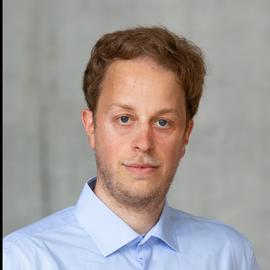
Tobias König is a Post-Doctoral Researcher in Economics at the Institute of Finance and Statistics, Department of Economics, University of Bonn. He is also affiliated with the Collaborative Research Center (CRC) TR 224, a major interdisciplinary research initiative focused on economic policy design and evaluation. Research Interests: His research lies at the intersection of macroeconomics and finance, with a focus on monetary policy, banking stability, financial frictions, and firm-level heterogeneity. He investigates how labor market dynamics interact with credit markets, the role of financial constraints in investment, and the historical patterns of systemic bank runs. The recent publications of Dr. König span both theoretical and empirical domains, contributing to our understanding of optimal monetary policy under financial frictions, the effectiveness of deposit insurance schemes in Europe, and the microeconomic foundations of aggregate financial shocks. His work often combines rigorous modeling with comprehensive data analysis, including newly constructed historical datasets on bank runs across 184 countries. Scientific Contributions: Developed a New Keynesian banking model with endogenous financial accelerator to study optimal monetary policy. Constructed a novel, globally comprehensive dataset on systemic bank runs from 1800 to 2023. Provided empirical evidence on the investment channel of monetary policy using Norwegian administrative data. Education: PhD in Economics, 2022, Humboldt University of Berlin MSc in Economics, 2016, Humboldt University of Berlin BSc in Economics, 2013, Humboldt University of Berlin Dr. König actively presents his research at international conferences and seminars, including the World Congress of the Econometric Society and the Bank of England. He maintains a personal website and shares datasets and working papers openly. He advises no students listed in the provided materials and has no scientific awards mentioned. He is based in Bonn, Germany, and can be contacted via email at tkoenig@uni-bonn.de.
Dr. Henry Hong-Ning Dai is an Associate Professor in the Department of Computer Science at the Faculty of Science, Hong Kong Baptist University (HKBU). He previously held academic positions at Lingnan University and Macau University of Science and Technology, where he advanced from Assistant to Associate Professor. He holds a Ph.D. from the Chinese University of Hong Kong and a D.Eng. from Shanghai Jiao Tong University. Education: Ph.D. in Computer Science and Engineering, Chinese University of Hong Kong (2008) D.Eng. in Computer Technology Application, Shanghai Jiao Tong University (2012) M.Eng. in Computer Science and Engineering, South China University of Technology (2003) B.Eng. in Computer Science and Engineering, South China University of Technology (2000) Dr. Dai's research focuses on security and reliability of VR/AR systems , Internet of Things , blockchain and distributed systems , federated learning , and cyber-physical systems . His work integrates AI, networking, and software engineering to address real-world security and performance challenges in emerging technologies. He has published over 300 papers in top journals and conferences such as IEEE JSAC, TMC, ICSE, INFOCOM, and AAAI, accumulating more than 24,000 citations. The 15 most recent publications (2023–2025) highlight his leadership in VR/AR security (e.g., AcouListener, Meta VR study), blockchain scalability and fairness (e.g., Porygon, Auncel, Justitia), federated and robust learning (e.g., EBS-CFL, FedDP), and edge-AI and wireless security (e.g., HARBOR, Smart Shield). His recent work also explores AI-generated art evaluation and LLM-driven manufacturing systems , showcasing interdisciplinary innovation. Scientific Awards and Recognition: Holder of 1 U.S. patent and 1 Australia innovation patent Winner of more than 17 awards Senior Member of ACM, IEEE, and EAI Dr. Dai has been Principal or Co-Investigator on over 12 research projects totaling HK$16 million, funded by UGC, NSFC, FDCT, and HKBU. He serves as an Associate Editor for IEEE Communications Surveys & Tutorials , IEEE Transactions on Intelligent Transportation Systems , and several other IEEE journals. He has chaired program committees and served on the PC of top conferences including ICSE, KDD, and INFOCOM. He is actively recruiting Ph.D. students and RAs in security, blockchain, and AI. Laboratories and Research Teams: While not explicitly named, Dr. Dai leads a research group focused on secure and intelligent distributed systems, with active projects in blockchain, VR security, and edge AI. His team has developed open-source tools such as VR-SP Detector , PrettySmart , and RLF for smart contract analysis and security assessment.
Ramón Pedro Artiaga Díaz is a Professor in the Department of Naval and Industrial Engineering at the University of A Coruña, Spain. He belongs to the Knowledge Area of Materials Science and Metallurgical Engineering and leads research in thermal and rheological properties of materials. He teaches across diverse programs including Industrial Technology Engineering, Nanoscience, Podiatry, and Fashion Industry Management, with a strong emphasis on materials, polymers, composites, and sustainable technologies. University: University of A Coruña School: College of Engineering Department: Department of Naval and Industrial Engineering Research Group: Propiedades térmicas y reológicas de materiales His research focuses on thermal analysis, kinetics, polymer science, composite materials, and rheology, with applications in sustainable fashion, biomedical engineering, and industrial materials. He uses advanced characterization techniques to study curing processes, degradation, and mechanical behavior of complex materials. His recent publications span high-impact journals such as Journal of Thermal Analysis and Calorimetry , Advanced Materials , and Nature Communications , showing consistent output in thermal characterization, nanocomposites, bioactive scaffolds, and sustainable materials. The research trends highlight interdisciplinary work combining materials science with environmental and medical applications. Thermal and rheological characterization of polymers and composites Development of sustainable and recyclable materials Applications in biomedical engineering and orthopedics Innovation in textile and fashion technologies Kinetic modeling of curing and degradation processes Industrial collaboration with companies like INDITEX Ramón Artiaga Díaz has supervised numerous final-year projects and master’s theses, demonstrating active engagement in student mentorship. He has secured funding from national (Ministerio de Ciencia, Innovación y Universidades) and international (CNRS) agencies, as well as industry contracts (INDITEX, S.A.), supporting extensive R&D activities. He is involved in multiple research projects focusing on complex materials, thermal analysis, and sustainable technologies. His work bridges fundamental science with industrial applications, particularly in textiles and advanced manufacturing.
Dr. Martin John James Beckinsale is an Associate Professor at the School of Leadership, Management and Marketing, De Montfort University, within the Faculty of Business and Law. He is actively engaged in teaching, research, and leadership, with a strategic focus in 2024 on 60-credit modules and the BAL Artificial Intelligence Trailblazer initiative. He is affiliated with the Centre for Enterprise & Innovation (CEI) and the Centre for Research in Ethnic Minority Entrepreneurship (CREME). Dr. Beckinsale holds a PhD in Strategic Innovation Networks from Aston University, an MSc in Strategic Management of Technology from UMIST, and a BSc (Hons) in Engineering Science and Business Studies from the University of Warwick. His research centers on Small and Medium-Sized Enterprises (SMEs), particularly Ethnic Minority Businesses (EMBs), exploring digital transformation, ICT adoption, innovation management, and the role of Artificial Intelligence in entrepreneurship and business education. He investigates policy issues related to SMEs and EMBs, e-procurement, and operations management, often through action research methodologies. His work emphasizes inclusive business support and supplier diversity. The recent publications highlight a growing trend toward AI in education and business, digital innovation in SMEs, and the socio-technical challenges of ICT adoption among underrepresented entrepreneurs. His research spans both theoretical frameworks and practical policy applications, with a strong emphasis on real-world impact. Best in Track E Winner, ISBE 2007 Nominated Best in Track E, ISBE 2008 Nominated Best in Business Support Track, ISBE 2009 Senior Fellowship (SFHEA), July 2024 Fellow of the Chartered Management Institute (FCMI), 2017 Dr. Beckinsale supervises PhD and DBA students, including current candidates M. Alakayleh and Zara Fadimatou, and has successfully guided four PhD students to completion. He has secured externally funded research grants, including a project funded by Leicester City Council on diverse small firms. He is an active member of the Institute for Small Business & Entrepreneurship (ISBE), serving as Track Chair since 2009 and regularly presenting peer-reviewed work. He also serves as a reviewer for journals such as the International Small Business Journal and the Journal of Small Business and Enterprise Development. He leads and teaches across multiple modules at both undergraduate and postgraduate levels, including Research Methodology, Digital Transformation, Operations Management, and Innovation and Technology Management. He has previously led programs such as the MSc International Business & Management Suite and MSc Air Transport Management.
Role: Full Professor in Econometrics at the Department of Economic Sciences, University of Bologna. Coordinator of the SIdE Postgraduate course on Panel Data Econometrics: Theory and Applications since 2012. Fellow of the Society for Economic Measurement (SEM). Organizer of the 27th International Panel Data Conference (June 2022). Research Interests: Econometric methodology, panel data analysis, economic uncertainty measurement, corporate finance dynamics, climate change economics, and macroeconomic policy evaluation. Specializes in developing web-based uncertainty indices (e.g., EURQ) and applying advanced econometric techniques like GMM-level estimation and Proxy-SVAR approaches. Recent Work: Focuses on climate change perception impacts, heterogeneous firm behavior, and innovative applications of machine learning in economics. Recent studies include analyzing public climate concerns, covenants violations in corporate finance, and shocks identification in climate policy evaluation. Key Projects: 27th International Panel Data Conference (2022), EURQ uncertainty index development, SIdE panel data course. Awards: SEM Fellowship recognizing contributions to economic measurement. Teaching & Advising: Oversees student mobility programs (Erasmus+), coordinates international exchange initiatives, and advises on temporary study plans for incoming/outgoing students. Collaborates with the International Relations Office on mobility policies.
Chiara Lisciandra is an Assistant Professor at Heinrich Heine University Düsseldorf and a Humboldt Experienced Researcher Fellow at the Munich Center for Mathematical Philosophy, LMU Munich. She serves as an Associate Editor for the Journal of Economic Methodology and an elected Board Member of the International Network for Economic Method. Ph.D. in Logic and Philosophy of Science, Tilburg University Habilitation to Associate Professor, Italian Ministry of Higher Education Former positions at Utrecht University, Groningen University, LMU Munich, University of Helsinki, and University of Pisa Her research focuses on philosophy of science , economic methodology , and social philosophy , particularly norms in science and society, interdisciplinary modeling, and game theory. Her recent work explores explanatory norms in interdisciplinary research and citation metrics from a philosophy of science perspective. Publications emphasize robustness analysis , model transfer , and norm emergence . Articles span 2013–2021, with ongoing projects including a Cambridge University Press book on game theory. Awards include the 2023 Peregrinus Prize for interdisciplinary contributions. Scientific Awards : Peregrinus Prize 2023 (Bavarian Academy of Science), Humboldt Fellowship Committees : Board Member, Phil-Sci Archive; Member, PSA/EPSA/BSPS Open Access Committee Collaborations : Co-editor for INEM 2023 Special Issue; Co-organizer of 2024 Lake Como Summer School in Philosophy of Economics Her work bridges philosophy, economics, and social sciences, examining how domain-specific norms shape scientific explanations and societal behaviors.
Marco Galici is a postdoctoral Researcher at the Technological Research Institute (IIT) of the School of Engineering (ICAI) at Comillas Pontifical University. He joined the institute on 26 April 2025, specializing in Distributed Resources, Networks, and Flexibility. He earned his Ph.D. in Industrial Engineering (Doctor Europaeus) from the University of Cagliari (Italy) in February 2024 with honors, following his 2020 degree from the same institution. His research focuses on electricity markets for integrating renewable energy, decentralized technologies like Distributed Ledger, and decarbonizing electrical systems . His work examines uncertainty management, transactive energy systems, and blockchain applications in smart cities. The 15 most recent publications highlight his expertise in peer-to-peer energy trading, robust optimization, and decentralized control mechanisms. Marco's technical skills include reinforcement learning , blockchain development (Hyperledger, Solidity), and tools like MATLAB/Python. While he hasn't received specific scientific awards yet, his contributions span conferences in Greece, UK, USA, Italy, Portugal, and China, demonstrating international collaboration.
Jacob Broom is a Lecturer in Politics and Policy at Murdoch University and a Fellow of the Indo-Pacific Research Centre. He has previously held academic positions at the University of Melbourne (2023-2024) as a Research Fellow and at the University of Western Australia (2022-2023) as an Associate Lecturer. Dr. Broom completed his PhD at the University of Western Australia in 2023, following a BA (Hons) from the same institution in 2017. His academic journey reflects a deep commitment to understanding Australian political and policy landscapes. His research explores the intersection between finance, politics, and social policy in the Australian context, with particular focus on innovative financing mechanisms. Dr. Broom's work on social impact bonds, gender lens investing, and the financialization of public policy has established him as a notable scholar in political economy. He has published extensively on Western Australian politics, election analysis, and the evolving dynamics of political campaigns, including the increasing role of culture wars in contemporary politics. Dr. Broom's recent publications demonstrate consistent engagement with current political developments, analyzing electoral trends and policy implications with scholarly rigor. His work bridges academic research and public discourse, making complex political phenomena accessible to broader audiences through platforms like The Conversation. As an active academic and commentator, Dr. Broom contributes significantly to understanding how financial mechanisms reshape public policy and political outcomes in Australia, with particular relevance to state-level governance and electoral dynamics.
Jason R. Bent is a Professor and Director of The Malin Institute for the Law and the Workplace at Chicago-Kent College of Law, Illinois Institute of Technology. A full-time faculty member, he specializes in employment and labor law with expertise in antidiscrimination law, workplace safety, and the legal implications of algorithms in hiring practices. His educational background includes a J.D. from the University of Michigan Law School and a B.A. from Grinnell College. Professor Bent's research focuses on employment law, labor law, and antidiscrimination frameworks, with growing emphasis on algorithmic bias in hiring systems. His seminal works include Legal Protection for the Individual Employee and The Statistics of Discrimination , which analyze statistical evidence in discrimination cases and the impact of technology on workplace equality. He examines systemic issues in employment law through theoretical and empirical lenses, addressing gaps in civil rights protections. His recent scholarship reveals a pronounced shift toward analyzing artificial intelligence's role in employment discrimination, particularly regarding Title VII compliance and affirmative action legality. He connects historical labor law doctrines with contemporary challenges like OSHA enforcement and voter intimidation by employers, demonstrating how foundational legal principles adapt to modern workplace dynamics. Professor Bent's scholarly contributions have earned significant recognition: Winner of Southeastern Association of Law Schools (SEALS) Call for Papers contest (2019) Selected presentation at Denver University Law Review Symposium (2014) Featured at Fourth Annual Employment & Labor Law Scholars Forum (2010) Invited symposium presentation for Buffalo Law Review article (2015) Information regarding graduate student advising and external research grants was not specified in available materials. As Director of The Malin Institute for the Law and the Workplace, Professor Bent leads an academic hub that fosters interdisciplinary research on contemporary labor challenges, hosting conferences and facilitating collaboration between scholars, practitioners, and policymakers to address evolving workplace legal issues.
Claudia Martins Antunes is an Associate Professor at the Department of Computer Engineering, Instituto Superior Técnico, Universidade de Lisboa. Her work focuses on data mining, pattern discovery, and knowledge integration across diverse domains including healthcare, education, and bioacoustics. Primary Affiliation: Instituto Superior Técnico, Universidade de Lisboa Academic Role: Associate Professor Research Interests: Claudia specializes in data mining methodologies that incorporate domain knowledge, with particular emphasis on temporal data analysis and structured pattern mining. Her research spans healthcare analytics, educational data modeling, and multi-dimensional pattern discovery. Temporal data mining Constraint-based pattern discovery Knowledge-driven data analysis Healthcare data repositories Publication Trends: Claudia's work demonstrates consistent innovation in pattern mining techniques applied to healthcare and educational contexts. Recent publications focus on blockchain data analysis, urban planning applications, and advanced feature engineering methods, while earlier works established foundations in student modeling and sequential pattern mining. Teaching Activities: She teaches courses in Programming for Data Science, Data Science fundamentals, and Computer Engineering, alongside supervision of integrative projects in Industrial Engineering and Management.
Anna Sonnsjö Andersson is a doctoral student and researcher at the Department of Law, Faculty of Law, Lund University. She is affiliated with the Rights and Vulnerability and Criminal Law research groups, focusing on the intersection of labor market exploitation, criminal regulation, and victim autonomy. Her research project Criminal Exploitation at Work analyzes the historical and contemporary construction of workplace exploitation as a criminal offense, emphasizing power structures and subordination in labor law. The study includes a legal analysis of statutes, preparatory works, and judicial practice, complemented by interviews with legal professionals. Recent publications address AI in policing, human trafficking legislation, and workplace crime policy, reflecting her expertise in criminal law, labor law, and vulnerability studies. She teaches criminal law and procedure at undergraduate and graduate levels and supervises bachelor's theses. Anna previously worked as a lawyer at an anti-discrimination agency and as a sustainability coordinator in Malmö City. Her work aligns with UN Sustainable Development Goals on reducing inequality and promoting decent work.
Feryal Erhun is a Professor of Operations & Technology Management at Cambridge Judge Business School , University of Cambridge. She serves as the Academic Director of the Wo+Men’s Leadership Centre and engages in practice-based research through partnerships like Intel Corporation, Cisco, and Stanford University Medical Center. Her work bridges operational challenges with strategic organizational insights. Education: BS, MS from Bilkent University; MS, PhD from Carnegie Mellon University’s Graduate School of Industrial Administration Her research focuses on strategic interactions in supply chains and socially responsible operations. Key themes include stakeholder collaboration, risk management, and applying game theory to business challenges. She emphasizes industry-academia partnerships to address real-world problems in healthcare logistics, semiconductor capacity planning, and pharmaceutical-CRO dynamics. Recent publications highlight her interdisciplinary approach, spanning healthcare systems modeling , pandemic response strategies , and sustainable supply chain frameworks . Her work has been recognized by the Franz Edelman Award (finalist in 2012) and ongoing contributions to journals like Production and Operations Management Society. She advocates for diversity in leadership and drives innovation through the Wo+Men’s Leadership Centre. Scientific Awards: 2012 Franz Edelman Award Finalist Edelman Laureate inductee As an editorial board member for major operations journals, she shapes academic discourse while maintaining active collaborations with industry leaders. Her role in the Cambridge Mathematics of Information in Healthcare Hub underscores her commitment to operational excellence in healthcare systems.