

Johannes Spinnewijn is a Professor of Economics at the London School of Economics and Political Science (LSE), affiliated with STICERD and multiple research centers. He holds a PhD in Economics from MIT (2009), following an M.A. from Université Libre de Bruxelles and B.A. from KU Leuven. His research focuses on Public Economics , Behavioral Economics , and Economic Theory , with emphasis on unemployment insurance design, tax compliance, health inequalities, and labor market policies. Notable contributions include analyzing optimal unemployment benefit timing, risk-based selection in insurance, and behavioral nudges in tax systems. Spinnewijn has received prestigious awards such as the ERC Starting Grant (2017-2022) , Wiley Prize (2015) , and Austin Robinson Memorial Prize (2013) . He serves as Director of the CEPR Public Economics Program and co-director of STICERD's Public Economics Program. His editorial roles include the American Economic Review , Review of Economic Studies , and Journal of Public Economics . He has advised over 15 PhD students, including those at top institutions like MIT, Chicago, and Edinburgh. His grants include €1.5 million from the ERC and £200K from the ESRC. Recent work explores health disparities, mental health determinants, and socioeconomic impacts of chronic diseases. Spinnewijn has held visiting roles at Columbia University, UC Berkeley, MIT, and KU Leuven. His teaching spans public economics, contract theory, and microeconomics at both undergraduate and graduate levels.
جستوجوی استاد و پژوهشگر
استاد راهنما، استاد دانشگاه یا پژوهشگر مناسب برای مسیر پژوهشیتان را پیدا کنید و با او ارتباط بگیرید.
نمایش ۳۱-۴۵ از ۳٬۵۷۹ استاد راهنما
اطلاعات این پروفایلها از صفحات عمومی دانشگاهها جمعآوری شده و ممکن است بهروز نباشد.

Julian Jara-Ettinger is an Associate Professor of Psychology and Computer Science at Yale University. He holds a Ph.D. from MIT (2016). His research focuses on understanding the cognitive and computational mechanisms underlying human social behavior, including fairness, linguistic communication, gesture, moral reasoning, and pedagogy. He employs interdisciplinary methods such as computational modeling, eye-tracking, cross-cultural studies, and developmental research to bridge psychology and artificial intelligence. Key research areas include the development of social cognition in children, the integration of theory of mind with communication, and the application of cognitive science principles to build socially intelligent machines. His work emphasizes how humans infer others' knowledge, intentions, and desires, with implications for AI safety and ethical systems design. Publications span topics like epistemic inference, moral judgments, and the computational foundations of social interaction. His lab's research often intersects with evolutionary simulations, neural modeling, and cultural psychology. No scientific awards are explicitly mentioned in the provided text. Collaborations involve cross-disciplinary teams addressing challenges in developmental science, AI ethics, and cognitive robotics. His work has practical applications in educational strategies, social policy, and human-AI collaboration frameworks.
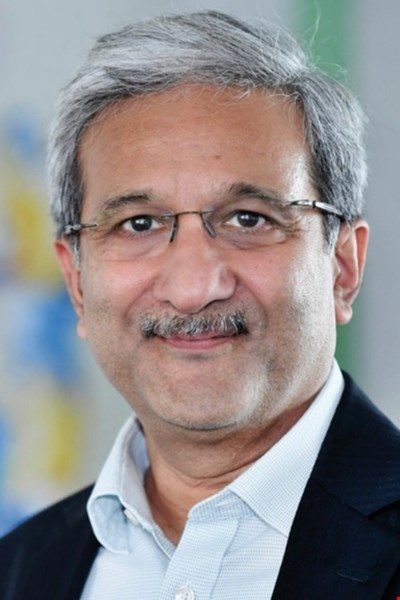
Professor Ashley Braganza serves as Dean of Brunel Business School at Brunel University London and holds the Chair in Business Transformation. He founded and co-directs Brunel's interdisciplinary Research Centre for Artificial Intelligence (established 2018), which includes a dedicated AI Lab and forms part of Brunel's broader AI Ecosystem. His leadership secured £3.5 million in grants during the 2022/23 academic year and a recent €5.8 million ELOQUENCE EU project (2024-2027). His academic qualifications include a PhD in Organisational Change and Information Systems from Cranfield University and an MBA in Strategic Management Responsibility from the University of Strathclyde. Professor Braganza's research centers on artificial intelligence, big data, change management, strategy implementation, process and knowledge management, and transformation-enabled information systems . His practice-based approach stems from over 40 major consultancy projects with global organizations including BT, Microsoft, McDonald's, Astra Zeneca, and UN agencies. He champions interdisciplinary experiential learning and rigorous academic research with real-world applications. Analysis of his 15 most recent publications reveals dominant trends in applying AI and digital technologies to healthcare supply chains, blockchain governance, and socioeconomic challenges like digital poverty. His work consistently bridges operations management, information systems, and social sciences while examining human-organizational impacts of technological transformation. His distinguished recognition includes: Election to the British Academy of Management College of Fellows for 25+ years of scholarly contribution and community service Professor Braganza has directed significant research initiatives including the British Academy-funded digital poverty study in Margate, UK-India collaborative projects on AI in healthcare productivity, and curriculum development for special needs trainers. His consultancy assignments with major corporations have co-created practical frameworks for implementing complex organizational change programs. He founded and chairs the British Academy of Management Special Interest Group in Transformation, Change and Development, and directs Brunel's AI: Social and Digital Innovation Research Centre, fostering cross-disciplinary collaboration through the Operations and Information Systems Management Research Group (OISM).
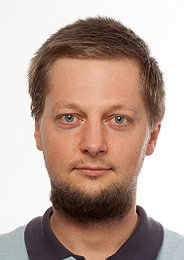
Cezary Kaliszyk is a Professor in Theoretical Computer Science at the University of Melbourne, previously affiliated with the University of Innsbruck. He is actively involved in research and leadership in formal methods, automated reasoning, and machine learning for theorem proving. Research Interests: Automated Reasoning and Interactive Theorem Proving Formalized Mathematics and Proof Automation Machine Learning for Logic and Theorem Proving Integration of AI with Proof Assistants (Coq, Isabelle) Dependent Type Theory and Higher-Order Logic His recent publications (2023–2025) span topics in dependently-typed logic, learning for proof guidance, formalization of surreal numbers, and blockchain-based formal methods. The works consistently bridge formal logic with machine learning, emphasizing automation, explainability, and cross-system integration. Scientific Leadership and Projects: Principal Investigator, ERC project FormalWeb3 Lead Developer, CoqHammer , Tactician , ProofWeb WG5 Leader, COST Action EuroProofNet (until 2024) Contributor to HOL(y)Hammer , Isabelle Enigma He supervises multiple PhD students and has mentored several graduates in formal methods and AI. He teaches courses in theoretical computer science, logic, and machine learning. There are no listed awards in the provided data, but his extensive publication record and project leadership indicate significant recognition in the field. Labs and Research Groups: He leads a research group focused on formal methods and learning-based reasoning, collaborating internationally on projects involving proof automation, formal libraries, and semantic technologies.
Professor Peter Y. K. Cheung is a Professor of Digital Systems at Imperial College London, holding dual affiliations within the Department of Electrical and Electronic Engineering and the Dyson School of Design Engineering. His work focuses on reconfigurable systems, FPGA architectures, and high-level synthesis tools. He co-founded one of the UK's leading FPGA research groups with Professor Wayne Luk, addressing challenges in variability mitigation, reliability, and application-specific FPGA deployments. His research spans Field-Programmable Gate Arrays (FPGAs) Reconfigurable computing Neural network acceleration Cryptographic protocols Embedded systems He has pioneered techniques such as logic shrinkage for FPGA-based neural networks and developed frameworks like LUTNet for efficient inference. His contributions also include fault-tolerant FPGA designs and methodologies for distributed computation protocols. Key collaborations include work with the Department of Computing on FPGA-based AI acceleration and cybersecurity applications. His recent work explores edge computing, secure decentralized systems, and pandemic modeling using adaptive control strategies. Notable projects include the DSCS protocol for secure distributed computation, acceleration of gravitational wave detection algorithms, and energy-efficient CNN implementations. His research bridges hardware-software co-design with real-world applications in healthcare, finance, and aerospace.

- careers
- contingent work
- firm boundaries
- +۴ مورد دیگر
Matthew Bidwell is a Professor of Management at the Wharton School of Business, University of Pennsylvania . His research focuses on evolving employment relationships, career dynamics, and human resource management in modern labor markets. He serves as faculty co-director of the Wharton People Analytics Initiative and faculty director of the Wharton CHRO Program. Ph.D., MIT Sloan School S.M., Political Science, MIT M. Chem, Oxford Bidwell's research examines international career mobility , managerial contracting , and organizational labor market strategies . His work reveals complex relationships between global mobility and compensation, and analyzes how institutions like search firms shape career trajectories. Recent publications show trends in cross-border employment , executive career progression , and status-driven wage dynamics . His studies utilize longitudinal datasets and organizational personnel records to uncover patterns in managerial mobility. Scientific Recognition Wharton Teaching Excellence Award (2020) ASQ Scholarly Contribution Award (2017) John T. Dunlop Outstanding Scholar Award (2014) Sloan Foundation Industry Studies Fellowship (2010-2012) Bidwell has served as Senior Editor at Organization Science and contributes regularly to business media outlets. His teaching emphasizes evidence-based people management through the People Analytics course at Wharton.

Cyrille Arthoمشاهده پروفایل
دانشیار
- Software Engineering
- Formal Methods
- Cybersecurity
- +۵ مورد دیگر
Cyrille Artho is an Associate Professor in the Division of Theoretical Computer Science at KTH Royal Institute of Technology, actively contributing to research in formal methods, software testing, and cybersecurity. His work spans model checking, smart contract security, and concurrent systems verification, with significant contributions to tools like Java Pathfinder and Modbat. PhD from ETH Zurich (2005) with dissertation on multi-threading fault detection Teaches Software Safety and Security, Software Engineering Fundamentals, and supervises degree projects His research focuses on developing formal techniques for safety-critical systems, particularly in blockchain security and distributed applications. Recent work emphasizes smart contract verification, anomaly detection in microservices, and trusted execution environments for secure cloud analytics. The 15 most recent publications reveal a strong trend toward blockchain security (6 articles), formal verification of distributed systems (5), and novel testing methodologies (4), with increasing integration of machine learning for vulnerability detection. As chair of the FTSCS workshop series and contributor to major conferences like ASE and ICST, Artho has significantly shaped the formal methods community. His leadership in organizing workshops demonstrates commitment to advancing safety-critical systems research. Principal investigator for C3.ai DTI Cyber Safety Cage for Networks project Develops Modbat framework for model-based API testing Active in Digital Futures research initiative at KTH

Professor Alistair Brandon-Jones (PhD, PGDip, BSc Hons) is a Full Chaired Professor of Operations and Supply Chain Management at the University of Bath's School of Management since 2014. He serves as Head of the Information, Decisions and Operations Division (2020–present) and holds Visiting Professor roles at Hult International Business School and Danish Technical University. His career spans academic leadership positions at Manchester Business School, Bath, and Warwick Business School, where he completed his PhD. Research Interests : Digitalisation of operations and supply chains, professional service operations, healthcare operations, and cybersecurity in AI systems. His work combines empirical methods with cross-sector collaborations, supported by UKRI, ESRC, EPSRC, and the Welsh Assembly Government. Key themes include telehealth integration , responsible AI deployment , and value-based procurement . Teaching & Consulting : He teaches Operations Management, Supply Chain, and Project Management across executive, MBA, and undergraduate levels, with consulting experience for Maersk, NHS, and Qatar Leadership Centre. His textbooks like Operations Management (10th ed., 2022) are globally cited. Scientific Awards : Times Higher Education Teaching Excellence Prize Association of MBAs (AMBA) Award Production Operations Management Society (POMS) Recognition Hult International Business School Teaching Prize Supervision & Projects : Currently supervising doctoral students in digital transformation, he leads two major projects: ESRC Digital Security by Design Social Science Hub (2020–2025) and Welsh Government Healthcare Integration (2009–2009). His research aligns with UN SDG 12 (Sustainable Consumption and Production) through supply chain innovations.

Prof. Dr. Mareike Kühne is a full-time Professor of Business Administration at the Department of Business and Management, Brandenburg University of Technology. With a unique interdisciplinary background spanning economics, business administration, philosophy, and neuroscience, she bridges affective dimensions with economic rationality to develop holistic decision-making frameworks. Doctorate in Economics, Otto von Guericke University Magdeburg (1992-1997) Fulbright Scholar, San Diego State University (1997-1998) Studies in Philosophy, Humboldt University (2007-2011) Doctoral and Master’s in Neuroscience, Berlin School of Mind and Brain (2011-2013) Her research integrates insights from psychology and neuroscience into capital market-oriented corporate reporting, corporate governance, and normative rationality frameworks. She critiques current economic models for neglecting the embodied nature of cognition, advocating for a more nuanced understanding of rationality that incorporates lived experience. Her 15 most recent works span sustainability reporting (2025), neuroeconomics (2021), M&A disputes (2017), and IFRS standard evolution (2005-2012). These publications highlight her focus on reconciling traditional accounting principles with interdisciplinary approaches to decision-making. Fulbright Scholar (1997-1998) Prof. Kühne has taught at Humboldt University, HHL Leipzig, and the Berlin School of Mind and Brain. She actively participates in professional organizations including the German Society for Philosophy, European Accounting Association, and European Financial Reporting Advisory Group. Her work emphasizes the practical impact of neuroscientific findings on economic policy and standard-setting.

Swati Aggarwal is a Professor in Artificial Intelligence at the Faculty of Logistics, Molde University College (HiMolde). Her research focuses on AI applications in healthcare, ethics, cognitive development, and neural networks. She holds a PhD in Neutrosophic Neural Networks, a Master's in Information Technology, and a Bachelor's in Computer Science and Engineering. Previously, she was a Marie Curie Postdoc Fellow at NTNU, working on AI models for cognitive assessment in infants (AIM_COACH project). Research Interests - AI in Health/Medicine - Ethics in AI and Societal Impact - EEG/BCI for Cognitive Assessment - Machine Learning and Deep Learning Publications Her recent work spans AI ethics, BCI applications, adversarial attacks, and healthcare diagnostics. Notable contributions include EEG-based infant perceptual monitoring (2025) and malaria detection via EfficientNet (2023). She also explores cross-lingual adversarial robustness and blockchain in hospitality systems. Labs/Teams - ABC-AI: Applied, Basic, and Conscientious AI Group - Virtual Technologies and Learning Research Group
- Construction Project Risk Management
- Climate Risk and Resilience in Built Environment
- Digital Construction Technologies
- +۵ مورد دیگر
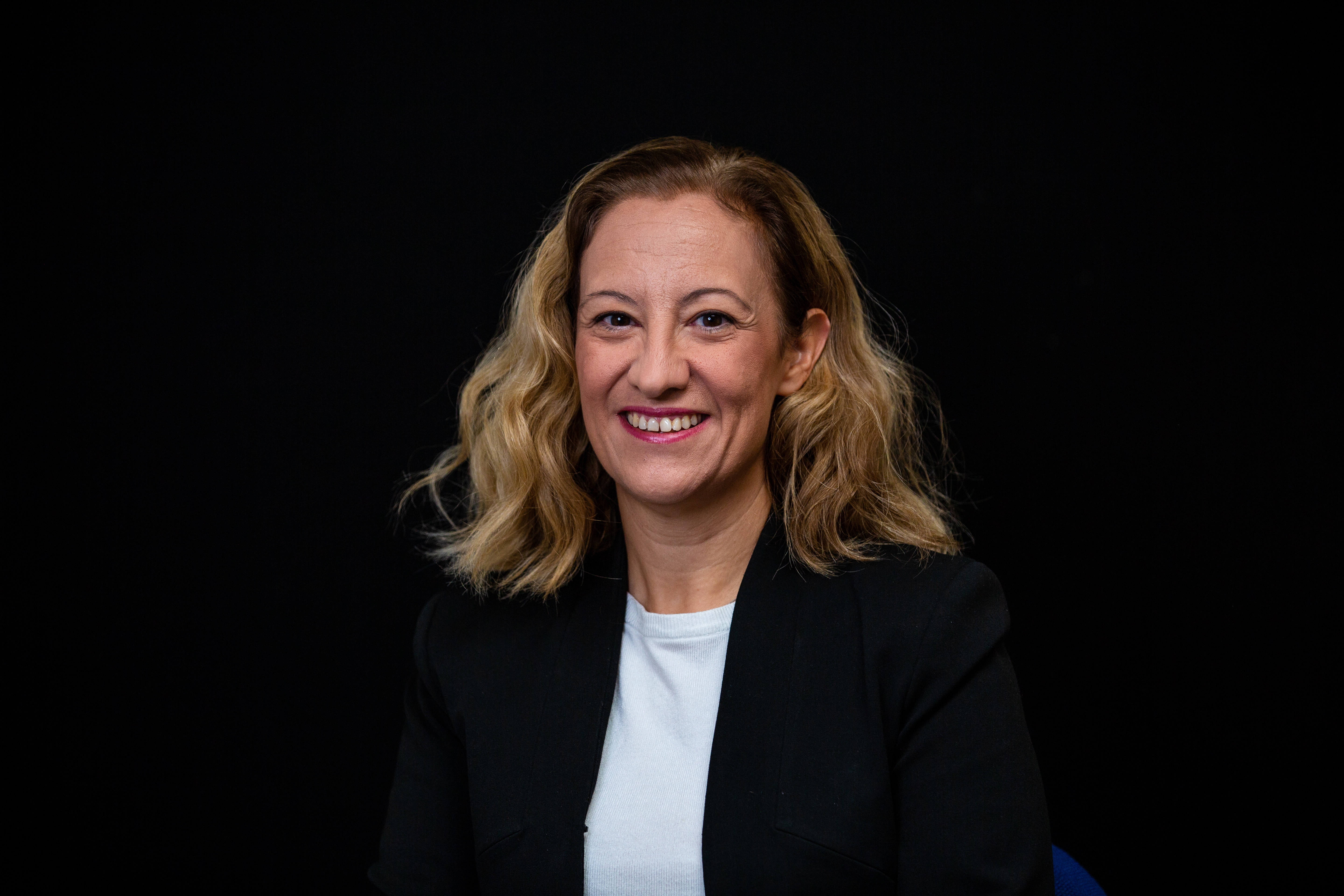
Professor Irem Dikmen is a leading academic in Construction Engineering and Management at the University of Reading, where she serves as School Director of Internationalisation in the Chancellor's Building. Her research integrates engineering, management, and information sciences to advance construction project risk management, particularly focusing on climate resilience, digital technologies, and social value in infrastructure systems. PhD, MSc, and BSc in Civil Engineering from Middle East Technical University Her work leverages systems thinking, artificial intelligence, and digital tools to develop decision-support frameworks for megaprojects and climate adaptation. Recent publications highlight innovations in NLP contract analysis, energy performance ontologies, and risk visualization techniques. She supervises students on topics spanning IoT lifecycle management, ESG risks, and NLP defect detection. Key collaborations include the Climate and Finance Research Cluster and Walker Institute , with contributions to digital construction technologies and sustainability risk assessment. Teaching modules include Construction Risk Management, Economics, and Business Organisation.
Alexander Summers is an Associate Professor at the Department of Computer Science , University of British Columbia . He joined UBC in March 2020 after serving as a Senior Researcher (Oberassistent) at ETH Zurich from 2014-2020. His research bridges Programming Languages , Formal Methods , and Software Engineering , with a focus on automated verification tools for heap-based and concurrent programs. MSc Joint Mathematics and Computer Science, Imperial College London (2004) PhD Computer Science, Imperial College London (2009) Postdoc, ETH Zurich (2009-2014) Summers leads the Prusti Project , developing deductive verification tools for Rust, and contributes to the Viper Project for intermediate verification languages. His work addresses challenges in: Memory safety and concurrency verification Ownership models and aliasing control Automated reasoning with SMT solvers Resource-oriented programming specifications Debugging verification condition quantifiers Formal validation of verification infrastructure His research has been recognized with a Amazon Research Award and ACM SIGPLAN Distinguished Paper Awards . He teaches courses like Advanced Software Engineering and Program Verifiers and Program Verification , and supervises graduate students in formal verification and Rust-related research.
Melanie Weberمشاهده پروفایل
استادیار
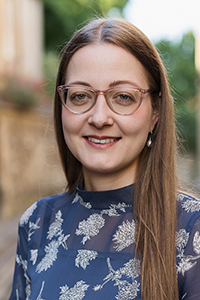
Melanie Weber is an Assistant Professor of Applied Mathematics and Computer Science at Harvard University's John A. Paulson School of Engineering and Applied Sciences (SEAS), leading the Geometric Machine Learning Group. Her research focuses on leveraging geometric structures in data for designing efficient machine learning and optimization algorithms with theoretical guarantees. She holds a PhD from Princeton University (2021) and has held fellowships at the Mathematical Institute of Oxford, Brasenose College, and the Simons Institute. Her work bridges geometry, optimization, and machine learning, with funding from NSF, Sloan Foundation, and Harvard initiatives. Education : PhD in Applied Mathematics, Princeton University (2021) BSc/MSc in Mathematics and Physics, University of Leipzig (2016) Research Interests : Dr. Weber's research integrates geometric principles into machine learning and optimization, focusing on non-Euclidean spaces, graph structures, and manifold-based methods. Key areas include optimization on Riemannian manifolds, curvature-based analysis (e.g., Ricci curvature), and developing algorithms resilient to data geometry challenges like over-smoothing in graph neural networks. Her work emphasizes theoretical foundations while addressing practical scalability in high-dimensional data. Awards & Recognition : 2024 Sloan Research Fellowship 2023 Leslie Fox Prize in Numerical Analysis 2023 NSF Grant for Geometric Optimization Grants & Funding : Supported by National Science Foundation (NSF), Alfred P. Sloan Foundation, Aramont Foundation, Harvard Dean’s Fund, and Harvard Data Science Initiative. Labs & Collaborations : Leads the Geometric Machine Learning Group at SEAS, collaborating with institutions like MIT, Max Planck Institute, and industry labs (Facebook, Google, Microsoft). Active in organizing workshops on geometric methods and curvature analysis.

Suzie Dunnمشاهده پروفایل
استادیار
- Technology and Law
- Gender Equality
- Digital Privacy
- +۴ مورد دیگر
Suzie Dunn is an Assistant Professor at Dalhousie University's Schulich School of Law and Acting Director of the Law & Technology Institute. She teaches Contracts, Judicial Decision-Making, Law and Technology, Intellectual Property, and Legal Ethics. Her research focuses on the intersection of gender, equality, technology, and law, particularly technology-facilitated violence, deepfakes, and digital privacy. Education: PhD candidate at the University of Ottawa Faculty of Law, with JD, LLM, and BA degrees. She previously served as a part-time professor at the University of Ottawa, where she taught Contracts and Law of Images, earning a 2021 teaching excellence award. Awards include the Joseph-Armand Bombardier Scholarship for PhD research and the Greenberg Prize for Feminist Research. Professional roles include advising the G7 and UN on gender-based violence in digital contexts, contributing to CIPPIC interventions in landmark Supreme Court cases (R v Jarvis, R v Downes), and serving on advisory boards for organizations like the Women’s Legal Education and Action Fund. She is a Senior Fellow at CIGI, working on global projects against online gender-based violence, and co-authored a UN resolution on digital violence prevention. Her work extends to tech safety toolkits for domestic violence shelters, policy development, and international collaborations. She was called to the Ontario bar in 2016 and actively engages in public discourse on AI ethics and digital rights.

- Public Economics
- Public Finance
- Public Policy
- +۷ مورد دیگر
Claus Thustrup Kreiner is a Professor of Economics and Director of the Center for Economic Behavior and Inequality (CEBI) at the University of Copenhagen's Faculty of Social Sciences, Department of Economics. He also serves as Area Director of Public Economics in the CESifo network and was co-editor of the Journal of Public Economics from 2014 to 2020. Kreiner has held various leadership positions including Director of the Economic Policy Research Unit (EPRU) since 2005 and Director of the Center of Excellence WEST from 2011-2013. Education: Ph.D. in Economics, University of Copenhagen, 1998 Visiting Ph.D. student, University of York, 1996 M.Sc. in Economics, University of Copenhagen, 1994 B.Sc. in Economics, University of Copenhagen, 1991 Claus Thustrup Kreiner's research primarily focuses on Public Economics , with secondary specializations in Labor Economics, Household Finance, Applied Microeconometrics, and Experimental Economics. His work examines inequality in income, wealth and health, optimal redistribution policy, and behavioral responses to public policy. Kreiner has conducted significant research using Danish administrative data to analyze tax compliance, labor supply responses, and inequality dynamics. His research often involves collaborations with institutions like Columbia University, London School of Economics, and UC Berkeley. His recent publications reveal a strong focus on inequality across multiple dimensions (income, wealth, health, life expectancy), tax policy design and compliance, labor market responses to policy changes, and the intersection of behavioral economics with public policy. Kreiner frequently employs high-frequency administrative data from Denmark to provide empirical evidence on how individuals and households respond to economic policies and shocks. Scientific Awards and Recognition: Appointed Knight of The Order of Dannebrog by Queen Margrethe II (2018) The Invisible Hand Award from the Society of Social Economics (2006, 2001) Best Teacher Award from the Study Board of Economics at University of Copenhagen (2002) Research Fellow at Centre for Economic Policy Research (CEPR), London (2009-) Kreiner has supervised numerous students primarily in Public Economics and has received multiple research grants including from the Danish Social Science Research Council (2003, 2006, 2009), International Growth Center (2009), and Danish National Research Foundation (1998-2003). He has served on important policy bodies including as co-chair of the Danish Economic Council (2010-2014) and member of the Danish Tax Commission (2008-2009). As Director of CEBI (Center for Economic Behavior and Inequality), Kreiner leads a major research center funded by the Danish National Research Foundation. He also directs the Economic Policy Research Unit (EPRU) and has been instrumental in establishing research collaborations through networks like CESifo. His work bridges academic research and policy application, as evidenced by his practical policy experience with government commissions.
فقط ۷۵۰ نتیجه اول نمایش داده میشود. برای رسیدن به نتایج دقیقتر، جستوجو را با فیلترها محدودتر کنید.