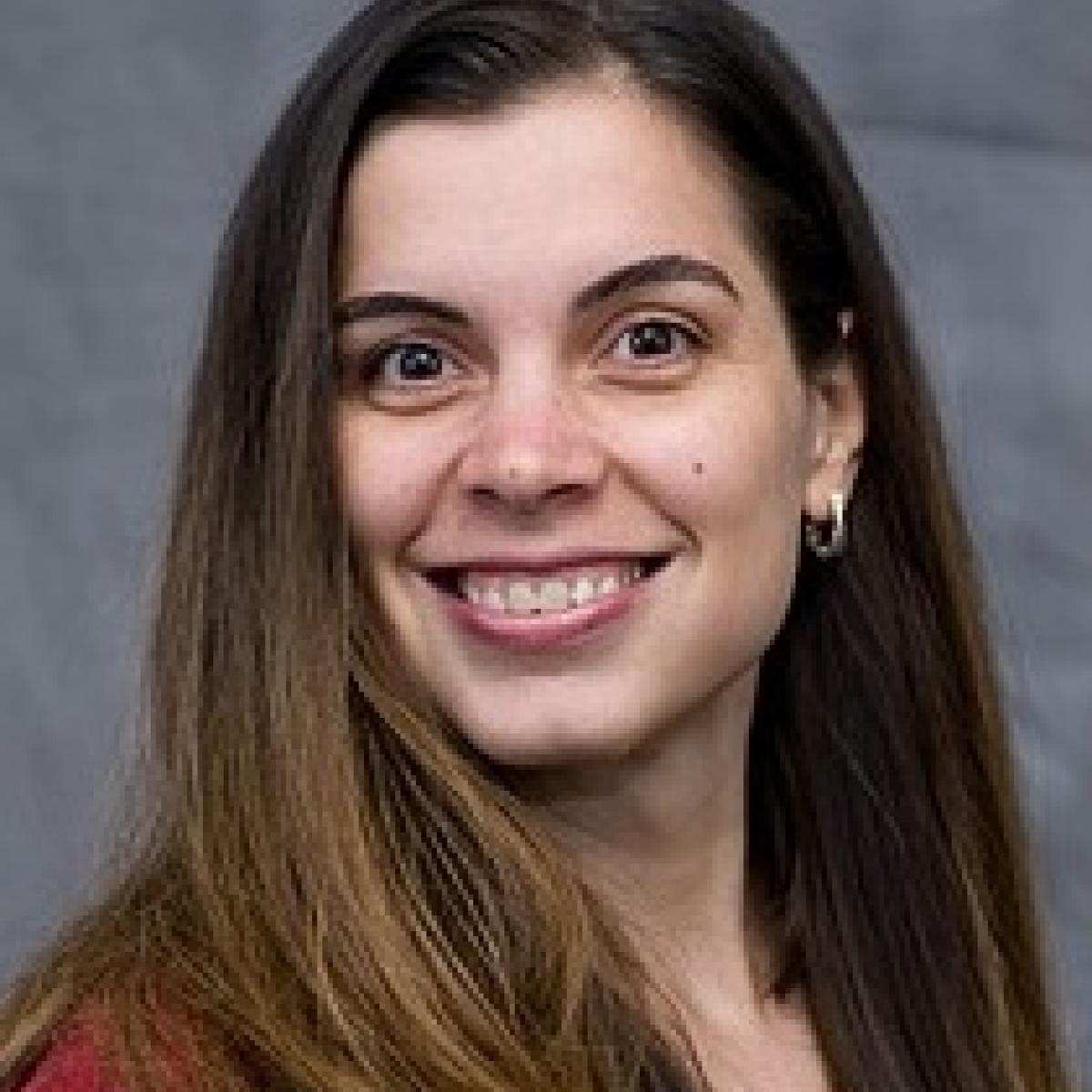
Nina Balcan is a Professor at Carnegie Mellon University and holds the Cadence Design Systems Professorship in Computer Science. She is affiliated with the School of Computer Science, specifically the Machine Learning Department (MLD) and Computer Science Department (CSD). Her research spans foundational aspects of machine learning, artificial intelligence, theoretical computer science, algorithmic game theory, and interdisciplinary connections in learning theory. Machine Learning Artificial Intelligence Theoretical Computer Science Algorithmic Game Theory Multi-Agent Systems Data-Driven Algorithm Design Her recent work focuses on advancing algorithm design through machine learning, robustness in adversarial environments, and economic modeling. Key contributions include Learning to Branch (JACM 2024), Regret Minimization in Stackelberg Games (NeurIPS 2024), and Learning Accurate Decision Trees (UAI 2024, Outstanding Student Paper Award). She has pioneered novel approaches to data-driven optimization, semi-supervised learning, and privacy-preserving clustering. Nina has received prestigious accolades including ACM Fellow AAAI Fellow Simons Investigator 2019 ACM Grace Murray Hopper Award Her teaching at CMU includes graduate courses on machine learning, advanced machine learning, and specialized topics like algorithmic game theory.
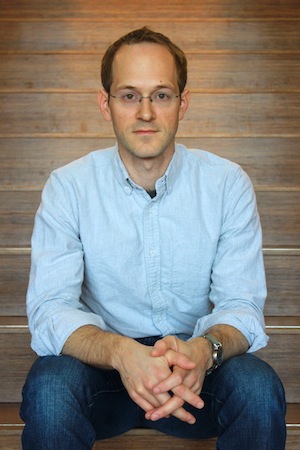
Andrew Childs is a Professor at the University of Maryland, affiliated with the Department of Computer Science and the Institute for Advanced Computer Studies (UMIACS). He serves as Director of the NSF Quantum Leap Challenge Institute for Robust Quantum Simulation (RQS) and is a Fellow at the Joint Center for Quantum Information and Computer Science (QuICS). His research focuses on quantum algorithms for simulating physical systems, algebraic problems, and quantum walk protocols, with applications in quantum computing and computational complexity. University of Maryland Institute for Advanced Computer Studies (UMIACS) Joint Center for Quantum Information and Computer Science (QuICS) NSF Quantum Leap Challenge Institute for Robust Quantum Simulation Childs' research spans quantum simulation, quantum Fourier transform, phase estimation, and Hamiltonian dynamics. He has developed techniques to reduce quantum computational resources for simulating quantum systems and explored limitations of quantum computers through hidden subgroup problems and non-unitary dynamics. His publications cover diverse areas including quantum walk optimization, Hamiltonian simulation methods, and applications to cryptography and condensed matter physics. Recent works address spatial search algorithms, product formulas for commutators, and quantum routing protocols. As an educator, Childs has taught courses on quantum algorithms and information processing at both the University of Maryland and University of Waterloo, with lecture notes and materials spanning multiple years. Contact: amchilds@umd.edu | Office: ATL 3359 | Affiliated with University of Maryland's quantum research institutes.
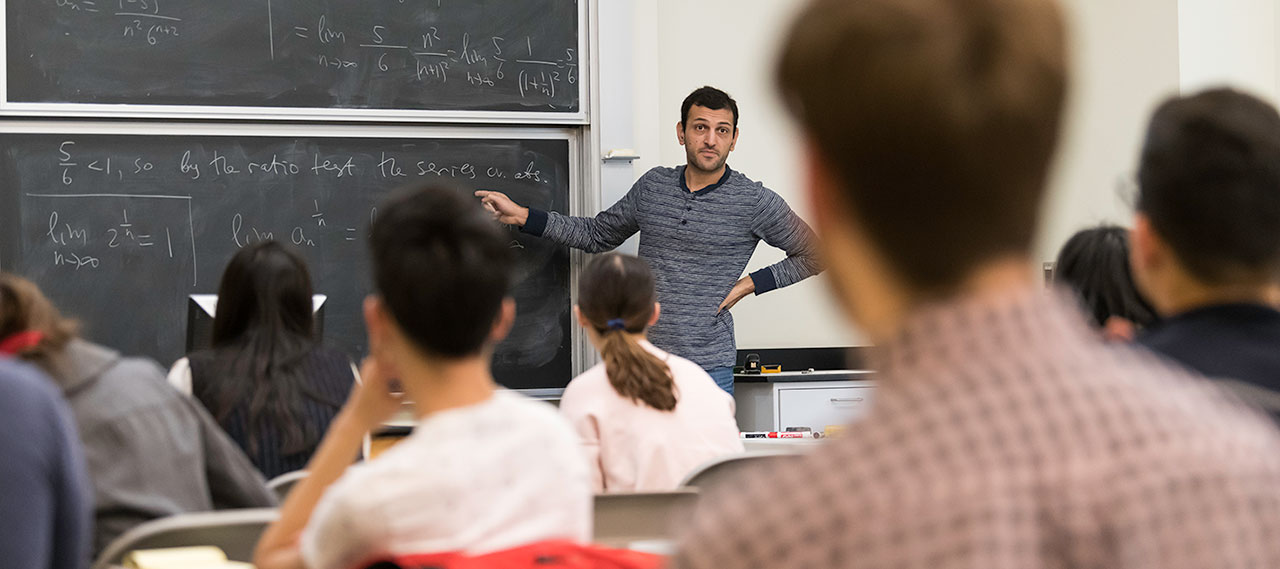
Professor Dinesh S. Thakur holds the position of Professor in the Department of Mathematics at the University of Rochester. He earned his PhD from Harvard University and has made significant contributions to number theory, arithmetic geometry, and function field arithmetic. His research focuses on developing theories related to zeta functions, Drinfeld modules, and p-adic analysis in finite characteristic environments. Education: PhD in Mathematics, Harvard University Research Interests: Thakur’s work integrates advanced topics such as elliptic curves, modular forms, Diophantine equations, and the arithmetic of function fields. He has pioneered studies on multizeta values, p-adic continued fractions, and the distribution of Diophantine exponents in finite characteristic. His research bridges classical number theory with modern algebraic geometry and p-adic analysis. Teaching & Mentorship: Thakur has taught a wide range of courses, including graduate-level topics in function field arithmetic, algebraic geometry, and number theory. He has advised 11 PhD students and several master’s students, whose theses span themes like elliptic Carmichael numbers, Drinfeld modular forms, and multizeta relations. Notable advisees include Javier Diaz-Vargas (1996), George Todd (2015), and Yao-Rui Yeo (2021). Outreach & Contributions: Thakur participates in initiatives like the Arizona Winter School and Olympiad training programs in India. He maintains an active seminar series at UR on topics such as L-values, Fermat’s Last Theorem, and automatic sequences. His work is accessible through his personal page and MathSciNet.
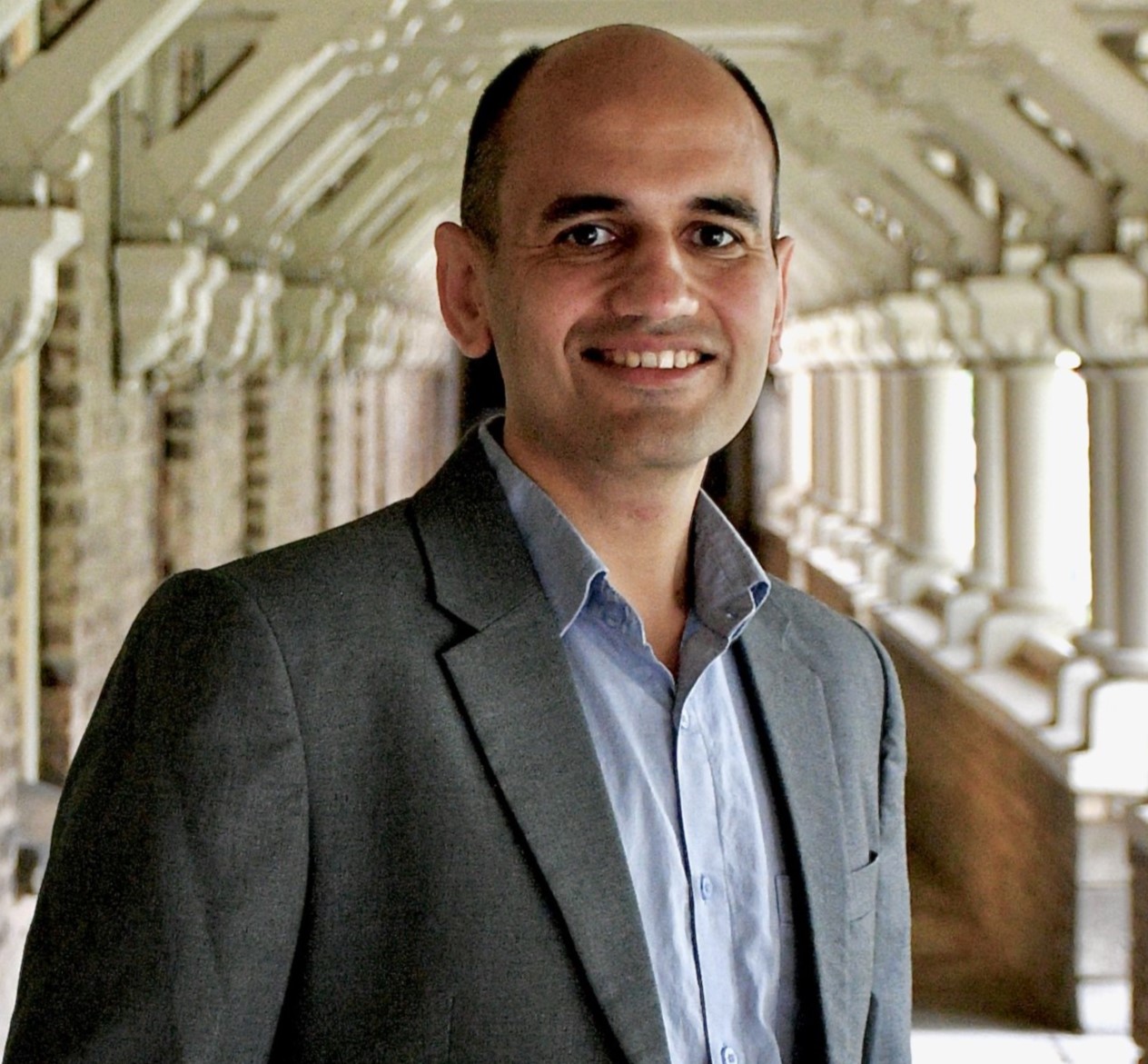
Kuldeep S. Meel is the Stephen Fleming Early-Career Associate Professor at the School of Computer Science, Georgia Institute of Technology, and an Associate Professor at the University of Toronto (on leave). He previously held a NUS Presidential Young Professorship at the National University of Singapore. His research focuses on automated reasoning, aiming to enable computing systems to handle uncertain real-world environments through scalable techniques integrating randomized algorithms, statistical inference, formal methods, distribution testing, and software engineering. Core research areas: Automated Reasoning, Formal Methods, Approximate Model Counting, Probabilistic Inference, Constraint Solving His research group has achieved significant recognition in both individual awards and publications. Key trends in his recent work include advancing model counting algorithms, developing frameworks for probabilistic explanations, and improving scalability in formal verification and constraint satisfaction. His tools have consistently ranked top in international competitions, demonstrating practical impact in automated reasoning. 2019 NRF Fellowship for AI 2022 ACP Early Career Researcher Award 2020 IEEE Intelligent Systems AI's 10 to Watch Top placements in Model Counting, SAT, and CAV competitions He mentors a diverse group of PhD and Master's students and collaborates with institutions worldwide. His group's publications span premier conferences in AI, formal methods, and design automation, reflecting interdisciplinary contributions to theoretical and applied computer science.
Wojciech Rytter is a full professor at the Institute of Informatics, Department of Mathematics and Informatics at the University of Warsaw, Poland, holding this position continuously since October 1971. His academic career includes significant international appointments as full professor at New Jersey Institute of Technology (2002-2004), Liverpool University (1997-2002), and Bonn University (1994-1995), and as visiting professor at University of California, Riverside (1992-1993) and University of Warwick (1985-1986). He earned his MSc in 1971, PhD in 1975, habilitation in 1985, and was awarded the scientific degree of professor in 1997, all from Warsaw University. Professor Rytter's research focuses on the design and analysis of computer algorithms, with particular expertise in automata and formal languages, parallel algorithms, and text algorithms. His work spans efficient sequential and parallel algorithms, automata theory, complexity of recognition and parsing of context-free languages, pattern matching, algorithmics of WWW, parallel combinatorial computing, graph-theoretic algorithms, and algorithmics of highly compressible objects. His theoretical contributions have practical applications in computational biology, bioinformatics, and text processing systems. His recent publications (2022-2025) demonstrate continued activity in string algorithms, particularly in pattern matching, string covers, and combinatorics on words, with a strong focus on theoretical computer science with applications in bioinformatics. 200 problems on automata, languages, computations (Cambridge University Press 2023) 125 Problems in Text Algorithms (Cambridge University Press, 2021) Jewels of Stringology (World Scientific, 2002) Fast parallel algorithms for matching problems in graphs (Oxford University Press 1998) Text algorithms (Oxford University Press 1994) Professor Rytter has collaborated extensively with researchers including Jakub Radoszewski, Tomasz Walen, Tomasz Kociumaka, and Maxime Crochemore. He is a member of the Academy of Europe (elected 2011, Informatics section) and has authored or co-authored more than 130 publications. He maintains an active research laboratory focused on string algorithms and combinatorics on words at the University of Warsaw.
Shirshendu Ganguly is an Associate Professor in the Department of Statistics at the University of California, Berkeley. His research focuses on probability theory, statistical physics, and their applications, including percolation models, phase transitions, Markov chains, and random graphs. He holds a PhD in Mathematics from the University of Washington and has held postdoctoral positions at UC Berkeley. Ganguly has been recognized with the 2019 Sloan Research Fellowship. Education: PhD in Mathematics, University of Washington, 2011–2016 Miller Postdoctoral Fellow, UC Berkeley, 2016–2018 Research Interests: Probability Theory, Statistical Mechanics, Markov Chains, Random Graphs, Percolation Theory, Sparse Combinatorial Structures His work explores geometric and probabilistic phenomena in disordered systems, including polymer models, self-organized criticality, and random matrix theory. He has advised multiple PhD students and contributes to teaching advanced probability courses at Berkeley. Awards: 2019 Sloan Research Fellowship
Brandon Seward is an Associate Professor of Mathematics at the University of California San Diego (UC San Diego), where they conduct research and teach in the Department of Mathematics. They use the pronouns they/them or he/him . Education Ph.D. in Mathematics, University of Michigan , 2015 Research Interests Their work lies at the intersection of ergodic theory, topological dynamics, descriptive set theory, and group theory . They investigate geometric, combinatorial, and entropic properties of actions of countable groups, with special emphasis on the divide between amenable and non-amenable groups. Publications & Research Impact Across 27 refereed papers (2014-2024), Seward has advanced entropy theory for non-amenable groups, Borel combinatorics of group actions, and structure theorems for measure-preserving actions. Their work has appeared in top journals such as Inventiones Mathematicae , Journal of the American Mathematical Society , and Duke Mathematical Journal . Scientific Awards Michael Brin Dynamical Systems Prize for Young Mathematicians (2018) – awarded for outstanding contributions to dynamical systems. Teaching & Mentorship Seward regularly teaches core undergraduate courses (e.g., Math 142A Introduction to Analysis) and organizes the UC San Diego Group Actions Seminar , a weekly research forum featuring international speakers. They serve as a faculty mentor and are actively involved in graduate student supervision and seminar coordination. Contact & Office Email: bseward@ucsd.edu Office: AP&M 5739, 9500 Gilman Drive, La Jolla, CA 92093-0112
Kevin Coulembier is a Professor in the Algebra Research Group at the University of Sydney . He has held a continuing position since 2017 and received prestigious awards including the Christopher Heyde Medal (2021), G. de B. Robinson Award (2022), and the Frontiers of Science Award (2024). Research Focus: Representation theory of algebraic groups, Lie (super)algebras, quantum groups, and monoidal categories; tensor ideals; and homological algebra. Grants: ARC Future Fellowship (2023), ARC Discovery Projects (2021, 2018), and DECRA Fellowship (2017). Students: Supervised postdocs and PhD students including Nick Bridger, Joseph Newton, Bregje Pauwels, Alexander Sherman, and Willow Stewart. Editorial Roles: Editor for Annals of Representation Theory and Mathematische Zeitschrift .
Chandra Chekuri is the Paul and Cynthia Saylor Professor in the Department of Computer Science at the University of Illinois Urbana-Champaign, situated within the Grainger College of Engineering. He has been actively contributing to theoretical computer science for over two decades, with significant leadership roles including serving as Editor-in-Chief of the prestigious SIAM Journal on Computing since May 2025. His academic journey began with a B.Tech in Computer Science from the Indian Institute of Technology, Madras in 1993, followed by a Ph.D. in Computer Science from Stanford University in 1998. Prior to joining UIUC, he spent eight years as a Member of Technical Staff at Bell Labs, Lucent Technologies. Chekuri's research focuses on theoretical computer science with particular emphasis on the design and analysis of algorithms, discrete and combinatorial optimization, approximation algorithms, mathematical programming, and graph theory. His work explores fundamental connections between discrete structures and optimization problems, with applications spanning network design, data analysis, and computational complexity. His recent publications demonstrate a continued focus on hypergraph algorithms, submodular function optimization, and graph partitioning problems, showing how theoretical insights can yield practical algorithmic improvements. His approach often combines continuous relaxations with discrete rounding techniques to develop approximation algorithms for NP-hard problems. As Editor-in-Chief of SIAM Journal on Computing, Chekuri leads one of theoretical computer science's most respected publications, which covers analysis and design of algorithms, algorithmic game theory, computational complexity, and other mathematical aspects of computer science. His editorial leadership follows previous service as Associate Editor for several major journals including SIAM Journal on Computing, Mathematics of Operations Research, and Mathematical Programming. ACM Fellow (January 2024) Scott Fisher Teaching Award (for year 2022-23) from CS Department Chekuri has advised numerous PhD students to completion, including Kent Quanrud, Vivek Madan, Shalmoli Gupta, and Chao Xu, with several currently in progress such as Tanvi Bajpai, ElFarouk Harb, Rhea Jain, and Weihao Zhu. His teaching portfolio includes graduate courses on Randomized Algorithms, Approximation Algorithms, Algorithms for Big Data, and Combinatorial Optimization. He has served as Director of the Graduate Program in the Department of Computer Science from May 2014 to August 2017, demonstrating significant administrative leadership within the department.
Marco Castronovo serves as an Assistant Professor in the Mathematics Department at Columbia University, with his office located in Mathematics Hall 614. His academic work bridges continuous and discrete mathematical structures through the lens of symplectic geometry and topology. His research focuses on Symplectic Topology , particularly exploring symplectic structures as frameworks for quantization of classical invariants. Key interests include: Developing open-string versions of Schubert calculus Investigating cluster structures in positroid varieties Constructing Landau-Ginzburg models for Grassmannians Studying Lagrangian cobordisms and exotic tori Analyzing connections between Dubrovin spectra and Fukaya algebras His recent publications reveal a consistent trajectory toward unifying symplectic geometry with combinatorial algebraic structures, particularly through Grassmannian varieties and their mirror symmetric counterparts. The work demonstrates increasing sophistication in connecting Fukaya categories with cluster algebraic frameworks, while maintaining strong ties to quantum topological invariants. As an academic mentor, Castronovo supervises undergraduate researchers including B. Basson (Barnard Summer Research Institute) and S. Kesavan (Columbia Summer Research Fellowship). He actively contributes to the mathematical community through refereeing and co-organizing the Columbia SGGTC Seminar, demonstrating commitment to both research dissemination and academic service. His computational work manifests through three significant open-source projects: Posetroids for exploring Zariski closure orders in Grassmannians, DubrovinDynamics for visualizing spectral evolution in truncated Dubrovin operators, and ClusterExplorer for conducting random walks on cluster structures of Grassmannians. These tools have become valuable resources for researchers working at the intersection of symplectic geometry and combinatorics.
Maria Rita Casali is a Full Professor at the Department of Physical, Computer and Mathematical Sciences, University of Modena and Reggio Emilia. Her research focuses on geometry, topology, and mathematical structures, particularly in relation to PL-manifolds and colored tensor models. Teaching: Courses in Geometry, Discrete Mathematics, and Linear Algebra for Engineering and Strategic Sciences degrees. Research: Investigates combinatorial invariants (regular genus, G-degree, gem-complexity) for compact 4-manifolds, linking them to quantum gravity and tensor models. Publications: Recent works include studies on trisections of 4-manifolds, classifications via colored graphs, and combinatorial properties of the G-degree. Her contributions to crystallization theory and PL-manifold representation have advanced the understanding of geometric topology and its applications in theoretical physics.
Stephen A. Vavasis is a Professor in the Department of Combinatorics and Optimization at the University of Waterloo, part of the Faculty of Mathematics. He holds a PhD in Computer Science from Stanford University (1989) and has held academic positions at Cornell University (1989–2006) before joining Waterloo. His research focuses on continuous optimization, data science, first-order methods, scientific computing, and computational mechanics. Current teaching includes courses on convex optimization and portfolio optimization methods. He has served as Associate Dean of Computing (2017–2020) and Interim Director of Data Science graduate programs. His work is supported by NSERC grants. Notable awards include the Hertz Fellowship, Churchill Scholarship, and Guggenheim Fellowship. Vavasis's research emphasizes applications of optimization to clustering, machine learning, and fracture mechanics. His publications span convex optimization frameworks, algorithmic analysis of gradient methods, and numerical methods in mechanics. Recent work explores unifying analyses of first-order optimization algorithms and robust optimization techniques for high-dimensional data problems.
Prof. Dr. Tobias Dyckerhoff is a Professor of Mathematics at the University of Hamburg , specializing in Higher Structures in Algebra and Geometry . He is affiliated with the Cluster of Excellence "Quantum Universe" and the Center for Mathematical Physics . His academic career includes positions at the University of Bonn, University of Oxford, Yale University, and the University of Pennsylvania. Research Interests : Higher category theory, homological algebra, perverse sheaves, Fukaya categories, and applications to symplectic geometry and quantum topology. Editorial Roles : Managing Editor of Abhandlungen aus dem mathematischen Seminar der Universität Hamburg (since 2023) and Editor of Applied Categorical Structures (since 2023). Publications & Articles focus on advanced topics like stable ∞-categories, spherical functors, and Calabi-Yau structures. Notable trends include interconnections between algebraic topology, category theory, and symplectic geometry. Scientific Awards : Bonn Junior Fellow (2014–2018) Titchmarsh Postdoctoral Fellow (2013–2014) Simons Postdoctoral Fellow (2010–2013) Students & Collaborations : Mentors active researchers like Angus Rush, Till Heine, and Jonte Gödicke. Collaborates with institutions such as MPI Bonn and international experts in higher structures.
Aaron Smith is an Associate Professor in the Department of Mathematics and Statistics at the University of Ottawa, affiliated with the Faculty of Science. He holds a PhD from Stanford University. His research focuses on applied probability, computational statistics, Monte Carlo methods, and Markov chains, with an emphasis on advancing theoretical understanding and practical applications of these methodologies. Dr. Smith's work includes contributions to community detection algorithms, Markov chain mixing times, and synthetic health data generation. His recent publications explore topics such as nonstandard Dirichlet form representations, perturbation analysis of MCMC algorithms, and sparse Bayesian multidimensional scaling. He advises students in applied probability and has supervised postdoctoral researchers in related fields. His research interests span a wide range of topics, including stochastic processes, statistical inference, and algorithm design. He is particularly known for his analysis of convergence rates in Markov chains and the development of efficient sampling techniques for complex models. His interdisciplinary work bridges theoretical mathematics and practical computational challenges in data science and healthcare. Dr. Smith collaborates on projects involving synthetic data frameworks for privacy-preserving applications and has contributed to foundational work on mixing times and perturbation effects in stochastic systems.
Professor Alexander Scott is a faculty member at the University of Oxford, holding positions as Professor of Mathematics and Dominic Welsh Tutor in Mathematics at Merton College. His research focuses on combinatorics, probability, algorithms, and graph theory, with a particular interest in the interplay between local and global structures in networks. He has organized the Oxford Combinatorics Seminar and co-founded the online Oxford Discrete Mathematics and Probability Seminar, fostering collaboration in these fields. Professor Scott’s work bridges theoretical foundations with applications in statistical physics and algorithmic design. He has supervised numerous graduate students in combinatorics and regularly teaches undergraduate courses in analysis and discrete mathematics. His contributions include advancements in extremal graph theory, probabilistic methods, and structural combinatorics, with over 150 publications in prestigious journals. He actively organizes academic events such as the annual One-Day Meeting in Combinatorics, hosting speakers from around the world. Despite the absence of explicit awards noted, his prolific research output and academic leadership reflect significant contributions to the field. His current interests continue to explore the Erdős-Hajnal conjecture, induced subgraph densities, and algorithmic challenges in combinatorial structures.