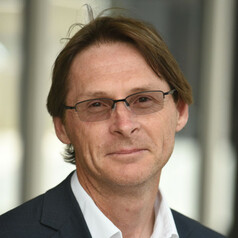
Istvan David is an Assistant Professor in the Department of Computing and Software at McMaster University , with research expertise spanning Digital Twins , Model-Driven Engineering , and Sustainability . His work bridges theoretical and applied domains, focusing on smart ecosystems , collaborative modeling , and AI-driven simulation . Key contributions include frameworks for digital twin evolution and interoperability in sustainable systems. Education : BSc, MSc, and PhD in Computer Engineering and Computer Science from Budapest University of Technology and Economics, and University of Antwerp. Research Areas : Digital Twins, Model-Driven Engineering, Reinforcement Learning, Smart Ecosystems, Sustainability, Collaborative Modeling, Cyber-Biophysical Systems, and Software Architecture. Recent Article Trends emphasize AI integration with digital twins, collaborative modeling in industrial contexts, and sustainable systems engineering . His work often combines machine learning with formal modeling to address challenges in technical sustainability and smart agriculture .
Dr. Ying Zhu is an Associate Professor in the Department of Marketing and Consumer Studies at the Lang School of Business and Economics, University of Guelph. She holds a Ph.D. in Marketing from Texas A&M University, alongside master’s degrees in Computer Science (Minzu University, China) and Management (University of Lethbridge, Canada). Previously, she served as an Associate Professor at UBC Okanagan. Her research focuses on digital marketing, consumer behavior, marketing analytics, and the impact of technology (e.g., AI, Metaverse) on consumer decisions. She has published 19 peer-reviewed articles since 2017, many in top-tier journals like American Psychologist and European Journal of Marketing . Her work explores themes such as brand extension strategies, digital advertising effectiveness, and sustainability initiatives. Dr. Zhu has received significant funding through SSHRC grants and has been recognized for her teaching excellence, including the Golden Apple Award. She actively advises graduate students and volunteers with community organizations like the Kelowna Museums Society. Her research on smartphone-induced consumer behavior has garnered media attention in outlets like Time Magazine , Global News , and Science Daily .
Katrin Erk is a Professor in both the Linguistics Department and Computer Science Department at the University of Texas at Austin. She is part of the UT Austin NLP and computational linguistics research groups. Her work focuses on computational semantics, particularly exploring word embeddings and contextualized word embeddings to study polysemous words and their meanings in context. She also investigates narrative schemas and their integration with sentence-level meaning representations, often employing logic-based frameworks. Research interests include understanding the nuanced and graded nature of word meanings, how these interact with sentence structures, and the theoretical implications of using distributional models in semantics. She has contributed to advancing methods that bridge formal semantic theories with data-driven approaches derived from large text corpora. Office hours for Fall 2024 are listed, and her contact includes an address at Patton Hall (RLP) and an email. No specific grants or awards are mentioned in the provided text.
Leah Macfadyen is an Associate Professor of Teaching in the Department of Language & Literacy Education at the University of British Columbia (UBC), Faculty of Education. She serves as Coordinator for Curriculum & Instruction in the Master of Educational Technology (MET) program. With interdisciplinary training in experimental sciences and humanities, she bridges analytical rigor with cultural theory in her research on digital education and learning analytics. Her research spans learning analytics , digital literacies , and critical intercultural communication . Key projects include developing UBC’s Introduction to Global Citizenship online course (2005) and co-authoring MET program courses like ETEC 542. She explores ethical dimensions of ‘big data’ in education and data literacy challenges. Recent publications (2020–2023) focus on institutional learning analytics frameworks, curriculum NLP analysis, and ethical codes for practitioners. Collaborative work with Shane Dawson and others has been published in journals like Journal of Learning Analytics , Computers & Education , and Journal of Genetic Counselling . Key Themes : Intercultural communication in digital spaces, systems thinking for educational analytics, ethical implications of data-driven learning Courses Developed : ETEC 500, 520, 542, 543, 581, and 590
Dr. Indratmo is an Associate Professor and Chair of the Department of Computer Science at MacEwan University. He holds a PhD from the University of Saskatchewan, an M.Sc. from the University of Manitoba, and a B.Eng. from Petra Christian University. His research focuses on information visualization, human-computer interaction, and social computing, with a particular emphasis on developing tools for analyzing social media data. He has contributed to projects like a visual analytical tool for sentiment analysis in Edmonton's traffic-related social media data and studies on multimedia content effectiveness in communication strategies. Indratmo teaches a range of computer science courses, emphasizing student engagement through transparent pedagogical practices. His work bridges technical innovation with social impact, aiming to enhance communication strategies for organizations through data-driven insights. He has published extensively in journals like Big Data Research and Visual Informatics , and his research spans topics from educational visualization tools to smart mirror applications and geospatial heritage systems. Outside academia, he enjoys outdoor activities in the Canadian Rockies. Notable collaborations include work on stacked bar chart efficacy, web-based course registration models, and exploratory browsing frameworks. His research portfolio demonstrates a commitment to both theoretical advancement and practical applications in computing.
Md. Zoheb Hassan serves as an Assistant Professor in the Department of Electrical Engineering and Computer Engineering at Laval University, where he leads cutting-edge research in wireless communications and spectrum management. His academic role includes graduate recruitment and active participation in the university's research ecosystem, particularly through the Establishment of the Next Generation of Professors program funded by FRQNT. Dr. Hassan's research centers on spectrum sharing and management, wireless communication systems, and communications network control systems. He pioneers the integration of digital twin technology and machine learning to solve critical challenges in next-generation networks, including interference management in 5G/6G aerial corridors, Internet of Vehicles, and satellite-terrestrial integration. His work emphasizes practical implementations such as proof-of-concept demonstrations for tactical networks and proactive resource allocation in dynamic environments. Analysis of his 2024-2025 publications reveals a dominant trend toward AI-driven wireless resource optimization, with 12 of 15 recent papers featuring digital twins for interference management, spectrum sharing, and energy efficiency. Key thematic clusters include vehicular communications (4 papers), underwater IoT networks (2 papers), and hardware-impairment resilient designs (3 papers), demonstrating his focus on bridging theoretical advances with real-world deployment challenges across diverse network topologies. Dr. Hassan has secured significant competitive funding for his research initiatives: Digital Twin-Enhanced Interference Management for Next-Generation Radio Access Networks in the FR3 Band (FRQNT, 2025-2027) Center for Radio Frequency and Communications Systems, Technologies and Applications (FRQNT, 2024-2030) Context-Aware Spectrum Sharing and Management for Next Generation Wireless Networks (NSERC, 2024-2029) Development of innovative technologies for modeling predictive systems in urban mobility (MITACS, 2022-2026) Springboard to Discovery supplement for Context-Aware Spectrum Sharing (NSERC, 2024-2025) He actively mentors doctoral candidates, currently supervising Mahima Karim (PhD in Electrical Engineering, expected 2025) and Mohammadamin Parhizgar (PhD in Electrical Engineering, expected 2024). His supervisory approach combines theoretical rigor with practical problem-solving, focusing on spectrum management algorithms and digital twin implementations for next-generation networks. While specific laboratory affiliations aren't detailed in the source material, his projects indicate strong alignment with Laval University's wireless research infrastructure and the Center for Radio Frequency and Communications Systems.
Shane Dawson is the Executive Dean of UniSA Education Futures and Professor of Learning Analytics at the University of South Australia. His work bridges social network analysis and learner interaction data to enhance teaching quality and educational outcomes. Affiliation : University of South Australia Research Focus : Learning Analytics, Curriculum Mapping, K-12 Decision-Making Systems, and AI in Education Recent Research Trends : Shane’s 2025 publications emphasize generative AI for curriculum analytics, ethical considerations in K-12 dashboards, and longitudinal graduate attribute monitoring. His articles often integrate psychometric models, social network tools, and open-source software like OVAL and SNAPP . Advising and Collaboration : As a co-developer of key learning analytics tools and a supervisor for research students, he collaborates globally with institutions such as Johns Hopkins University and Shahid Beheshti University of Medical Sciences. Labs and Teams : Shane leads UniSA’s Teaching Innovation Unit and is a founding member of the Society for Learning Analytics Research , driving institutional and international initiatives in educational technology.
Ridha Khedri is a Professor in the Department of Computing and Software at McMaster University . His research spans formal methods in software engineering, cybersecurity, information security ontology, network segmentation, and covert channels analysis. Full Professor since 2000 Contact: khedri@mcmaster.ca Research Interests : Prof. Khedri develops algebraic frameworks for software security, with recent work on network segmentation , ontology engineering , and covert channel detection . His interdisciplinary efforts include hybrid machine learning-ontology models for environmental predictions (e.g., river ice breakup) and digital twin healthcare systems . Article Trends : His 15 most recent works (2016-2025) focus on network security , knowledge representation , and formal verification . Notable trends include automated security testing , ontology modularization , and multi-context reasoning systems . Teaching : He has taught courses like Software Design (CAS 703), Discrete Mathematics (SFWRENG 2DM3), and Algebraic Methods in Software Engineering (CAS 738) since 2017.
Dr. Rafeef Garbi is a Professor at the Department of Electrical and Computer Engineering, University of British Columbia, and the Founder/Director of the Biomedical Signal and Image Computing Laboratory (BiSICL). Her multidisciplinary research integrates artificial intelligence, computer vision, and medical imaging for clinical applications in pediatric orthopedics, oncology, and neurology. PhD (Chalmers University, Sweden), MSc (with distinction), Technical Licentiate Research Focus: Specializing in Medical Image Computing and Visual Computing , her lab develops AI-driven solutions for: Automated segmentation and analysis of multi-dimensional biomedical data Clinically-translatable biomarkers for disease assessment Computer-aided intervention systems in surgical contexts Scientific Leadership: UBC Killam Faculty Research Fellow Peter Wall Institute for Advanced Studies Early Career Scholar Senior IEEE Member & Founding IEEE EMBS Vancouver Section Member Key Collaborations: Active in the Medical Image Computing and Computer Assisted Intervention (MICCAI) Society and CAIDA: UBC ICICS Centre for Artificial Intelligence Decision-making and Action. Her team bridges engineering, medicine, and computational biology through translational research.
Dr. Hung Cao is an Assistant Professor of Computer Science at the University of New Brunswick, where he directs the Analytics Everywhere Lab. His work focuses on interdisciplinary research in Cyber-Physical Systems (CPS), IoT, Edge/Fog/Cloud Computing, and Explainable AI, addressing societal challenges through data-driven solutions. Prior roles include PostDoc Fellow and Data Scientist at the People in Motion Lab, UNB, and Lecturer/Researcher at Vietnam National University. He holds a Ph.D. in Geomatics Engineering (specializing in Data Science) from UNB (2020), an M.Sc. in Computer Science from University College Dublin (2015), and a B.Eng. from Vietnam National University (2011). Research interests span Smart Cities, Embedded AI, TinyML, Federated Learning, and Real-time Systems. He has led projects with Cisco, NB Power, and other industry partners to develop scalable analytics frameworks for IoT applications. Dr. Cao actively contributes to technical communities (IEEE Smart City, Edge Computing, etc.), serving as a reviewer for journals and conferences, and a Topic Editor for Electronics Journal . His innovations include the Analytics Everywhere framework for spatio-temporal data analysis, MACeIP platform for smart cities, and energy-efficient IoT systems for environmental monitoring. Current work emphasizes human-centered AI for healthcare diagnostics and industrial inspection systems.
Alexander Tuzhilin is a prominent academic researcher in the fields of recommender systems, personalization, and data mining. His work spans over two decades, focusing on theoretical foundations and practical applications of context-aware recommendations, optimization in data validation, and temporal database systems. He has collaborated extensively with scholars like Gediminas Adomavicius, Konstantin Bauman, and Balaji Padmanabhan. Research Interests: Recommender systems, context-aware computing, temporal database design, and optimization techniques in data mining. Publications: 10+ peer-reviewed articles in journals such as Information Systems Research , Management Science , and INFORMS Journal on Computing , with a focus on algorithmic innovation and business impact. Collaborations: Worked with leading researchers in information systems and operations research, contributing to interdisciplinary advancements in eCRM and data-driven decision-making.
Sudhakar Ganti is an Associate Professor in the Department of Computer Science at the University of Victoria, part of the Faculty of Engineering and Computer Science. He holds a PhD from the University of Ottawa. His research focuses on cloud computing resource management, software-defined networking (SDN), traffic management, quality-of-service optimization, and performance evaluation through queueing theory. His work bridges theoretical frameworks with practical applications in network efficiency and distributed systems. Dr. Ganti’s expertise includes optimizing resource allocation in fog-cloud systems, enhancing telehealth IoT energy efficiency, and developing dynamic defense frameworks for SDN security. His contributions span network traffic prediction, large file transport protocols, and formal verification of networking systems. He has published extensively in top-tier conferences and journals, addressing challenges in distributed computing, cyber security, and edge computing. His research trends emphasize leveraging reinforcement learning for fog-cloud resource allocation, multi-objective optimization in IoT, and SDN-driven network security. Earlier work includes foundational studies on optical router bypass, cloud workload characterization, and conversational agents for smart environments. Despite his prolific output, no academic awards or grants are explicitly mentioned in his profile.
Maha Ben Ali is an Associate Professor at the Department of Mathematical and Industrial Engineering at Polytechnique Montréal. She is also an Adjunct Professor at Université Laval and a member of the Interuniversity Research Centre on Enterprise Networks, Logistics and Transportation (CIRRELT) and the Laboratoire Poly-Industries 4.0 . Education: Bachelor’s in Industrial Engineering, École Nationale des Ingénieurs de Tunis M.Sc. in Industrial Systems Engineering, École Nationale des Ingénieurs de Tunis M.Sc./Ph.D. in Mechanical Engineering (Industrial concentration), Université Laval Research Interests focus on Industrial Engineering , with emphasis on Demand Management , Supply Chain Optimization , Simulation Modeling , Industry 4.0 , and Data Valorization . Her work combines Operations Research with Machine Learning to solve complex production and logistics challenges, particularly in softwood lumber and bioethanol supply chains . Publications (34 total) include studies on reinforcement learning for demand-driven systems, hybrid recommendation systems in B2B contexts, and symbiotic bioethanol network design . She has presented at conferences like the Winter Simulation Conference and IISE Annual Conference . Scientific Awards: Best paper – CIGI-QUALITA-MOSIM 2023 David Martell Student Paper Prize in Forestry – CORS 2018 NSERC Alexander Graham Bell Canada Graduate Scholarship FRQNT Doctoral scholarship Fast-tracking scholarship Teaching includes courses like Production and Inventory Planning , Simulation of Production Systems , and Logistic Networks . She has supervised 9 completed Master’s theses on topics ranging from multi-project scheduling to CO₂ emission reduction in freight transportation .
Skyler Wang is an Assistant Professor of Sociology at McGill University, specializing in AI, technology, and human-computer interaction. He holds a Ph.D. from UC Berkeley and previously served as a Sociologist at Meta’s FAIR lab. His research critically examines sociotechnical systems' epistemic cultures and social impacts, focusing on AI-driven human-machine interactions in health, relational contexts, and digital platforms. His research interests include AI ethics, platform societies, digital intimacy, and multilingual systems. Notable works include the book project Sharing Bodies in the Sharing Economy , exploring Couchsurfing’s sociosexual dynamics, and applied AI projects like No Language Left Behind (doubling machine translation languages) and SeamlessM4T (awarded TIME’s 2023 Best Inventions). Teaching focuses on Technology & Society, Artificial Intelligence & Society, and Digital Intimacy. Advising roles include Major/Minor and Honours Sociology students. Active in interdisciplinary collaborations through McGill’s Quebec Inter-University Centre for Social Statistics and global AI ethics initiatives. Education: Ph.D. Sociology, UC Berkeley (2023) Key Affiliations: Meta FAIR Lab (prior), McGill Department of Sociology Publications in Nature , CSCW , Big Data & Society , and media features in WIRED, CNN, and NPR
Dr. Svetlana Yanushkevich is a Professor in the Department of Electrical and Software Engineering at the Schulich School of Engineering, University of Calgary. She is also a Full Member of the Hotchkiss Brain Institute and the Mathison Centre for Mental Health Research and Education. Her research focuses on biometric technologies, decision support systems, biomedical applications, and computational intelligence. She leads the Biometric Technologies Laboratory, developing strategies for risk assessment in biometric systems and healthcare monitoring through machine reasoning and signal processing. Education : BSc/MSc in Electrical Engineering (1989), State University of Informatics and Radioelectronics, Minsk PhD in Electrical Engineering (1992), same institution Dr. Habilitated in Technical Sciences (1999), Warsaw University of Technology Research Interests : Dr. Yanushkevich’s work spans biometric system design (e.g., gait analysis, facial attributes), decision support via probabilistic models (Bayesian networks, causal inference), biomedical applications (stroke rehabilitation, wearable sensors), and computational intelligence for data science. She emphasizes fairness, bias mitigation, and trustworthiness in AI systems, particularly in healthcare and accessibility contexts. Recent Research Trends : Her recent publications address causal modeling for accessibility barriers, UAV operator cognitive workload, and medical device optimization in radiation therapy. She explores AI ethics, stress contagion in human-robot teams, and cross-spectral biometric systems. Awards & Recognition : 2024 FEIC Fellow (Engineering Institute of Canada) 2019 Research Excellence Award (Schulich School of Engineering) 2001 Senior IEEE Membership Advising & Grants : She coordinates courses like ENCM 509 (Biometric Systems Design) and ENEL 610 (Biometric Technologies). Her research is supported by grants focusing on healthcare AI, accessibility technologies, and computational epidemiology. Labs & Collaborations : Her Biometric Technologies Lab collaborates with institutions like Hokkaido University and the IEEE Computational Intelligence Society. Projects include wearable health monitoring, decision support platforms, and AI-driven epidemiological modeling.