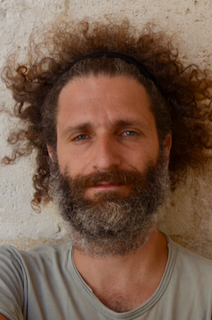
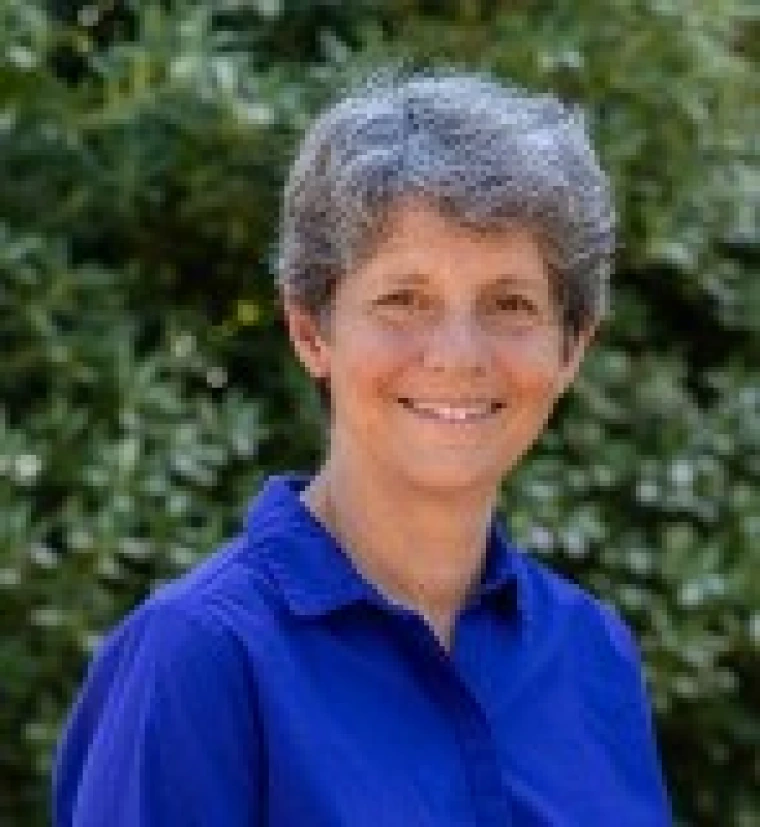
Sharese King is the Neubauer Family Assistant Professor of Linguistics at the University of Chicago, where she has taught since 2018. She earned her Ph.D. and Master's in Linguistics from Stanford University, focusing on language variation across African American communities. Her research bridges sociolinguistics, critical race theory, and phonetics to examine how African American speech is constructed, racialized, and socially evaluated. Education: Ph.D., Linguistics, Stanford University (2018) M.A., Linguistics, Stanford University Research Interests: Sociolinguistics Language Variation & Change African American Language Critical Race Theory Phonetic and experimental analysis Dialect and judicial systems Notable Contributions: Interdisciplinary studies on raciolinguistics and courtroom bias Analysis of /s/ articulation in intersectional contexts Reconceptualization of AAVE as AAL to emphasize linguistic diversity Fieldwork in Bakersfield, Rochester, and Chicago Publications in American Speech , Journal of Sociolinguistics , Language , and Nature Scientific Awards: Provost's Postdoctoral Fellowship Neubauer Family Assistant Professorship Labs & Projects: Co-founder of the Chicagoland Language Project
Jerrica Ty Rowlett serves as an Assistant Professor of Communication and Language Studies within the College of Arts and Sciences at Bryant University, where she examines digital communication's societal implications through research and teaching in digital culture and social media dynamics. Education Ph.D., Florida State University M.A., Clemson University B.A., Georgetown College Her research program investigates identity formation, civic engagement, and digital inequity through critical analysis of social media platforms. She explores how digital environments shape interpersonal relationships, political discourse, and community building while addressing power dynamics in online spaces, with particular attention to abusive contexts, gender representation, and emotional experiences. Analysis of her publication record (2015-2024) reveals a consistent trajectory examining social media's evolving societal impact. Early work focused on educational applications and youth culture, progressing to sophisticated analyses of political meme culture, relationship dissolution in abusive contexts, and emotional contagion online. Her scholarship demonstrates increasing attention to social justice dimensions within digital communication. Scientific Awards No awards documented in current sources Advising and Grants Student advising details and research grant information are not specified in available materials, though her extensive publication record indicates active scholarly mentorship and research productivity. Labs and Teams No dedicated research laboratories or formal collaborative teams are mentioned in the provided information.
Amir Zamir is a tenure-track Assistant Professor of Computer Science at the Swiss Federal Institute of Technology Lausanne (EPFL) in the School of Computer & Communication Sciences. Previously, he worked at UC Berkeley, Stanford, and UCF with prominent researchers including Silvio Savarese, Jitendra Malik, Mubarak Shah, Rahul Sukthankar, and Leonidas Guibas. He currently leads the Visual Intelligence & Learning Lab at EPFL and serves as chief scientist of Duranta, having previously been the CVML chief scientist of Aurora Solar (a Forbes AI 50 company valued at $4B in 2022) from 2015 to 2022. Dr. Zamir's research spans computer vision, machine learning, and artificial intelligence, with a focus on developing general multi-modal/multi-task vision systems that operate as active agents in the real world. His work emphasizes slow science principles, seeking fundamental understanding over quick publications. Key research areas include embodied vision, multimodal foundation models, computational imaging, and vision-language integration. His notable projects include 4M, Taskonomy, Gibson Environment, Omnidata, and MultiMAE, which have significantly influenced the field of computer vision and embodied AI. Zamir has made substantial contributions to the computer vision community through numerous high-impact publications and leadership roles. His work demonstrates a consistent focus on creating vision systems that go beyond narrow and passive methods toward more general, active, and embodied approaches. The trajectory of his research shows increasing sophistication in handling multiple modalities and tasks within unified frameworks, culminating in recent work on multimodal foundation models that can handle diverse vision tasks. Dr. Zamir has received numerous prestigious awards including the Young Researcher Award 2022 from ECCV, the PAMI Mark Everingham Prize 2022, SIGGRAPH 2022 Best Paper Award for CLIPasso, CVPR 2018 Best Paper Award for Taskonomy, and CVPR 2016 Best Student Paper Award. He is also an ELLIS Faculty Scholar and received the NVIDIA Pioneering Research Award in 2018 for the Gibson Environment. As an advisor, Dr. Zamir has mentored numerous PhD students including Roman Bachmann, Andrei Atanov, Rishubh Singh, Jason Toskov, Kunal Pratap Singh, Zhitong Gao, Mingqiao Ye, and Muhammad Uzair Khattak. His former PhD students include Oguzhan Kar (now at Apple), Alexander Sasha Sax (co-advised with Jitendra Malik, now at Meta FAIR), and Teresa Yeo (now at MIT-Singapore Alliance). Dr. Zamir teaches several advanced courses including CS-503 Visual Intelligence, CS-500 AI Product Management, COM-304 Intelligent Systems, and ENG-615 Topics in Autonomous Robotics. Dr. Zamir leads the Visual Intelligence & Learning Lab at EPFL, which focuses on developing fundamental methods for visual intelligence that can operate effectively in real-world environments. The lab takes an interdisciplinary approach combining computer vision, machine learning, robotics, and cognitive science to create systems that can perceive, understand, and interact with the world. Current research directions include multimodal foundation models, computational imaging, embodied vision, and personalization of generative models.
Yingyan (Celine) Lin is an Associate Professor in the School of Computer Science at Georgia Institute of Technology, leading the Efficient and Intelligent Computing (EIC) Lab. Her work focuses on cross-layer innovations in machine learning systems, from algorithms to chip design, aiming to advance green AI and ubiquitous machine learning. She holds a Ph.D. in Electrical and Computer Engineering from the University of Illinois at Urbana-Champaign (2017). Research interests include efficient machine learning, neural rendering (e.g., NeRF), hardware-software co-design for AI acceleration, and graph neural networks. Her lab has pioneered projects like RTML and 3DML, funded by NSF, NIH, DARPA, and industry partners (Qualcomm, Intel, Meta). Awards: NSF CAREER Award (2021), ACM SIGDA Outstanding Young Faculty (2022), Meta Faculty Research Award (2022) Grants: Multi-university projects funded by NSF, NIH, DARPA, SRC, ONR, and industry Recognition: First-place wins at DAC 2022 and TinyML Design Contest 2022, IEEE Micro Top Pick 2023 Her research bridges algorithmic innovation with hardware implementation, emphasizing energy efficiency and real-time performance for applications in AR/VR, computer vision, and neuro-symbolic AI systems.
Kenji Kawaguchi is the Presidential Young Professor in the Department of Computer Science at the National University of Singapore (NUS), where he leads the Deep Learning Lab and is a faculty affiliate at the NUS Institute of Data Science. His research bridges theoretical and applied machine learning, focusing on deep learning, large language models, and physics-informed neural networks. His educational background includes a Ph.D. and S.M. in Computer Science and Electrical Engineering from the Massachusetts Institute of Technology (MIT), advised by Leslie Pack Kaelbling, and a postdoctoral fellowship at Harvard University’s Center of Mathematical Sciences and Applications. Dr. Kawaguchi’s research interests center on the theoretical foundations of deep learning, optimization, generalization, and applications in areas such as molecular modeling, AI safety, and efficient training of large models. He has made significant contributions to understanding in-context learning, diffusion models, and neural operators for partial differential equations. His recent publications (2023–2025) reflect a strong trend toward improving the efficiency, robustness, and interpretability of large-scale models, particularly in language and scientific domains. Key themes include LLM alignment and safety, diffusion model optimization, and physics-informed learning for high-dimensional problems. Presidential Young Professor He has served as Area Chair and PC Member for top-tier conferences including NeurIPS, ICML, ICLR, AAAI, and UAI, and as reviewer for journals such as JMLR and Annals of Statistics. He has delivered invited talks at Harvard, MIT, Stanford, CMU, Brown, and Google Research, reflecting his international recognition. He actively mentors students and welcomes PhD candidates and postdocs to join his research group.
Aarti Singh is a Professor in the Machine Learning Department at Carnegie Mellon University and Director of the NSF AI Institute for Societal Decision Making. She leads research at the intersection of machine learning, statistics, and decision making, with applications to scientific and societal domains. Her work focuses on designing principled interactive algorithms for learning and decision making under uncertainty. Education: Ph.D. in Electrical Engineering, University of Wisconsin-Madison (2008) M.S. in Electrical Engineering, University of Wisconsin-Madison (2003) B.E. in Electronics and Communication Engineering, University of Delhi (2001) Research Interests: Professor Singh's research centers on developing interactive machine learning algorithms that go beyond finding input-output associations to make higher-level decisions about the most informative data and actions. Her work spans autonomous decision making, including active sampling, stochastic optimization, bandits, and reinforcement learning that are statistically optimal, computationally tractable, and robust. She also investigates human factors in decision making, designing algorithms that model and leverage human feedback while accounting for bias, memory effects, and calibration. Her research has applications in material science, cosmology, and peer review systems. Research Trends: Professor Singh's recent publications demonstrate a strong focus on reinforcement learning, particularly in developing more efficient and robust algorithms for decision making under uncertainty. Her work bridges theoretical foundations with practical applications, spanning from fundamental algorithm development to real-world implementation in scientific domains. There's a clear trajectory toward integrating human factors into decision-making algorithms, with significant contributions to peer review systems and preference learning. Scientific Awards: NSF Career Award United States Air Force Young Investigator Award A. Nico Habermann Faculty Chair Award Harold A. Peterson Best Dissertation Award Multiple paper awards Advising and Grants: Professor Singh has advised numerous PhD and master's students, many of whom have gone on to faculty positions or research roles at leading institutions. Her research is supported by prestigious grants from ONR, Simons Foundation, AFRL, ARL, and NSF. She serves as General Chair (2025) and Program Chair (2020) for the International Conference on Machine Learning (ICML) and has held leadership roles in multiple professional organizations. Research Team: Professor Singh leads a vibrant research group within the Machine Learning Department at CMU, with current PhD students working on topics including reinforcement learning, human-AI collaboration, and decision making under uncertainty. She also directs the NSF AI Institute for Societal Decision Making, which brings together researchers from multiple disciplines to develop AI systems that support human decision making in societal contexts.
Dr. Kaya de Barbaro is an Associate Professor in the Department of Psychology at the University of Texas at Austin (College of Liberal Arts). She holds a Ph.D. from the University of California San Diego. Her research focuses on bridging computer science and developmental/clinical psychology, particularly maternal mental health and infant social-emotional development. She directs the Daily Activity Lab, which uses mobile/wearable sensors and machine learning to analyze real-world interactions, aiming to develop just-in-time interventions for new mothers. Key research areas include maternal-infant dynamics, physiological synchronization, and the impact of environmental chaos on development. She has pioneered methods for analyzing high-density data, such as Granger causality and machine learning algorithms to detect behaviors like crying and holding. Recent work emphasizes leveraging ecological momentary assessment surveys and 24-hour LENA audio recordings to understand proximal mechanisms of development. Dr. de Barbaro teaches Psychology 333D (Introduction to Developmental Psychology) and has developed curricula for both in-person and online formats. She is actively involved in training students through the Eureka program at UT Austin. Her lab collaborates on tools like chatbots for postpartum mental health and has published extensively on sensor-based methodologies in developmental science.
Anca Dragan is an Associate Professor in the Department of Electrical Engineering and Computer Sciences at the University of California, Berkeley, where she runs the InterACT Lab focused on algorithms for human-AI and human-robot interaction. Currently on leave from Berkeley, she leads AI Safety and Alignment at Google DeepMind, overseeing safety for Gemini models and preparing for future advancements. Dragan has been a co-PI of the Center for Human-Compatible AI and served on the steering committee for the Berkeley AI Research (BAIR) Lab. B.Sc. in Computer Science from Jacobs University Bremen, Germany Ph.D. from Carnegie Mellon University Dr. Dragan's research focuses on enabling AI agents to work effectively with, around, and in support of people. Her work bridges robotics, machine learning, and game theory to create systems that better understand human preferences and coordinate with users. Key areas include AI alignment (ensuring AI does what people actually want), learning reward functions from diverse human feedback forms, and developing algorithms for human-AI collaboration across domains like autonomous vehicles, brain-machine interfaces, and recommender systems. Her research emphasizes maintaining uncertainty about human preferences and accounting for the plurality of human values. Dr. Dragan's recent publications reveal a strong focus on addressing fundamental challenges in AI safety and alignment. Her work spans theoretical foundations of reward learning, practical implementations for human-AI coordination, and critical examinations of limitations in current approaches. There's a clear trajectory toward more robust, safe, and value-aligned AI systems that can handle complex human preferences while avoiding both present-day harms and potential catastrophic risks. IEEE RAS Early Academic Career Award in Robotics and Automation (2021) McEntyre Award for Excellence in Teaching (2020) PECASE (Presidential Early Career Award for Science and Engineering) (2019) Sloan Fellowship (2018) NSF CAREER Award (2017) Okawa Foundation Award (2017) MIT Tech Review 35 Innovators Under 35 (2017) Multiple best paper awards at top robotics and AI conferences Dr. Dragan has mentored numerous successful students who have gone on to faculty positions at MIT, Stanford, CMU, and Princeton, as well as industry roles at DeepMind, Waymo, and Meta. Her advising philosophy emphasizes both technical rigor and consideration of broader societal impacts. She has secured significant research funding including NSF CAREER, ONR Young Investigator, and Okawa Foundation awards, supporting work on human-AI interaction and alignment. Dragan has also consulted for Waymo for six years, helping develop roadmaps for deploying increasingly learning-based safety-critical systems. Dr. Dragan leads the InterACT Lab at UC Berkeley, which has produced influential work on Cooperative Inverse Reinforcement Learning, Inverse Reward Design, and other foundational concepts in human-AI interaction. The lab's research has significantly shaped the field of AI alignment, with applications spanning autonomous vehicles that coordinate with human drivers, brain-machine interfaces that adapt to user needs, and language models that better understand human preferences. Current work focuses on scaling safety approaches as AI capabilities advance, ensuring alignment keeps pace with technological progress.
Meredith Tamminga is an Associate Professor of Linguistics at the University of Pennsylvania, where she directs the Language Variation and Cognition Lab . Her work bridges sociolinguistics , psycholinguistics , and theoretical linguistics , focusing on how linguistic variability is represented in mental grammar and how social context influences speech perception and production. She co-leads the Philadelphia Signs Project , exploring sign language sociolinguistics with collaborators at Penn and Gallaudet University. PhD in Linguistics (2014), University of Pennsylvania BA in Linguistics (2009), McGill University Her research integrates experimental methods with naturalistic speech analysis to study individual and group-level language change. Keywords include phonetics-phonology mapping , intraspeaker variation , and quantitative modeling . Notable grants include NSF awards and SAS Dean’s Mentorship Award . Key affiliations include MindCORE , Penn’s hub for integrative mind sciences, and collaborative ties to the Phonetics Lab , Child Language Lab , and Cultural Evolution of Language Lab . Her lab emphasizes cross-departmental research and welcomes undergraduate RAs and PhD students.
Alexandra Horowitz is a Senior Research Fellow and Adjunct Associate Professor at Barnard College. She has been teaching since 2004, specializing in dog cognition and olfactory research. Her academic roles span the Departments of English and Psychology, reflecting her interdisciplinary focus on animal behavior and human-animal interactions. Education: M.S. and Ph.D. in Cognitive Science from UC San Diego; B.A. in Philosophy from the University of Pennsylvania. Research interests include naturalistic observations of dog social play, testing anthropomorphic assumptions, and characterizing canine olfactory abilities. She has authored influential books like Inside of a Dog and Being a Dog , exploring how dogs perceive the world. Her work frequently appears in top journals and media outlets, including the New York Times and TED-Ed. Recent articles highlight studies on dog navigation, play behavior, and olfactory perception. She has been recognized as among the Top 2% of Cited Authors globally. Her presentations and lectures span academic conferences, museums, and public forums, emphasizing science communication.
Max Planck Institute for Intelligent SystemsGermany
Celestine Mendler-Dünner is a Principal Investigator at the ELLIS Institute in Tübingen, co-affiliated with the Max Planck Institute for Intelligent Systems and the Tübingen AI Center. She leads the Algorithms and Society research group, focusing on machine learning in social contexts and the role of prediction in digital economies. Her work bridges theoretical machine learning with practical societal impact, developing tools for safe, reliable, and equitable AI ecosystems. Her educational background includes a PhD from ETH Zurich in collaboration with IBM Research, followed by an SNSF postdoctoral fellowship at UC Berkeley hosted by Moritz Hardt. She was previously a group leader at the Max Planck Institute for Intelligent Systems before joining the ELLIS Institute. Mendler-Dünner's research spans several interconnected themes including performative prediction (where predictions change the behavior they aim to predict), algorithmic collective action (how participants can steer AI systems toward common goals), and the role of LLMs in social science research. Her work combines theoretical foundations with practical implementations, addressing challenges in interactive machine learning, optimization in dynamic environments, and context-specific evaluation of AI systems. She particularly examines how algorithmic predictions mediate services and platforms at societal scale, exploring concepts of economic power in digital markets. Her publication record shows a clear evolution from system-aware machine learning algorithms (including foundational work on IBM Snap ML) toward increasingly sociotechnical questions at the intersection of machine learning, economics, and policy. Recent work focuses on measuring performative power in digital economies, evaluating LLMs as risk scores, and developing frameworks for algorithmic collective action in recommender systems and labor markets. Among her notable recognitions are the ETH Medal for her dissertation, the IBM Research Division Award, the Fritz Kutter Award, and the IBM Eminence and Excellence Award. She is an ELLIS Scholar, a fellow of the Elisabeth-Schiemann-Kolleg, and affiliated with several prestigious research programs including the International Max Planck Research School for Intelligent Systems and the Max Planck ETH Center for Learning Systems. ETH Medal (dissertation award) IBM Research Division Award Fritz Kutter Award IBM Eminence and Excellence Award SNSF Early Postdoc Mobility Fellowship Mendler-Dünner actively mentors the next generation of researchers, advising PhD student Patrik Wolf and supervising research interns including Joachim Baumann, Haiqing Zhu, and Anna Badalyan, as well as Master's student Dorothee Sigg. She serves as core faculty for the International Max Planck Research School and associated faculty for the Max Planck ETH Center for Learning Systems. Her group has secured significant research funding through fellowships and institutional support, enabling work on projects like Powermeter (measuring search engine influence) and Snap ML (resource-efficient machine learning library with over 1 million PyPI downloads). She leads the Algorithms and Society research group, which examines machine learning as part of broader sociotechnical ecosystems. The group explores human-population interactions with algorithmic systems and incorporates these insights into learning system fundamentals. Current projects include investigating economic incentives in digital platforms, developing tools for systematic LLM evaluation in social science contexts, and creating frameworks for collective action in algorithmic systems. Mendler-Dünner also co-organizes the Algorithmic Collective Action workshop at NeurIPS 2025, demonstrating her leadership in emerging research directions at the AI-society interface.
Snježana Babić serves as Associate Professor and Head of the Graduate Study Program Informatics - Teaching Major at the Faculty of Informatics in Pula , University of Pula. With a PhD obtained in 2016 and university affiliation since 2017, she teaches across undergraduate and graduate programs focusing on ICT fundamentals, web design, digital competencies, and informatics education methodology. Her educational background includes graduation in 1993 followed by doctoral studies culminating in 2016. Though specific institutions aren't detailed in the text, her career trajectory shows progression from foundational ICT teaching to specialized informatics education leadership. Babić's research centers on educational technology adoption with particular emphasis on programming pedagogy for young learners through the MEMA method. Her work investigates digital competencies across multiple educational contexts, from primary schools to higher education. Recent publications demonstrate rapid adaptation to emerging technologies, with 2025 studies examining ChatGPT integration in Croatian educational settings and cross-cultural applications of programming methods. Analysis of her 15 most recent publications reveals consistent focus on technology acceptance models applied to Croatian educators and students. The research trajectory shows evolution from foundational e-learning systems (2016-2020) to cutting-edge AI and robotics applications (2022-2025), maintaining strong methodological focus on teacher motivation , implementation barriers , and culturally-specific adoption factors . Her teaching portfolio demonstrates deep integration with research interests: Undergraduate: ICT Fundamentals, Web Design and Application Graduate: Digital Competencies in Education, Informatics Education Methodology, Practicum for IT Educators Cross-disciplinary: ICT in Nursing, Healthcare Informatics Babić actively contributes to institutional leadership as program head while maintaining robust research productivity. Her work bridges theoretical technology adoption frameworks with practical implementation challenges in Croatian educational contexts, particularly examining how emerging technologies like humanoid robots and AI assistants can be effectively integrated into teaching practices.
Andreas Vlachos is a Professor of Natural Language Processing and Machine Learning at the Department of Computer Science and Technology, University of Cambridge, and holds the Dinesh Dhamija Fellowship at Fitzwilliam College. His research spans dialogue modeling, automated fact-checking, imitation learning, semantic parsing, biomedical text mining, and trustworthiness in AI systems. PhD in Computer Science, University of Cambridge (supervised by Ted Briscoe and Zoubin Ghahramani) Lecturer at University of Sheffield Postdoctoral roles at UCL, University of Cambridge (NLIP group, Stephen Clark), and University of Wisconsin-Madison (Mark Craven) Current research focuses on evaluating and mitigating biases in language models, advancing fact-checking methodologies, and improving model robustness through interpolation, reinforcement learning, and causal reasoning. His work integrates natural logic, knowledge graphs, and multimodal evidence for verification tasks. Recent publications address uncertainty quantification, temporal planning benchmarks, and ethical framing of NLP artifacts. Grants from ERC, EPSRC, Facebook, Google, and the Alan Turing Institute fund his research team. Collaborations include Sebastian Riedel, Stephen Clark, and Mark Craven. Key projects explore disinformation detection, long-form generation, and confidence calibration in AI systems.
Diane E. Austin is a Professor and Director of the School of Anthropology at the University of Arizona. She also serves as a Research Anthropologist at the Bureau of Applied Research in Anthropology (BARA). Her work focuses on environmental anthropology, particularly community dynamics in industrial and environmental contexts, with a strong emphasis on social justice and collaborative research. She has over 25 years of experience leading interdisciplinary projects in the U.S., Mexico, and Gulf Coast regions. Austin's research spans diverse areas including Native American communities, U.S.-Mexico border sustainability, Gulf Coast oil industry impacts, and urban food systems in arid regions. She has pioneered long-term partnerships with tribal organizations, federal agencies, and community groups, earning recognition such as the University Distinguished Outreach Professor (2008) and Distinguished Director (2023). Her recent work highlights longitudinal studies on the Deepwater Horizon oil spill's social effects, binational environmental initiatives in Nogales, and community-based approaches to disaster resilience. She coordinates BARA's internship and post-baccalaureate programs, supporting hundreds of students in applied anthropological research. Awards: Partners in Conservation Award (2010), Border Research Partnership Award Finalist (2012) Leadership Roles: Chair of the Good Neighbor Environmental Board, Member of the Gulf Research Program Advisory Board Key Projects: Southern Paiute cultural preservation, Gulf Coast oil industry studies, Nogales reforestation initiatives Austin’s teaching includes courses on ethnographic methods, data analysis, and mixed-methods research. She actively engages in policy advocacy, contributing expert testimony in legal proceedings related to environmental disasters and labor rights.
Andrés Buxó-Lugo serves as an Assistant Professor of Psychology at the University at Buffalo, where he directs the Language Processing and Computation Lab. His research investigates the cognitive mechanisms underlying language production, comprehension, and acquisition with a specialized focus on speech prosody—the rhythm, intonation, and intensity patterns in speech—and their role in human communication. His primary research interests include psycholinguistics, cognitive psychology, speech prosody, language production, language comprehension, language acquisition, and computational linguistics. He examines how listeners integrate diverse linguistic cues during speech processing, how individuals learn unfamiliar constructions like non-native pronunciations or novel prosodic patterns, and the cognitive basis of durational changes in speech. His work also explores how communicative context shapes prosodic production and how higher-level linguistic information aids prosodic structure parsing. Analysis of his 15 most recent publications (2019-2025) reveals consistent interdisciplinary work bridging cognitive science, linguistics, and computational modeling. Key trends include phonological representation studies, speech planning mechanisms, intonation adaptation across talkers, lexical representation structures, and the integration of input expectations in syntactic parsing. His research demonstrates significant methodological diversity, incorporating experimental paradigms, computational modeling, and acoustic analysis to unravel language processing complexities. As director of the Language Processing and Computation Lab at the University at Buffalo, Buxó-Lugo leads research initiatives focused on developing computational models of language processing while investigating the cognitive foundations of speech and prosody through empirical experimentation and theoretical innovation.