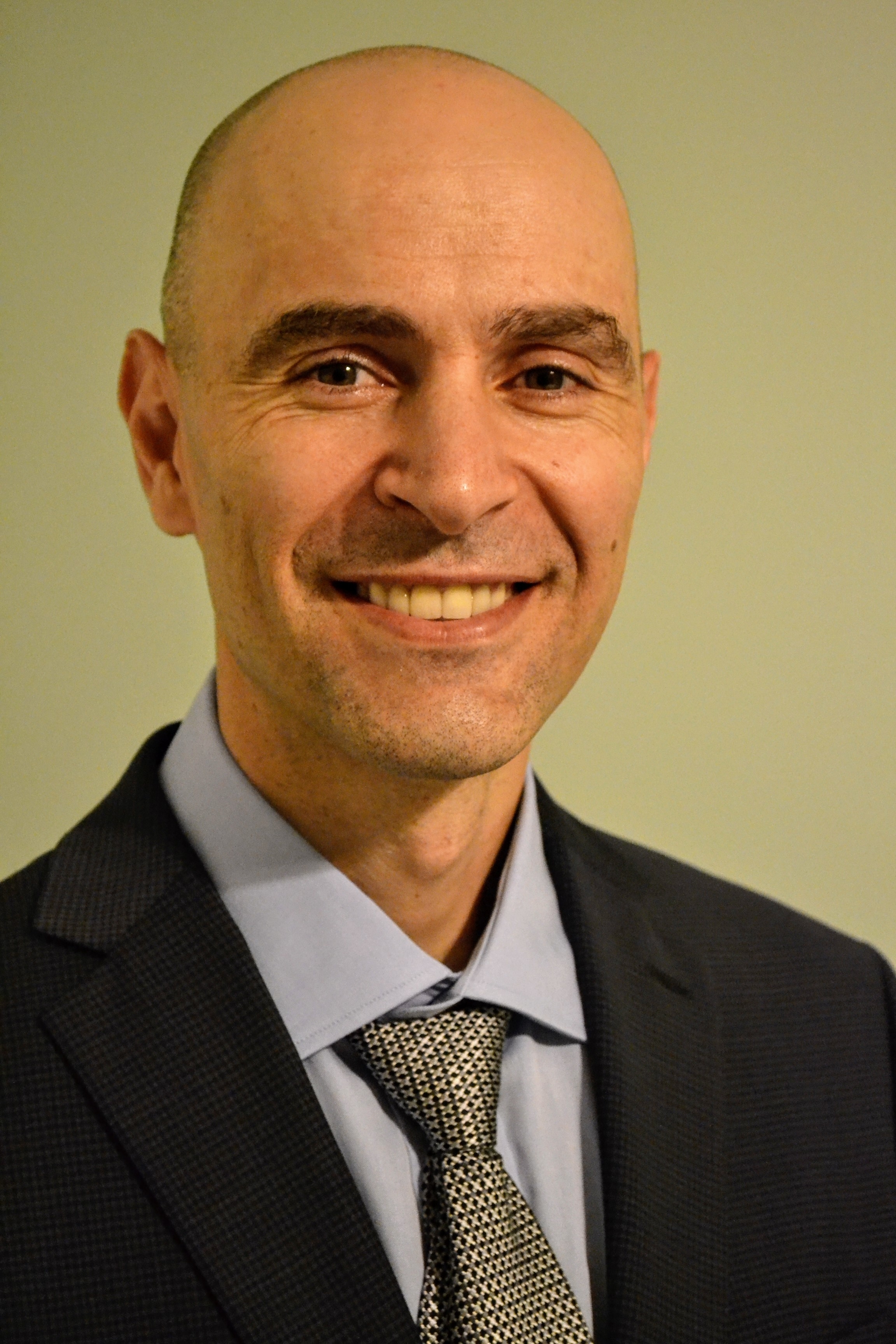
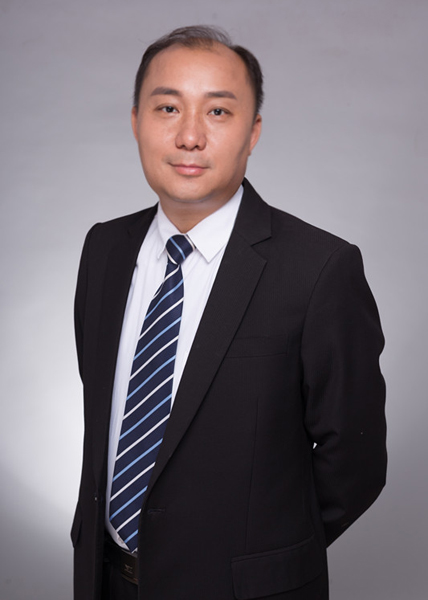
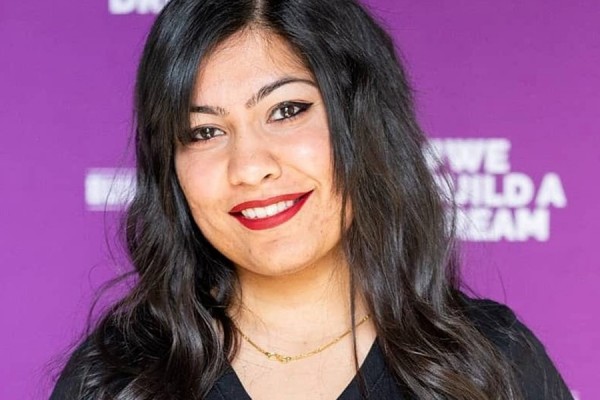
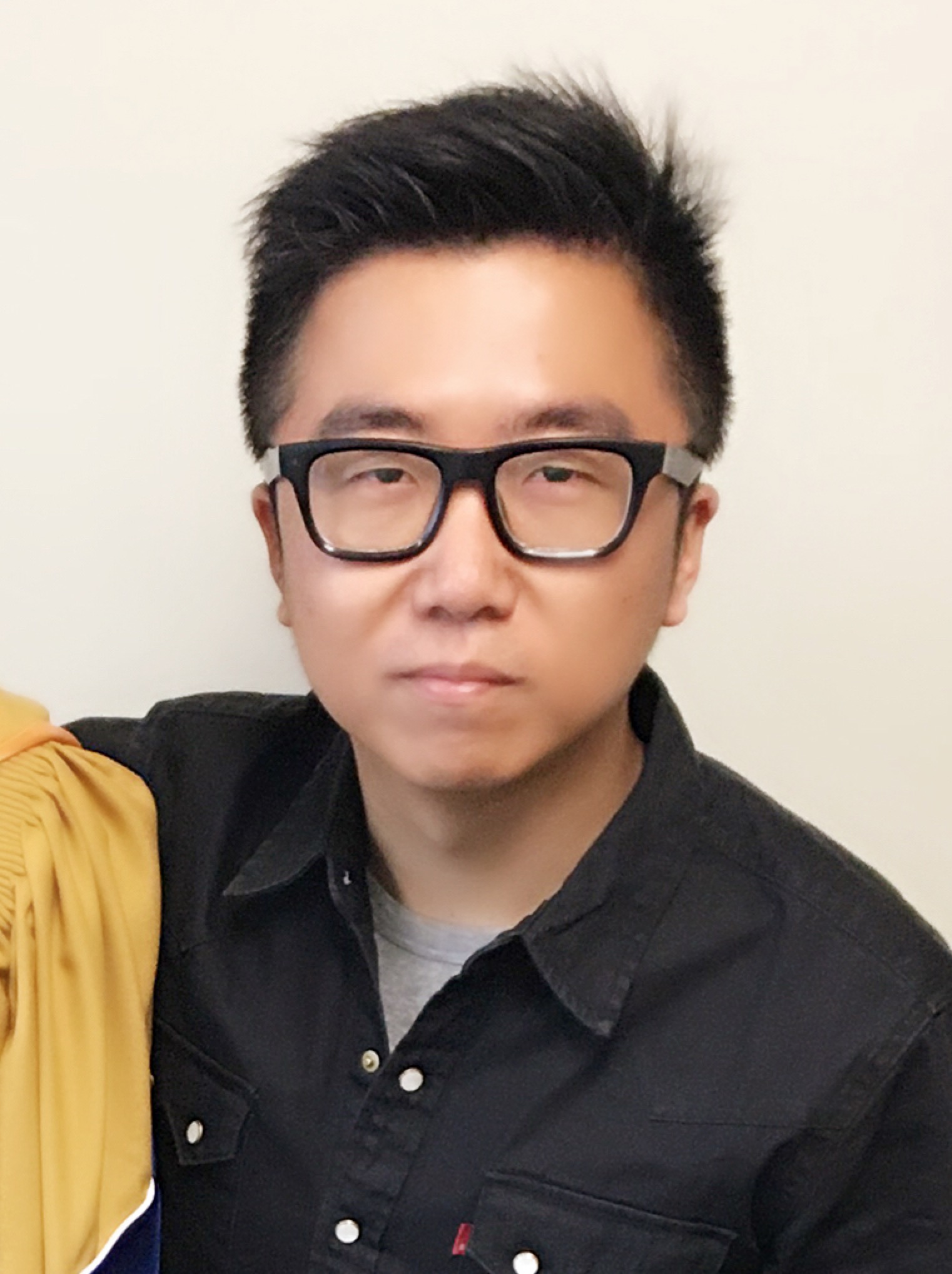
Suvi Saarikallio is a Professor of Music Education at the University of Jyväskylä, Finland , affiliated with the Faculty of Humanities and Social Sciences and the Department of Music, Art and Culture Studies . She leads interdisciplinary research bridging music psychology, education, and therapy, with a focus on youth development, emotion regulation, and well-being. Research Groups: Centre of Excellence in Music, Mind, Body and Brain (2022-2029), Musiconnect (2022-2027) Key Projects: Music and You, Stress & music listening, MPACT (Music and Sports), Music and Cross-modal Associations, SOSUS (Social Sustainability for Children) Research Trends: Her recent publications explore music's role in emotional regulation, cross-modal perception, health outcomes, and educational applications. Themes include AI's impact on music evaluation, rhythm's connection to cognitive skills, and music's influence on stress and social-emotional development. Contact: suvi.saarikallio@jyu.fi
Georges Kaddoum is a Professor at École de technologie supérieure (ÉTS) , specializing in Electrical Engineering. He holds the Canada Research Chair in Unlocking the Power of IoT 6G-Networks and the LACIME – Communications and Microelectronic Integration Laboratory affiliation. His work bridges wireless communications, IoT, and machine learning. Research Interests include wireless communication systems, physical layer security, machine learning for networking, and 6G technologies. He focuses on optimizing network performance in challenging environments (impulsive noise, underwater, non-terrestrial networks) and developing AI-driven solutions for jamming mitigation, resource allocation, and secure IoT frameworks. Recent Publications highlight 6G-enabled vehicular networks, quantum-safe blockchain integration, federated learning for transportation systems, and deep learning-based receivers for chaotic communication systems. His work emphasizes semantic communication, interference management, and digital twin applications. Awards IEEE TCSC Award for Excellence in Scalable Computing (2022) Prix d’excellence de la relève (Université du Québec, 2018) Prix d’excellence en recherche (ÉTS, 2018) Multiple IEEE Exemplary Reviewer and Best Paper Awards (2014–2022) Supervision includes 15+ PhD/Master’s students working on topics like index modulation, physical layer security, UAV communications, and intelligent resource management. Research Units Ultra Research Chair on Intelligent Tactical Wireless Networks LACIME Laboratory Canada Research Chair in IoT 6G-Networks
Shrirang Mare is an Assistant Professor in the Computer Science Department at Western Washington University (WWU), focusing on computer security and privacy with emphasis on usable security solutions for diverse user groups including low-literate individuals, the elderly, and cross-cultural populations. His research bridges human-computer interaction and cyber-physical systems to create accessible security mechanisms for emerging technologies. His educational background includes a PhD in Computer Science from Dartmouth College (2016), where his dissertation on seamless authentication for ubiquitous devices established his research trajectory. Dr. Mare's research interests encompass security and privacy, human-computer interaction, and cyber-physical systems, with specialized focus on security for low-literate users and developing regions. His work consistently addresses real-world applicability through field studies in countries like India and Pakistan, examining mobile payment systems, SMS fraud, and smart home privacy challenges. Analysis of his 15 most recent publications (2018-2024) reveals a dominant trend in wearable-based authentication systems (wristbands for desktops/smartphones) and privacy solutions for consumer IoT, particularly smart homes. His research uniquely combines technical security mechanisms with deep user-centered design principles, often targeting underserved populations in developing regions. No scientific awards or fellowships were mentioned in the provided documentation. Teaching responsibilities include Privacy Enhancing Technologies, Object Oriented Design, and Data Structures at WWU, with prior guest lectures at UC Berkeley and the University of Washington; no current advisees or grant funding details were specified. Dr. Mare operates within the Computer Science Department at WWU but no dedicated research lab or team structure was referenced in the source materials.
Tammy English is an Associate Professor in the Department of Psychological & Brain Sciences at Washington University in St. Louis, where she leads the Emotion and Relationships Laboratory. Her research investigates how individuals regulate emotions in real-world social contexts, with a focus on authenticity, interpersonal dynamics, and well-being across the lifespan. PhD, University of California, Berkeley MA, University of California, Berkeley BA, Swarthmore College Her research interests span emotion regulation , social psychology , affective science , interpersonal relationships , and developmental psychology , with increasing emphasis on aging, cognitive factors, and diversity in educational contexts. She employs intensive longitudinal methods such as experience sampling and ambulatory assessment to capture emotional dynamics in daily life. The most recent publications highlight trends in emotion regulation across adulthood , particularly how cognitive abilities, authenticity, and situational context influence regulatory success. Her work explores both intrapersonal and interpersonal emotion regulation, including its role in romantic relationships, intergroup interactions, and mental health conditions like depression. There is a strong methodological focus on ecological validity, momentary assessment, and distinguishing adaptive from maladaptive regulation. APS Fellow (2022) Tenured faculty (2019) Recipient of multiple NIA grants, including R01AG070139 Mentor to award-winning students (ExpiWell Dissertation Award, SPSP Heritage Award) Dr. English has advised numerous graduate students and postdoctoral researchers, including Tabea Springstein and Isidro Landa, and has secured significant grant funding from the National Institute on Aging to study the neural and motivational underpinnings of emotion regulation across the lifespan. Her lab collaborates widely, including with the Emotion and Mental Health Lab, and presents regularly at premier conferences such as the Society for Affective Science and the Association for Psychological Science. The Emotion and Relationships Lab conducts cutting-edge research on how people manage emotions in social contexts across adulthood, with special attention to aging, cognitive health, and educational equity. The lab uses mobile sensing, experience sampling, and experimental designs to study emotion regulation in real time and real-world settings.
Robin Kravets is a Professor in the Department of Computer Science at the University of Illinois at Urbana-Champaign, where she leads the Mobius research group. She earned her Ph.D. in Computer Science from the Georgia Institute of Technology in August 1999. Her office is located at 3114 Siebel Center for Comp Sci, and she can be contacted via email at rhk@illinois.edu or phone at (217) 244-6026. Courses Taught: CS 438 (ECE 438) - Communication Networks CS 498 WN3 (CS 498 WN4) - Wireless IoT Lab CS 591 PH2 (CS 591 PHD) - PhD Orientation Seminar CS 591 SCH - PhD Job Search Prep CS 591 WN - Wireless Networking Seminar ECE 439 (CS 439) - Wireless Networks ENG 572 - Professional Practicum Research Focus: Dr. Kravets specializes in wireless and mobile systems, with emphasis on IoT security, energy-efficient networking, and privacy-preserving protocols. Her work addresses challenges in dense network environments, vehicular communication, and low-power devices, often leveraging probabilistic models and adaptive protocols to enhance system resilience. Publication Trends: Her recent articles (2016-present) predominantly explore wireless IoT security (e.g., MAC randomization defenses, BLE optimization) and practical applications in environmental sensing/retail. Earlier work (2007-2015) established foundations in vehicular networks, disruption-tolerant communication, and energy-aware protocols. Leadership: She directs the Mobius Group, which develops solutions for mobile and IoT systems, including projects like IVP (Illinois Vehicular Project) and contributions to standards in pervasive computing.
Hui Pan is a distinguished academic holding dual positions as Nokia Chair in Data Science and Professor of Computer Science at the University of Helsinki, and Chair Professor of Computational Media and Arts at the Hong Kong University of Science and Technology (HKUST). His research spans networking, mobile computing, augmented reality, and computational social science. He earned his Ph.D. in Computer Science from the University of Cambridge in 2007. His work bridges social networks with mobile systems, pioneering fields like mobile social networks and opportunistic forwarding algorithms. Research interests include data science, complex networks, and innovative applications of augmented reality. His recent publications focus on low-latency AR frameworks, blockchain for computation offloading, and mobile web visualization. He has received prestigious awards, including IEEE Fellow (2018), ACM Distinguished Scientist (2016), and the Nokia Chair Endowment (2017). He has supervised over 15 PhD and 12 MPhil graduates, with 13 current Ph.D. students and 2 MPhil students. His editorial roles include Associate Editorships at IEEE Transactions journals and guest editorships at top venues like IEEE JSAC and ACM Transactions. He has organized conferences such as WWW Track Chair and ExtremeCom General Chair.
Yan Chen is a Professor of Computer Science at Northwestern University's Robert R. McCormick School of Engineering and Applied Science. He leads the Northwestern Lab for Internet and Security Technology (LIST) and the Center for Ultra-scale Computing and Information Security. His research focuses on cybersecurity, network measurement, and distributed systems security. Chen holds a Ph.D. from UC Berkeley (2003), M.S. from SUNY Stony Brook, and B.E. from Zhejiang University. Research interests include securing networking systems, intrusion detection, cloud-native platforms, and mobile security. Notable awards include the DOE Early CAREER Award (2005), Air Force Young Investigator Award (2007), and ACM ASPLOS'18 Most Influential Paper Award. His work has been cited over 17,000 times with an h-index of 62 (2024). Key contributions include the LIST lab's advancements in APT detection, provenance tracking in microservices, and security frameworks like FlowCog. He advises numerous Ph.D. students and has graduated over 20 researchers now in academia and industry.
Dr. Dongyun Nie is an Assistant Professor at Dublin City University's School of Computing. She holds a PhD in Computer Science with a specialization in Customer Relationship Management. Her core research explores customer lifetime value, forecasting, data mining, and record linkage. Her recent publications demonstrate interdisciplinary work spanning health informatics, sports analytics, and environmental data engineering. Research predominantly focuses on machine learning applications for real-world data challenges including eye-tracking systems, lifelog analytics, and public health data infrastructure. Teaching responsibilities include modules on Machine Learning (CA4109), Enterprise Systems Configuration (CA2049), and Web Design (CA106), integrating research expertise into computing education.
Erald Troja is a Tenured Associate Professor in the Mathematics, Computer Science and Science Division at St. John's University's Collins College of Professional Studies. He serves as the acting Program Director for the Cyber Security Systems program and the Director of the National Security Agency Center of Academic Excellence in Cybersecurity (NCAE). He holds a Ph.D. in Computer Science from The Graduate Center, CUNY, and previously served as an Assistant Professor at IONA College. With over 20 years of industry experience, he worked as a Sr. Systems Engineer at Time Warner Cable and Charter Communications. His research focuses on cybersecurity, privacy-preserving computations, location privacy, applied cryptography, and mobile computing. Recent work includes gamification of cybersecurity education using the metaverse, AI integration in cybersecurity curricula, and mitigating threats in autonomous systems. He has published in top-tier venues like IEEE Access, Ad Hoc Networks, and IEEE VTC. Teaching interests include network security, wireless security, and cryptography. He has developed innovative pedagogical methods like escape room-style learning and virtual reality-based training. His contributions to cybersecurity education and research have positioned him as a leader in advancing practical cybersecurity solutions and educational frameworks.
Michael Cottingham is an Associate Professor of Sport Administration in the Department of Health and Human Performance at the University of Houston's College of Liberal Arts and Social Sciences. He serves as the Director of Adaptive Athletics at UH, leading a comprehensive disability sport program and research lab that has produced over 50 publications and secured more than $1.3 million in external funding. Dr. Cottingham teaches senior-level undergraduate classes and is involved in the Sport Administration graduate program. B.A. in Political Science, Minor in Sociology at The University of Arizona, 2002 M.S. in Recreation Administration at The University of Southern Mississippi, 2008 Ph.D. in Human Performance concentration Sport Management at The University of Southern Mississippi, 2012 Dr. Cottingham's research focuses on disability sport, particularly examining perceptions of athletes with disabilities, spectatorship and sponsorship in disability sport, and broader topics in sport consumer behavior. His work explores promotional strategies in sport and how these apply specifically to disability contexts. He has conducted extensive research on wheelchair rugby, power soccer, and wheelchair tennis, examining consumer motivations, marketing approaches, and the experiences of athletes and spectators in these sports. Analysis of Dr. Cottingham's recent publications reveals a strong emphasis on disability sport consumer behavior across multiple disciplines including sports marketing, psychology, rehabilitation science, and sociology. His research spans both theoretical frameworks and practical applications, with particular attention to how disability sport programming impacts Latinx populations with mobility impairments. The publications demonstrate interdisciplinary collaboration with researchers in community health, rehabilitation, and sport management fields. As Director of Adaptive Athletics at UH, Dr. Cottingham oversees a program that hosts large-scale disability sport events including the annual Cougar Open wheelchair tennis tournament. The program partners with The Institute for Research and Rehabilitation and runs the Community Healthcare Worker Model Study, which examines the impact of disability sport programming on Latinx with mobility impairments. Through Adaptive Athletics, Dr. Cottingham has developed programs for wheelchair rugby and adaptive tennis, with plans to expand to power soccer and wheelchair basketball. The program has received funding from the National Institute on Disability, Independent Living, and Rehabilitation Research (NIDILRR) and has established partnerships with organizations including Houston Parks and Recreation, United States Quad Rugby Association, United States Tennis Association, Halliburton Charitable Foundation, and One Step Closer Foundation.
Dr. Josip Bošnjaković is an Associate Professor at both the Catholic Faculty of Theology in Đakovo (part of Josip Juraj Strossmayer University in Osijek) and the Croatian Catholic University in Zagreb. Ordained as a priest of the Đakovo-Osijek Archdiocese in 2003, he holds a doctorate in educational psychology from the Pontifical Salesian University in Rome (2012) and is a certified psychotherapist specializing in transactional analysis. He serves as the head of the Counseling Center in the Đakovo-Osijek Archdiocese and as president of the Croatian Society of Marriage and Family Counselors since 2019. His research interests bridge psychology and theology, with particular focus on empathy, compassion, trauma recovery, family dynamics, and spiritual resilience. Bošnjaković has developed an interdisciplinary approach that integrates psychological science with theological insights, particularly emphasizing how compassion functions as both a psychological mechanism and theological virtue. His work explores how spiritual resources contribute to psychological resilience, especially in crisis situations including war trauma, pandemic experiences, and family breakdown. Bošnjaković's recent publications (2024-2025) demonstrate a consistent focus on practical applications of psychological theory within pastoral contexts. His research shows how concepts from transactional analysis can enhance pastoral care, with particular attention to communication skills, conflict resolution, and emotional intelligence in religious settings. He has made significant contributions to understanding how spiritual practices support mental health and how religious communities can better address psychological needs. As an active member of professional organizations including ITAA (International Transactional Analysis Association), EATA (European Association of Transactional Analysis), and IAPR (International Association for the Psychology of Religion), Bošnjaković bridges academic research with practical counseling applications. He regularly contributes to professional development through workshops, conferences, and media appearances where he discusses psychological and spiritual aspects of contemporary challenges. His academic leadership includes directing the specialist study program in Propaedeutics of Psychotherapy and Theotherapy at the Catholic Faculty of Theology in Đakovo since 2023. Bošnjaković also serves on various academic committees including the Award Committee and Supervisory Board at his institution, and previously served on the Ethics Committee at the Croatian Catholic University (2013-2017).
Hongbo Jiang is a Distinguished Professor and Vice Dean of the College of Computer Science and Electronic Engineering at Hunan University, China. He holds concurrent roles as Director of the Trusted Systems and Networking Key Laboratory of Hunan Province and Director of the Hunan International Technical Cooperation Base for High-Performance Computing and Distributed Systems. His academic journey includes tenures as a Professor at Huazhong University of Science and Technology and a Hong Kong Scholar Research Fellow at The Chinese University of Hong Kong. Education: PhD in Computer Science (Case Western Reserve University, 2008), B.S./M.S. in Mathematics (Huazhong University of Science and Technology, 2002). Research Interests: Distributed systems, mobile computing, smart sensing, wireless networks, IoT, and edge computing. Ongoing projects include mobile/wireless applications, data science in IoT, and edge computing platforms. His work emphasizes practical implementations such as DriverSonar for driving safety and SmileAuth for biometric authentication. Key Achievements: Elected Member of Academia Europaea (2022), Fellow of AAIA, IET, and BCS. Notable awards include the Wu Wenjun Science and Technology Award (2020) and multiple best paper recognitions. Over 100+ publications in top venues like ACM MobiCom, IEEE/ACM Transactions. Professional Contributions: Editorial roles across 8+ journals including IEEE Transactions on Mobile Computing and ACM Transactions on Sensor Networks. Conference leadership includes co-founding ACM TURC and EAI ICECI. Active in technical committees for INFOCOM, MOBIHOC, and ICDCS. Labs/Teams: Leads research groups focused on networking, IoT, and edge computing. Current openings for PhD/MSc students and PostDoc researchers with strong mathematical and systems backgrounds.
Ikjot Saini is a Professor at the University of Windsor’s Faculty of Engineering, co-leading the SHIELD Automotive Cybersecurity Centre of Excellence, Canada’s first organization addressing threats in connected transportation. Her research focuses on automotive cybersecurity, vehicular networks, and privacy-preserving technologies. She has supervised doctoral students Shiva Nejati and Kunj Dhonde, and contributed to courses in the University’s Continuing Education program, specializing in cybersecurity education for professionals. Her work includes pioneering studies on blockchain-based security for connected autonomous vehicles (CAVs), machine learning-driven intrusion detection systems, and privacy-enhancing mechanisms like pseudonym-changing strategies. She has been recognized with the K.W. Michael Siu Award from the APMA Institute for Automotive Cybersecurity (2020). Saini’s research bridges theoretical advancements with real-world applications, ensuring vehicles and infrastructure remain secure against evolving cyber threats. Her contributions span academic publications, industry partnerships, and policy recommendations, positioning her as a leader in vehicular cybersecurity. Ongoing projects emphasize eco-efficiency in cybersecurity solutions and adversarial modeling for privacy evaluation.
Dr Melanie Cooke is a Senior Lecturer in ESOL and Applied Linguistics at King's College London, working within the School of Education, Communication and Society and the Centre for Language, Discourse and Communication. She has been with King's since 2003, following prior teaching experience teaching EFL in Spain and ESOL to adult migrants in London. Cooke serves as convenor of the Hub for Education and Language Diversity (HELD), a collaboration between the Centre for LDC and English for Action, and co-organized the ESRC-funded 'Queering ESOL' seminar series. Her research focuses on teaching and learning in adult ESOL classrooms in the UK, particularly examining the social and political contexts of migrant language education. Cooke's work explores linguistic citizenship, participatory pedagogy in ESOL, and the relationship between language education and citizenship policies. She has made significant contributions to understanding how language is used as a political tool in immigration policy and integration debates. Her recent publications demonstrate a consistent focus on linguistic citizenship, with major works including 'Localising linguistic citizenship in England' (2024), 'Working papers for a more open academy' (2023), and 'Brokering Britain, Educating Citizens' (2019) with Rob Peutrell. These works explore the intersection of language education, migration policy, and citizenship frameworks. Elsevier Outstanding PhD Thesis Prize for Exceptional Doctoral Work (2016) Cooke teaches across multiple programs including BA English Language & Linguistics, MA Applied Linguistics and ELT, MA Language and Cultural Diversity, and MA TESOL. Her courses cover sociolinguistics, qualitative research methods, language and migration, and communicative language teaching. She also actively supervises PhD students in areas related to ESOL teaching and learning, language and citizenship, and language and migration. Notably, Cooke maintains active engagement with ESOL practice, regularly teaching in an ESOL class in East London that uses the participatory ESOL approach, creating a valuable connection between her research and practice.
Cheng Zhang is an Associate Professor (with Tenure) in Information Science and a Field Member in Computer Science at Cornell University. He directs the Smart Computer Interfaces for Future Interaction (SciFi) Lab , focusing on integrating human-centered AI with advanced sensing technologies to empower everyday wearables. Ph.D. in Computer Science, Georgia Institute of Technology (2020) M.S. in Software Engineering, Chinese Academy of Sciences B.S. in Software Engineering, Nankai University His research examines how to solicit information on and around the human body to address real-world challenges in interaction, health sensing, and activity recognition. He builds novel sensing systems spanning hardware prototypes, algorithm design (machine learning and physics-based modeling), and high-impact applications in accessibility and health. Article Trends : His recent work includes low-power, minimally intrusive wearables (e.g., EchoForce for muscle activity tracking, Ring-a-Pose for hand poses, SeamFit for smart clothing) using acoustic sensing and machine learning. The 15 most recent articles span 2025–2023, with applications in silent speech, authentication, and pose estimation. Scientific Awards : NSF CAREER Award Ubicomp 10-Year Impact Award Best Paper Honorable Mentions at ISWC’24 and ISWC’23 Advising : Mentored Ph.D. students like Ruidong Zhang (Qualcomm Fellowship recipient) and Ke Li, with research featured in Cornell Chronicle and IEEE Spectrum .