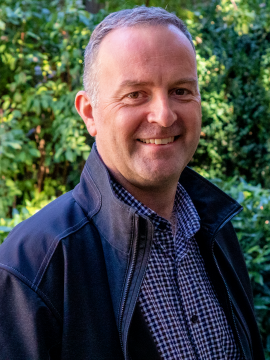
Jesse Sowell is an Associate Professor at the University College London (UCL) in the STEaPP (Science, Technology, Engineering and Public Policy) department. His work intersects internet governance , cybersecurity policy , and public policy analysis , with a focus on emerging technologies like artificial intelligence and the Internet of Things. He contributes to the Sustainable Development Goal 11 (Sustainable Cities and Communities) through digital policy research. Email: j.sowell@ucl.ac.uk Collaboration Network: Active in international policy and cybersecurity research Research interests span: AI-driven policy crafting and systematic review methodologies Security lifecycle of IoT devices and networks Adaptive governance frameworks for digital risks Competition dynamics in internet infrastructure Transnational cybersecurity norms and incident response IPv4-IPv6 transition policy comparisons Publication trends reveal a focus on internet governance , cybersecurity , and AI policy , with increasing attention to IoT security (2017-2021) and AI integration in policymaking (2025). His work bridges technical and policy dimensions, emphasizing network resilience and multi-stakeholder collaboration .
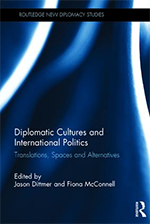
Professor Fiona McConnell is a leading political geographer at the University of Oxford , affiliated with the School of Geography and the Environment and St Catherine's College as a Tutorial Fellow. Her career spans institutions like Newcastle University (as Lecturer) and Trinity College, Cambridge (Junior Research Fellow). Education: BA in Geography, University of Cambridge (Fitzwilliam College) PhD, Queen Mary University of London McConnell's research explores governance beyond the state , focusing on stateless communities , diplomacy in marginalized spaces , and geographies of peace . She pioneers concepts like liminal geopolitics and diaspora diplomacy , examining how marginalized groups engage in statecraft and redefine legitimacy. Her recent publications reveal trends in digital diplomacy , self-determination , and legal geographies . Collaborations with scholars like Costas Constantinou, Elaine Ho, and Liam Saddington highlight her interdisciplinary approach. Scientific Awards: Philip Leverhulme Prize for Geography (2019) Back Award, Royal Geographical Society (2022) British Academy Mid-Career Fellowship (2017) McConnell supervises doctoral students in areas including contested sovereignties , digital mediation , and peacebuilding through natural resources . She leads the Gobi Framework project (2018–2021) on sustainable mining in Central Asia and co-founded the Model UNPO teaching initiative.
Dr. Anna Hartman is a Lecturer in Marketing at The Australian National University's Research School of Management. She holds a PhD in Marketing from the University of Melbourne, along with advanced degrees in Marketing Communications and a background in Clinical Nutrition. Her research focuses on consumer culture theory, institutional dynamics, and market legitimacy, particularly in contested markets like reproductive care and aesthetic services. PhD: Marketing, University of Melbourne (2022) MCom: Marketing, University of Melbourne (2017) MSc: Integrated Marketing Communications, Golden Gate University (2011) B.A.: Culture, Ecology & Sustainable Community (2005) DipHlthSci: Clinical Nutrition (2003) Research Interests: Dr. Hartman examines how social evaluations (legitimacy, stigma, authenticity) shape markets, with a focus on cultural consumption and institutional microfoundations. Her work bridges consumer research, organizational studies, and strategic communications, addressing ethical dilemmas in markets such as donor-assisted conception and aesthetic services. Her recent projects explore passionate publics in online reviews, gender equity in academia, and the dynamics of cross-border reproductive care marketing. She currently leads a project on social evaluations in sustainable food systems. Registered to supervise postgraduate students Research grants: Capturing Social Evaluations on Sustainable Food Systems (2024–2025) Labs/Teams: Active in interdisciplinary research teams focusing on market legitimacy and healthcare marketing ethics.
Dr. Johann Fortwengel is a Reader in International Management and Head of Department for Strategy, International Management & Entrepreneurship at King's Business School , King's College London. He holds a secondary appointment as a Research Associate at the Gordon Institute of Business Science, University of Pretoria. Previously, he served as Senior Lecturer (2019–2021) and Lecturer (2016–2019) at King's. He also held a Visiting Professorship at Northeastern University's D’Amore-McKim School of Business in 2023. Education: Doctorate from Freie Universität Berlin (2014) MA in Global Studies (2011) BA in Sociology (2009) Research Interests: How multinational enterprises navigate institutional and country differences Organizational identity formation in global contexts Interorganizational networks and institutional theory Vocational training systems (e.g., apprenticeships) His work emphasizes multinational enterprises' strategic responses to institutional challenges, particularly their identity development and cross-border practices. Key Activities: Associate Editor of Journal of Management Studies and Outreach Editor Editorial board roles at Journal of International Business Studies , Management International Review , and Strategic Organization Academic advisor to the Commonwealth Scholarship Commission Consultant to governments, SMEs, and multinational firms on post-pandemic strategies Awards & Recognition: Research awards from the German Research Foundation (DFG) and British Academy/Leverhulme Awarded for peer reviewing, teaching excellence, and research impact Impact & Grants: Lead researcher in the Research Excellence Framework 2021 case study on apprenticeship programs Funded projects include exploring African law firms' professionalization and internationalization Labs & Teams: Member of the Chinese International Investments research group Collaborates internationally on institutional theory and global management challenges
Sean Buchanan is an Associate Professor and The Associates Fellow in Business Administration at the Asper School of Business, University of Manitoba. His research focuses on organizational responses to contentious social issues in politically polarized environments. He holds a PhD from the Schulich School of Business at York University. Research interests include social and environmental issues in business, political polarization, and qualitative methods. His work examines how organizations navigate stakeholder alignment in activism, institutional dynamics, and regulatory frameworks. Recent studies explore topics like corporate activism, sustainability governance, and stigma deflection in the sharing economy. Teaching includes Business and Society (GMGT 1010) and Seminar in Management and Capitalism (GMGT 4210). His publications span top journals like Academy of Management Review and Organization Science , addressing themes such as institutional theory, power dynamics, and crisis management. No scientific awards or grants are explicitly listed, though his extensive publication record reflects scholarly contributions to business and organizational studies.
Dr. Charlotte Al Khalili is a Research Fellow at the University of Sussex's School of Global Studies, specializing in social anthropology with a focus on Syrian revolutionary politics, displacement, and migratory aspirations. Her work spans ethnographic analysis of post-conflict subjectivity, religious imagination, and cross-border solidarity movements. Current research: Leverhulme-funded project on Syrian migratory aspirations after revolutionary defeat Past projects: LabEx HaStec study on predestination/martyrdom, genealogy of non-violence in Syria Research Interests: She investigates how revolutions reshape time perception and lifeworlds, analyzing Syrian displacement through lenses of waiting, memory, and contested hospitality. Her work connects Syrian-Turkish border dynamics with broader anthropological theories of subjectivity. Scientific Awards: Leverhulme Early Career Fellowship (Anthropology) Grants: Principal investigator for 'Pursuing a Good Life: Syrian Migratory Aspirations after the Defeated Revolution' (LEVERHULME TRUST, 2022-2026).
Carmen Brandt is a Professor of Contemporary South Asian Studies at the University of Bonn, Germany, where she has been a faculty member since 2017, first as a Junior Professor and since 2023 as a W2-Professor. She is affiliated with the Department of South Asian Studies within the Faculty of Humanities. Her academic journey began at Martin-Luther-Universität Halle-Wittenberg, where she earned her Magistra Artium in 2006 and her doctorate in 2015 with a dissertation on the 'Bedes' of Bengal. She previously served as a research associate and lecturer at Halle before joining Bonn. W2-Professor, University of Bonn (2023–present) Junior Professor, University of Bonn (2017–2023) Research Associate, Martin-Luther-Universität Halle-Wittenberg (2007–2016) Lecturer in Bengali, Halle (2006–2007) Her research focuses on language and script politics, minority discourses, nation-building, and the cultural dynamics of Bengal and Bangladesh. She investigates how writing systems serve as tools of identity formation and political contestation, particularly among marginalized communities such as the 'Bedes' and Balti people. Her interdisciplinary approach draws from sociolinguistics, cultural anthropology, and postcolonial theory. The 15 most recent publications reflect a consistent engagement with themes of script identity, ethnic marginalization, and geopolitical belonging. Her work spans monographs, journal articles, and edited volumes, often analyzing how language policies and media representations shape national and subnational identities in South Asia. She frequently collaborates with scholars across institutions and countries, contributing to transnational academic discourse. Scientific and Professional Memberships: Editorial Team, ASIEN journal Chairperson, Bengal Link e.V. Chairperson, Deutsche Gesellschaft für Asienkunde (DGA) Spokesperson Council, Working Group “Modern South Asia” (DGA) Member, Literaturforum Indien e.V. Member, Association of Asian Studies She has advised and organized numerous academic events, including the German South Asia Days and workshops on Tibetanness and language politics. She has delivered invited lectures across South Asia, Europe, and North America, demonstrating her international scholarly reach. Her work bridges academic research and public engagement, particularly through journalistic contributions on South Asian socio-political issues. Laboratories and Research Teams: While not leading a formal lab, she actively organizes and participates in collaborative research networks, including the Working Group on Modern South Asia and the German South Asia Consortium. She has co-organized multiple international conferences and workshops, fostering interdisciplinary dialogue among early-career and established scholars.
Professor David Clarke is a faculty member at Cardiff University , serving as Head of the School of Modern Languages and Professor of Modern German Studies. His research focuses on the politics of memory in Germany and Europe, particularly addressing victimhood , cultural diplomacy , and heritage's role in soft power . Clarke contributes to teaching in the MA in Global Cultures program and supervises PhD projects related to memory studies, memorials, and war museums. He has participated in significant research initiatives, including the Horizon 2020 UNREST project and an ongoing MSCA project on disputed territories. His recent publications explore topics such as agonistic memory , digital diasporic practices , and post-witness tourism in documentary film. Clarke has also co-edited works on disaster rituals and European war museum cultures. ClarkeD4@cardiff.ac.uk
Annalisa Pelizza is a researcher affiliated with the University of Bologna, focusing on Science and Technology Studies (STS) and Critical Security Studies (CSS) in the context of migration management. She co-led the "Processing Citizenship" project, funded by the European Research Council (ERC) under Horizon 2020, which analyzed digital registration systems as co-producers of citizenship and European governance. Key contributions include the conceptualization of "scripts of alterity" to critique classification mechanisms in European border security systems (Eurodac, SIS II, VIS) and national systems (Greek Register of Foreigners). Her work bridges STS and CSS, emphasizing power relations, resistance practices ("de-inscriptions"), and the stabilizing/contingent roles of digital infrastructures in multilevel governance. Research Interests: Pelizza’s research explores how digital data systems enact migrants as security subjects, the political implications of classification schemas, and the interplay between European Union and national authorities in border management. She employs ethnographic observation and the Ontology Explorer software tool to map knowledge production and contestation in security apparatuses. Project & Methodology: The "Processing Citizenship" project involved extensive fieldwork in Greece (Fylakio, Samos, Chios, Leros) from 2017–2019, analyzing data schemas and user interactions with border systems. Her findings highlight a de facto division of labor between EU and national governance scales, as well as non-intentional resistance practices like "unmatching declarations" that challenge hegemonic categorizations.
Maya Unnithan is a Professor of Social and Medical Anthropology at the University of Sussex, affiliated with the School of Global Studies and Department of Anthropology. She has been faculty since 1991 and currently serves as Head of Department and Director of the Centre for Cultures of Reproduction, Technologies & Health (CORTH). Her research focuses on reproductive health, gender politics, biopolitics, and bodily autonomy across India and the UK. She has conducted extensive fieldwork in Rajasthan and explored topics like infertility, surrogacy, abortion, and prenatal sex selection. Her work bridges global health norms with local contexts, examining how reproductive rights are interpreted and contested. 2025: "The Undue Importance of Marriage in India's Current Surrogacy Legislation" (Amicus Curiae) 2024: "Anthropology and Subaltern Historiography" (Discover Society) 2023: "Anthropology of Abortion" (Wiley) 2023: "Only parents can understand thalassaemia needs" (Anthropology & Medicine) 2022: "Substantial Relations: Making Global Reproductive Medicine in Postcolonial India" (Springer) 2022: "Conflicted reproductive governance" (Springer) 2021: "Arbitrating abortion in England" (Medical Anthropology) 2020: "Gender politics in Rajasthan" (Discourses of Development) 2019: "Fertility, Health and Reproductive Politics" (Routledge monograph) 2018: "Re-situating abortion in neoliberal times" (Global Public Health) 2018: "Re-visioning evidence on UK sex selection" (Global Public Health) 2015: "Bodily rights and collective claims" (Health & Human Rights) 2014: "On reproductive justice in India" (Culture, Health & Sexuality) 2014: "Challenges translating human rights" (Development and Change) 2013: Review of Maraesa's reproductive anthropology (Ethos) Unnithan has received significant funding including: 2025-2027: LEVERHULME TRUST - "Reproductive freedom and ethics" 2023: BRITISH ACADEMY - "Articulations of Communal Harmony in Kerala" 2022-2024: Norwegian Research Council - "Reporting in context" maternal health initiative 2017-2021: ESRC - "Son preference and sex selection in the UK" 2016-2020: ESRC - "Inherited blood disorders and genomics in India" 2009-2012: ESRC - "Realising Global Rights to Health" 2018: WHO Safe Abortion Guidance participation 2013: WHO maternal health evidence monograph contribution 2015-2018: UK Reproductive Health Leadership Forum advisor 2015-2018: APPG on Reproductive Health evidence submissions She co-founded CORTH in 2014 to facilitate interdisciplinary dialogue on reproductive politics and health technologies. The center has fostered international collaborations with researchers from Norway, Tanzania, Ethiopia, India, Bangladesh, and Ghana, including knowledge exchange programs and a Memorandum of Understanding. Unnithan's work explores how gender values migrate across borders and shift over generations, impacting reproductive healthcare access and policy implementation.
Dr. Daniel Drewski is an Assistant Professor at the Faculty of Social and Economic Sciences , Otto-Friedrich University of Bamberg, Germany. His research focuses on the Sociology of European Integration , Globalization , and Symbolic Boundaries in Migration . He previously worked as a Research Associate at the Cluster of Excellence 'Contestations of the Liberal Script' (SCRIPTS) and the Institute of Sociology at Freie Universität Berlin. Doctorate from Berlin Graduate School of Social Sciences (2019) Study periods in Berlin, Santiago de Chile, and Bloomington (IN) Research Interests include: Migration policy and border dynamics Social and symbolic boundary constructions Discourse analysis in EU institutions Qualitative methodologies Publication Trends reveal consistent focus on: Refugee policy framing (2024 typology) Symbolic boundaries in EU elites (2022 monograph) Comparative migration analysis (Germany, Poland, Spain) Global academic and labor market stratification Scientific Recognition : Recipient of German Sociological Association's Dissertation Prize (2019)
Dr Muhammad Salman Khan is a Lecturer in Human Geography at King’s College London, based in the Department of Geography within the School of Global Affairs and Faculty of Social Science & Public Policy. His research focuses on the intersection of development and cultural geography, with specialties in emotional geographies, gender studies, local governance, post-conflict development, and borderland studies. He has conducted significant work on conflict dynamics in Pakistan and Afghanistan, particularly in Swat Valley, examining topics like Taliban violence, hydro-heritage, and affective dimensions of displacement. Salman has led projects funded by institutions like the US Institute of Peace, including studies on economic revival among displaced entrepreneurs and the geopolitical impact of affect theory. He is currently developing research on border governance in Pakistan/Afghanistan and climate governance's social accountability. His editorial roles include associate editor at the Forum for Social Economics and co-editing a special issue on civil society in economies. Teaching includes undergraduate and postgraduate modules such as Geographical Foundations , Independent Geographical Study , and Critical Geopolitics . His recent publications explore themes like gendered water access in post-conflict zones, market dynamics under Taliban rule, and institutional analysis in local governance. Salman’s work contributes to UN Sustainable Development Goals related to gender equality, peace, and sustainable cities. His research integrates qualitative and interdisciplinary methods to address contested development processes in conflict-affected regions.
Matthew Evenden is a full-time Professor at the Department of Geography within the Faculty of Arts at the University of British Columbia , currently on leave until December 31, 2025. His research spans environmental history, water history, and political geography, focusing on large rivers, hydroelectricity, and the social-ecological impacts of development projects. Education : PhD and MA from York University, BA (Honours) from Queen’s University Evenden’s work critically examines human-environment interactions through historical lenses. Key themes include: Politics and controversies surrounding dams, fisheries, and water quality Entangled histories of water and power structures Ecological consequences of solid ballast use during the Age of Sail Transboundary water governance and border dynamics Unbuilt environments and contested development legacies Recent publications analyze: 20th-century hydroelectric mobilization in Canada/US/Germany Chlorination and fluoridation debates in Vancouver Ballast theory and Cold War scientific exchanges Historical river management in Calgary and European contexts As a supervisor, Evenden guides graduate research on topics like: Settler geographies in Canadian North Environmental governance along Canada-US borders Postwar development in British Columbia Ecological impacts of historical mining and infrastructure He is affiliated with the Institute for Resources, Environment and Sustainability and International Canadian Studies Centre , conducting interdisciplinary research and public scholarship collaborations.
Philip Balsiger serves as an Ordinary Professor at the Institute of Sociology within the Faculty of Humanities and Social Sciences at the University of Neuchâtel. His academic work centers on economic sociology and social movements, specifically examining contestation processes in markets and the moral dimensions of economic practices. His research focuses on two interconnected domains: Morality and Markets : Investigating market moralization through ethical consumption, impact investing, and social movement challenges to corporate power. This includes studying organic/local products, moral struggles in markets, and sustainable consumption practices. Digital Economy Transformations : Analyzing regulatory struggles and market reorganization driven by digital platforms, particularly in the Swiss hotel industry and broader service sectors. Current projects include a 2024-2028 study of consumer cooperatives across Switzerland, France, and Germany to assess consumer democracy's transformative potential, and a completed 2019-2023 analysis of Geneva's impact investing ecosystem. Recent publications (2021-2025) demonstrate consistent thematic focus on moral justifications in finance and platform power dynamics. His work employs qualitative methods to dissect how professionals translate social impact into market value and how consumers navigate ethical dilemmas within capitalist frameworks. No scientific awards are documented in the source material. Professor Balsiger's leadership of multi-year research projects indicates successful grant acquisition and mentorship of graduate researchers. His international collaborations, particularly in comparative studies of consumer cooperatives and platform economies, demonstrate active engagement with cross-border academic teams despite no dedicated laboratory structure being mentioned.
Anne Norheim-Hansen serves as Associate Professor of Strategy at KEDGE Business School, holding a PhD in Management Science from SKEMA Business School & Aix-Marseille University. Her expertise bridges academic research and industry practice, with prior roles in media and telecommunications across London, New York, Oslo, and Paris. Her educational background includes: PhD in Management Science, SKEMA Business School & Aix-Marseille University Professor Norheim-Hansen's research investigates strategic alliances through the lens of environmental sustainability and corporate reputation. She examines how firms navigate green supplier development, respond to environmental misconduct in supply chains, and leverage reputation dynamics in alliances. Her work integrates institutional theory, resource-based views, and stakeholder perspectives to address real-world sustainability challenges in global business contexts. Analysis of her 2017-2024 publications reveals consistent focus on environmental strategy within supply chain and alliance frameworks. Key trends include firm responses to partner misconduct (particularly in palm oil and carbon-reduction sectors), green supplier development incentives, and reputation spillovers in strategic partnerships. Her research spans business ethics, sustainable operations, and international business, with methodological strengths in empirical analysis of emerging market cases. Regarding academic guidance and funding, no specific student advisement or grant activities are documented in available materials.