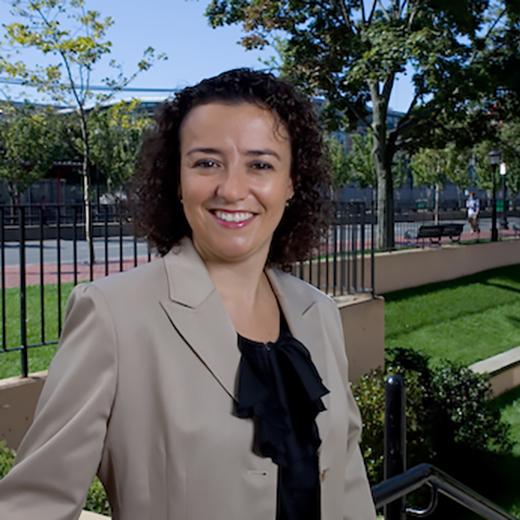
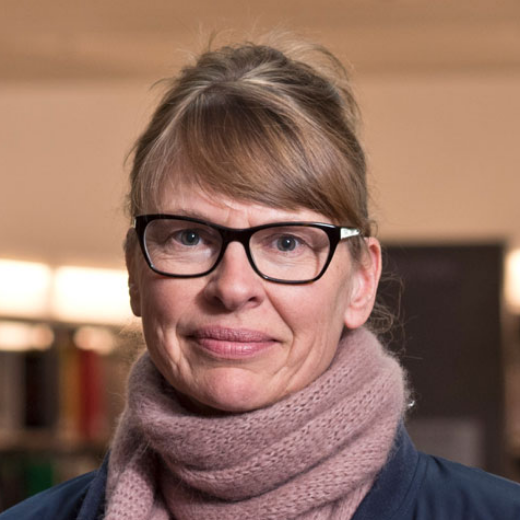
Cathy McIlwaine is Professor of Development Geography at King's College London's Department of Geography. Her work focuses on urban futures, contested development, and transnational gender-based violence dynamics. She leads projects addressing violence against women and girls (VAWG) in global cities like London and Rio de Janeiro, emphasizing feminist methodologies and community-driven solutions. Her research spans migration studies, transnational activism, and urban inequality, with particular attention to Latin American migrant communities. Key themes include counter-mapping practices, creative encounters for dignity recovery, and SDG 5 implementation in marginalized urban spaces. McIlwaine has secured major grants from AHRC, ESRC, and the British Academy, leading initiatives such as the VEM project (Visual and Embodied Methodologies) and transnational violence prevention programs in Brazilian favelas. She contributed to the 2021 Research Excellence Framework panel. Key Projects: Developing arts-based approaches to prevent gender-based violence in Brazilian favelas (AHRC, 2024-2026) Visual and Embodied Methodologies for gendered violence analysis (ESRC, 2023-2025) Awards: No explicit awards listed; recognized through sustained research impact and grant leadership Grants: Over £5M secured across 5 major funded projects since 2017 Her work bridges academia and activism, creating impactful community tools like digital storytelling platforms and participatory mapping initiatives. Current focus includes post-pandemic urban resilience and transnational solidarity networks against gendered violence.
Nils Robert Güttler is Assistant Professor for the History of Science at the University of Vienna , Department of History. He holds a Habilitation from ETH Zurich (2022) and a doctorate from Humboldt University Berlin (2014) with summa cum laude. Education: Magister Artium (2007) from Humboldt University Berlin Additional studies at Uppsala University His research focuses on Environmental History , History of Science , and Political Knowledge Production . Key themes include: Science in socio-political contexts Environmental science infrastructures Media history of science communication Science-activism intersections Recent publications explore airport ecologies , infrastructural borderlands , and environmental knowledge circulation across 2013–2025. His 2023 monograph Nach der Natur examines the Frankfurt Airport's role in environmental knowledge production. Scientific awards include: Caspar-Friedrich-Wolff Medal (2016) Georg Uschmann Prize (2015) Golden Owl teaching award (2015) Advancement Award (2013) He has supervised 11 MA theses in History and Philosophy of Science, participated in third-party funded projects like cache (Swiss National Fund), and co-founded the intercom publishing lab . Current projects address airport border ecologies , media history , and counter-knowledge dynamics.
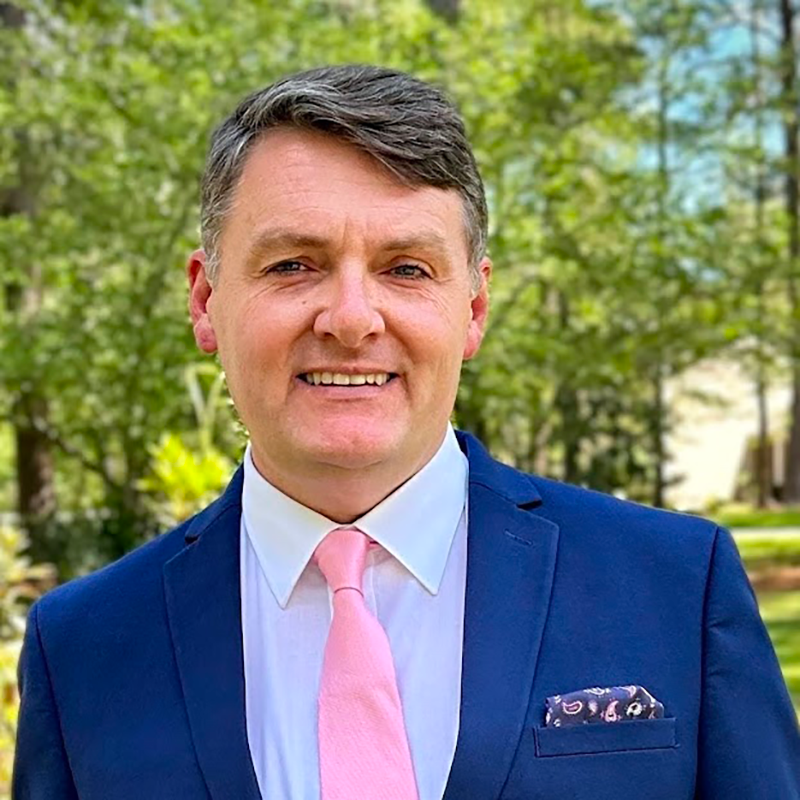
Eric Spears is a Professor of Geography and International Studies at Columbus State University (CSU), serving as the Mildred Miller Fort Foundation Eminent Scholar and Chair of International Education. He is the Executive Director of the Center for Global Engagement (CGE), a nationally award-winning international education department, and a Global Fellow in the CSU Honors College. Ph.D. in Geography from West Virginia University (USA) M.A. in International Political Economy from the University of Warwick (UK) B.A. in Geography from Marshall University (USA) Dr. Spears specializes in Brazil (Latin America) and East Asia (China and Korea), focusing on the production of space, politics of scale, contested spaces/borders, and urban resistance during authoritarian regimes. His current work explores the Spencer Map Collection in CSU archives for a forthcoming book, Cartographic America (CSU Press, 2024), and investigates political violence in Sao Paulo during Brazil’s military dictatorship (1964–1985). He also studies the political ecology of the Georgia coastline and antique maps of colonial America. Honors & Awards: Fulbright Recipient Global Fellow, CSU Honors College Dr. Spears has served as a Senior International Officer (SIO) for 24 years, leading international education initiatives at Mercer University, Georgia College and State University, and CSU since 2017. He chairs the University System of Georgia’s System Council on International Education (SCIE) and leads the East-West Center’s Asian Studies Development Program (ASDP) Alumni Association. He raises over $1.9 million in grants and endowments and contributes to the Georgia Student Rotary Program (GRSP), which sponsors international students for subnational diplomacy. He oversees CSU’s Spencer House in Oxford, England—a flagship study abroad program—and collaborates with institutions such as West Virginia University’s Department of Geology and Geography and Oxford Brookes University (UK).
Temur Umarov serves as a Research Fellow at the Carnegie Moscow Center, specializing in Central Asian political dynamics and Sino-Russian relations within the post-Soviet space. His work provides critical analysis of regional stability, leadership transitions, and great power competition affecting Eurasia. Education: Bachelor's degree in International Regional Studies (Sinology) from the Russian Presidential Academy of National Economy and Public Administration (RANEPA) Double-degree Master's in Global Economy from the Moscow Institute of International Relations (MGIMO) and Beijing University of International Business and Economics (UIBE) Umarov's research centers on the interplay between domestic governance and foreign policy in Central Asian states, with particular focus on Kazakhstan, Uzbekistan, Tajikistan, and Turkmenistan. He examines how authoritarian regimes navigate multi-vector diplomacy amid competing Russian, Chinese, and American interests, while analyzing threats from Taliban resurgence and resource-driven geopolitical contests. His methodology combines regional expertise with international relations theory to forecast stability risks. Analysis of his recent publications reveals escalating scholarly attention to leadership succession crises, Taliban-related security threats, and the weaponization of economic dependencies. The research trajectory shows increasing emphasis on China's expanding security footprint and the erosion of traditional Russian dominance in Central Asia. Scientific recognition: Carnegie-Tsinghua Center Young Ambassadors Program fellowship Carnegie Endowment for International Peace Central Asian Futures Program fellowship Umarov maintains no disclosed academic advising relationships but leverages prior professional experience in CIS business development with Lifan Group to inform his policy analysis. His industry background provides unique insights into economic statecraft dimensions of Central Asian geopolitics. As part of the Carnegie Endowment for International Peace network, Umarov contributes to high-impact policy research through collaborative projects across global Carnegie centers, focusing on actionable strategies for regional conflict prevention and great power negotiation frameworks.
Atefeh Farzindar is a Part-Time Lecturer in the Department of Computer Science at the University of Southern California (USC), affiliated with the Viterbi School of Engineering. She holds a PhD in Computer Science from the University of Montreal and a Doctorate in automatic summarization of legal documents from Paris-Sorbonne University. Her academic roles include Adjunct Professorships at the University of Montreal and Polytechnique Montréal, alongside leadership positions in organizations like the Canadian Artificial Intelligence Association and the Natural Sciences and Engineering Research Council of Canada (NSERC). Her research focuses on Natural Language Processing (NLP), Health Informatics, Machine Learning, and their applications in healthcare and social media analysis. She has authored/co-authored influential books including Natural Language Processing for Social Media and Transforming Healthcare with Big Data and AI . Her work bridges technology and art, reflected in her painting exhibitions and a published collection of science fiction short stories, Gazelle in New York . Farzindar actively engages in industry-academia collaboration, serving as CEO and co-founder of NLP Technologies Inc., and leading non-profit initiatives like "Dreams Without Borders" to promote ethical AI development. She has received awards such as the Femmessor-Montréal contest for balancing innovation in technology and art.
Aimar Ventsel is an Associate Professor of Ethnology at the University of Tartu's Faculty of Arts and Humanities, holding a position in the Institute of Cultural Research since 2024. He has held academic roles including Senior Research Fellow at the University of Tartu and temporary professorships at institutions like North-Eastern Federal University. His research focuses on cultural anthropology, Siberian indigenous cultures, post-Soviet societies, and the intersection of cultural heritage with politics. Education: PhD in Social Anthropology from Martin Luther University Halle-Wittenberg and Max Planck Institute for Social Anthropology (2005) MA in History and Anthropology from Free University of Berlin (1998) BA in History and Ethnology from University of Tartu (1993) Research Interests: Aimar’s work explores ethnic identity dynamics in post-Soviet contexts, indigenous rights in Siberia, and the role of popular music in cultural transformation. He has conducted fieldwork in Sakha (Yakutia) and Kazakhstan, examining topics like kinship systems, informal economies, and punk subcultures in Eastern Europe. Grants & Projects: Lead researcher on projects such as 'Theories of Ethnicity in Post-Soviet Contexts' and 'Arctic Indigenous Organizations.' Collaborated with institutions like the University of Cambridge’s Scott Polar Research Institute and the University of Warwick. Awards: Honorary Professor of Karaganda State University (2024), Tartu University Merit Award (2020). Active in organizing international conferences on Arctic studies, cultural borders, and subcultural dynamics.
Ragne Kõuts-Klemm is an Associate Professor in Sociology of Journalism at the University of Tartu's Faculty of Social Sciences, Institute of Social Studies, with a 20-year academic career (2002–present). Her research spans media systems, journalism practices, digital society, and communication sciences, focusing on topics like disinformation, media resilience, and societal transformation. Doctor's Degree (2013): Media-connected society analysis Research Master's Degree (2002): Minority representation in Estonian journalism Her recent work examines data journalism skills, Baltic media systems, and slow journalism innovations. Projects include combating disinformation, digital copyright law, and media monitoring of Russian-speaking communities. Scientific awards: 2002 Estonian National Contest for Young Scientists, I Prize. Administrative roles: Estonian Press Council member (2020–2024), UNESCO IPDC expert (2023–), and SA Kultuurileht board member (2023–).
Anna Lamin is a Professor in the International Business & Strategy Group, specializing in strategic management and international business in emerging markets. Her research focuses on business groups, organizational legitimacy, agglomeration economics, and R&D dynamics in countries like India and Russia. She teaches both undergraduate and MBA courses, emphasizing global strategic challenges. Education: Ph.D., University of Minnesota (Carlson School of Management) MBA, Indiana University, Bloomington B.S., University of Minnesota Research Interests: Her work examines how firms in weak institutional environments leverage business group affiliations, agglomeration benefits, and innovation strategies to overcome challenges. Key themes include R&D investment under weak intellectual property regimes, the role of clusters in fostering competitiveness, and legitimacy recovery in contested markets. Presentations & Engagement: She has presented widely at institutions like Harvard Business School and Indian Institute of Management, Bangalore. Her work bridges qualitative and quantitative methods, particularly in analyzing transition economies. Awards: Ronald Copeland Best Paper Award (2014) Ronald Copeland Best Paper Award (2013) Editorial Roles: Senior editor at Asia-Pacific Journal of Management , and on editorial boards of Journal of International Business Studies , Global Strategy Journal , and Journal of World Business . Active reviewer for top journals including Academy of Management Journal and Organization Science .
Saara Lotta Linno is a Junior Research Fellow in Comparative Literature at the Institute of Cultural Research, Faculty of Arts and Humanities, University of Tartu, holding a part-time research position since August 2022. She is currently pursuing her PhD in Comparative Literature at the same institution, focusing on poetic multilingualism in Estonian poetry of the 20th and 21st centuries under the supervision of Professor Liina Lukas. She earned her Master’s degree in World Literature cum laude from the University of Tartu in 2022, having previously completed a Bachelor’s degree in Estonian Literature, also cum laude. Her research interests center on multilingualism in literature, code-switching in poetry, small literatures, digital-age poetry, and contemporary Estonian poetic forms. Her recent publications explore poetic code-switching, multilingualism in Estonian poetry, and the reception of bilingual poets. Her work demonstrates a consistent focus on linguistic hybridity, national identity, and intertextuality in Baltic literary contexts. She has presented her research at international conferences, including the TREXTUALITY conference at the University of Turku in 2023. Among her notable recognitions is the Estonian Research Council's National Contest first prize for her bachelor’s thesis in 2020. She is an active member of the Estonian Association of Comparative Literature. She contributes to major research projects such as 'Voices of Youth in Digital Age Poetry: Poetics, Attitudes, and Identities' (funded by the Estonian Ministry of Culture and Estonian Research Agency) and 'The Factor of Lyrical Poetry in the Formation of Small Literatures' (funded by the Estonian Research Council), where she works under the principal investigators Rebekka Lotman and Liina Lukas, respectively. Her academic work bridges literary theory, linguistics, and cultural studies, offering nuanced insights into the evolving landscape of Estonian and Baltic literature in multilingual and digital contexts.
Eva Leitolf is a tenured full professor at the Free University of Bozen/Bolzano (unibz) in Italy, where she serves as head of Studio Image in the Faculty of Design and Arts. She has held this position since February 2019 and also acts as a tutor for gender equity at the university. Leitolf is an internationally recognized artist whose work critically examines image production and contextualization practices, with a particular focus on contested societal phenomena such as colonialism, racism, and migration. Her research interests span several interconnected areas including practice-oriented artistic research, politics of representation and communication, practices of contextualization, image-text relations, visual representation of colonialism and racism, and documentary discourses and practices. Leitolf's conceptual approach combines photography with textual elements to visualize concrete conflicts while simultaneously questioning the media she works with. Leitolf's recent publications and artistic projects reveal a consistent exploration of power dynamics in visual representation, particularly regarding migration, colonial legacies, and social violence. Her work demonstrates a sophisticated understanding of how photographic evidence functions within broader social and political contexts, often examining the tension between what can be seen and what must be imagined or contextualized. Nominated for Deutsche Börse Photography Prize (2008) Scholarship at Villa Massimo, Rome (2012) City of Munich's Art Prize (2016) Leitolf's work has been exhibited at major international institutions including the Pinakothek der Moderne in Munich, the Rijksmuseum in Amsterdam, and the Wallach Art Gallery in New York. Her publications regularly appear in prestigious color supplements of Süddeutsche Zeitung and Die Zeit. She has developed a distinctive methodology that combines thorough research with conceptual photographic practice, creating works that challenge conventional documentary approaches while maintaining rigorous engagement with social issues. Her studio practice at unibz focuses on critical examination of visual representation, particularly regarding colonialism, racism, and migration. Leitolf's approach often involves combining photography with textual elements from police reports and other documentary sources to create layered narratives that question the evidentiary status of photographic images.
Andrew Konove is an Associate Professor in the Department of History at the University of Texas at San Antonio (UTSA), within the College of Liberal and Fine Arts. He specializes in the political, economic, and social history of urban Mexico and Spanish America during the late colonial and early national periods, bringing expertise in Latin American urban studies, economic history, and the history of the Spanish Empire to his academic role. Dr. Konove received his educational foundation at prestigious institutions: B.A., Magna Cum Laude, with High Honors in History from Haverford College M.A., M.Phil., and Ph.D. in History from Yale University Graduate Certificate of Concentration in Latin American Studies from Yale University Dr. Konove's research interests center on Latin American History with particular focus on urban economies, monetary systems, and political sovereignty in colonial and early national Mexico. His work examines how informal economies like street markets shaped urban politics and social structures, how monetary systems reflected and influenced political sovereignty, and how public spaces became sites of contestation and resistance. Through archival research spanning centuries, he reveals connections between economic practices and political power in Spanish America, demonstrating how everyday economic activities like street vending or counterfeiting had profound implications for national identity and governance. His publications from 2015-2025 reveal a clear evolution in his scholarly focus, beginning with studies of Mexico City's Baratillo marketplace and expanding to broader examinations of monetary systems across Spanish America. Recent work shows increasing attention to how counterfeiting, small change, and monetary policy intersected with questions of national sovereignty and political identity in the 19th century. His research demonstrates remarkable continuity between colonial economic practices and modern informal economies, revealing historical patterns that continue to shape urban Latin America today. Dr. Konove's scholarly contributions have been recognized with significant honors: Social Science Book Prize from the Mexico Section of the Latin American Studies Association for "Black Market Capital" Finalist for the Business History Conference's Hagley Prize Summer Stipend Award from the National Endowment for the Humanities (NEH) in 2020 John Carter Brown Library/Research Fellowship from Brown University in 2020 Dr. Konove has secured multiple research grants supporting his scholarly work, including a $52,000 grant for "Capitalism's Hardwiring: Money Credit and Finance in a Globalizing World 1620-2020" (2022-2023) and several grants totaling over $30,000 for his "Making Change" project on money and sovereignty in Hispanic America (2020-2021). At UTSA, he teaches graduate and undergraduate courses on colonial and modern Latin American history and the history of the Spanish Empire, mentoring the next generation of historians while continuing his own research on two major book projects: "Making Change: Money, Wealth, and Sovereignty in Hispanic America, 1750-1850" and "Zócalo: A History of Mexico City." While not explicitly mentioned as directing a formal research lab, Dr. Konove's work connects him to multiple scholarly communities focused on Latin American urban history, economic history, and the history of money. His research bridges disciplinary boundaries, connecting historians of Latin America with scholars of economic history, urban studies, and political theory through his examination of how monetary practices and urban economies shaped political sovereignty in the early Americas.
Professor Encarnation of Gutiérrez Rodríguez is a distinguished faculty member at Goethe University Frankfurt's Institute of Sociology within the Faculty of Social Sciences. Her office is located at Theodor-W.-Adorno-Platz 6, Campus-Westend, PEG Building, Room 3.G 063 PEG, 60323 Frankfurt am Main. Her research focuses at the intersection of migration studies, cultural sociology, and decolonial theory. Specializing in migrant feminism, border thinking, and intersectional approaches to human rights in migration societies, Professor Gutiérrez Rodríguez examines how power structures operate across transnational contexts. Her work critically engages with postcolonial perspectives on gender, pluriversality, and decolonial mourning as political work. Her research activities demonstrate consistent engagement with contemporary theoretical debates, particularly regarding solidarities in migration societies, ontological politics, and multidirectional remembering practices. The thematic coherence across her presentations reveals a sustained scholarly commitment to understanding how marginalized communities navigate and resist bordering practices. Humboldt Fellow Professor Gutiérrez Rodríguez supervises BA and MA theses and collaborates with research assistants Slađana Branković and María Cárdenas Alfonso. She leads several significant research initiatives including the MeDiMi project, Latin America Network, and PluriSoLa Assessment. Her work receives support through various academic collaborations and institutional frameworks at Goethe University. She actively participates in multiple research networks including the MeDiMi initiative focused on human rights in migration societies and the PluriSoLa network examining pluriversality in contested spaces. Her research team engages with transnational feminist movements, decolonial knowledge production, and critical border studies through these collaborative frameworks.
Toomas Hinnosaar is an Associate Professor in Economics at the University of Nottingham, holding a PhD from Northwestern University. He specializes in game theory, mechanism design, and behavioral economics, with a focus on strategic interactions, market structures, and digital public goods. His research explores sequential contests, network pricing, and the impact of online information on real-world outcomes. Key findings include the role of transparency in strategic environments and the economic implications of social media dynamics. His work has been featured in major outlets like the Guardian , BBC Radio , and VoxEU . Scientific recognition includes selection for the Journal of the European Economic Association 's Virtual Issue: Editor's Choice Collection (2019). His methodological contributions span randomized field experiments, auction theory, and dynamic pricing models.
Jason Hunt, Ph.D., is an Associate Professor of Mathematics and Chair of the Department of Mathematical & Computing Sciences at Catawba College. He can be contacted at jwhunt@catawba.edu or (704) 637-4256. Education B.S., Wofford College M.A., Wake Forest University Ph.D., Emory University Dr. Hunt's research focuses on Discrete Mathematics, particularly Graph Theory and Combinatorics. He emphasizes accessible problems for student collaboration and works with colleagues across the Mathematics Department and School of Business. As advisor to the Math Club, he mentors students in extracurricular mathematical activities and has led teams to compete in Math Jeopardy contests at the Southeastern Regional MAA meetings. He maintains a holistic approach to teaching mathematics across all curriculum levels and integrates his personal interests in farming and Border Collie training into his academic work.
Dr. Floor Haalboom is an Assistant Professor at Utrecht University's Faculty of Veterinary Medicine, Department of Population Health Sciences, specializing in Animals in Science & Society (AISS). She maintains dual affiliations with the Utrecht University Descartes Centre for the History and Philosophy of the Sciences and the Humanities and the Utrecht University Centre for Environmental Humanities, highlighting her interdisciplinary scholarly approach. Dr. Haalboom earned her PhD in history of (veterinary) medicine from Utrecht University in 2017 with the dissertation 'Negotiating Zoonoses,' examining societal dealings with infectious diseases shared by humans and livestock in the Netherlands between 1898 and 2001. Her academic background also includes a University Teaching Qualification (2016), an MA in Historical and Comparative Studies of the Sciences and the Humanities (2012), a BA in Dutch Language and Culture (2010), and a BSc in Biology (2009). As a historian of science and medicine, Dr. Haalboom specializes in modern environmental history of animals, livestock farming, veterinary medicine, zoonoses and One Health. Her research examines historical patterns of disease transmission between humans and animals, with particular focus on feed systems, animal husbandry practices, and public health responses. She currently leads the Dutch Research Council-funded Veni-project 'What does your meat eat? A global environmental history of Dutch livestock feed (1954-2020)' conducted at the Erasmus MC Medical Ethics, Philosophy and History department. Dr. Haalboom's scholarly output demonstrates expertise across multiple disciplines, with publications spanning historical epidemiology, veterinary medicine history, and the intersection of animal and human health. Her work often examines how knowledge about disease transmission has been produced, contested, and applied in agricultural and medical contexts over time. Carson Fellow at the Rachel Carson Center for Environment and Society (2018-2019) Dutch Research Council Veni grant for 'What does your meat eat?' project (2021-2025) Since 2022, Dr. Haalboom has been teaching veterinary history at the Veterinary Faculty. Her research has received significant national media attention, particularly in relation to the Q-fever crisis (2017-2018) and the COVID-19 pandemic (2020-2021). She has previously worked on projects including 'Feeding Factory Farms' and the patient history of diabetes. Dr. Haalboom participates actively in scholarly communities including the World Association for the History of Veterinary Medicine, contributing to interdisciplinary research focused on the environmental humanities and the historical dimensions of human-animal relationships.