Jan Konop is a Lecturer at the Academy of Music in Gdańsk, affiliated with Faculty IV – Choral Conducting, Church Music, Artistic Education, Rhythmics and Jazz. He leads the Big Band at the OSM in Gdańsk since 2013 and founded the Jan Konop BIG BAND in 2009, achieving notable festival awards. His career spans orchestral work, jazz performance, and music education. Education: Secondary Music School in Gdańsk-Wrzeszcz (Trombone, 1979) Instrumental Department, Academy of Music in Gdańsk Jazz and Popular Music Faculty, Katowice Research Interests: Specializing in jazz big band performance, trombone techniques, and music education. He emphasizes ensemble dynamics and historical influences in jazz, blending traditional and contemporary styles. Awards: His band’s accolades include Grand Prix wins and finalist placements in international jazz festivals, reflecting his leadership and artistic vision. Labs/Teams: Directs the Jan Konop BIG BAND and leads the OSM Big Band, fostering collaboration with artists like Chuck Mangione and promoting Gdańsk’s jazz scene.
Marek Štrbák is an Assistant Professor at the Academy of Performing Arts in Bratislava's Faculty of Music and Dance, specializing in the Department of Keyboard Instruments. He holds doctoral degrees in artistic studies and philosophy, focusing on the educational and pedagogical roles of organists and church musicians in Germany and Slovakia. His academic background includes studies at the University of Music and Performing Arts in Vienna (with Prof. M. Radulescu), Stuttgart (Prof. L. Lohmann), and Strasbourg (Prof. Ch. Mantoux). He has completed doctoral research at the University of Constantine the Philosopher in Nitra (2014) and artistic doctoral studies at the Academy of Performing Arts Bratislava under Prof. J.V. Michalek (2019). Štrbák is a sought-after organist with extensive international concert activity, collaborating with orchestras like the Slovak Philharmonic and the State Chamber Orchestra Žilina. His repertoire spans all historical periods, emphasizing works by Slovak composers, including premieres of their organ pieces. He has participated in masterclasses with renowned artists such as Jon Laukvik and Lorenzo Ghielmi and is a laureate of major national and international competitions. His artistic activity includes regular performances, masterclasses, and advocacy for Slovak musical heritage. Despite his prolific career, no specific grant or lab affiliations are explicitly mentioned in the text.
Tony Cho is an Assistant Professor of Chamber Music and Collaborative Piano at the Eastman School of Music, University of Rochester. His career spans performances at venues like Weill Carnegie Hall and international festivals, including Kneisel Hall and Bowdoin International Chamber Music Festivals. He collaborates with violinist David Bowlin, with recordings released on Naxos and New Focus labels. Education: Bachelor’s degree (with minor in Spanish Literature) from Oklahoma State University Piano performance degrees from University of Washington and University of Cincinnati, College-Conservatory of Music Research & Performance: Focuses on collaborative piano, vocal/opera coaching, and chamber music. Specializes in interdisciplinary artistry, blending classical and contemporary repertoire. Extensive experience in opera productions as an assistant conductor and coach for over 70 productions at institutions like Central City Opera and Glimmerglass Opera. Awards: 2017 Distinguished Music Alumnus Award (Oklahoma State University) Teaching & Mentorship: Former faculty at Juilliard School, USC, Chapman University, and Oberlin Conservatory. Conducted masterclasses globally, including the Norwegian Academy of Music and Central Conservatory in Beijing. Summer festival roles include Hawaii Performing Arts Festival and SongFest. Labs/Teams: Active with Fermata Chamber Soloists and partnerships in festivals like Thessaloniki International Chamber Music Festival.
Alex Lubet is a Professor in the Department of Music at the University of Minnesota, Twin Cities, within the College of Liberal Arts. His work bridges music, disability studies, and adaptive technology, with a strong focus on inclusivity and accessibility in musical performance and education. Professor, Department of Music, University of Minnesota Researcher, Minnesota Lab for Low-Vision Research Visiting lecturer/researcher at Sichuan Conservatory of Music, Korea University, Kosin University, and James Madison University His research interests center on the intersection of music and disability, particularly blindness and citizenship, adaptive musical instruments like AUMI, experimental music, and cultural theory. He explores how sensory differences shape musical identity and performance, contributing to broader conversations in disability studies and the arts. His work emphasizes tactile acuity, hypergestures, and the redefinition of musical access. The recent publications show a consistent focus on disability-inclusive music practices, adaptive technologies, and cultural theories of experimental music. Themes across his work include blindness in music, distributed identity, microtiming, and the socio-political dimensions of artistic citizenship. His scholarship is deeply interdisciplinary, drawing from musicology, neuroscience, cultural studies, and computational music science. Scientific Awards and Recognitions: No specific awards listed in the provided text. Lubet has been actively involved in research projects and collaborations, including the development of datasets on tactile acuity in pianists and contributions to international research networks. He has advised or collaborated with researchers on funded projects related to low-vision and music. His visiting roles suggest mentorship and knowledge exchange across global institutions. While formal advisees are not listed, his collaborative output implies supervision and academic guidance. He is associated with the Minnesota Lab for Low-Vision Research, where interdisciplinary work on sensory adaptation in musicians takes place. His network includes scholars in computational music, disability studies, and ethnomusicology, fostering innovative approaches to music and accessibility.
Prof. Dr. Hab. Piotr Andrzej Olech serves as a Professor in the Department of Choral and Vocal Education at the Faculty of Arts, Maria Curie-Skłodowska University in Lublin. A distinguished vocalist, he has performed with major European orchestras and ensembles including the Warsaw Chamber Opera, National Theatre Brno, Wrocław Baroque Orchestra, and Collegium Vocale Gent under Philippe Herreweghe. His academic background includes: Graduation with honors from the Vocal-Acting Department of the Academy of Music in Gdańsk (class of Prof. Piotr Kusiewicz) Graduation from the Music Education Department of the Fryderyk Chopin University of Music in Warsaw Prof. Olech specializes in vocal performance , with a primary focus on baroque music , while also performing classical, early romantic, and contemporary repertoire. He has refined his artistry through masterclasses with Paul Esswood, Kai Wessel, and The King's Singers, emphasizing historical performance practices and contributing significantly to the revival of baroque vocal works. His acclaimed discography features over 50 CD recordings for labels such as CD Accord, DUX, and Sony Music Polska, earning him six Fryderyk Awards and an International Classical Music Award in the Baroque Vocal category. Numerous additional recordings have received nominations for these prestigious honors. Prof. Olech maintains active collaborations with leading period-instrument ensembles across Europe and is frequently invited to conduct masterclasses and workshops on baroque vocal performance techniques.
Tor Jørund Føreland Pedersen is an Associate Professor in the Department of Visual Arts and Drama at the University of Agder, Faculty of Fine Arts. He is actively engaged in research and artistic practice that bridges visual arts, digital technology, and emerging technologies such as artificial intelligence (AI) and virtual reality (VR). His work explores innovative methods in creative processes, particularly focusing on how digital tools can enhance artistic expression and pedagogy. Department: Department of Visual Arts and Drama School: Faculty of Fine Arts University: University of Agder Email: joerund.pedersen@uia.no Phone: +47 38141812 Mobile: +47 96009000 Office: G2017A, Universitetsveien 25, 4630 Kristiansand, Norway His research interests include photography, alternative photographic methods, visual culture, digital technology in creative processes, AI in visual art, VR, and programming in art education. He is particularly interested in how AI can function as a co-creator and how digital tools can support formative assessment in artistic development. The recent publications and artistic works of Tor Jørund Føreland Pedersen show a strong thematic focus on AI and VR in art creation, with recurring exploration of co-creation, ethical and aesthetic challenges, and technical implementation in educational contexts. His work often involves collaborative projects, workshops, and artistic exhibitions, including Norway’s first fully AI-generated art exhibition, 'XSILO.' He is involved in research groups such as 'Art and young people' and 'Sensus communis – Literature, Aesthetics, Nature,' reflecting his commitment to interdisciplinary and socially engaged art practices. While no specific students or scientific awards are listed in the provided information, his active publication record and artistic output indicate a vibrant and ongoing academic and creative career. He frequently collaborates with colleagues such as Tor Jarle Wergeland and Siri Linde Ingul on projects related to digital tools in art and craft education. His artistic projects include performances, exhibitions, and workshops held nationally and internationally, including in Albania and at institutions like Preus Museum and Agder Kunstsentrum. These reflect a sustained engagement with both theoretical and practical dimensions of contemporary visual arts.
Simon Emmerson is a Professor in Music, Technology & Innovation at De Montfort University’s Leicester Media School , with a career spanning nearly five decades. He founded the Electroacoustic Music Association of Great Britain (EMAS) and served on Sonic Arts Network/Sound and Music boards. His DAAD Edgard Varese Visiting Professorship at TU Berlin and Silver Jubilee Visiting Professorship at Western Australian Academy of Performing Arts highlight his global influence. Current research student supervisor at DMU Co-PI on AHRC-funded project New Multimedia Tools for Electroacoustic Music Analysis Editorial Board member for Organised Sound , Radical Musicology , and Journal of Sonic Studies His research focuses on electroacoustic music’s live performance practices, spatial composition, gender dynamics in electronic music institutions, and machine-human listening symbiosis. He pioneered ‘concert installation’ formats like Aeolian , where looping structures create non-linear temporal experiences. Key publications include foundational texts The Language of Electroacoustic Music (1986), Living Electronic Music (2007), and The Routledge Research Companion to Electronic Music (2018). His AHRC-supported project (2010-2013) produced innovative analysis tools for hybrid genres. Scientific contributions: 2019 Oxford Handbook chapter on imagination in performance 2018 ICLI collaboration on crossadaptive processing 2016 EMAS institutional history analysis 2015 Organised Sound article on machine listening 2007 Living Electronic Music monograph As composer, he has created over 50 electroacoustic works performed at festivals in Paris, Berlin, Lisbon, and Birmingham. His advising includes supervising PhD/Masters students at DMU, though specific names aren’t listed. He maintains active performance presence with concerts in 2020 celebrating his 70th birthday.
Stockton Helbing is an Adjunct Assistant Professor at the University of Texas at Arlington and an Adjunct Professor at the University of North Texas , where he teaches jazz drum set. Based in Dallas, TX, he combines academic instruction with an active career as a performing and recording artist, having released eight albums since 2005. His work spans drumming, composition, music education, and directing the Helbing Jazz Initiative (HJI), which provides masterclasses to K-12 students. His educational background includes a BA in Music from the University of North Texas (2003). He has authored two pedagogical texts: Big Band Drum Set Sight Reading Etudes Volume 1 and Studies in Syncopation , both integrated into UNT's percussion curriculum. Research interests focus on jazz performance , drumming pedagogy , and historical jazz interpretation . His creative output includes 8 albums showcasing jazz composition, drumming innovation, and collaborative ensemble work. Notably, he produced Maynard Ferguson’s final studio recording The One and Only (2007). Awards: Dallas Jazz Appreciation Month Jazz Legend award for Jazz Innovator of the year (2019) Teaching includes courses in jazz appreciation, private drum lessons, and ensemble preparation at UNT, with recent syllabi covering Jazz Senior Recital/Project (MUSI 4392), Preparatory Private Lessons (MUSI 2223), and Pri Lessons in Jazz Drumset (MUSI 1238-3259). He maintains academic links through guest artist engagements at institutions like San Jose State University and George Mason University.
Louise Lansdown is the Assistant Head of Strings (Viola) at the Royal Northern College of Music (RNCM), Professor of Viola and Chamber Music at the Yehudi Menuhin School (YMS), and Visiting Tutor in Viola at the Royal Birmingham Conservatoire (RBC). Her research focuses on Paul Hindemith, with a PhD on his early life and works, and she is writing a book on Hindemith and the viola for Schott. She is the founder of the Cecil Aronowitz International Viola Competition, the British Viola Society, and the BIG Viola Project, which promotes viola education in schools across the UK and beyond. Lansdown is also a key figure in the ARCO project, a distance-learning initiative connecting RBC with South Africa’s Morris Isaacson Centre for Music and India’s KM Music Conservatory. Her work emphasizes cultural exchange, music education, and the promotion of viola repertoire globally. Education: PhD in Musicology (University of Manchester), MMus (RNCM), BMus (Hons), Dip ABRSM. Her research spans Hindemith’s compositions, viola performance practices, and the role of music in socio-cultural contexts. She has delivered lectures worldwide, performed in Hindemith-themed concerts, and led academic modules on his works. Scientific Awards: Nominated for Guardian Internationalization Award (2018) and BASA22 Award (2019) for her ARCO project. She is a trustee of the National Youth String Orchestra and Lionel Tertis International Viola Competition. Notable Projects: The Aronowitz Viola Course (Cornwall), documentary series ‘Cinderella No More: The English Viola Legacy,’ and collaborations with the Ubuntu Ensemble and Mzansi National Philharmonic Orchestra. Lansdown’s work bridges classical music heritage with contemporary innovation, advocating for viola’s role in modern music.
Helen Seddon-Gray is a Lecturer in Music at the Royal Northern College of Music (RNCM), specializing in composition and cross-cultural music studies. She holds a PhD from the University of Manchester and has extensive teaching experience across undergraduate and postgraduate programs. Her research explores harmonic language, polarities in music, and the intersection of belief systems with artistic creation. She has collaborated extensively with RNCM alumni and staff on projects like the virtual performance of Lalit and Shahana . Teaching roles: Music theory, music history, performance studies, composition/improvisation Coordinates Personal Tutoring Provision Supervises Masters Projects and PhD reviews Her compositions are published by editiondb.com and include works for piano, horn, and percussion. Current projects include a book of contemporary horn studies focusing on extended techniques.
Dr. Annette Cleary is a Professor of Cello and Chamber Music at the Royal Irish Academy of Music (RIAM). She holds a Doctorate in Music (DMusPerf) from RIAM and has extensive international performance and academic credentials. Her teaching roles include masterclasses in Connemara, Italy, Austria, Croatia, and Germany, alongside current affiliations with the Degani Piano Trio and Sonamus ensemble. Education: BA (magna cum laude) from California State University, Fresno; MA from University of Southern California; KA (Artistic Solo Degree) from Stuttgart Hochschule für Musik; DMusPerf (2010) from RIAM. Performance Credits: Soloist with RTE Concert Orchestra, National Symphony Orchestra, and international ensembles like the Schleswig-Holstein International Orchestra (1989). Research focuses on contemporary Irish cello repertoire and performance practice. Notable recordings include Rich and Rare (2018) and collaborations with Degani Trio and Sonamus. Awards include the Bell T. Richie Award and multiple academic excellence recognitions. Orchestral experience includes roles with the London Symphony Orchestra, Irish Chamber Orchestra, and Bournemouth Symphony Orchestra. Active in jury roles for international competitions such as the Bucchi International Chamber Music Competitions and Antonio Janigro Cello Competition.
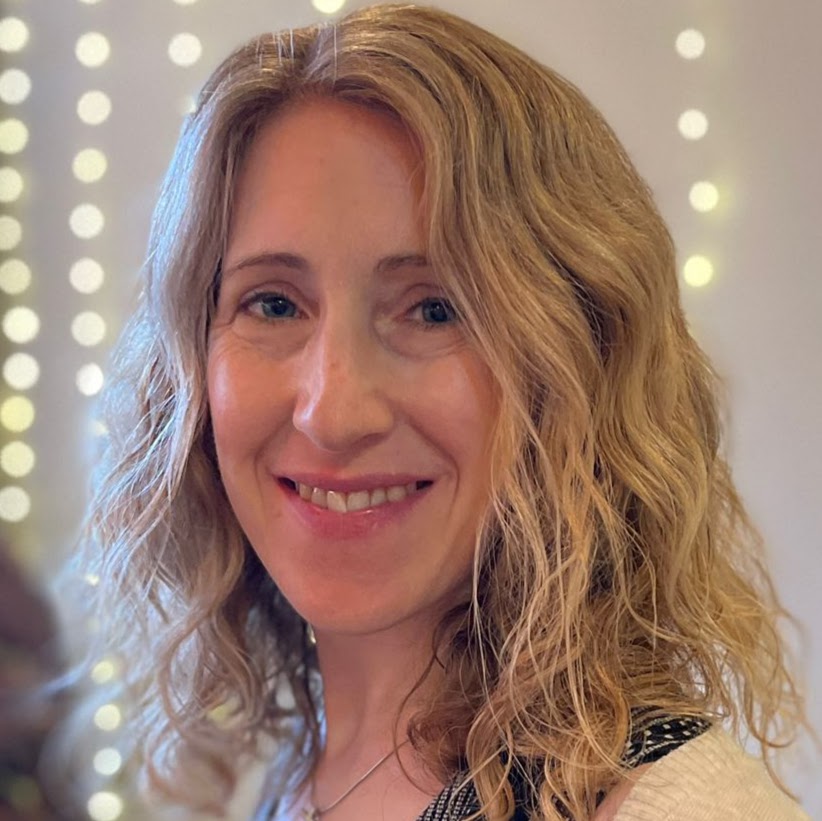
Professor Helen Julia Minors is the Head of the School of Arts at York St John University (since 2022) and a Visiting Professor of Artistic Research at Lulea Technical University (Sweden, 2020–present). Her expertise spans musicology, performance studies, and educational research, with a focus on gender leadership, inclusive pedagogy, and interdisciplinary collaboration. She has held leadership roles at Kingston University, including School Head of Performing Arts and Head of Music, and has championed EDI initiatives, LGBTQ+ advocacy, and anti-discrimination policies. Her research explores music and translation, cultural communication, and the intersections of music with dance, drama, and design. Education: PhD in Music (implied by academic rank). Grants & Funding: Over £200,000 in grants for projects like 'Women’s Musical Leadership Online Network' (AHRC), 'Taking Race Live' (OfS), and collaborations with arts organizations. Research Interests: Gender equity in music leadership, intercultural performance practices, and the translation of music across disciplines. She has published extensively on topics ranging from Paul Dukas to contemporary dance-music intersections. Awards: Rose Award (2016), CATE Finalist (2017), and Student Award for Employability (2021). She co-founded the EDI Music Studies Network (2019) and chairs major music education bodies. Teaching: Supervises PhD candidates and teaches modules on music education, critical theory, and interdisciplinary performance. Labs/Teams: Leads the School of Arts and collaborates with institutions like Aldworth Philharmonic and Club Inégales.
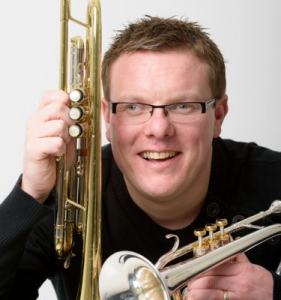
Richard Marshall is a Professor of Cornet at the Royal Northern College of Music (RNCM) and a cornet tutor at Birmingham Conservatoire. He holds a BA (Hons) in Band Studies and an LRSM in Bandmastership. Currently serving as principal cornet of the renowned Black Dyke Band, he previously held the same role at Grimethorpe Colliery Band for a decade. His expertise spans performance, pedagogy, and leadership in brass band traditions. He is also a York Performing Artist and Consultant. Education: BA (Hons) in Band Studies LRSM in Bandmastership Research Interests: Focused on cornet technique, brass ensemble dynamics, and historical performance practices within banding traditions. His work bridges classical and contemporary repertoire, emphasizing pedagogical methods for wind instruments. Professional Roles: Principal Cornet, Black Dyke Band Consultant and Artist for York Performing Labs/Teams: Engaged with RNCM's Wind, Brass and Percussion department, contributing to ensemble training and performance programs.
Univ.-Prof. Dr. Bartolo Musil is a Professor at the Music and Arts University of the City of Vienna (MUK), affiliated with the Faculty of Music. He has been active since September 2024 and is involved in academic leadership roles. His professional engagement spans multiple disciplines within music and performing arts. His teaching and research interests include Keyboard Instruments, Conducting, Composition, Jazz (including Jazz-Piano, Jazz-Bass, Jazz-Trumpet, Jazz-Trombone, Jazz-Saxophone, Jazz-Drums, Jazz-Guitar, Jazz-Singing, and Jazz-Composition & Arrangement), Early Music (Harpsichord, Fortepiano, Historical Violin, etc.), Voice and Opera (Solo Singing, Song and Oratorio, Opera, Classical Operetta), Musical Theatre, Drama, Contemporary Dance, and Pedagogical Study Programmes such as Music Education and the Master of Arts Education (MAE). He contributes to the Doctoral Programme at MUK, focusing on artistic-scholarly research and supervision of PhD projects. Bartolo is also involved in international academic relations, including Erasmus+ programmes and other exchange initiatives.
Helga Arias, MA, is a Lecturer at the Music and Arts University of the City of Vienna, affiliated with the Faculty of Music since September 2024. Her roles span diverse disciplines, including Piano Accompaniment, Jazz-Piano, Jazz-Bass, and Early Music instruments such as Harpsichord and Historical Violin. She contributes to academic diploma programs like Classical Operetta and the Certificate of Ensemble Playing. Her teaching areas include Jazz, Early Music, and various keyboard and wind instruments. She is involved in the university's international programs, including Erasmus+ exchanges and collaborative initiatives with partner institutions. While no specific doctoral supervision or grants are detailed, her expertise aligns with the university's focus on artistic-scholarly research and performance excellence. Helga Arias actively participates in the university’s pedagogical study programs, such as Music Education and the Master of Arts Education (MAE). Her work emphasizes interdisciplinary approaches to music performance, historic instrument techniques, and contemporary jazz practices.







/prod01/yorksjacuk/media/content-assets/staff-profile-images/Helen-Minors.jpg)