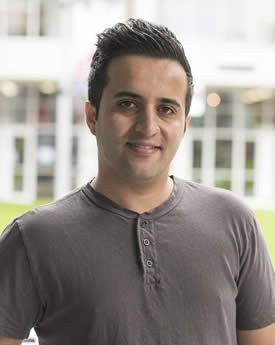
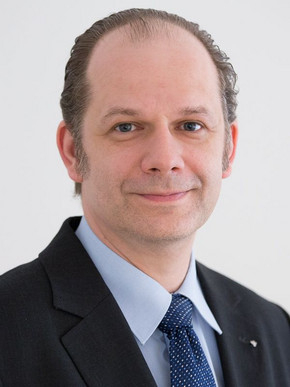
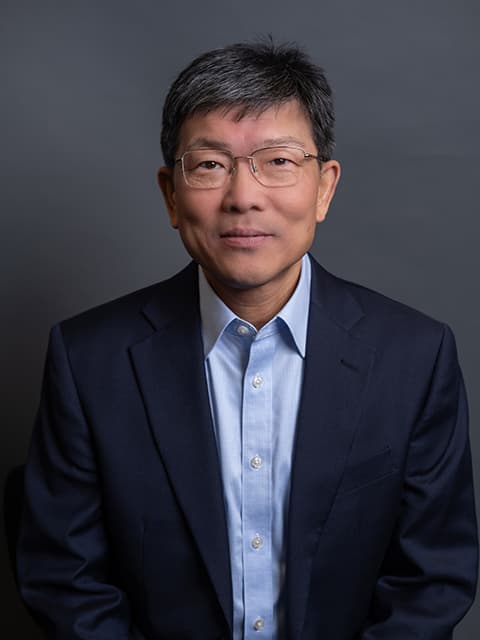
Dr Ramin Raeesi is a Lecturer in Management Science at Kent Business School, University of Kent, and an Interim Director of the Centre for Logistics and Heuristic Optimisation (CLHO). He also holds a visiting researcher position at the Centre for Transport and Logistics (CENTRAL) at Lancaster University Management School. Research Overview: Focuses on combinatorial optimisation, vehicle routing, and sustainable logistics with environmental considerations. Research Interests include: Exact and metaheuristic solution algorithms Multi-objective optimisation Electric and hydrogen-fuelled transport systems Shared logistics and container terminal optimisation Publications highlight work on electric vehicle routing with time windows and mobile battery swapping. His research integrates big data analytics into transport and logistics networks. Labs & Groups: Centre for Logistics and Heuristic Optimisation (CLHO) Centre for Transport and Logistics (CENTRAL)
Ramon Piedra de la Cuadra is an Assistant Professor in the Integrated Sciences Department at the College of Engineering, Universidad de Huelva. His research focuses on operations research, transportation planning, and sustainable waste management, applying advanced optimization techniques to urban mobility and environmental logistics. Research Interests: Transportation network optimization Bilevel programming for infrastructure deployment Time-dependent routing algorithms Mathematical modeling for sustainability Heuristic and matheuristic methods Publication Trends: Recent works emphasize electric vehicle charging station placement, eco-tourism route design, and multi-compartment waste collection models. Earlier research explores rail transit strategies, entropic analysis for sprawled cities, and mathematical education challenges.
Eva Barrena Algara is a Professor at the Department of Economics, Quantitative Methods, and Economic History at the University Pablo de Olavide. Her work bridges operations research, transportation planning, and mathematical optimization, with a focus on urban rail systems and network design. Her research interests include: Railway timetabling and scheduling under dynamic passenger demand Mixed-integer programming for transportation network optimization Multiplex network analysis in collective transportation systems Heuristic and metaheuristic algorithms for coordinated vehicle routing Waste logistics and humanitarian relief routing applications Her publications since 2013 demonstrate expertise in train unit scheduling, demand-adapted timetables, and network transferability analysis, often using Gröbner bases and adaptive algorithms. She collaborates with researchers like Gilbert Laporte and David Canca, with papers appearing in journals such as Computers & Operations Research and European Journal of Operational Research . Key application areas include metro systems, disaster response logistics, and waste collection optimization. She serves on the editorial board or as reviewer for transportation and operations research journals, and her work has been cited over 45 times. Her methodological contributions span exact formulations, biased-randomized heuristics, and stochastic modeling for time-dependent problems.
Hans-Joachim Schramm is a Senior Lecturer at WU Vienna University of Economics and Business in the Institute of Transport Economics and Logistics, and an external lecturer at Copenhagen Business School's Maritime Business program. With a diploma in economics from Humboldt University Berlin and a doctorate from Technical University of Dresden, he brings significant industry experience as a former freight forwarder to his academic work. His research focuses on international transport and logistics management, particularly trade facilitation measures, customs, foreign trade management, and controlling at transport and logistics service providers. His work spans economic and political issues across maritime, air, rail, and road transport sectors. Schramm has established expertise in Supply Chain Controlling, Digitalization, Air freight, Freight forwarding, Customs, Security and risk management, Supply Chain Financing, and various aspects of maritime transport. His publication portfolio shows a clear trend toward increasingly interdisciplinary research, combining traditional transport economics with digitalization, sustainability concerns, and geopolitical considerations. Recent work demonstrates particular attention to carbon emissions in freight transport, maritime safety systems, and the impacts of global events like the Suez Canal blockage on supply chains. ISM Best Supply Chain Paper Award at AOM Annual Meeting 2021 KLU Young Researcher Best Paper Award at IAME 2018 Best Paper Award at IAME 2016 CSCMP Teaching Innovation Award 2014 Schramm has been actively involved in numerous research projects, including investigations into cabotage in Austria, vehicle flagging out effects on the Austrian economy, transport industry consolidation through M&A, and automatic track changing systems. His international collaborations span across Europe and globally, with guest lecturing activities in Belgium, Denmark, Finland, France, Sweden, Hungary, China, and Cuba. He serves on editorial boards for International Journal of Logistics Management and Maritime Economics and Logistics, and has participated in peer review processes for numerous leading journals in his field.
Richard Senington is a Senior Lecturer in Automation Engineering at the School of Engineering Science, University of Skövde. He holds a PhD from the University of Leeds (UK) obtained in 2013 and has been working at the University of Skövde since 2016 after several years as a software consultant. His primary research and teaching focus on automation technologies within industrial production systems. Senington completed his doctoral studies at the University of Leeds in 2013 before working as a software consultant for several years. He returned to academia in 2016 when he joined the University of Skövde, where he has since established himself as a researcher in automation engineering and related fields. His research interests span Functional Programming, Optimization techniques, Industrial Internet of Things, and Human-Robot Collaboration. Senington's work particularly focuses on applying advanced computational methods to industrial production problems. His recent research has explored Knowledge Graphs for manufacturing decision support, Monte Carlo Tree Search applications in production systems, and containerization technologies for factory software management. He actively investigates how these technologies can improve production efficiency, decision-making processes, and system resilience in manufacturing environments. His publication record shows consistent output in industrial simulation and production engineering venues, with a focus on practical applications of computational methods in manufacturing. His most recent work (2024-2025) centers on Knowledge Graph applications for production systems, while his earlier work (2018-2021) focused on containerization technologies and Monte Carlo Tree Search applications. Senington is currently involved in two major research projects: 'Future-Proof Factories: The SMART Way to Resilient Production' (December 2025 - November 2029), which explores how factories can maintain operations during disruptions like rising energy prices or machine failures, and 'Virtual Factories of the Future' (October 2018 - September 2026), an eight-year research profile focused on knowledge-driven optimization in manufacturing. He previously contributed to the 'SUDO' project (October 2020 - September 2024), which addressed lock-in effects in IT system development for complex application domains. Within the EU-funded SYMBIO-TIC project, Senington collaborates with Magnus Holm on Human Robot Collaboration research. His teaching responsibilities include multiple courses at both bachelor's and master's levels in engineering disciplines, with a focus on advanced production technologies and automation systems.
Dr. Abtin Nourmohammadzadeh is a scientific assistant (Researcher) at the Institute for Business Information Systems, University of Hamburg Business School, since July 2019. He previously served as a doctoral researcher at Clausthal University of Technology (2014-2019) and holds a PhD in Informatics. Current Role: Researcher at University of Hamburg Education: Master's and Bachelor's in Industrial Engineering Research Focus: Optimization techniques, transportation logistics, and machine learning His research integrates meta-heuristic optimization (e.g., genetic algorithms, particle swarm optimization) with transportation problems (truck platooning, container terminals) and machine learning (ANNs, SVMs) for industrial fault diagnosis. Publications demonstrate applications of mathematical programming , swarm intelligence , and hybrid algorithms to logistics and engineering challenges. Recent work emphasizes fuel-efficient vehicle coordination , noise-resilient diagnostic systems , and port operations optimization . No specific scientific awards are mentioned in the provided text.
Professor Jiyin Liu is a Professor of Operations Management and Director of Undergraduate Studies at Loughborough Business School. He holds a BEng (1982) and MEng (1985) in Industrial Automation and Systems Engineering from Northeastern University, China, and a PhD (1993) in Manufacturing Engineering and Operations Management from the University of Nottingham. His career includes roles as an Assistant Professor at Hong Kong University of Science and Technology (HKUST), where he contributed to logistics management program development and received teaching awards. He joined Loughborough in 2003, became a Professor in 2005, and served as Head of the MIDO Group (2008–2013). His expertise focuses on operations planning, scheduling, and supply chain/logistics optimization, blending academic rigor with industry relevance. Education: BEng in Industrial Automation, Northeastern University of China (1982) MEng in Systems Engineering, Northeastern University of China (1985) PhD in Manufacturing Engineering and Operations Management, University of Nottingham (1993) Research Interests: Professor Liu’s work addresses complex optimization challenges in logistics, manufacturing, and service systems. His research bridges theoretical models and practical applications, with a focus on scheduling algorithms, risk-aware decision-making, and sustainable operations. Key areas include steel production optimization, vehicle routing, crane scheduling in ports, and dynamic pricing strategies. His methodologies often involve metaheuristics (e.g., genetic algorithms, differential evolution) and machine learning approaches. Recent Research Trends: His publications (2020–2023) emphasize logistics and manufacturing optimization, with notable contributions to steel industry operations, green vehicle routing, and risk-aware scheduling. He also explores decision support systems for bundling shipments and optimizing resource allocation in dynamic environments. Awards: Teaching Excellence Appreciation award (twice, Hong Kong University of Science and Technology) Collaborations & Impact: He collaborates with global firms such as Hongkong International Terminals, Baosteel, and Philips Electronics. His work on Baosteel’s operations optimization and container terminal logistics has demonstrated real-world impact. He also contributed to developing decision support systems for field service scheduling and emergency resource allocation post-disasters. Labs/Teams: Leads research initiatives in operations management, focusing on industrial applications through partnerships with industry stakeholders. His team specializes in mathematical modeling (MILP, heuristic algorithms) and data-driven solutions for complex operational problems.
Ozgur Kabadurmus is an Assistant Professor in the Department of Marketing and Supply Chain Management at the University of Wisconsin-Eau Claire, within the College of Business. His research focuses on sustainable supply chain design, operations optimization, and the application of data-driven methodologies in logistics systems. Dr. Kabadurmus holds a Ph.D. in Industrial and Systems Engineering from Auburn University, along with multiple advanced degrees from Istanbul Technical University. Education: Ph.D., Industrial and Systems Engineering, Auburn University M.S., Industrial and Systems Engineering, Auburn University M.S., Industrial Engineering, Istanbul Technical University B.S., Industrial Engineering, Istanbul Technical University Research Interests: His work spans lean manufacturing systems, green logistics optimization, big data analytics for supply chain decision-making, and circular economy models. He has published extensively in journals like Socio-Economic Planning Sciences, Journal of Combinatorial Optimization, and Annals of Operations Research. Key Research Trends: Recent publications emphasize pandemic-resilient supply chains, disruptive technologies in last-mile delivery, and multi-objective optimization for carbon footprint reduction. His methodologies often integrate machine learning and simulation tools for predictive analytics. Grants & Advising: While specific grants are not listed, his collaborative work with industry partners (e.g., logistics firms) indicates applied research funding. No advisee information is included in the provided text. Labs/Teams: Affiliated with the College of Business research initiatives in supply chain innovation and sustainable operations.
Dr. Bill Du is a Senior Lecturer in Logistics and Supply Chain Management at La Trobe Business School, La Trobe University. He holds a PhD in Control Theory and Control Engineering from Nankai University and has held academic positions at institutions including the National University of Singapore and the University of Tasmania. His research focuses on applying machine learning, simulation, and optimization to transport and logistics systems, with particular emphasis on sustainability (e.g., carbon accounting, decarbonization of transport) and emerging technologies like blockchain and AI. Education: B.E. in Software Engineering (Nankai University, 2004) M.Eng. in System Engineering (Nankai University, 2009) PhD in Control Theory (Nankai University, 2012) Research Interests: AI-driven optimization in logistics Freight transport sustainability Agribusiness value chain risk analysis Blockchain in container shipping Articles Trends: His recent work emphasizes real-time carbon accounting frameworks, blockchain adoption barriers, and stochastic optimization models for maritime operations. He frequently explores interdisciplinary applications of machine learning in transport systems. Awards: Recognized for INFORMS President’s Pick (2015), IBM’s CPLEX industry mention, and a Transportation Research Part E Most Cited Article (2011). Advising & Grants: Total research funding exceeds $1M, with industry collaborators like American President Lines and Kongsberg Digital. Supervised PhD projects on agribusiness logistics and blockchain risks in container transport. Labs/Teams: Active in cross-disciplinary teams addressing UN SDGs (Goals 9,12,13), particularly through projects funded by AgriFutures Australia and Singapore Maritime Institute.
Professor Meng Qiang serves as Professor in the Department of Civil and Environmental Engineering (CEE) at the National University of Singapore (NUS), where he directs both the Centre for Transport Research (CTR) and the NUS Guangzhou Research Translation and Innovation Institute (NUS-GRTII). His academic leadership extends to editorial roles including Co-Editor-in-Chief of Multimodal Transportation and Advisory Editor for Transportation Research Part E . His educational background spans Bachelor of Science from East China Normal University (1984), Master of Science from Chinese Academy of Sciences (1989), and PhD in Civil Engineering from Hong Kong University of Science and Technology (2000). Prior to joining NUS, he held academic positions at Shandong Normal University where he became Professor in the Information and Management School after completing his PhD. Professor Meng's research expertise focuses on three interconnected domains: urban mobility modelling and optimization (including AI-based traffic prediction, autonomous vehicle operations, and EV infrastructure planning); shipping and intermodal freight transportation (covering liner network optimization, container logistics, and maritime cybersecurity); and quantitative risk assessment of transport operations (particularly for urban tunnels and maritime safety). His work integrates advanced computational methods with real-world transportation challenges, as evidenced by over 260 high-impact publications. His scholarly impact is demonstrated through consistent recognition as a Top 2% Scientist in logistics and transportation (Stanford University, 2019-2022) and numerous prestigious awards including the Omega Best Paper Award (2023), TSL Freight Transportation Award (2020), and Singapore MOT Minister's Innovation Award (2009). His publications reveal evolving research trajectories toward autonomous vehicle integration, maritime decarbonization, and AI-driven transportation solutions. Best Paper Award of Omega 2023 Member, Academy of Engineering Singapore (2022) TSL Best Paper Award in Freight Transportation and Logistics (2020) OCDI Takeuchi Yoshio Logistics Award (2019) Chang Jiang Scholar Chair Professor (2017) WCTR Society Prize for Best Paper (2013) Singapore MOT Minister's Innovation Award (2009) Professor Meng has supervised 17 PhD students and mentored 20 postdoctoral fellows, with many graduates achieving prominent academic positions internationally including Distinguished Young Scholars in China. His industry contributions include the QRAFT risk assessment software for road tunnels and an AI-based traffic prediction model developed with ST Engineering. He leads the Centre for Transport Research which conducts government and industry-funded projects addressing Singapore's transportation challenges through advanced modeling and optimization techniques.
Marta Borowska-Stefańska is an Assistant Professor at the Institute of the Built Environment and Spatial Policy, Faculty of Geographical Sciences, University of Lodz. She serves as Deputy Director of the Institute, overseeing organizational matters. Her academic roles include teaching and research. Education: PhD in Geography (2014) from University of Lodz, with a thesis on flood-prone area management. She has participated in extensive professional development, including ESRI GIS training, DAAD-funded stays in Germany, and ERASMUS+ collaborations in Romania and Slovakia. Research focuses on spatial planning, flood risk management, GIS applications, and urban mobility. Key projects include optimizing flood evacuation strategies, analyzing pandemic-induced transport changes, and assessing road network vulnerability under flooding. She leads grants like IDUB-funded studies on mobility patterns of the elderly and post-pandemic transport systems. Her work emphasizes interdisciplinary approaches, with international collaborations and publications spanning disaster management, transport systems, and spatial policy. Projects often involve applied tools like network analysis and simulation modeling. Grants and Projects: IDUB grants on flood risk management and elderly mobility; ERASMUS+ initiatives enhancing academic exchange. Active in conferences and editorial roles, including co-editing the 'Biuletyn Uniejowski.'
Prof. Rolf H. Möhring is a Professor at the Department of Mathematics, Faculty II – Mathematics and Natural Sciences, Technical University of Berlin. He specializes in Combinatorial Optimization, Graph and Network Algorithms, and Operations Research with applications in industrial and transportation systems. His research bridges theoretical foundations and practical implementations, addressing challenges in scheduling, distributed computing, and algorithmic game theory. Key research interests include graph algorithms, project scheduling optimization, and robust optimization methodologies. Notable contributions span network flow analysis, traffic equilibrium design, and logistics optimization in container terminals and shipping routes. Awards: 2025 Research.com Mathematics in Germany Leader Award, 2010 EURO Gold Medal. Publications: Over 127 papers with 16,279 citations in Computer Science and 113 papers with 15,733 citations in Mathematics. His work frequently explores combinatorial structures, invariant theory, and practical applications in distributed systems. His advising focuses on PhD students in combinatorial optimization and algorithmic theory, with contributions to the Mathematics Genealogy Project. Collaborations include industrial projects like Kiel Canal ship traffic optimization and AGV routing in container terminals, emphasizing real-world problem-solving through mathematical frameworks.
Stefano DE LUCA is a Full Professor at the Department of Civil Engineering (DICIV) of the University of Salerno. His research focuses on transportation systems, traffic flow modeling, sustainable mobility, and infrastructure planning. He actively contributes to projects addressing electric vehicle adoption, smart traffic management, and urban development. His work often integrates advanced modeling techniques with real-world data analysis. Key areas of expertise include hybrid traffic flow models, signal optimization for noise reduction, and the impact of transportation infrastructure on socio-economic factors. He is involved in international collaborations through Erasmus+ agreements and leads initiatives related to port logistics and container terminal efficiency. His academic contributions span over 150 publications, with recent work emphasizing electric vehicle adoption in emerging markets and interdisciplinary approaches to transportation challenges. Dr. DE LUCA is associated with laboratories focusing on transportation systems and sustainability, and he maintains active participation in academic committees and advisory roles within the university.
Magdalene Marinaki serves as a Researcher and permanent laboratory teaching personnel at the Technical University of Crete (TUC), School of Production Engineering and Management. She also teaches in the Hellenic Open University's Social Sciences Graduate Program. Her expertise lies in optimization methodologies, optimal control systems, and nature-inspired algorithms applied to logistics and manufacturing. She holds a Diploma, MSc, and PhD from TUC, specializing in Production Engineering and Management. Her research focuses on computational optimization, metaheuristics, vehicle routing problems (VRP), energy-efficient transportation systems, and structural control. She has authored 4 books and over 50 journal articles, with additional contributions to conference proceedings. Notable projects involve EU-funded research on blockchain applications in maritime logistics, electric vehicle routing, and unmanned aerial vehicle (UAV) path optimization. Her recent work emphasizes sustainable transportation solutions, including EV charging infrastructure planning and drone-integrated delivery networks. She has developed algorithms like teaching-learning-based optimization and hybrid swarm intelligence techniques, addressing real-world challenges in supply chain management and smart manufacturing systems.
Evelien van der Hurk is an Associate Professor at the Department of Technology, Management and Economics within DTU Management at the Technical University of Denmark. Her research focuses on optimization, simulation, and decision-making in transportation systems and public health. She specializes in public transport planning, epidemic modeling, and resilient infrastructure design. Her work integrates operations research techniques with real-world applications, addressing challenges such as rolling stock rescheduling, disease spread mitigation, and autonomous transit systems. She has contributed to advancing methodologies like matheuristics for timetabling and simulation-optimization frameworks for immunization strategies. Key research themes include transportation network design, passenger behavior analysis, and robust scheduling under uncertainty. Her articles often bridge theoretical models with practical implementation, emphasizing societal impact in urban mobility and public health policy. No scientific awards or student advisement details are explicitly mentioned in the provided materials. Her research has been published in leading journals and conferences, reflecting her expertise in interdisciplinary systems optimization.