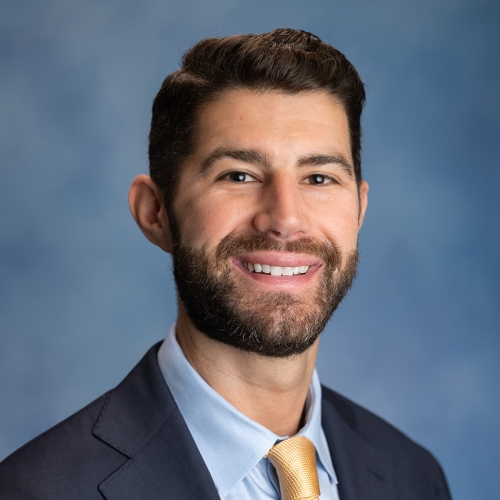
Ryan Hansen is Professor and Chair of the Department of Pharmacy at the University of Washington School of Pharmacy. He holds associate faculty appointments at the Harborview Injury Prevention Research Center and affiliate investigator status at the Kaiser Permanente Washington Research Institute, while also contributing to the Center for Pharmacy Practice Transformation and CHOICE Institute. PhD and PharmD from University of Washington Bachelor of Arts in Chemistry and Philosophy from Carroll College His research focuses on comparative effectiveness analysis , cost-effectiveness modeling , and medication safety evaluation , particularly in high-risk populations. He leads initiatives in health technology assessment and healthcare system efficiency , with expertise spanning pharmacoepidemiology , managed care pharmacy , and pharmaceutical policy . Key publication trends highlight his work in Medicare Part D economics , opioid-gabapentin safety , and community pharmacy interventions for HCV and PrEP. He teaches graduate courses on healthcare law , economic evaluation , and pharmaceutical policy .
Adam Markovitz is an Assistant Professor of Internal Medicine at the University of Michigan Medical School , specializing in value-based payment reforms. He is affiliated with the Department of Internal Medicine, Division of General Internal Medicine, and holds memberships at the Caswell Diabetes Institute, Samuel and Jean Frankel Cardiovascular Center, and Institute for Healthcare Policy and Innovation. Educational Background: BS from Yale College (2009) MD and PhD in Health Policy Economics from University of Michigan (2021) Dr. Markovitz focuses on reducing healthcare spending through novel payment models, particularly examining Medicare's Accountable Care Organizations (ACOs) and Comprehensive Primary Care Plus initiatives. His work analyzes risk selection, quality incentives, and racial disparities in payment systems. Scientific Awards: Horowitz Foundation Irving Louis Horowitz Award (2021) AHRQ R36 Individual Dissertation Award (2021) His research, published in JAMA Health Forum , Health Affairs , and other top journals, reveals critical limitations in current payment reforms, including unintended consequences like racial disparities and administrative inefficiencies. His recent studies span 2016-2025, demonstrating sustained focus on optimizing healthcare value.
Christopher Bacon is Professor and Chair of the Environmental Studies and Sciences Department at Santa Clara University, where he directs transdisciplinary research on agroecology, food sovereignty, and climate justice. His work integrates participatory action research with smallholder coffee and cacao cooperatives across Central America and California. Research Interests: Agroecological transitions and diversified farming systems Food & water security under climate variability and hurricanes Environmental-justice analysis of air-quality burdens near Silicon Valley schools Gendered livelihood strategies within fair-trade coffee networks Participatory governance for food sovereignty and rural resilience Recent publications (2020-2025) exhibit two dominant trajectories: (1) empirical assessments of hurricane exposure, drought vulnerability, and dietary diversity among Nicaraguan smallholders, and (2) critical policy analyses of food-system governance at global climate negotiations and local pantry-garden partnerships in Santa Clara County. Collectively the corpus blends ecological science, political ecology, and community-based praxis. Scientific Awards: No specific awards are listed in the supplied text; citation metrics and faculty page behind login may contain further honors. Advising & Grants: While individual student names are not publicly displayed, Professor Bacon mentors graduate and undergraduate projects embedded in his long-term participatory sites in Mexico, Nicaragua, and Bay-Area food-justice organizations. External funding sources are not enumerated in the scraped material. Labs & Teams: He leads community-engaged research initiatives that link SCU’s Environmental Studies and Sciences Department with coffee cooperatives, NGOs, and municipal food-security networks across Central America and California.
João Nuno Costa Gonçalves is an Assistant Professor at the Faculty of Philosophy and Social Sciences (FFCS) of the Portuguese Catholic University in Braga, where he serves as Coordinator of the Degree in Applied Data Science and the scientific area of Computing and Data Science. He is also an integrated researcher at CEGE - Center for Studies in Management and Economics at Católica Porto Business School, demonstrating his strong connection between academic teaching and research in business analytics. His educational background includes: PhD in Industrial and Systems Engineering, University of Minho Masters in Systems Engineering, University of Minho Degree in Mathematics, University of Minho Dr. Gonçalves' research focuses on the intersection of data science and business applications, with particular emphasis on Business Analytics, Time Series Forecasting, and Statistical Learning. His work bridges theoretical advancements with practical implementation in supply chain management, inventory optimization, and decision support systems. He has developed numerous frameworks that help organizations transition toward data-driven decision-making processes, especially in complex industrial contexts like automotive supply chains. His publication portfolio reveals consistent contributions to operations research and business analytics, with recent work emphasizing explainable AI for business contexts, proactive academic success management, and bridging the gap between theoretical analytics and practical implementation. His research demonstrates a clear trajectory from foundational statistical methods toward increasingly sophisticated AI applications in business decision-making. As an educator, he teaches across multiple programs including the Degree in Applied Data Science, Degree in Data Science and Technology (EaD), and Master in Digital Communication. His courses span from foundational mathematics to advanced data science applications, including Mathematical Analysis I & II, Statistical Learning, Artificial Intelligence in Marketing, and Laboratory of Data Science and Technology.
Elin Skurtveit is an Associate Professor II (20%) at the Department of Geosciences, University of Oslo and a full-time technical expert in Energy Geomechanics and Geophysics at the Norwegian Geotechnical Institute (NGI) . She has held this dual position since 2018 and 2010 respectively. Academic background in structural geology and geomechanics Key focus: Subsurface CO2 storage safety and fault stability Experience at Stanford University's Zoback Stress and Crustal Mechanics Group Her research integrates: Mechanical testing (Triax, Ring Shear, Direct Shear) CO2 exposure experiments on reservoir rocks Clay smear and shear band formation analysis Fluid flow characterization in fault zones Current projects: gigaCCS (2025-2032): Lead NGI representative SHARP Storage : Project manager NCCS : Structural derisking task lead FRISK : Fault-related leakage risk quantification Collaborations: With Cegal for carbon storage data management Industry partnerships with Northern Lights JV International academic networks through ERA-NET ACT
Christian Albrecht is a Professor in the Department of Applied Biosciences and Process Engineering at Anhalt University of Applied Sciences, Faculty 7, based in Köthen, Germany. He specializes in inorganic and analytical chemistry with a strong focus on catalysis and process analytics. His educational background includes a chemistry degree and a doctorate from Martin Luther University Halle-Wittenberg (MLU Halle), where he completed his dissertation on the synthesis and characterization of novel platinum complexes and clusters under Professor Dirk Steinborn. He was a Marie Curie Fellow at the University of Wrocław and completed a postdoctoral program at École Polytechnique Fédérale de Lausanne under Professor Kay Severin. His research focuses on the chemistry of platinum group metals, catalysis (homogeneous and heterogeneous), recycling of heavy metal-containing industrial waste, synthesis of polymerizable ligands and complexes, and process analytics in engineering and life science contexts. He is particularly interested in sustainable solutions for catalyst deactivation and industrial waste valorization. His publications and lectures from 2005–2009 reflect a strong engagement in coordination chemistry, organometallic synthesis, and catalysis. Topics span from fundamental studies on platinum clusters to applied research in industrial process optimization and environmental analytics. The trend shows a transition from academic synthesis to applied and industrial chemistry. Marie Curie Fellow, University of Wrocław Postdoctoral Researcher, EPFL, Lausanne Product Manager and Head of R&D at AURA Technologie GmbH Development Engineer at IDC-Geräteentwicklungsgesellschaft (Analytik Jena AG) Prof. Albrecht actively supervises project, bachelor's, and master's theses, inviting students to explore topics in inorganic and analytical chemistry. He emphasizes hands-on, practical learning and interdisciplinary connections between natural sciences, engineering, and sustainability. He also delivers public 'show' lectures combining science with history, art, and culture to promote curiosity and innovative thinking.
Prof. Dr. Andreas Hartmann is a Professor of Applied Computer Science at HTWK Leipzig , specializing in distributed applications and their security. Since 2021, he has been a key faculty member in the Faculty of Digital Transformation , where he also serves as the Chairman of the Audit Committee. His role involves teaching, research, and administrative leadership in digital transformation initiatives. Education & Career Path: 2021-Present: Professor of Applied Computer Science (Distributed Applications & Security), HTWK Leipzig 2015-2021: Professor of Software Engineering, HfT Leipzig 2014-2015: Head of IT Strategy & Controlling, Federal Ministry of Transport & Digital Infrastructure 2010-2014: Head of Information & Communication Services, FSU Jena 2005-2010: Team Leader CIO Group, FSU Jena Research Focus: His research spans Enterprise Architecture , IT governance , and digital transformation in higher education . He is particularly involved in developing frameworks for cloud infrastructures and advancing IT security standards like BSI Grundschutz and Zero Trust models. His work integrates theoretical research with practical applications in university settings. Publications & Impact: Recent publications (2025-2018) emphasize digital university transformation, enterprise architecture management in academia, and secure cloud solutions. His collaborative works on integrating IT service management with enterprise architecture (TOGAF) highlight his role in shaping institutional IT strategies. Studies on measuring digitalization in higher education further underscore his commitment to evidence-based digital transformation. Professional Memberships: The Open Group: IT4IT™ Core Standard, TOGAF® UCISA & EUNIS: Enterprise Architecture Special Interest Group CIO Association Germany: Spokesperson for Enterprise Architecture Management ZKI: Working groups on IT Service Management & Campus Management Teaching & Labs: He teaches courses including Distributed Applications , IT Architectures and Modeling , and Cloud Computing and Virtualization . While no specific lab details are provided, his affiliation with the Faculty of Digital Transformation suggests involvement in collaborative projects related to digital infrastructure and educational technology.
Dr. Justin Calabrese is the Head of Earth Systems Research at the Center for Advanced Systems Understanding (CASUS) , part of the Helmholtz-Zentrum Dresden-Rossendorf (HZDR) . His work integrates ecology, epidemiology, and computational modeling to address complex systems-level challenges. Research Interests: Dr. Calabrese specializes in Ecological modeling of animal movement and habitat use Epidemiological dynamics of disease outbreaks Computational tools for spatial and temporal data analysis Conservation biology applications Key Contributions: He develops advanced methodologies like the ctmm R package for movement analysis and applies mathematical frameworks to problems ranging from wildlife-vehicle collisions to pandemic response strategies.
Dr. Yanfang Chen is a researcher at the Laboratory of Atmospheric Chemistry, Paul Scherrer Institute (PSI), Villigen, Switzerland. Her work focuses on atmospheric chemistry, aerosol science, and environmental pollution analysis. Key research areas include secondary organic aerosol formation, particulate matter characterization, and chemical reaction mechanisms in atmospheric processes. Her studies examine organosiloxane aerosols, brown carbon properties, aqueous-phase oxidation reactions, and water-soluble organic nitrogen species. Recent publications (2016-2023) demonstrate expertise in chemical characterization techniques, source apportionment analysis, and environmental impact assessments. Articles address topics like OH radical reactions, photochemical aging effects, and particulate matter dynamics in urban settings across China. Contact: yanfang.chen@psi.ch | Forschungsstrasse 111, 5232 Villigen PSI, Switzerland | Phone: +41 56 310 29 73
Dr. Nan Zhao serves as Senior Lecturer in Electrical Engineering at Lancaster University's School of Engineering, UK, since 2022. Previously, he held positions as Assistant Professor at University College Dublin (2018-2022) and Sessional Lecturer at McMaster University (2017-2018), where he earned his PhD in Electrical Engineering in 2017. His research spans electrical power engineering with core focus areas including energy storage systems , renewable integration (solar, wind, wave), electric machines , and EV powertrain systems . Current projects involve AI-driven ocean energy arrays and high-performance wave energy conversion systems. His publication record demonstrates deep engagement with power system stability challenges in renewable-dense grids, particularly through virtual synchronous generators and transportable storage solutions. Key editorial activities include contributions to Electronics Letters and IET Renewable Power Generation . His research group actively recruits PhD students and postdocs, with Renqi Guo currently listed as a PhD student. Primary research collaborations occur through the Energy TALOS group. Notable scientific contributions include: Hybrid synchronous condenser-virtual generator systems for microgrid stability (2025) Statistical deadband estimation for transportable energy storage (2025) Novel wave energy conversion grid integration techniques (2024) Dr. Zhao maintains active industry engagement through research on practical grid integration challenges, with recent work addressing frequency response services, curtailment reduction, and cyber-physical grid resilience. His lab focuses on translating theoretical power electronics advances into deployable renewable energy solutions.
John R. Lange is an Associate Professor in the Computer Science Department at the University of Pittsburgh's School of Computing and Information. Currently on leave at Oak Ridge National Laboratory, he has established himself as a leading researcher in high-performance computing and systems software. His work bridges academic research and practical supercomputing applications, with extensive collaborations across national laboratories and research institutions. PhD in Computer Science from Northwestern University (2006) M.S. in Computer Science from Northwestern University (2010) B.S. in Computer Engineering from Northwestern University (2003) B.S. in Computer Science from Northwestern University (2003) Dr. Lange's research centers on High Performance Computing systems, with particular expertise in operating systems for supercomputing environments, virtualization technologies, and network optimization. His work explores how specialized operating systems can enhance performance in large-scale computing infrastructures, addressing challenges in resource management, fault tolerance, and system composition. He investigates the intersection of traditional HPC architectures with emerging virtualization techniques to create more flexible and efficient computing environments. His publication record demonstrates a consistent focus on advancing the state of the art in high-performance systems, with recent work emphasizing exascale computing challenges, network optimization for leadership-class supercomputers, and innovative approaches to system composition. His research shows an evolution from foundational virtualization techniques toward more sophisticated solutions for next-generation supercomputing architectures, with increasing emphasis on practical implementations in real-world leadership computing facilities. Best Paper Finalist at SC 2024 for network cost optimization research Best Paper Finalist at SC 2023 for Frontier exascale supercomputer architecture Best Paper Nominee at HPDC 2012 for VNET/P overlay networking As an educator, Dr. Lange has taught numerous systems courses including Introduction to Systems Software (CS 0449), Computer and Network Security (CS 1652), and Operating Systems (CS 2510 and CS 3510). His teaching spans both undergraduate and graduate levels, focusing on practical systems knowledge with hands-on projects. His research has been supported by collaborations with Oak Ridge National Laboratory and other national computing facilities, enabling his work to directly impact real-world supercomputing infrastructure. Dr. Lange is actively involved with The Prognostic Lab and maintains strong connections with the Oak Ridge Leadership Computing Facility (OLCF), where his current leave appointment allows him to work at the forefront of exascale computing research and development.
Dominic Hudson is Shell Professor of Ship Safety and Efficiency at the University of Southampton , leading the Centre for Maritime Futures . He serves as Head of the Maritime Engineering group and is a member of the Southampton Marine and Maritime Institute . Focus areas: hydrodynamics, energy-efficient ship design, decarbonisation Key collaborations: Shell Shipping, English Institute of Sport, British Swimming Teaching: ship design, hydrodynamics, power requirement prediction External roles: Royal Institution of Naval Architects (Chair 2002-2011), International Towing Tank Conference Education : BEng in Ship Science, University of Southampton (1994, First-Class) PhD in high-speed catamaran motion prediction, University of Southampton (1999) His research explores hydrodynamic optimization for maritime energy efficiency, focusing on future fuels , digitalisation , and crew safety . Recent work includes hydrogen fuel storage models, LNG boil-off gas prediction, and wind-propulsion yaw moment analysis. The Centre for Maritime Futures drives multidisciplinary projects in maritime decarbonisation and digital oceans. Scientific Awards : Vice Chancellor's Teaching Award (2008) Wakeham Prize (2002) Landrini Award (2013) Multiple Bronze Medals from RINA (2002, 2004, 2005, 2014, 2015) As a Chartered Engineer with industry experience at Three Quays Marine Services (2003), he has coordinated Ship Science courses (2008-2011) and directed programs (2011-2013). His academic leadership extends to visiting positions at Yokohama National University (2008) and Nanyang Technological University (2011-2016), plus collaborations with IHPC-SMMI Joint Laboratory in Singapore.
Alan Erera is the Manhattan Associates/Dabbiere Chair and Professor at the H. Milton Stewart School of Industrial and Systems Engineering at Georgia Tech. He serves as Associate Chair for Research, Faculty Director for the M.S. in Supply Chain Engineering program, Co-Director for Global Transportation in the Supply Chain & Logistics Institute , and Co-Executive Director of the Georgia Tech Panama Logistics Innovation & Research Center . Education : Ph.D., Industrial Engineering & Operations Research (2000), University of California, Berkeley M.S., Industrial Engineering & Operations Research (1996), UC Berkeley B.S.Eng., Civil Engineering & Operations Research, Summa Cum Laude (1993), Princeton University Research Focus : Transportation and logistics systems planning under uncertainty, with emphasis on dynamic vehicle routing for same-day distribution, resilient food supply chains, service network design for freight carriers, container fleet management, and real-time operational control. His work combines stochastic/robust optimization with applications in urban delivery, shared mobility, and supply chain security. Scientific Contributions : Developed dynamic dispatch wave frameworks for same-day delivery Created robust network design models for food supply chains Innovated container fleet management techniques for global shipping Pioneered truckload linehaul optimization Advanced real-time routing algorithms Awards & Honors : INFORMS Transportation Science Dissertation Prize Winner Dwight D. Eisenhower Transportation Fellow NSF/USDOT/DHS Research Grant Recipient Berkeley Fellowship for Graduate Study W. Mack Angas Prize at Princeton Methodological Trends : Combines dynamic programming, stochastic optimization, and machine learning for logistics challenges. Key article themes show progression from fundamental network design (2002-2014) to modern AI-enhanced approaches (2023-2025) in urban delivery and real-time systems.
David Davis is an associate professor in the Department of Economics at South Dakota State University (SDSU), located within the Ness School of Management and Economics. His research focuses on the economic impacts of food assistance programs such as WIC and SNAP, particularly their effects on infant formula markets, food pricing dynamics, and government policy outcomes. Davis has extensive experience in empirical microeconometrics, panel data methods, and cross-sectional/time-series analyses to study market structures and policy effectiveness. Education: B.S. in Economics, University of South Dakota M.S. in Economics, University of Oregon Ph.D. in Economics, University of Oregon (1998) Research Interests: Davis specializes in empirical industrial organization , agricultural and food policy , and market power analysis . Key areas include: Evaluating WIC’s influence on infant formula market competition Assessing SNAP’s role in food insecurity mitigation Exploring geographic factors in food plant agglomeration Quantifying policy effects using advanced econometric techniques His work bridges microeconomic theory with practical policy evaluation, particularly in food systems and public welfare programs. Professional Contributions: Davis has served on committees such as the University Research and Scholarship Committee (chair, 2016–2017) and the National Academies of Science’s WIC Food Package Review Committee (2014–2016). His career includes roles at the USDA’s Economic Research Service and Grain Inspection, Packers and Stockyard Administration, where he analyzed agricultural markets, competition, and policy implications. Advising and Grants: While no students are listed, Davis has advised USDA policy research initiatives. His grants and projects likely relate to WIC/SNAP evaluation, though specifics are not detailed in the text. Labs/Teams: No dedicated lab or team is explicitly mentioned, but his work involves collaboration with USDA branches and academic networks focused on food policy and econometric analysis.
Kevin Buchin is a Professor at the Department of Computer Science, Faculty of Computer Science at Technical University of Dortmund, where he leads Chair 11: Algorithm Engineering. His work focuses on bridging theoretical and experimental algorithm development, particularly in computational geometry and spatial data analysis. Professor Buchin's research spans several key areas in algorithm engineering, with particular expertise in computational geometry, spatial networks, algorithms for GIS (Geographic Information Systems), and motion planning algorithms. His work combines theoretical foundations with practical applications, developing algorithms that address real-world challenges in spatial data processing and analysis. He has made significant contributions to trajectory analysis, geometric spanners, Fréchet distance computations, and map construction algorithms. His research often involves interdisciplinary collaborations that connect computer science with geographic applications and movement data analysis. An analysis of Professor Buchin's recent publications reveals a strong focus on trajectory analysis and spatial network algorithms. His work consistently addresses fundamental problems in computational geometry while developing practical solutions for real-world applications. Key trends include advancements in Fréchet distance computations, trajectory clustering techniques, geometric spanner constructions, and map-matching algorithms. His research demonstrates a balanced approach between theoretical algorithm development and practical implementation, often resulting in benchmark suites and publicly available code to support reproducibility and further research. Professor Buchin actively supervises student research projects and theses. For Bachelor's theses, he requires successful completion of "Effiziente Algorithmen (EA)" and DAP2 courses, while Master's thesis students should have completed "Algorithmen und Datenstrukturen (AuD)" and ideally specialized courses and seminars in algorithms/algorithm engineering. His group offers final projects in algorithm engineering, geometric algorithms, geometric graphs, networks, GIS algorithms, and motion planning. He has supervised numerous Master's theses, with examples of completed projects available on his group's website. The Algorithm Engineering research group led by Professor Buchin includes Mart Hagedoorn (MSc), Antonia Kalb (MSc), Dr. Guangping Li, Aleksandr Popov (external, MSc), Dr. Carolin Rehs, and student assistants Jan Erik Swiadek and Torben Scheele. The group develops tools like the "Ruler of the Plane" game that illustrates geometric problems and algorithms, which is also available online. They maintain repositories containing game sources, art, and documentation for extending the games, including the "dots & polygons" game and new levels for the art gallery game. The group also produces educational videos illustrating research results, particularly in trajectory analysis, and offers a Coursera course on geometric algorithms.